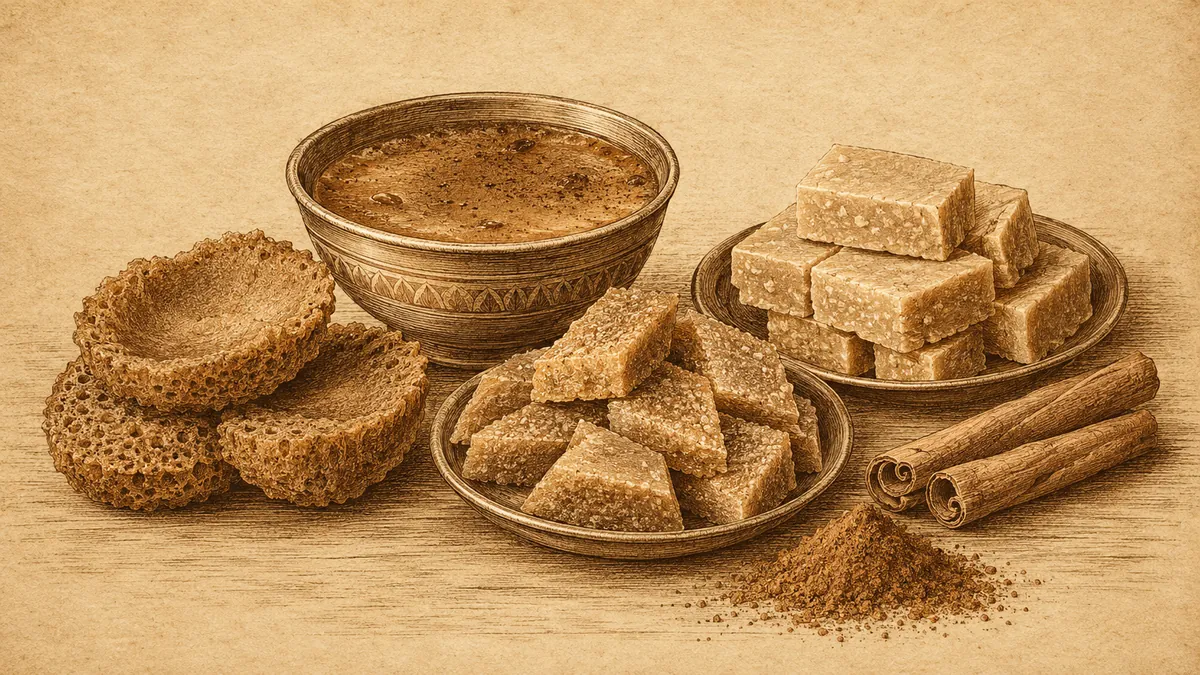
Cinnamon has a quiet but important place in traditional Sri Lankan sweets. True Ceylon cinnamon, Cinnamomum verum, grows on the island itself, so its warm, sweet, delicate flavour has long been woven into festive treats and everyday sweets, from the steamed coconut custard watalappan to syrupy cakes, milk toffees and spiced doughs. It is usually one of several spices, adding gentle warmth rather than dominating, and it appears especially at New Year and other celebrations.
Sri Lanka is the home of true cinnamon, so it is no surprise that the spice turns up in the island’s sweets. This guide looks, in plain and flavourful terms, at how cinnamon is used in traditional Sri Lankan sweets and which treats it appears in. It builds on our pillar guide to the culinary uses of Ceylon cinnamon.
The short answer
In traditional Sri Lankan sweets, Ceylon cinnamon is used as a warming background spice, most famously in watalappan, and also in festive sweets such as kavum, aluwa, dodol and milk toffee, usually alongside cardamom, cloves and nutmeg. Because true cinnamon is mild and sweet rather than sharp, it blends into the coconut, jaggery and treacle that form the base of many Sri Lankan sweets, lifting them with a soft, fragrant warmth. It is used in both stick and ground form, and is a familiar part of the island’s festive table.
Why cinnamon suits Sri Lankan sweets
True Ceylon cinnamon is well matched to sweet dishes because its flavour is gentle and sweet, with little of the harsh, hot edge of cassia. This lets it add warmth to a dessert without overpowering the coconut, palm sugar and spices around it. Sri Lankan sweets often rest on jaggery or kithul treacle, both made from palm sap, and on coconut in its many forms, and cinnamon’s mellow sweetness sits naturally with these. Grown on the island, it has always been close at hand, so cooks have folded it into their sweets for generations alongside cardamom, cloves and nutmeg.
Watalappan: the classic spiced sweet
If one Sri Lankan sweet shows off warming spice, it is watalappan, a rich steamed custard made from coconut milk, eggs and jaggery or kithul treacle, flavoured with spices. Cinnamon, together with cardamom and sometimes nutmeg and cloves, gives watalappan its fragrant, mellow warmth, balancing the deep caramel sweetness of the palm sugar. Often served at celebrations and especially associated with festive meals, watalappan is perhaps the dish where cinnamon’s role in Sri Lankan sweets is most clearly tasted. It shows how the spice works in the island’s cooking: not as the star, but as part of a warm, rounded blend.
Festive sweets and New Year treats
Many traditional Sri Lankan sweets appear at the Sinhala and Tamil New Year and other celebrations, and cinnamon often has a place among them. Oil cakes such as kavum, made from rice flour and treacle, and sweets like aluwa, a rice-flour and sugar sweet, are commonly spiced, with cinnamon adding to their warmth. Dodol, a dense, dark sweet of coconut milk, jaggery and rice flour, is slow-cooked with spices that can include cinnamon. Milk toffee, a popular homemade sweet of condensed milk and sugar, is sometimes scented with cinnamon too. The spice is rarely the headline, but it is part of the familiar festive flavour. For more on these occasions, see our guide to cinnamon in Sri Lankan festivals and celebrations.
Some traditional sweets that use cinnamon
| Sweet | What it is |
|---|---|
| Watalappan | Steamed coconut and jaggery custard, spiced |
| Kavum | Traditional oil cake of rice flour and treacle |
| Aluwa | Rice-flour and sugar sweet, often spiced |
| Dodol | Dense coconut, jaggery and rice-flour sweet |
| Milk toffee | Condensed-milk fudge, sometimes cinnamon-scented |
Other sweets and tea-time treats
Beyond the best-known festive sweets, cinnamon finds its way into many everyday Sri Lankan treats. Aggala, little balls of roasted rice flour, treacle and spice, can carry a hint of cinnamon, as can kalu dodol, a very dark, rich version of dodol. Spiced plantain or banana fritters, coconut cakes and various rice-flour sweets may be scented with it, and cinnamon often appears in the sweet milk rice and treacle dishes shared at celebrations. At tea time, where Sri Lanka’s love of tea meets its love of sweets, a warm, lightly spiced cake or biscuit may owe part of its fragrance to cinnamon. In many homes a piece of cinnamon bark is also dropped into the pot when making tea or a spiced milk drink, so the same gentle warmth that flavours the sweets carries over into what is served beside them. None of this is fixed by rule; each family and region has its own habits, but the thread running through them is the soft, sweet warmth that true Ceylon cinnamon brings.
How cinnamon is used in the kitchen
In Sri Lankan sweet-making, cinnamon is used in both its forms. A piece of a quill may be simmered in coconut milk, syrup or treacle to infuse its flavour gently before the stick is removed, which is common in custards and slow-cooked sweets. Ground cinnamon is stirred into doughs, batters and mixtures where its flavour should spread evenly, such as in cakes and toffees. Often it is combined with other warm spices, especially cardamom and cloves, in small amounts, so that no single spice stands out. Because true Ceylon cinnamon is mild, cooks can use a little more freely than they might with the stronger cassia. A gentle hand is still the rule, though, since the aim in most Sri Lankan sweets is a rounded, fragrant warmth rather than a single bold spice note, and the cinnamon is meant to sit in harmony with the coconut and palm sugar. Fresh, good-quality cinnamon makes a real difference here, as its aroma is strongest when the bark is not too old, which is one reason home cooks often keep whole quills and grind or break them as needed. For general guidance on cooking with the spice, see our guide to how to use cinnamon sticks in cooking.
Cinnamon as part of a wider tradition
Cinnamon in Sri Lankan sweets is one thread of a much older relationship between the island and its spices. Cinnamon has been grown, traded and used in Sri Lankan homes for centuries, so its presence in the sweet kitchen is part of a deep culinary heritage rather than a modern addition. The same warm spices that flavour the sweets also appear in savoury cooking and in daily life, which is why the scent of cinnamon, cardamom and cloves is so closely tied to Sri Lankan food. To read more of this wider story, see our guide to traditional uses of cinnamon in Sri Lankan culture.
Frequently asked questions
What Sri Lankan sweets use cinnamon?
Cinnamon appears in many traditional Sri Lankan sweets, most famously watalappan, the spiced coconut and jaggery custard. It is also used in festive sweets such as kavum, aluwa and dodol, and sometimes in milk toffee, usually alongside cardamom, cloves and nutmeg.
Is cinnamon a strong flavour in Sri Lankan desserts?
Usually not. True Ceylon cinnamon is mild and sweet, so in Sri Lankan sweets it adds gentle background warmth rather than a strong flavour. It is typically used with other spices and blends into the coconut, jaggery and treacle, lifting the dessert without dominating it.
What is watalappan flavoured with?
Watalappan is a steamed custard of coconut milk, eggs and jaggery or kithul treacle, flavoured with warm spices. Cinnamon is a common part of the blend, along with cardamom and often nutmeg and cloves, which give the custard its fragrant, mellow warmth.
Do Sri Lankan sweets use cinnamon sticks or powder?
Both. A piece of cinnamon quill is often simmered in coconut milk, syrup or treacle to infuse its flavour and then removed, while ground cinnamon is stirred into doughs, batters and toffees where it should spread evenly through the mixture.
Summary
Cinnamon has long been part of traditional Sri Lankan sweets, a natural fit on the island that is home to true cinnamon, Cinnamomum verum. Its mild, sweet warmth blends into the coconut, jaggery and kithul treacle at the heart of the island’s desserts, so it lifts rather than dominates. It shines most clearly in watalappan, the spiced steamed custard, and appears in festive sweets such as kavum, aluwa, dodol and milk toffee, usually alongside cardamom, cloves and nutmeg. Cooks use it in both stick and ground form, simmering quills to infuse syrups and stirring powder into doughs and batters. More than a single ingredient, cinnamon in Sri Lankan sweets reflects a long culinary heritage, in which the island’s own spices give its food a warm, fragrant character all its own.
This website provides educational information about Ceylon Cinnamon as a spice and food ingredient. It is not intended to provide medical advice or make health claims.