Cinnamon sticks, also called quills, are whole rolls of dried Ceylon cinnamon bark that release a gentle, sweet warmth slowly as they cook. To use them, drop a stick straight into simmering curries, rice, stews, syrups, mulled drinks or poaching liquid, let it infuse, then lift it out before serving. Unlike ground cinnamon, a whole stick flavours a dish without adding texture or clouding it, which makes it a favourite for slow-cooked and liquid dishes.
This guide covers how to get the most from Ceylon cinnamon sticks in everyday cooking: which dishes suit them, how many to use, how long to infuse, and how to store and reuse them. It pairs with our pillar guide on the culinary uses of Ceylon cinnamon.
What is a cinnamon stick?
A cinnamon stick is a quill of dried inner bark rolled into a tube. True Ceylon cinnamon sticks are pale, thin and made of many soft layers rolled together, so they crumble easily and have a delicate, sweet flavour. They are used whole to flavour a dish from the inside out, then removed. To learn more about the sticks themselves, see our full guide to cinnamon sticks.
Why cook with whole sticks instead of powder?
Whole cinnamon sticks give a cleaner, gentler flavour and leave no gritty texture, while releasing their aroma slowly over a long cook. Ground cinnamon is quicker and stronger but can turn a sauce cloudy and settle at the bottom. Sticks are ideal when you want a smooth liquid, a slow infusion, or a subtle background warmth. Powder is better when you want an instant, even hit of flavour, as in baking. Many kitchens keep both, choosing by the dish.
How to use cinnamon sticks in cooking
In curries and savoury dishes
Add a whole stick to the pan early, when you fry the onions and spices, so its flavour has time to spread through the dish. It works beautifully in slow-cooked curries, tagines, biryanis and braises, giving a soft, sweet warmth that balances chilli and salt. Fish it out before serving, or simply push it to the side of the plate.
In rice and grains
Drop a stick into the pot when cooking rice, pilau or pilaf. As the rice absorbs the water, it takes on a light, fragrant warmth. This is a classic use in Sri Lankan and South Asian cooking, where a piece of cinnamon quill sits alongside cardamom and cloves in the pot.
In drinks
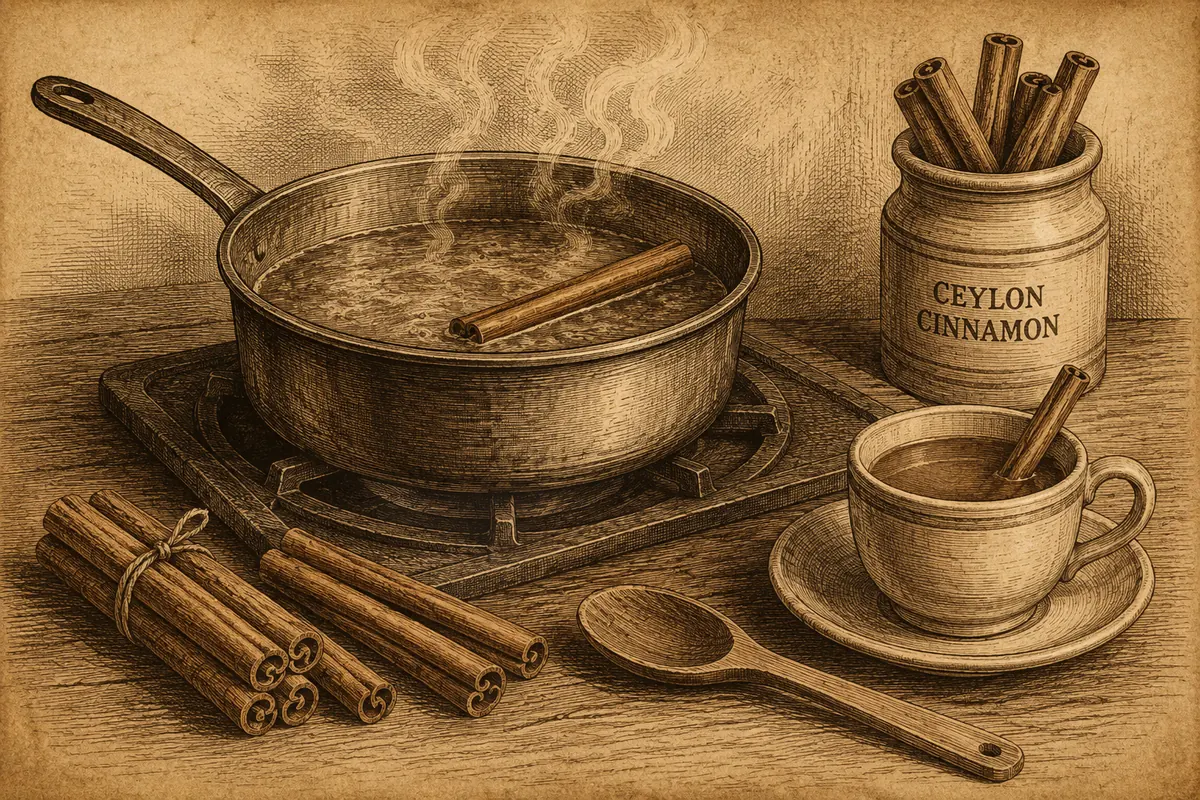
Cinnamon sticks are made for warm drinks. Simmer one in tea, mulled wine, hot cider, spiced coffee or warm milk, and it releases a sweet, comforting aroma. A single stick can flavour a whole pot, and it can often be reused once or twice. Stir a drink with a stick to add a light hint of cinnamon at the table.
In syrups and poaching liquid
To make a cinnamon syrup, simmer a stick with sugar and water, then lift it out. Use the syrup in drinks, over pancakes or in desserts. A stick added to the liquid for poaching pears, apples or other fruit infuses the fruit with a gentle spice as it cooks.
In desserts and baked goods
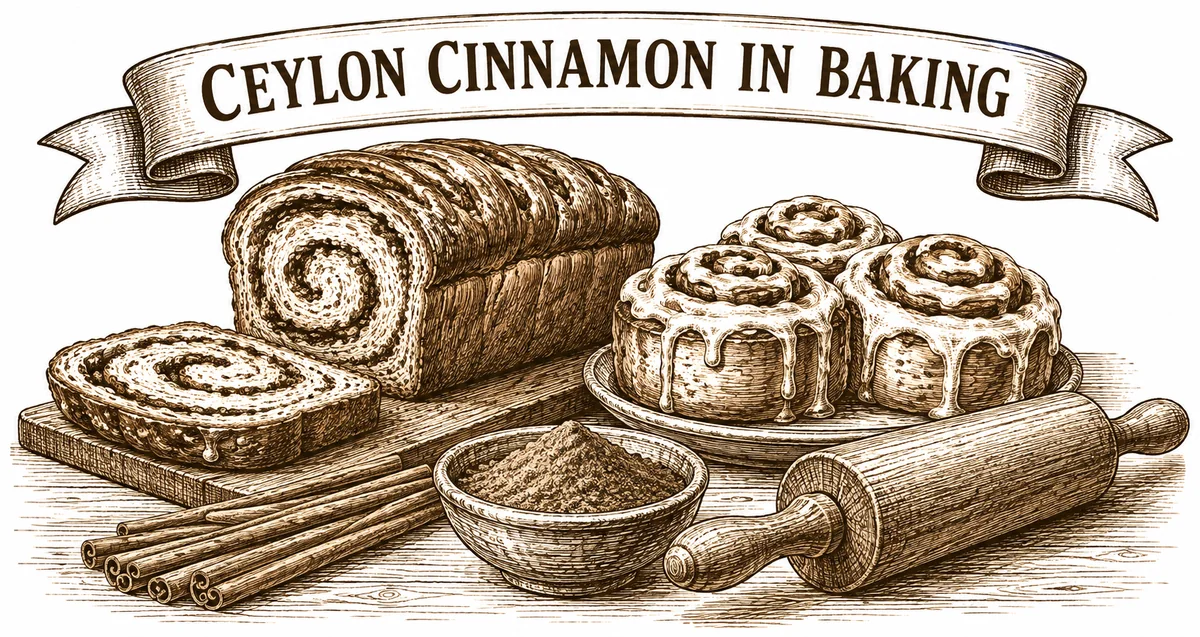
For custards, rice pudding, compotes and stewed fruit, a whole stick infused into the warm liquid gives a clean cinnamon flavour without specks. For baking such as cakes and cookies, ground cinnamon is usually easier, since a stick cannot be mixed evenly into a batter. Our guide on Ceylon cinnamon in baking covers those uses in detail.
How many cinnamon sticks should you use?
As a rough guide, one stick of about 7 to 8 centimetres flavours a dish for four to six people or a pot of drink. Because Ceylon cinnamon is delicate, you can add a little more without it turning harsh, but it is easy to start with one stick, taste, and add another if you want a stronger flavour. For a long, slow cook, one stick is often plenty, as the flavour builds over time.
Whole sticks vs ground cinnamon at a glance
| Use | Cinnamon stick | Ground cinnamon |
|---|---|---|
| Curries and stews | Best, infuses slowly | Works, can cloud sauce |
| Rice and grains | Best, clean flavour | Less common |
| Warm drinks | Best, reusable | Can leave sediment |
| Syrups and poaching | Best, easy to remove | Harder to strain |
| Cakes and cookies | Not suitable | Best, mixes evenly |
| Speed | Slow infusion | Instant flavour |
How long to infuse a cinnamon stick
The longer a stick sits in hot liquid, the more flavour it gives. In a quick drink, ten to fifteen minutes of gentle simmering draws out a good amount of aroma. In a slow-cooked curry or stew, the stick can stay in for the whole cook, an hour or more, building a deeper warmth. Taste as you go, and remove the stick once the flavour is where you want it, since leaving it in indefinitely will not harm the dish but adds little after a point.
Can you reuse cinnamon sticks?
Yes. A cinnamon stick still holds flavour after one use, especially if it was only simmered in a drink. Rinse it, let it dry fully, and store it in an airtight jar. It will be milder the second time, so it suits another pot of tea or a gentle infusion rather than a dish that needs a strong cinnamon note. Once a stick has lost its smell, it is spent.
How to store cinnamon sticks
Keep cinnamon sticks whole in an airtight container, away from heat, light and moisture. Stored this way they hold their aroma far longer than ground cinnamon, often for a couple of years. Grinding or breaking them only when needed keeps the flavour fresh. For the full method, see our guide on how to store Ceylon cinnamon properly.
A simple way to start
If you are new to cooking with whole sticks, begin with a pot of spiced tea: simmer one Ceylon cinnamon stick in water or milk for ten minutes, add tea and a little sweetness, and taste the difference from powder. From there, try a stick in your next rice pot or curry. The clean, sweet warmth of true Ceylon cinnamon is easy to fall for. To understand why Ceylon is prized for this gentle flavour, see our guide to what true Ceylon cinnamon is.
Removing and serving
Because a cinnamon stick stays firm and woody even after a long cook, it is always taken out rather than eaten. In a pot dish, simply lift it out with a spoon before serving, or leave it in and warn diners to set it aside on the plate. In a drink, the stick can stay in the cup or jug as an attractive garnish, and it doubles as a stirrer that adds a little more flavour with each swirl. Whole sticks are easy to spot and remove, which is one of their advantages over powder in a smooth sauce or clear broth.
Getting whole spices to bloom
A useful trick is to warm the stick briefly in a little oil or dry in the pan before adding liquid. This gentle heat helps release the aromatic oils in the bark, so the cinnamon flavour spreads more fully through the dish. Take care not to scorch it, as burnt spice turns bitter. A few seconds of warmth alongside your other whole spices, such as cardamom pods and cloves, is enough to wake up the aroma before the rest of the cooking begins.
Frequently asked questions
Do you leave the cinnamon stick in while cooking?
Yes. Add the whole stick at the start so it infuses the dish as it cooks, then lift it out before serving. It is not eaten whole; it is used only to flavour the food and liquid around it.
Can you eat a whole cinnamon stick?
Cinnamon sticks are not meant to be eaten whole, as they stay woody and firm even after cooking. They are used to flavour a dish and then removed. If you want the cinnamon in the food itself, use ground cinnamon instead.
How many times can you reuse a cinnamon stick?
Usually once or twice, mainly for drinks or gentle infusions. Rinse and dry the stick between uses. Each time it gives a little less flavour, and once it no longer smells of cinnamon it should be replaced.
Are Ceylon cinnamon sticks better for cooking than cassia sticks?
Ceylon cinnamon sticks have a milder, sweeter, more delicate flavour and thin, soft, layered bark that is easy to break. Cassia sticks are harder and stronger. For subtle dishes and drinks, many cooks prefer the gentler taste of Ceylon.
Summary
Cinnamon sticks are whole quills of dried bark that you add to a dish to infuse a gentle, sweet warmth, then remove before serving. They shine in curries, rice, stews, warm drinks, syrups and poached fruit, where their clean flavour and lack of grit beat ground cinnamon. One stick usually flavours a dish for four to six people, and it can often be rinsed, dried and reused once or twice. Stored whole in an airtight jar, Ceylon cinnamon sticks keep their aroma for a long time, making them a simple and rewarding way to cook with true cinnamon.
This website provides educational information about Ceylon Cinnamon as a spice and food ingredient. It is not intended to provide medical advice or make health claims.