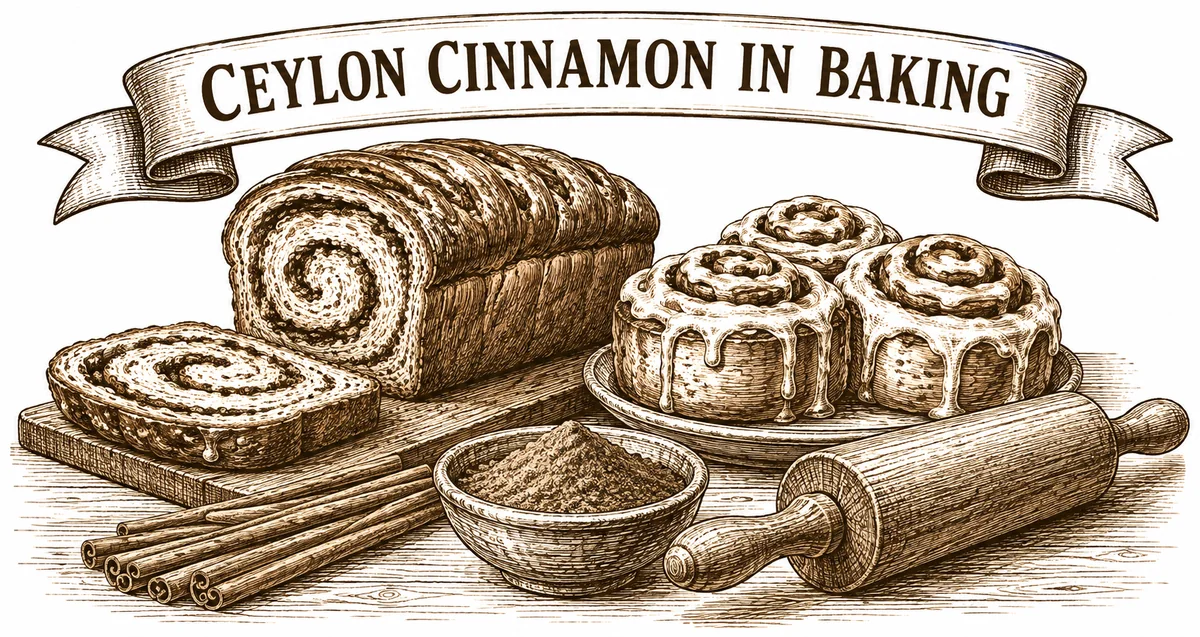
Ceylon cinnamon is prized in baking for its delicate, sweet, mildly citrusy flavour, which blends smoothly into cakes, breads, pastries and biscuits without the harsh bite of cassia. Because true Ceylon cinnamon (Cinnamomum verum) is finer and less overpowering, you can often use it a little more generously, letting its warm aroma lift a bake rather than dominate it.
This guide walks through how to get the best from Ceylon cinnamon in the kitchen: when to use powder versus quills, how to add it at the right moment, which classic bakes it suits, and simple habits that keep its flavour fresh. For the wider view of cooking with this spice, see our pillar guide on the culinary uses of Ceylon cinnamon.
Why use Ceylon cinnamon in baking?
Ceylon cinnamon suits baking because its flavour is gentle, sweet and complex rather than sharp and hot. Cassia, the cinnamon most people know from supermarket shelves, is stronger and more pungent, which can overwhelm subtle bakes. Ceylon cinnamon’s softer profile lets it sit in harmony with butter, vanilla, fruit and sugar, adding warmth and fragrance without taking over. This is one reason many bakers who try true Ceylon cinnamon find their cakes and pastries taste rounder and more refined. The differences between the two are explained in our guide to Ceylon cinnamon vs cassia.
Powder or quills: which to use in baking?
Both forms have a place in the baker’s kitchen, and choosing well makes a real difference.
Ground cinnamon for even flavour
For most baking, ground Ceylon cinnamon is the natural choice. It disperses evenly through batters, doughs and fillings, so every bite carries the same gentle warmth. Powder is ideal for cakes, cookies, muffins, cinnamon rolls and spiced breads, where you want the flavour woven throughout.
Whole quills for infusing
Whole quills shine when you want to infuse a liquid rather than season a batter. Simmering a quill in milk, cream, syrup or a fruit compote draws out the aroma slowly and cleanly, which you can then use as the base of a custard, rice pudding, poached fruit or a soaking syrup. Grinding your own powder from fresh quills also gives a brighter flavour than pre-ground cinnamon that has sat for months. The distinctions between forms and grades are covered in our complete guide to Ceylon cinnamon grades.
When to add cinnamon in a recipe
Timing affects how the flavour comes through in the finished bake.
Mixed into dry ingredients
For cakes, biscuits and breads, the simplest approach is to whisk ground cinnamon into the flour and other dry ingredients before combining with the wet. This ensures it is evenly distributed and avoids clumping.
Blended into fillings and swirls
For cinnamon rolls, swirl breads and pastries, cinnamon is usually mixed with sugar and sometimes butter to form a filling or paste that is spread and rolled through the dough. Here a slightly more generous hand works well, because the cinnamon is concentrated in ribbons rather than spread through the whole crumb.
Infused into liquids first
For custards, syrups and puddings, add a quill to the warming liquid and let it steep, then remove it before finishing the recipe. This gives a smooth, even cinnamon note without any powdery texture.
How much Ceylon cinnamon to use
Because Ceylon cinnamon is milder than cassia, you can generally be a little more generous, though taste always guides the amount. A rough starting point for a standard cake or batch of cookies is around one to two teaspoons of ground Ceylon cinnamon, adjusted up or down to preference. It is easy to add more next time, so when trying a new recipe it is sensible to start moderate, taste the batter where safe to do so, and build up. The gentle flavour means Ceylon cinnamon rewards experimentation without the risk of a single spoonful overpowering the whole bake.
Classic bakes that suit Ceylon cinnamon
Ceylon cinnamon flatters a wide range of baked goods.
| Bake | How cinnamon is used |
|---|---|
| Cinnamon rolls | Mixed with sugar and butter as a swirl filling |
| Spiced cakes and loaves | Whisked into the dry ingredients |
| Cookies and biscuits | Blended into the dough; dusted on top |
| Fruit pies and crumbles | Tossed with the fruit and sugar |
| Custards and rice puddings | Infused as a whole quill in the milk |
Cinnamon also pairs beautifully with common baking partners such as vanilla, nutmeg, cardamom, apple, pear, chocolate and citrus, so it slots naturally into festive and everyday recipes alike.
Cinnamon and sugar: a baking staple
One of the simplest and most useful preparations is cinnamon sugar: ground Ceylon cinnamon stirred into caster or granulated sugar. It can be sprinkled over buns, toast, doughnuts, pastries and cookies before or after baking, or folded into swirl fillings. Because Ceylon cinnamon is so fragrant, a homemade cinnamon sugar using fresh, good-quality cinnamon tastes noticeably livelier than a jar that has been open for a long time. Making a small batch as you need it keeps the aroma at its best.
Getting the freshest flavour
The flavour of any cinnamon fades over time as its aromatic oils gradually escape. To keep bakes tasting their best, store Ceylon cinnamon in an airtight container away from heat, light and moisture, and buy in amounts you will use within a reasonable period. Whole quills keep their flavour longer than powder, so grinding small quantities as needed is a good habit for keen bakers. If a jar of ground cinnamon has lost its punch, you may simply need to use a little more, or replace it. Good storage is part of buying well, a theme covered in our Ceylon cinnamon buying guide.
A few simple tips for better results
Small adjustments can noticeably improve how cinnamon comes through in your baking. Whisking the powder thoroughly into dry ingredients prevents streaks and clumps. Toasting whole quills briefly before grinding can deepen their aroma. Tasting fillings and batters where it is safe to do so lets you fine-tune the amount to your liking. And choosing genuine Ceylon cinnamon in the first place sets the ceiling on flavour, which is why it helps to know how to identify authentic Ceylon cinnamon before you bake.
Summary
Ceylon cinnamon is a baker’s friend because its sweet, delicate, complex flavour improves cakes, cookies, breads, pastries and puddings without overpowering them. Use ground cinnamon for even flavour through batters and doughs, and whole quills for infusing milk, syrups and custards. Whisk powder into dry ingredients, build cinnamon-sugar fillings for swirls, and infuse quills into warming liquids for smooth results. Because it is milder than cassia, you can often be a little more generous, adjusting to taste. Keep it fresh with airtight storage, grind small amounts from quills when you can, and start with authentic Ceylon cinnamon to give every bake the finest possible warmth and aroma.
Frequently asked questions
Is Ceylon cinnamon good for baking?
Yes. Its delicate, sweet and complex flavour blends smoothly into cakes, breads, cookies and pastries without the harsh, hot bite of cassia, making it especially suited to subtle bakes.
How much Ceylon cinnamon should I use in a cake?
A common starting point is around one to two teaspoons of ground Ceylon cinnamon for a standard cake, adjusted to taste. Because it is milder than cassia, you can often use a little more without it becoming overpowering.
Should I use cinnamon powder or sticks for baking?
Use ground cinnamon for even flavour through batters, doughs and fillings, and whole quills for infusing liquids such as milk, cream or syrup. Grinding your own powder from fresh quills gives a brighter taste.
When should I add cinnamon in a baking recipe?
Whisk ground cinnamon into the dry ingredients for even distribution, blend it with sugar and butter for swirl fillings, or infuse a whole quill into warming liquids for custards and puddings, removing it before finishing.
This website provides educational information about Ceylon Cinnamon as a spice and food ingredient. It is not intended to provide medical advice or make health claims.
Leave a Reply