Tag: Ceylon cinnamon

  • What Does Ceylon Cinnamon Smell Like?

    What Does Ceylon Cinnamon Smell Like?

    Ceylon cinnamon has a warm, sweet and delicate aroma, gently woody and lightly floral, with soft citrus and clove-like notes behind its main sweetness. It smells refined and complex rather than sharp or fiery. This gentle, perfumed scent is one of the clearest signs of true cinnamon, Cinnamomum verum, from Sri Lanka, and it is noticeably milder and more layered than the strong, hot, one-note smell of the cheaper cassia that is often sold simply as cinnamon.

    Aroma is one of the first things people notice about Ceylon cinnamon, and it is also one of the best ways to recognise it. This guide describes what Ceylon cinnamon smells like, why it has that scent, and how its aroma compares with cassia. It builds on our pillar guide, what is true Ceylon cinnamon.

    The short answer

    Ceylon cinnamon smells warm, sweet, delicate and complex, with woody, lightly floral and faintly citrus notes, and only a gentle spiciness. Open a jar of true Ceylon cinnamon and the first impression is sweetness and warmth, followed by softer, more perfumed notes that unfold rather than hit you all at once. It is fragrant but refined. This is quite different from cassia, which smells stronger, hotter and more straightforwardly spicy. The delicacy and depth of the scent are exactly what mark out genuine Ceylon cinnamon.

    The main notes in the aroma

    The aroma of Ceylon cinnamon can be broken into a few layers. The dominant impression is a sweet, warm woodiness, the familiar cinnamon character, but gentler than most people expect. Behind it sit lightly floral and faintly citrus notes that give the scent its freshness and lift. There is also a soft, clove-like warmth that adds depth without heat. Together these make the smell complex and rounded. Rather than a single strong blast of spice, Ceylon cinnamon offers a layered, almost perfume-like fragrance that reveals more the longer you smell it.

    Aroma noteHow it shows in Ceylon cinnamon
    SweetnessClear and gentle, the first impression
    Woody warmthSoft and rounded, not harsh
    Floral hintLight, adds freshness and lift
    Citrus edgeFaint, brightens the scent
    Clove-like noteSoft warmth in the background

    Why Ceylon cinnamon smells the way it does

    The scent comes from the natural aromatic compounds in the bark. The main one, cinnamaldehyde, gives cinnamon its characteristic sweet, warm smell, and Ceylon cinnamon contains it at a gentler level than cassia, which is part of why it is milder. Other naturally occurring compounds, including eugenol, add the soft clove-like and spicy notes, while traces of other aromatics contribute the floral and citrus hints. The balance of these compounds, rather than any single one, is what gives Ceylon cinnamon its delicate, layered aroma. Our guide to what gives Ceylon cinnamon its aroma looks at this in more detail.

    How it differs from cassia’s smell

    The clearest way to understand the smell of Ceylon cinnamon is to compare it with cassia. Cassia, the common cinnamon in many supermarkets, smells strong, hot and sharply spicy, with a bold single note that fills the room. Ceylon cinnamon, by contrast, is softer, sweeter and more fragrant, with the gentle complexity described above. If a cinnamon smells aggressive or fiery, it is likely cassia; if it smells sweet, mellow and perfumed, it is likely true Ceylon cinnamon. This difference in aroma is one of the simplest tests, which our guide to how to tell if cinnamon powder is Ceylon uses from the identification side.

    Sticks versus powder

    The form affects how strongly you smell the aroma. Whole Ceylon cinnamon sticks, or quills, release their scent slowly, so you often need to break or scratch a quill to catch the full fragrance, which then comes through sweet and clear. Ground Ceylon cinnamon smells more immediately, since grinding exposes much more surface and releases the aromatic compounds at once, but it also fades faster over time. A fresh jar of Ceylon cinnamon powder gives the quickest impression of the scent, while a quill rewards a closer sniff. In both forms the character is the same gentle, sweet, complex aroma.

    How freshness changes the smell

    Aroma is also a guide to freshness. Fresh Ceylon cinnamon has a lively, full scent, sweet and clearly perfumed. As it ages, especially as powder, the volatile aromatic compounds slowly escape, and the smell becomes fainter and flatter. Old cinnamon may still be safe to use if kept dry, but it will not give the same fragrance or flavour. So the strength of the scent, as well as its character, tells you something: a weak, dull smell suggests the cinnamon is past its best, while a warm, sweet, lively aroma points to fresh, good-quality Ceylon cinnamon.

    How the aroma shows in cooking

    The gentle scent of Ceylon cinnamon carries into the way it behaves in food. Because its aroma is sweet and delicate rather than overpowering, it perfumes a dish without dominating it, which is why it works so well in both sweet and savoury cooking. In a simmering curry, a warm drink or a baked dessert, Ceylon cinnamon adds a soft, fragrant warmth that blends with the other ingredients. The same quality that makes it smell refined in the jar makes it versatile in the kitchen. Cassia, with its stronger, hotter aroma, tends to announce itself more loudly, which suits some dishes but can overwhelm others. The smell, in other words, is a good guide to how the cinnamon will taste and behave.

    A simple way to compare the two

    If you want to understand the smell of Ceylon cinnamon, the easiest way is to compare it directly with cassia. Place a little of each side by side, as sticks or powder, and smell them in turn. The cassia will usually seem stronger and hotter at first, almost pushing forward, while the Ceylon cinnamon will seem softer, sweeter and more rounded, inviting a second, closer sniff. Once you have smelled the two together, the delicate, layered character of true Ceylon cinnamon becomes easy to recognise on its own. This simple comparison is one of the most memorable ways to learn the difference, and it needs no special equipment.

    Using the smell to buy well

    Because the aroma is so distinctive, your nose is a genuine tool when choosing cinnamon. Where you can smell before buying, or when you open a new pack, a sweet, delicate, layered fragrance is a good sign of true Ceylon cinnamon, while a harsh, hot, single-note smell suggests cassia. Combined with checking the label for Cinnamomum verum and Sri Lankan origin, the scent helps confirm you have the real thing. In this way, learning what Ceylon cinnamon smells like is not just pleasant but practical, since it connects directly to recognising and buying genuine Ceylon cinnamon.

    Summary

    Ceylon cinnamon smells warm, sweet, delicate and complex. Its main character is a gentle, sweet woodiness, lifted by light floral and faint citrus notes and softened by a clove-like warmth, giving a layered, almost perfumed fragrance rather than a sharp blast of spice. This refined aroma comes from the balance of natural compounds in the bark, including a milder level of cinnamaldehyde than cassia, which is why true cinnamon, Cinnamomum verum, smells softer and more fragrant than the strong, hot, one-note cassia. The scent is clearest in fresh cinnamon and fades with age, and it differs between whole quills, which release it slowly, and powder, which smells at once. Because the aroma is so distinctive, it is one of the easiest ways to recognise genuine Ceylon cinnamon from Sri Lanka.

    Frequently asked questions

    What does Ceylon cinnamon smell like?

    It smells warm, sweet, delicate and complex, with gentle woody, lightly floral and faintly citrus notes and a soft clove-like warmth. The fragrance is refined and perfumed rather than sharp, which is a clear sign of true Ceylon cinnamon.

    How is the smell of Ceylon cinnamon different from cassia?

    Cassia smells strong, hot and sharply spicy, with a bold single note. Ceylon cinnamon is softer, sweeter and more fragrant, with gentle complexity. If a cinnamon smells aggressive, it is likely cassia; if it smells sweet and perfumed, it is likely Ceylon.

    Why does Ceylon cinnamon smell sweeter?

    Because of the balance of natural compounds in the bark. It contains cinnamaldehyde at a gentler level than cassia, along with eugenol and other aromatics that add soft clove, floral and citrus notes, giving a milder, more layered and sweeter aroma.

    Does ground cinnamon smell different from sticks?

    The character is the same, but the strength differs. Ground Ceylon cinnamon smells more immediately because grinding releases the aromatic compounds at once, while whole quills release their scent slowly and may need breaking or scratching to smell fully.

    Can I use smell to tell if cinnamon is fresh?

    Yes. Fresh Ceylon cinnamon has a lively, sweet, full aroma, while old cinnamon smells faint and flat as its volatile compounds escape. A weak smell suggests it is past its best, and a warm, sweet, lively scent points to fresh, good-quality cinnamon.

    This website provides educational information about Ceylon Cinnamon as a spice and food ingredient. It is not intended to provide medical advice or make health claims.
  • Cinnamon Quills vs Cinnamon Sticks: Same Thing?

    Cinnamon Quills vs Cinnamon Sticks: Same Thing?

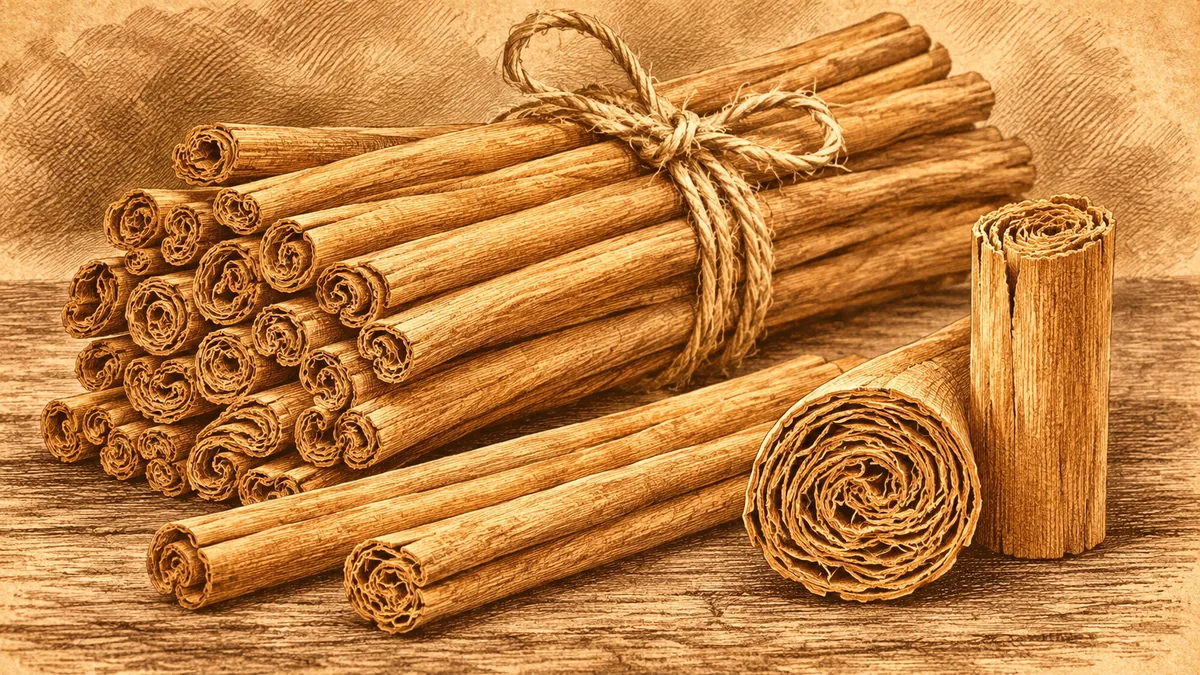
    Cinnamon quills and cinnamon sticks are essentially the same thing: both are rolled tubes of dried cinnamon bark. “Quill” is the traditional trade term for the rolled bark of true cinnamon, Cinnamomum verum, from Sri Lanka, while “stick” is the everyday word most shoppers use. So a Ceylon cinnamon quill is a cinnamon stick, though the word quill is most often used for the fine, many-layered rolls of true Ceylon cinnamon, and “stick” is used loosely for any rolled cinnamon, including thick cassia.

    If you have seen cinnamon sold as both “quills” and “sticks” and wondered whether they differ, the short answer is that they are the same form under two names. This guide explains the terms, where they come from, and the small distinctions worth knowing. It builds on our pillar guide to Ceylon cinnamon grades.

    The short answer

    A cinnamon quill and a cinnamon stick are the same thing, a rolled tube of dried cinnamon bark; quill is the traditional trade name and stick is the common everyday name. In the Ceylon cinnamon trade, the rolled bark is called a quill, and quills are graded by their quality and size. In shops and recipes, the same rolls are usually called sticks. The only nuance is that quill almost always refers to genuine Ceylon cinnamon, while stick is used more loosely for any rolled cinnamon, true or cassia. In practice, if you buy Ceylon cinnamon quills or Ceylon cinnamon sticks, you are buying the same form.

    What a quill is

    A quill is the name given to the rolled, dried inner bark of the cinnamon tree. When Ceylon cinnamon is made, thin pieces of peeled inner bark are rolled together into long tubes, which are dried and cut to length. These tubes are the quills. The word comes from the way the rolled bark resembles a writing quill or a hollow reed. In the Ceylon cinnamon trade, quill is the standard term, and it is used in grading and export. Our guide to the definition and origin of the cinnamon quill looks at the word and the form in more detail.

    What a stick is

    A stick is simply the common name for the same rolled tube of cinnamon bark. When you buy cinnamon sticks in a supermarket, you are buying quills under a more familiar name. The word stick describes the shape well for everyday use, and most cooks and recipes use it. Because stick is a loose, general word, it is applied to any rolled cinnamon, whether it is fine Ceylon cinnamon or the thicker, harder cassia. So while every quill is a stick, not every stick sold as cinnamon is a true Ceylon quill, which is where a little care with labels helps.

    TermWhat it means
    QuillTrade name for rolled cinnamon bark, usually Ceylon
    StickEveryday name for the same rolled form
    Same form?Yes, both are rolled tubes of dried bark
    Usual use of “quill”Genuine Ceylon cinnamon, in the trade
    Usual use of “stick”Any rolled cinnamon, Ceylon or cassia

    Why there are two words

    The two names exist because cinnamon is spoken of in two worlds: the trade and the kitchen. In the growing and export trade of Sri Lanka, the rolled bark has long been called a quill, and the term carries into grading, where quills are sorted by quality and diameter. In everyday shopping and cooking, people naturally call the same thing a stick, because that is what it looks like. Neither word is wrong; they simply come from different settings. Knowing that they mean the same form helps when you see Ceylon cinnamon described either way.

    The difference that does matter

    While quill and stick describe the same form, the real difference to watch is not the word but the type of cinnamon. True Ceylon cinnamon quills are thin and soft, made of many fine layers rolled together, and they crumble easily. Cassia sticks are thick, hard and usually a single curl of coarse bark. Both may be sold loosely as cinnamon sticks, so the useful question is not quill versus stick but Ceylon versus cassia. Our guide to how cinnamon quills are rolled by hand shows how the fine Ceylon quills are made, which is part of what sets them apart.

    Quills, quillings, featherings and chips

    Within the Ceylon cinnamon trade, quill is one of several terms for the different forms the bark takes. Alongside whole quills there are quillings, which are the broken pieces of quill, featherings, which are the thin shavings and inner bark too small to roll, and chips, which are rough pieces of outer bark. These are all graded and sold for different uses. So while a shopper mainly meets the whole quill, or stick, the trade recognises a family of related forms. Our glossary of feathering, quilling and chips explains these terms.

    How quills are sized and sold

    In the Ceylon cinnamon trade, quills are not just rolled and sold as they are; they are cut to standard lengths and sorted. Long tubes of rolled bark are trimmed to a set length for export, and the pieces are then graded by their diameter and quality, with finer, thinner quills reaching the higher grades. This is why the word quill carries weight in the trade: it is the unit that grading and pricing are built around. A shopper who buys a few cinnamon sticks is, in trade terms, buying short lengths of graded quill. Knowing this connects the familiar kitchen stick to the graded quill of the export trade, which our pillar guide to Ceylon cinnamon grades sets out in full.

    Where you will see each word

    In practice, the word you meet depends on where you are looking. On a supermarket shelf or in a recipe, you will almost always see cinnamon sticks. On a specialist spice seller’s site, in writing about Sri Lankan cinnamon, or on an export grade description, you will see quills. Some sellers of genuine Ceylon cinnamon deliberately use the word quill to signal that they are offering the true, trade-grade article rather than loose supermarket cinnamon. So while the two words mean the same form, the choice of word can sometimes hint at how close the seller is to the Ceylon cinnamon trade, though it is never a guarantee on its own.

    Which word should you use

    For everyday purposes, either word is fine, and stick is perfectly clear. If you are reading about the cinnamon trade, grades or Sri Lankan production, you will see quill, and it means the same rolled form you know as a stick. The practical advice is to focus less on the choice of word and more on whether the cinnamon is genuine Ceylon cinnamon. Whether a seller calls it a Ceylon cinnamon quill or a Ceylon cinnamon stick, what matters is that it is true Cinnamomum verum from Sri Lanka, thin and many-layered, rather than thick cassia under a loose name.

    Summary

    Cinnamon quills and cinnamon sticks are the same thing: rolled tubes of dried cinnamon bark. Quill is the traditional trade name, used in the Ceylon cinnamon industry and in grading, while stick is the everyday word used by shoppers and cooks. The two terms come from different settings, the trade and the kitchen, but describe one form. The only nuance is that quill almost always means genuine Ceylon cinnamon, Cinnamomum verum, whereas stick is applied loosely to any rolled cinnamon, including cassia. The difference worth attention is therefore not quill versus stick but Ceylon versus cassia: true Ceylon quills are thin, soft and many-layered, while cassia is thick and hard. Whichever word you meet, look for genuine Ceylon cinnamon from Sri Lanka.

    Frequently asked questions

    Are cinnamon quills and cinnamon sticks the same?

    Yes. Both are rolled tubes of dried cinnamon bark. Quill is the traditional trade name, especially for true Ceylon cinnamon, and stick is the everyday name for the same form. If you buy Ceylon cinnamon quills or sticks, you are buying the same thing.

    Why is Ceylon cinnamon called a quill?

    Because the rolled, dried inner bark resembles a writing quill or hollow reed. In the Ceylon cinnamon trade, quill is the standard term for this rolled form, and quills are graded by quality and size for sale and export.

    Is there any difference between a quill and a stick?

    Not in form, since both are rolled cinnamon bark. The small nuance is that quill usually refers to genuine Ceylon cinnamon, while stick is used loosely for any rolled cinnamon, including cassia. So the real difference to check is Ceylon versus cassia, not quill versus stick.

    Are cinnamon sticks always Ceylon cinnamon?

    No. The word stick is used for any rolled cinnamon, so a cinnamon stick may be true Ceylon cinnamon or the thicker, harder cassia. True Ceylon sticks, or quills, are thin and made of many fine layers, while cassia is usually a single thick curl.

    Should I buy quills or sticks?

    They are the same form, so the choice of word does not matter. What matters is buying genuine Ceylon cinnamon, Cinnamomum verum from Sri Lanka. Look for the species name and origin, and for thin, many-layered rolls, whether they are sold as quills or sticks.

    This website provides educational information about Ceylon Cinnamon as a spice and food ingredient. It is not intended to provide medical advice or make health claims.

  • Smallholder Cinnamon Farmers in Sri Lanka

    Smallholder Cinnamon Farmers in Sri Lanka

    Most of Sri Lanka’s Ceylon cinnamon is grown by smallholder farmers, families who cultivate true cinnamon, Cinnamomum verum, on small plots of land rather than on large plantations. These smallholdings, often only a few acres, are concentrated in the wet south and southwest of the island, where generations of the same families grow, harvest and peel the bark by hand. Smallholder farmers are the backbone of the Ceylon cinnamon industry, and their skill and labour are what bring the spice from tree to quill.

    Behind every stick of Ceylon cinnamon is a farming family, and understanding who grows the spice helps explain both its quality and its value. This guide looks at smallholder cinnamon farmers in Sri Lanka: who they are, how they work, and why they matter. It builds on our pillar guide to Sri Lankan cinnamon farming.

    The short answer

    Smallholder farmers are families who grow Ceylon cinnamon on small plots, usually a few acres, and they produce the large majority of Sri Lanka’s cinnamon. Rather than large estates, the island’s cinnamon comes mainly from many small family farms across the southern and southwestern districts. These families tend the trees, harvest the shoots and often peel the bark themselves, passing the skills down the generations. Because so much depends on their hand work, smallholders are central to both the supply and the quality of true Ceylon cinnamon.

    Who the smallholders are

    Smallholder cinnamon farmers are rural families, many of whom have grown the spice for generations. Their plots are small, often part of a mixed garden that may also hold coconut, fruit trees and other crops, and cinnamon provides an important part of the household income. The work is a family effort, with different members involved in tending, harvesting and peeling. In many cinnamon-growing villages, this way of life is deeply established, and the knowledge of how to grow and process cinnamon well is a shared inheritance. This continuity is part of what gives Sri Lankan cinnamon its heritage, as our guide to the cinnamon-growing regions of Sri Lanka describes.

    How smallholders work

    On a smallholding, cinnamon is grown as a managed shrub rather than a tall tree. The plants are cut back low so they send up many thin shoots, which are harvested when they reach the right size. After cutting, the shoots are peeled, a delicate hand skill, and the inner bark is rolled into quills and dried. Much of this is done on the farm or nearby, often by the family or by skilled peelers they work with. Because the plants regrow after cutting, a smallholding can be harvested again and again over many years, giving a steady livelihood from a small area of land.

    FeatureSmallholder cinnamon farming
    Farm sizeSmall, often only a few acres
    Who works itFamilies, often across generations
    WhereMainly the wet south and southwest
    MethodGrown as a cut-back shrub, peeled by hand
    RoleProduce most of Sri Lanka’s cinnamon

    Why smallholders matter to quality

    The smallholder model is closely tied to the quality of Ceylon cinnamon. Because peeling and rolling the thin bark is a careful hand skill, the attention of experienced family peelers helps produce the fine, many-layered quills that true cinnamon is known for. Small-scale, hands-on work allows this care in a way that large mechanised production would struggle to match. The result is that the character of Ceylon cinnamon is bound up with the people who make it, and the craft passed down within farming families is a real part of what buyers are paying for. This link between people and quality is a recurring theme across the island’s cinnamon story.

    The challenges smallholders face

    Smallholder farming also comes with difficulties. Returns can be uncertain, since prices vary and much of the value can be captured further along the supply chain rather than at the farm. The hand work is labour-intensive, and finding and keeping skilled peelers is a real concern in some areas. Weather, pests and the cost of inputs all affect a small farm more sharply than a large one. These pressures mean that, despite the spice’s fame, the families who grow it do not always share fully in its value. This is why efforts to support them matter, as our guide to fair trade and Ceylon cinnamon explains.

    How smallholders are supported

    A range of efforts aim to strengthen the position of smallholder cinnamon farmers. Fair trade and ethical sourcing schemes seek to give producers a fairer price and more stable demand. Training and support for peelers help keep the skilled craft alive and improve quality. Grouping smallholders into cooperatives or producer groups can give them more bargaining power and better access to markets. Protecting the Ceylon name through origin recognition also helps, since it defends the value of genuine Sri Lankan cinnamon that smallholders produce. Together these measures try to ensure that the families behind the spice benefit from its reputation.

    Cinnamon alongside other crops

    On many smallholdings, cinnamon is not grown on its own but as part of a mixed home garden. A family plot may hold coconut palms, fruit trees, pepper, and vegetables alongside the cinnamon shrubs, so the land yields several things at once. This mixed approach spreads risk, since a poor season for one crop can be offset by another, and it makes good use of a small area. Cinnamon fits this pattern well because it grows as a managed shrub in the understorey and regrows after cutting, giving a reliable return without needing a large dedicated field. For many families, cinnamon is therefore one steady thread in a wider farming life rather than their only source of income, which is part of how smallholdings stay resilient.

    The future of smallholder cinnamon farming

    The smallholder system faces questions about its future as well as its present. Younger people in farming families sometimes move to towns or other work, which raises concerns about who will tend the plots and carry on the peeling craft. At the same time, growing interest in genuine, traceable and sustainably grown Ceylon cinnamon offers an opportunity, since it rewards exactly the small-scale, careful production that smallholders provide. Support for training, fair prices and producer groups can help make cinnamon farming an attractive livelihood for the next generation. How well these efforts succeed will shape whether the smallholder tradition, and the quality it underpins, continues to thrive in the years ahead.

    Why this matters for buyers

    For someone buying Ceylon cinnamon, knowing that it comes from smallholder families adds meaning to the choice. Choosing genuine Ceylon cinnamon, and where possible cinnamon sold through fair and transparent channels, supports the rural communities who grow it. It also connects the buyer to the craft and heritage behind the spice, rather than treating it as an anonymous commodity. In this sense, the smallholder story is part of what makes true Ceylon cinnamon more than just a flavour: it is the product of many small farms and skilled hands across the south of Sri Lanka.

    Summary

    Most of Sri Lanka’s Ceylon cinnamon is grown by smallholder farmers, families who cultivate true cinnamon, Cinnamomum verum, on small plots of a few acres rather than on large plantations. Concentrated in the wet south and southwest, these families tend the cut-back shrubs, harvest the shoots and often peel the thin bark by hand, with the skills passed down the generations. Because the quality of Ceylon cinnamon depends so much on careful hand peeling, smallholders are central to both its supply and its fine character. They also face real challenges, from uncertain prices to the labour of peeling, which is why fair trade, training and cooperative efforts aim to support them. For buyers, choosing genuine Ceylon cinnamon helps sustain the smallholder families and the craft behind the spice.

    Frequently asked questions

    Who grows most of Sri Lanka’s cinnamon?

    Smallholder farmers, meaning families who grow Ceylon cinnamon on small plots of land, produce the large majority of Sri Lanka’s cinnamon. The industry is based on many small family farms, mainly in the south and southwest, rather than on large plantations.

    How big is a smallholder cinnamon farm?

    Usually small, often only a few acres, and frequently part of a mixed garden with other crops such as coconut and fruit trees. Cinnamon from these small plots provides an important part of the household income for the family.

    Do smallholders peel the cinnamon themselves?

    Often yes. Much of the peeling is done on or near the farm by the family or by skilled peelers they work with. Peeling the thin bark and rolling it into quills is a careful hand skill, and this attention is part of what gives Ceylon cinnamon its quality.

    What challenges do smallholder cinnamon farmers face?

    Uncertain prices, labour-intensive hand work, and difficulty finding skilled peelers are common challenges, along with weather, pests and input costs. Much of the spice’s value can be captured later in the supply chain, so farmers do not always share fully in it.

    How can buyers support smallholder farmers?

    By choosing genuine Ceylon cinnamon and, where possible, cinnamon sold through fair and transparent channels. This helps support the rural families who grow the spice and the skilled craft behind it, rather than treating cinnamon as an anonymous commodity.

    This website provides educational information about Ceylon Cinnamon as a spice and food ingredient. It is not intended to provide medical advice or make health claims.

  • Cinnamon in Curries: The Sri Lankan Way

    Cinnamon in Curries: The Sri Lankan Way

    In Sri Lankan cooking, Ceylon cinnamon is an everyday curry spice, not just a sweet one. A small piece of true cinnamon, Cinnamomum verum, is added whole to the hot oil at the start of a curry, along with other whole spices, where it releases a warm, sweet fragrance that runs through the finished dish. It is used in meat, fish, vegetable and lentil curries across the island, usually as a stick rather than powder, and its mild, sweet character supports the other spices instead of overpowering them.

    To many cooks outside Sri Lanka, cinnamon belongs in cakes and desserts, so its role in savoury curries can be a surprise. This guide explains how Ceylon cinnamon is used in Sri Lankan curries, why it works so well, and how to cook with it the traditional way. It builds on our pillar guide to the culinary uses of Ceylon cinnamon.

    The short answer

    In Sri Lankan curries, a small piece of Ceylon cinnamon stick is fried whole in oil at the start, releasing a warm, sweet aroma that flavours the whole dish. It is one of several whole spices, alongside cardamom, cloves and curry leaves, that build the base of a curry. True Ceylon cinnamon is mild and sweet, so it rounds and deepens a savoury curry rather than dominating it. The stick is usually left in during cooking and often removed or simply left on the plate, since the flavour has already passed into the dish.

    Why cinnamon belongs in savoury curries

    Cinnamon works in curries because its warmth sits naturally alongside savoury and spicy flavours. In Sri Lankan cooking it is treated as a warming spice that adds depth, much as it does in many South Asian and Middle Eastern dishes. True Ceylon cinnamon is especially suited to this because it is sweet and delicate rather than sharp, so it blends into the curry and lifts the other spices without taking over. The result is a rounded, fragrant base that would taste flatter without it. This savoury use is central to how cinnamon is valued in Sri Lanka, as our guide to how to use cinnamon sticks in cooking describes.

    How it is added to a curry

    The traditional method is simple. At the start of cooking, oil is heated and whole spices are added to it, a step often called tempering or thel dala. A small piece of cinnamon stick goes in with cardamom pods, cloves and curry leaves, and sizzles for a few moments until fragrant. Onions, garlic and ginger usually follow, then the main ingredient and the ground spices. Because the cinnamon is added early and cooked through the dish, its aroma spreads evenly. Using a stick rather than powder keeps the flavour clean and lets the piece be lifted out later if wished.

    AspectCinnamon in Sri Lankan curries
    Form usedUsually a piece of whole stick, not powder
    When addedEarly, fried in oil with other whole spices
    RoleWarm, sweet background that deepens the dish
    Pairs withCardamom, cloves, curry leaves, pandan
    Used inMeat, fish, vegetable and lentil curries

    Which curries use cinnamon

    Ceylon cinnamon appears across the Sri Lankan curry repertoire. It is common in richer meat curries such as chicken, beef and pork, where its warmth suits the deeper flavours, and in fish curries, where a little sweetness balances the spice and sourness. It also features in vegetable and lentil dishes, including the everyday dhal that appears at most meals, often added with a few other whole spices during tempering. The spice is so routine that many home cooks reach for a piece of cinnamon almost without thinking when starting a curry. This wide use reflects its place in the island’s food, as our guide to cinnamon in traditional Sri Lankan sweets shows for the sweeter side.

    Cinnamon in Sri Lankan curry powder

    Beyond the whole stick, cinnamon is also part of Sri Lankan curry powder, the ground blend at the heart of much of the island’s cooking. Roasted Sri Lankan curry powder, used for meat and fish, typically combines coriander, cumin and fennel with warming spices that can include cinnamon, cloves and cardamom. Here the cinnamon is ground and roasted with the other spices, adding its warmth to the blend rather than being fished out as a stick. So cinnamon can reach a curry in two ways at once: as a whole piece fried in the oil, and as part of the ground curry powder stirred in later.

    How much to use

    A little cinnamon goes a long way in a curry. Traditionally only a small piece of stick, a few centimetres long, is used for a family-sized pot, enough to perfume the dish without making it taste sweet or of cinnamon alone. The aim is balance: the cinnamon should be felt as warmth in the background, not noticed as a distinct flavour. Because true Ceylon cinnamon is mild, it is forgiving, but it is still better to use a modest piece and let it work alongside the other spices. If using powder in a blend, the same restraint applies, since cinnamon is one supporting note among many.

    Cinnamon with other whole spices

    Cinnamon rarely works alone in a Sri Lankan curry; it is one voice in a small group of whole spices. Cardamom pods bring a cooler, floral note, cloves add a deeper warmth, and curry leaves and pandan give the fresh, savoury aroma that marks the island’s cooking. Cinnamon sits among these as the sweet, rounding element that ties them together. The balance between them is part of what gives Sri Lankan curries their distinctive fragrance, and cooks adjust the mix to suit the dish, a little more cinnamon and clove for a rich meat curry, a lighter touch for fish or vegetables. Understanding cinnamon as a team player, rather than a solo flavour, is the key to using it well in savoury cooking.

    Why Ceylon cinnamon suits curry cooking

    The kind of cinnamon matters for curries as well as for sweets. True Ceylon cinnamon is thin, soft and sweet, with a delicate aroma that blends gently into a savoury dish. The thicker, sharper cassia often sold as cinnamon can be more aggressive and one-note, which can sit less comfortably in a balanced curry. For traditional Sri Lankan cooking, Ceylon cinnamon is the natural choice, both because it is grown there and because its gentle sweetness is exactly what the dishes are built around. Using genuine Ceylon cinnamon, then, is part of cooking a curry the Sri Lankan way.

    Summary

    In Sri Lankan cooking, Ceylon cinnamon is an everyday curry spice. A small piece of true cinnamon, Cinnamomum verum, is fried whole in hot oil at the start of a curry, together with cardamom, cloves and curry leaves, where it releases a warm, sweet aroma that runs through the dish. It is used across meat, fish, vegetable and lentil curries, usually as a stick, and it also forms part of roasted Sri Lankan curry powder in ground form. Because true Ceylon cinnamon is mild and sweet rather than sharp, it deepens and rounds a savoury curry without overpowering it, so only a small piece is needed. Its gentle character is exactly why Ceylon cinnamon, rather than the harsher cassia, is the cinnamon of choice for cooking curries the Sri Lankan way.

    Frequently asked questions

    Is cinnamon used in savoury curries?

    Yes. In Sri Lankan and much South Asian cooking, cinnamon is a common savoury spice. A piece of Ceylon cinnamon stick is fried in oil at the start of a curry to add a warm, sweet background flavour to meat, fish, vegetable and lentil dishes.

    Do you use cinnamon sticks or powder in curry?

    Traditionally a whole stick is used, added to the hot oil with other whole spices so it can perfume the dish and be lifted out later. Ground cinnamon also appears as part of roasted Sri Lankan curry powder, so it can reach a curry in both forms.

    How much cinnamon should I put in a curry?

    Only a small piece of stick, a few centimetres long, for a family-sized pot. The cinnamon should be felt as warmth in the background rather than tasted on its own. True Ceylon cinnamon is mild, but restraint still gives the most balanced result.

    When do you add cinnamon to a curry?

    Early, during tempering. Oil is heated and whole spices, including the cinnamon stick, are fried until fragrant before the onions, garlic, main ingredient and ground spices are added. This lets the cinnamon flavour spread evenly through the dish.

    Why use Ceylon cinnamon rather than cassia in curries?

    True Ceylon cinnamon is mild, sweet and delicate, so it blends gently into a savoury curry and supports the other spices. Cassia is sharper and more one-note. For traditional Sri Lankan curries, the gentle Ceylon cinnamon is the natural and authentic choice.

    This website provides educational information about Ceylon Cinnamon as a spice and food ingredient. It is not intended to provide medical advice or make health claims.
  • Why People Confuse Ceylon Cinnamon and Cassia

    Why People Confuse Ceylon Cinnamon and Cassia

    People confuse Ceylon cinnamon and cassia because both are sold simply as “cinnamon”, both come as rolled brown bark with a similar warm smell, and in powder form they look almost identical. Yet they are different spices: Ceylon cinnamon is the bark of Cinnamomum verum from Sri Lanka, while cassia comes from other Cinnamomum species grown mainly in China, Indonesia and Vietnam. Loose labelling, lower cassia prices and a shared everyday name are the main reasons the two are so often mixed up.

    If you have ever wondered why “cinnamon” can mean two quite different spices, you are not alone. This guide explains exactly why Ceylon cinnamon and cassia are so easily confused, and how to tell them apart. It builds on our pillar guide, Ceylon cinnamon versus cassia.

    The short answer

    The confusion comes down to the shared name “cinnamon”, a similar appearance and aroma, and labels that rarely state the species. In many countries the word cinnamon is used for both true Ceylon cinnamon and the cheaper cassia, so shops, recipes and packaging seldom distinguish them. Because cassia is far more common and less costly, most of the “cinnamon” people meet is actually cassia, which makes the two blur together in everyday use. The difference becomes clear only when you look at the species name, the bark structure and the flavour, rather than the generic label.

    They share one everyday name

    The biggest reason for the confusion is language. The word cinnamon is used loosely for several related spices, so a jar simply marked cinnamon could be either true Ceylon cinnamon or cassia. Most dictionaries, recipes and supermarkets treat cinnamon as a single thing, even though botanically it is not. This shared name means a shopper can buy, cook with and talk about cinnamon for years without ever learning that two different spices sit behind the word. Our guide to reading cinnamon labels correctly shows how the species name, when it appears, cuts through this.

    They look alike, especially as powder

    Ceylon cinnamon and cassia also look similar enough to be mistaken for each other, particularly once ground. As a fine brown powder, the two are hard to tell apart by eye, which is why so much ground cinnamon is cassia without the buyer realising. As sticks there are real differences, since Ceylon quills are thin, soft and made of many fine layers, while cassia is a thick, hard single curl, but a casual glance may miss this. Our guide to how to tell if cinnamon powder is Ceylon explains what to look and ask for when the visual clues are gone.

    Reason for confusionWhat is really going on
    Shared name“Cinnamon” is used for both spices
    Similar lookBoth are rolled brown bark, alike as powder
    Similar smellBoth are warm and sweet-spicy at first
    Price and supplyCassia is cheaper and far more common
    Vague labelsSpecies and origin are often not stated

    Their aromas are similar at first

    Smell adds to the mix-up, because both spices are warm and sweet-spicy when you first open the jar. To a casual nose they seem like the same thing. On closer attention the two differ: true Ceylon cinnamon is delicate, sweet and complex, while cassia is stronger, sharper and more one-note. But most people do not sniff the two side by side, so the first warm impression is enough to treat them as identical. Our guide to coumarin levels in Ceylon cinnamon versus cassia looks at one real difference behind the two barks.

    Cassia is cheaper and more common

    Economics is a large part of the story. Cassia is easier to grow and harvest and costs much less than true Ceylon cinnamon, so it dominates the cinnamon sold around the world. Most supermarket cinnamon, and most cinnamon in processed foods, is cassia. Because true Ceylon cinnamon is the rarer and dearer of the two, many people have simply never knowingly tasted it, and assume the common cassia is what cinnamon is meant to be. This everyday dominance of cassia is why the two are so readily confused, and why the Ceylon name has to be stated clearly to stand apart.

    Labels rarely tell you the species

    Even a careful shopper is often left guessing, because many labels do not state the species or origin. A packet marked only cinnamon, with no mention of Cinnamomum verum or Sri Lanka, gives no way to know which spice is inside. In some markets the word cinnamon on a label is more likely to mean cassia than true cinnamon. Without a clear species name, the buyer cannot resolve the confusion at the point of sale, and the generic label quietly keeps the two spices blurred together. This is why checking for the species name and origin is the surest way to know what you have.

    Where the confusion shows up

    The mix-up appears in everyday places rather than in any single mistake. In supermarkets, a shelf of jars marked only cinnamon usually holds cassia, with true Ceylon cinnamon either absent or tucked away at a higher price. In recipes, a line that calls for a teaspoon of cinnamon does not say which spice, so cooks use whatever their jar contains. In conversation, people describe a warm, sweet flavour as cinnamon without ever distinguishing the two. Even many gift sets, spiced blends and flavoured products lean on cassia while calling it cinnamon. Because the confusion is spread thinly across so many small moments, most people never notice it, which is exactly why it persists.

    How to stop confusing them

    The confusion clears once you know what to look for. Check the label for the species name Cinnamomum verum and a statement of Sri Lankan origin, since this is the clearest sign of true Ceylon cinnamon. With sticks, look at the bark: Ceylon quills are thin and made of many soft layers rolled together, while cassia is a thick, hard single curl. With aroma, compare them and notice that Ceylon cinnamon is sweeter and more delicate. Knowing that two spices hide behind one word is itself most of the answer, because once you expect the difference, you start to see and taste it.

    Why the distinction is worth making

    Telling the two apart matters because they are not interchangeable in every way. Their flavour differs, with Ceylon cinnamon milder and more refined, and they are also different barks with different characteristics. For anyone who wants the genuine article, whether for its taste, its origin or its heritage, the generic word cinnamon is not enough. Learning why the confusion exists is the first step to buying with confidence, so that when you want true Ceylon cinnamon you can recognise it rather than relying on a label that treats every cinnamon as the same.

    Summary

    People confuse Ceylon cinnamon and cassia because both are sold under the single word cinnamon, both are rolled brown bark that looks alike, and both smell warm and sweet at first, especially as powder. Behind the shared name are different spices: Ceylon cinnamon is the bark of Cinnamomum verum from Sri Lanka, while cassia comes from other Cinnamomum species grown mainly in China, Indonesia and Vietnam. Because cassia is cheaper and far more common, it is the cinnamon most people meet, and vague labels that omit the species keep the two blurred. The confusion clears once you check for the species name and Sri Lankan origin, look at the bark structure, and compare the aromas, since true Ceylon cinnamon is thinner, softer, sweeter and more delicate than cassia.

    Frequently asked questions

    Why are Ceylon cinnamon and cassia both called cinnamon?

    Because the word cinnamon is used loosely for several related spices from the Cinnamomum family. Shops, recipes and labels rarely separate them, so both true Ceylon cinnamon and the cheaper cassia are simply sold and spoken of as cinnamon.

    Is most cinnamon actually cassia?

    In many markets, yes. Cassia is cheaper and more widely grown, so much of the cinnamon in supermarkets and processed foods is cassia rather than true Ceylon cinnamon. This is a large reason the two are so often confused.

    How can I tell Ceylon cinnamon from cassia?

    Check the label for Cinnamomum verum and Sri Lankan origin. As sticks, Ceylon cinnamon is thin and made of many soft layers, while cassia is a thick, hard single curl. In aroma, Ceylon cinnamon is sweeter and more delicate than the sharper cassia.

    Do Ceylon cinnamon and cassia taste the same?

    They are similar at first but not the same. True Ceylon cinnamon is milder, sweeter and more complex, while cassia is stronger and sharper. Because many people have only tasted cassia, they often assume that is simply what cinnamon tastes like.

    Why does the difference between them matter?

    Because they are different spices with different flavour and bark, and are not fully interchangeable. If you want genuine Ceylon cinnamon for its taste, origin or heritage, the generic cinnamon label is not enough, so knowing the difference helps you buy what you actually want.

    This website provides educational information about Ceylon Cinnamon as a spice and food ingredient. It is not intended to provide medical advice or make health claims.
  • Buying Ceylon Cinnamon in Bulk: A Guide

    Buying Ceylon Cinnamon in Bulk: A Guide

    Buying Ceylon cinnamon in bulk means purchasing larger quantities of true cinnamon, Cinnamomum verum, at once, usually at a lower price per unit than small retail packs. It suits households that use cinnamon often, as well as cafes, bakers and small businesses. The keys to buying well in bulk are confirming the cinnamon is genuine Ceylon cinnamon from Sri Lanka, choosing sticks or powder to match your use, checking grade and freshness, and having a cool, dry, airtight way to store what you buy.

    Bulk buying can be a sensible way to get good value from Ceylon cinnamon, but only if the cinnamon is authentic and you can store it well. This guide explains when bulk buying makes sense, what to check before you buy, and how to keep a larger quantity fresh. It builds on our pillar, the Ceylon cinnamon buying guide.

    The short answer

    Buy Ceylon cinnamon in bulk when you use it often enough to finish it before it fades, when you can confirm it is genuine Cinnamomum verum from Sri Lanka, and when you have proper airtight storage. Bulk lowers the price per unit and cuts packaging, which is useful for frequent cooks, bakers, cafes and small food businesses. The main cautions are authenticity, since the Ceylon name is often misused, and freshness, since cinnamon slowly loses aroma. Sticks keep far longer than powder, so for long storage, whole quills in bulk are usually the safer choice.

    When buying in bulk makes sense

    Bulk buying rewards steady, regular use. If you bake often, run a cafe or small food business, or simply use cinnamon in cooking and drinks most weeks, a larger quantity will be finished while still fresh and will cost less per gram than small jars. If you only use cinnamon occasionally, a large quantity may lose its aroma before you reach the bottom of it, so a smaller pack is the better buy. The honest question to ask is how much you realistically use in a few months, and whether the form you are buying will stay fresh that long.

    Confirm it is genuine Ceylon cinnamon

    The single most important check when buying in bulk is authenticity. Because true Ceylon cinnamon costs more than cassia, the Ceylon name is sometimes applied to cheaper bark, and a large purchase multiplies the cost of getting this wrong. Look for the species name Cinnamomum verum and a clear statement of Sri Lankan origin, not just the word cinnamon or a vague country label. If you can see the product, genuine Ceylon quills are thin, soft and made of many fine layers rolled together, unlike the thick, hard single curl of cassia. Our guide to reading cinnamon labels correctly explains the wording to look for, which matters even more at bulk quantities.

    Sticks or powder for bulk buying

    The form you buy changes how long a bulk quantity will last. Whole cinnamon sticks, or quills, expose little surface to the air, so they hold their aroma for a few years when stored well. Ground cinnamon has far more surface area and fades faster, keeping its best flavour for several months up to about a year. For a large quantity meant to last, sticks are usually the wiser choice, and you can grind small amounts as needed. Powder in bulk suits only those who use it quickly. Our guide to cinnamon sticks versus powder and what to buy looks at this choice in detail.

    FactorBulk sticks (quills)Bulk powder
    Best-flavour lifeA few yearsSeveral months to a year
    Best forLong storage, grind as neededHigh, quick turnover
    Storage needAirtight, cool, dark, dryAirtight, cool, dark, dry
    ConvenienceNeeds grinding for powder usesReady to use straight away
    Risk if slow useLow, keeps wellHigher, fades faster

    Check grade, origin and freshness

    Bulk Ceylon cinnamon is often sold by grade, and knowing a little about grades helps you buy the right thing for your use. Finer grades such as Alba have thinner, more delicate quills, while continental and coarser grades are sturdier and often more economical for everyday cooking. For most kitchens and cafes, a mid grade offers good value without paying for the most delicate quills. Alongside grade, confirm the origin is Sri Lanka and ask about freshness, since aroma is what you are really buying. A reputable bulk seller should be able to tell you the grade and origin, and genuine Ceylon cinnamon should smell warm and sweet rather than faint.

    Plan your storage before you buy

    Buying in bulk only pays off if you can keep the cinnamon fresh, so plan storage before you order. The aim is to keep both sticks and powder in airtight containers in a cool, dark, dry place, away from heat, light and moisture. For a large quantity, it helps to divide it between a main sealed store that you open rarely and a smaller working jar for daily use, so the bulk of it is disturbed as little as possible. Each time a container is opened, a little air gets in, so keeping most of your stock sealed protects its aroma. Our guide to storing cinnamon sticks versus cinnamon powder covers the method in full.

    Getting good value without waste

    Good value in bulk is not simply the lowest price per gram, but the lowest cost for cinnamon you actually use while it is fresh. A large, cheap quantity that fades before you finish it is not a saving. A sensible approach is to match the quantity to your real use over a few months, favour sticks for anything you will keep long term, and buy powder in bulk only if you use it quickly. Splitting a bulk purchase with others who also use cinnamon is another way to enjoy the lower unit price without holding more than you can keep fresh. In short, buy what you will use, store it well, and the bulk price becomes a genuine saving.

    Where bulk buying fits for small businesses

    For cafes, bakeries and small food producers, bulk Ceylon cinnamon can make good sense, since steady use means it is turned over quickly and the lower unit price adds up. The same checks apply, only with more at stake: confirm the cinnamon is genuine Cinnamomum verum from Sri Lanka, choose a grade suited to the dishes or drinks you make, and keep the stock sealed and cool. Many small businesses buy sticks for display, infusions and grinding, and a separate quantity of powder for baking, matching each form to how fast it is used. Consistent authenticity also matters for a business, because customers who value true cinnamon will notice the difference.

    Summary

    Buying Ceylon cinnamon in bulk means purchasing larger quantities of true cinnamon, Cinnamomum verum, at a lower price per unit, which suits frequent cooks, bakers, cafes and small businesses. It pays off when you use cinnamon often enough to finish it fresh, when you confirm it is genuine Ceylon cinnamon from Sri Lanka, and when you can store it well. Sticks keep far longer than powder, so whole quills are usually the better choice for a large quantity, with powder bought in bulk only for quick use. Check the species name and origin, consider grade and freshness, and plan airtight, cool, dark storage before you buy. Done this way, bulk buying turns the lower unit price into a real saving on authentic Ceylon cinnamon.

    Frequently asked questions

    Is it cheaper to buy Ceylon cinnamon in bulk?

    Usually yes, the price per unit is lower than small retail packs, and there is less packaging. It is only a true saving, though, if you use the cinnamon while it is still fresh. A large quantity that fades before you finish it is not good value, so match the amount to your real use.

    Should I buy bulk cinnamon as sticks or powder?

    For long storage, buy sticks, since whole quills keep their aroma for a few years and can be ground as needed. Buy powder in bulk only if you use it quickly, within several months to about a year, because ground cinnamon loses its aroma faster than sticks.

    How do I know bulk cinnamon is genuine Ceylon cinnamon?

    Look for the species name Cinnamomum verum and a clear statement of Sri Lankan origin. Genuine Ceylon quills are thin, soft and made of many fine layers, unlike the thick, hard curl of cassia. A reputable bulk seller should confirm the grade and origin.

    How should I store a large quantity of cinnamon?

    Keep it in airtight containers in a cool, dark, dry place, away from heat, light and moisture. For bulk, divide it into a sealed main store you open rarely and a smaller working jar for daily use, so most of your stock stays sealed and keeps its aroma longer.

    How much Ceylon cinnamon should I buy in bulk?

    Buy roughly what you will use over a few months while it stays fresh. For sticks this can be more, since they keep well, while for powder it should be less. If a bulk quantity is more than you can use in time, consider sharing it with others who also use cinnamon.

    This website provides educational information about Ceylon Cinnamon as a spice and food ingredient. It is not intended to provide medical advice or make health claims.

  • The Cultural Significance of Cinnamon in Sri Lanka

    The Cultural Significance of Cinnamon in Sri Lanka

    Cinnamon holds a deep cultural significance in Sri Lanka, where it has been grown, traded and used for centuries. As the home of true cinnamon, Cinnamomum verum, the island treats the spice as part of its heritage: a source of livelihood for generations of farming and peeling families, an ingredient woven into its food and hospitality, and a symbol of its place in the world’s spice history. Cinnamon is not just a crop in Sri Lanka but a thread running through its culture.

    To understand Ceylon cinnamon fully is to see how closely it is tied to the culture of Sri Lanka. This guide looks at what cinnamon means to the island beyond its flavour: its place in work, food, tradition and identity. It builds on our pillar guide to the history of Ceylon cinnamon.

    The short answer

    In Sri Lanka, cinnamon is culturally significant as a heritage crop, a traditional craft, a culinary staple and a symbol of national identity. The island is the original home of true cinnamon, and the spice has shaped its economy, its daily life and its reputation abroad for centuries. Families pass down the skills of growing and peeling cinnamon, cooks use it across sweet and savoury dishes, and the Ceylon name carries the island’s pride. This blend of livelihood, craft, cuisine and identity is what gives cinnamon its cultural weight in Sri Lanka.

    Cinnamon as heritage and livelihood

    For many Sri Lankan families, cinnamon is a family inheritance as much as a crop. Across the cinnamon-growing south, generations have grown, peeled and prepared the spice, passing the knowledge from parents to children. The skill of peeling in particular is a craft learned over years and kept within communities, so that working with cinnamon becomes part of a family’s identity. This long continuity gives the spice a cultural meaning that a simple cash crop would not have: it links present-day farmers to ancestors who did the same work, and ties whole districts to a shared way of life. Our guide to traditional uses of cinnamon in Sri Lankan culture looks further at this heritage.

    Cinnamon in Sri Lankan food

    Cinnamon is woven into Sri Lankan cooking, where it appears in both everyday meals and special dishes. It is a common ingredient in curries, rice dishes and spice blends, lending warmth to savoury food, and it also flavours sweets, cakes and drinks. Because true cinnamon is mild and sweet rather than harsh, it blends gently into a dish rather than overpowering it. Its presence in the kitchen is so routine that it is simply part of how food tastes at home. This culinary role, both daily and celebratory, is a large part of what makes the spice culturally familiar, as our guide to cinnamon in traditional Sri Lankan sweets shows.

    Cinnamon in festivals and hospitality

    Beyond the everyday kitchen, cinnamon has a place in Sri Lankan celebrations and hospitality. Festive foods and sweets often carry its warm aroma, and offering spiced food and drink to guests is part of the island’s tradition of welcome. The scent of cinnamon is tied to moments of gathering and generosity, which gives it an emotional as well as a practical meaning. In this way the spice is bound up with the social life of the island, not only its meals. Our guide to cinnamon in Sri Lankan festivals and celebrations explores this side in more detail.

    DimensionCultural role of cinnamon in Sri Lanka
    HeritageA family craft and livelihood passed down generations
    FoodA staple in curries, sweets, rice and drinks
    HospitalityPart of festive food and welcoming guests
    HistoryCentre of the island’s famous spice trade
    IdentityA symbol of Sri Lanka and the Ceylon name

    Cinnamon and the island’s history

    Cinnamon’s cultural significance is inseparable from Sri Lanka’s history. For centuries the island was the world’s source of true cinnamon, and the spice drew traders and later colonial powers to its shores, shaping events across the island’s past. This long history means cinnamon is not a recent addition to the culture but a thread running through it, connected to the island’s role in the global spice trade. The very name Ceylon, the island’s historical name, became a byword for fine cinnamon, which is itself a mark of how closely the spice and the place are linked. This is the story our pillar guide to the history of Ceylon cinnamon tells in full.

    Cinnamon as a symbol of identity

    Today cinnamon remains a source of national pride and identity for Sri Lanka. As the home of the finest true cinnamon, the island holds a distinctive place in the world of spices, and that reputation is something Sri Lankans value. Efforts to protect the Ceylon name, such as origin recognition for the spice, reflect this sense that cinnamon is part of the country’s identity and worth defending. When Ceylon cinnamon is praised abroad, it reflects well on its homeland, and the spice stands as a quiet ambassador for Sri Lanka. In this sense, cinnamon carries meaning far beyond the kitchen or the farm.

    Cinnamon in the island’s economy and daily rhythm

    Cinnamon’s cultural place is also tied to the rhythm of rural life and the island’s economy. In the cinnamon-growing districts of the south and southwest, the work of tending gardens, harvesting shoots and peeling bark sets the pattern of the week for many households, and the income it brings helps support schools, homes and village life. Because the spice has been an export earner for Sri Lanka over a very long period, it is woven into the story the country tells about itself as a trading island. This practical, economic side of cinnamon is not separate from its cultural meaning but part of it, since a crop that has fed and clothed families for generations naturally becomes something people feel pride and attachment toward. Our pillar guide to Sri Lankan cinnamon farming looks at this working side of the spice in more detail.

    Passing the craft to the next generation

    A culture lives only as long as its skills are passed on, and cinnamon peeling is a clear example. The delicate work of separating the thin inner bark and rolling it into quills takes years to master, and it has traditionally been taught within families and communities, from experienced peelers to younger ones learning at their side. Keeping this knowledge alive is part of what keeps cinnamon culturally meaningful, because each new peeler carries forward a craft that stretches back through many generations. Efforts to train and support peelers, and to recognise their skill, help ensure that the tradition does not fade. In this sense the cultural significance of cinnamon depends on people as much as on the plant, and on the willingness of each generation to learn and continue the work.

    Why the cultural link matters

    Understanding the cultural significance of cinnamon helps explain why authenticity matters so much. When a spice is this closely tied to a place and its people, genuine origin is not only a quality question but a cultural one, since the craft, the heritage and the reputation all belong to Sri Lanka. Valuing true Ceylon cinnamon, then, also means valuing the communities and traditions behind it. This is why the island’s cinnamon is best understood not just as a product but as a living part of Sri Lankan culture, shaped by history and carried forward by the families who still grow and prepare it.

    Summary

    Cinnamon is culturally significant in Sri Lanka as a heritage crop, a traditional craft, a culinary staple and a symbol of national identity. As the original home of true cinnamon, Cinnamomum verum, the island has grown and prepared the spice for centuries, with the skills passed down through farming and peeling families across the south. Cinnamon flavours everyday meals and festive foods alike, features in hospitality and celebration, and is woven into the island’s long spice-trade history. It remains a source of pride and a quiet ambassador for Sri Lanka abroad. Seen this way, Ceylon cinnamon is not merely a product but a living thread in Sri Lankan culture, which is part of why its authentic origin carries such meaning.

    Frequently asked questions

    Why is cinnamon culturally important in Sri Lanka?

    Because Sri Lanka is the home of true cinnamon and has grown, peeled and traded it for centuries. The spice is a family heritage and livelihood, a staple in the island’s food, a part of its hospitality, and a symbol of its identity and place in spice history.

    How is cinnamon used in Sri Lankan culture?

    It is used widely in cooking, from curries and rice dishes to sweets and drinks, and it features in festive foods and hospitality. Beyond the kitchen, growing and peeling cinnamon is a traditional craft passed down within families across the cinnamon-growing south.

    Is cinnamon a symbol of Sri Lanka?

    Yes. As the source of the world’s finest true cinnamon, Sri Lanka takes pride in the spice, and the Ceylon name is closely linked to the island. Cinnamon acts as a quiet ambassador for the country and is part of its national identity.

    How long has cinnamon been part of Sri Lankan culture?

    For many centuries. The island was the world’s source of true cinnamon and was long at the centre of the global cinnamon trade, so the spice is a deep-rooted part of its history and culture rather than a recent addition.

    Why does the cultural significance of cinnamon matter for buyers?

    Because it shows that genuine Ceylon cinnamon carries heritage and craft, not just flavour. Valuing authentic cinnamon means valuing the Sri Lankan communities and traditions behind it, which is part of why origin and authenticity are so important.

    This website provides educational information about Ceylon Cinnamon as a spice and food ingredient. It is not intended to provide medical advice or make health claims.
  • What Is the Ceylon Cinnamon Geographical Indication?

    What Is the Ceylon Cinnamon Geographical Indication?

    A Geographical Indication, or GI, is an official label that ties a product to a specific place of origin and protects its name. The Ceylon Cinnamon Geographical Indication identifies true cinnamon, Cinnamomum verum, grown and prepared in Sri Lanka, confirming that cinnamon sold as Ceylon cinnamon genuinely comes from there. It protects the name from misuse, supports the farmers and peelers who produce it, and gives buyers a trusted mark of authentic origin.

    Ceylon cinnamon is tied so closely to Sri Lanka that its origin has become part of its identity, and a Geographical Indication puts that link into law. This guide explains what the Ceylon Cinnamon GI is, how a GI works, and why it matters for authenticity and for the people who grow the spice. It builds on our pillar guide to Sri Lankan cinnamon farming.

    The short answer

    The Ceylon Cinnamon Geographical Indication is an official origin mark that recognises true cinnamon from Sri Lanka and protects the name from being used on cinnamon from elsewhere. Like a GI for Champagne or Parmigiano Reggiano, it says that a product with this name must come from a defined place and meet defined standards. For Ceylon cinnamon, that place is Sri Lanka, and the product is bark from Cinnamomum verum prepared in the traditional way. The GI helps buyers trust the name and helps producers protect the reputation and value of their spice.

    What a geographical indication is

    A geographical indication is a sign used on products that have a specific geographical origin and qualities or a reputation due to that origin. Well-known examples include Champagne, which must come from the Champagne region of France, and Parmigiano Reggiano cheese from its defined area of Italy. The idea is that some products are inseparable from where they are made, because the place, its conditions and its traditions shape the product. A GI protects the name so that only genuine products from that place can use it, which guards both the consumer and the producer. Ceylon cinnamon fits this idea closely, since its character comes from Sri Lanka’s land, climate and craft.

    The Ceylon Cinnamon GI

    Ceylon cinnamon has been recognised with a Geographical Indication that links the name to Sri Lanka as its country of origin. This was a notable step for the country, as Ceylon cinnamon is one of its most famous products and one that has long been copied or confused with cheaper cassia. Under the GI, cinnamon marketed as Ceylon cinnamon is expected to be genuine true cinnamon from Sri Lanka, produced to defined standards of quality and origin. The GI works alongside the national grading and quality rules, such as those described in our guide to the SLS standard for Ceylon cinnamon, giving the spice both a quality framework and an origin protection.

    Why the GI matters for authenticity

    The main value of the GI is authenticity. Because true Ceylon cinnamon is more costly than cassia and other cinnamon-like barks, the name has long been attractive to imitate, and cinnamon from other countries has sometimes been sold under the Ceylon name. A Geographical Indication makes that misuse harder, because the name is legally tied to genuine Sri Lankan origin. For buyers, this means the Ceylon name carries more weight, and for Sri Lanka, it protects a reputation built over centuries. The GI supports the same goal as careful label-reading, which our guide to reading cinnamon labels correctly explains from the shopper’s side.

    AspectWhat the Ceylon Cinnamon GI does
    OriginTies the name to Sri Lanka as the source
    ProductIdentifies true cinnamon, Cinnamomum verum
    Name protectionLimits use of the name to genuine products
    Quality linkWorks with national grading and standards
    Who it helpsBuyers seeking authenticity and local producers

    Why the GI matters for farmers and sustainability

    Beyond authenticity, the GI matters for the people who grow and prepare cinnamon. Much of Sri Lanka’s cinnamon comes from smallholder farms and skilled peeling families, and protecting the Ceylon name helps protect the value of their work. When the name cannot be freely used by cheaper substitutes, genuine producers can command a fairer price, which supports rural livelihoods across the cinnamon-growing south. This connects to wider efforts around fair and sustainable cinnamon, including those discussed in our guide to fair trade and Ceylon cinnamon. In this way the GI is not only a legal mark but also a tool for sustaining a traditional craft and the communities behind it.

    How a GI is used and enforced

    A geographical indication is registered with the relevant authorities and then used on qualifying products, often with a recognised logo or wording that shows the protected origin. Producers whose cinnamon meets the origin and quality conditions may use the indication, while others may not legally use the protected name for similar products. Enforcement depends on the legal systems where the GI is recognised, and protection can extend to other countries through registration there. For a spice traded worldwide, recognition in major markets is especially important, since it guards the Ceylon name where much of the cinnamon is sold.

    The GI and the Ceylon name

    The Ceylon Cinnamon GI reinforces something the name has always implied: that this cinnamon belongs to Sri Lanka. The word Ceylon is the island’s historical name, and it has long been a byword for fine cinnamon, as our guide to why it is called Ceylon cinnamon explains. The GI turns that long association into a protected right, ensuring that the name points to genuine origin rather than being a loose description anyone can borrow. In doing so, it strengthens the bond between the spice, its name and its homeland.

    What the GI means for a shopper

    For an everyday buyer, the GI is a reason to trust the Ceylon name a little more, but it works best alongside the usual checks. A protected origin mark means that genuine Ceylon cinnamon can be identified and that misuse of the name is discouraged, yet a shopper still benefits from reading the label for the species name, Cinnamomum verum, and a clear statement of Sri Lankan origin. Where a product carries both a trustworthy origin indication and clear labelling, the buyer has good reason to believe it is authentic. The GI, in other words, strengthens the value of the Ceylon name without removing the sense of checking what is on the packet, and the two together give the clearest picture of authenticity.

    Summary

    A Geographical Indication is an official mark that ties a product to a specific place and protects its name, and the Ceylon Cinnamon GI applies this to true cinnamon, Cinnamomum verum, from Sri Lanka. It confirms that cinnamon sold under the Ceylon name genuinely comes from the island and meets defined standards, making misuse of the name harder and giving buyers a trusted sign of authentic origin. Beyond protecting consumers, the GI helps the smallholder farmers and peeling families who produce the spice by defending the value of their work, supporting rural livelihoods and a traditional craft. Working alongside national grading and quality rules, the Ceylon Cinnamon GI turns the long association between the spice and its homeland into a protected right, reinforcing that genuine Ceylon cinnamon comes from Sri Lanka.

    Frequently asked questions

    What is the Ceylon Cinnamon Geographical Indication?

    It is an official origin mark that recognises true cinnamon, Cinnamomum verum, from Sri Lanka and protects the Ceylon cinnamon name. It confirms that cinnamon sold under that name genuinely comes from Sri Lanka and meets defined standards of quality and origin.

    What does a geographical indication mean?

    A geographical indication is a sign used on products whose qualities or reputation come from a specific place of origin. Examples include Champagne and Parmigiano Reggiano. It protects the name so that only genuine products from that place can use it.

    Why does Ceylon cinnamon have a GI?

    Because true Ceylon cinnamon is closely tied to Sri Lanka and is often imitated by cheaper cassia or cinnamon from other countries. The GI protects the name, guards authenticity, and supports the farmers and peelers who produce genuine Ceylon cinnamon.

    How does the GI protect buyers?

    It legally ties the Ceylon cinnamon name to genuine Sri Lankan origin, making it harder for other products to be sold under that name. This gives buyers more confidence that cinnamon labelled as Ceylon cinnamon is authentic true cinnamon from Sri Lanka.

    Does the GI help cinnamon farmers?

    Yes. By protecting the value of the Ceylon name, the GI helps genuine producers, many of them smallholder farmers and peeling families, earn a fairer price for their work. This supports rural livelihoods and the traditional craft of making true cinnamon.

    This website provides educational information about Ceylon Cinnamon as a spice and food ingredient. It is not intended to provide medical advice or make health claims.
  • Storing Cinnamon Sticks vs Cinnamon Powder

    Storing Cinnamon Sticks vs Cinnamon Powder

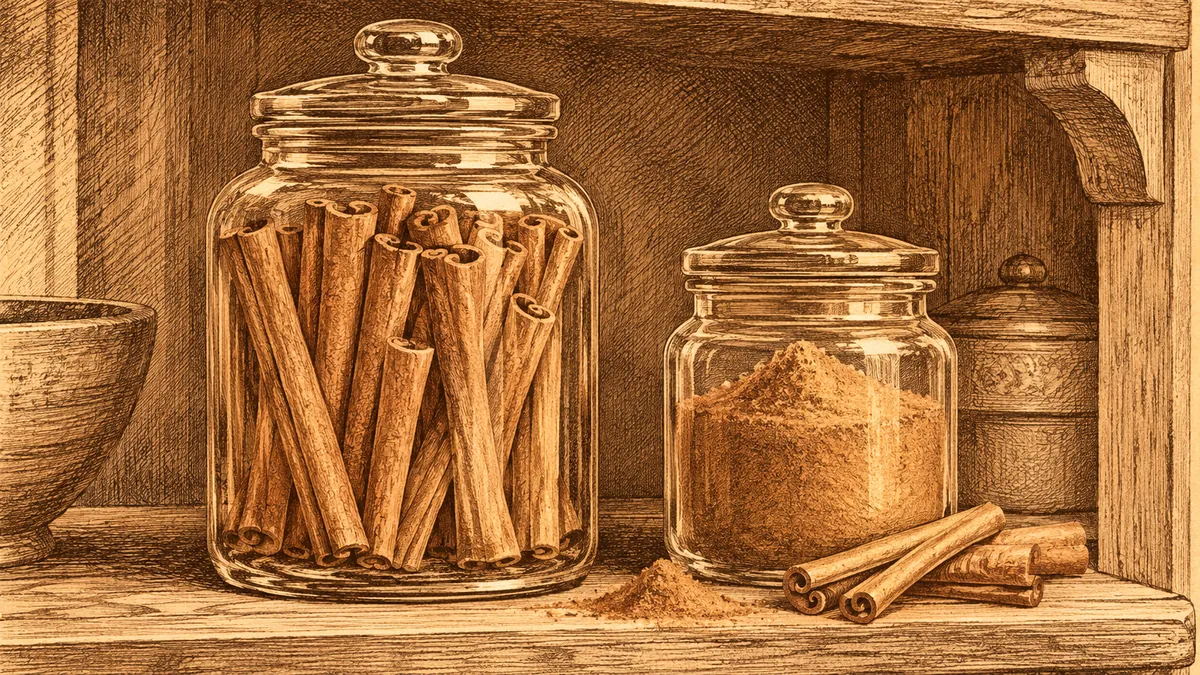
    Cinnamon sticks and cinnamon powder are stored the same way, in a cool, dark, dry place in an airtight container, but they keep for very different lengths of time. Whole Ceylon cinnamon sticks, or quills, hold their aroma far longer because less of their surface is exposed to air, lasting a few years when stored well. Ground cinnamon has much more surface area, so it loses its scent and flavour faster, staying at its best for several months to about a year.

    Whether you buy Ceylon cinnamon as sticks or as powder, how you store it decides how long it keeps its aroma and flavour. This guide explains how to store each form, why sticks last longer than powder and how to get the most from both. It builds on our pillar guide, the Ceylon cinnamon buying guide.

    The short answer

    Store both sticks and powder in an airtight container in a cool, dark, dry cupboard, away from heat, light and moisture. Sticks keep well for a few years, powder for several months up to about a year. The storage conditions are the same, but the shelf life is not: whole quills have far less exposed surface than ground cinnamon, so they hold their volatile aroma compounds much longer. This is why many people buy sticks and grind small amounts as needed, rather than keeping a large jar of powder for a long time.

    Why the form changes the shelf life

    The difference between storing sticks and powder comes down to surface area. A whole cinnamon stick is a tightly rolled quill of bark, with only its outer surface in contact with the air. Grinding that same bark into powder exposes a huge number of tiny particles, each surface meeting the air. The aromatic compounds that give cinnamon its scent and flavour are volatile, meaning they slowly escape into the air, and the more surface is exposed, the faster this happens. So powder loses its character faster than a stick simply because far more of it is open to the air. For more on how long the spice lasts overall, see our guide to how long Ceylon cinnamon lasts.

    How to store cinnamon sticks

    Store whole Ceylon cinnamon sticks in an airtight container, such as a sealed jar or tin, in a cool, dark, dry cupboard. Keep them away from the heat of the stove or oven, out of direct sunlight, and away from damp, since heat, light and moisture all speed the loss of aroma. Stored this way, good Ceylon cinnamon sticks hold their fragrance well for a few years. Because the quills are whole, they are forgiving and keep their quality for a long time, which is one reason sticks are a practical way to buy cinnamon you will use slowly.

    How to store cinnamon powder

    Ground cinnamon needs the same conditions, an airtight container in a cool, dark, dry place, but it rewards a little more care because it fades faster. Keep the jar tightly closed between uses, and avoid letting steam reach it, for example by not shaking it directly over a hot, steaming pot, since moisture both clumps the powder and hastens the loss of aroma. Buy powder in amounts you will use within several months to a year, rather than a large jar that will sit for years. Ground cinnamon rarely becomes unsafe if kept dry, but it does grow weak and dull over time, so using it while fresh gives the best flavour.

    PointCinnamon sticks (quills)Cinnamon powder
    Storage conditionsCool, dark, dry, airtightCool, dark, dry, airtight
    Exposed surfaceSmall, only the outsideLarge, every particle
    Typical best-flavour lifeA few yearsSeveral months to a year
    Main enemyHeat, light, damp over timeAir and moisture, faster
    Best practiceKeep sealed, grind as neededBuy small, use while fresh

    The case for buying sticks and grinding

    Because whole sticks keep so much longer than powder, one practical approach is to buy Ceylon cinnamon as sticks and grind a little into powder only when you need it. This gives you the long shelf life of quills together with fresh-ground flavour each time. Ceylon cinnamon is especially suited to this, as its bark is thin and brittle and grinds more easily than the hard bark of cassia. Our guide to cinnamon sticks versus powder and what to buy looks at this choice in more detail. For everyday cooks who use powder often, though, buying a modest jar and replacing it regularly works perfectly well.

    Signs cinnamon has lost its freshness

    Both sticks and powder lose aroma gradually rather than spoiling suddenly. The clearest sign is smell: fresh Ceylon cinnamon has a warm, sweet fragrance, and when that scent becomes faint, the cinnamon has passed its best. With powder, a dull colour and a weak aroma when you open the jar are the signs to replace it. With sticks, a quill that smells of little even when scratched or broken has faded. Kept dry, cinnamon does not usually become unsafe, but weak cinnamon gives weak results in cooking, so aroma is the test that matters. Our guide to whether Ceylon cinnamon goes bad covers this in full.

    Choosing the right container

    The container matters as much as the cupboard. The aim is an airtight seal that keeps air and moisture out, so a glass jar with a tight lid, or a metal tin that closes well, suits both sticks and powder. Glass has the advantage of not holding odours, though a clear jar should be kept in a dark cupboard rather than on an open shelf, since light fades the aroma. For powder especially, a small jar that is opened and closed cleanly is better than a large one that is left part full for a long time, because each opening lets in a little air. Whatever the material, a good seal and a dark, cool spot are what count, and the same container advice applies whether you keep sticks or ground cinnamon.

    Common storage mistakes

    A few simple mistakes shorten the life of both forms. Keeping cinnamon in a rack above or beside the stove exposes it to heat and steam, which drive off aroma quickly. Leaving a jar open, or using a container that does not seal well, lets the volatile compounds escape. Storing cinnamon in a clear jar on a sunny shelf exposes it to light. And shaking powder straight over a steaming pot lets moisture in. Avoiding these, by keeping cinnamon sealed, cool, dark and dry, is most of what good storage requires, and it applies equally to sticks and powder.

    Summary

    Cinnamon sticks and cinnamon powder are stored under the same conditions, sealed in an airtight container in a cool, dark, dry place away from heat, light and moisture, but they keep for different lengths of time. Whole Ceylon cinnamon sticks expose little surface to the air, so they hold their aroma well for a few years, while ground cinnamon exposes far more surface and fades faster, staying at its best for several months up to about a year. Because of this, a practical approach is to buy sticks and grind small amounts as needed, while cooks who use powder regularly can keep a modest jar and replace it often. In both cases, aroma is the test of freshness, and keeping cinnamon sealed and away from heat, light and damp is the key to making it last.

    Frequently asked questions

    Do cinnamon sticks last longer than cinnamon powder?

    Yes. Whole sticks expose much less surface to the air than ground powder, so they hold their aroma far longer. Stored well, sticks keep their best flavour for a few years, while powder is best used within several months to about a year.

    How should I store cinnamon sticks and powder?

    Both should be kept in an airtight container in a cool, dark, dry cupboard, away from heat, light and moisture. The conditions are the same for both forms; only the shelf life differs, with sticks keeping longer than powder.

    Does ground cinnamon go bad?

    Ground cinnamon kept dry rarely becomes unsafe, but it loses its aroma and flavour over time and becomes dull and weak. The sign to replace it is a faint smell and a flat colour. Using it while fresh gives the best results.

    Is it better to buy cinnamon sticks or powder?

    For long storage, sticks are better because they keep much longer and can be ground as needed. For frequent, convenient use, powder is fine if bought in modest amounts and replaced regularly. Many people keep sticks for the long term and a small jar of powder for everyday use.

    Can I store cinnamon in the fridge or freezer?

    It is not necessary. A cool, dark, dry cupboard is ideal. Refrigerators can introduce moisture through condensation, which is unhelpful for a dry spice, so an airtight container in a cupboard away from heat is the simplest and most reliable choice.

    This website provides educational information about Ceylon Cinnamon as a spice and food ingredient. It is not intended to provide medical advice or make health claims.

  • How Ceylon Cinnamon Is Officially Graded

    How Ceylon Cinnamon Is Officially Graded

    Ceylon cinnamon is officially graded by sorting the dried quills according to set rules for their diameter, appearance and quality, then labelling them with standard grade codes. The main grades run from the finest, Alba, through the Continental, Mexican and Hamburg families, with numbered sub-grades such as C5 or M5. Grading follows national standards in Sri Lanka, and quills are measured and inspected so that each grade means the same thing to every buyer.

    Behind every tin of Ceylon cinnamon labelled with a grade is a formal system of sorting and measurement. This guide explains how that official grading works, what the grade codes mean and who sets the rules, in plain terms. It builds on our pillar guide, the complete guide to Ceylon cinnamon grades.

    The short answer

    Official grading sorts dried Ceylon cinnamon quills by measured diameter, appearance and defects into named grades, following Sri Lankan national standards. Thinner, finer, cleaner quills reach higher grades, while thicker or more flawed ones fall into lower ones. Each grade has a code, such as Alba, C5 Special, C5, M5 or H1, and a definition that sets the limits for that grade. Because the rules are written down and the quills are measured against them, a grade name carries the same meaning from one supplier to another.

    What grading means

    Grading is the process of sorting a crop into quality classes so that buyers know what they are getting. For Ceylon cinnamon, grading takes the finished, dried quills and divides them into grades based on measurable features. It does not change the cinnamon itself: a grade simply describes where a particular quill fits on a scale from finest to coarsest. This matters because cinnamon is traded worldwide, and a shared grading system lets a buyer order a grade and receive bark that matches it, without inspecting every quill in person.

    What is measured

    Official grading rests on a few clear, measurable features of each quill. The most important is diameter: the thickness of the rolled quill, measured across its width. Finer, thinner quills are more prized and reach higher grades, while thicker quills fall into lower grades. Alongside diameter, graders look at appearance and colour, the evenness and neatness of the quill, and the presence of any defects such as roughness, breakage or blemishes. Together these decide the grade. The emphasis on diameter is why the finest grade, Alba, is defined by a very small quill diameter.

    The main grade families

    Ceylon cinnamon grades are organised into families, each with its own range of quill diameters. Alba is the finest and thinnest, the top of the scale. Below it, the Continental grades cover fine quills, the Mexican grades cover medium quills, and the Hamburg grades cover the thickest quills. Within these families, numbers mark sub-grades, so a label may read C5 Special, C5, C4, M5, M4 or H1, where the letter shows the family and the number relates to the diameter class. The result is a ladder of grades from Alba at the top down through the Hamburg range, each step allowing a slightly thicker quill.

    Grade familyCodeQuill character
    AlbaAlbaFinest and thinnest, top grade
    ContinentalC5 Special, C5, C4Fine, thin quills
    MexicanM5, M4Medium quills
    HamburgH1, H2, H3Thicker quills

    For a fuller description of what each grade name means, see our guide to cinnamon grading terms made simple.

    Who sets the standards

    The grading of Ceylon cinnamon is governed by official standards, most importantly the national standards of Sri Lanka. The Sri Lanka Standards Institution sets the rules for how cinnamon is classified, defining the grades and their requirements. There are also international standards, such as those issued by the International Organization for Standardization, which cover cinnamon quality and classification more broadly. These written standards are what make a grade official rather than a matter of opinion. Our guides to the SLS standard for Ceylon cinnamon and to ISO standards and cinnamon quality explain these bodies in more detail.

    How quills are sorted in practice

    In practice, grading happens after the cinnamon has been peeled, rolled and dried. Workers sort the finished quills, judging and measuring their diameter and checking their appearance, and group together the quills that meet each grade’s definition. Skilled graders can assess quills quickly by eye and feel, having learned the diameter classes through long experience, while measurement confirms the borderline cases. The sorted quills are then bundled by grade, ready to be labelled and traded. This sorting step turns a mixed batch of quills into clearly defined grades that the market can price and buy.

    Why official grading matters

    Official grading gives Ceylon cinnamon a common language of quality. For producers, it allows their cinnamon to be sold at a fair price that matches its grade, rewarding the care taken in peeling and rolling fine quills. For buyers, it provides confidence: ordering a named grade means receiving bark that meets a defined standard, whether the buyer is a spice importer, a manufacturer or a retailer. For the trade as a whole, it supports trust and consistency, since everyone works from the same definitions. In this way grading underpins the reputation of Ceylon cinnamon as a carefully classified, high-quality spice.

    Grading beyond whole quills

    Official grading covers more than the prime quills. During peeling and sorting, not every piece of bark forms a perfect quill, and these other forms are graded too. Featherings are the small, thin inner pieces of bark; quillings are broken fragments of quills; and chips are small pieces of bark trimmed away or left over. Each of these has its own place in the grading system and its own uses, generally in grinding and flavouring rather than sale as whole sticks. Sorting them properly means the whole crop is classified, with prime quills graded by diameter and the remaining material graded into these named classes. Our glossary of feathering, quilling and chips explains these forms in detail.

    Grading and price

    Grade and price are closely linked. Because higher grades such as Alba require the finest, thinnest quills, which are more limited and take more skill to produce, they command higher prices. Lower grades, with thicker quills, are more plentiful and cost less. This is why grade is one of the first things a serious buyer looks at, and why the grade on a label is a useful guide to both quality and cost. Grading, in other words, is not only about quality description but also about how the market values different classes of cinnamon.

    Summary

    Ceylon cinnamon is officially graded by sorting the dried quills according to written standards, mainly those of the Sri Lanka Standards Institution, based on measurable features above all the quill’s diameter, together with appearance and defects. The grades form a ladder from the finest, Alba, through the Continental, Mexican and Hamburg families, each marked by a code such as C5, M5 or H1. Grading takes place after peeling, rolling and drying, when workers sort and measure the quills and bundle them by grade. Because the rules are set down and applied consistently, a grade carries the same meaning for every buyer, which supports fair pricing, buyer confidence and the reputation of Ceylon cinnamon as a well-classified spice.

    Frequently asked questions

    How is Ceylon cinnamon officially graded?

    It is graded by sorting the dried quills according to set standards, mainly the quill’s diameter along with its appearance and any defects. Finer, thinner quills reach higher grades, and each grade has a code and a written definition under Sri Lankan national standards.

    What is the highest grade of Ceylon cinnamon?

    Alba is the highest and finest grade. It is defined by a very small quill diameter, meaning the thinnest, most delicate quills. Because such quills are limited and skilled to produce, Alba is the most prized and most costly grade.

    What do the grade codes like C5 or M5 mean?

    The letter shows the grade family, such as C for Continental or M for Mexican, and the number relates to the diameter class within that family. So C5 and M5 are specific sub-grades, each covering quills of a defined thickness.

    Who sets the grading standards for Ceylon cinnamon?

    The main authority is the Sri Lanka Standards Institution, which sets national standards defining the grades. International standards from the International Organization for Standardization also cover cinnamon quality and classification. These written rules make the grades official.

    Does the grade affect the price of cinnamon?

    Yes. Higher grades such as Alba, made from the finest, thinnest quills, are more limited and command higher prices, while lower grades with thicker quills cost less. Grade is therefore a useful guide to both quality and price.

    This website provides educational information about Ceylon Cinnamon as a spice and food ingredient. It is not intended to provide medical advice or make health claims.