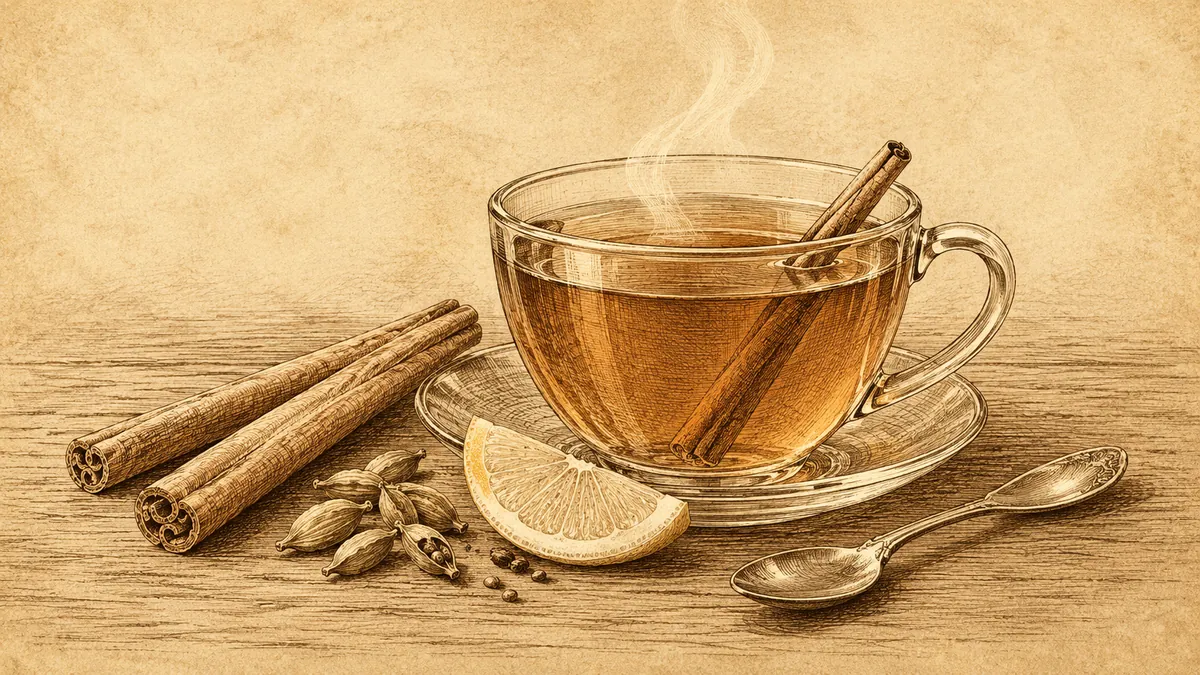
Tag: Ceylon cinnamon

  • Ceylon Cinnamon in Tea: Ways to Use It

    Ceylon Cinnamon in Tea: Ways to Use It

    Ceylon cinnamon is a simple way to add gentle, sweet warmth to tea. The easiest method is to simmer a small piece of a true Ceylon cinnamon quill, Cinnamomum verum, in water or milk, or to drop a short stick into a pot of black tea while it brews. Because true cinnamon is mild rather than sharp, it flavours tea softly without turning it bitter, and the same quill can often be used more than once. This guide covers the main ways to use Ceylon cinnamon in tea.

    Cinnamon and tea have gone together for a long time, and true Ceylon cinnamon suits the pairing well. This guide sets out practical ways to use it, from a plain cinnamon tea to spiced blends, in plain and flavourful terms. It builds on our pillar guide to the culinary uses of Ceylon cinnamon.

    The short answer

    To use Ceylon cinnamon in tea, simmer a small piece of a cinnamon quill in water for a few minutes to make a plain cinnamon tea, or add a short stick to black tea, chai or a milky tea while it steeps. You can also stir in a small pinch of ground Ceylon cinnamon, though a stick gives a cleaner cup with no grit. True Ceylon cinnamon is mild and sweet, so it blends into tea gently rather than overpowering it.

    Why Ceylon cinnamon suits tea

    True Ceylon cinnamon has a mild, sweet and lightly citrus flavour, with little of the hot, sharp edge of cassia. That softness is what makes it a good match for tea, where you usually want warmth and fragrance rather than a strong bite. Its thin, papery quills also break and release flavour easily, and they are low enough in intensity that the tea itself still comes through.

    Ceylon cinnamon works in both plain water infusions and milk-based teas. In water it gives a light, fragrant cup. In milk, as with chai or a spiced tea, its sweetness sits naturally alongside the richer base. Either way, the spice adds aroma and a soft finish rather than heat.

    Plain Ceylon cinnamon tea

    The simplest cinnamon tea uses nothing but water and a piece of quill. Break off a short length of a Ceylon cinnamon stick, around two to three centimetres, and simmer it in a cup of water for five to ten minutes. The longer it simmers, the deeper the flavour. Remove the stick, and the tea is ready. You can add a little honey or a slice of lemon if you like, and the same stick can usually be simmered a second time for a lighter cup.

    Ground Ceylon cinnamon also works, though it leaves a fine sediment. If you use powder, a small pinch stirred into hot water is enough, and letting it settle before drinking gives a smoother cup.

    Adding cinnamon to black tea

    A short Ceylon cinnamon stick dropped into the pot while black tea brews gives a lightly spiced cup. The cinnamon infuses alongside the tea leaves, so you get the tea’s own character with a soft, warm edge. This works well with strong black teas, including a Ceylon tea from Sri Lanka, where the spice and the tea share an origin. Leave the stick in for the brewing time, then pour as usual.

    For a stronger cinnamon note, simmer the stick in the water first for a few minutes, then use that water to brew the tea. For how cinnamon behaves in a hot drink more generally, our guide to Ceylon cinnamon in coffee covers similar methods.

    Cinnamon in chai and spiced tea

    Ceylon cinnamon is a classic part of a spiced tea or chai, where it sits alongside cardamom, cloves, ginger and black pepper. To make a simple spiced tea, simmer a short cinnamon stick with a few cardamom pods and a little ginger in water and milk, then add black tea and sweeten to taste. The cinnamon gives the blend its warm, sweet backbone without dominating the other spices.

    Because true cinnamon is gentle, you can use a slightly larger piece in a spiced milk tea than you would in a plain water infusion, since the milk and other spices carry stronger flavours. A whole short stick per pot is a good starting point.

    Iced cinnamon tea

    Cinnamon also works in cold tea. Brew a cinnamon tea or a spiced black tea as above, let it cool, then chill it and serve over ice. The spice flavour holds up well when cold, giving a fragrant iced tea. A cinnamon stick left in the jug as it chills deepens the flavour, and a slice of orange or lemon suits the cold version nicely.

    A simple spiced cinnamon tea, step by step

    If you want a method to follow, this makes one mug of lightly spiced cinnamon tea. Put a cup of water and a short Ceylon cinnamon stick into a small pan, bring it to a gentle simmer, and let it bubble softly for about five minutes so the cinnamon can infuse. Add two cardamom pods and a thin slice of ginger if you want a fuller spiced cup, and simmer for another two minutes. Add your black tea, either a tea bag or a teaspoon of loose leaf, and let it steep for two to three minutes off the heat. Pour through a strainer, add a splash of milk and a little honey if you like, and lift out the cinnamon stick to save for next time. The result is a warm, fragrant cup where the cinnamon supports the tea rather than hiding it.

    Flavours that pair well with cinnamon tea

    Ceylon cinnamon sits happily beside many tea-friendly flavours. Citrus, such as a slice of orange or lemon, lifts a plain cinnamon tea and suits the iced version. Honey rounds out the sweetness, while cardamom, cloves, ginger and nutmeg build a fuller spiced blend. A little vanilla or a few peppercorns can add depth to a milky cup. Because true cinnamon is gentle, it rarely clashes, so it is an easy spice to build a tea around.

    Stick or powder: which to use in tea

    FormBest forNotes
    Ceylon cinnamon stickPlain cinnamon tea, chai, iced teaClean cup, no grit, can be reused
    Ground Ceylon cinnamonQuick single cupsLeaves fine sediment, let it settle
    Cinnamon tea bagConvenienceCheck the label names Ceylon, not cassia

    How much to use

    A little Ceylon cinnamon goes a long way in tea, so it is best to start small and adjust. For a single cup of plain cinnamon tea, a two to three centimetre piece of stick is plenty. For a pot of spiced tea or chai, a whole short stick works well alongside the other spices. If you prefer a stronger cinnamon flavour, simmer the stick for longer rather than adding more, since a long, gentle infusion draws out flavour without any bitterness. Whole sticks are easy to lift out, which gives you control over how strong the cup becomes.

    If you are buying cinnamon specifically for tea, thin, brittle Ceylon quills are ideal because they infuse quickly and cleanly. For choosing the right form and grade, our guide on how to use cinnamon sticks in cooking covers the same whole-stick methods that suit tea.

    Frequently asked questions

    How do you make Ceylon cinnamon tea?

    Simmer a short piece of a Ceylon cinnamon quill, around two to three centimetres, in a cup of water for five to ten minutes, then remove the stick. Add honey or lemon if you like. For a spiced version, simmer the cinnamon with cardamom and ginger, then add black tea and milk.

    Can you put a cinnamon stick in tea?

    Yes. A short Ceylon cinnamon stick dropped into the pot while tea brews gives a lightly spiced cup, and it can be lifted out when the flavour is right. Whole sticks give a cleaner cup than powder, with no sediment, and they can often be reused once.

    Is Ceylon cinnamon better than cassia for tea?

    Ceylon cinnamon is milder and sweeter, so it flavours tea gently without a sharp or bitter edge, which many people prefer in a hot drink. Cassia is stronger and hotter. Both can be used in tea, so the choice comes down to how bold a cinnamon flavour you want.

    Can you reuse a cinnamon stick for tea?

    Yes. A Ceylon cinnamon stick can usually be simmered a second time for a lighter cup, since the first use does not draw out all the flavour. Rinse and dry it between uses, and replace it once it stops giving much aroma.

    Summary

    Ceylon cinnamon is an easy and flexible way to flavour tea. The simplest method is to simmer a short piece of a true cinnamon quill, Cinnamomum verum, in water, or to drop a stick into black tea, chai or a milky tea as it brews. Its mild, sweet character blends into the cup gently rather than overpowering it, it works hot or iced, and a whole stick can often be reused. Starting with a small piece and simmering longer for a stronger flavour gives the best control over the final cup.

    This website provides educational information about Ceylon Cinnamon as a spice and food ingredient. It is not intended to provide medical advice or make health claims.

  • Ceylon Cinnamon vs Indonesian Cinnamon

    Ceylon Cinnamon vs Indonesian Cinnamon

    Ceylon cinnamon and Indonesian cinnamon are two different barks sold under the same everyday name. Ceylon cinnamon is true cinnamon, Cinnamomum verum, grown in Sri Lanka, with a thin, papery bark and a mild, sweet flavour. Indonesian cinnamon is a type of cassia, usually Cinnamomum burmannii, often called korintje or Padang cassia, with a thick, hard bark and a stronger, hotter taste. Knowing which one you have helps you buy and cook with confidence.

    Indonesian cinnamon is one of the most common cinnamons on supermarket shelves, so it is worth knowing how it compares with true Ceylon cinnamon. This guide sets out the botanical, origin, appearance and flavour differences in plain terms. It builds on our pillar comparison, Ceylon cinnamon versus cassia.

    The short answer

    Ceylon cinnamon is true cinnamon from the species Cinnamomum verum, native to Sri Lanka, while Indonesian cinnamon is a cassia, usually Cinnamomum burmannii, grown in Indonesia. Ceylon has a thin, layered quill and a gentle, sweet flavour. Indonesian cassia has a thick, single-layer bark and a bolder, spicier flavour, and it is the cinnamon most often used in mass-market ground cinnamon.

    What is Indonesian cinnamon?

    Indonesian cinnamon comes from Cinnamomum burmannii, a tree grown mainly on the island of Sumatra. It is widely known in the spice trade as korintje or Padang cassia, after the Padang region and port. Because Indonesia produces a very large share of the world’s cassia, much of the ground cinnamon sold in North America and parts of Europe is Indonesian cassia, even when the label simply reads “cinnamon”.

    Indonesian cinnamon is a genuine cinnamon in the broad sense, since it belongs to the Cinnamomum family. It is not the same species as true Ceylon cinnamon, though, and the two differ in bark structure, flavour and the way they are used.

    What is Ceylon cinnamon?

    Ceylon cinnamon is true cinnamon, Cinnamomum verum, grown in Sri Lanka, the island once known as Ceylon. It is made from the thin inner bark of the tree, which is peeled and rolled into delicate quills built up from many fine layers. Its flavour is mild, sweet and lightly citrus, with a soft aroma. To read more about the species itself, see our guide to what true Ceylon cinnamon is.

    Botanical differences

    The clearest difference is the species. True Ceylon cinnamon is Cinnamomum verum (once called Cinnamomum zeylanicum). Indonesian cinnamon is Cinnamomum burmannii, one of several cassia species alongside Cinnamomum cassia from China and Cinnamomum loureiroi from Vietnam. All are in the same plant family, but they are distinct trees with their own bark and flavour.

    This matters because the name “cinnamon” on a label does not tell you the species. The botanical name does. A label that reads Cinnamomum verum points to Ceylon cinnamon, while Cinnamomum burmannii points to Indonesian cassia.

    Origin differences

    Ceylon cinnamon is grown in Sri Lanka, which remains the main source of true cinnamon. Indonesian cinnamon is grown in Indonesia, chiefly on Sumatra. Both countries have warm, humid tropical climates that suit the trees, but the growing regions and the plants themselves are different. When a label states “Product of Sri Lanka”, it lines up with Ceylon cinnamon. “Product of Indonesia” points to cassia.

    Appearance and bark structure

    The two barks look quite different once you know what to look for. A Ceylon cinnamon quill is made of many thin layers rolled tightly together, so it looks like a packed cigar and feels light and brittle. It snaps and crumbles easily. An Indonesian cassia stick is a thick, single curl of hard bark that is much tougher to break, often with a darker, redder brown colour.

    Ground cinnamon is harder to tell apart by eye, which is why the species name on the label matters most for powder. If you want to tell the barks apart in your own kitchen, our guide on how to identify authentic Ceylon cinnamon sets out the simple checks.

    Flavour differences

    Ceylon cinnamon has a mild, sweet and delicate flavour with gentle citrus notes. It adds warmth without heat, which makes it a good match for desserts and light dishes. Indonesian cassia is bolder and spicier, with a stronger, hotter edge and a deeper colour. Many people recognise this fuller flavour because Indonesian cassia is so common in everyday baking blends and breakfast cereals.

    Neither is simply better. For delicate custards and milk-based sweets, the softness of Ceylon cinnamon suits the dish. For a strong cinnamon hit in a spiced bun or a hearty stew, the intensity of cassia can be a good fit.

    How they are used in cooking

    The two cinnamons tend to suit different jobs in the kitchen. Ceylon cinnamon, with its gentle sweetness, is a natural fit for puddings, custards, fruit dishes and milk-based drinks, where a softer spice lets the other flavours come through. It also works well in delicate Sri Lankan sweets and in lightly spiced teas and coffees. Indonesian cassia, being stronger and hotter, carries its flavour through heavier bakes, spiced buns, breakfast cereals and mulled drinks, and it is the cinnamon most people picture when they think of a bold cinnamon taste.

    In practice, many cooks keep both. A thin Ceylon quill can be simmered in syrup or milk and lifted out, while ground cassia is often stirred straight into doughs and batters for a deeper, warmer note. Choosing between them is less about quality and more about how much cinnamon flavour a dish needs.

    Price and availability

    Indonesian cassia is cheaper and more widely available than true Ceylon cinnamon, which is part of why it fills so many supermarket shelves. Cassia trees grow quickly and yield thick bark, so the spice is produced in large volumes at lower cost. True Ceylon cinnamon is more labour intensive to peel and roll by hand, and Sri Lanka produces a smaller share of the global cinnamon trade, so it usually costs more and is more often found in specialist shops or online. The higher price reflects the careful handwork and the thin, delicate quills rather than any single measure of quality.

    Ceylon cinnamon versus Indonesian cinnamon at a glance

    FeatureCeylon cinnamonIndonesian cinnamon
    TypeTrue cinnamonCassia
    SpeciesCinnamomum verumCinnamomum burmannii
    Common nameCeylon, true cinnamonKorintje, Padang cassia
    OriginSri LankaIndonesia (mainly Sumatra)
    BarkThin, many layers, brittleThick, single layer, hard
    FlavourMild, sweet, delicateBold, spicy, stronger
    ColourLight tanDarker red-brown

    Which one is in your kitchen?

    If your cinnamon came in a plain supermarket jar labelled only “cinnamon” or “ground cinnamon”, it is most likely Indonesian or another cassia, since cassia dominates the mass market. If you bought thin, crumbly quills labelled Cinnamomum verum and marked as a product of Sri Lanka, you have true Ceylon cinnamon. The surest way to know is to read the species name and origin on the label, and to look at the bark if you have whole sticks. For a wider comparison with other cassia types, see our guide to Ceylon cinnamon versus Chinese cinnamon.

    Frequently asked questions

    Is Indonesian cinnamon real cinnamon?

    Indonesian cinnamon is a real cinnamon in the broad sense, since it belongs to the Cinnamomum family. It is a cassia, usually Cinnamomum burmannii, rather than true cinnamon. True cinnamon is the separate species Cinnamomum verum, grown in Sri Lanka.

    What is korintje cinnamon?

    Korintje is a common trade name for Indonesian cassia, Cinnamomum burmannii, grown on Sumatra. It is also called Padang cassia. It is the same bark as Indonesian cinnamon, so korintje and Indonesian cinnamon refer to the same thing.

    Is Ceylon or Indonesian cinnamon better for baking?

    It depends on the result you want. Indonesian cassia gives a strong, spicy cinnamon flavour that suits bold baked goods. Ceylon cinnamon gives a milder, sweeter warmth that suits delicate desserts. Both work in baking, so the choice is about flavour strength.

    Why is most supermarket cinnamon Indonesian?

    Indonesia produces a very large share of the world’s cassia, and cassia is cheaper and more widely traded than true cinnamon. As a result, much of the ground cinnamon sold in shops is Indonesian cassia, often labelled simply as “cinnamon”.

    Summary

    Ceylon cinnamon and Indonesian cinnamon are different barks. Ceylon cinnamon is true cinnamon, Cinnamomum verum, from Sri Lanka, with a thin, layered quill and a mild, sweet flavour. Indonesian cinnamon is a cassia, usually Cinnamomum burmannii and known as korintje, grown in Indonesia, with a thick, hard bark and a bolder, spicier taste. The species name and origin on the label are the clearest way to tell which bark you are buying, and each has its place depending on the dish and the flavour you want.

    This website provides educational information about Ceylon Cinnamon as a spice and food ingredient. It is not intended to provide medical advice or make health claims.
  • What to Look for on a Ceylon Cinnamon Label

    What to Look for on a Ceylon Cinnamon Label

    When you buy Ceylon cinnamon, the label is the first thing you can actually check. True Ceylon cinnamon, Cinnamomum verum, comes from Sri Lanka, and a good label will usually say so in plain words: the species or botanical name, the country of origin, and often a grade such as Alba or C5. A label that only says “cinnamon”, with no species and no origin, gives you very little to go on. This guide walks through the details worth looking for on a Ceylon cinnamon label before you buy.

    Shopping for true cinnamon can be confusing because the word “cinnamon” on its own covers several different barks. This buying guide looks, point by point, at what a Ceylon cinnamon label should tell you and which words are a good sign. It builds on our pillar Ceylon cinnamon buying guide.

    The short answer

    On a Ceylon cinnamon label, look for the species name Cinnamomum verum (or Cinnamomum zeylanicum), the country of origin Sri Lanka, and a grade such as Alba, C5 or C4. Helpful extras include the form (quills, sticks or ground), packaging and harvest or batch details, and any recognised certification. A label that names the species and the origin, rather than just “cinnamon”, is the clearest starting sign that you are buying true Ceylon cinnamon.

    Why the label matters

    In many shops, “cinnamon” with no further detail is cassia, a related but different bark that comes mostly from China, Indonesia and Vietnam. True Ceylon cinnamon is a separate species with a milder, sweeter flavour and a thin, papery bark. Because the two are sold under the same everyday name, the label is often the only way to tell them apart before you open the pack. For the full flavour and bark differences, see our guide to Ceylon cinnamon versus cassia.

    A clear, detailed label is itself a quality signal. Sellers who take care to name the species, the origin and the grade are usually confident about what they are selling. A vague label is not proof of a problem, but it does leave you guessing.

    The species or botanical name

    The single most useful thing on the label is the botanical name. True Ceylon cinnamon is Cinnamomum verum, which was once called Cinnamomum zeylanicum, so either name points to the real thing. Cassia barks carry different species names, such as Cinnamomum cassia, Cinnamomum burmannii or Cinnamomum loureiroi.

    If the label prints Cinnamomum verum or Cinnamomum zeylanicum, that is a strong sign. If it prints one of the cassia species names, you are looking at cassia, whatever the front of the pack says. If there is no species name at all, treat the product as unconfirmed until you can check further.

    The country of origin

    True Ceylon cinnamon is grown in Sri Lanka, and most of the world’s supply still comes from there. A label that reads “Product of Sri Lanka” or “Origin: Sri Lanka” lines up with genuine Ceylon cinnamon. “Ceylon” is the historic name for the island, so “Ceylon cinnamon” and “Sri Lankan cinnamon” mean the same thing.

    Be careful with wording such as “packed in” or “distributed by”, which tells you where the pack was filled or handled, not where the bark was grown. The origin you want is the country where the cinnamon itself was produced. Our guide to reading cinnamon labels correctly goes deeper into this kind of wording.

    The grade

    Ceylon cinnamon is sorted into grades, and many good labels print the grade on the pack. Grades such as Alba, C5 Special, C5, C4 and the Continental and Mexican groups describe the thickness and appearance of the quills, with the thinnest and most delicate quills carrying the highest grades. Alba is the finest and thinnest.

    A grade on the label is a sign that the seller is working within the recognised Ceylon cinnamon system. You do not always need the top grade: for everyday cooking a mid grade is often a sensible choice. The point is that a named grade shows the product has been sorted to a standard rather than simply bagged.

    The form: quills, sticks or ground

    The label should make clear what form you are buying. True Ceylon cinnamon quills are made of many thin layers rolled together, so they look like a tightly packed cigar and snap easily. Cassia sticks are usually a single thick, hard curl. If you are buying sticks, “Ceylon cinnamon quills” is a better sign than an unnamed “cinnamon stick”.

    Ground cinnamon is harder to judge by eye once it is powder, which makes the species name and origin on the label even more important. If you want to tell the two forms apart in your own kitchen, our guide on how to identify authentic Ceylon cinnamon sets out the simple checks.

    Certifications and standards

    Some Ceylon cinnamon packs carry certification marks or references to a standard. The Sri Lanka Standards Institution sets the SLS standard for Ceylon cinnamon, and there are organic, fair trade and geographical indication schemes as well. A certification is not required for the cinnamon to be genuine, but a recognised mark adds confidence, especially when buying online. Our guide to the SLS standard for Ceylon cinnamon explains what that particular standard covers.

    Read certification wording closely. A phrase such as “certified organic” refers to how the cinnamon was grown, not to the species. Organic cassia is still cassia. Origin and species remain the details that tell you whether the bark is true Ceylon cinnamon.

    Harvest, batch and packaging details

    Smaller sellers often print a harvest date, a batch number or a best-before date. These help you judge freshness, since cinnamon slowly loses aroma over time once ground. Whole quills keep their aroma longer than powder, so a packaging date matters more for ground cinnamon. Good packaging is a resealable pouch or a sealed jar that keeps out air and light.

    None of these details confirm the species on their own, but together they show a careful seller. A pack with the species, the origin, a grade and a clear date is giving you a full picture.

    What a Ceylon cinnamon label should tell you

    Label detailGood sign for Ceylon cinnamonReason to check further
    Species nameCinnamomum verum or Cinnamomum zeylanicumA cassia species, or no species at all
    Country of originProduct of Sri LankaOnly “packed in” wording, or no origin
    GradeAlba, C5, C4 or another named gradeNo grade given
    FormCeylon cinnamon quills, sticks or groundUnnamed “cinnamon stick”
    CertificationSLS, organic, fair trade or GI markClaims with no species named
    FreshnessHarvest, batch or best-before dateNo date, loose or open packaging

    Putting it together at the shelf

    A quick way to read a label is to work down from the most telling detail. First look for the species: Cinnamomum verum or Cinnamomum zeylanicum is what you want. Next check the origin for Sri Lanka. Then look for a grade such as Alba or C5, confirm the form, and finally glance at any certification and the packaging date. If the first two details are present and clear, you are almost certainly holding true Ceylon cinnamon. If they are missing, it is worth asking the seller or reading more before you buy.

    Frequently asked questions

    What should a Ceylon cinnamon label say?

    A good Ceylon cinnamon label gives the species name Cinnamomum verum (or the older Cinnamomum zeylanicum), the country of origin Sri Lanka, and usually a grade such as Alba or C5. Helpful extras are the form, any certification and a harvest or best-before date.

    Does “Ceylon cinnamon” on the label guarantee it is real?

    The name alone is a good start but is strongest when backed by the species name and a Sri Lankan origin. A label that says “Ceylon cinnamon”, names Cinnamomum verum and states “Product of Sri Lanka” is giving you the full picture.

    If a label only says “cinnamon”, what does that mean?

    A plain “cinnamon” label with no species and no origin is most often cassia, since cassia is the common cinnamon in many shops. It is not confirmation either way, so look for the species name or ask the seller before assuming it is true Ceylon cinnamon.

    Does organic or fair trade mean it is Ceylon cinnamon?

    No. Organic and fair trade describe how the cinnamon was grown and traded, not which species it is. Cassia can also be organic. Always check the species name and origin alongside any such certification.

    Summary

    The label is your best tool when buying Ceylon cinnamon. The details that matter most are the species name, Cinnamomum verum or Cinnamomum zeylanicum, and the country of origin, Sri Lanka. A named grade such as Alba or C5, a clear form, a recognised certification and a freshness date all add confidence. A label that names the species and the origin is the clearest sign of true Ceylon cinnamon, while a bare “cinnamon” label with neither detail is worth a second look before you buy.

    This website provides educational information about Ceylon Cinnamon as a spice and food ingredient. It is not intended to provide medical advice or make health claims.
  • Cinnamon in Traditional Sri Lankan Sweets

    Cinnamon in Traditional Sri Lankan Sweets

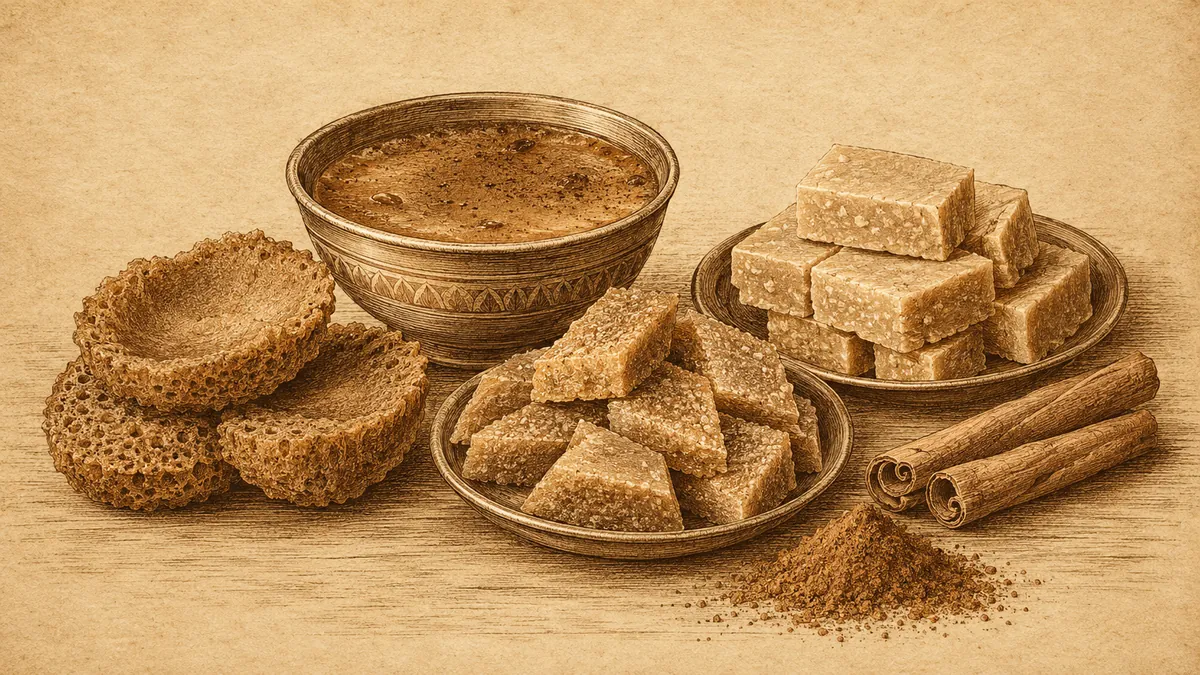
    Cinnamon has a quiet but important place in traditional Sri Lankan sweets. True Ceylon cinnamon, Cinnamomum verum, grows on the island itself, so its warm, sweet, delicate flavour has long been woven into festive treats and everyday sweets, from the steamed coconut custard watalappan to syrupy cakes, milk toffees and spiced doughs. It is usually one of several spices, adding gentle warmth rather than dominating, and it appears especially at New Year and other celebrations.

    Sri Lanka is the home of true cinnamon, so it is no surprise that the spice turns up in the island’s sweets. This guide looks, in plain and flavourful terms, at how cinnamon is used in traditional Sri Lankan sweets and which treats it appears in. It builds on our pillar guide to the culinary uses of Ceylon cinnamon.

    The short answer

    In traditional Sri Lankan sweets, Ceylon cinnamon is used as a warming background spice, most famously in watalappan, and also in festive sweets such as kavum, aluwa, dodol and milk toffee, usually alongside cardamom, cloves and nutmeg. Because true cinnamon is mild and sweet rather than sharp, it blends into the coconut, jaggery and treacle that form the base of many Sri Lankan sweets, lifting them with a soft, fragrant warmth. It is used in both stick and ground form, and is a familiar part of the island’s festive table.

    Why cinnamon suits Sri Lankan sweets

    True Ceylon cinnamon is well matched to sweet dishes because its flavour is gentle and sweet, with little of the harsh, hot edge of cassia. This lets it add warmth to a dessert without overpowering the coconut, palm sugar and spices around it. Sri Lankan sweets often rest on jaggery or kithul treacle, both made from palm sap, and on coconut in its many forms, and cinnamon’s mellow sweetness sits naturally with these. Grown on the island, it has always been close at hand, so cooks have folded it into their sweets for generations alongside cardamom, cloves and nutmeg.

    Watalappan: the classic spiced sweet

    If one Sri Lankan sweet shows off warming spice, it is watalappan, a rich steamed custard made from coconut milk, eggs and jaggery or kithul treacle, flavoured with spices. Cinnamon, together with cardamom and sometimes nutmeg and cloves, gives watalappan its fragrant, mellow warmth, balancing the deep caramel sweetness of the palm sugar. Often served at celebrations and especially associated with festive meals, watalappan is perhaps the dish where cinnamon’s role in Sri Lankan sweets is most clearly tasted. It shows how the spice works in the island’s cooking: not as the star, but as part of a warm, rounded blend.

    Festive sweets and New Year treats

    Many traditional Sri Lankan sweets appear at the Sinhala and Tamil New Year and other celebrations, and cinnamon often has a place among them. Oil cakes such as kavum, made from rice flour and treacle, and sweets like aluwa, a rice-flour and sugar sweet, are commonly spiced, with cinnamon adding to their warmth. Dodol, a dense, dark sweet of coconut milk, jaggery and rice flour, is slow-cooked with spices that can include cinnamon. Milk toffee, a popular homemade sweet of condensed milk and sugar, is sometimes scented with cinnamon too. The spice is rarely the headline, but it is part of the familiar festive flavour. For more on these occasions, see our guide to cinnamon in Sri Lankan festivals and celebrations.

    Some traditional sweets that use cinnamon

    Traditional Sri Lankan sweets in which cinnamon is often used.
    SweetWhat it is
    WatalappanSteamed coconut and jaggery custard, spiced
    KavumTraditional oil cake of rice flour and treacle
    AluwaRice-flour and sugar sweet, often spiced
    DodolDense coconut, jaggery and rice-flour sweet
    Milk toffeeCondensed-milk fudge, sometimes cinnamon-scented

    Other sweets and tea-time treats

    Beyond the best-known festive sweets, cinnamon finds its way into many everyday Sri Lankan treats. Aggala, little balls of roasted rice flour, treacle and spice, can carry a hint of cinnamon, as can kalu dodol, a very dark, rich version of dodol. Spiced plantain or banana fritters, coconut cakes and various rice-flour sweets may be scented with it, and cinnamon often appears in the sweet milk rice and treacle dishes shared at celebrations. At tea time, where Sri Lanka’s love of tea meets its love of sweets, a warm, lightly spiced cake or biscuit may owe part of its fragrance to cinnamon. In many homes a piece of cinnamon bark is also dropped into the pot when making tea or a spiced milk drink, so the same gentle warmth that flavours the sweets carries over into what is served beside them. None of this is fixed by rule; each family and region has its own habits, but the thread running through them is the soft, sweet warmth that true Ceylon cinnamon brings.

    How cinnamon is used in the kitchen

    In Sri Lankan sweet-making, cinnamon is used in both its forms. A piece of a quill may be simmered in coconut milk, syrup or treacle to infuse its flavour gently before the stick is removed, which is common in custards and slow-cooked sweets. Ground cinnamon is stirred into doughs, batters and mixtures where its flavour should spread evenly, such as in cakes and toffees. Often it is combined with other warm spices, especially cardamom and cloves, in small amounts, so that no single spice stands out. Because true Ceylon cinnamon is mild, cooks can use a little more freely than they might with the stronger cassia. A gentle hand is still the rule, though, since the aim in most Sri Lankan sweets is a rounded, fragrant warmth rather than a single bold spice note, and the cinnamon is meant to sit in harmony with the coconut and palm sugar. Fresh, good-quality cinnamon makes a real difference here, as its aroma is strongest when the bark is not too old, which is one reason home cooks often keep whole quills and grind or break them as needed. For general guidance on cooking with the spice, see our guide to how to use cinnamon sticks in cooking.

    Cinnamon as part of a wider tradition

    Cinnamon in Sri Lankan sweets is one thread of a much older relationship between the island and its spices. Cinnamon has been grown, traded and used in Sri Lankan homes for centuries, so its presence in the sweet kitchen is part of a deep culinary heritage rather than a modern addition. The same warm spices that flavour the sweets also appear in savoury cooking and in daily life, which is why the scent of cinnamon, cardamom and cloves is so closely tied to Sri Lankan food. To read more of this wider story, see our guide to traditional uses of cinnamon in Sri Lankan culture.

    Frequently asked questions

    What Sri Lankan sweets use cinnamon?

    Cinnamon appears in many traditional Sri Lankan sweets, most famously watalappan, the spiced coconut and jaggery custard. It is also used in festive sweets such as kavum, aluwa and dodol, and sometimes in milk toffee, usually alongside cardamom, cloves and nutmeg.

    Is cinnamon a strong flavour in Sri Lankan desserts?

    Usually not. True Ceylon cinnamon is mild and sweet, so in Sri Lankan sweets it adds gentle background warmth rather than a strong flavour. It is typically used with other spices and blends into the coconut, jaggery and treacle, lifting the dessert without dominating it.

    What is watalappan flavoured with?

    Watalappan is a steamed custard of coconut milk, eggs and jaggery or kithul treacle, flavoured with warm spices. Cinnamon is a common part of the blend, along with cardamom and often nutmeg and cloves, which give the custard its fragrant, mellow warmth.

    Do Sri Lankan sweets use cinnamon sticks or powder?

    Both. A piece of cinnamon quill is often simmered in coconut milk, syrup or treacle to infuse its flavour and then removed, while ground cinnamon is stirred into doughs, batters and toffees where it should spread evenly through the mixture.

    Summary

    Cinnamon has long been part of traditional Sri Lankan sweets, a natural fit on the island that is home to true cinnamon, Cinnamomum verum. Its mild, sweet warmth blends into the coconut, jaggery and kithul treacle at the heart of the island’s desserts, so it lifts rather than dominates. It shines most clearly in watalappan, the spiced steamed custard, and appears in festive sweets such as kavum, aluwa, dodol and milk toffee, usually alongside cardamom, cloves and nutmeg. Cooks use it in both stick and ground form, simmering quills to infuse syrups and stirring powder into doughs and batters. More than a single ingredient, cinnamon in Sri Lankan sweets reflects a long culinary heritage, in which the island’s own spices give its food a warm, fragrant character all its own.

    This website provides educational information about Ceylon Cinnamon as a spice and food ingredient. It is not intended to provide medical advice or make health claims.
  • The Environmental Footprint of Cinnamon Farming

    The Environmental Footprint of Cinnamon Farming

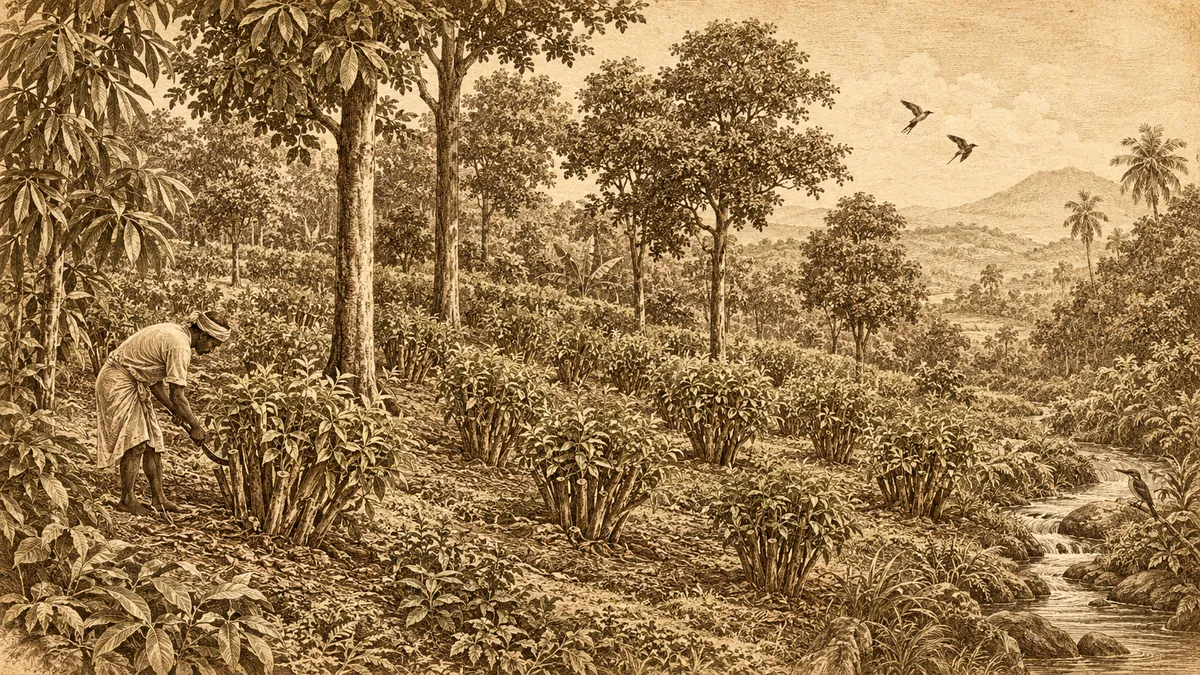
    Cinnamon farming has a relatively light environmental footprint compared with many crops. True cinnamon, Cinnamomum verum, is a hardy perennial tree grown mostly on small family plots in Sri Lanka, often with few chemical inputs and alongside other plants. It is harvested by coppicing rather than felling, so the same plants regrow for years. Like any agriculture it has impacts on soil, water and land, but its low-input, tree-based nature makes it comparatively gentle on the environment.

    As more and more people think about where their food comes from, the environmental side of spices matters too. This guide looks, in plain and factual terms, at the environmental footprint of cinnamon farming and what makes it relatively low-impact. It builds on our pillar guide to Sri Lankan cinnamon farming.

    The short answer

    Cinnamon farming is generally considered low-impact because it is a perennial tree crop, grown largely by smallholders with modest inputs, and harvested by cutting back stems that regrow rather than by clearing land each season. The cinnamon plant, Cinnamomum verum, is grown as a bush that is coppiced, meaning stems are cut for their bark while the rootstock lives on and sends up new shoots. This avoids replanting and keeps roots in the soil year-round. Grown this way, often mixed with other crops and trees, cinnamon tends to place less strain on land, soil and water than many intensively farmed crops.

    Why cinnamon is a low-input crop

    Several features of the cinnamon plant keep its environmental demands modest. It is a hardy, long-lived tree suited to the warm, wet conditions of Sri Lanka’s lowlands, so in its natural climate it needs little help to grow. Many smallholders grow it with few or no synthetic fertilisers and pesticides, relying instead on the plant’s natural resilience and on traditional practices. Because it is a perennial that is cut back rather than uprooted, the soil is not ploughed and left bare each year, which reduces erosion. For more on the conditions it likes, see our guide to the best soil for cinnamon.

    Coppicing and continuous ground cover

    One of the most environmentally helpful features of cinnamon growing is coppicing. Rather than cutting down the whole tree, workers harvest the stems and the plant regrows from the base, so the same rootstock keeps producing for many years. This means the ground stays covered and the roots stay in place, holding the soil together and reducing runoff. Permanent root systems and regular leaf fall also help return organic matter to the soil. Compared with annual crops that are planted and cleared each season, this continuous cover is gentler on the land and helps keep it stable on the sloping ground where cinnamon often grows.

    Cinnamon and biodiversity

    Because cinnamon is frequently grown on small plots and mixed gardens rather than vast single-crop plantations, it can sit more comfortably within a varied, green setting. Smallholder cinnamon is often interplanted with other trees and crops, which supports a wider range of plants and wildlife than a monoculture would. The tree cover, leaf litter and flowering can provide habitat and food for insects and birds. This is not guaranteed everywhere, and large cleared plantations have more impact, but the typical smallholder pattern of cinnamon growing tends to fit into a mixed, green environment rather than replacing it.

    The environmental factors at a glance

    How cinnamon farming affects different environmental factors.
    FactorTypical impact of cinnamon farming
    SoilLow erosion; roots stay in place and cover is continuous
    WaterMostly rain-fed in the wet zone, with little irrigation
    Chemical inputsOften low, especially on traditional smallholdings
    Land usePerennial; same plants regrow, so no yearly clearing
    BiodiversityCan be high on mixed plots, lower on cleared plantations

    How it compares with other crops

    It helps to see cinnamon in context. Many of the crops that raise environmental concern are annuals grown as large monocultures, where land is cleared and replanted every season, often with heavy irrigation and regular use of fertilisers and sprays. Cinnamon is almost the opposite: a long-lived tree that stays in the ground for years, is cut back rather than replanted, grows mainly on rain in its home climate, and is commonly farmed in small, mixed plots. These qualities place it closer to agroforestry, where trees and crops are grown together, than to intensive field farming. That does not make it impact-free, but it does mean that, measure for measure, a tree crop like cinnamon tends to ask less of the soil and water than many of the staples and cash crops grown at scale. For a spice valued by weight rather than bulk, a little cinnamon also goes a long way, so the footprint per portion used in the kitchen is small.

    Where the impacts do lie

    No farming is without effect, and it is fair to be clear about where cinnamon has an environmental cost. Clearing new land for cinnamon, as for any crop, removes whatever grew there before, so expansion into forest would carry a real impact. Processing uses water and, for drying, sometimes fuel, and transporting the spice around the world adds to its carbon footprint like any traded good. On steep ground, poor management can still lead to erosion despite the crop’s generally protective nature. These are the areas where good practice matters most, and where sustainability efforts in the cinnamon sector tend to focus.

    How sustainability is being supported

    There is growing attention to keeping cinnamon farming sustainable, both to protect the environment and to support the farmers who depend on it. Certification schemes, including organic and fair-trade style programmes, encourage lower chemical use and better practices, and reward growers for them. Interest in traceability and in protecting the Ceylon cinnamon name also pushes the sector towards careful, documented production. Because so much cinnamon is grown by smallholders, supporting those farmers is itself part of sustainability: when growers earn a fair return, they can afford to farm well, maintain their plots and avoid the shortcuts that damage land over time. In this way the environmental and human sides of sustainability are closely linked, and schemes that improve farmer incomes often improve environmental outcomes too. Buyers can play a part by choosing cinnamon that is certified or clearly traceable to responsible growers. For the social and economic side of this, see our guide to fair trade and Ceylon cinnamon, and for the wider picture of where and how it is grown, our guide to the cinnamon-growing regions of Sri Lanka.

    Frequently asked questions

    Is cinnamon farming bad for the environment?

    Generally, no. Cinnamon is a perennial tree crop grown mostly by smallholders with modest inputs and harvested by coppicing, so the plants regrow and the soil stays covered. Like all farming it has some impact, but its low-input, tree-based nature makes it comparatively gentle on the environment.

    Does cinnamon farming cause deforestation?

    Established cinnamon growing on existing farmland does not; the same plants are cut back and regrow for years without clearing. The impact would come from clearing new land, such as forest, to plant more cinnamon, which is why expansion needs care. Most Sri Lankan cinnamon is grown on long-standing smallholdings.

    Is cinnamon a sustainable crop?

    Cinnamon has many features of a sustainable crop: it is perennial, often low-input, holds the soil through coppicing, and is frequently grown on mixed smallholdings. Sustainability still depends on good practice, and certification schemes encourage lower chemical use, careful land management and fair treatment of farmers.

    Does cinnamon need a lot of water or chemicals?

    Not usually. In Sri Lanka’s wet zone, cinnamon is largely rain-fed and needs little irrigation, and many smallholders grow it with few or no synthetic fertilisers and pesticides. This low demand for water and chemicals is part of why it is seen as a relatively low-impact crop.

    Summary

    The environmental footprint of cinnamon farming is relatively light. True cinnamon, Cinnamomum verum, is a hardy perennial grown mostly by smallholders in Sri Lanka’s wet zone, usually rain-fed and often with few chemical inputs. Because it is harvested by coppicing, the same plants regrow for years, keeping roots in the soil and the ground covered, which reduces erosion and avoids yearly land clearing. Grown on mixed plots, it can support biodiversity rather than replace it. Real impacts do exist, mainly from clearing new land, from the water and fuel used in processing, and from global transport, and these are where good practice and certification matter most. Overall, cinnamon stands out as one of the gentler crops on the land, and sustainable production helps keep it that way while supporting the farmers of Sri Lanka who have tended it for generations.

    This website provides educational information about Ceylon Cinnamon as a spice and food ingredient. It is not intended to provide medical advice or make health claims.

  • Does Ceylon Cinnamon Go Bad?

    Does Ceylon Cinnamon Go Bad?

    Ceylon cinnamon does not spoil quickly the way fresh food does, but it does gradually lose its aroma and flavour over time, and it can deteriorate if stored badly. Kept dry and sealed, true cinnamon, Cinnamomum verum, stays usable for a long time, but it slowly fades rather than rotting. In that sense it goes stale more than it goes bad, though damp storage can lead to clumping or mould.

    It is a common kitchen question: that jar of cinnamon has been in the cupboard for ages, so is it still good? This guide explains, in plain terms, what happens to Ceylon cinnamon over time, how to tell when it is past its best, and how to keep it fresh. It builds on our guide to the Ceylon cinnamon buying guide.

    The short answer

    Ceylon cinnamon does not really go bad in the sense of becoming unsafe soon after a date, but it does lose its aroma and flavour over months and years, and it can spoil if it gets damp. As a dried spice, cinnamon is low in moisture, which is why it keeps so well. What fades first is its fragrance and taste, as the natural aromatic oils slowly evaporate. Stored in a cool, dry, sealed container, it stays good for a long time; stored in heat, light or damp, it loses quality faster and can grow mould if moisture gets in.

    Does dried cinnamon actually spoil?

    Dried spices like cinnamon are among the longest-lasting items in the kitchen. Because the bark is dried to a low moisture content, there is little for microbes to grow on, so cinnamon does not rot the way fresh produce does. Instead, the main change over time is a slow loss of potency. The aromatic compounds that give cinnamon its smell and taste, such as the cinnamaldehyde discussed in our guide to what gives Ceylon cinnamon its aroma, gradually escape into the air. So old cinnamon is usually not unsafe, it is simply weaker and less fragrant than it once was. The exception is if it has been exposed to moisture, which can cause clumping, a musty smell or visible mould, and in that case it should be thrown away.

    How long does it keep?

    How long Ceylon cinnamon stays at its best depends mainly on its form and how it is stored. Whole quills keep their aroma far longer than ground powder, because the surface area exposed to air is much smaller. As a general guide, whole cinnamon sticks hold good flavour for a few years, while ground cinnamon is usually at its best within a year or so, after which it steadily weakens. These are not hard expiry dates but a rough picture of when the spice is most fragrant. For a closer look, see our guide to how long Ceylon cinnamon lasts.

    Roughly how long Ceylon cinnamon stays at its best.
    FormBest flavourMain reason
    Whole quills (sticks)Around two to four yearsLess surface exposed to air
    Ground cinnamonAround one yearMore surface, so oils fade faster
    Cinnamon kept dampMuch shorterRisk of clumping and mould

    Signs your cinnamon is past its best

    The easiest test is your nose. Fresh Ceylon cinnamon has a warm, sweet, delicate fragrance. If a quill or a spoon of powder smells faint or of almost nothing when you sniff it, the aromatic oils have largely gone and it will add little flavour to your cooking. With ground cinnamon, you can also rub a pinch between your fingers: good cinnamon releases its scent, while stale cinnamon smells flat. A quick way to wake up a whole stick is to scrape or snap it, which exposes fresh surface and releases more aroma. These checks tell you about potency, not safety. Separately, any sign of damp, such as hard clumps, a musty or sour smell, or spots of mould, means the cinnamon has spoiled and should be discarded.

    What makes cinnamon lose quality faster

    Four things speed up the fading of cinnamon: air, heat, light and moisture. Air carries away the volatile oils, which is why an open or loosely closed jar loses aroma quickly. Heat, such as a spot above the stove or near the oven, drives off those oils faster. Light, especially direct sunlight, can degrade the spice and dull its colour. Moisture is the most serious, because it can turn a simple loss of flavour into actual spoilage, with clumping and mould. Avoiding these four is the whole secret to keeping cinnamon fresh, and it is why storage advice always comes back to cool, dark, dry and sealed.

    Can you revive older cinnamon?

    If your cinnamon has only faded in strength rather than spoiled, there are a few simple ways to get more from it. A whole quill that smells weak can often be refreshed by snapping or scraping it to expose a fresh surface, or by warming it gently in a dry pan for a short time, which coaxes out more of the remaining aroma. Lightly toasting a stick before adding it to a dish is a common way to lift its flavour. With ground cinnamon that has gone flat, there is less you can do, but you can simply use a larger quantity to make up for the lost strength. None of this restores cinnamon to new, since the lost oils are gone for good, but it helps you make the most of what remains. If the spice smells of almost nothing even after this, it is time to replace it. And to be clear, reviving only applies to cinnamon that has faded, never to cinnamon that has been spoiled by damp or mould, which should always be discarded.

    How to store Ceylon cinnamon well

    To keep Ceylon cinnamon at its best, store it in an airtight container, away from heat, light and damp. A sealed glass jar or a tin with a tight lid, kept in a cool, dark cupboard rather than on the counter or above the stove, works well. Keep the container closed when not in use, and avoid dipping a wet spoon into ground cinnamon, as that introduces moisture. Buying whole quills and grinding small amounts as needed is the best way to keep flavour, since the sticks protect the oils until you need them. Stored this way, true Ceylon cinnamon will reward you with its gentle, sweet aroma for a long time.

    Frequently asked questions

    Does Ceylon cinnamon go bad?

    Not in the usual sense. As a dried spice it is very low in moisture, so it does not rot quickly and is rarely unsafe simply from age. Over time it loses aroma and flavour, so it goes stale rather than bad. It can truly spoil, however, if it gets damp and develops clumps or mould.

    How can I tell if my cinnamon is still good?

    Smell it. Fresh Ceylon cinnamon has a warm, sweet fragrance, while old cinnamon smells faint or flat and adds little flavour. With powder, rub a pinch between your fingers to check the scent. If there is any musty smell, hard clumping or mould, it has spoiled and should be thrown away.

    Can you use expired cinnamon?

    A best-before date on cinnamon is about quality, not safety, so cinnamon a little past its date is usually fine to use if it still smells good, though it may be weaker. You may simply need to use a little more. If it smells of nothing, it is best replaced, and if it shows damp or mould, discard it.

    Does whole or ground cinnamon last longer?

    Whole cinnamon quills last longer than ground cinnamon. Because a stick has far less surface exposed to air, its aromatic oils fade more slowly, keeping good flavour for a few years. Ground cinnamon has much more surface area, so it weakens faster and is usually best within about a year.

    Summary

    Ceylon cinnamon does not go bad the way fresh food does. As a dried spice, true cinnamon, Cinnamomum verum, is low in moisture and keeps for a long time, so the main change over months and years is a gradual loss of aroma and flavour as its natural oils escape. Old cinnamon is usually stale rather than unsafe, and the simplest test is to smell it: a faint or flat scent means weak flavour. Whole quills keep far longer than ground powder, and the enemies of freshness are air, heat, light and moisture. Store cinnamon cool, dark, dry and sealed, and grind sticks as needed, and it will stay fragrant for years. The one time to throw cinnamon away is when damp has caused clumping, a musty smell or mould, which is the real meaning of cinnamon going bad.

    This website provides educational information about Ceylon Cinnamon as a spice and food ingredient. It is not intended to provide medical advice or make health claims.

  • ISO Standards and Cinnamon Quality

    ISO Standards and Cinnamon Quality

    ISO standards are international rules that set out what cinnamon should be and how its quality is measured, so that buyers and sellers around the world share the same definitions. For true cinnamon, the key standard is ISO 6539, which specifies the requirements for cinnamon from Cinnamomum verum (also written Cinnamomum zeylanicum) in its various forms. These standards cover things like the species, the forms the bark is sold in, and quality factors such as moisture and volatile oil content.

    Standards sound dry, but they are part of what keeps the global cinnamon trade honest and consistent. This guide explains, in plain terms, what ISO standards are, how they apply to cinnamon, and what quality factors they look at. It builds on our pillar guide to Ceylon cinnamon grades.

    The short answer

    ISO standards for cinnamon are international specifications, chiefly ISO 6539, that define what true cinnamon is and set measurable quality requirements for it. ISO stands for the International Organization for Standardization, a body that publishes agreed technical standards used worldwide. For cinnamon, these standards name the botanical species, describe the forms the spice is traded in, such as quills and ground powder, and lay out quality factors like moisture, volatile oil, ash and foreign matter. They give the whole trade a shared language for quality.

    What ISO is

    ISO, the International Organization for Standardization, is an independent, international body that brings together experts to agree on technical standards for products, materials and methods. An ISO standard is a published document that sets out requirements or guidelines, so that a product made or tested in one country can be understood and trusted in another. For food and spices, ISO standards help define what a product is and how to test it, which supports fair trade and consistent quality across borders. They are voluntary in themselves, but are widely referenced in contracts, national rules and quality systems, so in practice they carry real weight in how spices are bought and sold around the world.

    ISO 6539: the standard for true cinnamon

    The main ISO standard for true cinnamon is ISO 6539. It specifies requirements for cinnamon obtained from Cinnamomum verum, the species also known as Cinnamomum zeylanicum, which is the botanical source of Ceylon cinnamon. The standard describes the different commercial forms of the bark, including quills, quillings, featherings, chips and ground cinnamon, and sets out the characteristics each should have. In doing so, it ties the name cinnamon, in this standard, firmly to the true cinnamon species rather than to the cassia types. This is why ISO 6539 matters for anyone interested in authentic Ceylon cinnamon: it is an international reference point for what the genuine article is.

    What quality factors the standards look at

    ISO standards for cinnamon do not just name the species. They also set out measurable quality factors that a sample should meet. These typically include the moisture content, the volatile oil content, which relates to the aroma and flavour strength, the total ash and acid-insoluble ash, which reflect mineral matter and any gritty contamination, and limits on foreign matter such as stalks or extraneous material. For ground cinnamon, fineness and the absence of added colouring or starch may also be considered. Together these factors give a rounded picture of quality that goes beyond simply how the cinnamon looks.

    Typical quality factors covered by ISO standards for cinnamon.
    FactorWhat it tells you
    SpeciesConfirms it is true cinnamon, Cinnamomum verum
    Moisture contentHow much water is present, which affects keeping quality
    Volatile oil contentRelates to the strength of aroma and flavour
    Total and acid-insoluble ashReflects mineral matter and any gritty contamination
    Foreign matterLimits on stalks, dust and extraneous material

    How cinnamon is tested against the standards

    Checking cinnamon against an ISO specification is done in a laboratory, using agreed test methods. Moisture is usually measured by carefully drying a sample and weighing the loss, while volatile oil content is found by distilling the ground cinnamon and measuring the oil collected. Ash is determined by burning a sample and weighing the mineral residue that remains, and foreign matter is assessed by careful inspection and separation. Because these methods are standardised, a laboratory in one country should reach much the same result as a laboratory in another, which is the whole point of having a shared standard. For exporters, passing these tests is often a condition of sale, so the standards shape quality well before the cinnamon reaches a shop shelf. This testing is separate from the visual grading of the quills, though both contribute to the overall judgement of quality.

    How ISO standards relate to grades

    ISO standards and the grading system work together but are not the same thing. The grades, such as Alba, Continental and the numbered quill grades, describe the physical quality of the quills, mainly their thickness, neatness and appearance. ISO standards sit alongside this, defining the species and setting broader quality and testing requirements. A quill can be graded by its appearance and also tested against an ISO specification for factors like moisture and volatile oil. In practice, exporters and buyers often use both: the grade to describe the look and class of the cinnamon, and the standard to confirm it meets agreed quality and authenticity requirements. You can read more about the appearance side in our pillar guide to Ceylon cinnamon grades.

    ISO and national standards together

    ISO standards do not replace national ones; they work with them. In Sri Lanka, for example, the national SLS standard sets out requirements for Ceylon cinnamon, and there is a certification mark for pure Ceylon cinnamon, while ISO provides the international layer. The different standards broadly agree on the essentials, that true cinnamon is Cinnamomum verum and that quality is judged on factors like moisture, oil and cleanliness. For the story of the Sri Lankan standard, see our guide to the SLS standard for Ceylon cinnamon, and for a broader look at quality rules, our guide to Ceylon cinnamon quality standards.

    Why standards matter for buyers

    For everyday buyers, ISO standards work quietly in the background. You are unlikely to test your own cinnamon against ISO 6539, but the standard shapes what reputable suppliers sell. When a supplier states that their cinnamon meets a recognised standard, it is a sign that the product has been defined and tested against agreed requirements, rather than simply labelled cinnamon and sold. Combined with checking the species and origin on the label, an awareness of standards helps you understand that quality cinnamon is backed by real, measurable requirements. It is one more reason that true Ceylon cinnamon, grown and processed to meet these standards, is regarded as a premium spice.

    Frequently asked questions

    What is the ISO standard for cinnamon?

    The main ISO standard for true cinnamon is ISO 6539, which specifies requirements for cinnamon from Cinnamomum verum (also called Cinnamomum zeylanicum). It describes the commercial forms, such as quills and ground cinnamon, and sets quality factors like moisture and volatile oil content.

    Does ISO 6539 cover Ceylon cinnamon?

    Yes. ISO 6539 covers cinnamon from Cinnamomum verum, which is the species that Ceylon cinnamon comes from. The standard defines this true cinnamon and its forms, which is why it is the key international reference for authentic Ceylon cinnamon.

    What quality factors do ISO cinnamon standards measure?

    They typically cover the species, moisture content, volatile oil content, total and acid-insoluble ash, and limits on foreign matter. For ground cinnamon, fineness and the absence of added colouring or starch may also be considered. Together these define quality beyond appearance.

    Are ISO standards the same as cinnamon grades?

    No. Grades such as Alba and Continental describe the physical appearance and class of the quills, mainly thickness and neatness. ISO standards define the species and set broader quality and testing requirements. The two are used together to describe and confirm quality.

    Summary

    ISO standards are international specifications that give the cinnamon trade a shared definition of what cinnamon is and how its quality is measured. The key one for true cinnamon is ISO 6539, which specifies requirements for cinnamon from Cinnamomum verum, also known as Cinnamomum zeylanicum, and describes its forms, from quills to ground powder. These standards look at quality factors such as moisture, volatile oil, ash and foreign matter, giving a fuller picture than appearance alone. They work alongside the grading system, which describes how the quills look, and alongside national standards such as Sri Lanka’s SLS. For buyers, the value of standards is that they sit behind reputable suppliers, so quality Ceylon cinnamon is backed by agreed, measurable requirements rather than just a label.

    This website provides educational information about Ceylon Cinnamon as a spice and food ingredient. It is not intended to provide medical advice or make health claims.

  • Coumarin Levels in Ceylon Cinnamon vs Cassia

    Coumarin Levels in Ceylon Cinnamon vs Cassia

    The main difference in coumarin between the two kinds of cinnamon is one of quantity. Coumarin is a naturally occurring aromatic compound found in the bark of cinnamon trees, and true Ceylon cinnamon, Cinnamomum verum, contains only trace amounts of it, while cassia cinnamon contains much more. This difference in coumarin content is one of the most studied and most talked about contrasts between Ceylon cinnamon and cassia.

    Coumarin comes up often when people compare the two cinnamons, yet it is frequently misunderstood. This guide explains what coumarin is, why the levels differ, and what researchers and food-safety bodies have said about it, in plain and factual terms. It builds on our pillar guide to Ceylon cinnamon vs cassia cinnamon.

    The short answer

    Ceylon cinnamon contains only trace levels of coumarin, whereas cassia cinnamon contains substantially higher levels. Coumarin is a naturally occurring compound that gives a sweet, hay-like note and is present in many plants. In cinnamon it sits in the bark, and the amount varies a great deal by species. True Ceylon cinnamon is consistently very low in coumarin, which is one reason it is often distinguished from the cassia types sold as ordinary cinnamon.

    What coumarin is

    Coumarin is a naturally occurring aromatic compound found in a range of plants, including cinnamon, tonka beans and sweet clover. It has a pleasant, sweet, grassy or hay-like smell and contributes to the aroma of the plants that contain it. In cinnamon, coumarin is one of many naturally occurring compounds in the bark, alongside the aroma compound cinnamaldehyde that gives cinnamon much of its character. You can read more about the aroma side in our guide to what gives Ceylon cinnamon its aroma. Coumarin is studied by researchers as a marker that helps tell cinnamon species apart, because the amount present is closely tied to which species the bark came from. It is the same compound that gives freshly cut hay and certain grasses their characteristic sweet, warm scent, which is why it is described as having a hay-like note.

    Why the levels differ between Ceylon and cassia

    The difference comes down to species. True Ceylon cinnamon is made from Cinnamomum verum, which naturally produces very little coumarin in its bark. The cassia cinnamons, which include Cinnamomum cassia, Cinnamomum burmannii and Cinnamomum loureiroi, naturally contain far more. So the gap is not about processing or quality but about the botany of the trees themselves. This is why laboratories can use coumarin content, along with other markers, to check whether a sample is genuine Ceylon cinnamon or one of the cassia types often sold simply as cinnamon. The way these show up on packaging is covered in our guide to reading cinnamon labels correctly.

    How much coumarin each type contains

    Exact figures vary from sample to sample, because coumarin levels depend on the particular batch, the growing conditions and the part of the bark. As a general picture, though, researchers consistently report that Ceylon cinnamon contains only trace amounts of coumarin, while cassia contains many times more. The table below gives a simplified comparison of the typical pattern rather than precise numbers, since published measurements range widely.

    A simplified comparison of coumarin in Ceylon cinnamon and cassia.
    FeatureCeylon cinnamonCassia cinnamon
    SpeciesCinnamomum verumC. cassia, burmannii, loureiroi
    Typical coumarin levelTrace amountsMuch higher
    Main originSri LankaChina, Indonesia, Vietnam
    Used as a species markerLow readingHigh reading

    How coumarin is measured in cinnamon

    Coumarin is measured in a laboratory rather than by eye or by taste. A small, ground sample of the bark is prepared and analysed using techniques such as high-performance liquid chromatography, often shortened to HPLC, which separates the compounds in the sample and measures how much of each is present. The result is usually given as a concentration, for example milligrams of coumarin per kilogram of cinnamon. Because the figure depends on the exact batch, the growing conditions and even which part of the bark was tested, individual readings vary, which is why researchers describe a range rather than a single fixed number. What stays consistent across studies is the pattern: samples confirmed as Cinnamomum verum read very low, and samples of the cassia species read much higher. This reliability is what makes coumarin useful as a species marker. It is worth noting that you cannot judge coumarin content at home, because it has only a faint aroma and no obvious taste at the levels found in cinnamon, so laboratory testing is the only way to measure it accurately.

    What researchers and food-safety bodies say

    Coumarin in food has been studied by researchers and reviewed by food-safety authorities. Bodies such as the European Food Safety Authority have looked at coumarin as a naturally occurring food compound and published guidance on it, including a tolerable daily intake figure used in food-safety assessment. Because cassia is higher in coumarin, these discussions often focus on cassia-based products. Ceylon cinnamon, by contrast, is consistently reported as very low in coumarin. This website does not give health or medical advice, and anyone with specific dietary questions should speak to a qualified professional. What can be said factually is that the two cinnamons differ markedly in coumarin content, and that this difference is well documented in the scientific literature.

    Why this difference matters for identification

    For the purposes of this educational resource, the most useful point is that coumarin content is a reliable way to tell the two cinnamons apart in a laboratory. Because the level is tied so closely to species, a low coumarin reading points to Ceylon cinnamon and a high reading points to cassia. This makes coumarin one of several scientific markers, alongside the look, aroma and bark structure, that together confirm whether a sample is true Ceylon cinnamon. For the home cook, the practical takeaway is simply that true Ceylon cinnamon and cassia are different products with different compositions, and that knowing which one you have starts with knowing the species and origin.

    This is also part of why the two cinnamons are not simply interchangeable in the way they are often assumed to be. They look different, they taste different, and they differ in measurable composition, coumarin included. A label that names Cinnamomum verum or Cinnamomum zeylanicum and gives a Sri Lankan or Ceylon origin is pointing to the low-coumarin true cinnamon, while a bare cinnamon label with no species or origin is, more often than not, one of the higher-coumarin cassia types. Understanding the coumarin difference therefore reinforces the broader message of this resource: that true Ceylon cinnamon is a distinct spice, and that the clearest way to be sure of what you are buying is to check the species and the country of origin on the label rather than relying on the single word cinnamon.

    Frequently asked questions

    Does Ceylon cinnamon contain coumarin?

    Yes, but only in trace amounts. Coumarin is a naturally occurring compound in cinnamon bark, and true Ceylon cinnamon, Cinnamomum verum, naturally contains very little of it, far less than the cassia types of cinnamon.

    Why does cassia have more coumarin than Ceylon cinnamon?

    The difference is down to species. Cassia cinnamons such as Cinnamomum cassia and Cinnamomum burmannii naturally produce much more coumarin in their bark than Cinnamomum verum does. It is a feature of the trees themselves rather than of how the cinnamon is processed.

    Can coumarin be used to tell Ceylon cinnamon from cassia?

    Yes. Because coumarin content is closely tied to species, laboratories use it as one marker to distinguish true Ceylon cinnamon, which reads very low, from cassia, which reads much higher. It is used alongside other checks such as appearance and aroma.

    Is coumarin natural in cinnamon?

    Yes. Coumarin is a naturally occurring aromatic compound found in many plants, including cinnamon, tonka beans and sweet clover. It is not added to cinnamon; it is simply present in the bark in differing amounts depending on the species.

    Summary

    Coumarin is a naturally occurring aromatic compound found in cinnamon bark, and the key difference between the two cinnamons is how much of it they contain. True Ceylon cinnamon, made from Cinnamomum verum, holds only trace amounts of coumarin, while the cassia types, Cinnamomum cassia, burmannii and loureiroi, contain substantially more. The gap is a matter of species rather than processing, which is why laboratories use coumarin as a marker to tell genuine Ceylon cinnamon from cassia: a low reading points to Ceylon, a high reading to cassia. Researchers and food-safety bodies have studied coumarin as a food compound, and this difference is well documented. For anyone trying to understand the two cinnamons, coumarin is one more clear, measurable way in which true Ceylon cinnamon stands apart from the common cassia sold as ordinary cinnamon.

    This website provides educational information about Ceylon Cinnamon as a spice and food ingredient. It is not intended to provide medical advice or make health claims.
  • Galle: The Heart of Ceylon Cinnamon

    Galle: The Heart of Ceylon Cinnamon

    Galle, the historic port city on the southwest coast of Sri Lanka, has long been at the heart of the Ceylon cinnamon trade. Its harbour shipped cinnamon out to the world for centuries, and the rich, wet lowlands of the Galle District remain one of the main areas where true cinnamon, Cinnamomum verum, is grown, peeled and rolled today. This makes Galle both a historic gateway for cinnamon and a living centre of its production.

    When people picture where Ceylon cinnamon comes from, they often think of Sri Lanka as a whole. But the spice has always had a heartland, and Galle sits right in the middle of it. This guide looks at why Galle matters to cinnamon, both in history and today. It builds on our pillar guide to Sri Lankan cinnamon farming.

    The short answer

    Galle is a historic southern port and district in Sri Lanka that became a major hub for the Ceylon cinnamon trade, and its surrounding lowlands are still an important cinnamon-growing region. The city’s sheltered harbour made it a natural point for shipping cinnamon abroad during the Portuguese, Dutch and British periods, while the warm, wet climate and sandy soils of the Galle District suit the cinnamon tree well. Both the trade history and the farming continue to link Galle closely with true cinnamon.

    Where Galle is

    Galle lies on the southwestern tip of Sri Lanka, facing the Indian Ocean. It is the main city of the Galle District, which forms part of the island’s Southern Province. This stretch of coast and its inland hills fall within the wet zone, the part of the country that receives the most rain. The combination of coastal access and a humid, low-lying interior is exactly what shaped Galle’s twin role as a trading port and a growing area for cinnamon.

    Galle and the cinnamon trade in history

    For much of recorded history, the cinnamon that reached Europe and the Middle East passed through ports on Sri Lanka’s southwest coast, and Galle was among the most important. Its natural harbour gave traders a safe place to load the spice, and over time the city grew into a fortified trading centre. The Portuguese, and later the Dutch, built up Galle as a stronghold, and the old walled Galle Fort still stands today as a reminder of that era. Cinnamon was one of the prizes that drew these powers to the island, and Galle was one of the doors through which it left. For the wider story of how cinnamon moved across the world, see our guide to the history of Ceylon cinnamon.

    The legacy of Galle Fort

    Galle Fort is the most visible sign of the city’s trading past. First built by the Portuguese and then greatly extended by the Dutch, the walled town was designed to guard the harbour and the precious goods that moved through it, cinnamon chief among them. Inside the walls sat warehouses, offices and homes for the officials and merchants who ran the trade. Today the fort is a well-preserved historic quarter, and walking its ramparts is a way of standing where the cinnamon trade once concentrated. Its survival is a reminder of how much wealth and attention the spice drew to this one stretch of coast, and of Galle’s central place in that story. While the great trading companies are long gone, the link between the city and cinnamon has outlasted them, carried on now by the growers and peelers of the surrounding district rather than by colonial merchants.

    Why the climate and soil suit cinnamon

    Galle’s place in the cinnamon world is not only about its harbour. The district sits in the wet lowlands, where warm temperatures, high humidity and steady rainfall give the cinnamon tree the conditions it likes. The sandy and loamy soils near the coast drain well, which suits the shallow-rooted tree, and the mild coastal climate stays warm through the year. These are the same conditions found along much of the southwest, which is why the cinnamon heartland runs through this region. You can read more about the wider map in our guide to the cinnamon-growing regions of Sri Lanka.

    Galle today: growing, peeling and rolling

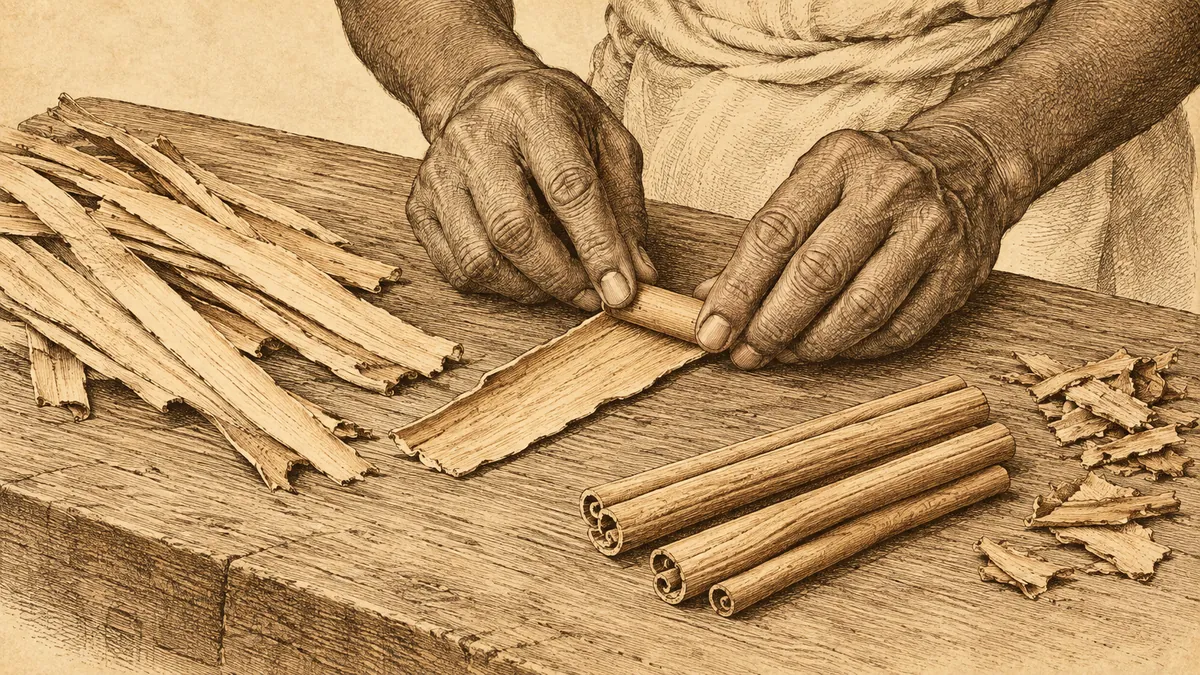
    Galle is not just a historic name. The district is still home to many cinnamon gardens and smallholdings, along with the peelers and workers who turn the bark into finished quills. The craft of peeling the fine inner bark and rolling it by hand, passed down through generations, is very much alive here, and the region supplies a good share of the country’s cinnamon. Much of the work is done on small family plots rather than large plantations, which keeps the traditional, hands-on character of the trade. The way the bark is peeled by hand is covered in our guide to traditional cinnamon peeling methods.

    This mix of small growers and skilled peelers matters for quality as well as heritage. Because so much of the cinnamon around Galle is handled in small batches by experienced workers, the fine, pale, tightly rolled quills that define true Ceylon cinnamon can be produced with care. The knowledge of when to harvest, how to judge the bark and how to roll an even quill is held in families and passed from one generation to the next. In that sense Galle is not only a place on a map but a living reservoir of cinnamon skill, which is part of what keeps Sri Lankan cinnamon distinct from the mass-produced cassia grown elsewhere.

    Galle within the southern cinnamon belt

    Galle does not stand alone. It sits within a broader southern coastal belt that includes neighbouring districts, all sharing the wet-zone climate that cinnamon needs. Together these areas form the core of Sri Lankan cinnamon country. Galle is often singled out because of its history as a port and its long association with the trade, but it is best understood as the heart of a wider growing region rather than the only place cinnamon comes from.

    Galle and the wider cinnamon region at a glance

    How Galle fits into Ceylon cinnamon, past and present.
    AspectGalle’s role
    LocationSouthwest coast, main city of the Galle District, Southern Province
    Climate zoneWet zone, with warm temperatures and high rainfall
    Historic roleMajor fortified port that shipped cinnamon abroad
    Modern roleActive cinnamon-growing, peeling and rolling district
    Typical growersSmallholders and family plots more than large estates

    Why Galle is called the heart of Ceylon cinnamon

    The phrase fits Galle for two reasons. First, its history: the city’s harbour and fort made it a centre of the trade for centuries, so much of the cinnamon that shaped the spice’s reputation abroad passed through here. Second, its geography: the district still grows and processes a large amount of true cinnamon, thanks to a climate and soil that suit the tree. A place that was both the gateway and the garden for a spice has a fair claim to be its heart. For why the spice carries the name Ceylon in the first place, see our guide to why it is called Ceylon cinnamon.

    Frequently asked questions

    Is Galle where Ceylon cinnamon comes from?

    Galle is one of the main areas where Ceylon cinnamon is grown and processed, but not the only one. The district, on Sri Lanka’s southwest coast, sits in the wet-zone heartland of cinnamon country and has a long history as a cinnamon port, which is why it is closely linked with the spice.

    Why was Galle important for the cinnamon trade?

    Galle had a sheltered natural harbour on the southwest coast, close to the cinnamon-growing lowlands. This made it a convenient point to gather and ship the spice abroad, and the Portuguese and Dutch fortified the city partly to control that trade. The old Galle Fort dates from this era.

    Is cinnamon still grown around Galle today?

    Yes. The Galle District remains an active cinnamon-growing region, with many smallholdings and family plots. The traditional craft of peeling and rolling the bark by hand is still practised there, and the area supplies a notable share of Sri Lanka’s cinnamon.

    What makes the Galle area good for cinnamon?

    Galle lies in the wet zone, with warm temperatures, high humidity and steady rainfall, and it has sandy, well-draining coastal soils. These conditions suit the cinnamon tree, which is one reason the southwest coast around Galle became the heart of Ceylon cinnamon country.

    Summary

    Galle, on the southwest coast of Sri Lanka, has been at the heart of Ceylon cinnamon for centuries. Its sheltered harbour made it a major port for shipping the spice abroad during the Portuguese, Dutch and British periods, and the fortified Galle Fort still marks that history. Beyond trade, the Galle District sits in the wet-zone lowlands, where a warm, humid climate and sandy coastal soils suit Cinnamomum verum well, so the area remains an active growing and processing region worked mostly by smallholders and family plots. As both the historic gateway and a living garden for true cinnamon, Galle earns its place as the heart of the Ceylon cinnamon region, one part of the wider southern belt that makes Sri Lanka the home of the world’s finest cinnamon.

    This website provides educational information about Ceylon Cinnamon as a spice and food ingredient. It is not intended to provide medical advice or make health claims.

  • How Cinnamon Quills Are Rolled by Hand

    How Cinnamon Quills Are Rolled by Hand

    Cinnamon quills are rolled by hand from strips of the peeled inner bark of the true cinnamon tree, Cinnamomum verum. After the bark is peeled and lightly dried, a skilled worker nests smaller strips inside larger ones and rolls them into a long, tight tube, joining piece after piece end to end to build a quill that can reach around 42 inches. As the rolled bark dries further it shrinks and tightens into the familiar cinnamon stick. This hand rolling is one of the most skilled steps in making Ceylon cinnamon, and it is done almost entirely by hand rather than by machine.

    The rolled cinnamon quill is the signature form of true cinnamon, and the way it is made by hand is part of what sets Ceylon cinnamon apart. This guide explains the process step by step. It builds on our pillar guide to how Ceylon cinnamon is made.

    The short answer

    Cinnamon quills are made by hand-rolling strips of peeled inner bark into long tubes, nesting smaller pieces inside larger ones and joining them end to end, then drying the rolls so they tighten into sticks. A skilled cinnamon worker peels the fine inner bark, lets it wilt slightly, and rolls it on a flat surface into a continuous quill. The quills are then dried, during which the bark curls and firms into the neat rolled sticks sold as Ceylon cinnamon.

    From peeled bark to rolled quill

    Rolling begins only after the bark has been prepared. The outer bark is scraped away and the fine inner bark is carefully peeled off in strips, a delicate job described in our guide to traditional cinnamon peeling methods. These thin, flexible strips of inner bark are the raw material for the quills. They are usually left for a short time so they lose a little moisture and become easier to handle, and it is these strips that the worker then rolls into shape.

    The nesting technique

    The key to a good quill is a technique often described as pipe within a pipe. Rather than rolling a single strip into a hollow tube, the worker places smaller strips and offcuts of inner bark inside the roll as it is formed. This filling holds the tube together, keeps its shape and makes the quill solid rather than empty. As the bark dries and shrinks, the nested pieces bind together into one firm stick. This is why a true Ceylon cinnamon quill is made of many thin layers packed together, which is one of the features that helps tell it apart from the thicker, single-layer bark of cassia.

    Building a long quill

    A single strip of bark is not long enough to make a full quill on its own, so the worker joins strips end to end as they roll. Piece after piece is added, each one continuing the roll, until a long, continuous quill is built up. Traditionally these are made to standard lengths, commonly around 42 inches or 21 inches, which are later trimmed to the sizes buyers want. The result is a long, even tube of tightly rolled bark, which is the classic form of Ceylon cinnamon before it is cut into shorter sticks.

    Rolling and drying

    The rolling itself is done on a flat surface, using the hands and simple tools, with the worker pressing and turning the bark so it curls into a firm, even roll. Once formed, the quills are set out to dry, usually in shade and air rather than harsh sun, so they dry slowly and keep their pale colour. During drying the bark loses moisture, shrinks and curls more tightly, so the quill firms up into a hard stick that holds its shape. Careful drying at this stage is important for the colour, firmness and keeping quality of the finished cinnamon. Rushed or overly hot drying can darken or crack the quills, so the slow, shaded method is preferred where the finest pale quills are wanted.

    The steps at a glance

    The main steps in hand-rolling Ceylon cinnamon quills.
    StepWhat happens
    PeelingThe fine inner bark is peeled off in strips
    WiltingStrips lose a little moisture and become easier to roll
    NestingSmaller pieces are placed inside the roll to fill it
    RollingStrips are rolled and joined end to end into a long quill
    DryingThe quills dry, shrink and tighten into firm sticks

    Why it is skilled work

    Hand-rolling cinnamon is a craft that takes practice to do well. The worker has to judge the moisture of the bark, roll it tightly and evenly, nest the filling neatly and join the strips smoothly, all by feel. A well-made quill is thin, even, tightly rolled and free of gaps, while a poorly rolled one is loose or uneven. Because the neatness and thinness of the quill affect its grade, the skill of the roller has a direct effect on the value of the cinnamon, a link described in our guide to featherings, quillings and chips, the smaller grades that come from the same process. A practised roller can produce a steady stream of even, well-formed quills, while the pieces that are too small or break along the way are set aside as the lower grades. In this sense the quality of a batch of cinnamon is decided partly at the rolling bench, by the hands and judgement of the person shaping each quill.

    Hand-rolled, not machine-made

    One of the striking things about Ceylon cinnamon is that this rolling is still done by hand. There is no simple machine that can peel the delicate inner bark and roll it into fine quills the way a trained worker can, so the craft has been passed down through generations of cinnamon workers in Sri Lanka. This is part of why true Ceylon cinnamon carries the character it does, and part of why it is more costly than mass-produced cassia. The rolled quill you hold is the product of skilled hands, not a factory line.

    What the rolled quill tells you

    The finished quill is also a useful sign of authenticity. A true Ceylon cinnamon quill is thin and light, made of many soft layers rolled together, so it looks like a tightly wound cigar and can be crumbled fairly easily. This layered, hand-rolled structure comes directly from the process described above. It is quite different from cassia, which is usually a thick, hard, single curl of bark. So understanding how quills are rolled by hand also helps you recognise the real thing, as covered in our guide to what a cinnamon quill is.

    Frequently asked questions

    How are cinnamon quills made?

    Cinnamon quills are made by hand-rolling strips of peeled inner bark into long tubes. A skilled worker nests smaller pieces inside larger ones, rolls the bark on a flat surface and joins strips end to end, then dries the rolls so they shrink and tighten into firm sticks.

    Why are cinnamon quills rolled by hand?

    The fine inner bark of true cinnamon is delicate and must be peeled and rolled with care, which no simple machine does as well as a trained worker. So Ceylon cinnamon quills are still rolled by hand, a craft passed down through generations of cinnamon workers in Sri Lanka.

    How long is a cinnamon quill?

    Traditionally, quills are rolled to standard lengths of around 42 inches or 21 inches, built up by joining many strips of bark end to end. They are then cut to the shorter lengths that buyers want, so the sticks you buy are pieces of these longer quills.

    Why are Ceylon cinnamon quills made of many layers?

    Because of the nesting, or pipe within a pipe, technique. Smaller strips are placed inside the roll as it is formed, so the finished quill is made of many thin layers packed together. This layered structure is one of the features that tells true Ceylon cinnamon apart from cassia.

    Summary

    Cinnamon quills are rolled by hand from strips of the peeled inner bark of Cinnamomum verum. After peeling, the strips are lightly wilted, then rolled on a flat surface using a nesting technique that places smaller pieces inside the roll, joined end to end to build a long, continuous quill of around 42 or 21 inches. As the rolled bark dries, it shrinks and curls into a firm stick made of many thin layers. This is skilled manual work, still done by hand rather than by machine, and the neatness of the roll affects the grade. The layered, hand-rolled quill is both the classic form of Ceylon cinnamon and one of the clearest signs that it is the genuine true cinnamon.

    This website provides educational information about Ceylon Cinnamon as a spice and food ingredient. It is not intended to provide medical advice or make health claims.