Tag: Ceylon cinnamon

  • Reading Cinnamon Labels Correctly

    Reading Cinnamon Labels Correctly

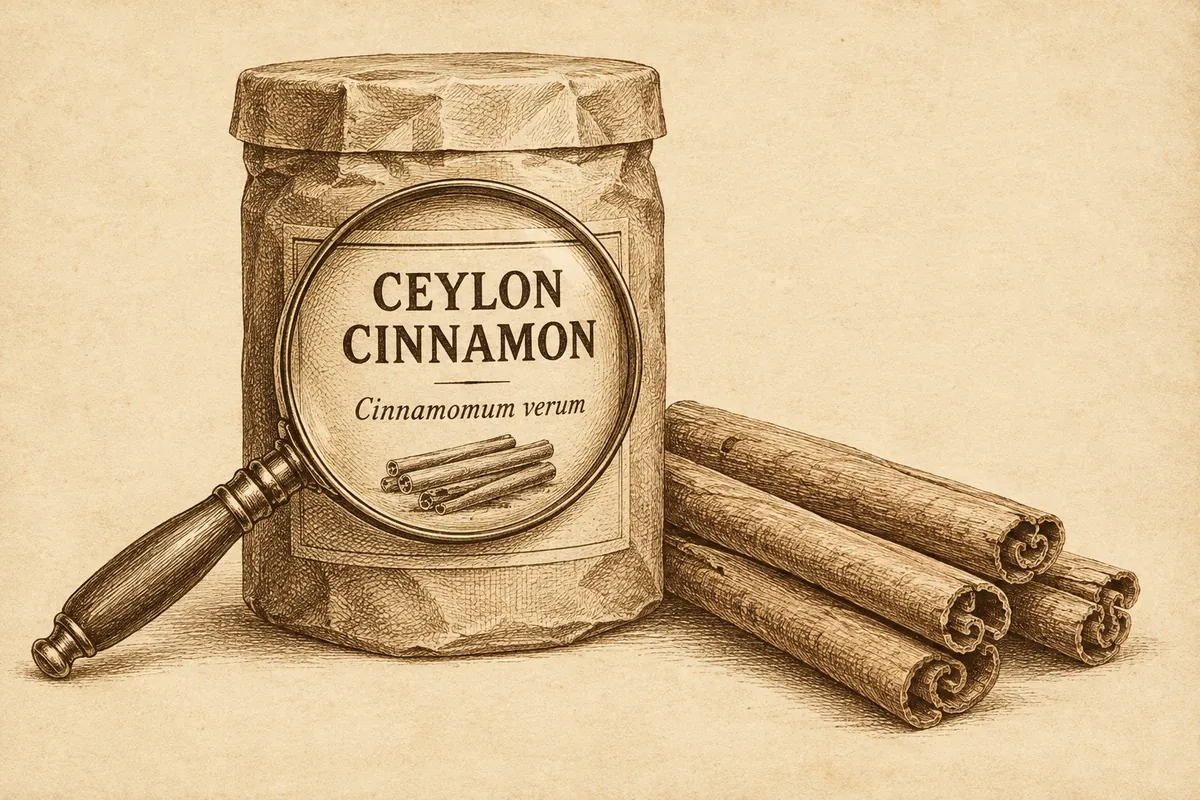
    Reading a cinnamon label correctly means checking three things above all: the species name, the country of origin, and the wording used for the product. True Ceylon cinnamon is the bark of Cinnamomum verum (also written Cinnamomum zeylanicum) from Sri Lanka, so a label that names that species and a Sri Lankan origin, or clearly says “Ceylon cinnamon”, is telling you it is the real thing. A label that only says “cinnamon”, names a different species such as Cinnamomum cassia, or gives an origin like China or Indonesia is usually one of the cheaper cassia types, not true cinnamon.

    Cinnamon labels can be confusing, and the differences that matter are often in the small print. This guide shows you exactly what to look for. It builds on our pillar guide to how to identify authentic Ceylon cinnamon.

    The short answer

    To read a cinnamon label correctly, look for the species name Cinnamomum verum, a Sri Lankan or Ceylon origin, and the words “Ceylon cinnamon” or “true cinnamon”. Those three signs together tell you the product is genuine Ceylon cinnamon. If a label just says “cinnamon” with no species or origin, or names a cassia species such as Cinnamomum cassia, it is most likely a cassia type rather than true cinnamon.

    1. The species name

    The single most reliable thing on any cinnamon label is the botanical, or species, name. True Ceylon cinnamon is Cinnamomum verum, which is the same plant as the older name Cinnamomum zeylanicum. If you see either of those on the label, you are looking at true cinnamon. To understand the name itself, see our guide to what “Cinnamomum verum” actually means.

    The other cinnamon species you may see named are the cassia types. These include Cinnamomum cassia (also called Cinnamomum aromaticum), Cinnamomum burmannii and Cinnamomum loureiroi. All of these are cassia, not true cinnamon. So the species name alone can tell you which kind of cinnamon is in the packet, if the seller has printed it.

    2. The country of origin

    Origin is the second big clue. True Ceylon cinnamon comes from Sri Lanka, the island once called Ceylon, so a label that says “Product of Sri Lanka” or “Ceylon” points to the genuine spice. The cassia types, by contrast, are grown mainly in China, Indonesia and Vietnam, so an origin from those countries usually signals a cassia rather than true cinnamon. Origin and species work best together: a label that names both Cinnamomum verum and Sri Lanka gives you the clearest possible confirmation.

    3. The product wording

    The words a seller chooses also carry meaning. Phrases such as “Ceylon cinnamon”, “true cinnamon” or “pure Ceylon cinnamon” indicate the genuine article, and reputable sellers of true cinnamon tend to say so clearly because it is a selling point. A plain label that only says “cinnamon”, with no species and no origin, is a warning sign: most of the cinnamon sold this way around the world is actually cassia. This is not always deliberate, since in many countries the word cinnamon is legally allowed for cassia too, but it does mean a bare “cinnamon” label tells you very little.

    Label clues at a glance

    How to read common cinnamon label clues.
    On the labelLikely means
    Cinnamomum verum or zeylanicumTrue Ceylon cinnamon
    “Ceylon cinnamon” / “true cinnamon”True Ceylon cinnamon
    Product of Sri LankaTrue Ceylon cinnamon
    Cinnamomum cassia, burmannii or loureiroiCassia, not true cinnamon
    Origin China, Indonesia or VietnamUsually cassia
    Just “cinnamon”, no species or originUnknown, often cassia

    Grade codes on the label

    Some Ceylon cinnamon labels also carry grade codes such as Alba, C5 Special or C5. These describe the thickness and quality of the quills and are a good sign, because they show a seller who knows and is open about their product. A grade code does not by itself prove the species, but sellers who use the proper Ceylon grading are usually selling genuine true cinnamon. To understand these codes, see our guide to Continental grade Ceylon cinnamon, which explains the common C grades.

    Ceylon or Sri Lankan on the label

    You may notice that some labels say “Ceylon cinnamon” while others say “Sri Lankan cinnamon”. These mean the same thing, because Ceylon was the former name of Sri Lanka. Both point to true cinnamon from the same island. The older name Ceylon is more common on labels because it became the established name for the spice, as explained in our guide to why it is called Ceylon cinnamon. So do not be thrown by seeing either term; they are two names for the same genuine spice.

    What labels do not tell you

    It is worth knowing what a label cannot confirm on its own. Words like “natural”, “premium” or “finest” are marketing terms and do not tell you the species. Certifications such as organic show how the spice was grown, not whether it is true cinnamon or cassia. Even a picture of rolled quills on the front is not proof, since cassia is also sold in stick form. This is why the species name and origin matter so much: they are the facts, while the rest is presentation. When those key facts are missing, it is reasonable to treat the product as uncertain.

    A quick label checklist

    When you pick up a packet of cinnamon, a simple routine helps. First, look for the species name and check whether it is Cinnamomum verum or zeylanicum. Second, look for the origin and see whether it says Sri Lanka or Ceylon. Third, read the product name for the words Ceylon or true cinnamon. If all three point the same way, you can be confident it is genuine Ceylon cinnamon. If the label is vague on all three, it is safer to assume it may be cassia and to look for a clearer product instead.

    Where to look on the packet

    The most useful information is often not on the front of the packet. The front usually carries the brand name and a large word like “Cinnamon”, chosen to catch the eye rather than to inform. The species name and country of origin are more often found in the small print on the back or side, near the ingredients or the packer’s details. So it pays to turn the packet over and read the fine print rather than judging by the front alone. If you are buying online, the same applies to the product description: look past the headline for a species name and an origin, and treat their absence as a reason to ask the seller before buying.

    Reading loose and market labels

    Not all cinnamon comes in printed packets. At markets, spice shops and bulk bins, the label may be a simple sign or a handwritten card. Here the same rules apply, but you may need to ask. A knowledgeable seller of true cinnamon will happily tell you the species and that it is Ceylon or Sri Lankan, and will often point to the soft, thin, layered quills as proof. If a seller cannot say what species it is or where it is from, that uncertainty is itself useful information. Asking two simple questions, what species is it and where is it from, quickly separates sellers who know their cinnamon from those who do not.

    Frequently asked questions

    How do I know if a cinnamon label is true Ceylon cinnamon?

    Look for the species name Cinnamomum verum (or Cinnamomum zeylanicum), an origin of Sri Lanka or Ceylon, and the words “Ceylon cinnamon” or “true cinnamon”. When a label shows these, it is genuine Ceylon cinnamon. A label that only says “cinnamon” with no species or origin is often cassia.

    What species names mean it is not Ceylon cinnamon?

    The cassia types are named Cinnamomum cassia (or Cinnamomum aromaticum), Cinnamomum burmannii and Cinnamomum loureiroi. If a label names any of these, it is cassia rather than true Ceylon cinnamon.

    Does “Ceylon” or “Sri Lankan” on a label matter?

    Both mean the same thing. Ceylon was the former name of Sri Lanka, so “Ceylon cinnamon” and “Sri Lankan cinnamon” both refer to true cinnamon from that island. The name Ceylon is simply more common on labels.

    Why do some labels just say “cinnamon”?

    In many countries the word cinnamon is legally allowed for cassia as well as true cinnamon, so a bare “cinnamon” label does not tell you which one it is. Because most cinnamon sold this way is cassia, a label with no species or origin is best treated as uncertain.

    Summary

    Reading a cinnamon label correctly comes down to three checks: the species name, the origin, and the product wording. True Ceylon cinnamon is Cinnamomum verum (or Cinnamomum zeylanicum) from Sri Lanka, so a label naming that species, a Sri Lankan or Ceylon origin, and the words Ceylon or true cinnamon is showing you the genuine spice. Cassia types are named Cinnamomum cassia, burmannii or loureiroi and usually come from China, Indonesia or Vietnam, while a bare “cinnamon” label with no species or origin is often cassia by default. Grade codes and the Ceylon or Sri Lankan wording add further confidence, but marketing words and certifications do not confirm the species. Check the facts on the label, and the true cinnamon reveals itself.

    This website provides educational information about Ceylon Cinnamon as a spice and food ingredient. It is not intended to provide medical advice or make health claims.

  • Cinnamon in the Bible and Antiquity

    Cinnamon in the Bible and Antiquity

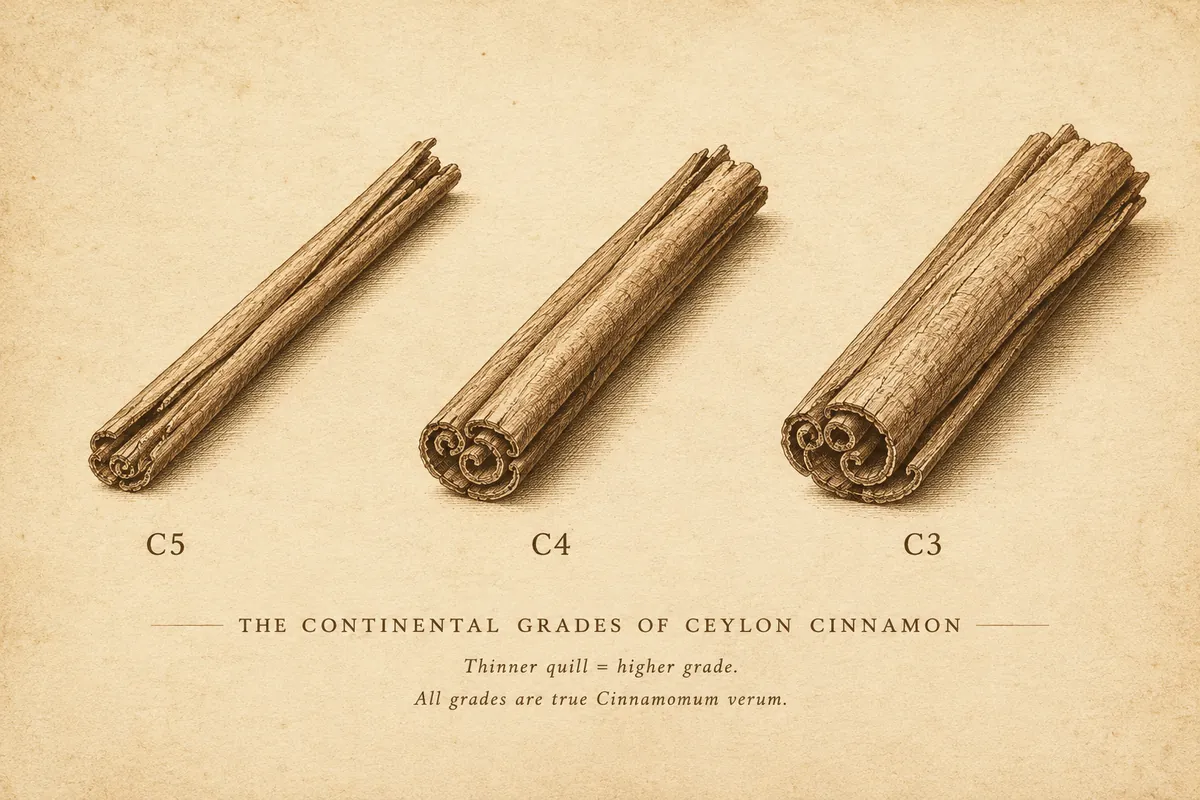
    Cinnamon appears in the Bible and across the ancient world as one of the most prized spices of antiquity. In the Hebrew Bible it is named among the ingredients of a sacred anointing oil in the Book of Exodus, and it appears again in Proverbs, the Song of Songs and, in the New Testament, the Book of Revelation. Beyond scripture, cinnamon was valued by the ancient Egyptians, Greeks and Romans as a costly luxury for perfume, incense and ritual, carried west along secret trade routes whose true source lay in and around Sri Lanka, the home of true cinnamon, Cinnamomum verum.

    Few spices carry as much history as cinnamon. This guide looks at where it appears in the Bible and how it was treasured in antiquity. It builds on our pillar guide to the history of Ceylon cinnamon.

    The short answer

    Cinnamon is mentioned several times in the Bible and was one of the most valued luxury spices of the ancient world. In scripture it appears as an ingredient of a holy anointing oil in Exodus, as a perfume in Proverbs and the Song of Songs, and among the goods of a great trading city in Revelation. In wider antiquity, Egyptians, Greeks and Romans prized cinnamon for perfume, incense and ceremony, and its high price and mysterious origin made it a symbol of wealth and the distant East.

    Cinnamon in the Bible

    Cinnamon is named directly in several books of the Bible, always as a fragrant, precious substance rather than an everyday food. The references show how highly it was regarded in the ancient Near East.

    The anointing oil in Exodus

    The best known biblical mention comes in the Book of Exodus, where cinnamon is listed among the ingredients of a sacred anointing oil, alongside other costly aromatics such as myrrh and cassia. This oil was set apart for holy use, which tells us that cinnamon was considered fine and precious enough to belong in a sacred preparation. Being placed beside myrrh, one of the most treasured perfumes of the ancient world, shows the high standing cinnamon held.

    Proverbs and the Song of Songs

    Cinnamon also appears as a perfume. In the Book of Proverbs it is named among the scents used to perfume a bed, and in the Song of Songs it is listed among the choice spices of a fragrant garden, together with other aromatics. In both cases cinnamon stands for luxury, sweetness and desirability. These poetic uses confirm that, in the biblical world, cinnamon was a byword for something rare and delightful to the senses. The same spice appears in these very different settings, sacred ritual and love poetry alike, which shows how widely admired its fragrance was.

    Revelation and the spice trade

    In the New Testament, cinnamon appears in the Book of Revelation among a long list of precious goods traded by a great commercial city. Its place on that list, beside gold, fine cloth and other luxuries, reflects the reality of the ancient spice trade, in which cinnamon was a high-value commodity carried over great distances. The mention is a reminder that, by the time of the early Roman Empire, cinnamon was a well established article of international trade.

    Cinnamon in ancient Egypt

    Outside the Bible, cinnamon was treasured across the ancient world, and Egypt is one of the earliest places associated with it. The ancient Egyptians valued fragrant spices and resins for perfume, incense and their embalming practices, and cinnamon was among the aromatics linked to these uses. Because it had to be brought from far away, it was a mark of wealth and status, reserved for temples, the wealthy and the rites of the dead rather than everyday cooking. The care the Egyptians took over fragrant spices, and the long distances these goods travelled to reach the Nile, help explain why cinnamon carried such prestige throughout the ancient Mediterranean. Our guide to cinnamon in ancient Egypt looks at this early chapter in more detail.

    Cinnamon in ancient Greece and Rome

    The Greeks and Romans wrote about cinnamon with a mixture of admiration and mystery. The Greek historian Herodotus recorded a famous tale that cinnamon was gathered from the nests of great birds, a story that shows how little the Mediterranean world knew about where the spice truly came from. Traders, most likely Arab middlemen, deliberately kept the real source secret to protect their business and justify the high prices.

    In Rome, cinnamon was a costly import. The Roman writer Pliny the Elder complained about its high price and noted how far it travelled to reach Roman markets. Cinnamon was burned as fragrant incense and used in perfumes, and Roman sources describe it being used lavishly at grand occasions as a display of wealth. One much repeated anecdote, recorded by Pliny, tells that the Emperor Nero burned a huge quantity of cinnamon at the funeral of his wife, a gesture meant to show extraordinary wealth and grief. Whether or not every detail is exact, the story captures how cinnamon was seen: something so costly that using it freely was itself a statement. Throughout the classical world, then, cinnamon was firmly a luxury, associated with the exotic East and with those who could afford the finest things.

    Where did biblical cinnamon come from?

    Scholars have long discussed exactly which plant the cinnamon of the Bible and antiquity refers to. The Hebrew word usually translated as cinnamon is qinnamon, and ancient writers were often vague about the botanical details, partly because traders hid the true source. What is clear is that the finest true cinnamon, Cinnamomum verum, is native to Sri Lanka, and that the ancient spice routes ultimately connected the Mediterranean world with South Asia. So while the precise identity of every ancient reference is debated, the story of cinnamon in antiquity is bound up with the same true cinnamon and the same distant island that give us Ceylon cinnamon today, which is part of why the spice took on the island’s name, as explained in our guide to why it is called Ceylon cinnamon.

    Why cinnamon was so valued in antiquity

    Several things combined to make cinnamon precious in the ancient world. It had a warm, sweet, lasting fragrance that suited perfume, incense and ceremony. It came from far away, along difficult routes, so supply was limited and prices were high. And its true origin was hidden, which added an air of mystery and wonder. Together these gave cinnamon a reputation as a spice fit for temples, kings and the wealthy. That reputation for rarity and value has echoes today, and it is part of the reason true Ceylon cinnamon is still regarded as a fine spice, as our guide to why Ceylon cinnamon is so expensive explains.

    Frequently asked questions

    Is cinnamon mentioned in the Bible?

    Yes. Cinnamon is named several times in the Bible. It appears as an ingredient of a sacred anointing oil in the Book of Exodus, as a perfume in Proverbs and the Song of Songs, and among the luxury goods of a great trading city in the Book of Revelation.

    What was cinnamon used for in ancient times?

    In antiquity cinnamon was used mainly as a fragrant luxury rather than an everyday food. It featured in perfumes, incense, anointing oils and religious ceremony, and it was a high-value item in the ancient spice trade, treasured by the Egyptians, Greeks and Romans.

    Where did cinnamon come from in antiquity?

    The finest true cinnamon, Cinnamomum verum, is native to Sri Lanka, and the ancient spice routes linked South Asia with the Mediterranean world. Traders kept the true source secret, so ancient Greek and Roman writers were often unsure exactly where it grew.

    Why was cinnamon so expensive in the ancient world?

    Cinnamon was costly because it came from far away over difficult trade routes, its supply was limited, and its true origin was hidden by the merchants who traded it. Its fine fragrance and rarity made it a symbol of wealth and status.

    Summary

    Cinnamon has a long and storied place in the Bible and in antiquity. In scripture it is named as an ingredient of a sacred anointing oil in Exodus, as a perfume in Proverbs and the Song of Songs, and among the precious goods of a great city in Revelation, always standing for something fragrant and precious. In the wider ancient world, the Egyptians, Greeks and Romans prized cinnamon for perfume, incense and ceremony, and writers such as Herodotus and Pliny recorded both its high price and the mystery around its origin. That origin lay in the distant East, and the finest true cinnamon, Cinnamomum verum, comes from Sri Lanka, tying these ancient stories to the same Ceylon cinnamon valued as a fine spice today.

    This website provides educational information about Ceylon Cinnamon as a spice and food ingredient. It is not intended to provide medical advice or make health claims.
  • Continental Grade Ceylon Cinnamon Explained

    Continental Grade Ceylon Cinnamon Explained

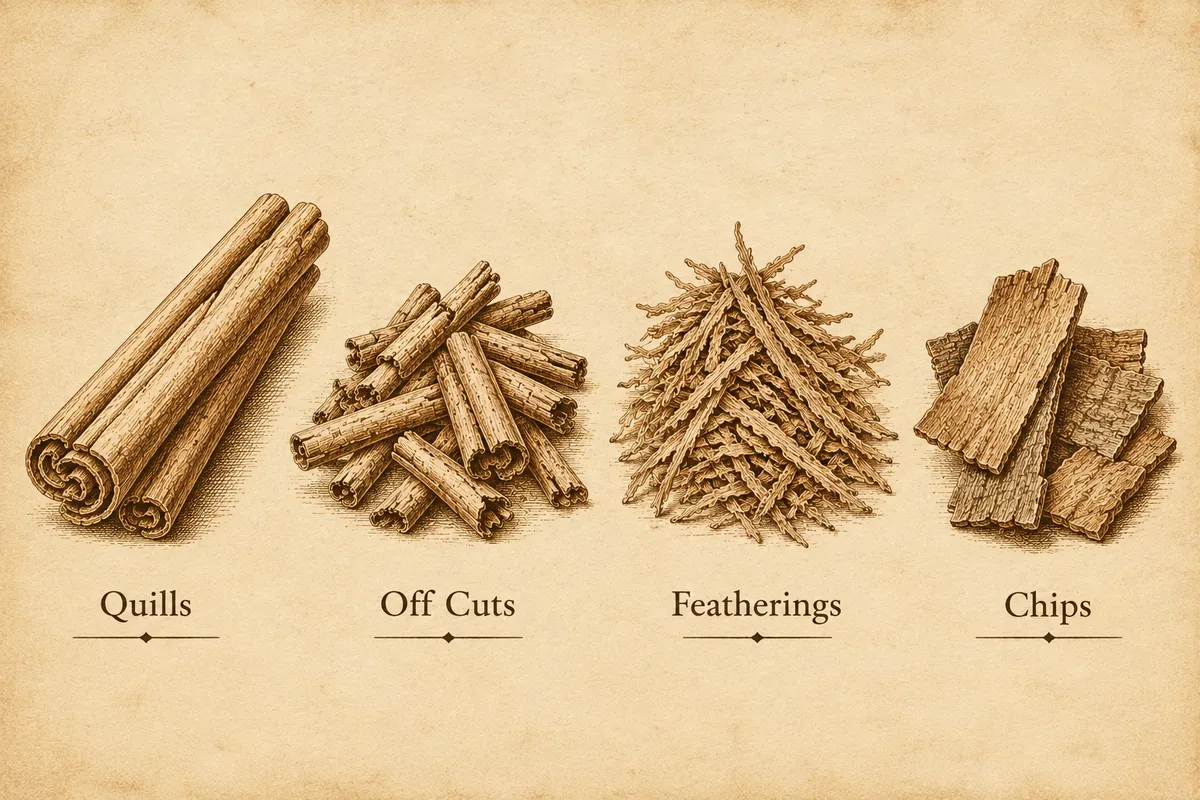
    Continental grade Ceylon cinnamon is one of the main quality groups of true cinnamon quills, sitting just below the finest Alba grade and above the coarser Mexican and Hamburg grades. The name is often shortened to the letter “C”, and the group includes the well known sub-grades C5 Special, C5, C4 and C3, where a higher number means a thinner, finer quill. Continental quills are neat, moderately thin rolls of the inner bark of Cinnamomum verum from Sri Lanka, and they are among the most widely traded grades of Ceylon cinnamon.

    If you have seen codes like “C5” on a bag of cinnamon and wondered what they mean, this guide explains the Continental grade and where it fits. It builds on our full guide to Ceylon cinnamon grades.

    The short answer

    Continental grade is a group of Ceylon cinnamon quill grades, marked with a “C”, that sit between the top Alba grade and the thicker Mexican and Hamburg grades. Within the Continental group, quills are ranked by how thin they are, using codes such as C5 Special, C5, C4 and C3, with the higher numbers being the thinner and finer quills. Continental cinnamon is good quality true cinnamon, popular for everyday use because it balances fine character with a sensible price.

    What “Continental” means in cinnamon grading

    Ceylon cinnamon quills are sorted into named grade groups based on their thickness and appearance. The main groups, from finest to coarsest, are Alba, Continental, Mexican and Hamburg. Continental is the second group, so it is a high grade but not the very finest. The word itself is simply the traditional trade name for this group, and it is usually written as the single letter C on grade codes. So when you see a Ceylon cinnamon grade beginning with C, it belongs to the Continental family.

    The C sub-grades explained

    Within the Continental group there are several sub-grades, and this is where the numbers come in. The quills are graded by diameter, which is measured across the rolled stick. Thinner quills are considered finer and sit higher in the grading, so the sub-grades run in order of thickness.

    The common Continental sub-grades are C5 Special, C5, C4 and C3. C5 Special is the thinnest and finest of the Continental quills, close in quality to the top Alba grade, which is why it is prized. As the number falls from C5 to C3, the quills get gradually thicker. All of them are still good quality true cinnamon; the number simply tells you how thin and refined the quill is. Our detailed guide to C5 Special Ceylon cinnamon looks at the top Continental grade in depth.

    How Continental compares with the other grades

    It helps to see the Continental group next to the others. The four main grade groups differ mainly in the thickness of the quills, which affects their fineness and price.

    The main Ceylon cinnamon quill grade groups compared.
    Grade groupRelative thicknessFinenessTypical position
    AlbaThinnestFinestTop grade, premium
    Continental (C)Thin to mediumHighFine everyday grade
    Mexican (M)MediumGoodMid grade
    Hamburg (H)ThickestCoarserLower grade

    As the table shows, Continental sits near the top. It is finer than the Mexican and Hamburg grades and only a step below Alba. This is why Continental grades, and C5 in particular, are a popular choice for people who want fine true cinnamon without paying the premium for Alba.

    How Continental grade quills are judged

    The grading of Continental cinnamon is based mainly on the diameter of the quills, but a few other things matter too. Graders look at how thin and even the quills are, how neatly they are rolled, their colour, and how free they are of blemishes. A fine Continental quill is thin, smooth, pale tan in colour and tightly rolled. Because the grade is tied to thickness, thinner quills reach the higher C numbers. The result is a clear, consistent system that lets buyers know what to expect from a given grade code without seeing the cinnamon in person.

    What Continental grade is used for

    Continental grade Ceylon cinnamon is a versatile, everyday grade. It is fine enough to be enjoyed as whole quills in cooking, drinks and desserts, yet more affordable than the top Alba grade, so it is a common choice for home cooks and for retail packs of Ceylon cinnamon sticks. The thinner Continental quills, such as C5 Special and C5, are often chosen where appearance and delicacy matter, while the slightly thicker C4 and C3 are practical all-rounders. Whichever sub-grade you choose, you are getting genuine Cinnamomum verum, so the flavour and aroma are the fine, sweet, delicate character of true cinnamon. For most kitchens, a Continental grade strikes a comfortable middle ground: the quills look attractive in a jar or on a plate, they grind and steep well, and they do not cost as much as the rarest Alba sticks. This is a large part of why Continental cinnamon, and C5 in particular, is so widely stocked by retailers around the world.

    Continental grade on labels

    You will most often meet the Continental grade as a short code on a label or a supplier’s grade list, such as “C5” or “C5 Special”. Some sellers write out “Continental” in full, while others use only the letter and number. If you see a Ceylon cinnamon product marked with a C code, you now know it is a Continental grade and roughly where it sits: a fine quill, close to the top of the range. When a label gives both the grade and the species, Cinnamomum verum, together, it is telling you two useful things at once, the exact grade of the quills and that they are genuine true cinnamon. If a product only says “cinnamon” with no grade or species, there is less to go on, so the grade codes are a helpful sign of a seller who is open about what they sell.

    Continental grade and quality

    It is worth repeating that grade and quality are not quite the same thing. The Continental grade tells you about the thickness and neatness of the quills, not whether the cinnamon is genuine. A C3 quill of true Ceylon cinnamon is still real, fine cinnamon, while a thick, cheap stick of cassia is not, whatever it looks like. So the most important checks remain the species and origin: genuine Cinnamomum verum from Sri Lanka. Once you know you have true cinnamon, the Continental grade then tells you how thin and refined the particular quills are, which relates to the wider family of small grades and by-products covered in our glossary of featherings, quillings and chips.

    Frequently asked questions

    What is Continental grade Ceylon cinnamon?

    Continental grade is one of the main groups of Ceylon cinnamon quill grades, marked with a C. It sits below the finest Alba grade and above the coarser Mexican and Hamburg grades, and it includes sub-grades such as C5 Special, C5, C4 and C3, ranked by how thin the quills are.

    What do the C numbers mean?

    The C stands for Continental, and the number refers to the thickness of the quill. Higher numbers, such as C5, are thinner and finer, while lower numbers, such as C3, are slightly thicker. C5 Special is the thinnest and finest of the Continental grades.

    Is Continental grade good quality?

    Yes. Continental is a high grade of true Ceylon cinnamon, second only to Alba among the main groups. It is finer than the Mexican and Hamburg grades and is a popular everyday choice because it balances fine quality with a sensible price.

    Is Continental grade better than Alba?

    Alba is the top grade, with the thinnest quills, so it is graded higher than Continental. Continental, especially C5 Special, comes close to Alba in fineness at a lower price. Both are genuine Cinnamomum verum, so the difference is mainly in the thinness and neatness of the quills, not in whether the cinnamon is true.

    Summary

    Continental grade is one of the four main grade groups of Ceylon cinnamon quills, marked with the letter C and sitting just below the finest Alba grade, above the coarser Mexican and Hamburg grades. Within the Continental group, quills are ranked by thickness using codes such as C5 Special, C5, C4 and C3, where higher numbers mean thinner, finer quills and C5 Special is the top of the group. Continental cinnamon is fine, good quality true cinnamon from Cinnamomum verum, popular as an everyday grade because it offers much of the delicacy of Alba at a more accessible price. As always, the grade describes the thinness and neatness of the quills, while the species and Sri Lankan origin are what confirm that it is genuine Ceylon cinnamon.

    This website provides educational information about Ceylon Cinnamon as a spice and food ingredient. It is not intended to provide medical advice or make health claims.
  • Feathering, Quilling and Chips: A Glossary

    Feathering, Quilling and Chips: A Glossary

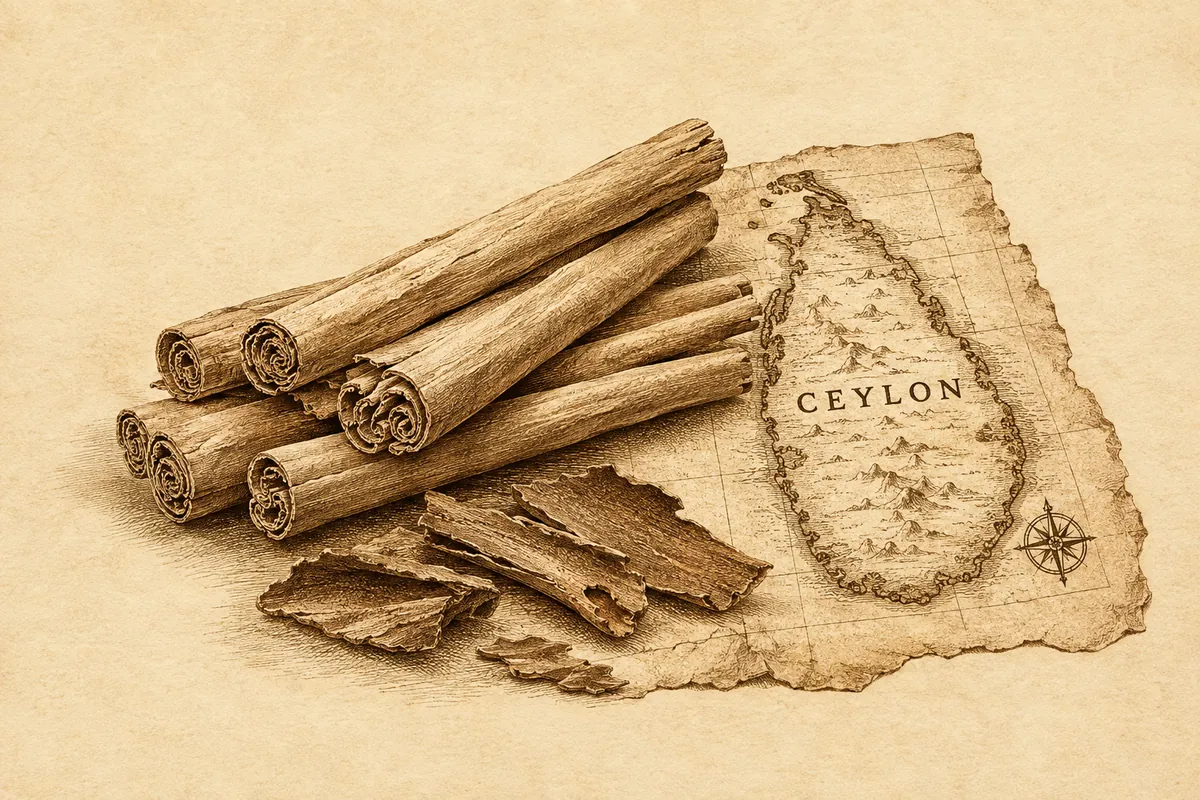
    Off cuts, featherings, quillings and chips are the smaller grades and by-products of Ceylon cinnamon, made from the pieces that are left over when the prime rolled quills are formed and trimmed to size. Off cuts are the short pieces cut off when a quill is trimmed to a customer’s required length; featherings are the thin, feathery inner-bark shavings; quillings are the broken fragments of quills; and chips are the flat pieces of bark that cannot be rolled. All come from the same true cinnamon tree, Cinnamomum verum, and are mostly ground into powder or distilled for oil rather than sold as whole sticks.

    These three words appear on grade lists and in the cinnamon trade, and they often confuse newcomers. This short glossary explains what each one means and how they relate to the familiar cinnamon quill. It builds on our full guide to Ceylon cinnamon grades.

    The short answer

    Off cuts, featherings, quillings and chips are the smaller, lower grades of Ceylon cinnamon left over from making and trimming quills. Off cuts are the pieces cut off when a quill is trimmed to a set length, quillings are broken bits of quill, featherings are thin feathery shavings and small inner-bark curls, and chips are flat pieces of bark that were never rolled. None of them are waste: they carry the same aroma and flavour as the prime quills and are widely used, mostly after grinding or distillation.

    Starting point: the cinnamon quill

    To understand these terms, it helps to start with the quill, the best known form of Ceylon cinnamon. A quill is a tube of dried inner bark, rolled by hand into the familiar stick shape. Making quills is skilled work, and not every piece of bark ends up as a long, perfect quill. The pieces that are too short, too small or the wrong shape become the grades described below. For the full picture of the quill itself, see our guide to what a cinnamon quill is.

    Off cuts

    Off cuts are the short pieces cut from a quill when it is trimmed to a required length. Ceylon cinnamon quills are traditionally hand-made to standard lengths, most often 42 inches or 21 inches. When a customer or buyer needs a particular size, the long quills are cut down to that length, and the remaining cut pieces are gathered and sold as off cuts. They are made of exactly the same fine rolled inner bark as the full quills, and carry the same aroma and taste, so an off cut is really just a shorter length of prime cinnamon. Because they are short and uneven, they cost less than full-length sticks and are a practical choice for cooking, steeping or grinding, where the length of the quill does not matter.

    Quillings

    Quillings are broken pieces and short offcuts of quills. When quills are trimmed to length, or when longer quills break during handling and transport, the small fragments left behind are gathered together and sold as quillings. They are made of exactly the same rolled inner bark as full quills, so they have the same fine aroma and taste. Because they are shorter and broken, they cost less than whole quills and are often chosen for grinding into powder, where the length of the piece does not matter. In short, quillings are true cinnamon in smaller, broken form.

    Featherings

    Featherings, sometimes called feather cinnamon, are the thin, light, feathery pieces of inner bark. During peeling and rolling, small curls and delicate shavings of the inner bark are produced that are too small and fine to form into proper quills. These wispy, feather-like pieces are collected as featherings. They are among the lightest grades of cinnamon and, like quillings, are usually ground or used where whole sticks are not needed. The name captures their look well: light, curly and feather-like.

    Chips

    Chips are flat, unrolled pieces of cinnamon bark. Some bark cannot be made into quills at all, for example thicker or coarser pieces, or the outer bark that is scraped away. These pieces are dried flat and sold as cinnamon chips. Chips are the most basic grade and are used mostly for grinding into powder, for making cinnamon oil by distillation, or for steeping in liquids where a whole quill is not required. Because they are flat rather than rolled, they are easy to tell apart from quills and quillings at a glance.

    Featherings, quillings and chips at a glance

    The by-product grades of Ceylon cinnamon compared.
    TermWhat it isFormCommon use
    QuillPrime rolled inner barkLong rolled tube (42 or 21 inches)Whole sticks, display, cooking
    Off cutsPieces cut when trimming quills to sizeShort rolled piecesCooking, steeping, grinding
    QuillingsBroken pieces of quillShort rolled fragmentsGrinding into powder
    FeatheringsThin feathery inner-bark shavingsLight curls and sliversGrinding, blending
    ChipsFlat unrolled bark piecesFlat chipsPowder, oil, steeping

    Why these grades exist

    All of these grades exist because of how Ceylon cinnamon is made by hand. Peelers separate the inner bark, which is rolled into quills as it dries. The process naturally produces offcuts, breakages, shavings and pieces of bark that will not roll. Rather than being thrown away, these are carefully sorted into featherings, quillings and chips. This sorting is part of good, low-waste cinnamon production, and it means that every usable piece of the fragrant inner bark finds a purpose. The grades are simply a way of organising the different sizes and shapes that come off the tree. This careful sorting also helps buyers, because it lets them choose exactly the format they need. Someone who wants long sticks for display buys quills, while someone who plans to grind their own powder can buy quillings or featherings and pay less for the same fragrant bark. In this sense the grades are as much about matching cinnamon to its use as they are about the pieces themselves.

    Are they lower quality?

    It is important to be clear that lower grade does not mean poor quality here. Featherings, quillings and chips from true Ceylon cinnamon are still true Ceylon cinnamon, with the same sweet, delicate character as the quills. The grade mainly describes the size and shape of the piece, not how good it tastes. What matters most for quality is still the species and origin: genuine Cinnamomum verum from Sri Lanka. A feathering of real Ceylon cinnamon is finer than a whole quill of cassia. So these grades are best thought of as different formats of the same good spice, chosen to suit different jobs.

    How each grade is used

    Because featherings, quillings and chips are smaller and less tidy than whole quills, they are rarely sold as display sticks. Instead, most of them are ground into cinnamon powder, where size and shape do not matter and the flavour is what counts, a process described in our guide to ground Ceylon cinnamon. Chips in particular are also used to make cinnamon oil by distillation, and for steeping in drinks and syrups. This is why buying quillings, featherings or chips can be a sensible choice when you plan to grind or infuse the cinnamon anyway, since you get the true spice at a lower price than perfect whole quills.

    How the grades relate to the wider grading system

    Featherings, quillings and chips sit alongside the more familiar quill grades such as Alba, Continental and the C5 and C4 codes. Where those grades describe the quality and diameter of the rolled quills, featherings, quillings and chips describe the smaller pieces that fall outside the quill grades. Together they make up the full range of Ceylon cinnamon products. To see where the premium rolled grades fit, our guide to C5 Special Ceylon cinnamon explains one of the well known quill grades in detail.

    Frequently asked questions

    What are cinnamon off cuts?

    Off cuts are the short pieces cut from Ceylon cinnamon quills when they are trimmed to a set length. Quills are traditionally made to 42 inches or 21 inches, and when a specific size is needed they are cut down, leaving off cuts. These are the same fine rolled bark as full quills, just shorter, and cost less.

    What are cinnamon featherings?

    Featherings are the thin, light, feathery pieces of Ceylon cinnamon inner bark: small curls and shavings that are too fine to roll into full quills. They are collected during peeling and rolling and are usually ground into powder or used in blends. They carry the same aroma and flavour as the quills.

    What are cinnamon quillings?

    Quillings are the broken pieces and short offcuts of cinnamon quills. They are the same rolled inner bark as whole quills, just in smaller, broken form, and they cost less. Quillings are commonly ground into cinnamon powder.

    What are cinnamon chips?

    Chips are flat, unrolled pieces of cinnamon bark that cannot be made into quills. They are dried flat and used mainly for grinding into powder, making cinnamon oil, or steeping in drinks and syrups.

    Are featherings, quillings and chips lower quality?

    Not in flavour. They are lower grades only in the sense of size and shape, not taste. Featherings, quillings and chips from true Ceylon cinnamon have the same fine, sweet character as the quills. Quality depends on the species and origin, genuine Cinnamomum verum from Sri Lanka, more than on the format.

    Summary

    Off cuts, featherings, quillings and chips are the smaller grades and by-products of Ceylon cinnamon, all made from the same true cinnamon tree, Cinnamomum verum. Off cuts are the pieces cut off when a quill is trimmed from its traditional 42-inch or 21-inch length to a required size, quillings are broken pieces of quill, featherings are thin feathery inner-bark shavings, and chips are flat pieces of bark that were never rolled. They arise naturally from the hand-made process of forming quills, and rather than being wasted they are sorted and sold, mostly for grinding into powder or distilling into oil. Above all, lower grade here means smaller and less tidy, not poorer in taste: these formats carry the same fine aroma and flavour as the prime quills, which makes them a practical way to buy genuine Ceylon cinnamon when you plan to grind or infuse it. The key point is that the grade name tells you about the shape and size of the piece, while the species and origin tell you about the quality, and it is the second of these that decides whether you are getting fine true cinnamon.

    This website provides educational information about Ceylon Cinnamon as a spice and food ingredient. It is not intended to provide medical advice or make health claims.

  • Why Is It Called Ceylon Cinnamon?

    Why Is It Called Ceylon Cinnamon?

    Ceylon cinnamon is called “Ceylon” cinnamon because it comes from the island of Sri Lanka, which was known as Ceylon for much of its history. This island is the native home of the true cinnamon tree, Cinnamomum verum, and for centuries it was the world’s source of the finest cinnamon. The name stuck to the spice as a mark of origin and quality, and it remains in use today even though the country itself is now called Sri Lanka.

    The name “Ceylon cinnamon” carries a lot of history in two words. This guide explains where the name comes from, why it is still used, and what it tells you about the spice. It builds on our pillar guide to what true Ceylon cinnamon is.

    The short answer

    It is called Ceylon cinnamon because it originates in Sri Lanka, the island formerly named Ceylon, which is the native home of the true cinnamon tree Cinnamomum verum. “Ceylon” was the English name for the country until 1972, and by then the island’s cinnamon was already famous worldwide under that name. The spice kept the name as a recognised sign of its origin and its fine quality, so “Ceylon cinnamon” still means cinnamon from Sri Lanka today.

    Ceylon was the old name for Sri Lanka

    The key to the name is simple: Ceylon and Sri Lanka are the same place. Ceylon was the name used for the island for a long period, especially during British rule, and it remained the country’s official name until 1972, when it was changed to Sri Lanka. During the centuries when the island was called Ceylon, its cinnamon became known around the world, and the spice was named after the place it came from. So Ceylon cinnamon simply means cinnamon from the island once called Ceylon, which is modern Sri Lanka.

    Where the word “Ceylon” itself came from

    The word Ceylon has a long journey behind it. It grew out of older names for the island that passed through several languages. Traders and travellers from different parts of the world each had their own version of the island’s name, and over time the European form settled into “Ceylon” in English, “Ceilão” in Portuguese and “Zeylan” in Dutch. Each of these came from earlier names rooted in the island’s own history. By the time English speakers were using “Ceylon”, it was the everyday name for both the island and, before long, for its most famous spice.

    What matters for the spice is not the exact path of the word, but the fact that “Ceylon” was the name the wider world knew the island by during the very period when its cinnamon trade was at its height. Ships carried the bark to distant ports labelled as coming from Ceylon, merchants bought and sold it under that name, and cooks came to ask for it by name. In this way the word became attached to the spice as firmly as it was to the island, so that centuries later people still reach for “Ceylon cinnamon” without always knowing that Ceylon was ever a country at all.

    The island is the home of true cinnamon

    The name is not only about geography. It also points to the plant. The true cinnamon tree, Cinnamomum verum, is native to Sri Lanka, and the spice made from its bark has been valued for its fine, sweet, delicate character since ancient times. Because the island was the original and finest source of this spice, the world came to associate the very best cinnamon with the island’s name. For more on the botanical name behind the tree, see our guide to what “Cinnamomum verum” actually means. The connection between the spice and its homeland is also why the island’s long trading history is so bound up with cinnamon, as told in our history of Ceylon cinnamon.

    The name marks quality, not just origin

    Over time, “Ceylon cinnamon” came to mean more than just “cinnamon from a certain island”. It became a mark of quality. Because the island produced cinnamon of a fine, mild, sweet kind, buyers and cooks learned that the Ceylon name signalled the real, true spice rather than a rougher substitute. This reputation is one reason the name has lasted. When people say Ceylon cinnamon, they usually mean the premium, authentic spice, and part of the reason it commands attention is bound up with why it is prized, a theme covered in our guide to why Ceylon cinnamon is so expensive.

    Ceylon cinnamon versus cassia

    The name also does an important job of telling true cinnamon apart from cassia. Most of the cinnamon sold cheaply around the world is not Ceylon cinnamon at all but cassia, which comes from different trees grown in other countries. Calling the true spice “Ceylon cinnamon” makes the distinction clear: it is the genuine Cinnamomum verum from Sri Lanka, not one of the cassia types. This is why the name matters so much to people who want the real thing, and it is explained fully in our pillar comparison of Ceylon cinnamon versus cassia.

    The many names for the same spice

    Because of this history, the same spice goes by several names, which can be confusing at first.

    Different names used for the same true cinnamon.
    NameWhat it refers toWhy it is used
    Ceylon cinnamonTrue cinnamon from Sri LankaNamed after the island’s historic name, Ceylon
    True cinnamonThe same spice, Cinnamomum verumTo distinguish it from cassia
    Sri Lankan cinnamonThe same spice, by the modern country nameReflects the country’s current name
    Cinnamomum verumThe botanical species itselfThe scientific name of the tree

    All four names point to the same thing: the dried inner bark of the true cinnamon tree from Sri Lanka. Ceylon cinnamon is simply the most familiar and widely used of them.

    Why the name did not change to “Sri Lanka cinnamon”

    When the country changed its name from Ceylon to Sri Lanka in 1972, the spice did not follow suit for most buyers. By then, “Ceylon cinnamon” was a well established name in kitchens, markets and trade all over the world. Changing a famous product name is difficult once it is widely known, and the Ceylon name already carried a strong reputation for quality. You will sometimes see the spice described as Sri Lankan cinnamon, which is perfectly accurate, but the older name remains the common one. In this way, “Ceylon” lives on as the name of a spice long after it stopped being the name of a country.

    What the name tells a buyer

    For anyone shopping for cinnamon, the name is a useful signal. When a product is clearly labelled as Ceylon cinnamon, and better still names the species Cinnamomum verum, it is telling you that this is the true cinnamon from Sri Lanka rather than a cassia type. That said, names on labels are only as trustworthy as the seller, so it still pays to look for a clear origin and botanical name together. Understanding what the Ceylon name means is the first step to choosing the genuine spice with confidence.

    Frequently asked questions

    Why is it called Ceylon cinnamon?

    Because it comes from Sri Lanka, the island that was called Ceylon for much of its history. The island is the native home of the true cinnamon tree, Cinnamomum verum, and its cinnamon became famous worldwide under the Ceylon name, which the spice still carries today.

    Is Ceylon the same as Sri Lanka?

    Yes. Ceylon was the name of the country until 1972, when it was changed to Sri Lanka. They are the same island. Ceylon cinnamon therefore means the same thing as Sri Lankan cinnamon: true cinnamon grown in Sri Lanka.

    Is Ceylon cinnamon the same as true cinnamon?

    Yes. Ceylon cinnamon, true cinnamon and Cinnamomum verum all refer to the same spice, made from the inner bark of the true cinnamon tree native to Sri Lanka. The different names are used to tell it apart from cassia.

    Why is the name still used if the country is now Sri Lanka?

    Because “Ceylon cinnamon” was already an established, well known name for the spice long before the country was renamed in 1972. The name carries a strong reputation for quality, so it stayed in use even though the country’s own name changed.

    Summary

    Ceylon cinnamon is called Ceylon cinnamon because it comes from Sri Lanka, the island known as Ceylon for much of its history and until 1972. This island is the native home of the true cinnamon tree, Cinnamomum verum, and was long the world’s source of the finest cinnamon, so the spice took the island’s name as a sign of both origin and quality. The name also helps tell true cinnamon apart from cassia. Even though the country is now Sri Lanka, the older name remains the common one, which is why the same spice is known as Ceylon cinnamon, true cinnamon, Sri Lankan cinnamon and Cinnamomum verum, all pointing to one thing: the real cinnamon of Sri Lanka.

    This website provides educational information about Ceylon Cinnamon as a spice and food ingredient. It is not intended to provide medical advice or make health claims.
  • What Is Ceylon Cinnamon Oil?

    What Is Ceylon Cinnamon Oil?

    Ceylon cinnamon oil is the concentrated essential oil extracted from the bark or leaves of the true cinnamon tree, Cinnamomum verum, from Sri Lanka. It captures the warm, sweet, spicy aroma and flavour of cinnamon in a highly concentrated liquid form. There are two main types: cinnamon bark oil, which has the rich, sweet character of the spice itself, and cinnamon leaf oil, which is warmer and more clove-like. Both are used as flavourings and fragrances, and because they are so concentrated, only tiny amounts are needed.

    Cinnamon oil is one of the many forms in which Ceylon cinnamon reaches the world. This guide explains what it is, how it is made and how it is used. It builds on our pillar guide to what true Ceylon cinnamon is.

    The short answer

    Ceylon cinnamon oil is the essential oil distilled from the bark or leaves of Cinnamomum verum, giving a highly concentrated form of cinnamon’s aroma and flavour. Bark oil carries the sweet, warm scent of the spice, while leaf oil is more clove-like. Both are potent, so only a very small amount is used, whether for flavouring food and drink or as a fragrance.

    Bark oil and leaf oil

    The most important thing to understand about cinnamon oil is that there are two main kinds, and they are quite different.

    Cinnamon bark oil

    Bark oil is distilled from the inner bark, the same part of the tree used to make cinnamon quills. It has the rich, sweet, warm aroma most people associate with cinnamon, dominated by the compound cinnamaldehyde. Because it comes from the prized bark, it is generally the more expensive of the two and the one valued for a true cinnamon flavour and scent.

    Cinnamon leaf oil

    Leaf oil is distilled from the leaves of the tree rather than the bark. Its aroma is warmer, spicier and more clove-like, because it is higher in a compound called eugenol, which is also found in cloves. Leaf oil is usually less costly than bark oil and has a slightly different character, so the two are chosen for different purposes. To understand the compounds behind these differences, see our guide to cinnamaldehyde.

    Bark oil vs leaf oil at a glance

    Comparing Ceylon cinnamon bark oil and leaf oil.
    FeatureBark oilLeaf oil
    SourceInner barkLeaves
    Main compoundCinnamaldehydeEugenol
    AromaSweet, warm, true cinnamonWarmer, spicier, clove-like
    CostHigherLower
    Typical useFlavour, fine fragranceFragrance, flavouring, scenting

    How cinnamon oil is made

    Ceylon cinnamon oil is usually produced by steam distillation. In this process, steam is passed through the cinnamon bark or leaves, carrying the volatile aromatic oils with it. The steam and oil vapour are then cooled and condensed back into liquid, and the oil, which does not mix with water, is separated off. The result is a concentrated essential oil holding the fragrant compounds of the plant. Because the oils are the same volatile compounds that give the spice its scent, distilling them simply captures that aroma in a pure, concentrated form, a theme covered in our guide to what gives Ceylon cinnamon its aroma.

    What cinnamon oil is used for

    Cinnamon oil has several everyday uses, all built on its strong aroma and flavour.

    Flavouring

    In food and drink, cinnamon oil is used as a concentrated flavouring, for example in confectionery, baked goods, and some beverages. A very small amount delivers a strong cinnamon taste. Food-grade cinnamon oil should always be used for this purpose, and only in tiny quantities.

    Fragrance and scenting

    Cinnamon oil is widely used as a fragrance, in perfumes, scented candles, potpourri and household scents. Its warm, spicy aroma is especially popular in autumn and festive scents, where it evokes a cosy, comforting mood.

    Traditional and aromatic use

    Cinnamon and its oil have long been valued as aromatics, historically prized for their fragrance. Today cinnamon leaf and bark oils remain popular in aromatic blends and scented products, continuing this long tradition of enjoying cinnamon for its smell.

    Why cinnamon oil is so concentrated

    It is worth stressing just how concentrated cinnamon oil is. A single small bottle of essential oil holds the aromatic compounds from a large amount of bark or leaves, so it is far stronger than the spice itself. This is why only a drop or two is needed to flavour or scent, and why cinnamon oil should be handled with care and, for culinary use, always be food grade and heavily diluted. Undiluted essential oils are very strong and are not meant to be used neat. Treating cinnamon oil as the potent concentrate it is helps you use it safely and get the best from it.

    How to choose a good cinnamon oil

    If you are buying cinnamon oil, a few things help you choose well. First, check whether it is bark oil or leaf oil, since they smell and behave differently and suit different purposes. Second, look at the source: oil made from true Ceylon cinnamon (Cinnamomum verum) from Sri Lanka carries the fine, sweet character of the real spice, so a clear botanical name and origin on the label are good signs. Third, decide what you need it for, and if it is for food, make sure it is clearly sold as food grade, since not all essential oils are intended for eating. Finally, buy from reputable sellers who are open about what their oil is and where it comes from. A little care at the point of purchase makes it much easier to use the oil confidently afterwards.

    Storing cinnamon oil

    Like the aromatic oils in the spice itself, the compounds in cinnamon oil are volatile and can fade or change over time if the oil is not kept well. The usual advice is to store essential oils in a tightly closed bottle, away from heat and direct light, in a cool place. Dark glass bottles are commonly used because they help shield the oil from light. Kept this way, a good cinnamon oil holds its strong aroma for a long time. Because only tiny amounts are used at a time, a small bottle tends to last, so careful storage really pays off in keeping every drop fragrant and effective.

    Cinnamon oil and true Ceylon cinnamon

    As with the spice itself, there is a difference between oil from true Ceylon cinnamon (Cinnamomum verum) and oil from cassia. Ceylon cinnamon oil reflects the milder, sweeter, more refined character of the true spice, while cassia oil tends to be sharper and is often cheaper and more common. For those who value the fine flavour and aroma of true cinnamon, Ceylon cinnamon oil offers that same quality in concentrated form. Choosing oil made from genuine Sri Lankan Cinnamomum verum is the way to be sure of it, which ties back to the broader picture in our guide to the culinary uses of Ceylon cinnamon.

    Frequently asked questions

    What is Ceylon cinnamon oil?

    It is the concentrated essential oil extracted, usually by steam distillation, from the bark or leaves of the true cinnamon tree, Cinnamomum verum, from Sri Lanka. It captures the warm, sweet, spicy aroma and flavour of cinnamon in a highly concentrated liquid, used as a flavouring and fragrance.

    What is the difference between cinnamon bark oil and leaf oil?

    Bark oil is distilled from the inner bark and has the sweet, warm aroma of true cinnamon, led by cinnamaldehyde. Leaf oil is distilled from the leaves and is warmer and more clove-like, being higher in eugenol. Bark oil is usually more expensive; leaf oil is generally cheaper.

    How is cinnamon oil made?

    Most cinnamon oil is made by steam distillation. Steam is passed through the bark or leaves, picking up the volatile aromatic oils, then cooled so the oil condenses and can be separated from the water. This captures the fragrant compounds of cinnamon in concentrated form.

    Is Ceylon cinnamon oil used in cooking?

    Yes, food-grade cinnamon oil is used as a concentrated flavouring in confectionery, baking and some drinks, but only in tiny amounts because it is so strong. It should always be food grade and well diluted, and undiluted essential oils are not meant to be consumed neat.

    Summary

    Ceylon cinnamon oil is the concentrated essential oil of the true cinnamon tree, Cinnamomum verum, distilled from either the bark or the leaves. Bark oil carries the sweet, warm aroma of the spice, led by cinnamaldehyde, while leaf oil is warmer and more clove-like, higher in eugenol. Made mainly by steam distillation, the oil captures cinnamon’s fragrance in a very potent form, used as a flavouring, a fragrance and an aromatic. Because it is so concentrated, only a little is needed, and food use calls for food-grade oil, well diluted. As ever, oil from genuine Ceylon cinnamon reflects the fine, sweet character of the true spice.

    This website provides educational information about Ceylon Cinnamon as a spice and food ingredient. It is not intended to provide medical advice or make health claims.

  • What Soil Is Best for Cinnamon?

    What Soil Is Best for Cinnamon?

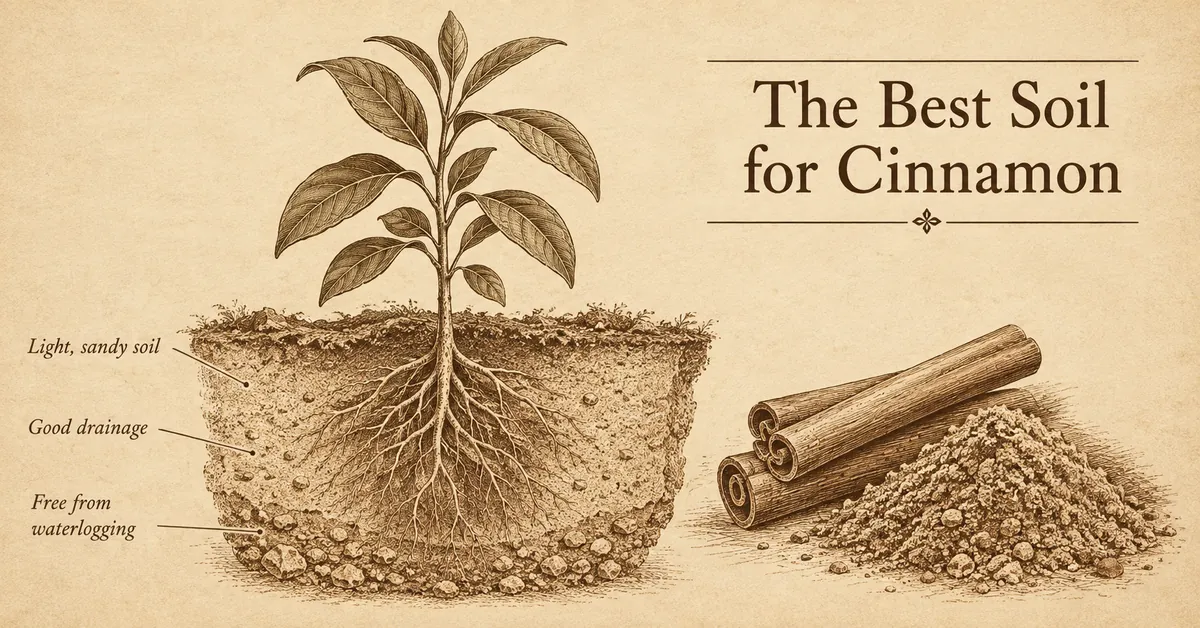
    The best soil for Ceylon cinnamon is light, sandy, well-drained soil that is slightly acidic and reasonably fertile. True cinnamon (Cinnamomum verum) grows especially well in the sandy loams of Sri Lanka’s wet coastal lowlands, where water drains freely and the roots never sit waterlogged. While cinnamon can tolerate a range of soils, it does best in deep, loose, free-draining ground with plenty of organic matter, which is one reason the sandy south-western coast of Sri Lanka has long been the heart of cinnamon growing.

    Soil is one of the quiet factors behind fine cinnamon. This guide explains what soil Ceylon cinnamon needs and why. It builds on our pillar guide to Sri Lankan cinnamon farming.

    The short answer

    Ceylon cinnamon grows best in light, sandy, well-drained, slightly acidic soil with good organic content. Free drainage is the single most important quality, since the roots dislike sitting in water. Sandy loams suit it especially well, which is why the sandy coastal soils of south-western Sri Lanka are ideal. Cinnamon is fairly adaptable, but the closer the soil is to this ideal, the better it grows.

    Why drainage matters most

    If there is one thing cinnamon needs from its soil, it is good drainage. The tree does not like waterlogged ground, where roots can suffer in the absence of air and be prone to rot. Light, sandy soils let excess water pass through quickly, keeping the roots healthy. This is why sandy and sandy-loam soils are so well suited to cinnamon, and why low-lying areas that flood or hold water are poor choices. Even in the wet zone, where rainfall is high, it is free-draining soil that lets the plant enjoy plenty of water without becoming waterlogged. This balance of ample rain and quick drainage is central to the climate Ceylon cinnamon needs.

    The ideal soil qualities

    Several soil qualities together make for good cinnamon growing.

    Texture: light and sandy

    Cinnamon prefers a light, loose, sandy or sandy-loam soil. This texture drains freely, is easy for roots to grow through, and warms readily. Heavy clay soils that hold water and compact tightly are much less suitable.

    Drainage: free and quick

    As noted, the soil must let water drain away rather than pooling. Good drainage is more important than richness; a poorer sandy soil that drains well often suits cinnamon better than a rich soil that stays wet.

    Acidity: slightly acidic

    Cinnamon generally does well in soil that is slightly acidic rather than strongly alkaline. This mildly acidic range suits the plant and the wet-zone soils where it naturally grows tend to fall within it.

    Fertility and organic matter

    While cinnamon tolerates fairly poor soils, it grows more strongly in ground with reasonable fertility and a good amount of organic matter. Organic content helps the light soil hold enough moisture and nutrients without losing its free-draining nature.

    Ideal soil for cinnamon at a glance

    The soil qualities that suit Ceylon cinnamon.
    QualityIdeal for cinnamon
    TextureLight, sandy or sandy loam
    DrainageFree and quick, never waterlogged
    AciditySlightly acidic
    FertilityModerate, with organic matter
    DepthDeep, loose and easy to root into

    The famous sandy soils of Sri Lanka

    The reason Sri Lanka produces the finest Ceylon cinnamon is partly its soil. The south-western coastal belt, taking in districts such as Galle, Matara and the surrounding wet zone, has light, sandy soils that drain freely while the climate supplies steady rain. This natural pairing of sandy ground and a wet, warm climate is close to perfect for cinnamon, and it has shaped the island’s cinnamon country for centuries. The link between the crop and these particular soils is part of why the growing regions cluster where they do, as our guide to the cinnamon-growing regions of Sri Lanka describes.

    Can cinnamon grow in other soils?

    Cinnamon is a fairly adaptable plant and can grow in a range of soils, from sandy coastal ground to some lateritic and loamy inland soils, as long as drainage is adequate. It is not restricted to a single perfect soil type. However, there is a difference between merely surviving and thriving. In heavy, poorly drained or frequently waterlogged soils the plant struggles, while in light, well-drained ground it flourishes. So while cinnamon can be grown more widely, the quality and vigour of the crop are best where the soil comes closest to the sandy, free-draining ideal.

    Preparing soil for cinnamon

    Where growers want to give cinnamon the best start, soil preparation focuses on the same qualities. Loosening compacted ground improves drainage and rooting, and adding organic matter such as compost enriches light soils and helps them hold moisture and nutrients. On sites where water tends to collect, improving drainage or planting on slightly raised ground helps keep the roots out of standing water. The aim throughout is to recreate, as far as possible, the deep, loose, free-draining and reasonably fertile conditions that cinnamon prefers. Good soil preparation sets the foundation for healthy trees and, in time, fine bark.

    Does soil affect cinnamon quality?

    Soil does more than keep the tree alive; it plays a part in the character of the bark. Healthy trees grown in suitable, free-draining, reasonably fertile soil tend to produce good, even bark, while trees struggling in poor or waterlogged ground are less vigorous and yield less well. The traditional reputation of Sri Lanka’s coastal cinnamon owes something to the light, sandy soils there, which help produce the fine, pale bark the island is known for. This is not a matter of one soil giving a completely different flavour, but of good growing conditions supporting healthy plants and, in turn, quality bark. Soil, then, is one of several quiet contributors to what makes true Ceylon cinnamon so prized.

    Common soil problems and how growers manage them

    A few soil problems come up often, and each has a practical answer. Waterlogging, the most serious, is managed by choosing well-drained sites, improving drainage, or planting on gently raised ground so water runs off. Compacted or heavy soil, which restricts roots and drainage, is loosened and improved with organic matter to open up its structure. Thin or poor soil is enriched over time by adding compost and mulch, building fertility and organic content without destroying the light texture cinnamon likes. And on sloping land, care is taken to limit erosion so the fertile topsoil is not washed away. In each case the goal is the same: to keep the soil loose, fertile and above all free-draining, matching as closely as possible the natural conditions in which cinnamon thrives.

    Soil, climate and the whole picture

    Soil never works alone; it is part of a bigger set of growing conditions. Cinnamon needs the right soil together with a warm tropical climate and plenty of well-spread rainfall to do its best. The sandy soils of Sri Lanka’s wet zone are ideal precisely because they pair with that climate, draining away the heavy rain while keeping the roots healthy. Understanding soil is therefore one piece of understanding how and where Ceylon cinnamon is grown, a subject covered in our guide to where and how Ceylon cinnamon is grown.

    Frequently asked questions

    What soil is best for cinnamon?

    Light, sandy, well-drained soil that is slightly acidic and reasonably fertile is best for Ceylon cinnamon. Free drainage matters most, since the roots dislike waterlogged ground. Sandy loams, like those of Sri Lanka’s wet coastal lowlands, suit the plant especially well.

    Does cinnamon need well-drained soil?

    Yes. Good drainage is the single most important soil quality for cinnamon. The tree does not tolerate waterlogged conditions well, so light, sandy soils that let excess water pass through quickly are ideal, keeping the roots healthy even in a high-rainfall climate.

    What kind of soil does cinnamon grow in in Sri Lanka?

    In Sri Lanka, cinnamon grows mainly in the light, sandy soils of the wet south-western coastal lowlands, in districts such as Galle and Matara. These free-draining sandy soils, combined with a warm, wet climate, are close to ideal for the crop.

    Can cinnamon grow in clay soil?

    Cinnamon grows poorly in heavy clay soils that hold water and compact tightly, because they drain badly and can leave roots waterlogged. It strongly prefers light, sandy, free-draining soil. If only heavier soil is available, improving its drainage and structure helps.

    Summary

    The best soil for Ceylon cinnamon is light, sandy and well-drained, slightly acidic and reasonably fertile, with plenty of organic matter and good depth. Above all it must drain freely, since cinnamon dislikes waterlogged ground. The sandy soils of Sri Lanka’s wet south-western coast, paired with a warm, rainy climate, are close to perfect, which is why the island’s cinnamon country lies there. Cinnamon can adapt to other soils where drainage allows, but it thrives best in the loose, sandy, free-draining conditions that suit its roots, giving the healthy trees behind fine true cinnamon.

    This website provides educational information about Ceylon Cinnamon as a spice and food ingredient. It is not intended to provide medical advice or make health claims.

  • Ceylon Cinnamon in Coffee: A How-To

    Ceylon Cinnamon in Coffee: A How-To

    Adding Ceylon cinnamon to coffee is easy and gives a warm, sweet, aromatic flavour without any sugar. The simplest ways are to stir a little ground Ceylon cinnamon into your coffee grounds before brewing, sprinkle it over the top of a finished cup, or drop a whole cinnamon stick into the pot or mug to infuse. Because true Ceylon cinnamon is mild and sweet, it blends smoothly into coffee, adding gentle spice and a lovely aroma to hot or iced drinks.

    Cinnamon and coffee are a natural pairing, and true Ceylon cinnamon makes the combination especially smooth. This guide shows how to use Ceylon cinnamon in coffee, step by step. It builds on our pillar guide to the culinary uses of Ceylon cinnamon.

    The short answer

    Add Ceylon cinnamon to coffee by stirring ground cinnamon into the grounds before brewing, dusting it over a finished cup, or steeping a whole cinnamon stick in the coffee. A little goes a long way, and Ceylon cinnamon’s gentle sweetness means it flavours coffee without overpowering it. You can use it in hot brews, iced coffee and milky drinks alike.

    Why Ceylon cinnamon suits coffee

    Ceylon cinnamon is the mild, sweet, delicate true cinnamon from Sri Lanka, and this softer character is exactly what makes it work so well in coffee. Where a sharp, pungent cassia can dominate a cup, Ceylon cinnamon adds warmth and fragrance while letting the coffee itself shine through. Its gentle sweetness can also make a cup taste a touch sweeter without any added sugar. This same refined flavour is what makes Ceylon cinnamon so prized in the kitchen generally, as our guide to using cinnamon sticks in cooking explains.

    Three easy ways to add cinnamon to coffee

    There are three simple methods, each suited to a slightly different situation.

    Stir it into the grounds before brewing

    For an even, well-infused flavour, add a small amount of ground Ceylon cinnamon directly to your coffee grounds before brewing, whether in a filter, cafetiere or drip machine. Around a quarter to half a teaspoon per couple of cups is a good starting point. The cinnamon brews along with the coffee, giving a smooth, integrated taste throughout the pot.

    Sprinkle it over a finished cup

    The quickest method is simply to dust a little ground cinnamon over the top of a made coffee, especially one with foam or milk that helps hold the powder. This is perfect for a single cup and lets each person add as much or as little as they like. A light sprinkle over a latte or cappuccino adds both flavour and an attractive finish.

    Steep a whole cinnamon stick

    For a gentle, clean infusion with no powder in the cup, drop a whole Ceylon cinnamon quill into the coffee pot, cafetiere or even your mug and let it steep while the coffee brews or sits. The stick slowly releases its warm flavour and can be lifted out before drinking. This is a lovely, tidy way to flavour a whole pot, and it makes good use of the long-lasting whole quills discussed in our guide to buying cinnamon sticks versus powder.

    How much cinnamon to use at a glance

    Simple guide to adding Ceylon cinnamon to coffee.
    MethodRough amountBest for
    In the grounds1/4 to 1/2 tsp per 2 cupsEven flavour through a pot
    Sprinkled on topA light dustingSingle cups, lattes
    Whole stick steeped1 quill per pot or mugClean infusion, no powder

    Ceylon cinnamon in iced and cold coffee

    Cinnamon is not just for hot coffee. It works beautifully in iced coffee and cold brew too. For cold brew, add a whole Ceylon cinnamon stick to the coffee and water as it steeps in the fridge, and the slow, cold infusion draws out a smooth, mellow cinnamon flavour over several hours. For a quick iced coffee, stir a little ground cinnamon into the coffee while it is still warm so it dissolves evenly, then chill and pour over ice. Either way, the warm spice pairs surprisingly well with a cold, refreshing drink.

    Cinnamon in milky coffee drinks

    Some of the best-loved ways to enjoy cinnamon in coffee involve milk. A dusting of Ceylon cinnamon over the foam of a latte or cappuccino is a classic, adding aroma with every sip. You can also warm a cinnamon stick gently in the milk before frothing it, letting the spice infuse into the milk for a deeper flavour. Cinnamon works well alongside other warm flavours too, so a pinch in a mocha or a spiced milky coffee adds a comforting, festive note. Its gentle sweetness makes these drinks feel indulgent without extra sugar.

    Tips for the best flavour

    A few simple habits help you get the most from cinnamon in coffee. Use freshly ground or good-quality ground Ceylon cinnamon, since fresher cinnamon has a stronger, sweeter aroma, a point covered in our guide to what gives Ceylon cinnamon its aroma. Start with a small amount and add more to taste, as it is easy to add and impossible to remove. If you dislike finding powder at the bottom of the cup, favour the whole-stick method or stir the powder in very well. And make sure you are using true Ceylon cinnamon rather than cassia, so the flavour stays smooth and sweet rather than sharp.

    Pairing cinnamon coffee with other flavours

    Once you are happy with plain cinnamon coffee, it is easy to build on it. Ceylon cinnamon sits comfortably alongside other warm flavours, so a small amount of vanilla, a little nutmeg, a pinch of cardamom or a touch of cocoa can turn a simple cinnamon coffee into something richer and more interesting. A cinnamon and vanilla latte, or a lightly spiced coffee reminiscent of a chai, are easy variations to try. The key is restraint: let the coffee and the cinnamon lead, and add other spices only in small pinches so the cup stays balanced rather than crowded. This gentle layering is one of the pleasures of cooking with a mild, adaptable spice like true Ceylon cinnamon.

    Getting a smooth cup without clumps

    One small challenge with ground cinnamon in coffee is that it can float or clump rather than dissolving fully, since it is a bark and not a soluble powder. There are easy ways around this. Stirring the cinnamon into the dry grounds before brewing spreads it evenly and avoids clumps in the cup. If you are adding it to a finished coffee, mix it into a little warm milk or a splash of the hot coffee first to make a smooth paste, then stir that in. And when you want a perfectly clear cup with no sediment at all, the whole-stick steeping method is the answer. A little care here gives you all the flavour and aroma of cinnamon with none of the gritty texture.

    A simple Ceylon cinnamon coffee to try

    To bring it all together, here is an easy approach for a fragrant cup. Add about a quarter teaspoon of ground Ceylon cinnamon to your coffee grounds and brew as normal. Pour into your cup, add milk if you like, and finish with a light dusting of cinnamon over the top. For a treat, warm the milk with a small piece of cinnamon stick first, then froth it. The result is a naturally sweet, aromatic coffee with a gentle warmth that suits any time of day. From here you can adjust the amount and method to build your own perfect cinnamon coffee.

    Frequently asked questions

    How do you add cinnamon to coffee?

    There are three easy ways. Stir ground Ceylon cinnamon into the coffee grounds before brewing for even flavour, sprinkle it over a finished cup for a quick option, or steep a whole cinnamon stick in the coffee for a clean infusion with no powder. Start with a small amount and adjust to taste.

    How much cinnamon should I put in coffee?

    A little goes a long way. Around a quarter to half a teaspoon of ground Ceylon cinnamon per couple of cups, or one whole stick per pot, is a good starting point. Ceylon cinnamon is mild and sweet, so you can add more to taste if you like a stronger flavour.

    Is Ceylon cinnamon good in coffee?

    Yes. Ceylon cinnamon’s mild, sweet, delicate flavour blends smoothly into coffee, adding warmth and aroma without overpowering the coffee itself. Its gentle sweetness can also make a cup taste slightly sweeter without any added sugar, which many people enjoy.

    Can I use a cinnamon stick in coffee?

    Yes. Dropping a whole Ceylon cinnamon quill into the pot, cafetiere or mug lets it steep and release its flavour, and you can lift it out before drinking. This gives a clean, gentle infusion with no powder in the cup, and works for hot coffee and cold brew alike.

    Summary

    Adding Ceylon cinnamon to coffee is a simple way to bring warmth, sweetness and aroma to your cup without any sugar. Stir ground cinnamon into the grounds before brewing for an even flavour, sprinkle it over a finished cup for speed, or steep a whole cinnamon stick for a clean infusion. It works in hot coffee, iced coffee, cold brew and milky drinks alike, and true Ceylon cinnamon’s mild, sweet character makes the pairing especially smooth. Start with a little, use good-quality Ceylon cinnamon, and adjust to build the perfect cinnamon coffee for your taste.

    This website provides educational information about Ceylon Cinnamon as a spice and food ingredient. It is not intended to provide medical advice or make health claims.

  • Ceylon Cinnamon vs Chinese Cinnamon

    Ceylon Cinnamon vs Chinese Cinnamon

    Ceylon cinnamon and Chinese cinnamon are two different spices. Ceylon cinnamon is the dried inner bark of Cinnamomum verum, native to Sri Lanka, prized for its soft, sweet, delicate flavour and thin, layered quills. Chinese cinnamon, also called Chinese cassia, comes from Cinnamomum cassia, a related tree grown mainly in China and South-East Asia. It is a thicker, harder, single-layer bark with a stronger, sharper, more pungent flavour, and it is the most common cassia sold simply as “cinnamon” around the world.

    Chinese cinnamon is one of the main types of cassia that people confuse with true cinnamon. This guide compares the two so you can tell them apart. It builds on our pillar guide to Ceylon cinnamon versus cassia.

    The short answer

    Ceylon cinnamon (Cinnamomum verum) is the true cinnamon of Sri Lanka, mild and sweet with thin layered quills, while Chinese cinnamon (Cinnamomum cassia) is a type of cassia from China with a thick single-layer bark and a stronger, sharper taste. They are different species from the same broad family, and Chinese cassia is the bolder, cheaper, more widely sold of the two.

    What is Chinese cinnamon?

    Chinese cinnamon is the common name for Cinnamomum cassia, also known as Chinese cassia or simply cassia. It is one of the main cassia species, alongside others such as Indonesian and Saigon (Vietnamese) cinnamon. Grown chiefly in southern China and neighbouring regions, it has been used for a very long time in Chinese cooking and trade. Because it is cheaper to produce than true cinnamon and has a strong, familiar flavour, Chinese cassia is what many shoppers around the world are actually buying when a product is labelled just “cinnamon”.

    What is Ceylon cinnamon?

    Ceylon cinnamon is true cinnamon, Cinnamomum verum, native to Sri Lanka (once called Ceylon). It is made from the thin, papery inner bark of the tree, which is peeled and rolled into delicate, multi-layered quills. Its flavour is soft, sweet and gently spicy, more refined and less sharp than cassia. To understand the true spice more fully, see our guide to what true Ceylon cinnamon is.

    Ceylon vs Chinese cinnamon at a glance

    Comparing Ceylon cinnamon and Chinese cinnamon (cassia).
    FeatureCeylon cinnamonChinese cinnamon (cassia)
    SpeciesCinnamomum verumCinnamomum cassia
    OriginSri LankaChina and nearby regions
    BarkThin, papery, many layersThick, hard, single layer
    Quill shapeScroll of fine layersSingle thick curl
    ColourPale tanDarker reddish brown
    FlavourSoft, sweet, delicateStrong, sharp, pungent
    PriceHigherLower

    Botanical and origin differences

    Although both belong to the Cinnamomum group of trees, Ceylon and Chinese cinnamon are distinct species with different homes. Ceylon cinnamon, Cinnamomum verum, is native to Sri Lanka, which remains the source of the finest true cinnamon. Chinese cinnamon, Cinnamomum cassia, is native to and grown mainly in China and the surrounding region. This difference in species and origin is the root of all the other contrasts between them, from bark structure to flavour.

    Appearance: how to tell them apart

    The clearest way to distinguish the two is by looking at the bark, especially whole sticks. Ceylon cinnamon quills are pale, thin and made of many soft layers rolled together, like a little scroll, and they are brittle enough to snap easily. Chinese cassia sticks are darker, thicker and harder, formed from a single tough layer curled into a hollow tube. Cassia is difficult to break by hand, while Ceylon crumbles readily. This visual test is one of the simplest checks, covered in our guide on how to identify real Ceylon cinnamon.

    Flavour and aroma

    The taste difference is easy to notice once you know it. Ceylon cinnamon is mild, sweet and subtly complex, with gentle floral and citrus notes that make it well suited to delicate dishes and desserts. Chinese cinnamon is much bolder: strong, sharp and intensely spicy, with a pungent warmth that stands up well to robust, savoury cooking. Neither is simply better; they suit different purposes. The difference in strength comes largely from the balance of aromatic compounds in each bark, including cinnamaldehyde, which our guide to cinnamaldehyde explains.

    A note on composition

    One well-known difference between the two is the level of a naturally occurring compound called coumarin. Cassia barks, including Chinese cassia, contain notably higher levels of coumarin than true Ceylon cinnamon, which is very low in it. This is a compositional difference that researchers and food scientists often point to when distinguishing the two spices. Here we note it simply as a factual difference in makeup rather than a health matter; it is one more way in which true Ceylon cinnamon and cassia are genuinely different products.

    Culinary uses

    Both spices are used in cooking, but their strengths differ. Ceylon cinnamon’s gentle sweetness makes it a favourite for baking, desserts, delicate drinks and dishes where a refined cinnamon note is wanted without overwhelming other flavours. Chinese cassia’s bold, punchy character suits hearty savoury dishes, spiced stews, strong mulled drinks and recipes where a powerful cinnamon hit is the aim. Many classic Chinese and other Asian dishes are built around the robust flavour of cassia. Choosing between them is really about matching the spice to the dish.

    Why they are often confused

    The confusion between Ceylon and Chinese cinnamon comes down to labelling. In many countries the word “cinnamon” on its own is most often cassia, frequently Chinese or Indonesian, rather than true Ceylon cinnamon. Since both are warm, brown, sweet-smelling barks from related trees, shoppers rarely realise they are buying a different spice. Only when the label specifically says Ceylon cinnamon or Cinnamomum verum can you be sure of true cinnamon. This same pattern of confusion appears with other cassia types, as our comparison of Ceylon and Saigon cinnamon describes.

    Cost and why cassia dominates shelves

    A big reason Chinese cassia is so common comes down to cost and scale. Cassia trees grow readily and the thick bark is quicker and cheaper to harvest and process than the delicate hand-peeled quills of true cinnamon. That lower cost, combined with a strong flavour that carries well in mass-market products, means cassia fills most supermarket shelves and flavours most inexpensive cinnamon goods. True Ceylon cinnamon, made by skilled hand peeling in Sri Lanka, costs more to produce and so sits at the premium end. When you understand this, the price gap between a cheap jar of “cinnamon” and genuine Ceylon cinnamon makes sense: you are usually comparing mass-produced cassia with a carefully crafted specialty spice.

    Which should you choose?

    The right choice depends on what you want. If you are after the fine, sweet, delicate spice with the greatest reputation for quality, and you value the true cinnamon of Sri Lanka, choose Ceylon cinnamon. If you want a strong, inexpensive, boldly flavoured cinnamon for hearty cooking, Chinese cassia does the job. Many cooks keep true Ceylon cinnamon for baking and refined dishes and reach for cassia when they want a powerful punch. Knowing the difference simply lets you choose on purpose rather than by accident.

    Frequently asked questions

    Is Chinese cinnamon the same as Ceylon cinnamon?

    No. They are different species. Ceylon cinnamon is true cinnamon, Cinnamomum verum, from Sri Lanka, with thin, layered quills and a mild, sweet flavour. Chinese cinnamon is a cassia, Cinnamomum cassia, from China, with a thick, hard bark and a strong, sharp taste.

    Is Chinese cinnamon real cinnamon?

    Chinese cinnamon is a type of cassia, which is a close relative of true cinnamon rather than the same spice. It is very widely sold simply as “cinnamon”, but only Cinnamomum verum, Ceylon cinnamon, is considered true cinnamon.

    How can I tell Ceylon from Chinese cinnamon?

    Look at the sticks. Ceylon cinnamon is pale, thin and made of many soft layers that snap easily, like a scroll. Chinese cassia is darker, thicker and harder, a single curled layer that resists breaking. With powder, rely on the label, checking for Ceylon cinnamon or Cinnamomum verum.

    Which is better, Ceylon or Chinese cinnamon?

    Neither is simply better; they suit different uses. Ceylon cinnamon is milder, sweeter and more refined, ideal for baking and delicate dishes. Chinese cassia is stronger and cheaper, good for bold, hearty cooking. The best choice depends on the flavour and budget you want.

    Summary

    Ceylon cinnamon and Chinese cinnamon are two distinct spices from related trees. Ceylon cinnamon, Cinnamomum verum from Sri Lanka, is the true cinnamon: pale, thin, many-layered and mild, sweet and delicate in flavour. Chinese cinnamon, Cinnamomum cassia from China, is a cassia: a thick, hard, single-layer bark with a strong, sharp, pungent taste, cheaper and more widely sold. They differ in species, origin, appearance, flavour and composition, and they are often confused only because both are sold as “cinnamon”. Knowing the difference lets you choose true Ceylon cinnamon when you want it and use cassia knowingly when a bolder flavour suits.

    This website provides educational information about Ceylon Cinnamon as a spice and food ingredient. It is not intended to provide medical advice or make health claims.

  • Cinnamon Sticks vs Powder: What to Buy

    Cinnamon Sticks vs Powder: What to Buy

    Whether to buy Ceylon cinnamon as sticks or powder comes down to how you use it. Whole cinnamon sticks, or quills, keep their aroma far longer, are ideal for infusing drinks, curries and slow-cooked dishes, and let you grind fresh powder as needed. Ground cinnamon is more convenient for baking and quick recipes but loses its flavour faster. For the best of both, many people keep whole quills as their main supply and a small jar of powder for everyday use.

    Standing in the spice aisle, the choice between cinnamon sticks and powder is a common one. This guide compares the two forms of Ceylon cinnamon and helps you decide what to buy. It builds on our pillar guide, the Ceylon cinnamon buying guide.

    The short answer

    Buy whole cinnamon sticks for the freshest, longest-lasting flavour and for infusing dishes and drinks, and buy ground cinnamon for convenience in baking and quick cooking. Sticks keep their aroma for years and can be ground fresh, while powder is ready to use but fades faster. The best choice depends on how and how often you cook with cinnamon, and many cooks simply keep both.

    Cinnamon sticks: the case for whole quills

    Whole Ceylon cinnamon sticks are the rolled inner bark of the tree, known as quills. Their biggest advantage is staying power: because the aromatic oils are locked inside the bark, whole sticks keep their flavour and scent for a long time, often three to four years when stored well. They are perfect for simmering in curries, rice dishes, mulled drinks and syrups, where they slowly release their warm flavour and can be removed before serving. You can also grind or grate them at home for the freshest possible powder. The main drawback is that they are less convenient for recipes that need ground cinnamon mixed straight in. To learn more about the form itself, see our guide covering cinnamon sticks.

    Ground cinnamon: the case for powder

    Ground Ceylon cinnamon is simply the bark milled into a fine powder. Its great strength is convenience: it blends instantly into cake batter, sprinkles over porridge or coffee, and mixes easily into doughs and sauces. For baking especially, powder is usually the practical choice. The trade-off is shelf life. With far more surface exposed to the air, ground cinnamon loses its aroma more quickly, keeping its best flavour for around one to two years. Our guide to ground Ceylon cinnamon looks at the powder form in more detail.

    Sticks vs powder at a glance

    Comparing whole cinnamon sticks and ground cinnamon.
    FeatureWhole sticksGround powder
    Shelf lifeAbout 3 to 4 yearsAbout 1 to 2 years
    FreshnessGrind fresh as neededFades faster once opened
    Best forInfusing drinks, curries, slow cookingBaking, quick recipes, sprinkling
    ConvenienceNeeds grinding for powder usesReady to use instantly
    Flavour controlStrong, freshly groundEven, easy to measure

    Which should you buy?

    The right choice depends on how you cook. If you mostly make drinks, curries, stews and slow-cooked dishes, whole sticks are ideal, giving long-lasting value and a gentle infused flavour. If you bake often or like a quick sprinkle of cinnamon, powder is far more practical. Many households find the answer is to keep both: a supply of whole quills as the long-lasting backbone, and a small jar of powder for everyday convenience. Buying whole and grinding small amounts also lets you enjoy the freshest flavour while keeping a longer-lasting reserve.

    Freshness and value over time

    One reason whole sticks often represent good value is their long shelf life. A jar of powder bought in bulk may lose much of its punch before you finish it, whereas whole quills stay fragrant for years, so little is wasted. If you use cinnamon only occasionally, sticks are the more economical choice, since they hold their flavour until you need them. If you get through cinnamon quickly, powder’s faster fading matters less, and its convenience wins. This link between form and freshness is described further in our guide on how long Ceylon cinnamon lasts.

    Grinding your own cinnamon

    One appealing middle path is to buy whole Ceylon cinnamon sticks and grind them at home as needed. True cinnamon is brittle and soft, so it grinds more easily than the harder cassia bark, and a spice grinder or even a sturdy mortar and pestle can turn quills into fresh powder. Grinding your own gives you the strong, bright flavour of freshly milled cinnamon whenever you want it, while the rest of your supply stays sealed in stick form, keeping its aroma. For anyone who cares about flavour, this is a simple way to enjoy the best of both worlds without buying two separate products.

    How each form performs in the kitchen

    The two forms suit different jobs in cooking, and knowing which to reach for makes a real difference. Whole sticks come into their own in anything liquid and slow: a stick dropped into a pot of rice, a simmering curry, a jug of mulled wine or a pan of syrup releases its flavour gradually and can be lifted out at the end, leaving a clean, warm background note. Powder, by contrast, disperses evenly and instantly, which is exactly what you want in a cake batter, a spice rub, a dusting over a latte or a quick stir into yoghurt or oatmeal. Trying to use a stick where you need powder, or powder where you need a gentle infusion, tends to disappoint. Matching the form to the dish is the simplest way to get the most from your cinnamon.

    Converting between sticks and powder

    If a recipe calls for one form and you have the other, a rough guide helps. A standard cinnamon stick, once ground, yields somewhere around half a teaspoon to a teaspoon of powder, though this varies with the size of the quill. For infusing, you can usually drop in a whole stick in place of a measured amount of powder and adjust to taste, removing it once the flavour is right. When grinding sticks for baking, grind a little more than you think you need, since freshly ground Ceylon cinnamon is fragrant and you will not want to run short mid-recipe. These simple conversions mean that keeping just one form on hand need not limit what you can cook.

    Making sure it is real Ceylon cinnamon

    Whichever form you choose, the most important thing is that you are buying genuine Ceylon cinnamon rather than cassia sold simply as “cinnamon”. With whole sticks this is easier to check, since true Ceylon quills are pale, thin and made of many soft layers, while cassia is a hard, thick single curl. With powder it is harder to tell by eye, so the label matters more: look for Ceylon cinnamon or Cinnamomum verum, ideally from Sri Lanka. This is one quiet advantage of sticks, that their authenticity is easier to judge, a point covered in our Ceylon cinnamon buying guide.

    Frequently asked questions

    Should I buy cinnamon sticks or ground cinnamon?

    It depends on how you use it. Buy whole cinnamon sticks for the freshest, longest-lasting flavour and for infusing drinks, curries and slow-cooked dishes. Buy ground cinnamon for convenience in baking and quick recipes. Many people keep both, using sticks as the main supply and powder for everyday use.

    Do cinnamon sticks last longer than powder?

    Yes. Whole cinnamon sticks keep their best flavour for around three to four years, while ground cinnamon holds its flavour for about one to two years. This is because whole quills keep their aromatic oils locked in the bark, whereas powder has far more surface exposed to the air.

    Can I grind cinnamon sticks into powder at home?

    Yes. True Ceylon cinnamon is brittle and grinds easily in a spice grinder or a sturdy mortar and pestle. Grinding your own from whole quills gives the freshest, strongest powder, while keeping the rest of your supply in long-lasting stick form.

    Is it cheaper to buy sticks or powder?

    It depends on how often you use cinnamon. If you use it occasionally, whole sticks are often better value because they stay fragrant for years with little waste. If you get through cinnamon quickly, powder’s convenience may outweigh its faster fading.

    Summary

    Choosing between Ceylon cinnamon sticks and powder comes down to how you cook. Whole sticks keep their aroma for years, are ideal for infusing drinks, curries and slow-cooked dishes, and can be ground fresh at home. Ground cinnamon is more convenient for baking and quick recipes but fades faster. For occasional use and long-lasting value, sticks are the better buy; for frequent baking and convenience, powder wins. Keeping both, with whole quills as the backbone and a small jar of powder for everyday use, gives you fresh flavour and easy convenience together, as long as you make sure it is genuine Ceylon cinnamon.

    This website provides educational information about Ceylon Cinnamon as a spice and food ingredient. It is not intended to provide medical advice or make health claims.