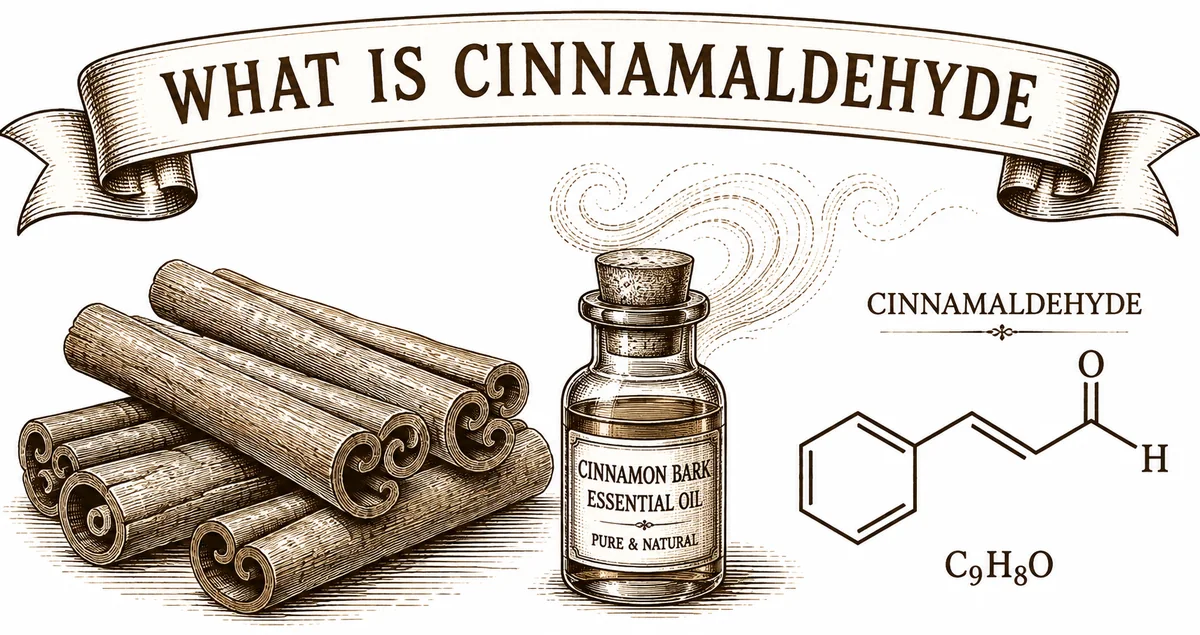
Cinnamaldehyde is the naturally occurring organic compound that gives cinnamon its characteristic warm, sweet, spicy aroma and flavour, it is the main component of the essential oil in cinnamon bark. When you smell or taste cinnamon, cinnamaldehyde is the molecule most responsible for that unmistakable scent, and true Ceylon cinnamon (Cinnamomum verum) owes much of its fragrance to it.
This guide gives a clear, non-technical explanation of what cinnamaldehyde is, where it comes from in the plant, why it matters for aroma and flavour, and how it relates to other compounds found in cinnamon. It is an educational look at the chemistry of a spice, not health advice. For the bigger picture of the spice itself, see our pillar guide on what is true Ceylon cinnamon.
What is cinnamaldehyde, simply put?
Cinnamaldehyde is an aromatic organic compound (an aldehyde) that occurs naturally in cinnamon and is the principal substance responsible for cinnamon’s smell and taste. In plain terms, it is the “cinnamon molecule”, the ingredient in the plant’s own chemistry that our noses and tongues register as cinnamon. It is found mainly in the bark, concentrated in the essential oil, and it is what makes cinnamon instantly recognisable among spices.
Where does cinnamaldehyde come from in the plant?
Cinnamaldehyde is produced by the cinnamon tree itself and is concentrated in the bark, which is the part harvested to make the spice.
In the bark oil
The inner bark of Cinnamomum verum contains a fragrant essential oil, and cinnamaldehyde is typically the largest single component of that oil. This is why the bark, once peeled, rolled and dried into quills, carries such a strong, sweet aroma, the process is described in our guide to how Ceylon cinnamon is made.
Bark versus leaf
Different parts of the plant have different chemistry. The bark oil is rich in cinnamaldehyde, which gives the familiar sweet cinnamon scent, whereas the leaf oil contains more of a different compound called eugenol, giving it a more clove-like character. This is why cinnamon bark and cinnamon leaf products can smell noticeably different.
Why cinnamaldehyde matters for aroma and flavour
The reason cinnamaldehyde is so important is simple: it is the main driver of cinnamon’s sensory identity. Its presence and concentration shape how sweet, warm and intense a cinnamon smells and tastes. A cinnamon rich in well-preserved aromatic oils will smell vivid and sweet, while one whose oils have faded will smell flat. This is why aroma is such a good test of freshness and quality, a theme in our guide to identifying authentic Ceylon cinnamon, and why storing cinnamon well to protect those volatile oils makes such a difference to cooking.
Cinnamaldehyde in cooking
Because cinnamaldehyde is a volatile aromatic compound, it behaves in characteristic ways in the kitchen. It is released as fragrance when cinnamon is warmed, which is why simmering a quill in milk or syrup, or baking with cinnamon, fills a room with scent. Gentle heat helps carry the aroma, while very prolonged high heat can drive off some of the delicate top notes. Understanding that cinnamon’s flavour lives largely in these aromatic oils helps explain why fresh, well-stored cinnamon performs so much better in recipes, as covered in our guide to the culinary uses of Ceylon cinnamon.
Cinnamaldehyde and other cinnamon compounds
Cinnamon is not a single chemical but a natural mixture, and cinnamaldehyde sits alongside other naturally occurring compounds.
| Compound | Mainly found in | Sensory role |
|---|---|---|
| Cinnamaldehyde | Bark oil | The characteristic sweet, warm cinnamon aroma |
| Eugenol | Leaf oil | A clove-like, spicy note |
| Coumarin | Cassia more than Ceylon | A compound found in much smaller amounts in Ceylon cinnamon |
The balance of these compounds differs between true Ceylon cinnamon and cassia. One well-known difference is coumarin, which is present in much lower amounts in Ceylon cinnamon than in cassia, a distinction discussed in our guide to Ceylon cinnamon vs cassia. Cinnamaldehyde, by contrast, is central to the aroma of both, though the overall flavour profiles still differ.
Is cinnamaldehyde natural or artificial?
Cinnamaldehyde is a naturally occurring compound made by the cinnamon plant, and it is the substance responsible for cinnamon’s natural scent. It can also be produced synthetically for use as a flavouring and fragrance ingredient in the wider food and cosmetics industries, but in true Ceylon cinnamon the cinnamaldehyde you encounter is the plant’s own. When you use genuine cinnamon bark or freshly ground cinnamon, its aroma comes from this naturally present compound rather than any additive.
What researchers study about cinnamaldehyde
As the defining compound of a globally important spice, cinnamaldehyde is of interest to scientists who study flavour, fragrance and plant chemistry. Researchers analyse its concentration to characterise different cinnamon types and grades, to understand aroma, and to assess quality in the spice trade. In this educational context, cinnamaldehyde is simply the best-known molecule in cinnamon’s natural make-up. This article does not make any health claims about cinnamaldehyde or cinnamon; it describes the compound’s role in aroma, flavour and plant chemistry only.
Summary
Cinnamaldehyde is the naturally occurring aromatic compound that gives cinnamon its signature warm, sweet, spicy character. Produced by the cinnamon tree and concentrated in the bark’s essential oil, it is the largest single component of that oil and the molecule most responsible for how cinnamon smells and tastes. Bark oil is rich in cinnamaldehyde, while leaf oil leans more towards eugenol, and the balance of these and other compounds, including the coumarin that is much lower in Ceylon cinnamon than in cassia, helps define each cinnamon’s flavour. Because cinnamaldehyde is volatile, protecting cinnamon’s oils through good storage keeps its aroma vivid. In short, cinnamaldehyde is the heart of cinnamon’s fragrance, and understanding it explains much about why fresh, genuine Ceylon cinnamon smells and tastes so good.
Frequently asked questions
What is cinnamaldehyde?
Cinnamaldehyde is the naturally occurring organic compound that gives cinnamon its characteristic warm, sweet aroma and flavour. It is the main component of the essential oil found in cinnamon bark.
Where is cinnamaldehyde found in cinnamon?
It is concentrated in the bark, within the essential oil, and is typically the largest single component of that oil. Cinnamon leaf oil, by contrast, contains more eugenol and less cinnamaldehyde.
Is cinnamaldehyde natural?
Yes. In true Ceylon cinnamon, cinnamaldehyde is produced naturally by the plant and is responsible for its scent. A synthetic version also exists for industrial flavour and fragrance use, but genuine cinnamon’s aroma comes from the natural compound.
Does cinnamaldehyde affect cinnamon’s flavour?
Very much so. As the main aromatic compound, cinnamaldehyde largely determines how sweet, warm and intense a cinnamon smells and tastes, which is why fresh, well-stored cinnamon with well-preserved oils performs best in cooking.
This website provides educational information about Ceylon Cinnamon as a spice and food ingredient. It is not intended to provide medical advice or make health claims.
Leave a Reply