Author: Mike

  • Visual Clues That Reveal Real Ceylon Cinnamon

    Visual Clues That Reveal Real Ceylon Cinnamon

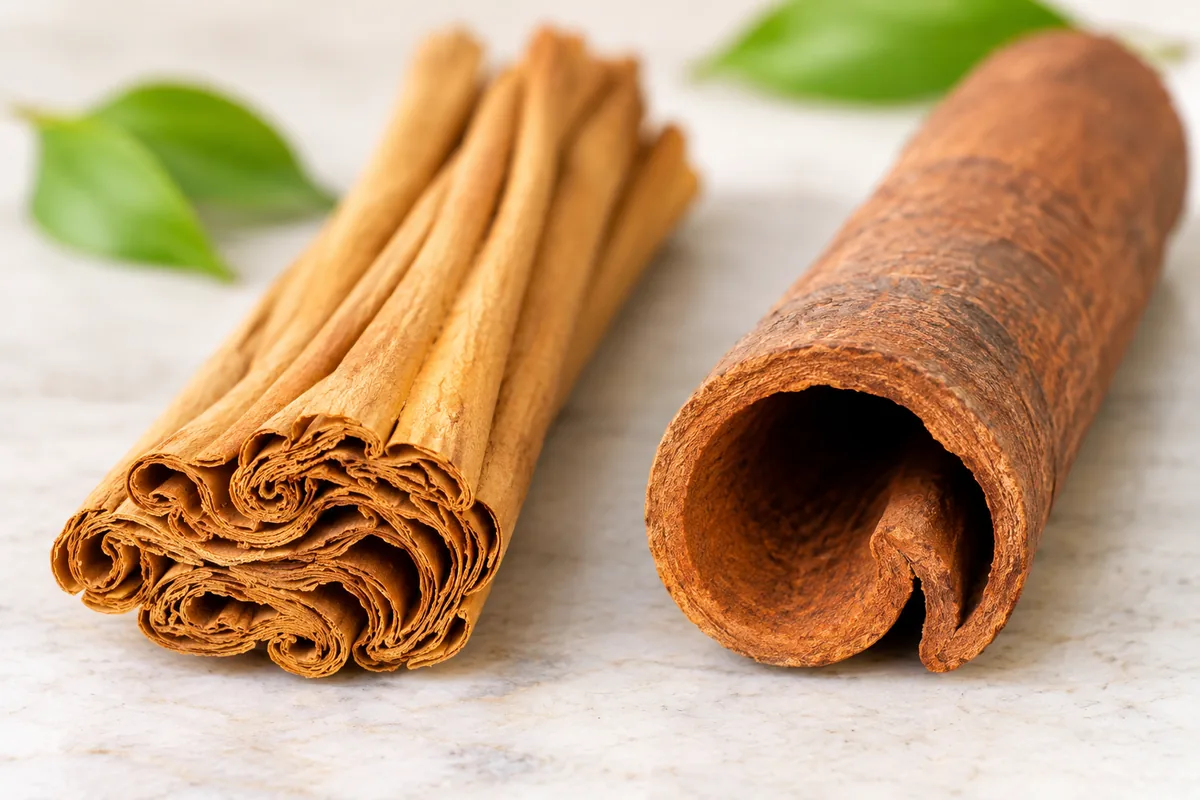
    You can tell real Ceylon cinnamon from cheaper cassia by a few clear visual clues. True Ceylon cinnamon, Cinnamomum verum, forms thin, pale tan quills made of many fine layers rolled tightly together, like a cigar or a rolled newspaper, and it is soft and crumbly enough to snap easily. Cassia, by contrast, is usually a single thick, hard curl of dark reddish-brown bark with a hollow centre. Looking at the colour, the thickness, the number of layers and the way the bark is rolled gives you a quick and reliable way to recognise genuine Ceylon cinnamon by sight, before you even taste or smell it.

    Knowing what real Ceylon cinnamon looks like is one of the most useful skills for a buyer. This guide sets out the visual clues that reveal it, so you can recognise the genuine article at a glance. It builds on our pillar guide to how to identify authentic Ceylon cinnamon.

    The short answer

    Real Ceylon cinnamon is thin, pale tan and made of many fine layers rolled tightly together, soft enough to crumble, while cassia is thick, hard, dark and usually a single curl. The quickest visual checks are colour, which is lighter for Ceylon; thickness, which is thin for Ceylon; and structure, which shows many delicate layers in a Ceylon quill like a rolled cigar. If a cinnamon stick is dark, thick, hard and hollow with one heavy curl, it is almost certainly cassia. If it is pale, thin, brittle and packed with fine layers, it is Ceylon.

    Clue one: colour

    The first visual clue is colour. Real Ceylon cinnamon is a light, warm tan or pale brown, sometimes almost buff. Cassia is darker, a deeper reddish-brown or rusty colour. The difference is clear when the two are placed side by side: the Ceylon quill looks noticeably paler and softer in tone, while the cassia looks dark and heavy. Colour alone is not a complete test, since lighting and age can shift the shade a little, but a pale tan colour is a strong first sign of genuine Ceylon cinnamon, and a dark reddish-brown is a sign of cassia.

    Visual clueReal Ceylon cinnamonCassia
    ColourPale tan, light brownDark reddish-brown
    ThicknessThin barkThick, heavy bark
    LayersMany fine layersOne or few thick layers
    Roll shapeTight, like a cigarSingle curl, hollow
    TextureSoft, crumbly, brittleHard, woody

    Clue two: thickness of the bark

    The thickness of the bark is one of the clearest clues. Real Ceylon cinnamon is made from very thin bark, so the walls of the quill are delicate and papery. Cassia is made from thick, coarse bark, so its sticks feel heavy and the walls are noticeably thicker and harder. If you look at the end of a stick, a Ceylon quill shows a thin, fine wall, while a cassia stick shows a thick, woody one. This difference in thickness is also why Ceylon cinnamon is so much easier to crumble and grind than the tough, hard cassia.

    Clue three: the layers and roll

    Perhaps the most telling visual clue is the structure of the roll. When you look at the end of a real Ceylon cinnamon quill, you see many thin layers of bark rolled tightly together, like a rolled-up newspaper or a cigar. This multi-layered roll is a signature of true cinnamon. A cassia stick, by contrast, is usually a single thick curl of bark, often rolling inward from both sides or forming one hard tube, with a hollow centre rather than many fine layers. Counting the layers at the end of a stick is one of the surest ways to tell the two apart. Our guide to the roll test for telling Ceylon from cassia looks at this in detail.

    Clue four: texture and brittleness

    Texture is both a visual and a physical clue. Real Ceylon cinnamon looks and feels soft, almost flaky, and its thin, layered quills are brittle, snapping and crumbling easily between the fingers. This is why Ceylon cinnamon can be ground at home without special equipment. Cassia looks and feels hard and woody, and its thick sticks resist breaking, needing real force to snap. So if a stick crumbles softly into fine layered pieces, that points to Ceylon, while a stick that stays hard and stubborn points to cassia. The brittle, flaky look of Ceylon is part of what makes it recognisable.

    Clue five: shape and length

    Real Ceylon cinnamon quills are often longer and more uniform, rolled into neat, slender tubes, and in the trade they are cut to standard lengths. Cassia sticks tend to be shorter, thicker and more irregular, often a single heavy curl. While shape varies by seller and grade, a neat, slender, tightly rolled quill is typical of Ceylon, and a short, chunky, hard curl is typical of cassia. Combined with colour and layering, the overall shape adds to the picture. None of these clues works perfectly alone, but together they give a reliable visual impression of which cinnamon you are looking at.

    What about ground cinnamon?

    Visual clues are easiest with whole sticks, because powder hides the structure that gives cinnamon away. Ground Ceylon cinnamon tends to be a lighter tan colour, while ground cassia is often darker and more reddish, but this is far less reliable than examining a quill. For powder, the label and source matter much more than appearance, since colour alone can be misleading. Where you can, buying whole quills lets you use the visual clues described here. Our guide to how to tell if cinnamon powder is Ceylon covers the powder question more fully.

    Putting the clues together

    No single visual clue is foolproof, but together they are very reliable. A genuine Ceylon cinnamon quill is pale tan, thin-walled, made of many fine layers rolled tightly like a cigar, soft and brittle, and often long and slender. A cassia stick is dark reddish-brown, thick, hard and woody, usually a single curl with a hollow centre. When several clues point the same way, you can be confident. If in doubt, combine the look of the cinnamon with a check of the label for Cinnamomum verum and Sri Lankan origin. Reading labels well is covered in our guide to reading cinnamon labels correctly.

    Summary

    Real Ceylon cinnamon can be recognised by sight through a handful of clear visual clues. It is pale tan rather than dark reddish-brown, thin-walled rather than thick, and made of many fine layers rolled tightly together like a cigar rather than a single hard curl. It is soft, flaky and brittle, crumbling easily, where cassia is hard and woody. Its quills are often long, slender and neat. Taken together, these clues of colour, thickness, layering, texture and shape give a quick and reliable way to tell true Ceylon cinnamon, Cinnamomum verum from Sri Lanka, from the cheaper cassia often sold simply as cinnamon. Visual checks work best on whole sticks; for powder, the label and source matter more. When the look of the cinnamon and the label agree, you can be confident you have the genuine article.

    Frequently asked questions

    How can I tell real Ceylon cinnamon by sight?

    Look for thin, pale tan quills made of many fine layers rolled tightly like a cigar, soft enough to crumble. Cassia is thick, hard, dark reddish-brown and usually a single curl with a hollow centre. Colour, thickness and layering are the clearest visual clues.

    What colour is real Ceylon cinnamon?

    Real Ceylon cinnamon is a light, warm tan or pale brown, sometimes almost buff. Cassia is darker, a deeper reddish-brown. The Ceylon quill looks noticeably paler and softer in tone when placed next to a dark cassia stick, though colour alone is not a complete test.

    How does the roll of Ceylon cinnamon differ from cassia?

    A real Ceylon cinnamon quill is made of many thin layers rolled tightly together, like a rolled newspaper or cigar. Cassia is usually a single thick curl of bark with a hollow centre. Counting the fine layers at the end of a stick is one of the surest visual tests.

    Is Ceylon cinnamon softer than cassia?

    Yes. Real Ceylon cinnamon is thin, soft and brittle, crumbling and snapping easily, which is why it can be ground at home. Cassia is thick, hard and woody, and resists breaking. The soft, flaky texture of Ceylon is one of its recognisable features.

    Can I use visual clues on ground cinnamon?

    Less reliably. Powder hides the structure that gives cinnamon away. Ground Ceylon tends to be a lighter tan and cassia darker, but colour alone can mislead. For powder, the label and source matter more than appearance, so buying whole quills is better for visual checks.

    This website provides educational information about Ceylon Cinnamon as a spice and food ingredient. It is not intended to provide medical advice or make health claims.

  • The Dutch East India Company and Cinnamon

    The Dutch East India Company and Cinnamon

    The Dutch East India Company, known by its Dutch initials VOC, controlled the Ceylon cinnamon trade for most of the seventeenth and eighteenth centuries. After taking the cinnamon-growing coasts of Sri Lanka from the Portuguese by 1658, the VOC enforced a strict monopoly over true Ceylon cinnamon, Cinnamomum verum, guarding its supply, fixing its price and eventually moving from gathering wild bark to organised cultivation in cinnamon gardens. For roughly a century and a half, Dutch control shaped how Ceylon cinnamon was grown, peeled, graded and sold, leaving a lasting mark on the island’s most famous spice before the British took over in 1796.

    The story of Ceylon cinnamon is in large part a story of who controlled it, and the Dutch period is one of the most important chapters. This guide explains who the VOC were, how they came to dominate the cinnamon trade, how they ran it, and what their rule left behind. It builds on our pillar guide to the history of Ceylon cinnamon.

    The short answer

    The Dutch East India Company (VOC) ran a tightly controlled monopoly over Ceylon cinnamon from the mid-1600s until 1796, after seizing the trade from the Portuguese. The VOC was a powerful Dutch trading company that dominated much of the Asian spice trade. On the island then called Ceylon, it made cinnamon its most jealously guarded commodity, controlling who could harvest it, how much reached Europe and what price it fetched. Over time the Dutch shifted from relying on wild cinnamon to planting it deliberately, a major change in how the spice was produced.

    Who were the Dutch East India Company?

    The Dutch East India Company, or Vereenigde Oostindische Compagnie, was founded in 1602 as a chartered trading company with sweeping powers to trade, build forts, keep armies and make treaties in Asia on behalf of the Dutch Republic. It became one of the largest commercial enterprises of its age, with a network of trading posts across the Indian Ocean and the East Indies. Spices were at the heart of its business, and among them Ceylon cinnamon held a special place as a high-value luxury. Controlling the source of the finest cinnamon in the world was therefore a major prize for the Company.

    How the Dutch took the cinnamon trade

    Before the Dutch, the Portuguese had controlled the cinnamon-growing coasts of Ceylon for over a century. In the mid-seventeenth century the VOC, allied at times with the Kingdom of Kandy in the island’s interior, fought a long campaign to drive the Portuguese out. By 1658 the Dutch had captured the key coastal strongholds, including the cinnamon lands of the south and west, and taken over the trade. Our guide to the Portuguese and Ceylon cinnamon covers the period before this. With the Portuguese gone from the coast, the VOC became the dominant European power over Ceylon cinnamon.

    PeriodWho controlled Ceylon cinnamon
    Before 1500sLocal rulers and Asian and Arab traders
    1500s to 1658The Portuguese, on the coasts
    1658 to 1796The Dutch East India Company (VOC)
    After 1796The British

    The Dutch cinnamon monopoly

    The heart of Dutch policy was monopoly. The VOC wanted to be the only supplier of true Ceylon cinnamon to Europe, so that it could keep prices high and profits large. To do this it controlled every stage, from harvesting to shipping. The Company restricted who could gather and peel cinnamon, punished unauthorised trade severely, and at times even destroyed surplus stock to keep supply tight and prices from falling. This strict control made Ceylon cinnamon one of the most profitable commodities the VOC handled, and it made the spice a symbol of the Company’s wider dominance over the Asian trade.

    From wild bark to cinnamon gardens

    For a long time, cinnamon was gathered from wild trees growing in the forests of the island, and the peelers were sent out to find and strip the bark. This left supply at the mercy of nature and of access to the interior. In the later eighteenth century the Dutch took a decisive step: they began planting cinnamon deliberately in managed plantations, or cinnamon gardens, especially around Colombo. Cultivated cinnamon gave a more reliable and controllable supply than wild harvesting. This shift from wild gathering to organised cultivation was one of the most important changes in the history of Ceylon cinnamon, and it laid the groundwork for the plantations that followed.

    The peelers and the Salagama community

    Dutch control of cinnamon rested heavily on the skilled peelers who stripped and prepared the bark. This difficult, specialised work was carried out mainly by members of the Salagama community, who were bound to deliver fixed quotas of cinnamon under the Dutch system. The peelers’ knowledge of how to cut, peel and roll the bark into fine quills was essential to the quality of Ceylon cinnamon, and the Company depended on it completely. The way the Dutch organised and obligated this labour was central to how the monopoly worked, and it shaped the social history of cinnamon production on the island for generations.

    Why cinnamon mattered so much to the Dutch

    Ceylon cinnamon was prized by the VOC because it was both rare and sought after. True cinnamon of this quality grew well only on the island, which gave whoever controlled it a near-unique source. In Europe, cinnamon was a luxury spice used in cooking and valued for its aroma and flavour, and demand was strong among the wealthy. By holding the source and the supply, the Dutch could command high prices. Cinnamon was therefore not just one spice among many for the Company but one of its signature commodities, closely guarded and central to its reputation and profits.

    The end of Dutch control

    Dutch dominance over Ceylon cinnamon lasted until the end of the eighteenth century. During the wars that followed the French Revolution, the British moved against Dutch possessions overseas, and in 1796 they took control of the maritime provinces of Ceylon, including the cinnamon lands. The VOC itself, weakened and heavily indebted, was dissolved soon after, at the end of 1799. With the British takeover, control of the Ceylon cinnamon trade passed to a new power, beginning another chapter in its long history. The Dutch monopoly, which had shaped the spice for nearly a century and a half, came to an end.

    What the Dutch period left behind

    The Dutch era left lasting marks on Ceylon cinnamon. The shift to organised cultivation in cinnamon gardens changed the spice from a wild-gathered product into a planted crop, a change that endured. The grading and quality controls developed under tight monopoly conditions reinforced the reputation of Ceylon cinnamon as a premium product. The patterns of labour and the role of the peeling communities shaped the social world of cinnamon for generations. Even the place names and heritage of towns such as Matara, an important Dutch cinnamon centre, carry this history. Our guide to Matara and its cinnamon heritage explores one such place.

    Summary

    The Dutch East India Company, the VOC, controlled Ceylon cinnamon from the mid-seventeenth century until 1796, after taking the trade from the Portuguese by 1658. The Company built a strict monopoly over true Ceylon cinnamon, Cinnamomum verum, controlling harvesting, peeling, shipping and price, and guarding the spice as one of its most profitable commodities. Over time it moved from gathering wild bark to planting cinnamon in managed gardens, a major change in how the spice was produced. Dutch control depended on the skilled peelers, mainly from the Salagama community, who prepared the bark. When the British took the maritime provinces of Ceylon in 1796, Dutch dominance ended, and the VOC was dissolved at the close of 1799. The Dutch period left a lasting legacy in the cultivation, grading and reputation of Ceylon cinnamon, and it remains a key chapter in the island’s spice history. Why the spice carries the name it does is explained in our guide to why it is called Ceylon cinnamon.

    Frequently asked questions

    Did the Dutch East India Company control Ceylon cinnamon?

    Yes. The Dutch East India Company, or VOC, controlled the Ceylon cinnamon trade from the mid-1600s until 1796, after taking it from the Portuguese by 1658. It ran a strict monopoly over the spice, guarding its supply and price as one of its most prized commodities.

    When did the Dutch control cinnamon in Ceylon?

    The Dutch East India Company controlled Ceylon cinnamon from 1658, when it completed its takeover from the Portuguese, until 1796, when the British seized the maritime provinces of the island. This covers most of the seventeenth and eighteenth centuries.

    How did the Dutch run the cinnamon trade?

    Through a tight monopoly. The VOC controlled who could harvest and peel cinnamon, restricted and punished unauthorised trade, and managed supply to keep prices high. It relied on skilled peelers, mainly from the Salagama community, to prepare the bark into fine quills.

    Did the Dutch start cinnamon plantations?

    Yes. For much of their rule the Dutch relied on wild cinnamon, but in the later eighteenth century they began planting it deliberately in managed cinnamon gardens, especially around Colombo. This shift to cultivation gave a more reliable supply and shaped later plantation farming.

    Why was Ceylon cinnamon so important to the Dutch?

    Because it was rare, high in quality and highly prized in Europe. True Ceylon cinnamon grew well only on the island, so controlling it gave the Dutch a near-unique source and the power to set high prices. It was one of the VOC’s signature and most profitable commodities.

    This website provides educational information about Ceylon Cinnamon as a spice and food ingredient. It is not intended to provide medical advice or make health claims.

  • Hamburg Grade Ceylon Cinnamon Explained

    Hamburg Grade Ceylon Cinnamon Explained

    Hamburg is the name of the thickest grade of true Ceylon cinnamon, Cinnamomum verum, from Sri Lanka. A Hamburg quill has the largest diameter of the main grades, which makes it coarser and bolder than the finer tiers, and it usually costs less. The name is a traditional trade label from the European markets the spice was sold into, not a different plant. When a cinnamon is labelled Hamburg, it tells you the bark has been rolled into thicker, sturdier quills and sorted into the lower, more affordable tier of the Ceylon cinnamon grading system, while still being genuine Ceylon cinnamon.

    If you have seen Ceylon cinnamon sold as “Hamburg” and wondered what it means, this guide explains it clearly. It covers what Hamburg is, how it sits in the grading system, how it compares with the finer grades, and when it is a sensible choice. It builds on our pillar guide to Ceylon cinnamon grades.

    The short answer

    Hamburg is the thickest and lowest of the main Ceylon cinnamon grades, with the largest quill diameter, a coarser texture and a bolder flavour, and it is usually the most affordable. Ceylon cinnamon is graded mainly by the thickness, or diameter, of its rolled quills, and the thicker the quill, the lower the grade. Hamburg sits at the bottom of the main ladder, below the Mexican, Continental and Alba grades. It is still genuine Ceylon cinnamon, simply made of sturdier bark, which makes it practical and economical for everyday cooking.

    Where the word Hamburg comes from

    Hamburg takes its name from the German port city, one of the European markets that Ceylon cinnamon was shipped into during the long history of the spice trade. Several Ceylon cinnamon grade names, such as Hamburg, Mexican and Continental, come from the destinations or markets the different thicknesses of quill were sold to. The name is a traditional trade label rather than a description of a different type of cinnamon. Hamburg cinnamon is the same species, Cinnamomum verum, as every other grade of Ceylon cinnamon; it is just the thicker, lower class of quill sorted by diameter.

    How Hamburg fits into the grading system

    Ceylon cinnamon is graded by quill diameter, and the main grades run from the finest to the thickest. Alba is the thinnest and highest, followed by the Continental grades, then the Mexican grades, and then the Hamburg grades, which are the thickest of the main tiers. Within each there are numbered sub-grades. Hamburg therefore sits at the lower end of the ladder. Our guide to how Ceylon cinnamon is officially graded sets out the full system, and the pillar guide above lists every grade in order.

    GradeQuill thicknessPosition
    AlbaThinnest of allTop grade
    ContinentalThinHigh grade
    MexicanMediumMiddle grade
    HamburgThickestLower grade

    What makes Hamburg a thicker grade

    Hamburg quills are made from thicker pieces of bark, rolled into sturdier tubes with a larger diameter than the finer grades. Because the bark is thicker, the quills are firmer and coarser, and they are quicker to produce than the very thin Alba quills, which need more careful peeling. The result is a strong, practical quill. The extra thickness also gives Hamburg a slightly bolder flavour and a sturdier feel, while still carrying the sweet, mild character that sets Ceylon cinnamon apart from cassia. This combination of lower cost and genuine quality is what makes Hamburg popular for everyday use.

    How Hamburg compares with the finer grades

    The main difference between Hamburg and the finer grades is quill thickness, and everything else follows from that. Compared with the Mexican grade just above it, Hamburg is thicker and a little coarser. Compared with the Continental and Alba grades, which have much thinner quills, Hamburg is clearly sturdier and bolder, and far more affordable. The finer grades are prized for their delicacy and pale, neat quills, while Hamburg is valued for being economical and practical. Our guides to the Mexican grade and the Continental grade explain those tiers, and what Alba means covers the top grade. All of them are true Ceylon cinnamon.

    What Hamburg means for flavour

    Because Hamburg is made of thicker bark, its flavour is a little bolder and less delicate than the finest grades, though it keeps the sweet, mild, complex character of Ceylon cinnamon rather than the hot, sharp taste of cassia. The sturdier quills release their flavour well in long, slow cooking, which makes Hamburg a sound choice for simmered dishes, stocks and infusions where the cinnamon has time to give up its flavour. For delicate uses where a soft, refined scent matters most, a finer grade is often chosen, but for hearty everyday cooking, Hamburg does the job well and at a lower cost.

    When Hamburg is the right choice

    Hamburg is a sensible choice whenever you want genuine Ceylon cinnamon at the best value. For everyday cooking, baking, mulled drinks and long-simmered dishes, the thickness of the quill makes little difference to the finished dish, so paying more for a finer grade is rarely necessary. Where Hamburg is less suited is in presentation, or in delicate preparations where the appearance and softness of fine Alba or Continental quills are appreciated. So the grade to choose depends on the use: Hamburg for practical, economical, everyday cooking, and the finer grades where delicacy and looks matter, as our pillar guide explains.

    How to recognise Hamburg

    You can recognise Hamburg quills by their thickness. They are the sturdiest of the main Ceylon cinnamon grades, with a larger diameter and a coarser, firmer feel than the fine, pale Alba or Continental quills. Next to a thin grade, the difference is clear. The quills are still genuine Ceylon cinnamon, made of layered bark, so they should remain softer and more crumbly than a hard, single-layer cassia stick. On a label, the word Hamburg, alongside Ceylon cinnamon or Cinnamomum verum, tells you the grade directly. Our guide to cinnamon grading terms made simple helps with reading these labels.

    A note on value and quality

    It is worth being clear that a lower grade like Hamburg does not mean lower-quality cinnamon in the sense of being a different or inferior spice. All the main grades, from Alba to Hamburg, are the same species of true Ceylon cinnamon, graded only by the thickness of the quill. Hamburg is simply the thicker, more affordable tier. A genuine Hamburg grade from Sri Lanka is still the real thing, far superior in character to cheap cassia sold loosely as cinnamon. The main check remains the same: look for Cinnamomum verum and Sri Lankan origin on the label, and then choose the grade that suits your use and budget.

    Summary

    Hamburg is the name of the thickest grade of true Ceylon cinnamon, Cinnamomum verum, from Sri Lanka. The name comes from the German port that was one of the European markets the spice was traded into, and it is a trade label rather than a different plant. Ceylon cinnamon is graded by quill diameter, and Hamburg sits at the lower end of the main ladder, below the Mexican, Continental and Alba grades, with the largest diameter, a coarser texture and a bolder flavour. Its thicker quills make it quicker to produce and more affordable, which is why it suits everyday cooking, baking and long-simmered dishes. Hamburg is still genuine Ceylon cinnamon, so the grade is about thickness and value rather than authenticity: for practical, economical use it is an excellent choice, while the finer grades are preferred where delicacy and appearance matter.

    Frequently asked questions

    What does Hamburg mean in Ceylon cinnamon?

    Hamburg is the name of the thickest grade of true Ceylon cinnamon. The quills have the largest diameter of the main grades, and the name comes from the German port that was one of the markets the spice was traded into. It is the lower, more affordable tier of the grading system.

    Is Hamburg grade lower quality?

    Not in the sense of being a different or inferior spice. Hamburg is the same species as all Ceylon cinnamon, graded only by quill thickness. It is the thicker, more affordable tier, still genuine Ceylon cinnamon and far better in character than cheap cassia.

    How is Hamburg different from Alba?

    Mainly in quill thickness. Alba is the thinnest and highest grade, with fine, pale, delicate quills, while Hamburg is the thickest, with sturdier, coarser quills and a bolder flavour. Alba is the most prized and expensive; Hamburg is the most economical.

    Is Hamburg cinnamon good for cooking?

    Yes. Hamburg is a sound, economical choice for everyday cooking, baking, mulled drinks and long-simmered dishes, where the thickness of the quill makes little difference to the result. Finer grades are preferred mainly for delicate uses and presentation.

    Is Hamburg cinnamon still true Ceylon cinnamon?

    Yes. A genuine Hamburg grade is true Ceylon cinnamon, Cinnamomum verum from Sri Lanka, simply sorted into the thicker, lower tier by diameter. Check the label for the species name and Sri Lankan origin to be sure it is the real thing rather than cassia.

    This website provides educational information about Ceylon Cinnamon as a spice and food ingredient. It is not intended to provide medical advice or make health claims.

  • What Does ‘Alba’ Mean in Ceylon Cinnamon?

    What Does ‘Alba’ Mean in Ceylon Cinnamon?

    In cinnamon, “Alba” is the name of the finest and thinnest grade of true Ceylon cinnamon, Cinnamomum verum, from Sri Lanka. An Alba quill has the smallest diameter of all the grades, which makes it the most delicate, the palest in colour and the most highly prized. The word Alba, from the Latin for white, reflects this light, pale, superior quality. When a cinnamon is labelled Alba, it is telling you that the bark has been rolled into very thin, fine quills and sorted into the top tier of the Ceylon cinnamon grading system.

    If you have seen Ceylon cinnamon sold as “Alba” and wondered what the word means, this guide explains it clearly. It covers what Alba is, how it fits into the grading system, how it compares with other grades, and what it means for flavour and value. It builds on our pillar guide to Ceylon cinnamon grades.

    The short answer

    Alba is the top grade of Ceylon cinnamon: the thinnest quills, with the smallest diameter, the palest colour and the most delicate flavour and aroma. Ceylon cinnamon is graded mainly by the thickness, or diameter, of its rolled quills, and the thinner the quill, the higher the grade. Alba sits at the very top, with the finest quills of all. The name comes from the Latin word for white, pointing to the pale, light appearance of these superior quills. So when you see Alba on a label, it signals the finest tier of true Sri Lankan cinnamon.

    Where the word Alba comes from

    Alba is a Latin word meaning white. In the context of Ceylon cinnamon, it refers to the pale, light colour and the refined quality of the thinnest quills. The grading terms used in the Ceylon cinnamon trade come from a long history of export, and several carry Latin or European names from the markets the spice was sold into. Alba marks the whitest, finest tier. The name is a traditional trade label rather than a description of a different plant: Alba cinnamon is the same species, Cinnamomum verum, as every other grade of Ceylon cinnamon, simply sorted into the top class by quill thickness.

    How Alba fits into the grading system

    Ceylon cinnamon is graded by quill diameter, and the grades run from the very fine to the thicker. Alba is the finest of all, with the smallest diameter. Below it come the Continental grades, then the Mexican grades, then the Hamburg grades, each with a larger quill diameter than the one above. Within these there are numbered sub-grades. The system is precise, and Alba is always the top. Our guide to how Ceylon cinnamon is officially graded sets out the full ladder, and the pillar guide above lists every grade in order.

    GradeQuill thicknessPosition
    AlbaThinnest of allTop grade
    ContinentalThinHigh grade
    MexicanMediumMiddle grade
    HamburgThickestLower grade

    What makes Alba the finest grade

    Alba quills are made from the thinnest, most carefully peeled inner bark, rolled into very fine tubes. Producing them takes skill, because the bark must be scraped and shaped precisely to reach such a small diameter. The result is a quill that is pale, smooth and delicate. Because the quills are so thin, Alba has a soft, refined flavour and a gentle aroma, without any of the coarseness of thicker, lower grades. This fineness, and the extra labour it takes to make, is why Alba is the most prized and usually the most expensive grade of Ceylon cinnamon.

    How Alba compares with other grades

    The main difference between Alba and the other grades is quill thickness, and everything else follows from that. Compared with the Continental grade just below it, Alba is thinner, paler and more delicate, though Continental is still a fine, high-quality cinnamon. Compared with the Mexican and Hamburg grades, which have thicker quills, Alba is noticeably finer and lighter in both appearance and flavour. Our guides to the Continental grade and the Mexican grade explain those tiers in detail. All of them are true Ceylon cinnamon; Alba is simply the top of the range.

    What Alba means for flavour

    Because Alba is made of the thinnest bark, its flavour is the most delicate and refined of the grades. Ceylon cinnamon as a whole is known for being sweet, mild and complex rather than hot and sharp, and Alba shows these qualities at their most gentle. The thin quills carry a soft, fragrant warmth that suits dishes where you want cinnamon to perfume without dominating. Lower grades, with their thicker bark, can give a slightly stronger, coarser result, which is fine for hearty cooking. For the finest, most delicate cinnamon flavour, Alba is the grade most often chosen.

    Is Alba worth the higher price?

    Whether Alba is worth its higher price depends on how you use cinnamon. Alba costs more because the thin quills take more skilled labour to produce and because they represent the top of the grading system. For everyday cooking, a slightly lower grade of genuine Ceylon cinnamon, such as Continental, gives much the same character at a lower price, since all grades are the same species. Where Alba stands out is in presentation and in delicate uses, where its pale, fine quills and its gentle flavour are most appreciated. So Alba is worth it when the fineness matters to you, and a lower grade is sensible when it does not, as our pillar guide explains.

    How to recognise Alba

    You can recognise Alba quills by their appearance. They are the thinnest of all Ceylon cinnamon quills, with a small, tight diameter, and they are pale, smooth and light. Next to a thicker grade, the difference in thickness is clear. The quills are also neat and uniform, reflecting the care taken in making them. On a label, the word Alba, usually alongside Ceylon cinnamon or Cinnamomum verum, tells you the grade directly. Combining the label with the look of the quills gives you a good check. Our guide to cinnamon grading terms made simple helps with reading these labels.

    A note on labels and marketing

    Because Alba is the top grade, the name is sometimes used in marketing to signal quality. Most of the time this is accurate, and an Alba label on genuine Ceylon cinnamon means the fine, thin quills described here. It is still worth checking that the cinnamon is true Ceylon cinnamon, Cinnamomum verum from Sri Lanka, rather than cassia, since the Alba grading system belongs to Ceylon cinnamon. A trustworthy seller will state both the species and the grade. When both are given, an Alba label is a clear and meaningful sign that you are buying the finest tier of true Ceylon cinnamon.

    Summary

    In cinnamon, Alba is the name of the finest and thinnest grade of true Ceylon cinnamon, Cinnamomum verum, from Sri Lanka. The word comes from the Latin for white, reflecting the pale, light, superior quality of these very fine quills. Ceylon cinnamon is graded by quill diameter, and Alba sits at the top, with the smallest diameter, above the Continental, Mexican and Hamburg grades. Its thin bark gives it the most delicate flavour and aroma, and the extra skill needed to produce it makes it the most prized and usually the most expensive grade. All grades are the same species, so a lower grade is a sensible choice for everyday cooking, while Alba stands out where fineness and delicacy matter most. On a label, Alba on genuine Ceylon cinnamon signals the finest class of true Sri Lankan cinnamon.

    Frequently asked questions

    What does Alba mean in cinnamon?

    Alba is the name of the finest, thinnest grade of true Ceylon cinnamon. The quills have the smallest diameter and the palest colour, and the word comes from the Latin for white, reflecting this light, superior quality. It is the top of the Ceylon cinnamon grading system.

    Is Alba the best grade of Ceylon cinnamon?

    Yes, Alba is the top grade. Ceylon cinnamon is graded by quill thickness, and Alba has the thinnest quills of all, above the Continental, Mexican and Hamburg grades. It is the most delicate and usually the most expensive, though all grades are the same species.

    Is Alba cinnamon a different plant?

    No. Alba cinnamon is the same species as all Ceylon cinnamon, Cinnamomum verum from Sri Lanka. Alba is only a grade, meaning the finest, thinnest quills. It is sorted into the top class by thickness, not grown from a different tree.

    Why is Alba cinnamon more expensive?

    Because the very thin quills take more skilled labour to peel and roll, and because Alba is the top of the grading ladder. The fineness that makes it the most delicate and prized grade also makes it the most costly to produce, which is reflected in the price.

    Do I need Alba grade for cooking?

    Not usually. Alba gives the finest, most delicate flavour, but a lower grade of genuine Ceylon cinnamon, such as Continental, works well for everyday cooking at a lower price, since all grades are the same species. Alba is best where its fineness and appearance matter.

    This website provides educational information about Ceylon Cinnamon as a spice and food ingredient. It is not intended to provide medical advice or make health claims.
  • What Does Ceylon Cinnamon Smell Like?

    What Does Ceylon Cinnamon Smell Like?

    Ceylon cinnamon has a warm, sweet and delicate aroma, gently woody and lightly floral, with soft citrus and clove-like notes behind its main sweetness. It smells refined and complex rather than sharp or fiery. This gentle, perfumed scent is one of the clearest signs of true cinnamon, Cinnamomum verum, from Sri Lanka, and it is noticeably milder and more layered than the strong, hot, one-note smell of the cheaper cassia that is often sold simply as cinnamon.

    Aroma is one of the first things people notice about Ceylon cinnamon, and it is also one of the best ways to recognise it. This guide describes what Ceylon cinnamon smells like, why it has that scent, and how its aroma compares with cassia. It builds on our pillar guide, what is true Ceylon cinnamon.

    The short answer

    Ceylon cinnamon smells warm, sweet, delicate and complex, with woody, lightly floral and faintly citrus notes, and only a gentle spiciness. Open a jar of true Ceylon cinnamon and the first impression is sweetness and warmth, followed by softer, more perfumed notes that unfold rather than hit you all at once. It is fragrant but refined. This is quite different from cassia, which smells stronger, hotter and more straightforwardly spicy. The delicacy and depth of the scent are exactly what mark out genuine Ceylon cinnamon.

    The main notes in the aroma

    The aroma of Ceylon cinnamon can be broken into a few layers. The dominant impression is a sweet, warm woodiness, the familiar cinnamon character, but gentler than most people expect. Behind it sit lightly floral and faintly citrus notes that give the scent its freshness and lift. There is also a soft, clove-like warmth that adds depth without heat. Together these make the smell complex and rounded. Rather than a single strong blast of spice, Ceylon cinnamon offers a layered, almost perfume-like fragrance that reveals more the longer you smell it.

    Aroma noteHow it shows in Ceylon cinnamon
    SweetnessClear and gentle, the first impression
    Woody warmthSoft and rounded, not harsh
    Floral hintLight, adds freshness and lift
    Citrus edgeFaint, brightens the scent
    Clove-like noteSoft warmth in the background

    Why Ceylon cinnamon smells the way it does

    The scent comes from the natural aromatic compounds in the bark. The main one, cinnamaldehyde, gives cinnamon its characteristic sweet, warm smell, and Ceylon cinnamon contains it at a gentler level than cassia, which is part of why it is milder. Other naturally occurring compounds, including eugenol, add the soft clove-like and spicy notes, while traces of other aromatics contribute the floral and citrus hints. The balance of these compounds, rather than any single one, is what gives Ceylon cinnamon its delicate, layered aroma. Our guide to what gives Ceylon cinnamon its aroma looks at this in more detail.

    How it differs from cassia’s smell

    The clearest way to understand the smell of Ceylon cinnamon is to compare it with cassia. Cassia, the common cinnamon in many supermarkets, smells strong, hot and sharply spicy, with a bold single note that fills the room. Ceylon cinnamon, by contrast, is softer, sweeter and more fragrant, with the gentle complexity described above. If a cinnamon smells aggressive or fiery, it is likely cassia; if it smells sweet, mellow and perfumed, it is likely true Ceylon cinnamon. This difference in aroma is one of the simplest tests, which our guide to how to tell if cinnamon powder is Ceylon uses from the identification side.

    Sticks versus powder

    The form affects how strongly you smell the aroma. Whole Ceylon cinnamon sticks, or quills, release their scent slowly, so you often need to break or scratch a quill to catch the full fragrance, which then comes through sweet and clear. Ground Ceylon cinnamon smells more immediately, since grinding exposes much more surface and releases the aromatic compounds at once, but it also fades faster over time. A fresh jar of Ceylon cinnamon powder gives the quickest impression of the scent, while a quill rewards a closer sniff. In both forms the character is the same gentle, sweet, complex aroma.

    How freshness changes the smell

    Aroma is also a guide to freshness. Fresh Ceylon cinnamon has a lively, full scent, sweet and clearly perfumed. As it ages, especially as powder, the volatile aromatic compounds slowly escape, and the smell becomes fainter and flatter. Old cinnamon may still be safe to use if kept dry, but it will not give the same fragrance or flavour. So the strength of the scent, as well as its character, tells you something: a weak, dull smell suggests the cinnamon is past its best, while a warm, sweet, lively aroma points to fresh, good-quality Ceylon cinnamon.

    How the aroma shows in cooking

    The gentle scent of Ceylon cinnamon carries into the way it behaves in food. Because its aroma is sweet and delicate rather than overpowering, it perfumes a dish without dominating it, which is why it works so well in both sweet and savoury cooking. In a simmering curry, a warm drink or a baked dessert, Ceylon cinnamon adds a soft, fragrant warmth that blends with the other ingredients. The same quality that makes it smell refined in the jar makes it versatile in the kitchen. Cassia, with its stronger, hotter aroma, tends to announce itself more loudly, which suits some dishes but can overwhelm others. The smell, in other words, is a good guide to how the cinnamon will taste and behave.

    A simple way to compare the two

    If you want to understand the smell of Ceylon cinnamon, the easiest way is to compare it directly with cassia. Place a little of each side by side, as sticks or powder, and smell them in turn. The cassia will usually seem stronger and hotter at first, almost pushing forward, while the Ceylon cinnamon will seem softer, sweeter and more rounded, inviting a second, closer sniff. Once you have smelled the two together, the delicate, layered character of true Ceylon cinnamon becomes easy to recognise on its own. This simple comparison is one of the most memorable ways to learn the difference, and it needs no special equipment.

    Using the smell to buy well

    Because the aroma is so distinctive, your nose is a genuine tool when choosing cinnamon. Where you can smell before buying, or when you open a new pack, a sweet, delicate, layered fragrance is a good sign of true Ceylon cinnamon, while a harsh, hot, single-note smell suggests cassia. Combined with checking the label for Cinnamomum verum and Sri Lankan origin, the scent helps confirm you have the real thing. In this way, learning what Ceylon cinnamon smells like is not just pleasant but practical, since it connects directly to recognising and buying genuine Ceylon cinnamon.

    Summary

    Ceylon cinnamon smells warm, sweet, delicate and complex. Its main character is a gentle, sweet woodiness, lifted by light floral and faint citrus notes and softened by a clove-like warmth, giving a layered, almost perfumed fragrance rather than a sharp blast of spice. This refined aroma comes from the balance of natural compounds in the bark, including a milder level of cinnamaldehyde than cassia, which is why true cinnamon, Cinnamomum verum, smells softer and more fragrant than the strong, hot, one-note cassia. The scent is clearest in fresh cinnamon and fades with age, and it differs between whole quills, which release it slowly, and powder, which smells at once. Because the aroma is so distinctive, it is one of the easiest ways to recognise genuine Ceylon cinnamon from Sri Lanka.

    Frequently asked questions

    What does Ceylon cinnamon smell like?

    It smells warm, sweet, delicate and complex, with gentle woody, lightly floral and faintly citrus notes and a soft clove-like warmth. The fragrance is refined and perfumed rather than sharp, which is a clear sign of true Ceylon cinnamon.

    How is the smell of Ceylon cinnamon different from cassia?

    Cassia smells strong, hot and sharply spicy, with a bold single note. Ceylon cinnamon is softer, sweeter and more fragrant, with gentle complexity. If a cinnamon smells aggressive, it is likely cassia; if it smells sweet and perfumed, it is likely Ceylon.

    Why does Ceylon cinnamon smell sweeter?

    Because of the balance of natural compounds in the bark. It contains cinnamaldehyde at a gentler level than cassia, along with eugenol and other aromatics that add soft clove, floral and citrus notes, giving a milder, more layered and sweeter aroma.

    Does ground cinnamon smell different from sticks?

    The character is the same, but the strength differs. Ground Ceylon cinnamon smells more immediately because grinding releases the aromatic compounds at once, while whole quills release their scent slowly and may need breaking or scratching to smell fully.

    Can I use smell to tell if cinnamon is fresh?

    Yes. Fresh Ceylon cinnamon has a lively, sweet, full aroma, while old cinnamon smells faint and flat as its volatile compounds escape. A weak smell suggests it is past its best, and a warm, sweet, lively scent points to fresh, good-quality cinnamon.

    This website provides educational information about Ceylon Cinnamon as a spice and food ingredient. It is not intended to provide medical advice or make health claims.

  • Cinnamon Quills vs Cinnamon Sticks: Same Thing?

    Cinnamon Quills vs Cinnamon Sticks: Same Thing?

    Cinnamon quills and cinnamon sticks are essentially the same thing: both are rolled tubes of dried cinnamon bark. “Quill” is the traditional trade term for the rolled bark of true cinnamon, Cinnamomum verum, from Sri Lanka, while “stick” is the everyday word most shoppers use. So a Ceylon cinnamon quill is a cinnamon stick, though the word quill is most often used for the fine, many-layered rolls of true Ceylon cinnamon, and “stick” is used loosely for any rolled cinnamon, including thick cassia.

    If you have seen cinnamon sold as both “quills” and “sticks” and wondered whether they differ, the short answer is that they are the same form under two names. This guide explains the terms, where they come from, and the small distinctions worth knowing. It builds on our pillar guide to Ceylon cinnamon grades.

    The short answer

    A cinnamon quill and a cinnamon stick are the same thing, a rolled tube of dried cinnamon bark; quill is the traditional trade name and stick is the common everyday name. In the Ceylon cinnamon trade, the rolled bark is called a quill, and quills are graded by their quality and size. In shops and recipes, the same rolls are usually called sticks. The only nuance is that quill almost always refers to genuine Ceylon cinnamon, while stick is used more loosely for any rolled cinnamon, true or cassia. In practice, if you buy Ceylon cinnamon quills or Ceylon cinnamon sticks, you are buying the same form.

    What a quill is

    A quill is the name given to the rolled, dried inner bark of the cinnamon tree. When Ceylon cinnamon is made, thin pieces of peeled inner bark are rolled together into long tubes, which are dried and cut to length. These tubes are the quills. The word comes from the way the rolled bark resembles a writing quill or a hollow reed. In the Ceylon cinnamon trade, quill is the standard term, and it is used in grading and export. Our guide to the definition and origin of the cinnamon quill looks at the word and the form in more detail.

    What a stick is

    A stick is simply the common name for the same rolled tube of cinnamon bark. When you buy cinnamon sticks in a supermarket, you are buying quills under a more familiar name. The word stick describes the shape well for everyday use, and most cooks and recipes use it. Because stick is a loose, general word, it is applied to any rolled cinnamon, whether it is fine Ceylon cinnamon or the thicker, harder cassia. So while every quill is a stick, not every stick sold as cinnamon is a true Ceylon quill, which is where a little care with labels helps.

    TermWhat it means
    QuillTrade name for rolled cinnamon bark, usually Ceylon
    StickEveryday name for the same rolled form
    Same form?Yes, both are rolled tubes of dried bark
    Usual use of “quill”Genuine Ceylon cinnamon, in the trade
    Usual use of “stick”Any rolled cinnamon, Ceylon or cassia

    Why there are two words

    The two names exist because cinnamon is spoken of in two worlds: the trade and the kitchen. In the growing and export trade of Sri Lanka, the rolled bark has long been called a quill, and the term carries into grading, where quills are sorted by quality and diameter. In everyday shopping and cooking, people naturally call the same thing a stick, because that is what it looks like. Neither word is wrong; they simply come from different settings. Knowing that they mean the same form helps when you see Ceylon cinnamon described either way.

    The difference that does matter

    While quill and stick describe the same form, the real difference to watch is not the word but the type of cinnamon. True Ceylon cinnamon quills are thin and soft, made of many fine layers rolled together, and they crumble easily. Cassia sticks are thick, hard and usually a single curl of coarse bark. Both may be sold loosely as cinnamon sticks, so the useful question is not quill versus stick but Ceylon versus cassia. Our guide to how cinnamon quills are rolled by hand shows how the fine Ceylon quills are made, which is part of what sets them apart.

    Quills, quillings, featherings and chips

    Within the Ceylon cinnamon trade, quill is one of several terms for the different forms the bark takes. Alongside whole quills there are quillings, which are the broken pieces of quill, featherings, which are the thin shavings and inner bark too small to roll, and chips, which are rough pieces of outer bark. These are all graded and sold for different uses. So while a shopper mainly meets the whole quill, or stick, the trade recognises a family of related forms. Our glossary of feathering, quilling and chips explains these terms.

    How quills are sized and sold

    In the Ceylon cinnamon trade, quills are not just rolled and sold as they are; they are cut to standard lengths and sorted. Long tubes of rolled bark are trimmed to a set length for export, and the pieces are then graded by their diameter and quality, with finer, thinner quills reaching the higher grades. This is why the word quill carries weight in the trade: it is the unit that grading and pricing are built around. A shopper who buys a few cinnamon sticks is, in trade terms, buying short lengths of graded quill. Knowing this connects the familiar kitchen stick to the graded quill of the export trade, which our pillar guide to Ceylon cinnamon grades sets out in full.

    Where you will see each word

    In practice, the word you meet depends on where you are looking. On a supermarket shelf or in a recipe, you will almost always see cinnamon sticks. On a specialist spice seller’s site, in writing about Sri Lankan cinnamon, or on an export grade description, you will see quills. Some sellers of genuine Ceylon cinnamon deliberately use the word quill to signal that they are offering the true, trade-grade article rather than loose supermarket cinnamon. So while the two words mean the same form, the choice of word can sometimes hint at how close the seller is to the Ceylon cinnamon trade, though it is never a guarantee on its own.

    Which word should you use

    For everyday purposes, either word is fine, and stick is perfectly clear. If you are reading about the cinnamon trade, grades or Sri Lankan production, you will see quill, and it means the same rolled form you know as a stick. The practical advice is to focus less on the choice of word and more on whether the cinnamon is genuine Ceylon cinnamon. Whether a seller calls it a Ceylon cinnamon quill or a Ceylon cinnamon stick, what matters is that it is true Cinnamomum verum from Sri Lanka, thin and many-layered, rather than thick cassia under a loose name.

    Summary

    Cinnamon quills and cinnamon sticks are the same thing: rolled tubes of dried cinnamon bark. Quill is the traditional trade name, used in the Ceylon cinnamon industry and in grading, while stick is the everyday word used by shoppers and cooks. The two terms come from different settings, the trade and the kitchen, but describe one form. The only nuance is that quill almost always means genuine Ceylon cinnamon, Cinnamomum verum, whereas stick is applied loosely to any rolled cinnamon, including cassia. The difference worth attention is therefore not quill versus stick but Ceylon versus cassia: true Ceylon quills are thin, soft and many-layered, while cassia is thick and hard. Whichever word you meet, look for genuine Ceylon cinnamon from Sri Lanka.

    Frequently asked questions

    Are cinnamon quills and cinnamon sticks the same?

    Yes. Both are rolled tubes of dried cinnamon bark. Quill is the traditional trade name, especially for true Ceylon cinnamon, and stick is the everyday name for the same form. If you buy Ceylon cinnamon quills or sticks, you are buying the same thing.

    Why is Ceylon cinnamon called a quill?

    Because the rolled, dried inner bark resembles a writing quill or hollow reed. In the Ceylon cinnamon trade, quill is the standard term for this rolled form, and quills are graded by quality and size for sale and export.

    Is there any difference between a quill and a stick?

    Not in form, since both are rolled cinnamon bark. The small nuance is that quill usually refers to genuine Ceylon cinnamon, while stick is used loosely for any rolled cinnamon, including cassia. So the real difference to check is Ceylon versus cassia, not quill versus stick.

    Are cinnamon sticks always Ceylon cinnamon?

    No. The word stick is used for any rolled cinnamon, so a cinnamon stick may be true Ceylon cinnamon or the thicker, harder cassia. True Ceylon sticks, or quills, are thin and made of many fine layers, while cassia is usually a single thick curl.

    Should I buy quills or sticks?

    They are the same form, so the choice of word does not matter. What matters is buying genuine Ceylon cinnamon, Cinnamomum verum from Sri Lanka. Look for the species name and origin, and for thin, many-layered rolls, whether they are sold as quills or sticks.

    This website provides educational information about Ceylon Cinnamon as a spice and food ingredient. It is not intended to provide medical advice or make health claims.

  • Smallholder Cinnamon Farmers in Sri Lanka

    Smallholder Cinnamon Farmers in Sri Lanka

    Most of Sri Lanka’s Ceylon cinnamon is grown by smallholder farmers, families who cultivate true cinnamon, Cinnamomum verum, on small plots of land rather than on large plantations. These smallholdings, often only a few acres, are concentrated in the wet south and southwest of the island, where generations of the same families grow, harvest and peel the bark by hand. Smallholder farmers are the backbone of the Ceylon cinnamon industry, and their skill and labour are what bring the spice from tree to quill.

    Behind every stick of Ceylon cinnamon is a farming family, and understanding who grows the spice helps explain both its quality and its value. This guide looks at smallholder cinnamon farmers in Sri Lanka: who they are, how they work, and why they matter. It builds on our pillar guide to Sri Lankan cinnamon farming.

    The short answer

    Smallholder farmers are families who grow Ceylon cinnamon on small plots, usually a few acres, and they produce the large majority of Sri Lanka’s cinnamon. Rather than large estates, the island’s cinnamon comes mainly from many small family farms across the southern and southwestern districts. These families tend the trees, harvest the shoots and often peel the bark themselves, passing the skills down the generations. Because so much depends on their hand work, smallholders are central to both the supply and the quality of true Ceylon cinnamon.

    Who the smallholders are

    Smallholder cinnamon farmers are rural families, many of whom have grown the spice for generations. Their plots are small, often part of a mixed garden that may also hold coconut, fruit trees and other crops, and cinnamon provides an important part of the household income. The work is a family effort, with different members involved in tending, harvesting and peeling. In many cinnamon-growing villages, this way of life is deeply established, and the knowledge of how to grow and process cinnamon well is a shared inheritance. This continuity is part of what gives Sri Lankan cinnamon its heritage, as our guide to the cinnamon-growing regions of Sri Lanka describes.

    How smallholders work

    On a smallholding, cinnamon is grown as a managed shrub rather than a tall tree. The plants are cut back low so they send up many thin shoots, which are harvested when they reach the right size. After cutting, the shoots are peeled, a delicate hand skill, and the inner bark is rolled into quills and dried. Much of this is done on the farm or nearby, often by the family or by skilled peelers they work with. Because the plants regrow after cutting, a smallholding can be harvested again and again over many years, giving a steady livelihood from a small area of land.

    FeatureSmallholder cinnamon farming
    Farm sizeSmall, often only a few acres
    Who works itFamilies, often across generations
    WhereMainly the wet south and southwest
    MethodGrown as a cut-back shrub, peeled by hand
    RoleProduce most of Sri Lanka’s cinnamon

    Why smallholders matter to quality

    The smallholder model is closely tied to the quality of Ceylon cinnamon. Because peeling and rolling the thin bark is a careful hand skill, the attention of experienced family peelers helps produce the fine, many-layered quills that true cinnamon is known for. Small-scale, hands-on work allows this care in a way that large mechanised production would struggle to match. The result is that the character of Ceylon cinnamon is bound up with the people who make it, and the craft passed down within farming families is a real part of what buyers are paying for. This link between people and quality is a recurring theme across the island’s cinnamon story.

    The challenges smallholders face

    Smallholder farming also comes with difficulties. Returns can be uncertain, since prices vary and much of the value can be captured further along the supply chain rather than at the farm. The hand work is labour-intensive, and finding and keeping skilled peelers is a real concern in some areas. Weather, pests and the cost of inputs all affect a small farm more sharply than a large one. These pressures mean that, despite the spice’s fame, the families who grow it do not always share fully in its value. This is why efforts to support them matter, as our guide to fair trade and Ceylon cinnamon explains.

    How smallholders are supported

    A range of efforts aim to strengthen the position of smallholder cinnamon farmers. Fair trade and ethical sourcing schemes seek to give producers a fairer price and more stable demand. Training and support for peelers help keep the skilled craft alive and improve quality. Grouping smallholders into cooperatives or producer groups can give them more bargaining power and better access to markets. Protecting the Ceylon name through origin recognition also helps, since it defends the value of genuine Sri Lankan cinnamon that smallholders produce. Together these measures try to ensure that the families behind the spice benefit from its reputation.

    Cinnamon alongside other crops

    On many smallholdings, cinnamon is not grown on its own but as part of a mixed home garden. A family plot may hold coconut palms, fruit trees, pepper, and vegetables alongside the cinnamon shrubs, so the land yields several things at once. This mixed approach spreads risk, since a poor season for one crop can be offset by another, and it makes good use of a small area. Cinnamon fits this pattern well because it grows as a managed shrub in the understorey and regrows after cutting, giving a reliable return without needing a large dedicated field. For many families, cinnamon is therefore one steady thread in a wider farming life rather than their only source of income, which is part of how smallholdings stay resilient.

    The future of smallholder cinnamon farming

    The smallholder system faces questions about its future as well as its present. Younger people in farming families sometimes move to towns or other work, which raises concerns about who will tend the plots and carry on the peeling craft. At the same time, growing interest in genuine, traceable and sustainably grown Ceylon cinnamon offers an opportunity, since it rewards exactly the small-scale, careful production that smallholders provide. Support for training, fair prices and producer groups can help make cinnamon farming an attractive livelihood for the next generation. How well these efforts succeed will shape whether the smallholder tradition, and the quality it underpins, continues to thrive in the years ahead.

    Why this matters for buyers

    For someone buying Ceylon cinnamon, knowing that it comes from smallholder families adds meaning to the choice. Choosing genuine Ceylon cinnamon, and where possible cinnamon sold through fair and transparent channels, supports the rural communities who grow it. It also connects the buyer to the craft and heritage behind the spice, rather than treating it as an anonymous commodity. In this sense, the smallholder story is part of what makes true Ceylon cinnamon more than just a flavour: it is the product of many small farms and skilled hands across the south of Sri Lanka.

    Summary

    Most of Sri Lanka’s Ceylon cinnamon is grown by smallholder farmers, families who cultivate true cinnamon, Cinnamomum verum, on small plots of a few acres rather than on large plantations. Concentrated in the wet south and southwest, these families tend the cut-back shrubs, harvest the shoots and often peel the thin bark by hand, with the skills passed down the generations. Because the quality of Ceylon cinnamon depends so much on careful hand peeling, smallholders are central to both its supply and its fine character. They also face real challenges, from uncertain prices to the labour of peeling, which is why fair trade, training and cooperative efforts aim to support them. For buyers, choosing genuine Ceylon cinnamon helps sustain the smallholder families and the craft behind the spice.

    Frequently asked questions

    Who grows most of Sri Lanka’s cinnamon?

    Smallholder farmers, meaning families who grow Ceylon cinnamon on small plots of land, produce the large majority of Sri Lanka’s cinnamon. The industry is based on many small family farms, mainly in the south and southwest, rather than on large plantations.

    How big is a smallholder cinnamon farm?

    Usually small, often only a few acres, and frequently part of a mixed garden with other crops such as coconut and fruit trees. Cinnamon from these small plots provides an important part of the household income for the family.

    Do smallholders peel the cinnamon themselves?

    Often yes. Much of the peeling is done on or near the farm by the family or by skilled peelers they work with. Peeling the thin bark and rolling it into quills is a careful hand skill, and this attention is part of what gives Ceylon cinnamon its quality.

    What challenges do smallholder cinnamon farmers face?

    Uncertain prices, labour-intensive hand work, and difficulty finding skilled peelers are common challenges, along with weather, pests and input costs. Much of the spice’s value can be captured later in the supply chain, so farmers do not always share fully in it.

    How can buyers support smallholder farmers?

    By choosing genuine Ceylon cinnamon and, where possible, cinnamon sold through fair and transparent channels. This helps support the rural families who grow the spice and the skilled craft behind it, rather than treating cinnamon as an anonymous commodity.

    This website provides educational information about Ceylon Cinnamon as a spice and food ingredient. It is not intended to provide medical advice or make health claims.

  • Cinnamon in Curries: The Sri Lankan Way

    Cinnamon in Curries: The Sri Lankan Way

    In Sri Lankan cooking, Ceylon cinnamon is an everyday curry spice, not just a sweet one. A small piece of true cinnamon, Cinnamomum verum, is added whole to the hot oil at the start of a curry, along with other whole spices, where it releases a warm, sweet fragrance that runs through the finished dish. It is used in meat, fish, vegetable and lentil curries across the island, usually as a stick rather than powder, and its mild, sweet character supports the other spices instead of overpowering them.

    To many cooks outside Sri Lanka, cinnamon belongs in cakes and desserts, so its role in savoury curries can be a surprise. This guide explains how Ceylon cinnamon is used in Sri Lankan curries, why it works so well, and how to cook with it the traditional way. It builds on our pillar guide to the culinary uses of Ceylon cinnamon.

    The short answer

    In Sri Lankan curries, a small piece of Ceylon cinnamon stick is fried whole in oil at the start, releasing a warm, sweet aroma that flavours the whole dish. It is one of several whole spices, alongside cardamom, cloves and curry leaves, that build the base of a curry. True Ceylon cinnamon is mild and sweet, so it rounds and deepens a savoury curry rather than dominating it. The stick is usually left in during cooking and often removed or simply left on the plate, since the flavour has already passed into the dish.

    Why cinnamon belongs in savoury curries

    Cinnamon works in curries because its warmth sits naturally alongside savoury and spicy flavours. In Sri Lankan cooking it is treated as a warming spice that adds depth, much as it does in many South Asian and Middle Eastern dishes. True Ceylon cinnamon is especially suited to this because it is sweet and delicate rather than sharp, so it blends into the curry and lifts the other spices without taking over. The result is a rounded, fragrant base that would taste flatter without it. This savoury use is central to how cinnamon is valued in Sri Lanka, as our guide to how to use cinnamon sticks in cooking describes.

    How it is added to a curry

    The traditional method is simple. At the start of cooking, oil is heated and whole spices are added to it, a step often called tempering or thel dala. A small piece of cinnamon stick goes in with cardamom pods, cloves and curry leaves, and sizzles for a few moments until fragrant. Onions, garlic and ginger usually follow, then the main ingredient and the ground spices. Because the cinnamon is added early and cooked through the dish, its aroma spreads evenly. Using a stick rather than powder keeps the flavour clean and lets the piece be lifted out later if wished.

    AspectCinnamon in Sri Lankan curries
    Form usedUsually a piece of whole stick, not powder
    When addedEarly, fried in oil with other whole spices
    RoleWarm, sweet background that deepens the dish
    Pairs withCardamom, cloves, curry leaves, pandan
    Used inMeat, fish, vegetable and lentil curries

    Which curries use cinnamon

    Ceylon cinnamon appears across the Sri Lankan curry repertoire. It is common in richer meat curries such as chicken, beef and pork, where its warmth suits the deeper flavours, and in fish curries, where a little sweetness balances the spice and sourness. It also features in vegetable and lentil dishes, including the everyday dhal that appears at most meals, often added with a few other whole spices during tempering. The spice is so routine that many home cooks reach for a piece of cinnamon almost without thinking when starting a curry. This wide use reflects its place in the island’s food, as our guide to cinnamon in traditional Sri Lankan sweets shows for the sweeter side.

    Cinnamon in Sri Lankan curry powder

    Beyond the whole stick, cinnamon is also part of Sri Lankan curry powder, the ground blend at the heart of much of the island’s cooking. Roasted Sri Lankan curry powder, used for meat and fish, typically combines coriander, cumin and fennel with warming spices that can include cinnamon, cloves and cardamom. Here the cinnamon is ground and roasted with the other spices, adding its warmth to the blend rather than being fished out as a stick. So cinnamon can reach a curry in two ways at once: as a whole piece fried in the oil, and as part of the ground curry powder stirred in later.

    How much to use

    A little cinnamon goes a long way in a curry. Traditionally only a small piece of stick, a few centimetres long, is used for a family-sized pot, enough to perfume the dish without making it taste sweet or of cinnamon alone. The aim is balance: the cinnamon should be felt as warmth in the background, not noticed as a distinct flavour. Because true Ceylon cinnamon is mild, it is forgiving, but it is still better to use a modest piece and let it work alongside the other spices. If using powder in a blend, the same restraint applies, since cinnamon is one supporting note among many.

    Cinnamon with other whole spices

    Cinnamon rarely works alone in a Sri Lankan curry; it is one voice in a small group of whole spices. Cardamom pods bring a cooler, floral note, cloves add a deeper warmth, and curry leaves and pandan give the fresh, savoury aroma that marks the island’s cooking. Cinnamon sits among these as the sweet, rounding element that ties them together. The balance between them is part of what gives Sri Lankan curries their distinctive fragrance, and cooks adjust the mix to suit the dish, a little more cinnamon and clove for a rich meat curry, a lighter touch for fish or vegetables. Understanding cinnamon as a team player, rather than a solo flavour, is the key to using it well in savoury cooking.

    Why Ceylon cinnamon suits curry cooking

    The kind of cinnamon matters for curries as well as for sweets. True Ceylon cinnamon is thin, soft and sweet, with a delicate aroma that blends gently into a savoury dish. The thicker, sharper cassia often sold as cinnamon can be more aggressive and one-note, which can sit less comfortably in a balanced curry. For traditional Sri Lankan cooking, Ceylon cinnamon is the natural choice, both because it is grown there and because its gentle sweetness is exactly what the dishes are built around. Using genuine Ceylon cinnamon, then, is part of cooking a curry the Sri Lankan way.

    Summary

    In Sri Lankan cooking, Ceylon cinnamon is an everyday curry spice. A small piece of true cinnamon, Cinnamomum verum, is fried whole in hot oil at the start of a curry, together with cardamom, cloves and curry leaves, where it releases a warm, sweet aroma that runs through the dish. It is used across meat, fish, vegetable and lentil curries, usually as a stick, and it also forms part of roasted Sri Lankan curry powder in ground form. Because true Ceylon cinnamon is mild and sweet rather than sharp, it deepens and rounds a savoury curry without overpowering it, so only a small piece is needed. Its gentle character is exactly why Ceylon cinnamon, rather than the harsher cassia, is the cinnamon of choice for cooking curries the Sri Lankan way.

    Frequently asked questions

    Is cinnamon used in savoury curries?

    Yes. In Sri Lankan and much South Asian cooking, cinnamon is a common savoury spice. A piece of Ceylon cinnamon stick is fried in oil at the start of a curry to add a warm, sweet background flavour to meat, fish, vegetable and lentil dishes.

    Do you use cinnamon sticks or powder in curry?

    Traditionally a whole stick is used, added to the hot oil with other whole spices so it can perfume the dish and be lifted out later. Ground cinnamon also appears as part of roasted Sri Lankan curry powder, so it can reach a curry in both forms.

    How much cinnamon should I put in a curry?

    Only a small piece of stick, a few centimetres long, for a family-sized pot. The cinnamon should be felt as warmth in the background rather than tasted on its own. True Ceylon cinnamon is mild, but restraint still gives the most balanced result.

    When do you add cinnamon to a curry?

    Early, during tempering. Oil is heated and whole spices, including the cinnamon stick, are fried until fragrant before the onions, garlic, main ingredient and ground spices are added. This lets the cinnamon flavour spread evenly through the dish.

    Why use Ceylon cinnamon rather than cassia in curries?

    True Ceylon cinnamon is mild, sweet and delicate, so it blends gently into a savoury curry and supports the other spices. Cassia is sharper and more one-note. For traditional Sri Lankan curries, the gentle Ceylon cinnamon is the natural and authentic choice.

    This website provides educational information about Ceylon Cinnamon as a spice and food ingredient. It is not intended to provide medical advice or make health claims.
  • Why People Confuse Ceylon Cinnamon and Cassia

    Why People Confuse Ceylon Cinnamon and Cassia

    People confuse Ceylon cinnamon and cassia because both are sold simply as “cinnamon”, both come as rolled brown bark with a similar warm smell, and in powder form they look almost identical. Yet they are different spices: Ceylon cinnamon is the bark of Cinnamomum verum from Sri Lanka, while cassia comes from other Cinnamomum species grown mainly in China, Indonesia and Vietnam. Loose labelling, lower cassia prices and a shared everyday name are the main reasons the two are so often mixed up.

    If you have ever wondered why “cinnamon” can mean two quite different spices, you are not alone. This guide explains exactly why Ceylon cinnamon and cassia are so easily confused, and how to tell them apart. It builds on our pillar guide, Ceylon cinnamon versus cassia.

    The short answer

    The confusion comes down to the shared name “cinnamon”, a similar appearance and aroma, and labels that rarely state the species. In many countries the word cinnamon is used for both true Ceylon cinnamon and the cheaper cassia, so shops, recipes and packaging seldom distinguish them. Because cassia is far more common and less costly, most of the “cinnamon” people meet is actually cassia, which makes the two blur together in everyday use. The difference becomes clear only when you look at the species name, the bark structure and the flavour, rather than the generic label.

    They share one everyday name

    The biggest reason for the confusion is language. The word cinnamon is used loosely for several related spices, so a jar simply marked cinnamon could be either true Ceylon cinnamon or cassia. Most dictionaries, recipes and supermarkets treat cinnamon as a single thing, even though botanically it is not. This shared name means a shopper can buy, cook with and talk about cinnamon for years without ever learning that two different spices sit behind the word. Our guide to reading cinnamon labels correctly shows how the species name, when it appears, cuts through this.

    They look alike, especially as powder

    Ceylon cinnamon and cassia also look similar enough to be mistaken for each other, particularly once ground. As a fine brown powder, the two are hard to tell apart by eye, which is why so much ground cinnamon is cassia without the buyer realising. As sticks there are real differences, since Ceylon quills are thin, soft and made of many fine layers, while cassia is a thick, hard single curl, but a casual glance may miss this. Our guide to how to tell if cinnamon powder is Ceylon explains what to look and ask for when the visual clues are gone.

    Reason for confusionWhat is really going on
    Shared name“Cinnamon” is used for both spices
    Similar lookBoth are rolled brown bark, alike as powder
    Similar smellBoth are warm and sweet-spicy at first
    Price and supplyCassia is cheaper and far more common
    Vague labelsSpecies and origin are often not stated

    Their aromas are similar at first

    Smell adds to the mix-up, because both spices are warm and sweet-spicy when you first open the jar. To a casual nose they seem like the same thing. On closer attention the two differ: true Ceylon cinnamon is delicate, sweet and complex, while cassia is stronger, sharper and more one-note. But most people do not sniff the two side by side, so the first warm impression is enough to treat them as identical. Our guide to coumarin levels in Ceylon cinnamon versus cassia looks at one real difference behind the two barks.

    Cassia is cheaper and more common

    Economics is a large part of the story. Cassia is easier to grow and harvest and costs much less than true Ceylon cinnamon, so it dominates the cinnamon sold around the world. Most supermarket cinnamon, and most cinnamon in processed foods, is cassia. Because true Ceylon cinnamon is the rarer and dearer of the two, many people have simply never knowingly tasted it, and assume the common cassia is what cinnamon is meant to be. This everyday dominance of cassia is why the two are so readily confused, and why the Ceylon name has to be stated clearly to stand apart.

    Labels rarely tell you the species

    Even a careful shopper is often left guessing, because many labels do not state the species or origin. A packet marked only cinnamon, with no mention of Cinnamomum verum or Sri Lanka, gives no way to know which spice is inside. In some markets the word cinnamon on a label is more likely to mean cassia than true cinnamon. Without a clear species name, the buyer cannot resolve the confusion at the point of sale, and the generic label quietly keeps the two spices blurred together. This is why checking for the species name and origin is the surest way to know what you have.

    Where the confusion shows up

    The mix-up appears in everyday places rather than in any single mistake. In supermarkets, a shelf of jars marked only cinnamon usually holds cassia, with true Ceylon cinnamon either absent or tucked away at a higher price. In recipes, a line that calls for a teaspoon of cinnamon does not say which spice, so cooks use whatever their jar contains. In conversation, people describe a warm, sweet flavour as cinnamon without ever distinguishing the two. Even many gift sets, spiced blends and flavoured products lean on cassia while calling it cinnamon. Because the confusion is spread thinly across so many small moments, most people never notice it, which is exactly why it persists.

    How to stop confusing them

    The confusion clears once you know what to look for. Check the label for the species name Cinnamomum verum and a statement of Sri Lankan origin, since this is the clearest sign of true Ceylon cinnamon. With sticks, look at the bark: Ceylon quills are thin and made of many soft layers rolled together, while cassia is a thick, hard single curl. With aroma, compare them and notice that Ceylon cinnamon is sweeter and more delicate. Knowing that two spices hide behind one word is itself most of the answer, because once you expect the difference, you start to see and taste it.

    Why the distinction is worth making

    Telling the two apart matters because they are not interchangeable in every way. Their flavour differs, with Ceylon cinnamon milder and more refined, and they are also different barks with different characteristics. For anyone who wants the genuine article, whether for its taste, its origin or its heritage, the generic word cinnamon is not enough. Learning why the confusion exists is the first step to buying with confidence, so that when you want true Ceylon cinnamon you can recognise it rather than relying on a label that treats every cinnamon as the same.

    Summary

    People confuse Ceylon cinnamon and cassia because both are sold under the single word cinnamon, both are rolled brown bark that looks alike, and both smell warm and sweet at first, especially as powder. Behind the shared name are different spices: Ceylon cinnamon is the bark of Cinnamomum verum from Sri Lanka, while cassia comes from other Cinnamomum species grown mainly in China, Indonesia and Vietnam. Because cassia is cheaper and far more common, it is the cinnamon most people meet, and vague labels that omit the species keep the two blurred. The confusion clears once you check for the species name and Sri Lankan origin, look at the bark structure, and compare the aromas, since true Ceylon cinnamon is thinner, softer, sweeter and more delicate than cassia.

    Frequently asked questions

    Why are Ceylon cinnamon and cassia both called cinnamon?

    Because the word cinnamon is used loosely for several related spices from the Cinnamomum family. Shops, recipes and labels rarely separate them, so both true Ceylon cinnamon and the cheaper cassia are simply sold and spoken of as cinnamon.

    Is most cinnamon actually cassia?

    In many markets, yes. Cassia is cheaper and more widely grown, so much of the cinnamon in supermarkets and processed foods is cassia rather than true Ceylon cinnamon. This is a large reason the two are so often confused.

    How can I tell Ceylon cinnamon from cassia?

    Check the label for Cinnamomum verum and Sri Lankan origin. As sticks, Ceylon cinnamon is thin and made of many soft layers, while cassia is a thick, hard single curl. In aroma, Ceylon cinnamon is sweeter and more delicate than the sharper cassia.

    Do Ceylon cinnamon and cassia taste the same?

    They are similar at first but not the same. True Ceylon cinnamon is milder, sweeter and more complex, while cassia is stronger and sharper. Because many people have only tasted cassia, they often assume that is simply what cinnamon tastes like.

    Why does the difference between them matter?

    Because they are different spices with different flavour and bark, and are not fully interchangeable. If you want genuine Ceylon cinnamon for its taste, origin or heritage, the generic cinnamon label is not enough, so knowing the difference helps you buy what you actually want.

    This website provides educational information about Ceylon Cinnamon as a spice and food ingredient. It is not intended to provide medical advice or make health claims.

  • Buying Ceylon Cinnamon in Bulk: A Guide

    Buying Ceylon Cinnamon in Bulk: A Guide

    Buying Ceylon cinnamon in bulk means purchasing larger quantities of true cinnamon, Cinnamomum verum, at once, usually at a lower price per unit than small retail packs. It suits households that use cinnamon often, as well as cafes, bakers and small businesses. The keys to buying well in bulk are confirming the cinnamon is genuine Ceylon cinnamon from Sri Lanka, choosing sticks or powder to match your use, checking grade and freshness, and having a cool, dry, airtight way to store what you buy.

    Bulk buying can be a sensible way to get good value from Ceylon cinnamon, but only if the cinnamon is authentic and you can store it well. This guide explains when bulk buying makes sense, what to check before you buy, and how to keep a larger quantity fresh. It builds on our pillar, the Ceylon cinnamon buying guide.

    The short answer

    Buy Ceylon cinnamon in bulk when you use it often enough to finish it before it fades, when you can confirm it is genuine Cinnamomum verum from Sri Lanka, and when you have proper airtight storage. Bulk lowers the price per unit and cuts packaging, which is useful for frequent cooks, bakers, cafes and small food businesses. The main cautions are authenticity, since the Ceylon name is often misused, and freshness, since cinnamon slowly loses aroma. Sticks keep far longer than powder, so for long storage, whole quills in bulk are usually the safer choice.

    When buying in bulk makes sense

    Bulk buying rewards steady, regular use. If you bake often, run a cafe or small food business, or simply use cinnamon in cooking and drinks most weeks, a larger quantity will be finished while still fresh and will cost less per gram than small jars. If you only use cinnamon occasionally, a large quantity may lose its aroma before you reach the bottom of it, so a smaller pack is the better buy. The honest question to ask is how much you realistically use in a few months, and whether the form you are buying will stay fresh that long.

    Confirm it is genuine Ceylon cinnamon

    The single most important check when buying in bulk is authenticity. Because true Ceylon cinnamon costs more than cassia, the Ceylon name is sometimes applied to cheaper bark, and a large purchase multiplies the cost of getting this wrong. Look for the species name Cinnamomum verum and a clear statement of Sri Lankan origin, not just the word cinnamon or a vague country label. If you can see the product, genuine Ceylon quills are thin, soft and made of many fine layers rolled together, unlike the thick, hard single curl of cassia. Our guide to reading cinnamon labels correctly explains the wording to look for, which matters even more at bulk quantities.

    Sticks or powder for bulk buying

    The form you buy changes how long a bulk quantity will last. Whole cinnamon sticks, or quills, expose little surface to the air, so they hold their aroma for a few years when stored well. Ground cinnamon has far more surface area and fades faster, keeping its best flavour for several months up to about a year. For a large quantity meant to last, sticks are usually the wiser choice, and you can grind small amounts as needed. Powder in bulk suits only those who use it quickly. Our guide to cinnamon sticks versus powder and what to buy looks at this choice in detail.

    FactorBulk sticks (quills)Bulk powder
    Best-flavour lifeA few yearsSeveral months to a year
    Best forLong storage, grind as neededHigh, quick turnover
    Storage needAirtight, cool, dark, dryAirtight, cool, dark, dry
    ConvenienceNeeds grinding for powder usesReady to use straight away
    Risk if slow useLow, keeps wellHigher, fades faster

    Check grade, origin and freshness

    Bulk Ceylon cinnamon is often sold by grade, and knowing a little about grades helps you buy the right thing for your use. Finer grades such as Alba have thinner, more delicate quills, while continental and coarser grades are sturdier and often more economical for everyday cooking. For most kitchens and cafes, a mid grade offers good value without paying for the most delicate quills. Alongside grade, confirm the origin is Sri Lanka and ask about freshness, since aroma is what you are really buying. A reputable bulk seller should be able to tell you the grade and origin, and genuine Ceylon cinnamon should smell warm and sweet rather than faint.

    Plan your storage before you buy

    Buying in bulk only pays off if you can keep the cinnamon fresh, so plan storage before you order. The aim is to keep both sticks and powder in airtight containers in a cool, dark, dry place, away from heat, light and moisture. For a large quantity, it helps to divide it between a main sealed store that you open rarely and a smaller working jar for daily use, so the bulk of it is disturbed as little as possible. Each time a container is opened, a little air gets in, so keeping most of your stock sealed protects its aroma. Our guide to storing cinnamon sticks versus cinnamon powder covers the method in full.

    Getting good value without waste

    Good value in bulk is not simply the lowest price per gram, but the lowest cost for cinnamon you actually use while it is fresh. A large, cheap quantity that fades before you finish it is not a saving. A sensible approach is to match the quantity to your real use over a few months, favour sticks for anything you will keep long term, and buy powder in bulk only if you use it quickly. Splitting a bulk purchase with others who also use cinnamon is another way to enjoy the lower unit price without holding more than you can keep fresh. In short, buy what you will use, store it well, and the bulk price becomes a genuine saving.

    Where bulk buying fits for small businesses

    For cafes, bakeries and small food producers, bulk Ceylon cinnamon can make good sense, since steady use means it is turned over quickly and the lower unit price adds up. The same checks apply, only with more at stake: confirm the cinnamon is genuine Cinnamomum verum from Sri Lanka, choose a grade suited to the dishes or drinks you make, and keep the stock sealed and cool. Many small businesses buy sticks for display, infusions and grinding, and a separate quantity of powder for baking, matching each form to how fast it is used. Consistent authenticity also matters for a business, because customers who value true cinnamon will notice the difference.

    Summary

    Buying Ceylon cinnamon in bulk means purchasing larger quantities of true cinnamon, Cinnamomum verum, at a lower price per unit, which suits frequent cooks, bakers, cafes and small businesses. It pays off when you use cinnamon often enough to finish it fresh, when you confirm it is genuine Ceylon cinnamon from Sri Lanka, and when you can store it well. Sticks keep far longer than powder, so whole quills are usually the better choice for a large quantity, with powder bought in bulk only for quick use. Check the species name and origin, consider grade and freshness, and plan airtight, cool, dark storage before you buy. Done this way, bulk buying turns the lower unit price into a real saving on authentic Ceylon cinnamon.

    Frequently asked questions

    Is it cheaper to buy Ceylon cinnamon in bulk?

    Usually yes, the price per unit is lower than small retail packs, and there is less packaging. It is only a true saving, though, if you use the cinnamon while it is still fresh. A large quantity that fades before you finish it is not good value, so match the amount to your real use.

    Should I buy bulk cinnamon as sticks or powder?

    For long storage, buy sticks, since whole quills keep their aroma for a few years and can be ground as needed. Buy powder in bulk only if you use it quickly, within several months to about a year, because ground cinnamon loses its aroma faster than sticks.

    How do I know bulk cinnamon is genuine Ceylon cinnamon?

    Look for the species name Cinnamomum verum and a clear statement of Sri Lankan origin. Genuine Ceylon quills are thin, soft and made of many fine layers, unlike the thick, hard curl of cassia. A reputable bulk seller should confirm the grade and origin.

    How should I store a large quantity of cinnamon?

    Keep it in airtight containers in a cool, dark, dry place, away from heat, light and moisture. For bulk, divide it into a sealed main store you open rarely and a smaller working jar for daily use, so most of your stock stays sealed and keeps its aroma longer.

    How much Ceylon cinnamon should I buy in bulk?

    Buy roughly what you will use over a few months while it stays fresh. For sticks this can be more, since they keep well, while for powder it should be less. If a bulk quantity is more than you can use in time, consider sharing it with others who also use cinnamon.

    This website provides educational information about Ceylon Cinnamon as a spice and food ingredient. It is not intended to provide medical advice or make health claims.