Author: Mike

  • The Cultural Significance of Cinnamon in Sri Lanka

    The Cultural Significance of Cinnamon in Sri Lanka

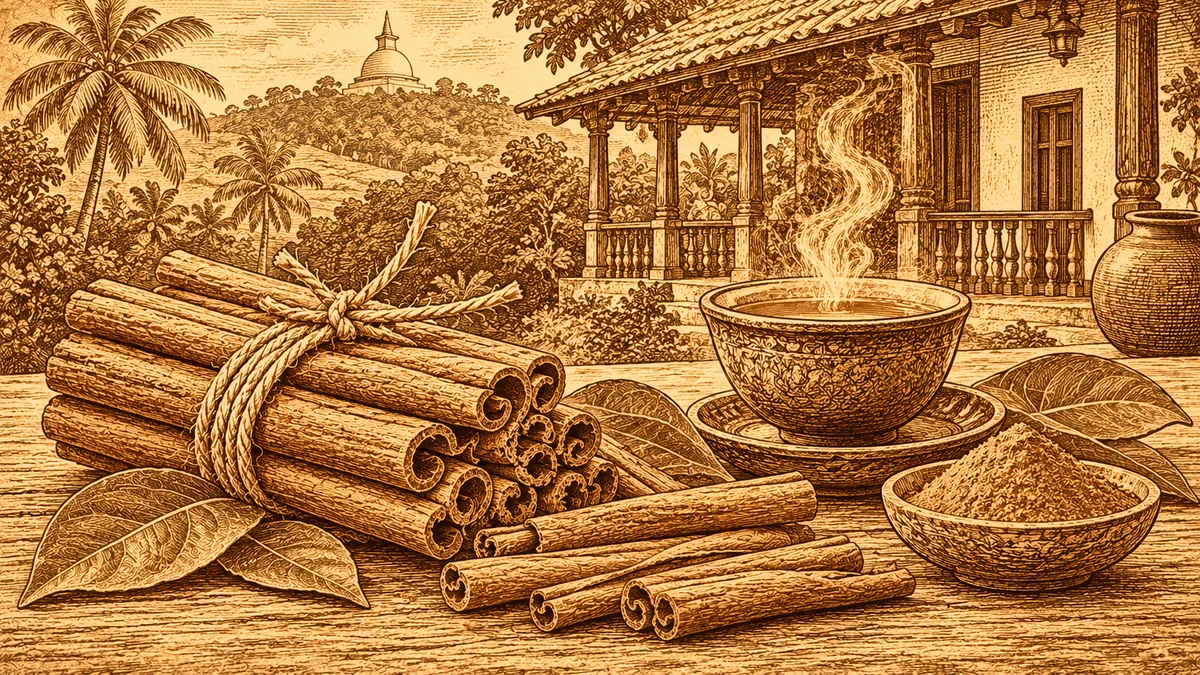
    Cinnamon holds a deep cultural significance in Sri Lanka, where it has been grown, traded and used for centuries. As the home of true cinnamon, Cinnamomum verum, the island treats the spice as part of its heritage: a source of livelihood for generations of farming and peeling families, an ingredient woven into its food and hospitality, and a symbol of its place in the world’s spice history. Cinnamon is not just a crop in Sri Lanka but a thread running through its culture.

    To understand Ceylon cinnamon fully is to see how closely it is tied to the culture of Sri Lanka. This guide looks at what cinnamon means to the island beyond its flavour: its place in work, food, tradition and identity. It builds on our pillar guide to the history of Ceylon cinnamon.

    The short answer

    In Sri Lanka, cinnamon is culturally significant as a heritage crop, a traditional craft, a culinary staple and a symbol of national identity. The island is the original home of true cinnamon, and the spice has shaped its economy, its daily life and its reputation abroad for centuries. Families pass down the skills of growing and peeling cinnamon, cooks use it across sweet and savoury dishes, and the Ceylon name carries the island’s pride. This blend of livelihood, craft, cuisine and identity is what gives cinnamon its cultural weight in Sri Lanka.

    Cinnamon as heritage and livelihood

    For many Sri Lankan families, cinnamon is a family inheritance as much as a crop. Across the cinnamon-growing south, generations have grown, peeled and prepared the spice, passing the knowledge from parents to children. The skill of peeling in particular is a craft learned over years and kept within communities, so that working with cinnamon becomes part of a family’s identity. This long continuity gives the spice a cultural meaning that a simple cash crop would not have: it links present-day farmers to ancestors who did the same work, and ties whole districts to a shared way of life. Our guide to traditional uses of cinnamon in Sri Lankan culture looks further at this heritage.

    Cinnamon in Sri Lankan food

    Cinnamon is woven into Sri Lankan cooking, where it appears in both everyday meals and special dishes. It is a common ingredient in curries, rice dishes and spice blends, lending warmth to savoury food, and it also flavours sweets, cakes and drinks. Because true cinnamon is mild and sweet rather than harsh, it blends gently into a dish rather than overpowering it. Its presence in the kitchen is so routine that it is simply part of how food tastes at home. This culinary role, both daily and celebratory, is a large part of what makes the spice culturally familiar, as our guide to cinnamon in traditional Sri Lankan sweets shows.

    Cinnamon in festivals and hospitality

    Beyond the everyday kitchen, cinnamon has a place in Sri Lankan celebrations and hospitality. Festive foods and sweets often carry its warm aroma, and offering spiced food and drink to guests is part of the island’s tradition of welcome. The scent of cinnamon is tied to moments of gathering and generosity, which gives it an emotional as well as a practical meaning. In this way the spice is bound up with the social life of the island, not only its meals. Our guide to cinnamon in Sri Lankan festivals and celebrations explores this side in more detail.

    DimensionCultural role of cinnamon in Sri Lanka
    HeritageA family craft and livelihood passed down generations
    FoodA staple in curries, sweets, rice and drinks
    HospitalityPart of festive food and welcoming guests
    HistoryCentre of the island’s famous spice trade
    IdentityA symbol of Sri Lanka and the Ceylon name

    Cinnamon and the island’s history

    Cinnamon’s cultural significance is inseparable from Sri Lanka’s history. For centuries the island was the world’s source of true cinnamon, and the spice drew traders and later colonial powers to its shores, shaping events across the island’s past. This long history means cinnamon is not a recent addition to the culture but a thread running through it, connected to the island’s role in the global spice trade. The very name Ceylon, the island’s historical name, became a byword for fine cinnamon, which is itself a mark of how closely the spice and the place are linked. This is the story our pillar guide to the history of Ceylon cinnamon tells in full.

    Cinnamon as a symbol of identity

    Today cinnamon remains a source of national pride and identity for Sri Lanka. As the home of the finest true cinnamon, the island holds a distinctive place in the world of spices, and that reputation is something Sri Lankans value. Efforts to protect the Ceylon name, such as origin recognition for the spice, reflect this sense that cinnamon is part of the country’s identity and worth defending. When Ceylon cinnamon is praised abroad, it reflects well on its homeland, and the spice stands as a quiet ambassador for Sri Lanka. In this sense, cinnamon carries meaning far beyond the kitchen or the farm.

    Cinnamon in the island’s economy and daily rhythm

    Cinnamon’s cultural place is also tied to the rhythm of rural life and the island’s economy. In the cinnamon-growing districts of the south and southwest, the work of tending gardens, harvesting shoots and peeling bark sets the pattern of the week for many households, and the income it brings helps support schools, homes and village life. Because the spice has been an export earner for Sri Lanka over a very long period, it is woven into the story the country tells about itself as a trading island. This practical, economic side of cinnamon is not separate from its cultural meaning but part of it, since a crop that has fed and clothed families for generations naturally becomes something people feel pride and attachment toward. Our pillar guide to Sri Lankan cinnamon farming looks at this working side of the spice in more detail.

    Passing the craft to the next generation

    A culture lives only as long as its skills are passed on, and cinnamon peeling is a clear example. The delicate work of separating the thin inner bark and rolling it into quills takes years to master, and it has traditionally been taught within families and communities, from experienced peelers to younger ones learning at their side. Keeping this knowledge alive is part of what keeps cinnamon culturally meaningful, because each new peeler carries forward a craft that stretches back through many generations. Efforts to train and support peelers, and to recognise their skill, help ensure that the tradition does not fade. In this sense the cultural significance of cinnamon depends on people as much as on the plant, and on the willingness of each generation to learn and continue the work.

    Why the cultural link matters

    Understanding the cultural significance of cinnamon helps explain why authenticity matters so much. When a spice is this closely tied to a place and its people, genuine origin is not only a quality question but a cultural one, since the craft, the heritage and the reputation all belong to Sri Lanka. Valuing true Ceylon cinnamon, then, also means valuing the communities and traditions behind it. This is why the island’s cinnamon is best understood not just as a product but as a living part of Sri Lankan culture, shaped by history and carried forward by the families who still grow and prepare it.

    Summary

    Cinnamon is culturally significant in Sri Lanka as a heritage crop, a traditional craft, a culinary staple and a symbol of national identity. As the original home of true cinnamon, Cinnamomum verum, the island has grown and prepared the spice for centuries, with the skills passed down through farming and peeling families across the south. Cinnamon flavours everyday meals and festive foods alike, features in hospitality and celebration, and is woven into the island’s long spice-trade history. It remains a source of pride and a quiet ambassador for Sri Lanka abroad. Seen this way, Ceylon cinnamon is not merely a product but a living thread in Sri Lankan culture, which is part of why its authentic origin carries such meaning.

    Frequently asked questions

    Why is cinnamon culturally important in Sri Lanka?

    Because Sri Lanka is the home of true cinnamon and has grown, peeled and traded it for centuries. The spice is a family heritage and livelihood, a staple in the island’s food, a part of its hospitality, and a symbol of its identity and place in spice history.

    How is cinnamon used in Sri Lankan culture?

    It is used widely in cooking, from curries and rice dishes to sweets and drinks, and it features in festive foods and hospitality. Beyond the kitchen, growing and peeling cinnamon is a traditional craft passed down within families across the cinnamon-growing south.

    Is cinnamon a symbol of Sri Lanka?

    Yes. As the source of the world’s finest true cinnamon, Sri Lanka takes pride in the spice, and the Ceylon name is closely linked to the island. Cinnamon acts as a quiet ambassador for the country and is part of its national identity.

    How long has cinnamon been part of Sri Lankan culture?

    For many centuries. The island was the world’s source of true cinnamon and was long at the centre of the global cinnamon trade, so the spice is a deep-rooted part of its history and culture rather than a recent addition.

    Why does the cultural significance of cinnamon matter for buyers?

    Because it shows that genuine Ceylon cinnamon carries heritage and craft, not just flavour. Valuing authentic cinnamon means valuing the Sri Lankan communities and traditions behind it, which is part of why origin and authenticity are so important.

    This website provides educational information about Ceylon Cinnamon as a spice and food ingredient. It is not intended to provide medical advice or make health claims.

  • What Is the Ceylon Cinnamon Geographical Indication?

    What Is the Ceylon Cinnamon Geographical Indication?

    A Geographical Indication, or GI, is an official label that ties a product to a specific place of origin and protects its name. The Ceylon Cinnamon Geographical Indication identifies true cinnamon, Cinnamomum verum, grown and prepared in Sri Lanka, confirming that cinnamon sold as Ceylon cinnamon genuinely comes from there. It protects the name from misuse, supports the farmers and peelers who produce it, and gives buyers a trusted mark of authentic origin.

    Ceylon cinnamon is tied so closely to Sri Lanka that its origin has become part of its identity, and a Geographical Indication puts that link into law. This guide explains what the Ceylon Cinnamon GI is, how a GI works, and why it matters for authenticity and for the people who grow the spice. It builds on our pillar guide to Sri Lankan cinnamon farming.

    The short answer

    The Ceylon Cinnamon Geographical Indication is an official origin mark that recognises true cinnamon from Sri Lanka and protects the name from being used on cinnamon from elsewhere. Like a GI for Champagne or Parmigiano Reggiano, it says that a product with this name must come from a defined place and meet defined standards. For Ceylon cinnamon, that place is Sri Lanka, and the product is bark from Cinnamomum verum prepared in the traditional way. The GI helps buyers trust the name and helps producers protect the reputation and value of their spice.

    What a geographical indication is

    A geographical indication is a sign used on products that have a specific geographical origin and qualities or a reputation due to that origin. Well-known examples include Champagne, which must come from the Champagne region of France, and Parmigiano Reggiano cheese from its defined area of Italy. The idea is that some products are inseparable from where they are made, because the place, its conditions and its traditions shape the product. A GI protects the name so that only genuine products from that place can use it, which guards both the consumer and the producer. Ceylon cinnamon fits this idea closely, since its character comes from Sri Lanka’s land, climate and craft.

    The Ceylon Cinnamon GI

    Ceylon cinnamon has been recognised with a Geographical Indication that links the name to Sri Lanka as its country of origin. This was a notable step for the country, as Ceylon cinnamon is one of its most famous products and one that has long been copied or confused with cheaper cassia. Under the GI, cinnamon marketed as Ceylon cinnamon is expected to be genuine true cinnamon from Sri Lanka, produced to defined standards of quality and origin. The GI works alongside the national grading and quality rules, such as those described in our guide to the SLS standard for Ceylon cinnamon, giving the spice both a quality framework and an origin protection.

    Why the GI matters for authenticity

    The main value of the GI is authenticity. Because true Ceylon cinnamon is more costly than cassia and other cinnamon-like barks, the name has long been attractive to imitate, and cinnamon from other countries has sometimes been sold under the Ceylon name. A Geographical Indication makes that misuse harder, because the name is legally tied to genuine Sri Lankan origin. For buyers, this means the Ceylon name carries more weight, and for Sri Lanka, it protects a reputation built over centuries. The GI supports the same goal as careful label-reading, which our guide to reading cinnamon labels correctly explains from the shopper’s side.

    AspectWhat the Ceylon Cinnamon GI does
    OriginTies the name to Sri Lanka as the source
    ProductIdentifies true cinnamon, Cinnamomum verum
    Name protectionLimits use of the name to genuine products
    Quality linkWorks with national grading and standards
    Who it helpsBuyers seeking authenticity and local producers

    Why the GI matters for farmers and sustainability

    Beyond authenticity, the GI matters for the people who grow and prepare cinnamon. Much of Sri Lanka’s cinnamon comes from smallholder farms and skilled peeling families, and protecting the Ceylon name helps protect the value of their work. When the name cannot be freely used by cheaper substitutes, genuine producers can command a fairer price, which supports rural livelihoods across the cinnamon-growing south. This connects to wider efforts around fair and sustainable cinnamon, including those discussed in our guide to fair trade and Ceylon cinnamon. In this way the GI is not only a legal mark but also a tool for sustaining a traditional craft and the communities behind it.

    How a GI is used and enforced

    A geographical indication is registered with the relevant authorities and then used on qualifying products, often with a recognised logo or wording that shows the protected origin. Producers whose cinnamon meets the origin and quality conditions may use the indication, while others may not legally use the protected name for similar products. Enforcement depends on the legal systems where the GI is recognised, and protection can extend to other countries through registration there. For a spice traded worldwide, recognition in major markets is especially important, since it guards the Ceylon name where much of the cinnamon is sold.

    The GI and the Ceylon name

    The Ceylon Cinnamon GI reinforces something the name has always implied: that this cinnamon belongs to Sri Lanka. The word Ceylon is the island’s historical name, and it has long been a byword for fine cinnamon, as our guide to why it is called Ceylon cinnamon explains. The GI turns that long association into a protected right, ensuring that the name points to genuine origin rather than being a loose description anyone can borrow. In doing so, it strengthens the bond between the spice, its name and its homeland.

    What the GI means for a shopper

    For an everyday buyer, the GI is a reason to trust the Ceylon name a little more, but it works best alongside the usual checks. A protected origin mark means that genuine Ceylon cinnamon can be identified and that misuse of the name is discouraged, yet a shopper still benefits from reading the label for the species name, Cinnamomum verum, and a clear statement of Sri Lankan origin. Where a product carries both a trustworthy origin indication and clear labelling, the buyer has good reason to believe it is authentic. The GI, in other words, strengthens the value of the Ceylon name without removing the sense of checking what is on the packet, and the two together give the clearest picture of authenticity.

    Summary

    A Geographical Indication is an official mark that ties a product to a specific place and protects its name, and the Ceylon Cinnamon GI applies this to true cinnamon, Cinnamomum verum, from Sri Lanka. It confirms that cinnamon sold under the Ceylon name genuinely comes from the island and meets defined standards, making misuse of the name harder and giving buyers a trusted sign of authentic origin. Beyond protecting consumers, the GI helps the smallholder farmers and peeling families who produce the spice by defending the value of their work, supporting rural livelihoods and a traditional craft. Working alongside national grading and quality rules, the Ceylon Cinnamon GI turns the long association between the spice and its homeland into a protected right, reinforcing that genuine Ceylon cinnamon comes from Sri Lanka.

    Frequently asked questions

    What is the Ceylon Cinnamon Geographical Indication?

    It is an official origin mark that recognises true cinnamon, Cinnamomum verum, from Sri Lanka and protects the Ceylon cinnamon name. It confirms that cinnamon sold under that name genuinely comes from Sri Lanka and meets defined standards of quality and origin.

    What does a geographical indication mean?

    A geographical indication is a sign used on products whose qualities or reputation come from a specific place of origin. Examples include Champagne and Parmigiano Reggiano. It protects the name so that only genuine products from that place can use it.

    Why does Ceylon cinnamon have a GI?

    Because true Ceylon cinnamon is closely tied to Sri Lanka and is often imitated by cheaper cassia or cinnamon from other countries. The GI protects the name, guards authenticity, and supports the farmers and peelers who produce genuine Ceylon cinnamon.

    How does the GI protect buyers?

    It legally ties the Ceylon cinnamon name to genuine Sri Lankan origin, making it harder for other products to be sold under that name. This gives buyers more confidence that cinnamon labelled as Ceylon cinnamon is authentic true cinnamon from Sri Lanka.

    Does the GI help cinnamon farmers?

    Yes. By protecting the value of the Ceylon name, the GI helps genuine producers, many of them smallholder farmers and peeling families, earn a fairer price for their work. This supports rural livelihoods and the traditional craft of making true cinnamon.

    This website provides educational information about Ceylon Cinnamon as a spice and food ingredient. It is not intended to provide medical advice or make health claims.
  • Storing Cinnamon Sticks vs Cinnamon Powder

    Storing Cinnamon Sticks vs Cinnamon Powder

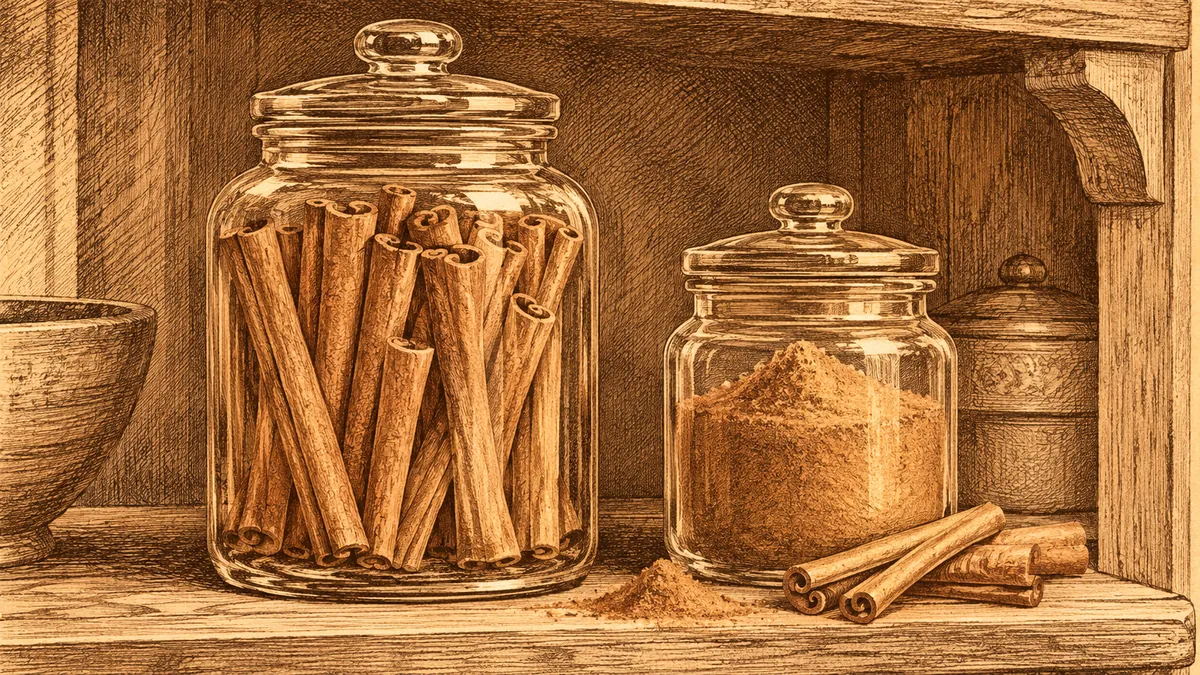
    Cinnamon sticks and cinnamon powder are stored the same way, in a cool, dark, dry place in an airtight container, but they keep for very different lengths of time. Whole Ceylon cinnamon sticks, or quills, hold their aroma far longer because less of their surface is exposed to air, lasting a few years when stored well. Ground cinnamon has much more surface area, so it loses its scent and flavour faster, staying at its best for several months to about a year.

    Whether you buy Ceylon cinnamon as sticks or as powder, how you store it decides how long it keeps its aroma and flavour. This guide explains how to store each form, why sticks last longer than powder and how to get the most from both. It builds on our pillar guide, the Ceylon cinnamon buying guide.

    The short answer

    Store both sticks and powder in an airtight container in a cool, dark, dry cupboard, away from heat, light and moisture. Sticks keep well for a few years, powder for several months up to about a year. The storage conditions are the same, but the shelf life is not: whole quills have far less exposed surface than ground cinnamon, so they hold their volatile aroma compounds much longer. This is why many people buy sticks and grind small amounts as needed, rather than keeping a large jar of powder for a long time.

    Why the form changes the shelf life

    The difference between storing sticks and powder comes down to surface area. A whole cinnamon stick is a tightly rolled quill of bark, with only its outer surface in contact with the air. Grinding that same bark into powder exposes a huge number of tiny particles, each surface meeting the air. The aromatic compounds that give cinnamon its scent and flavour are volatile, meaning they slowly escape into the air, and the more surface is exposed, the faster this happens. So powder loses its character faster than a stick simply because far more of it is open to the air. For more on how long the spice lasts overall, see our guide to how long Ceylon cinnamon lasts.

    How to store cinnamon sticks

    Store whole Ceylon cinnamon sticks in an airtight container, such as a sealed jar or tin, in a cool, dark, dry cupboard. Keep them away from the heat of the stove or oven, out of direct sunlight, and away from damp, since heat, light and moisture all speed the loss of aroma. Stored this way, good Ceylon cinnamon sticks hold their fragrance well for a few years. Because the quills are whole, they are forgiving and keep their quality for a long time, which is one reason sticks are a practical way to buy cinnamon you will use slowly.

    How to store cinnamon powder

    Ground cinnamon needs the same conditions, an airtight container in a cool, dark, dry place, but it rewards a little more care because it fades faster. Keep the jar tightly closed between uses, and avoid letting steam reach it, for example by not shaking it directly over a hot, steaming pot, since moisture both clumps the powder and hastens the loss of aroma. Buy powder in amounts you will use within several months to a year, rather than a large jar that will sit for years. Ground cinnamon rarely becomes unsafe if kept dry, but it does grow weak and dull over time, so using it while fresh gives the best flavour.

    PointCinnamon sticks (quills)Cinnamon powder
    Storage conditionsCool, dark, dry, airtightCool, dark, dry, airtight
    Exposed surfaceSmall, only the outsideLarge, every particle
    Typical best-flavour lifeA few yearsSeveral months to a year
    Main enemyHeat, light, damp over timeAir and moisture, faster
    Best practiceKeep sealed, grind as neededBuy small, use while fresh

    The case for buying sticks and grinding

    Because whole sticks keep so much longer than powder, one practical approach is to buy Ceylon cinnamon as sticks and grind a little into powder only when you need it. This gives you the long shelf life of quills together with fresh-ground flavour each time. Ceylon cinnamon is especially suited to this, as its bark is thin and brittle and grinds more easily than the hard bark of cassia. Our guide to cinnamon sticks versus powder and what to buy looks at this choice in more detail. For everyday cooks who use powder often, though, buying a modest jar and replacing it regularly works perfectly well.

    Signs cinnamon has lost its freshness

    Both sticks and powder lose aroma gradually rather than spoiling suddenly. The clearest sign is smell: fresh Ceylon cinnamon has a warm, sweet fragrance, and when that scent becomes faint, the cinnamon has passed its best. With powder, a dull colour and a weak aroma when you open the jar are the signs to replace it. With sticks, a quill that smells of little even when scratched or broken has faded. Kept dry, cinnamon does not usually become unsafe, but weak cinnamon gives weak results in cooking, so aroma is the test that matters. Our guide to whether Ceylon cinnamon goes bad covers this in full.

    Choosing the right container

    The container matters as much as the cupboard. The aim is an airtight seal that keeps air and moisture out, so a glass jar with a tight lid, or a metal tin that closes well, suits both sticks and powder. Glass has the advantage of not holding odours, though a clear jar should be kept in a dark cupboard rather than on an open shelf, since light fades the aroma. For powder especially, a small jar that is opened and closed cleanly is better than a large one that is left part full for a long time, because each opening lets in a little air. Whatever the material, a good seal and a dark, cool spot are what count, and the same container advice applies whether you keep sticks or ground cinnamon.

    Common storage mistakes

    A few simple mistakes shorten the life of both forms. Keeping cinnamon in a rack above or beside the stove exposes it to heat and steam, which drive off aroma quickly. Leaving a jar open, or using a container that does not seal well, lets the volatile compounds escape. Storing cinnamon in a clear jar on a sunny shelf exposes it to light. And shaking powder straight over a steaming pot lets moisture in. Avoiding these, by keeping cinnamon sealed, cool, dark and dry, is most of what good storage requires, and it applies equally to sticks and powder.

    Summary

    Cinnamon sticks and cinnamon powder are stored under the same conditions, sealed in an airtight container in a cool, dark, dry place away from heat, light and moisture, but they keep for different lengths of time. Whole Ceylon cinnamon sticks expose little surface to the air, so they hold their aroma well for a few years, while ground cinnamon exposes far more surface and fades faster, staying at its best for several months up to about a year. Because of this, a practical approach is to buy sticks and grind small amounts as needed, while cooks who use powder regularly can keep a modest jar and replace it often. In both cases, aroma is the test of freshness, and keeping cinnamon sealed and away from heat, light and damp is the key to making it last.

    Frequently asked questions

    Do cinnamon sticks last longer than cinnamon powder?

    Yes. Whole sticks expose much less surface to the air than ground powder, so they hold their aroma far longer. Stored well, sticks keep their best flavour for a few years, while powder is best used within several months to about a year.

    How should I store cinnamon sticks and powder?

    Both should be kept in an airtight container in a cool, dark, dry cupboard, away from heat, light and moisture. The conditions are the same for both forms; only the shelf life differs, with sticks keeping longer than powder.

    Does ground cinnamon go bad?

    Ground cinnamon kept dry rarely becomes unsafe, but it loses its aroma and flavour over time and becomes dull and weak. The sign to replace it is a faint smell and a flat colour. Using it while fresh gives the best results.

    Is it better to buy cinnamon sticks or powder?

    For long storage, sticks are better because they keep much longer and can be ground as needed. For frequent, convenient use, powder is fine if bought in modest amounts and replaced regularly. Many people keep sticks for the long term and a small jar of powder for everyday use.

    Can I store cinnamon in the fridge or freezer?

    It is not necessary. A cool, dark, dry cupboard is ideal. Refrigerators can introduce moisture through condensation, which is unhelpful for a dry spice, so an airtight container in a cupboard away from heat is the simplest and most reliable choice.

    This website provides educational information about Ceylon Cinnamon as a spice and food ingredient. It is not intended to provide medical advice or make health claims.

  • How Ceylon Cinnamon Is Officially Graded

    How Ceylon Cinnamon Is Officially Graded

    Ceylon cinnamon is officially graded by sorting the dried quills according to set rules for their diameter, appearance and quality, then labelling them with standard grade codes. The main grades run from the finest, Alba, through the Continental, Mexican and Hamburg families, with numbered sub-grades such as C5 or M5. Grading follows national standards in Sri Lanka, and quills are measured and inspected so that each grade means the same thing to every buyer.

    Behind every tin of Ceylon cinnamon labelled with a grade is a formal system of sorting and measurement. This guide explains how that official grading works, what the grade codes mean and who sets the rules, in plain terms. It builds on our pillar guide, the complete guide to Ceylon cinnamon grades.

    The short answer

    Official grading sorts dried Ceylon cinnamon quills by measured diameter, appearance and defects into named grades, following Sri Lankan national standards. Thinner, finer, cleaner quills reach higher grades, while thicker or more flawed ones fall into lower ones. Each grade has a code, such as Alba, C5 Special, C5, M5 or H1, and a definition that sets the limits for that grade. Because the rules are written down and the quills are measured against them, a grade name carries the same meaning from one supplier to another.

    What grading means

    Grading is the process of sorting a crop into quality classes so that buyers know what they are getting. For Ceylon cinnamon, grading takes the finished, dried quills and divides them into grades based on measurable features. It does not change the cinnamon itself: a grade simply describes where a particular quill fits on a scale from finest to coarsest. This matters because cinnamon is traded worldwide, and a shared grading system lets a buyer order a grade and receive bark that matches it, without inspecting every quill in person.

    What is measured

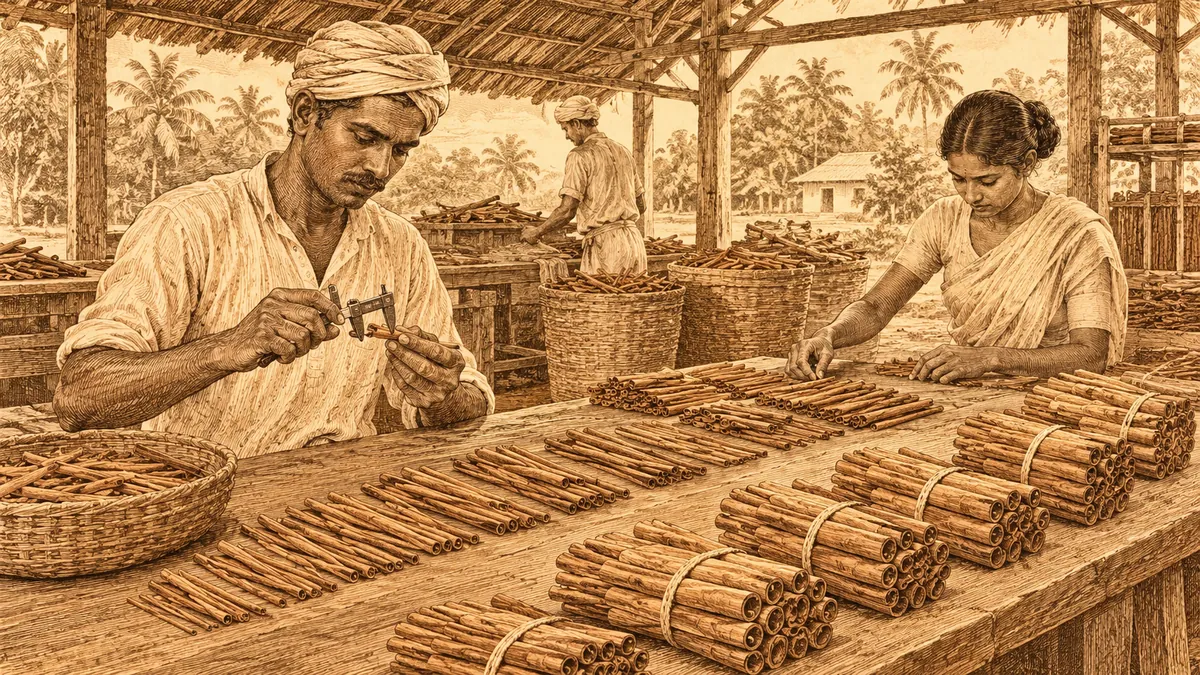
    Official grading rests on a few clear, measurable features of each quill. The most important is diameter: the thickness of the rolled quill, measured across its width. Finer, thinner quills are more prized and reach higher grades, while thicker quills fall into lower grades. Alongside diameter, graders look at appearance and colour, the evenness and neatness of the quill, and the presence of any defects such as roughness, breakage or blemishes. Together these decide the grade. The emphasis on diameter is why the finest grade, Alba, is defined by a very small quill diameter.

    The main grade families

    Ceylon cinnamon grades are organised into families, each with its own range of quill diameters. Alba is the finest and thinnest, the top of the scale. Below it, the Continental grades cover fine quills, the Mexican grades cover medium quills, and the Hamburg grades cover the thickest quills. Within these families, numbers mark sub-grades, so a label may read C5 Special, C5, C4, M5, M4 or H1, where the letter shows the family and the number relates to the diameter class. The result is a ladder of grades from Alba at the top down through the Hamburg range, each step allowing a slightly thicker quill.

    Grade familyCodeQuill character
    AlbaAlbaFinest and thinnest, top grade
    ContinentalC5 Special, C5, C4Fine, thin quills
    MexicanM5, M4Medium quills
    HamburgH1, H2, H3Thicker quills

    For a fuller description of what each grade name means, see our guide to cinnamon grading terms made simple.

    Who sets the standards

    The grading of Ceylon cinnamon is governed by official standards, most importantly the national standards of Sri Lanka. The Sri Lanka Standards Institution sets the rules for how cinnamon is classified, defining the grades and their requirements. There are also international standards, such as those issued by the International Organization for Standardization, which cover cinnamon quality and classification more broadly. These written standards are what make a grade official rather than a matter of opinion. Our guides to the SLS standard for Ceylon cinnamon and to ISO standards and cinnamon quality explain these bodies in more detail.

    How quills are sorted in practice

    In practice, grading happens after the cinnamon has been peeled, rolled and dried. Workers sort the finished quills, judging and measuring their diameter and checking their appearance, and group together the quills that meet each grade’s definition. Skilled graders can assess quills quickly by eye and feel, having learned the diameter classes through long experience, while measurement confirms the borderline cases. The sorted quills are then bundled by grade, ready to be labelled and traded. This sorting step turns a mixed batch of quills into clearly defined grades that the market can price and buy.

    Why official grading matters

    Official grading gives Ceylon cinnamon a common language of quality. For producers, it allows their cinnamon to be sold at a fair price that matches its grade, rewarding the care taken in peeling and rolling fine quills. For buyers, it provides confidence: ordering a named grade means receiving bark that meets a defined standard, whether the buyer is a spice importer, a manufacturer or a retailer. For the trade as a whole, it supports trust and consistency, since everyone works from the same definitions. In this way grading underpins the reputation of Ceylon cinnamon as a carefully classified, high-quality spice.

    Grading beyond whole quills

    Official grading covers more than the prime quills. During peeling and sorting, not every piece of bark forms a perfect quill, and these other forms are graded too. Featherings are the small, thin inner pieces of bark; quillings are broken fragments of quills; and chips are small pieces of bark trimmed away or left over. Each of these has its own place in the grading system and its own uses, generally in grinding and flavouring rather than sale as whole sticks. Sorting them properly means the whole crop is classified, with prime quills graded by diameter and the remaining material graded into these named classes. Our glossary of feathering, quilling and chips explains these forms in detail.

    Grading and price

    Grade and price are closely linked. Because higher grades such as Alba require the finest, thinnest quills, which are more limited and take more skill to produce, they command higher prices. Lower grades, with thicker quills, are more plentiful and cost less. This is why grade is one of the first things a serious buyer looks at, and why the grade on a label is a useful guide to both quality and cost. Grading, in other words, is not only about quality description but also about how the market values different classes of cinnamon.

    Summary

    Ceylon cinnamon is officially graded by sorting the dried quills according to written standards, mainly those of the Sri Lanka Standards Institution, based on measurable features above all the quill’s diameter, together with appearance and defects. The grades form a ladder from the finest, Alba, through the Continental, Mexican and Hamburg families, each marked by a code such as C5, M5 or H1. Grading takes place after peeling, rolling and drying, when workers sort and measure the quills and bundle them by grade. Because the rules are set down and applied consistently, a grade carries the same meaning for every buyer, which supports fair pricing, buyer confidence and the reputation of Ceylon cinnamon as a well-classified spice.

    Frequently asked questions

    How is Ceylon cinnamon officially graded?

    It is graded by sorting the dried quills according to set standards, mainly the quill’s diameter along with its appearance and any defects. Finer, thinner quills reach higher grades, and each grade has a code and a written definition under Sri Lankan national standards.

    What is the highest grade of Ceylon cinnamon?

    Alba is the highest and finest grade. It is defined by a very small quill diameter, meaning the thinnest, most delicate quills. Because such quills are limited and skilled to produce, Alba is the most prized and most costly grade.

    What do the grade codes like C5 or M5 mean?

    The letter shows the grade family, such as C for Continental or M for Mexican, and the number relates to the diameter class within that family. So C5 and M5 are specific sub-grades, each covering quills of a defined thickness.

    Who sets the grading standards for Ceylon cinnamon?

    The main authority is the Sri Lanka Standards Institution, which sets national standards defining the grades. International standards from the International Organization for Standardization also cover cinnamon quality and classification. These written rules make the grades official.

    Does the grade affect the price of cinnamon?

    Yes. Higher grades such as Alba, made from the finest, thinnest quills, are more limited and command higher prices, while lower grades with thicker quills cost less. Grade is therefore a useful guide to both quality and price.

    This website provides educational information about Ceylon Cinnamon as a spice and food ingredient. It is not intended to provide medical advice or make health claims.
  • The Essential Oil of Ceylon Cinnamon

    The Essential Oil of Ceylon Cinnamon

    The essential oil of Ceylon cinnamon is the concentrated aromatic oil drawn from the bark and leaves of Cinnamomum verum, the true cinnamon tree of Sri Lanka. It is produced by steam distillation and carries the plant’s natural aroma compounds in a strong, fragrant form. There are two main types, bark oil and leaf oil, which differ in their main compounds and their scent. The oil is valued for its aroma and flavour and is used in food flavouring, perfumery and fragrance.

    Ceylon cinnamon is known first as a spice, but the same tree also yields a prized essential oil. This guide explains what that oil is, how it is made, what it contains and how it is used, in plain and factual terms. It builds on our pillar guide to what true Ceylon cinnamon is, and sits alongside our introduction to Ceylon cinnamon oil.

    The short answer

    Ceylon cinnamon essential oil is a concentrated aromatic oil steam-distilled from the bark or leaves of Cinnamomum verum. Bark oil is rich in a compound called cinnamaldehyde and has the sweet, warm scent of the spice, while leaf oil is rich in eugenol and smells more clove-like. Both capture the tree’s natural aromatic compounds in concentrated form. The oil is used mainly for its aroma and flavour, in foods, drinks, perfumes and scented products, and it is studied by researchers interested in its naturally occurring compounds.

    What an essential oil is

    An essential oil is the concentrated, aromatic, oily liquid captured from a plant. It holds the volatile compounds that give the plant its smell and much of its flavour, gathered into a small, strong volume. For cinnamon, these are the same aroma molecules you notice when you open a jar of quills, but in a far more concentrated form. Because it is so concentrated, cinnamon essential oil is used in tiny amounts and is very different from ground cinnamon or whole bark used in cooking.

    Bark oil and leaf oil

    Ceylon cinnamon yields two distinct essential oils, depending on which part of the tree is distilled. Bark oil comes from the inner bark, the same material used to make quills, and its main compound is cinnamaldehyde, which gives the sweet, warm, familiar cinnamon scent. Leaf oil comes from the leaves and is richer in eugenol, a compound also found in cloves, so it has a warmer, more clove-like, slightly spicier aroma. Bark oil is generally the more prized and costly of the two, because bark is more limited and its scent is the classic cinnamon note. The difference between the two oils is a good example of how one plant can give more than one aromatic product. Our guide to what gives Ceylon cinnamon its aroma explains these compounds in more detail.

    How the oil is made

    Ceylon cinnamon essential oil is produced mainly by steam distillation. In this process, bark or leaves are placed in a still and steam is passed through them. The heat releases the plant’s volatile aromatic compounds, which travel with the steam into a cooling section, where the steam condenses back into water. The oil separates from this water and is collected. It takes a large amount of plant material to produce a small quantity of oil, which is part of why pure essential oil is concentrated and relatively costly. The method captures the natural compounds of the plant without adding anything to them.

    What the oil contains

    The main interest of cinnamon essential oil, for both industry and researchers, is its naturally occurring compounds. Bark oil is dominated by cinnamaldehyde, usually its largest single component, which carries the characteristic sweet cinnamon aroma. Leaf oil is dominated by eugenol, giving a clove-like character. Smaller amounts of other aromatic compounds are present in both, contributing to the full scent. These compounds are studied by scientists interested in the chemistry of aroma and flavour. It is worth noting that true Ceylon cinnamon is also low in coumarin, a compound discussed in our guide to coumarin levels in Ceylon cinnamon versus cassia.

    FeatureBark oilLeaf oil
    SourceInner bark of the treeLeaves of the tree
    Main compoundCinnamaldehydeEugenol
    AromaSweet, warm, classic cinnamonWarmer, clove-like, spicier
    Relative costHigher, more prizedLower, more plentiful
    Common usesFlavouring, fine fragranceFragrance, scented products

    How the oil is used

    Ceylon cinnamon essential oil is used mainly for its aroma and flavour. In food and drink, tiny, carefully measured amounts are used as a flavouring by manufacturers, since the oil is far too strong to use like ground cinnamon at home. In perfumery and fragrance, cinnamon oil adds a warm, sweet, spicy note to perfumes, soaps, candles and other scented goods. It also appears in the flavour and fragrance industry more broadly, wherever a concentrated cinnamon character is wanted. Across all these uses, the appeal is the same: a small amount of oil carries a great deal of the plant’s natural scent and taste.

    Why Ceylon cinnamon oil is distinctive

    The essential oil of Cinnamomum verum is tied to the same qualities that make the spice itself prized. The bark of true cinnamon is thin, fine and sweetly aromatic, and its oil carries that delicate, warm character. This is different from the oil of cassia, the coarser cinnamon-like barks from other species, which tends to be harsher. Just as whole Ceylon cinnamon is valued for its gentle, refined aroma, its essential oil is valued for the same reason. The origin in Sri Lanka, and the particular species, are part of what defines the product.

    Oil, spice and the whole plant

    Essential oil is one of several products that come from the Ceylon cinnamon tree. The bark becomes quills and ground cinnamon, the same bark and the leaves can be distilled into oil, and nothing of the tree’s aromatic value is wasted. Seeing the oil in this context helps explain the plant: it is a single species, Cinnamomum verum, grown in Sri Lanka, that yields a spice, an oil and a range of aromatic materials. The essential oil is simply the most concentrated expression of the aroma that the whole tree carries.

    Pure oil, blends and fragrance oils

    Not everything sold as cinnamon oil is the same thing. A pure essential oil is distilled only from the cinnamon plant and nothing else. Alongside it, the market also offers diluted oils, where the essential oil is mixed into a carrier oil, and synthetic fragrance oils, which copy the cinnamon scent using manufactured aroma chemicals rather than the plant itself. These products smell of cinnamon but are not the same as pure distilled oil, and they are often cheaper. For anyone wanting the genuine article, the label matters: a pure Ceylon cinnamon essential oil should name the plant, Cinnamomum verum, and state whether it is bark or leaf oil. This mirrors the care needed when buying the spice itself, where origin and species on the label are the clearest signs of authenticity.

    Summary

    The essential oil of Ceylon cinnamon is a concentrated aromatic oil steam-distilled from the bark or leaves of Cinnamomum verum, the true cinnamon tree of Sri Lanka. Bark oil, rich in cinnamaldehyde, carries the sweet, warm classic cinnamon scent, while leaf oil, rich in eugenol, has a more clove-like character. The oil is made by passing steam through plant material and collecting the aromatic compounds it releases, and it takes a lot of material to make a little oil. Used in tiny amounts, it flavours foods and drinks and scents perfumes and other products, and its naturally occurring compounds are studied by researchers. As one of several products of the same tree, the oil is the most concentrated form of the aroma that makes Ceylon cinnamon prized.

    Frequently asked questions

    What is Ceylon cinnamon essential oil?

    It is a concentrated aromatic oil distilled from the bark or leaves of Cinnamomum verum, the true cinnamon tree of Sri Lanka. It captures the plant’s natural aroma compounds in a strong, fragrant form and is used mainly for flavour and fragrance.

    What is the difference between bark oil and leaf oil?

    Bark oil comes from the inner bark and is rich in cinnamaldehyde, giving the sweet, classic cinnamon scent. Leaf oil comes from the leaves and is rich in eugenol, giving a warmer, clove-like aroma. Bark oil is generally more prized and more costly.

    How is cinnamon essential oil made?

    It is produced mainly by steam distillation. Steam is passed through bark or leaves, releasing their volatile aromatic compounds, which are then cooled, condensed and collected as oil. A large amount of plant material yields only a small quantity of oil.

    What is cinnamon essential oil used for?

    It is used mainly for its aroma and flavour: as a carefully measured flavouring in food and drink manufacturing, and as a warm, spicy note in perfumes, soaps, candles and other scented products. It is always used in very small amounts because it is highly concentrated.

    Is Ceylon cinnamon oil different from cassia oil?

    Yes. Ceylon cinnamon oil comes from Cinnamomum verum and tends to have a finer, sweeter, more delicate character, matching the refined aroma of true cinnamon. Cassia oils, from other species, are generally harsher in scent.

    This website provides educational information about Ceylon Cinnamon as a spice and food ingredient. It is not intended to provide medical advice or make health claims.
  • Matara and Its Cinnamon Heritage

    Matara and Its Cinnamon Heritage

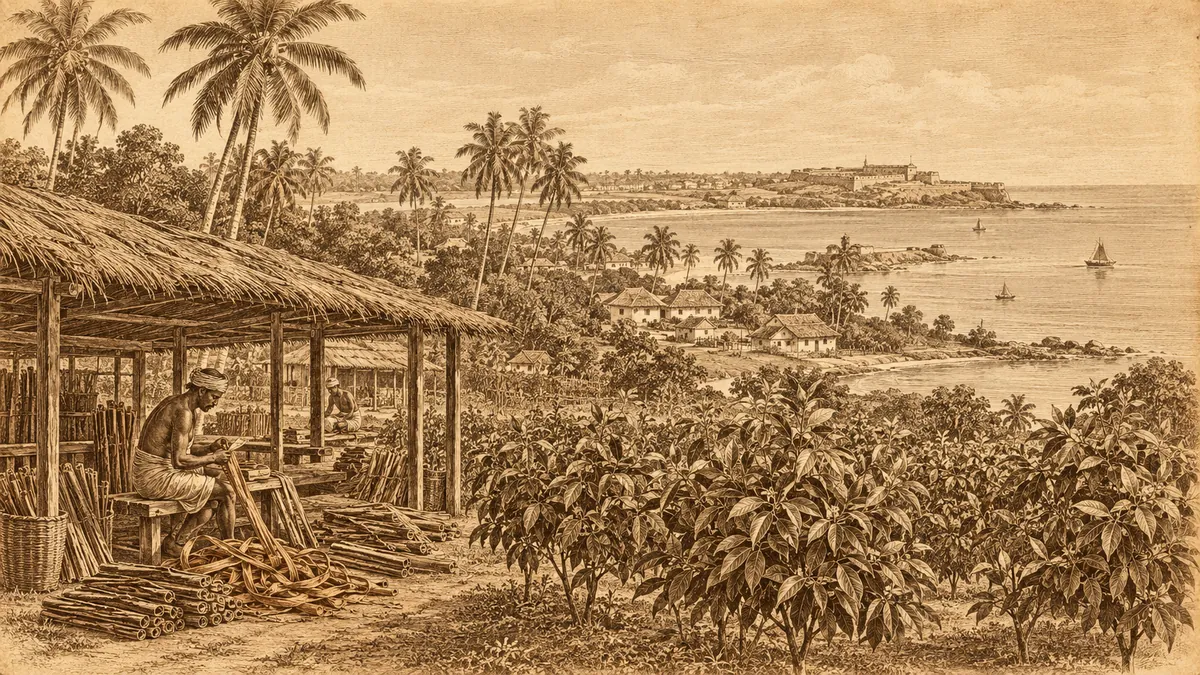
    Matara is a district on the southern coast of Sri Lanka and one of the heartlands of Ceylon cinnamon. Its warm climate, sandy coastal soils and long tradition of peeling make it a major source of true cinnamon, Cinnamomum verum. For centuries Matara has grown, peeled and traded cinnamon, and the district remains central to Sri Lanka’s cinnamon industry today, alongside its neighbour Galle.

    When people picture where Ceylon cinnamon comes from, the southern coast of Sri Lanka is the answer, and Matara sits at its core. This guide explains why Matara matters to cinnamon, what makes its land suited to the crop, and how its heritage of peeling and trade shaped the spice. It builds on our pillar guide to Sri Lankan cinnamon farming.

    The short answer

    Matara is one of the main cinnamon-growing districts of Sri Lanka, part of the southern coastal belt where most true cinnamon is produced. Its climate and soils suit Cinnamomum verum, and generations of local families have grown and peeled cinnamon there. The district has a deep heritage in the trade, from the colonial era to the many smallholder farms and peeling families working today. Together with Galle, Matara forms the southern core of Ceylon cinnamon country.

    Where Matara is

    Matara is a coastal district in the Southern Province of Sri Lanka, with the town of Matara on the Indian Ocean. It lies east of Galle, and the two districts together cover much of the island’s prime cinnamon land. The southern coast here is low, warm and wet, with sandy soils near the shore rising to gentle hills inland. This stretch of coast, running roughly from Galle through Matara, is the belt where true cinnamon has long grown best. For the wider picture of where the crop is grown, see our guide to the cinnamon-growing regions of Sri Lanka.

    Why the land suits cinnamon

    Cinnamon thrives in Matara because the conditions match what the tree needs. The climate is warm all year, with high rainfall and humidity, and no cold season. The coastal soils are often sandy and well drained, which Cinnamomum verum favours, and the low elevation keeps temperatures steady. These are the same conditions our guide to the climate Ceylon cinnamon needs describes, and Matara has them in good measure. The result is bark with the fine, sweet character that defines true Ceylon cinnamon.

    Matara’s cinnamon heritage

    Matara’s link to cinnamon goes back centuries. During the colonial period, when European powers controlled the Ceylon cinnamon trade, the southern coast was at the centre of cultivation and export, and Matara was one of its key areas. The district carries the marks of that era in its old fortifications and trading history. More lasting than any building, though, is the human heritage: the families who learned to grow, peel and prepare cinnamon and passed that skill down through generations. This living tradition of craft is a large part of what Matara heritage means.

    The peelers of the south

    At the heart of Matara’s cinnamon story are its peelers. Peeling true cinnamon is a skilled craft: the thin inner bark must be lifted cleanly and rolled into quills by hand. In Matara and the surrounding south, this skill has been held and handed down within communities for generations, making the region known not just for growing cinnamon but for preparing it well. The quality of a quill depends heavily on the peeler, so a district with deep peeling knowledge, as Matara has, tends to produce fine cinnamon.

    Matara and Galle together

    Matara is best understood alongside Galle, its western neighbour. The two southern districts form the core of Ceylon cinnamon country, sharing the same coastal climate, soils and traditions. Galle is often described as the heart of the trade, and Matara sits right beside it as a major growing and peeling area. Reading the two together gives the fuller picture of the south, so our guide to Galle, the heart of Ceylon cinnamon, is a natural companion to this one.

    FeatureMatara district
    LocationSouthern coast of Sri Lanka, east of Galle
    ClimateWarm and wet all year, high humidity
    SoilOften sandy and well drained near the coast
    Main crop roleMajor Ceylon cinnamon growing and peeling area
    HeritageCenturies of cultivation, peeling and trade
    NeighbourGalle, with which it forms the southern core

    Matara in the cinnamon trade today

    Matara remains an active part of Sri Lanka’s cinnamon industry. Much of the crop in the district comes from smallholder farms, where families grow cinnamon on modest plots alongside other crops, and peel it in their own sheds. This pattern of many small producers, rather than a few large estates, is typical of the southern cinnamon belt. The district supplies bark into the national trade, where it is graded, bundled and prepared for export. In this way the old heritage continues as a working industry, linking today’s farmers to a tradition that stretches back generations.

    Smallholder farms and family plots

    Much of Matara’s cinnamon grows on small family plots rather than large plantations. A typical grower may tend a modest area of cinnamon, sometimes mixed with other crops, and manage the cutting, peeling and drying within the household or with a small group of peelers. This smallholder pattern shapes the whole character of cinnamon in the district. It keeps the skill spread widely across many families, ties the crop closely to everyday rural life, and means the quality of the bark rests on countless individual hands rather than a single estate. It also makes cinnamon an important part of the income of ordinary households across the south.

    Cinnamon and daily life in the district

    In Matara, cinnamon is woven into the rhythm of rural life. The crop can be harvested through much of the year, so peeling sheds are a familiar sight across the district, and the work of cutting, peeling, rolling and drying marks the days of many families. Children often grow up around the craft, learning by watching before they ever lift a peeling knife, which is how the skill survives from one generation to the next. This everyday presence of cinnamon, as both a livelihood and an inherited craft, is a quiet but real part of what makes the district a cinnamon heartland rather than simply a place where the tree happens to grow.

    What Matara tells you about Ceylon cinnamon

    Understanding Matara helps explain why Ceylon cinnamon is tied so closely to Sri Lanka. True cinnamon is not simply a plant that grows anywhere: it is bound to particular places with the right climate, soils and skills, and the southern coast around Matara and Galle is the clearest example. When a label names Sri Lankan or Ceylon origin, it is this kind of district it points back to. The character of the spice, and the knowledge that prepares it, both come from places like Matara.

    Summary

    Matara is a district on the southern coast of Sri Lanka and one of the core areas of Ceylon cinnamon. Its warm, wet climate and sandy coastal soils suit Cinnamomum verum, and its people carry a centuries-old heritage of growing, peeling and trading the spice. Together with neighbouring Galle, Matara forms the southern heartland where most true cinnamon is produced, worked largely by smallholder farmers and skilled peeling families. The district shows how closely Ceylon cinnamon is tied to specific Sri Lankan places, their land and their craft, which is why Matara remains central to the story of true cinnamon today.

    Frequently asked questions

    Is Matara a major cinnamon area in Sri Lanka?

    Yes. Matara is one of the main cinnamon-growing districts, part of the southern coastal belt that produces most of Sri Lanka’s true cinnamon. It grows, peels and trades cinnamon on a large scale, mostly through smallholder farms.

    Where is Matara?

    Matara is a coastal district in the Southern Province of Sri Lanka, on the Indian Ocean, lying east of Galle. The two districts together cover much of the island’s prime cinnamon land.

    Why is cinnamon grown in Matara?

    The district has the warm, wet climate and sandy, well-drained coastal soils that Cinnamomum verum favours, along with a long tradition of skilled peeling. These conditions and skills together make it well suited to producing fine cinnamon.

    What is Matara’s cinnamon heritage?

    It is the district’s long history of growing, peeling and trading cinnamon, going back to the colonial era, and the living craft of peeling passed down through local families. This heritage is both historical and a working tradition that continues today.

    How is Matara linked to Galle?

    Matara and Galle are neighbouring southern districts that together form the core of Ceylon cinnamon country. They share the same coastal climate, soils and traditions, and are best understood as two parts of the same southern cinnamon belt.

    This website provides educational information about Ceylon Cinnamon as a spice and food ingredient. It is not intended to provide medical advice or make health claims.

  • How Ceylon Cinnamon Is Dried

    How Ceylon Cinnamon Is Dried

    Ceylon cinnamon is dried by resting the freshly peeled and rolled bark in shade and gentle air for several days, so the quills lose moisture slowly, keep their pale colour and tighten as they set. The peeled bark is formed into quills and dried on raised rope racks suspended overhead inside the roofed peeling sheds, turned as it firms, never out in the open. Careful drying is what gives true Ceylon cinnamon its light colour, smooth quills and fine aroma.

    Drying is one of the quiet but decisive steps in making Ceylon cinnamon. Done well, it sets the quill, locks in the aroma and keeps the colour pale. Done badly, it can darken the bark, invite mould or leave the quills loose. This guide explains how Ceylon cinnamon is dried, why the method matters and how it shapes the final spice. It builds on our pillar guide to how Ceylon cinnamon is made.

    The short answer

    Ceylon cinnamon is dried slowly and mostly in the shade, not baked hard in strong sun. After the bark is peeled and rolled into quills, it is left to dry over several days in shaded, airy conditions. As the quills lose water they shrink and tighten, so peelers roll and firm them during this time. The drying is done indoors on raised rope racks, in shade with good airflow, because strong direct sun can darken and crack the delicate bark. The aim is a quill that is dry, firm, pale and fragrant.

    Where drying fits in the process

    Drying comes after harvesting, peeling and rolling. First the stems are cut and the outer bark is scraped away. Then the thin inner bark is carefully lifted off in strips, a skill explained in our guide to traditional cinnamon peeling methods. These strips are shaped into the familiar quills, as described in how cinnamon quills are rolled by hand. Only then does drying begin, turning soft, moist bark into a stable, storable spice. Because the bark is still damp and flexible when rolling starts, drying and shaping overlap: the quill is formed, then set as it dries.

    Why slow shade drying is preferred

    Ceylon cinnamon bark is thin and delicate, so it responds badly to fast, harsh drying. Strong direct sun can dry the outside too quickly while the inside is still moist, which can crack the quill, darken the colour and trap moisture inside. Slow drying in shade, with good airflow, lets water leave the bark evenly from the inside out. This keeps the quill smooth and pale, helps it hold its shape, and protects the gentle aroma that sets true cinnamon apart. The traditional preference for shade is a practical response to how fragile the bark is.

    How the quills are dried day by day

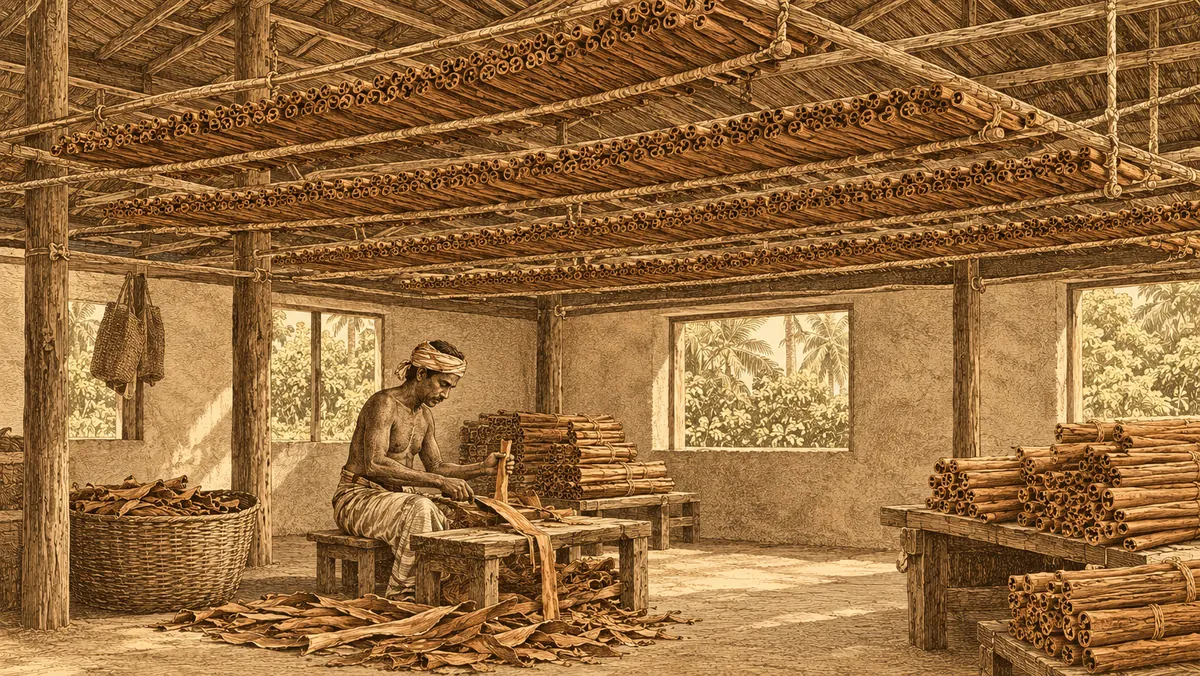
    In the early stage, the freshly rolled quills are soft and still shrinking. Peelers rest them across raised rope racks, horizontal lines of rope strung inside the peeling shed about eight to nine feet above the floor. This height matters: it keeps the drying quills in the warm, moving air near the roof, lets workers move and peel freely in the space below, and is still within easy reach so peelers can lift each batch of freshly peeled quills straight up onto the racks as they finish. Over the first days, as the bark loses water, the quills tighten around themselves, and the peelers roll and press them so they stay firm and even rather than loosening. The quills are turned so they dry on all sides. After several days the bark becomes firm and dry enough to hold its shape and can be taken down to sort and bundle. All of this happens inside the shed, never out in the open.

    Sun drying versus shade drying

    People often picture spices drying in the open sun, but quality Ceylon cinnamon is different. Shade drying is gentle and slow, protecting colour and shape, which is why the quills are dried indoors on the raised racks rather than in the open. Strong sun is faster but risks darkening and cracking the thin Ceylon bark, so direct sun drying is avoided for the delicate quills. In practice, good Ceylon cinnamon is dried in the shaded, airy space of the peeling shed from start to finish.

    AspectShade dryingSun drying
    SpeedSlow and gentleFaster
    Effect on colourKeeps quills paleCan darken the bark
    Effect on shapeQuills set smoothlyCan crack if too harsh
    Best useWhole drying processGenerally avoided
    RiskSlower, needs airflowCracking and colour loss

    What good drying does for the spice

    Proper drying shapes almost everything a buyer notices later. It fixes the quill so it stays tight and neat, which matters for grading, since smooth, even quills reach higher grades. It keeps the colour the pale tan that marks genuine Ceylon cinnamon rather than a dark, over-dried brown. It protects the delicate, sweet aroma instead of driving it off with excess heat. And by lowering moisture to a safe level, it makes the spice stable enough to store and ship without spoiling. In short, drying is where the quality built up during peeling and rolling is either preserved or lost.

    Weather, humidity and the drying space

    Drying depends heavily on the weather and the space it is done in. Sri Lanka’s cinnamon districts are warm and humid, so simply leaving bark in the open air is not enough on its own. Peelers dry quills on the raised rope racks inside the roofed peeling sheds, which keep off rain and harsh midday sun while their open sides still let breezes pass through. In damp or rainy spells, drying takes longer and needs extra care, because high humidity slows moisture loss and raises the risk of mould. Good ventilation is as important as shade, since moving air carries away the moisture leaving the bark. This is why the drying space, not just the sun, shapes the result.

    How peelers know the quills are ready

    Experienced peelers judge dryness by feel, sound and look rather than by instruments. A properly dried quill feels light and firm, holds its rolled shape without softness, and has an even pale colour along its length. It should not feel damp or flexible in the middle, which would signal moisture still trapped inside. This judgement is part of the craft passed down in cinnamon families, built on long experience with how the bark behaves as it dries. The same hands that peel and roll the bark also decide when it has dried enough to sort, bundle and store.

    Moisture, storage and shelf life

    The point of drying is to bring the bark down to a low, stable moisture level. Bark that is still damp can grow mould or lose aroma, while properly dried quills keep well for a long time. This is why drying links directly to storage: a well-dried quill stored in a cool, dry, airtight place holds its flavour for a year or more. For how long the finished spice lasts once dried, see our guide to how long Ceylon cinnamon lasts.

    Summary

    Ceylon cinnamon is dried slowly, mostly in shade with good airflow, over several days after the bark is peeled and rolled into quills. Because the inner bark is thin and delicate, gentle drying protects the pale colour, the smooth quill shape and the fine aroma, while harsh sun is avoided because it can darken and crack the bark. As the quills lose moisture they tighten, and peelers firm them during this stage on raised rope racks suspended inside the shed, never out in the open. Good drying sets the quill, preserves the quality built during peeling and rolling, and lowers moisture enough for safe storage, which is why it is a decisive step in producing true Ceylon cinnamon.

    Frequently asked questions

    Is Ceylon cinnamon dried in the sun or the shade?

    In the shade, indoors. The delicate bark is dried slowly on raised rope racks inside the roofed peeling sheds to protect its colour and shape. Direct sun is avoided because it can darken and crack the quills, so the cinnamon is not dried out in the open.

    How long does it take to dry Ceylon cinnamon?

    Several days. The exact time depends on the weather, the thickness of the bark and the airflow, but the quills are dried over a number of days until they are firm, pale and low in moisture.

    Why is Ceylon cinnamon dried slowly?

    Because the inner bark is thin and fragile. Slow drying lets moisture leave evenly, keeping the quill smooth, pale and fragrant. Fast, harsh drying can crack the bark, darken the colour and trap moisture inside.

    Does drying affect the colour of cinnamon?

    Yes. Gentle shade drying keeps the pale tan colour that marks genuine Ceylon cinnamon, while over-drying or strong sun can turn the bark darker. Colour is one of the clues people use to judge quality.

    Why does drying matter for storage?

    Drying lowers the moisture in the bark to a safe level. Well-dried quills resist mould and keep their aroma, so they store and ship well. Bark that is not dried enough can spoil or lose flavour quickly.

    This website provides educational information about Ceylon Cinnamon as a spice and food ingredient. It is not intended to provide medical advice or make health claims.

  • How to Tell if Cinnamon Powder Is Ceylon

    How to Tell if Cinnamon Powder Is Ceylon

    You can tell if cinnamon powder is Ceylon by checking its colour, aroma, taste and label. True Ceylon cinnamon powder, ground from Cinnamomum verum grown in Sri Lanka, is a pale tan to light brown, smells mild and sweet, and tastes delicate rather than hot. Cassia powder is darker and reddish, smells sharp and strong, and tastes more pungent. The most reliable single check is the label: real Ceylon powder names Cinnamomum verum or Sri Lankan origin.

    Telling true cinnamon from cassia is simple when you hold a whole stick, but powder hides most of the visual clues. This guide explains how to judge ground cinnamon using colour, smell, taste and packaging, so you can work out what is in the jar. It builds on our pillar guide to how to identify authentic Ceylon cinnamon.

    The short answer

    With powder, no single home test is definitive, so you combine clues: colour, aroma, taste, texture, price and above all the label. Ceylon cinnamon powder tends to be lighter in colour, gentler in smell and milder in taste than cassia. Because grinding removes the bark structure that makes whole quills easy to read, the label and the price often tell you more than your senses do. When certainty matters, laboratory testing is the only sure route.

    Why powder is harder to judge than sticks

    A whole Ceylon quill is easy to recognise. It is thin, brittle, and rolls into many fine layers like a cigar, while a cassia stick is thick, hard and curls into a single heavy scroll. That structure is the basis of the roll test for sticks. Grinding destroys all of it. Once bark becomes powder, you lose the layered cross-section, the thickness and the snap, and you are left with colour, smell and taste alone. This is why powder is the form where mislabelling is easiest and why careful buyers lean on packaging and source. For more on the ground form itself, see our guide to ground Ceylon cinnamon.

    Clue 1: Colour

    Colour is the first thing to look at. True Ceylon cinnamon powder is usually a pale tan or light brown, sometimes with a slightly orange warmth. Cassia powder is darker, leaning reddish-brown or deep brown. If you tip a little onto a white plate and it looks rich and dark, that points to cassia. If it looks soft and light, that points to Ceylon. Colour alone is not proof, since roast level, freshness and grind can shift the shade, but a clear difference is a strong hint.

    Clue 2: Aroma

    Smell is one of the better guides. Ceylon cinnamon has a delicate, sweet, almost floral aroma with gentle warmth. Cassia smells stronger, sharper and more pungent, the bold scent most people associate with mass-market cinnamon rolls and sweets. Open the jar, warm a pinch between your fingers and breathe it in. A soft, mellow fragrance suggests Ceylon. A powerful, spicy hit suggests cassia. For the chemistry behind the scent, see our note on what gives Ceylon cinnamon its aroma.

    Clue 3: Taste

    Taste follows aroma. Place a tiny amount on your tongue. Ceylon cinnamon is mild, sweet and smooth, with little bite. Cassia is hotter and more intense, with a pungent edge that can feel almost drying. If a small taste is gentle and pleasant, that favours Ceylon. If it is fiery and lingering, that favours cassia. Use only a pinch, as even mild cinnamon is strong in concentrated form.

    Clue 4: Texture

    Texture is a smaller clue but still useful. Ceylon powder, ground from thin and brittle bark, often feels finer and softer. Cassia, from hard and dense bark, can feel grittier. The difference is subtle and depends on how finely each was milled, so treat texture as a supporting sign rather than a decider.

    Clue 5: The label and packaging

    For powder, the label is the most reliable clue of all. Genuine Ceylon cinnamon will usually say so plainly. Look for the botanical name Cinnamomum verum (sometimes written as its synonym Cinnamomum zeylanicum), or a clear statement of origin such as “product of Sri Lanka” or “Ceylon cinnamon”. A jar labelled only “cinnamon”, with no species and no origin, is very often cassia, because cassia is the cheaper and more common type sold worldwide. Learn to read the small print with our guide to reading cinnamon labels correctly.

    Clue 6: Price

    Price is a practical signal. True Ceylon cinnamon costs more to grow, harvest and prepare than cassia, so it almost always sells at a higher price. A jar of powder that is unusually cheap is unlikely to be Ceylon. This does not mean every expensive jar is genuine, but a very low price is a reliable warning that you are probably looking at cassia.

    The iodine starch test: does it work?

    A popular home test uses iodine. The idea is that cassia contains more starch than Ceylon, so a drop of iodine turns cassia powder a darker blue-black, while Ceylon stays lighter. There is some truth to the starch difference, but the test is not reliable on its own. Starch levels vary, iodine concentration varies, and reading the colour is subjective. Treat it as a rough and interesting check rather than proof. Your senses plus the label give a better everyday answer.

    Ceylon vs cassia powder at a glance

    ClueCeylon cinnamon powderCassia powder
    ColourPale tan to light brownDarker reddish-brown
    AromaDelicate, sweet, mellowStrong, sharp, pungent
    TasteMild and sweetHot and intense
    TextureOften finer and softerCan feel grittier
    LabelCinnamomum verum or Sri Lanka namedOften just “cinnamon”, no species
    PriceHigherLower

    When you need certainty: laboratory testing

    If you truly need to confirm a powder, the only sure method is a laboratory. Specialist labs can identify the species and measure the compounds that differ between Ceylon and cassia, including coumarin, which is far lower in true cinnamon. This is how serious buyers and importers verify a shipment. For everyday kitchen use, the combination of colour, aroma, taste and label is enough, but for professional or high-volume buying, testing removes all doubt. Our guide to coumarin levels in Ceylon cinnamon versus cassia explains the key chemical marker.

    Putting the clues together

    No single clue is proof on its own, so the practical method is to stack them. Tip a little powder onto a white plate and check the colour. Warm a pinch and smell it, then taste a tiny amount. Turn the jar around and read the species name and origin, and note the price. When the signs agree, for example a pale powder with a sweet, mild aroma, a Cinnamomum verum label and a higher price, you can be confident it is Ceylon. When they conflict, such as a light colour but a jar marked only “cinnamon” at a bargain price, trust the label and the price over appearance, and treat the powder as cassia until proven otherwise.

    Summary

    You tell whether cinnamon powder is Ceylon by reading several clues together rather than relying on one. True Ceylon powder, ground from Cinnamomum verum grown in Sri Lanka, is paler, smells sweeter and gentler, and tastes milder than cassia, which is darker, sharper and hotter. Because grinding hides the bark structure that makes whole quills easy to read, the label is the most dependable guide: look for the species name or Sri Lankan origin, and be wary of a jar marked only “cinnamon” at a very low price. Home checks such as the iodine starch test are rough at best, and only laboratory analysis gives full certainty. Put together, these signs let you judge a jar of powder with confidence.

    Frequently asked questions

    Can you tell Ceylon from cassia once it is ground?

    Not with complete certainty by sight alone, but you can get a strong answer by combining colour, aroma and taste with the label. Ceylon powder is lighter, sweeter and milder, while cassia is darker, sharper and hotter. The species name or origin on the packaging is the most reliable everyday clue.

    Is darker cinnamon powder always cassia?

    Darker colour points towards cassia, but it is not absolute. Freshness, grind and how the bark was dried can shift the shade. Use colour as one clue among several rather than the only one.

    Does the iodine test really identify Ceylon cinnamon?

    Only loosely. Cassia tends to contain more starch, so iodine can turn it darker than Ceylon, but the result is hard to read and varies between samples. It is a fun experiment, not a dependable test.

    What should the label say for real Ceylon cinnamon?

    Look for Cinnamomum verum (or the synonym Cinnamomum zeylanicum), or a clear origin such as “Ceylon cinnamon” or “product of Sri Lanka”. A label that only says “cinnamon” with no species or origin is often cassia.

    Is cheaper cinnamon powder a bad sign?

    A very low price is a warning. True Ceylon cinnamon costs more to produce, so bargain powder is usually cassia. Price is not proof on its own, but it is a useful signal alongside the other clues.

    This website provides educational information about Ceylon Cinnamon as a spice and food ingredient. It is not intended to provide medical advice or make health claims.
  • The Portuguese and Ceylon Cinnamon

    The Portuguese and Ceylon Cinnamon

    The Portuguese were the first European power to control the Ceylon cinnamon trade. Arriving on the island of Ceylon, now Sri Lanka, in 1505, they recognised the value of its wild true cinnamon, Cinnamomum verum, and over the following decades took control of the coastal areas where it grew. Through treaties and force they secured the cinnamon supply, taxing and collecting the bark through the local peeler community, until they were displaced by the Dutch in the mid-seventeenth century. Their era marks the start of European competition over Ceylon cinnamon.

    Ceylon cinnamon has a long trade history, and the Portuguese period is a key chapter in it. This guide sets out, in plain terms, how the Portuguese came to Ceylon, how they controlled the cinnamon trade and what their rule meant for the spice. It builds on our pillar guide, the history of Ceylon cinnamon.

    The short answer

    The Portuguese controlled the Ceylon cinnamon trade from the early sixteenth century until the mid-seventeenth century, after arriving on the island in 1505. They were drawn by the island’s wild true cinnamon, took control of the cinnamon-growing coasts, and organised the collection of bark through the traditional peeler community, before the Dutch took over the trade in 1658.

    Why the Portuguese came to Ceylon

    In the early sixteenth century, European powers were seeking direct sea routes to the sources of prized spices, bypassing the overland trade. Cinnamon was one of the most prized of these spices, and the finest came from Ceylon. When Portuguese ships reached the island in 1505, they found true cinnamon, Cinnamomum verum, growing wild in the coastal forests, especially in the southwest. For a trading power built on spices, control of this supply was a major prize, and securing Ceylon cinnamon became a central aim of Portuguese activity in the region. For how the spice was valued in earlier eras, see our guide to cinnamon in the Bible and antiquity.

    How the Portuguese took control

    The Portuguese did not conquer the whole island at once. They first established a presence on the coast, built forts, and formed agreements with local rulers, in particular the kingdom of Kotte in the southwest, where much of the cinnamon grew. Over time these agreements, backed by military force, gave the Portuguese control of the coastal cinnamon lands and the right to collect the spice. The island’s interior kingdoms, especially Kandy, remained beyond their full control, so Portuguese power centred on the cinnamon-rich coasts rather than the whole of Ceylon.

    Cinnamon as tribute and trade

    Under the Portuguese, cinnamon became both a tribute and a traded commodity. Local rulers and communities were required to supply fixed quantities of cinnamon bark, and the Portuguese shipped it to Europe, where it sold at a high price. Because the cinnamon still grew mostly wild at this time rather than on plantations, the supply depended on gathering and peeling bark from trees across the coastal forests. This made the people who did that skilled work central to the whole trade.

    The peelers and the cinnamon supply

    The gathering and peeling of cinnamon was carried out by a traditional community of peelers, who held the specialised knowledge of how to find the right bark and strip it cleanly into quills. Under the Portuguese, this community was bound to deliver set amounts of cinnamon as a duty. The skill of peeling, passed down within these families, was essential, since poorly peeled bark made poor cinnamon. The Portuguese relied heavily on this established system rather than creating a new one, controlling the trade while the actual craft remained in local hands. The hand methods used then are still recognisable today, as our guide to why it is called Ceylon cinnamon touches on.

    Forts, ports and the coastal trade

    Portuguese power in Ceylon was built around the coast, where the cinnamon grew and where ships could load it for the voyage to Europe. They fortified key ports, most importantly Colombo, which became the centre of their activity on the island, and built or held other coastal strongholds to guard the trade. From these bases they controlled the gathering of cinnamon in the surrounding lands and its shipment overseas. Because their strength lay on the coast, the inland kingdom of Kandy stayed independent, and the long contest between the coastal Europeans and the highland kingdom runs through the whole of Ceylon’s colonial cinnamon history. For the Portuguese, holding the ports meant holding the cinnamon.

    The cinnamon that drew Europe

    It is worth remembering what made Ceylon cinnamon such a prize. The island’s wild Cinnamomum verum gave a thin, fragrant bark with a mild, sweet flavour, finer than the coarser cassia barks traded from elsewhere in Asia. In Europe, where cinnamon was a luxury, this quality commanded a high price, and Ceylon was its chief source. That combination of fine quality and limited supply is what turned a single island’s bark into something European empires were willing to fight over. The Portuguese were simply the first of those powers to seize it, and the character of the spice that drew them is the same mild, sweet true cinnamon prized today.

    The Portuguese era in the cinnamon story

    AspectUnder the Portuguese
    ArrivalReached Ceylon in 1505
    InterestWild true cinnamon, Cinnamomum verum
    Area controlledCinnamon-growing coasts, especially the southwest
    Trade methodCinnamon as tribute, shipped to Europe
    LabourTraditional peeler community, bound to supply bark
    End of eraDisplaced by the Dutch by 1658

    The end of Portuguese control

    Portuguese control of Ceylon cinnamon did not last. In the seventeenth century, the Dutch East India Company, a rival European spice power, moved against them, often in alliance with the inland kingdom of Kandy, which resented Portuguese power on the coast. Through a series of campaigns, the Dutch captured the Portuguese coastal forts, and by 1658 they had displaced the Portuguese from the island. Control of the lucrative Ceylon cinnamon trade passed to the Dutch, who would later take cinnamon cultivation further by planting it rather than relying only on wild bark. The Portuguese period thus forms the first chapter of European rivalry over the spice.

    What the Portuguese period changed

    The Portuguese era did not change how cinnamon itself was grown very much, since the spice was still gathered largely from wild trees. What it changed was who controlled the trade and how the bark was collected. By turning cinnamon into a tribute owed to a European power and tying the peeler community to fixed deliveries, the Portuguese set a pattern of outside control over Ceylon cinnamon that later powers would continue and tighten. In the longer history of the spice, their arrival marks the moment Ceylon cinnamon became a prize fought over by European empires rather than an Asian trade good alone.

    Frequently asked questions

    When did the Portuguese arrive in Ceylon?

    The Portuguese first reached the island of Ceylon, now Sri Lanka, in 1505. They were drawn by its wild true cinnamon and, over the following decades, took control of the coastal areas where the spice grew, holding the cinnamon trade until the Dutch displaced them by 1658.

    Why was cinnamon important to the Portuguese?

    Cinnamon was one of the most prized spices in Europe, and the finest, true cinnamon, grew in Ceylon. Controlling this supply gave the Portuguese a highly profitable trade, which is why securing Ceylon cinnamon was a central aim of their presence on the island.

    Did the Portuguese grow cinnamon on plantations?

    No. During the Portuguese period, cinnamon was still gathered mostly from wild trees in the coastal forests rather than grown on plantations. The bark was collected and peeled by a traditional community of peelers. Planned cultivation came later, chiefly under the Dutch.

    Who took over the cinnamon trade after the Portuguese?

    The Dutch East India Company took over the Ceylon cinnamon trade, displacing the Portuguese from the island by 1658. The Dutch later developed cinnamon cultivation by planting it, moving beyond the Portuguese reliance on wild bark.

    Summary

    The Portuguese were the first European power to control Ceylon cinnamon, arriving on the island in 1505 and taking hold of the cinnamon-growing coasts over the following decades. Drawn by the wild true cinnamon, Cinnamomum verum, they turned the spice into a tribute, shipped it to Europe at a high price, and relied on the island’s traditional peeler community to supply the bark. Their control lasted until the Dutch displaced them by 1658. The Portuguese period marks the start of European rivalry over Ceylon cinnamon and set a pattern of outside control that later powers continued. It is remembered today as the first time a single island’s fragrant bark drew a European empire across the sea to claim it.

    This website provides educational information about Ceylon Cinnamon as a spice and food ingredient. It is not intended to provide medical advice or make health claims.

  • Mexican Grade Ceylon Cinnamon Explained

    Mexican Grade Ceylon Cinnamon Explained

    Mexican grade Ceylon cinnamon is a mid-range grade of true cinnamon, Cinnamomum verum, from Sri Lanka. In the traditional grading scale it sits between the finer Continental grades and the thicker Hamburg grades, so its quills are a little thicker than Alba and Continental but thinner than Hamburg. The name comes from the export market these quills were historically sent to, not from Mexico as an origin. Mexican grade offers a good balance of quality and value, making it a practical everyday choice.

    If you have seen “Mexican” on a Ceylon cinnamon label and wondered what it means, this guide explains the grade in plain terms: where it sits, what the quills are like and when to choose it. It builds on our pillar guide, the complete guide to Ceylon cinnamon grades.

    The short answer

    Mexican grade Ceylon cinnamon is a middle grade of true cinnamon whose quills are thicker than Alba and Continental but thinner than Hamburg. It is still true Ceylon cinnamon, Cinnamomum verum, from Sri Lanka, with the same mild, sweet flavour; the grade simply describes the thickness and appearance of the quill. The “Mexican” name is a traditional export-market label, not a country of origin.

    Where Mexican grade sits in the scale

    Ceylon cinnamon is graded mainly by the thickness of the quill, from the finest and thinnest to the coarsest. The traditional names, from fine to thick, run Alba, then the Continental group, then the Mexican group, and then the Hamburg group. Mexican grade therefore sits in the middle: its quills are noticeably thicker than the delicate Alba and Continental grades, but they are still finer than the heavier Hamburg quills. Thinking of it as the mid-point of the scale is the easiest way to place it. For a plain-language run-through of all these terms, see our guide to cinnamon grading terms made simple.

    Why it is called “Mexican”

    The grade name can be confusing because it sounds like an origin. In fact, Mexican grade Ceylon cinnamon is still grown and made in Sri Lanka like all true cinnamon. The traditional grade names, including Continental, Mexican and Hamburg, were shaped by the export markets that each thickness of quill was historically shipped to. “Mexican” marked the quills destined for that market, and the label stuck as a grade name. So the word describes the grade, not where the cinnamon comes from. The origin is still Sri Lanka, the home of Cinnamomum verum.

    What Mexican grade quills are like

    Mexican grade quills are medium in thickness. They are rolled from the inner bark in the same way as finer grades, but because the bark is a little thicker, the quills are slightly sturdier and less delicate than Alba or Continental. The colour is the familiar tan of true cinnamon, and the flavour is the same mild, sweet, lightly citrus taste that defines Ceylon cinnamon, since the grade reflects thickness and appearance rather than a change in flavour. For everyday cooking, this sturdiness can even be an advantage, as the quills hold up well to simmering.

    How Mexican grade compares with other grades

    Compared with Alba, the finest grade, Mexican grade has thicker, less delicate quills and a lower price, while still being true Ceylon cinnamon. Compared with Continental, it is a step thicker and a little sturdier. Compared with Hamburg, the thickest of the main groups, Mexican grade is finer and neater. In flavour, all these grades share the mild, sweet character of true cinnamon, so the differences are mainly about quill thickness, appearance and price rather than taste. Our guide to Continental grade Ceylon cinnamon covers the grade just above Mexican in the scale.

    How the grade is measured

    Like other Ceylon cinnamon grades, Mexican grade is defined mainly by quill diameter rather than by a vague sense of quality. Sri Lanka’s long-standing grading rules set out the thickness ranges that place a quill in one group or another, so a grade name points to a measurable feature. This is why Mexican grade means roughly the same thing from one careful seller to the next, rather than being a loose description. When you see the grade on a reputable pack, it reflects this shared system, which is part of what makes Ceylon cinnamon a carefully sorted spice. The code grades, such as the C and H systems, describe the same thickness idea in an even more exact, numbered way.

    Where you will see Mexican grade

    Mexican grade turns up on packs of whole Ceylon cinnamon quills, often sold for everyday kitchen use rather than as a premium gift grade. On a label it usually sits alongside the species name and origin, so you might read “Ceylon cinnamon, Cinnamomum verum, Mexican grade, product of Sri Lanka”. Here the species and origin confirm it is true cinnamon, and the grade tells you the quills are a medium thickness. Because it balances quality and price, Mexican grade is a common choice for cooks who use cinnamon regularly and want genuine Ceylon cinnamon without paying the premium for the very finest Alba quills.

    Mexican grade at a glance

    FeatureMexican grade
    TypeTrue Ceylon cinnamon, Cinnamomum verum
    OriginSri Lanka
    Position in scaleMiddle: thicker than Continental, thinner than Hamburg
    QuillMedium thickness, fairly sturdy
    FlavourMild, sweet, lightly citrus
    Best forEveryday cooking and good value

    When to choose Mexican grade

    Mexican grade is a sensible choice when you want true Ceylon cinnamon at a fair price and do not need the very finest quills. It suits everyday cooking, simmering in syrups, stews and drinks, and any dish where the cinnamon is used for its flavour rather than shown off. The sturdier quills stand up well to long simmering, and the lower price compared with Alba makes it easy to use freely. If you want the most delicate quills for a special dish or for presentation, a finer grade such as Alba or C5 Special is worth the extra cost; for most home cooking, though, Mexican grade does the job well. Our guide to C5 Special Ceylon cinnamon covers one of those finer grades.

    Is Mexican grade good quality?

    Yes, Mexican grade is good quality true cinnamon. It is easy to assume that a middle grade means lower quality, but the grade reflects the thickness of the quill rather than whether the cinnamon is good or bad. Mexican grade is still Cinnamomum verum from Sri Lanka, with the same mild, sweet flavour as the finest grades. What you trade for the lower price is the very fine, delicate appearance of Alba, not the character or taste of the spice. For a cook who cares about flavour and value more than the look of the quill, Mexican grade is a strong choice. In practice, many people cannot tell the difference in a finished dish, since the flavour comes through the same way once the quill is simmered or ground. The main place a finer grade shows its advantage is on the plate, where its neat, slender quills look more elegant.

    Frequently asked questions

    Is Mexican grade cinnamon from Mexico?

    No. Mexican grade Ceylon cinnamon is grown and made in Sri Lanka, like all true cinnamon. “Mexican” is a traditional grade name tied to the export market the quills were historically sent to, not a country of origin. The cinnamon itself is Cinnamomum verum from Sri Lanka.

    Is Mexican grade better than Alba?

    Alba is finer, with thinner, more delicate quills, so it sits higher in the grading scale. Mexican grade has thicker quills and a lower price. Neither tastes better, since both are true Ceylon cinnamon; Alba is finer in appearance, while Mexican grade offers better everyday value.

    Does Mexican grade taste different?

    No. Mexican grade has the same mild, sweet, lightly citrus flavour as other grades of true Ceylon cinnamon. The grade describes the thickness and appearance of the quill, not the flavour, so a mid grade tastes much the same as a finer one.

    Is Mexican grade good value?

    Yes. Mexican grade is often good value, giving you genuine Ceylon cinnamon at a lower price than the finest grades. It suits everyday cooking well, and the sturdier quills hold up to simmering, so it is an economical way to use true cinnamon regularly.

    Summary

    Mexican grade Ceylon cinnamon is a mid-range grade of true cinnamon, Cinnamomum verum, from Sri Lanka, with quills thicker than Alba and Continental but thinner than Hamburg. The name reflects a traditional export market rather than a country of origin, so the cinnamon is still Sri Lankan. It has the same mild, sweet flavour as finer grades, with sturdier quills that suit everyday cooking, and it offers good value. For delicate presentation, a finer grade is worth it, but for flavour and everyday use, Mexican grade is a practical, good-quality choice.

    This website provides educational information about Ceylon Cinnamon as a spice and food ingredient. It is not intended to provide medical advice or make health claims.