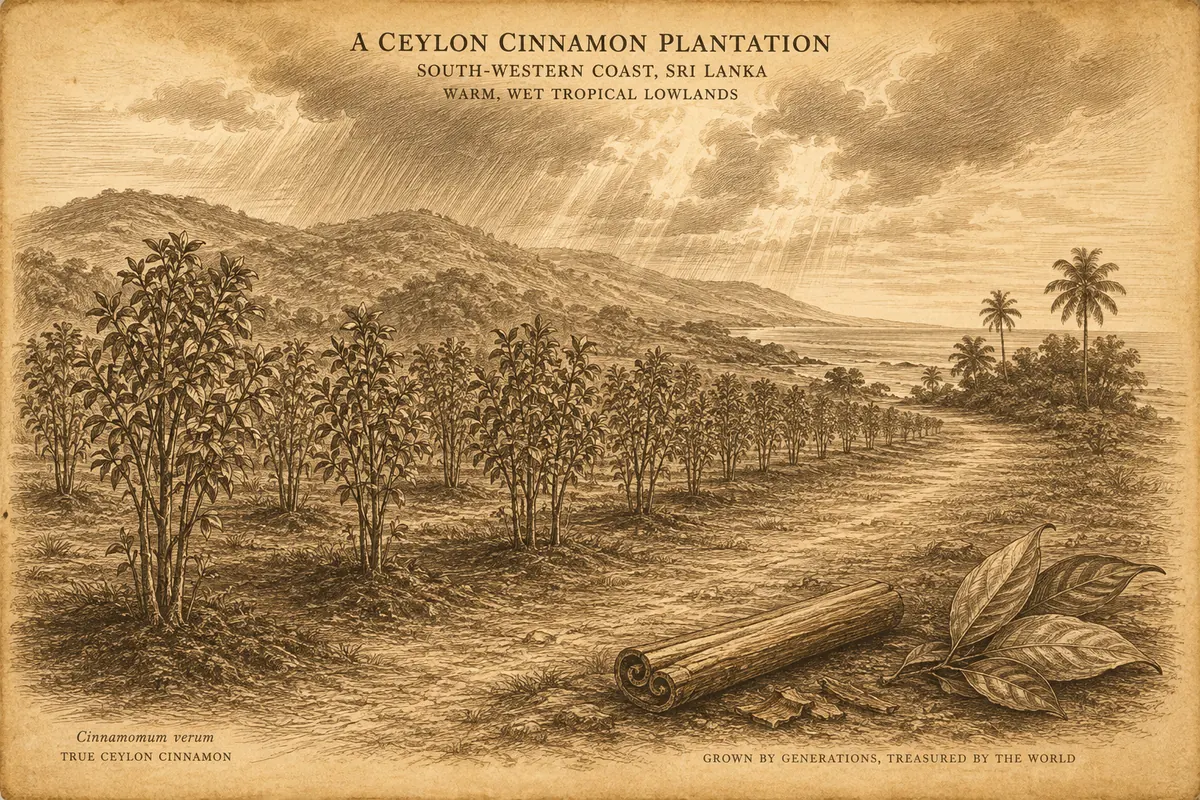
Ceylon cinnamon (Cinnamomum verum) needs a warm, wet tropical climate to grow well: steady heat of roughly 24 to 30 degrees Celsius, high rainfall of about 2,000 to 2,500 millimetres a year, high humidity, and plenty of sunshine, ideally near sea level. These conditions are found along the south-western coast of Sri Lanka, which is why the island became the home of true cinnamon.
The climate a cinnamon tree grows in shapes the flavour and quality of the bark, so understanding those conditions helps explain why Ceylon cinnamon from Sri Lanka is so prized. This guide sits alongside our pillar on Sri Lankan cinnamon farming.
The short answer
Ceylon cinnamon thrives in a hot, humid, low-lying tropical climate with abundant rainfall spread through the year. It likes warmth without cold spells, regular rain rather than long dry seasons, and a sunny position. The wet lowlands of south-western Sri Lanka give it exactly this, which is why the best true cinnamon has always come from there. To see where that is, our guide on where cinnamon is grown in Sri Lanka maps the main districts.
Temperature: steady tropical warmth
Cinnamon is a tropical tree and needs consistent warmth. It grows best in average temperatures of about 24 to 30 degrees Celsius, with no frost and no cold season. Sudden cold or a chilly climate will slow or stop its growth. The even, year-round heat of the tropics suits it perfectly, letting the tree grow steadily and the bark develop its full aroma.
Rainfall: plenty, spread through the year
Water is one of the biggest factors. Ceylon cinnamon likes a high annual rainfall, commonly in the range of 2,000 to 2,500 millimetres, and it prefers this rain to be well spread across the year rather than crammed into a short wet season. Regular moisture keeps the tree healthy and the bark growing. That said, the ground must drain freely, since cinnamon does not like to sit in waterlogged soil. A wet climate with good drainage is the sweet spot.
The wet zone and the monsoon
Sri Lanka’s south-western corner is known as the wet zone, watered by the south-west monsoon. This reliable rainfall, combined with warmth, makes it ideal cinnamon country. The monsoon delivers the steady moisture the trees need, and the peeling season is often timed around the rains, when the bark lifts most easily.
Humidity and sunshine
Alongside heat and rain, cinnamon likes high humidity, the moist air typical of coastal tropics. At the same time it wants plenty of sunshine, so an open, sunny position helps it grow strongly. This combination of a humid atmosphere and bright light is another feature of the south-western coastal belt where the spice flourishes. Too much dense shade tends to make the tree grow leggy and weak, so growers usually give it an open aspect where sunlight can reach the leaves for most of the day, which helps the plant build strong, aromatic bark.
Altitude: low and coastal is best
Ceylon cinnamon grows best at low elevations, from sea level up to a few hundred metres. It can be grown at somewhat higher altitudes, but the finest, most aromatic bark tends to come from the warm coastal lowlands. As the land rises and cools, growth slows, so the classic cinnamon gardens sit close to the coast. Our guide on how Ceylon cinnamon is grown looks at these growing conditions in more detail.
The climate Ceylon cinnamon needs at a glance
| Factor | What cinnamon needs |
|---|---|
| Climate type | Warm, humid tropical |
| Temperature | About 24 to 30 degrees Celsius, no frost |
| Rainfall | Roughly 2,000 to 2,500 mm a year, well spread |
| Humidity | High |
| Sunshine | Plenty, open sunny position |
| Altitude | Sea level to a few hundred metres |
| Drainage | Free-draining, not waterlogged |
Why Sri Lanka’s climate is ideal
Put these needs together and the south-western coast of Sri Lanka matches almost every one. It has year-round tropical heat, high and reliable monsoon rainfall, humid coastal air, strong sunshine and low, well-drained land near the sea. Few places in the world combine all of these so neatly, which is a major reason the island became famous for true cinnamon. The climate does not just let the tree survive; it helps produce the delicate, sweet, layered bark that defines Ceylon cinnamon. This close bond between place and spice is part of the island’s long cinnamon farming tradition.
Can Ceylon cinnamon grow elsewhere?
Yes, true cinnamon can be grown in other tropical regions with a similar warm, wet climate, such as parts of the Seychelles, Madagascar and southern India. Wherever the temperature, rainfall and humidity are right, the tree can be cultivated. Even so, Sri Lanka remains the benchmark, both for its ideal conditions and for its centuries of skill in growing and processing the spice. Climate makes the tree possible, but tradition and craft turn its bark into fine Ceylon cinnamon. It is worth noting that cinnamon grown in a different climate can taste noticeably different, since local heat, rain and soil all leave their mark on the bark. This is one reason buyers who want the classic Ceylon flavour look specifically for cinnamon grown in its traditional Sri Lankan home rather than simply the same species grown elsewhere.
How climate affects quality
The growing climate influences the final spice in subtle ways. Steady warmth and good moisture help the tree build the aromatic oils in its bark, while healthy, unstressed growth gives the thin, even inner bark that rolls into fine quills. Trees grown in poor conditions, too dry, too cold or badly drained, tend to give weaker, coarser bark. So the famous quality of Ceylon cinnamon starts in the field, with the right climate feeding a healthy tree, long before the bark is peeled and dried, as shown in our guide to how Ceylon cinnamon is made.
Climate and the growing year
The tropical climate also shapes the rhythm of the cinnamon year. Because the wet zone has no harsh winter, cinnamon grows more or less continuously, sending up new shoots that are harvested on a regular cycle rather than in a single yearly season. The rains matter for timing: peeling is easier when the bark is full of sap and lifts cleanly from the wood, which tends to happen during and just after wet spells. Growers read the weather closely, working with the monsoon rather than against it, so the climate sets the pattern of planting, tending and harvesting across the whole year.
Soil, drainage and shelter
Climate works together with the ground the tree sits in. The best cinnamon land is warm and wet but also free-draining, often sandy or loamy soil that holds moisture without turning boggy. Gentle slopes and coastal flats near the sea suit it well, giving both the humidity it likes and the drainage it needs. Some shelter from very strong winds helps too, since the young shoots that become quills are slender and easily damaged. When warm air, steady rain, bright sun and open, well-drained soil come together, the tree grows at its healthiest, and healthy trees give the finest bark.
Frequently asked questions
What climate does Ceylon cinnamon grow in?
A warm, humid tropical climate. It needs steady temperatures of around 24 to 30 degrees Celsius, high rainfall spread through the year, high humidity and plenty of sunshine, ideally at low, coastal elevations. Sri Lanka’s south-western wet zone provides all of this.
How much rain does cinnamon need?
Ceylon cinnamon typically grows best with roughly 2,000 to 2,500 millimetres of rainfall a year, spread fairly evenly rather than falling in one short season. The soil must drain well, since the tree does not like waterlogged ground.
Can cinnamon grow in a cold climate?
No. Cinnamon is a tropical tree and cannot tolerate frost or a cold season. It needs consistent warmth all year, so temperate or cold regions are not suitable for growing it outdoors.
Why is Sri Lanka so good for growing cinnamon?
Its south-western coast combines year-round tropical heat, high monsoon rainfall, humid air, strong sunshine and low, well-drained land near the sea. This mix of conditions is close to ideal for Ceylon cinnamon, which is a key reason the island became its home.
Summary
Ceylon cinnamon needs a warm, wet, humid tropical climate to grow well: temperatures of about 24 to 30 degrees Celsius with no frost, high and well-spread rainfall of around 2,000 to 2,500 millimetres a year, high humidity, plenty of sunshine and low, free-draining coastal land. The south-western wet zone of Sri Lanka matches these needs almost exactly, which is why the island became the home of true cinnamon. The right climate does more than keep the tree alive; it helps build the delicate, aromatic bark that makes Ceylon cinnamon so prized.
This website provides educational information about Ceylon Cinnamon as a spice and food ingredient. It is not intended to provide medical advice or make health claims.
Leave a Reply