Tag: Cinnamon cultivation

  • What Is the Ceylon Cinnamon Geographical Indication?

    What Is the Ceylon Cinnamon Geographical Indication?

    A Geographical Indication, or GI, is an official label that ties a product to a specific place of origin and protects its name. The Ceylon Cinnamon Geographical Indication identifies true cinnamon, Cinnamomum verum, grown and prepared in Sri Lanka, confirming that cinnamon sold as Ceylon cinnamon genuinely comes from there. It protects the name from misuse, supports the farmers and peelers who produce it, and gives buyers a trusted mark of authentic origin.

    Ceylon cinnamon is tied so closely to Sri Lanka that its origin has become part of its identity, and a Geographical Indication puts that link into law. This guide explains what the Ceylon Cinnamon GI is, how a GI works, and why it matters for authenticity and for the people who grow the spice. It builds on our pillar guide to Sri Lankan cinnamon farming.

    The short answer

    The Ceylon Cinnamon Geographical Indication is an official origin mark that recognises true cinnamon from Sri Lanka and protects the name from being used on cinnamon from elsewhere. Like a GI for Champagne or Parmigiano Reggiano, it says that a product with this name must come from a defined place and meet defined standards. For Ceylon cinnamon, that place is Sri Lanka, and the product is bark from Cinnamomum verum prepared in the traditional way. The GI helps buyers trust the name and helps producers protect the reputation and value of their spice.

    What a geographical indication is

    A geographical indication is a sign used on products that have a specific geographical origin and qualities or a reputation due to that origin. Well-known examples include Champagne, which must come from the Champagne region of France, and Parmigiano Reggiano cheese from its defined area of Italy. The idea is that some products are inseparable from where they are made, because the place, its conditions and its traditions shape the product. A GI protects the name so that only genuine products from that place can use it, which guards both the consumer and the producer. Ceylon cinnamon fits this idea closely, since its character comes from Sri Lanka’s land, climate and craft.

    The Ceylon Cinnamon GI

    Ceylon cinnamon has been recognised with a Geographical Indication that links the name to Sri Lanka as its country of origin. This was a notable step for the country, as Ceylon cinnamon is one of its most famous products and one that has long been copied or confused with cheaper cassia. Under the GI, cinnamon marketed as Ceylon cinnamon is expected to be genuine true cinnamon from Sri Lanka, produced to defined standards of quality and origin. The GI works alongside the national grading and quality rules, such as those described in our guide to the SLS standard for Ceylon cinnamon, giving the spice both a quality framework and an origin protection.

    Why the GI matters for authenticity

    The main value of the GI is authenticity. Because true Ceylon cinnamon is more costly than cassia and other cinnamon-like barks, the name has long been attractive to imitate, and cinnamon from other countries has sometimes been sold under the Ceylon name. A Geographical Indication makes that misuse harder, because the name is legally tied to genuine Sri Lankan origin. For buyers, this means the Ceylon name carries more weight, and for Sri Lanka, it protects a reputation built over centuries. The GI supports the same goal as careful label-reading, which our guide to reading cinnamon labels correctly explains from the shopper’s side.

    AspectWhat the Ceylon Cinnamon GI does
    OriginTies the name to Sri Lanka as the source
    ProductIdentifies true cinnamon, Cinnamomum verum
    Name protectionLimits use of the name to genuine products
    Quality linkWorks with national grading and standards
    Who it helpsBuyers seeking authenticity and local producers

    Why the GI matters for farmers and sustainability

    Beyond authenticity, the GI matters for the people who grow and prepare cinnamon. Much of Sri Lanka’s cinnamon comes from smallholder farms and skilled peeling families, and protecting the Ceylon name helps protect the value of their work. When the name cannot be freely used by cheaper substitutes, genuine producers can command a fairer price, which supports rural livelihoods across the cinnamon-growing south. This connects to wider efforts around fair and sustainable cinnamon, including those discussed in our guide to fair trade and Ceylon cinnamon. In this way the GI is not only a legal mark but also a tool for sustaining a traditional craft and the communities behind it.

    How a GI is used and enforced

    A geographical indication is registered with the relevant authorities and then used on qualifying products, often with a recognised logo or wording that shows the protected origin. Producers whose cinnamon meets the origin and quality conditions may use the indication, while others may not legally use the protected name for similar products. Enforcement depends on the legal systems where the GI is recognised, and protection can extend to other countries through registration there. For a spice traded worldwide, recognition in major markets is especially important, since it guards the Ceylon name where much of the cinnamon is sold.

    The GI and the Ceylon name

    The Ceylon Cinnamon GI reinforces something the name has always implied: that this cinnamon belongs to Sri Lanka. The word Ceylon is the island’s historical name, and it has long been a byword for fine cinnamon, as our guide to why it is called Ceylon cinnamon explains. The GI turns that long association into a protected right, ensuring that the name points to genuine origin rather than being a loose description anyone can borrow. In doing so, it strengthens the bond between the spice, its name and its homeland.

    What the GI means for a shopper

    For an everyday buyer, the GI is a reason to trust the Ceylon name a little more, but it works best alongside the usual checks. A protected origin mark means that genuine Ceylon cinnamon can be identified and that misuse of the name is discouraged, yet a shopper still benefits from reading the label for the species name, Cinnamomum verum, and a clear statement of Sri Lankan origin. Where a product carries both a trustworthy origin indication and clear labelling, the buyer has good reason to believe it is authentic. The GI, in other words, strengthens the value of the Ceylon name without removing the sense of checking what is on the packet, and the two together give the clearest picture of authenticity.

    Summary

    A Geographical Indication is an official mark that ties a product to a specific place and protects its name, and the Ceylon Cinnamon GI applies this to true cinnamon, Cinnamomum verum, from Sri Lanka. It confirms that cinnamon sold under the Ceylon name genuinely comes from the island and meets defined standards, making misuse of the name harder and giving buyers a trusted sign of authentic origin. Beyond protecting consumers, the GI helps the smallholder farmers and peeling families who produce the spice by defending the value of their work, supporting rural livelihoods and a traditional craft. Working alongside national grading and quality rules, the Ceylon Cinnamon GI turns the long association between the spice and its homeland into a protected right, reinforcing that genuine Ceylon cinnamon comes from Sri Lanka.

    Frequently asked questions

    What is the Ceylon Cinnamon Geographical Indication?

    It is an official origin mark that recognises true cinnamon, Cinnamomum verum, from Sri Lanka and protects the Ceylon cinnamon name. It confirms that cinnamon sold under that name genuinely comes from Sri Lanka and meets defined standards of quality and origin.

    What does a geographical indication mean?

    A geographical indication is a sign used on products whose qualities or reputation come from a specific place of origin. Examples include Champagne and Parmigiano Reggiano. It protects the name so that only genuine products from that place can use it.

    Why does Ceylon cinnamon have a GI?

    Because true Ceylon cinnamon is closely tied to Sri Lanka and is often imitated by cheaper cassia or cinnamon from other countries. The GI protects the name, guards authenticity, and supports the farmers and peelers who produce genuine Ceylon cinnamon.

    How does the GI protect buyers?

    It legally ties the Ceylon cinnamon name to genuine Sri Lankan origin, making it harder for other products to be sold under that name. This gives buyers more confidence that cinnamon labelled as Ceylon cinnamon is authentic true cinnamon from Sri Lanka.

    Does the GI help cinnamon farmers?

    Yes. By protecting the value of the Ceylon name, the GI helps genuine producers, many of them smallholder farmers and peeling families, earn a fairer price for their work. This supports rural livelihoods and the traditional craft of making true cinnamon.

    This website provides educational information about Ceylon Cinnamon as a spice and food ingredient. It is not intended to provide medical advice or make health claims.
  • Matara and Its Cinnamon Heritage

    Matara and Its Cinnamon Heritage

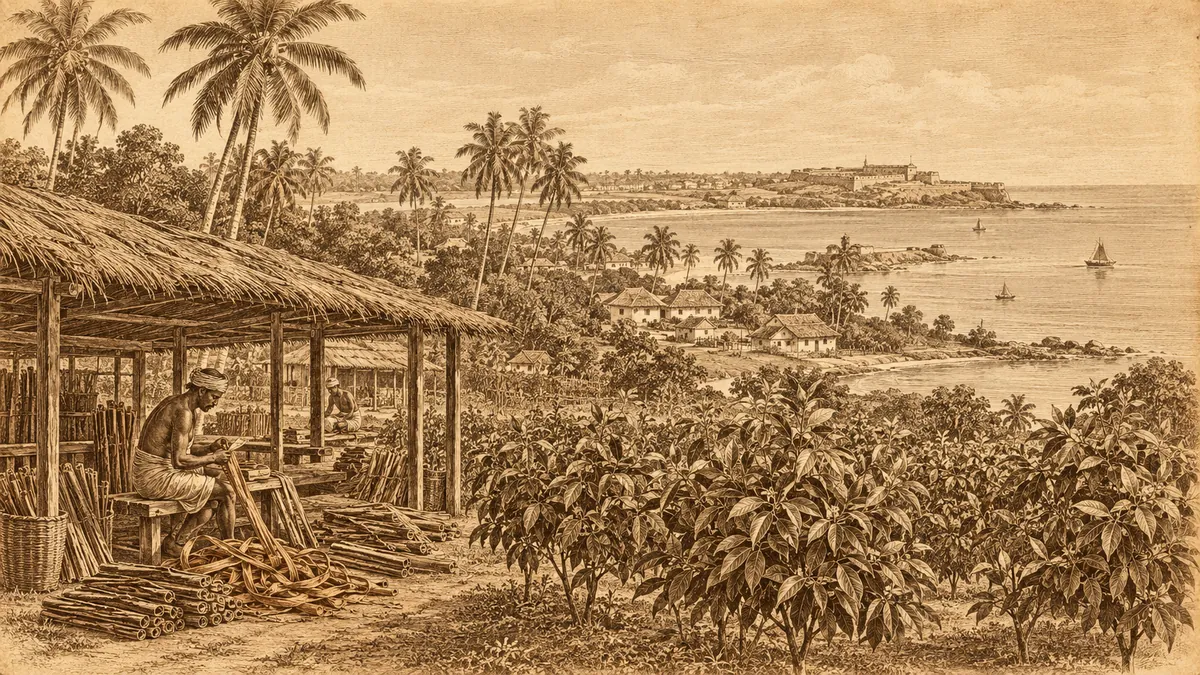
    Matara is a district on the southern coast of Sri Lanka and one of the heartlands of Ceylon cinnamon. Its warm climate, sandy coastal soils and long tradition of peeling make it a major source of true cinnamon, Cinnamomum verum. For centuries Matara has grown, peeled and traded cinnamon, and the district remains central to Sri Lanka’s cinnamon industry today, alongside its neighbour Galle.

    When people picture where Ceylon cinnamon comes from, the southern coast of Sri Lanka is the answer, and Matara sits at its core. This guide explains why Matara matters to cinnamon, what makes its land suited to the crop, and how its heritage of peeling and trade shaped the spice. It builds on our pillar guide to Sri Lankan cinnamon farming.

    The short answer

    Matara is one of the main cinnamon-growing districts of Sri Lanka, part of the southern coastal belt where most true cinnamon is produced. Its climate and soils suit Cinnamomum verum, and generations of local families have grown and peeled cinnamon there. The district has a deep heritage in the trade, from the colonial era to the many smallholder farms and peeling families working today. Together with Galle, Matara forms the southern core of Ceylon cinnamon country.

    Where Matara is

    Matara is a coastal district in the Southern Province of Sri Lanka, with the town of Matara on the Indian Ocean. It lies east of Galle, and the two districts together cover much of the island’s prime cinnamon land. The southern coast here is low, warm and wet, with sandy soils near the shore rising to gentle hills inland. This stretch of coast, running roughly from Galle through Matara, is the belt where true cinnamon has long grown best. For the wider picture of where the crop is grown, see our guide to the cinnamon-growing regions of Sri Lanka.

    Why the land suits cinnamon

    Cinnamon thrives in Matara because the conditions match what the tree needs. The climate is warm all year, with high rainfall and humidity, and no cold season. The coastal soils are often sandy and well drained, which Cinnamomum verum favours, and the low elevation keeps temperatures steady. These are the same conditions our guide to the climate Ceylon cinnamon needs describes, and Matara has them in good measure. The result is bark with the fine, sweet character that defines true Ceylon cinnamon.

    Matara’s cinnamon heritage

    Matara’s link to cinnamon goes back centuries. During the colonial period, when European powers controlled the Ceylon cinnamon trade, the southern coast was at the centre of cultivation and export, and Matara was one of its key areas. The district carries the marks of that era in its old fortifications and trading history. More lasting than any building, though, is the human heritage: the families who learned to grow, peel and prepare cinnamon and passed that skill down through generations. This living tradition of craft is a large part of what Matara heritage means.

    The peelers of the south

    At the heart of Matara’s cinnamon story are its peelers. Peeling true cinnamon is a skilled craft: the thin inner bark must be lifted cleanly and rolled into quills by hand. In Matara and the surrounding south, this skill has been held and handed down within communities for generations, making the region known not just for growing cinnamon but for preparing it well. The quality of a quill depends heavily on the peeler, so a district with deep peeling knowledge, as Matara has, tends to produce fine cinnamon.

    Matara and Galle together

    Matara is best understood alongside Galle, its western neighbour. The two southern districts form the core of Ceylon cinnamon country, sharing the same coastal climate, soils and traditions. Galle is often described as the heart of the trade, and Matara sits right beside it as a major growing and peeling area. Reading the two together gives the fuller picture of the south, so our guide to Galle, the heart of Ceylon cinnamon, is a natural companion to this one.

    FeatureMatara district
    LocationSouthern coast of Sri Lanka, east of Galle
    ClimateWarm and wet all year, high humidity
    SoilOften sandy and well drained near the coast
    Main crop roleMajor Ceylon cinnamon growing and peeling area
    HeritageCenturies of cultivation, peeling and trade
    NeighbourGalle, with which it forms the southern core

    Matara in the cinnamon trade today

    Matara remains an active part of Sri Lanka’s cinnamon industry. Much of the crop in the district comes from smallholder farms, where families grow cinnamon on modest plots alongside other crops, and peel it in their own sheds. This pattern of many small producers, rather than a few large estates, is typical of the southern cinnamon belt. The district supplies bark into the national trade, where it is graded, bundled and prepared for export. In this way the old heritage continues as a working industry, linking today’s farmers to a tradition that stretches back generations.

    Smallholder farms and family plots

    Much of Matara’s cinnamon grows on small family plots rather than large plantations. A typical grower may tend a modest area of cinnamon, sometimes mixed with other crops, and manage the cutting, peeling and drying within the household or with a small group of peelers. This smallholder pattern shapes the whole character of cinnamon in the district. It keeps the skill spread widely across many families, ties the crop closely to everyday rural life, and means the quality of the bark rests on countless individual hands rather than a single estate. It also makes cinnamon an important part of the income of ordinary households across the south.

    Cinnamon and daily life in the district

    In Matara, cinnamon is woven into the rhythm of rural life. The crop can be harvested through much of the year, so peeling sheds are a familiar sight across the district, and the work of cutting, peeling, rolling and drying marks the days of many families. Children often grow up around the craft, learning by watching before they ever lift a peeling knife, which is how the skill survives from one generation to the next. This everyday presence of cinnamon, as both a livelihood and an inherited craft, is a quiet but real part of what makes the district a cinnamon heartland rather than simply a place where the tree happens to grow.

    What Matara tells you about Ceylon cinnamon

    Understanding Matara helps explain why Ceylon cinnamon is tied so closely to Sri Lanka. True cinnamon is not simply a plant that grows anywhere: it is bound to particular places with the right climate, soils and skills, and the southern coast around Matara and Galle is the clearest example. When a label names Sri Lankan or Ceylon origin, it is this kind of district it points back to. The character of the spice, and the knowledge that prepares it, both come from places like Matara.

    Summary

    Matara is a district on the southern coast of Sri Lanka and one of the core areas of Ceylon cinnamon. Its warm, wet climate and sandy coastal soils suit Cinnamomum verum, and its people carry a centuries-old heritage of growing, peeling and trading the spice. Together with neighbouring Galle, Matara forms the southern heartland where most true cinnamon is produced, worked largely by smallholder farmers and skilled peeling families. The district shows how closely Ceylon cinnamon is tied to specific Sri Lankan places, their land and their craft, which is why Matara remains central to the story of true cinnamon today.

    Frequently asked questions

    Is Matara a major cinnamon area in Sri Lanka?

    Yes. Matara is one of the main cinnamon-growing districts, part of the southern coastal belt that produces most of Sri Lanka’s true cinnamon. It grows, peels and trades cinnamon on a large scale, mostly through smallholder farms.

    Where is Matara?

    Matara is a coastal district in the Southern Province of Sri Lanka, on the Indian Ocean, lying east of Galle. The two districts together cover much of the island’s prime cinnamon land.

    Why is cinnamon grown in Matara?

    The district has the warm, wet climate and sandy, well-drained coastal soils that Cinnamomum verum favours, along with a long tradition of skilled peeling. These conditions and skills together make it well suited to producing fine cinnamon.

    What is Matara’s cinnamon heritage?

    It is the district’s long history of growing, peeling and trading cinnamon, going back to the colonial era, and the living craft of peeling passed down through local families. This heritage is both historical and a working tradition that continues today.

    How is Matara linked to Galle?

    Matara and Galle are neighbouring southern districts that together form the core of Ceylon cinnamon country. They share the same coastal climate, soils and traditions, and are best understood as two parts of the same southern cinnamon belt.

    This website provides educational information about Ceylon Cinnamon as a spice and food ingredient. It is not intended to provide medical advice or make health claims.
  • The Life Cycle of a Cinnamon Plant

    The Life Cycle of a Cinnamon Plant

    The life cycle of a cinnamon plant runs from seed or cutting to a harvestable crop over several years. True Ceylon cinnamon, Cinnamomum verum, starts as a seed or a rooted cutting, grows into a young tree over two to three years, and is then cut back low to the ground in a step called coppicing. This makes it send up many slender shoots, and it is the bark of these shoots that becomes cinnamon. The plant then regrows and is harvested again and again from the same rootstock for decades.

    Understanding how a cinnamon plant grows helps explain why true cinnamon is made the way it is. This guide follows the plant from seed to a mature, repeatedly harvested bush, in plain terms. It builds on our pillar guide to Sri Lankan cinnamon farming.

    The short answer

    A cinnamon plant begins as a seed or cutting, grows for about two to three years, and is then coppiced, meaning cut back near the base so it grows many thin shoots. The bark of these shoots is peeled to make cinnamon. After each harvest the plant regrows new shoots from the same roots, so a single cinnamon plant can be harvested repeatedly for many years without being replanted.

    What kind of plant is cinnamon?

    True Ceylon cinnamon comes from Cinnamomum verum, an evergreen tree in the laurel family, native to Sri Lanka. Left to grow freely, it can reach the size of a small tree, with glossy leaves and small flowers. In cultivation, though, it is almost never allowed to grow tall. Instead it is kept as a low, many-stemmed bush so that farmers can harvest the thin bark of young shoots, which is where the best cinnamon comes from. The plant is hardy and long lived, which is what makes repeated harvesting possible.

    Stage one: seed and propagation

    The cycle usually begins with a seed or a cutting. Cinnamon trees flower and produce small fruits, each holding a seed. Seeds are collected when ripe and sown in a nursery, where they are kept shaded and watered until they sprout and grow into young seedlings. Growers also propagate cinnamon from cuttings or by layering, where a shoot is encouraged to root while still attached to the parent plant. Propagation from cuttings can keep the qualities of a good parent plant, while seeds give a wider mix.

    Seedlings spend their first months in the nursery before they are strong enough to plant out. Good soil and the right climate matter from the start. Our guides on the best soil for cinnamon and the climate Ceylon cinnamon needs cover the conditions young plants need.

    Stage two: planting out and early growth

    Once the seedlings are sturdy, they are planted out in the field, spaced to give each plant room to grow. Over the next two to three years the young plants establish their roots and grow upward, forming a single main stem and some branches. During this time the plant is building the strong root system that will support many later harvests. No bark is taken yet, since the stems are still growing and the plant needs this time to become well rooted.

    This establishment phase is a patient one. The grower weeds, waters in dry spells and protects the young plants, but mostly waits for them to reach the size where the first cut can be made.

    Stage three: coppicing

    After about two to three years, the plant reaches the key moment in its cycle: coppicing. The young tree is cut back close to the ground. Rather than killing the plant, this prompts it to respond by sending up a cluster of new, slender shoots from the base and roots. These straight young shoots are exactly what the cinnamon trade wants, because their thin bark peels cleanly and rolls into fine quills. From this point the plant is kept as a low bush rather than a tall tree.

    Coppicing is the turning point that shapes the rest of the plant’s life. It changes the plant from a single growing tree into a renewable, multi-stemmed source of harvestable shoots.

    Stage four: harvesting the shoots

    The new shoots are left to grow until they reach a suitable thickness and length, often over roughly a year to eighteen months, depending on conditions. When they are ready, they are cut, and the bark is peeled and processed into cinnamon. The thin inner bark is separated, rolled into quills and dried. For the full journey from shoot to finished spice, see our guide on how Ceylon cinnamon is made.

    Harvesting does not end the plant’s life. The cut stems are taken, but the rootstock remains in the ground, ready to grow the next set of shoots.

    Stage five: regrowth and repeated harvest

    After harvest, the plant regrows a fresh crop of shoots from the same base, and the cycle of growing and cutting repeats. A well-managed cinnamon plant can be harvested in this way for many years, often for decades, without needing to be replanted. This long productive life, built on one strong root system, is a defining feature of how cinnamon is grown. Each harvest takes only the young shoots, so the plant is never fully removed and keeps renewing itself.

    Over the years, growers may replace very old or weak plants, but the basic pattern holds: plant once, coppice, then harvest the regrowing shoots again and again.

    Flowering, fruiting and the next generation

    Although cultivated cinnamon is kept low and harvested young, the plant is still a flowering tree by nature. When some plants are allowed to grow taller, they produce small, pale flowers followed by little dark fruits, each carrying a seed. These seeds are the start of the next generation of plants, closing the loop of the life cycle. On a working plantation, most plants are coppiced for bark rather than left to flower, so growers often set aside a few mother plants specifically to flower and provide seed. In this way the plant’s natural reproductive stage and its cultivated, coppiced stage run side by side, one renewing the stock and the other supplying the spice.

    Caring for the plant between harvests

    Between cuttings, a cinnamon plant needs steady care to keep producing good shoots. Growers weed around the base, keep the soil in good condition and manage shade and water so the regrowing shoots come up straight and even. Weak or crowded shoots may be thinned so the plant puts its energy into fewer, better stems. This ongoing care over the plant’s long life is as much a part of the cycle as the cutting itself, since the quality of each harvest depends on how well the plant is tended in between.

    The cinnamon plant life cycle at a glance

    StageWhat happensRough timing
    Seed or cuttingPropagated in a nurseryFirst few months
    Planting outYoung plants establish rootsAbout 2 to 3 years
    CoppicingCut back to spur many shootsAt 2 to 3 years
    Harvesting shootsShoots cut and bark peeledEvery year to 18 months
    RegrowthFresh shoots regrow from rootsRepeated for decades

    Why the life cycle matters for cinnamon quality

    The way a cinnamon plant grows is tied directly to the quality of the spice. Because the finest cinnamon comes from the thin bark of young shoots, coppicing and repeated harvesting are not just practical choices but the source of good quality. A plant kept as a low bush produces many slender, even shoots, which give the thin, fragrant quills the trade prizes. The long life of the rootstock also means a plantation can keep producing cinnamon of a steady character year after year, as the same plants regrow familiar shoots.

    Frequently asked questions

    How long does it take to grow a cinnamon plant?

    A cinnamon plant takes about two to three years from planting before it is first coppiced, and after that its shoots are harvested roughly every year to eighteen months. The same plant can then be harvested repeatedly for many years from the same roots.

    What is coppicing in cinnamon farming?

    Coppicing is cutting the young cinnamon tree back close to the ground so it sends up many thin shoots from the base. The bark of these shoots is what becomes cinnamon. Coppicing turns the plant into a low, renewable bush rather than a tall tree.

    Does harvesting kill the cinnamon plant?

    No. Harvesting takes the young shoots, but the rootstock stays in the ground and grows a fresh crop of shoots. This is why a single cinnamon plant can be harvested again and again over many years without being replanted.

    Is cinnamon grown from seeds or cuttings?

    Both. Cinnamon can be grown from seeds sown in a nursery or propagated from cuttings or by layering. Cuttings can keep the qualities of a chosen parent plant, while seeds give a wider natural mix.

    Summary

    The life cycle of a cinnamon plant moves from seed or cutting, through two to three years of growth, to coppicing, which cuts the plant back so it grows the many thin shoots that become true cinnamon, Cinnamomum verum. The shoots are harvested, and the plant regrows fresh shoots from the same roots, repeating the cycle for decades. This pattern of growing, coppicing and regrowing is what makes cinnamon a long-lived, renewable crop, and it is the reason the finest cinnamon comes from the thin bark of young shoots.

    This website provides educational information about Ceylon Cinnamon as a spice and food ingredient. It is not intended to provide medical advice or make health claims.
  • What Soil Is Best for Cinnamon?

    What Soil Is Best for Cinnamon?

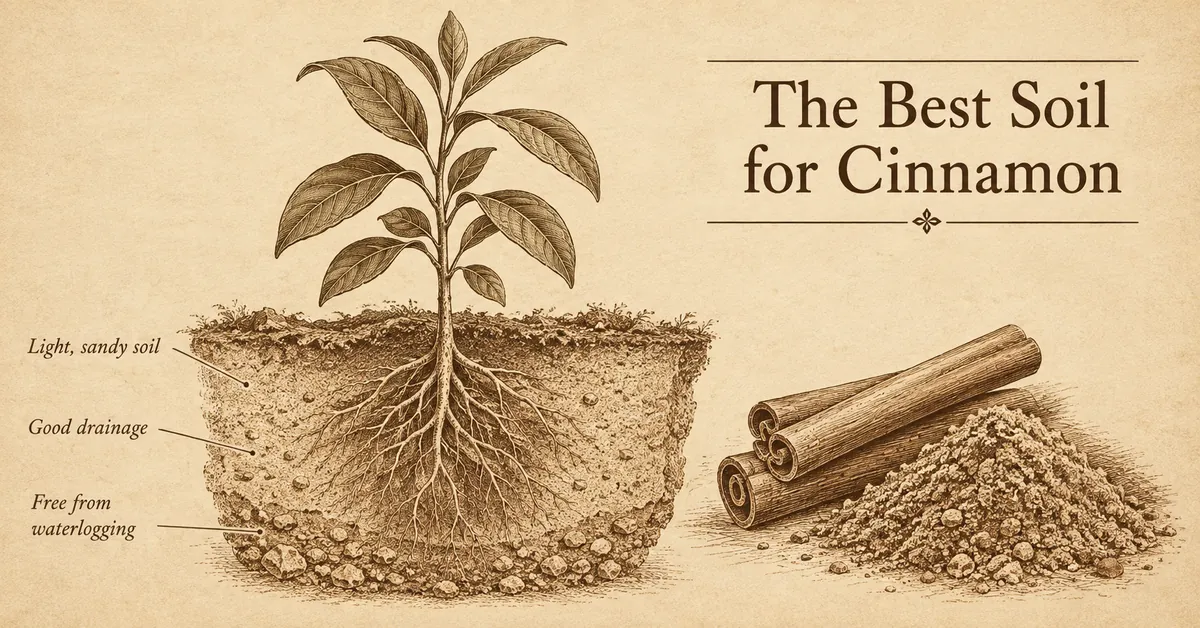
    The best soil for Ceylon cinnamon is light, sandy, well-drained soil that is slightly acidic and reasonably fertile. True cinnamon (Cinnamomum verum) grows especially well in the sandy loams of Sri Lanka’s wet coastal lowlands, where water drains freely and the roots never sit waterlogged. While cinnamon can tolerate a range of soils, it does best in deep, loose, free-draining ground with plenty of organic matter, which is one reason the sandy south-western coast of Sri Lanka has long been the heart of cinnamon growing.

    Soil is one of the quiet factors behind fine cinnamon. This guide explains what soil Ceylon cinnamon needs and why. It builds on our pillar guide to Sri Lankan cinnamon farming.

    The short answer

    Ceylon cinnamon grows best in light, sandy, well-drained, slightly acidic soil with good organic content. Free drainage is the single most important quality, since the roots dislike sitting in water. Sandy loams suit it especially well, which is why the sandy coastal soils of south-western Sri Lanka are ideal. Cinnamon is fairly adaptable, but the closer the soil is to this ideal, the better it grows.

    Why drainage matters most

    If there is one thing cinnamon needs from its soil, it is good drainage. The tree does not like waterlogged ground, where roots can suffer in the absence of air and be prone to rot. Light, sandy soils let excess water pass through quickly, keeping the roots healthy. This is why sandy and sandy-loam soils are so well suited to cinnamon, and why low-lying areas that flood or hold water are poor choices. Even in the wet zone, where rainfall is high, it is free-draining soil that lets the plant enjoy plenty of water without becoming waterlogged. This balance of ample rain and quick drainage is central to the climate Ceylon cinnamon needs.

    The ideal soil qualities

    Several soil qualities together make for good cinnamon growing.

    Texture: light and sandy

    Cinnamon prefers a light, loose, sandy or sandy-loam soil. This texture drains freely, is easy for roots to grow through, and warms readily. Heavy clay soils that hold water and compact tightly are much less suitable.

    Drainage: free and quick

    As noted, the soil must let water drain away rather than pooling. Good drainage is more important than richness; a poorer sandy soil that drains well often suits cinnamon better than a rich soil that stays wet.

    Acidity: slightly acidic

    Cinnamon generally does well in soil that is slightly acidic rather than strongly alkaline. This mildly acidic range suits the plant and the wet-zone soils where it naturally grows tend to fall within it.

    Fertility and organic matter

    While cinnamon tolerates fairly poor soils, it grows more strongly in ground with reasonable fertility and a good amount of organic matter. Organic content helps the light soil hold enough moisture and nutrients without losing its free-draining nature.

    Ideal soil for cinnamon at a glance

    The soil qualities that suit Ceylon cinnamon.
    QualityIdeal for cinnamon
    TextureLight, sandy or sandy loam
    DrainageFree and quick, never waterlogged
    AciditySlightly acidic
    FertilityModerate, with organic matter
    DepthDeep, loose and easy to root into

    The famous sandy soils of Sri Lanka

    The reason Sri Lanka produces the finest Ceylon cinnamon is partly its soil. The south-western coastal belt, taking in districts such as Galle, Matara and the surrounding wet zone, has light, sandy soils that drain freely while the climate supplies steady rain. This natural pairing of sandy ground and a wet, warm climate is close to perfect for cinnamon, and it has shaped the island’s cinnamon country for centuries. The link between the crop and these particular soils is part of why the growing regions cluster where they do, as our guide to the cinnamon-growing regions of Sri Lanka describes.

    Can cinnamon grow in other soils?

    Cinnamon is a fairly adaptable plant and can grow in a range of soils, from sandy coastal ground to some lateritic and loamy inland soils, as long as drainage is adequate. It is not restricted to a single perfect soil type. However, there is a difference between merely surviving and thriving. In heavy, poorly drained or frequently waterlogged soils the plant struggles, while in light, well-drained ground it flourishes. So while cinnamon can be grown more widely, the quality and vigour of the crop are best where the soil comes closest to the sandy, free-draining ideal.

    Preparing soil for cinnamon

    Where growers want to give cinnamon the best start, soil preparation focuses on the same qualities. Loosening compacted ground improves drainage and rooting, and adding organic matter such as compost enriches light soils and helps them hold moisture and nutrients. On sites where water tends to collect, improving drainage or planting on slightly raised ground helps keep the roots out of standing water. The aim throughout is to recreate, as far as possible, the deep, loose, free-draining and reasonably fertile conditions that cinnamon prefers. Good soil preparation sets the foundation for healthy trees and, in time, fine bark.

    Does soil affect cinnamon quality?

    Soil does more than keep the tree alive; it plays a part in the character of the bark. Healthy trees grown in suitable, free-draining, reasonably fertile soil tend to produce good, even bark, while trees struggling in poor or waterlogged ground are less vigorous and yield less well. The traditional reputation of Sri Lanka’s coastal cinnamon owes something to the light, sandy soils there, which help produce the fine, pale bark the island is known for. This is not a matter of one soil giving a completely different flavour, but of good growing conditions supporting healthy plants and, in turn, quality bark. Soil, then, is one of several quiet contributors to what makes true Ceylon cinnamon so prized.

    Common soil problems and how growers manage them

    A few soil problems come up often, and each has a practical answer. Waterlogging, the most serious, is managed by choosing well-drained sites, improving drainage, or planting on gently raised ground so water runs off. Compacted or heavy soil, which restricts roots and drainage, is loosened and improved with organic matter to open up its structure. Thin or poor soil is enriched over time by adding compost and mulch, building fertility and organic content without destroying the light texture cinnamon likes. And on sloping land, care is taken to limit erosion so the fertile topsoil is not washed away. In each case the goal is the same: to keep the soil loose, fertile and above all free-draining, matching as closely as possible the natural conditions in which cinnamon thrives.

    Soil, climate and the whole picture

    Soil never works alone; it is part of a bigger set of growing conditions. Cinnamon needs the right soil together with a warm tropical climate and plenty of well-spread rainfall to do its best. The sandy soils of Sri Lanka’s wet zone are ideal precisely because they pair with that climate, draining away the heavy rain while keeping the roots healthy. Understanding soil is therefore one piece of understanding how and where Ceylon cinnamon is grown, a subject covered in our guide to where and how Ceylon cinnamon is grown.

    Frequently asked questions

    What soil is best for cinnamon?

    Light, sandy, well-drained soil that is slightly acidic and reasonably fertile is best for Ceylon cinnamon. Free drainage matters most, since the roots dislike waterlogged ground. Sandy loams, like those of Sri Lanka’s wet coastal lowlands, suit the plant especially well.

    Does cinnamon need well-drained soil?

    Yes. Good drainage is the single most important soil quality for cinnamon. The tree does not tolerate waterlogged conditions well, so light, sandy soils that let excess water pass through quickly are ideal, keeping the roots healthy even in a high-rainfall climate.

    What kind of soil does cinnamon grow in in Sri Lanka?

    In Sri Lanka, cinnamon grows mainly in the light, sandy soils of the wet south-western coastal lowlands, in districts such as Galle and Matara. These free-draining sandy soils, combined with a warm, wet climate, are close to ideal for the crop.

    Can cinnamon grow in clay soil?

    Cinnamon grows poorly in heavy clay soils that hold water and compact tightly, because they drain badly and can leave roots waterlogged. It strongly prefers light, sandy, free-draining soil. If only heavier soil is available, improving its drainage and structure helps.

    Summary

    The best soil for Ceylon cinnamon is light, sandy and well-drained, slightly acidic and reasonably fertile, with plenty of organic matter and good depth. Above all it must drain freely, since cinnamon dislikes waterlogged ground. The sandy soils of Sri Lanka’s wet south-western coast, paired with a warm, rainy climate, are close to perfect, which is why the island’s cinnamon country lies there. Cinnamon can adapt to other soils where drainage allows, but it thrives best in the loose, sandy, free-draining conditions that suit its roots, giving the healthy trees behind fine true cinnamon.

    This website provides educational information about Ceylon Cinnamon as a spice and food ingredient. It is not intended to provide medical advice or make health claims.
  • The Climate Ceylon Cinnamon Needs

    The Climate Ceylon Cinnamon Needs

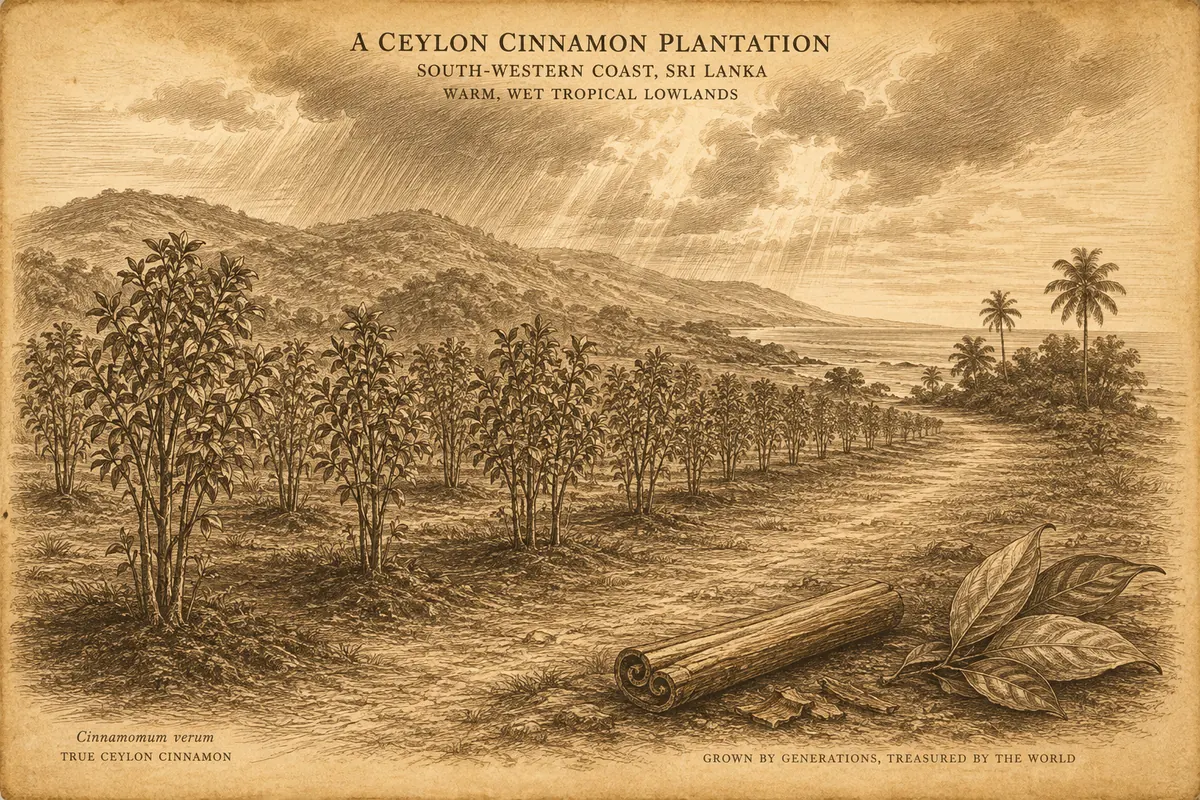
    Ceylon cinnamon (Cinnamomum verum) needs a warm, wet tropical climate to grow well: steady heat of roughly 24 to 30 degrees Celsius, high rainfall of about 2,000 to 2,500 millimetres a year, high humidity, and plenty of sunshine, ideally near sea level. These conditions are found along the south-western coast of Sri Lanka, which is why the island became the home of true cinnamon.

    The climate a cinnamon tree grows in shapes the flavour and quality of the bark, so understanding those conditions helps explain why Ceylon cinnamon from Sri Lanka is so prized. This guide sits alongside our pillar on Sri Lankan cinnamon farming.

    The short answer

    Ceylon cinnamon thrives in a hot, humid, low-lying tropical climate with abundant rainfall spread through the year. It likes warmth without cold spells, regular rain rather than long dry seasons, and a sunny position. The wet lowlands of south-western Sri Lanka give it exactly this, which is why the best true cinnamon has always come from there. To see where that is, our guide on where cinnamon is grown in Sri Lanka maps the main districts.

    Temperature: steady tropical warmth

    Cinnamon is a tropical tree and needs consistent warmth. It grows best in average temperatures of about 24 to 30 degrees Celsius, with no frost and no cold season. Sudden cold or a chilly climate will slow or stop its growth. The even, year-round heat of the tropics suits it perfectly, letting the tree grow steadily and the bark develop its full aroma.

    Rainfall: plenty, spread through the year

    Water is one of the biggest factors. Ceylon cinnamon likes a high annual rainfall, commonly in the range of 2,000 to 2,500 millimetres, and it prefers this rain to be well spread across the year rather than crammed into a short wet season. Regular moisture keeps the tree healthy and the bark growing. That said, the ground must drain freely, since cinnamon does not like to sit in waterlogged soil. A wet climate with good drainage is the sweet spot.

    The wet zone and the monsoon

    Sri Lanka’s south-western corner is known as the wet zone, watered by the south-west monsoon. This reliable rainfall, combined with warmth, makes it ideal cinnamon country. The monsoon delivers the steady moisture the trees need, and the peeling season is often timed around the rains, when the bark lifts most easily.

    Humidity and sunshine

    Alongside heat and rain, cinnamon likes high humidity, the moist air typical of coastal tropics. At the same time it wants plenty of sunshine, so an open, sunny position helps it grow strongly. This combination of a humid atmosphere and bright light is another feature of the south-western coastal belt where the spice flourishes. Too much dense shade tends to make the tree grow leggy and weak, so growers usually give it an open aspect where sunlight can reach the leaves for most of the day, which helps the plant build strong, aromatic bark.

    Altitude: low and coastal is best

    Ceylon cinnamon grows best at low elevations, from sea level up to a few hundred metres. It can be grown at somewhat higher altitudes, but the finest, most aromatic bark tends to come from the warm coastal lowlands. As the land rises and cools, growth slows, so the classic cinnamon gardens sit close to the coast. Our guide on how Ceylon cinnamon is grown looks at these growing conditions in more detail.

    The climate Ceylon cinnamon needs at a glance

    The main climate conditions that suit Ceylon cinnamon.
    FactorWhat cinnamon needs
    Climate typeWarm, humid tropical
    TemperatureAbout 24 to 30 degrees Celsius, no frost
    RainfallRoughly 2,000 to 2,500 mm a year, well spread
    HumidityHigh
    SunshinePlenty, open sunny position
    AltitudeSea level to a few hundred metres
    DrainageFree-draining, not waterlogged

    Why Sri Lanka’s climate is ideal

    Put these needs together and the south-western coast of Sri Lanka matches almost every one. It has year-round tropical heat, high and reliable monsoon rainfall, humid coastal air, strong sunshine and low, well-drained land near the sea. Few places in the world combine all of these so neatly, which is a major reason the island became famous for true cinnamon. The climate does not just let the tree survive; it helps produce the delicate, sweet, layered bark that defines Ceylon cinnamon. This close bond between place and spice is part of the island’s long cinnamon farming tradition.

    Can Ceylon cinnamon grow elsewhere?

    Yes, true cinnamon can be grown in other tropical regions with a similar warm, wet climate, such as parts of the Seychelles, Madagascar and southern India. Wherever the temperature, rainfall and humidity are right, the tree can be cultivated. Even so, Sri Lanka remains the benchmark, both for its ideal conditions and for its centuries of skill in growing and processing the spice. Climate makes the tree possible, but tradition and craft turn its bark into fine Ceylon cinnamon. It is worth noting that cinnamon grown in a different climate can taste noticeably different, since local heat, rain and soil all leave their mark on the bark. This is one reason buyers who want the classic Ceylon flavour look specifically for cinnamon grown in its traditional Sri Lankan home rather than simply the same species grown elsewhere.

    How climate affects quality

    The growing climate influences the final spice in subtle ways. Steady warmth and good moisture help the tree build the aromatic oils in its bark, while healthy, unstressed growth gives the thin, even inner bark that rolls into fine quills. Trees grown in poor conditions, too dry, too cold or badly drained, tend to give weaker, coarser bark. So the famous quality of Ceylon cinnamon starts in the field, with the right climate feeding a healthy tree, long before the bark is peeled and dried, as shown in our guide to how Ceylon cinnamon is made.

    Climate and the growing year

    The tropical climate also shapes the rhythm of the cinnamon year. Because the wet zone has no harsh winter, cinnamon grows more or less continuously, sending up new shoots that are harvested on a regular cycle rather than in a single yearly season. The rains matter for timing: peeling is easier when the bark is full of sap and lifts cleanly from the wood, which tends to happen during and just after wet spells. Growers read the weather closely, working with the monsoon rather than against it, so the climate sets the pattern of planting, tending and harvesting across the whole year.

    Soil, drainage and shelter

    Climate works together with the ground the tree sits in. The best cinnamon land is warm and wet but also free-draining, often sandy or loamy soil that holds moisture without turning boggy. Gentle slopes and coastal flats near the sea suit it well, giving both the humidity it likes and the drainage it needs. Some shelter from very strong winds helps too, since the young shoots that become quills are slender and easily damaged. When warm air, steady rain, bright sun and open, well-drained soil come together, the tree grows at its healthiest, and healthy trees give the finest bark.

    Frequently asked questions

    What climate does Ceylon cinnamon grow in?

    A warm, humid tropical climate. It needs steady temperatures of around 24 to 30 degrees Celsius, high rainfall spread through the year, high humidity and plenty of sunshine, ideally at low, coastal elevations. Sri Lanka’s south-western wet zone provides all of this.

    How much rain does cinnamon need?

    Ceylon cinnamon typically grows best with roughly 2,000 to 2,500 millimetres of rainfall a year, spread fairly evenly rather than falling in one short season. The soil must drain well, since the tree does not like waterlogged ground.

    Can cinnamon grow in a cold climate?

    No. Cinnamon is a tropical tree and cannot tolerate frost or a cold season. It needs consistent warmth all year, so temperate or cold regions are not suitable for growing it outdoors.

    Why is Sri Lanka so good for growing cinnamon?

    Its south-western coast combines year-round tropical heat, high monsoon rainfall, humid air, strong sunshine and low, well-drained land near the sea. This mix of conditions is close to ideal for Ceylon cinnamon, which is a key reason the island became its home.

    Summary

    Ceylon cinnamon needs a warm, wet, humid tropical climate to grow well: temperatures of about 24 to 30 degrees Celsius with no frost, high and well-spread rainfall of around 2,000 to 2,500 millimetres a year, high humidity, plenty of sunshine and low, free-draining coastal land. The south-western wet zone of Sri Lanka matches these needs almost exactly, which is why the island became the home of true cinnamon. The right climate does more than keep the tree alive; it helps build the delicate, aromatic bark that makes Ceylon cinnamon so prized.

    This website provides educational information about Ceylon Cinnamon as a spice and food ingredient. It is not intended to provide medical advice or make health claims.

  • How Ceylon Cinnamon Is Grown

    How Ceylon Cinnamon Is Grown

    Ceylon cinnamon is grown from young plants raised in nurseries and set out in warm, humid, low-country gardens in Sri Lanka, where the trees are cut back low and encouraged to send up many slender shoots rather than grow into tall trees. Those shoots, not the trunk, are what eventually become cinnamon, so growing the crop is really about managing a dense thicket of young stems year after year.

    This guide explains how true Ceylon cinnamon (Cinnamomum verum) is grown from the ground up: how the plants are propagated, where and how they are planted, the conditions they need, and how a cinnamon garden is managed through its long productive life. For the wider picture of cultivation in Sri Lanka, see our pillar guide on Sri Lankan cinnamon farming.

    What does it mean to “grow” Ceylon cinnamon?

    Growing Ceylon cinnamon means cultivating Cinnamomum verum as a coppiced bush rather than a full-sized tree, so that it continually produces the slender shoots whose bark becomes the spice. Left alone, the plant would grow into a tree many metres tall, but growers keep it low and multi-stemmed by cutting it back. Each harvest removes mature shoots and stimulates fresh ones, so a single well-managed plant keeps producing for many years. Understanding the spice itself helps here, as explained in our guide to what is true Ceylon cinnamon.

    Where Ceylon cinnamon grows best

    Ceylon cinnamon thrives in the warm, humid lowlands of Sri Lanka, particularly the wet zone near the south-western coast. A few conditions matter most.

    Climate

    The plant favours a hot, humid tropical climate with generous, fairly evenly spread rainfall and steady warmth through the year. Consistent moisture keeps the plants growing actively, which supports the frequent flushes of new shoots that growers rely on.

    Soil

    Cinnamon does well in well-drained sandy or loamy soils. Sandy coastal soils are traditionally associated with fine, fragrant cinnamon, while waterlogged ground is unsuitable because the roots dislike sitting in water. Good drainage combined with steady rainfall is the ideal balance.

    Elevation

    The crop is mainly a low-country one, grown from near sea level up into the lower hills. These warm elevations suit its growth and are part of why the coastal districts of the south-west became the heartland of Ceylon cinnamon.

    How Ceylon cinnamon plants are propagated

    New cinnamon plants are started before they ever reach the garden, usually in a nursery.

    From seed

    Cinnamon can be grown from seed, collected from ripe fruits and sown fresh, since the seeds lose viability quickly if stored. Seedlings are raised in nursery beds or bags until they are strong enough to transplant.

    From cuttings and division

    Growers also propagate cinnamon vegetatively, for example from cuttings or by dividing rooted material, which can help reproduce plants with desirable qualities. Whichever method is used, the aim is a healthy young plant with a good root system ready for planting out.

    Planting out a cinnamon garden

    Once seedlings are established, they are transplanted into the field, traditionally at the start of a rainy period so the young plants settle in with plenty of moisture. They are set out in rows at spacings that allow each plant room to form a clump of shoots while keeping the garden dense enough to be productive. In the early months the young plants are weeded and tended while they establish their roots and begin to grow. This early cultivation is the foundation of the garden’s later productivity, and it flows naturally into the harvesting cycle described in our guide to how Ceylon cinnamon is harvested.

    Coppicing: the key to growing cinnamon

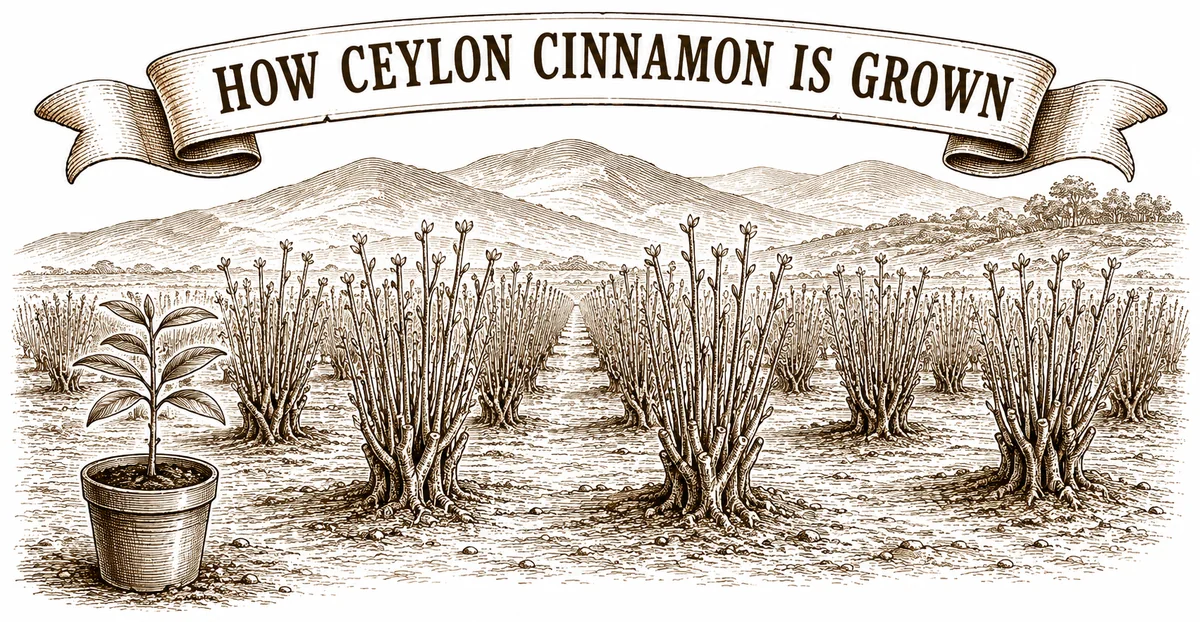
    The single most important growing technique is coppicing, cutting the young plant back close to the ground once it is established. Instead of one main stem growing tall, the cut plant responds by sending up a cluster of new shoots from the base. These multiple slender shoots are exactly what the grower wants, because straight, thin stems yield the finest bark. From then on, the plant is managed as a low, many-stemmed bush, with shoots harvested and new ones continually replacing them. This regenerative cycle is why a cinnamon garden can keep producing for decades from the same rootstock.

    How long before a cinnamon plant can be harvested?

    A newly planted cinnamon garden needs a few years before the first harvest. The young plants must grow, be coppiced, and produce shoots of the right size and maturity, which typically takes around two to three years from planting before worthwhile harvesting begins. After that first cutting, the plant is in production, and shoots can be taken repeatedly as they reach the right stage. The judgement of when a shoot is ready, straight, evenly coloured and of suitable thickness, is central to both growing and harvesting, and shapes the quality of the finished spice, as our guide to how Ceylon cinnamon is made explains.

    Caring for a growing cinnamon garden

    A productive garden needs ongoing attention rather than being left to itself.

    Weeding and soil care

    Young plants especially need to be kept clear of competing weeds, and the soil is looked after to keep it fertile and well drained. Healthy soil supports the steady flush of shoots the crop depends on.

    Managing shade and spacing

    Growers manage how much light the plants receive and keep the spacing of shoots in balance, removing weak or crowded stems so that strong, straight shoots can develop. This shaping of the bush is part of the everyday craft of cinnamon growing.

    Protecting the plants

    Like any crop, cinnamon can face pests and diseases, and growers watch for these and manage them to keep the garden vigorous. A well-tended garden produces cleaner, more uniform shoots and therefore better cinnamon.

    Ceylon cinnamon growing at a glance

    A simplified overview of how Ceylon cinnamon is grown.
    StageWhat happens
    PropagationPlants raised from fresh seed or cuttings in a nursery
    PlantingSeedlings transplanted to warm, humid, well-drained land
    EstablishmentYoung plants weeded and tended for the first years
    CoppicingPlants cut back low to force many slender shoots
    ProductionShoots harvested repeatedly; new shoots regrow for decades

    Why the way cinnamon is grown matters

    Every choice in the garden echoes through to the finished spice. Suitable climate and soil, careful propagation, correct spacing, and above all skilful coppicing all lead to straight, even, healthy shoots that peel into fine, fragrant quills. Poorly grown or neglected plants produce crooked, uneven stems that yield lower-grade bark. In other words, growing Ceylon cinnamon well is the first and most fundamental step in producing a premium spice, long before any peeling begins. It is also why genuine Ceylon cinnamon, grown this way in its traditional home, is so closely tied to Sri Lanka, a connection covered throughout our guide to Sri Lankan cinnamon farming.

    Summary

    Ceylon cinnamon is grown by cultivating Cinnamomum verum as a low, coppiced bush in the warm, humid, well-drained lowlands of Sri Lanka. Plants are raised from fresh seed or cuttings in a nursery, transplanted into the field during a rainy period, and tended as they establish. The defining technique is coppicing: cutting the young plant back so it sends up many slender shoots, which are the source of the spice. After roughly two to three years the first shoots are ready, and thereafter the same plants keep producing for decades as shoots are harvested and continually regrow. Good climate, soil, spacing and care all combine to produce the straight, even shoots that make fine cinnamon, making the way the crop is grown the true foundation of its quality.

    Frequently asked questions

    How is Ceylon cinnamon grown?

    It is grown by cultivating the Cinnamomum verum plant as a low, multi-stemmed bush in warm, humid, well-drained land in Sri Lanka, then cutting it back (coppicing) so it produces many slender shoots whose bark becomes cinnamon.

    What conditions does cinnamon need to grow?

    Ceylon cinnamon prefers a hot, humid tropical climate with steady rainfall, warm low-country elevations, and well-drained sandy or loamy soil. Waterlogged ground is unsuitable because the roots dislike sitting in water.

    How long does it take to grow cinnamon before harvest?

    A new garden usually needs around two to three years from planting before the first worthwhile harvest, once the plants have grown, been coppiced and produced shoots of suitable size. After that the plant stays in production for many years.

    Is cinnamon grown as a tree or a bush?

    Although the plant would naturally become a tree, growers keep it as a low, coppiced bush. Cutting it back forces a cluster of slender shoots, which are far more useful for producing fine bark than a single tall trunk.

    This website provides educational information about Ceylon Cinnamon as a spice and food ingredient. It is not intended to provide medical advice or make health claims.

  • Sri Lankan Cinnamon Farming

    Sri Lankan Cinnamon Farming

    Ceylon cinnamon is grown mainly on smallholdings in the wet, humid south-west of Sri Lanka, where Cinnamomum verum is cultivated as low, coppiced bushes rather than tall trees. Farmers raise the plants in sandy tropical soils, cut them back to encourage many harvestable stems, and gather mature shoots on a repeating cycle. This farming tradition, concentrated around Galle and Matara, underpins the world’s supply of true cinnamon.

    Behind every quill of Ceylon cinnamon is a farming system shaped by climate, soil and generations of know-how. Understanding how the plant is grown explains why Sri Lanka remains its heartland and how the harvest feeds the craft described in how Ceylon cinnamon is made.

    Where cinnamon grows in Sri Lanka

    Cultivation is concentrated in the island’s wet zone along the south and south-west coast, particularly the districts of Galle, Matara and parts of Ratnapura and Kalutara. These areas offer the warm temperatures, high rainfall and humidity, and free-draining sandy soils that Cinnamomum verum favours. The link between spice and place is now formally recognised: Ceylon Cinnamon holds a Protected Geographical Indication tied to Sri Lanka, a story told in our history of Ceylon cinnamon.

    The climate and soil it needs

    Ceylon cinnamon thrives in a tropical climate with consistent warmth, plentiful rainfall spread through the year, and high humidity. It grows from near sea level up into low hill country. It does best in well-drained sandy or loamy soils; waterlogged ground is unsuitable. These conditions influence not just yield but flavour, contributing to the fragrance and fine bark that define the spice.

    Grown as a bush, not a tree

    Left alone, Cinnamomum verum becomes a sizeable evergreen tree, but for spice production it is deliberately kept small. Through coppicing, repeatedly cutting the plant back near ground level, farmers encourage it to throw up a cluster of straight, slender shoots. These shoots, rather than the trunk, are what get harvested for bark, and coppicing lets a single plant be harvested again and again over many years.

    Propagation and establishment

    New plants are raised from seed or from vegetative material in nurseries, then transplanted to the field. A young planting takes a few years to establish before the first bark harvest, after which it enters a productive cycle that can continue for decades with good management. Farmers often maintain plants at a convenient height for hand-harvesting and peeling.

    The harvest cycle

    Once established, cinnamon is harvested repeatedly rather than once. Farmers select shoots that have reached the right thickness and maturity, typically brown, straight stems about the diameter of a thumb, and cut them, leaving the plant to regenerate new shoots for the next round. Harvesting is often timed to periods when the bark separates easily from the wood, which makes peeling cleaner. The cut stems move quickly to the peeling shed, since fresh bark is easiest to work.

    Smallholders at the heart of the industry

    Much of Sri Lanka’s cinnamon comes from smallholder farmers and family operations rather than vast estates. Cultivation, harvesting and peeling are frequently carried out by the same households or local peeler communities, and the skills are handed down through generations. This smallholder structure gives the industry its artisanal character and supports rural livelihoods across the wet zone.

    Intercropping and land use

    Because cinnamon is a hardy perennial, it is often grown alongside other crops or on land unsuited to more demanding plants, and it can be intercropped in mixed gardens. Its perennial roots help hold the soil, and its long productive life makes it a stable component of smallholder farming systems. These qualities also make it a relatively low-impact crop, a theme we will look at further in sustainability-focused articles.

    Challenges farmers face

    Cinnamon farming is not without difficulties. Growers contend with pests and diseases, weather variability, the physically demanding and highly skilled nature of harvesting and peeling, a shortage of trained peelers as younger generations seek other work, and fluctuating market prices. Supporting fair prices and preserving peeling skills are important to the long-term health of the industry.

    The botany behind the crop

    Cinnamomum verum is an evergreen member of the laurel family. Its young leaves emerge a striking reddish colour before maturing to glossy green, and it produces small flowers and dark berries. It is these botanical traits, a vigorous plant that regrows readily after cutting, with an aromatic inner bark, that make the coppicing system possible. The same plant supplies not only bark for the spice but leaves and twigs for cinnamon leaf oil, so little of it goes unused.

    How much a plant yields

    Yields depend on the age and health of the plant, the spacing, the soil and the skill of the harvesters. A well-managed plot produces a steady stream of harvestable shoots year after year, but the quantity of finished, gradable quills from any given weight of stems is modest, because only the thin inner bark is used and much depends on clean peeling. This relatively low conversion from raw stem to premium quill is part of why true cinnamon is a higher-value crop, as reflected in the buying guide.

    A relatively sustainable crop

    Cinnamon has several qualities that make it a comparatively low-impact crop. It is a long-lived perennial, so land is not repeatedly cleared and replanted; its roots help stabilise soil; and because it is coppiced rather than felled, the same plants keep producing for decades. Grown in mixed smallholder gardens and sometimes intercropped, it fits into diverse, resilient farming systems rather than large monocultures. These characteristics are increasingly valued by buyers who care about how their spices are produced.

    The future of Sri Lankan cinnamon

    The industry’s long-term health depends on keeping cultivation and peeling attractive to the next generation, maintaining quality standards, and securing fair prices for smallholders. Recognition such as the EU Geographical Indication helps by protecting the value of the “Ceylon Cinnamon” name, as noted in our history of Ceylon cinnamon. Supporting transparent, well-labelled supply chains ultimately helps both farmers and the consumers who want genuine true cinnamon.

    Why location matters so much

    Cinnamon can be grown in various tropical places, but Sri Lanka’s particular combination of climate, soil and, above all, human knowledge is difficult to reproduce. The island’s warm, humid wet zone provides ideal growing conditions, while centuries of accumulated peeling and processing skill turn that raw material into fine, thin-barked quills. This blend of place and craft is exactly what the Geographical Indication for Ceylon Cinnamon is designed to protect, and it is why cinnamon grown elsewhere rarely matches the character of the genuine Sri Lankan article. Location, in other words, is not just where the plant grows but where the knowledge lives.

    The farming calendar

    Cinnamon farming follows a rhythm rather than a single annual event. Because plants are coppiced and regrow continually, harvesting is spread across the year, with peelers often timing cutting to periods after rain when the bark lifts most easily from the wood. Between harvests, farmers tend the bushes, weeding, pruning and managing the canopy, to keep them producing straight, healthy shoots. This continuous cycle means a well-run smallholding provides work and income throughout the year rather than in a single burst, which is one reason cinnamon has long been a dependable crop for rural families in the wet zone.

    From field to the wider world

    The stems harvested on these smallholdings feed directly into the hand-craft of peeling and rolling covered in how Ceylon cinnamon is made, and ultimately into the graded quills and powder that reach kitchens around the world. Sri Lanka supplies the overwhelming majority of the world’s true cinnamon, and the quality of that cinnamon begins in the field with sound farming: the right plants, the right conditions and careful management. Understanding this farming foundation makes it easier to appreciate why genuine Ceylon cinnamon is both special and worth seeking out, as explained in what is true Ceylon cinnamon.

    Summary

    Sri Lankan cinnamon farming centres on the humid south-west of the island, where Cinnamomum verum is grown mostly by smallholders as low, coppiced bushes in warm, wet conditions and free-draining soils. Plants are raised from seed or cuttings, cut back to produce many harvestable shoots, and harvested repeatedly over many years. This traditional, skill-intensive system, rooted around Galle and Matara and now protected by a Geographical Indication, is the foundation on which the world’s true cinnamon depends.

    Frequently asked questions

    Where is Ceylon cinnamon grown?

    Mainly in the wet south-west of Sri Lanka, especially the Galle and Matara districts, in warm, humid conditions with well-drained soils.

    Is cinnamon grown as a tree or a bush?

    For spice production it is kept as a low, multi-stemmed bush through coppicing, so it produces many slender shoots that can be harvested for bark.

    How often is cinnamon harvested?

    Repeatedly. Farmers cut mature shoots and let the plant regenerate, allowing multiple harvests over many years from the same plant.

    Who grows Sri Lanka’s cinnamon?

    Much of it comes from smallholder farmers and family operations, with harvesting and peeling skills passed down through generations.

    This website provides educational information about Ceylon Cinnamon as a spice and food ingredient. It is not intended to provide medical advice or make health claims.