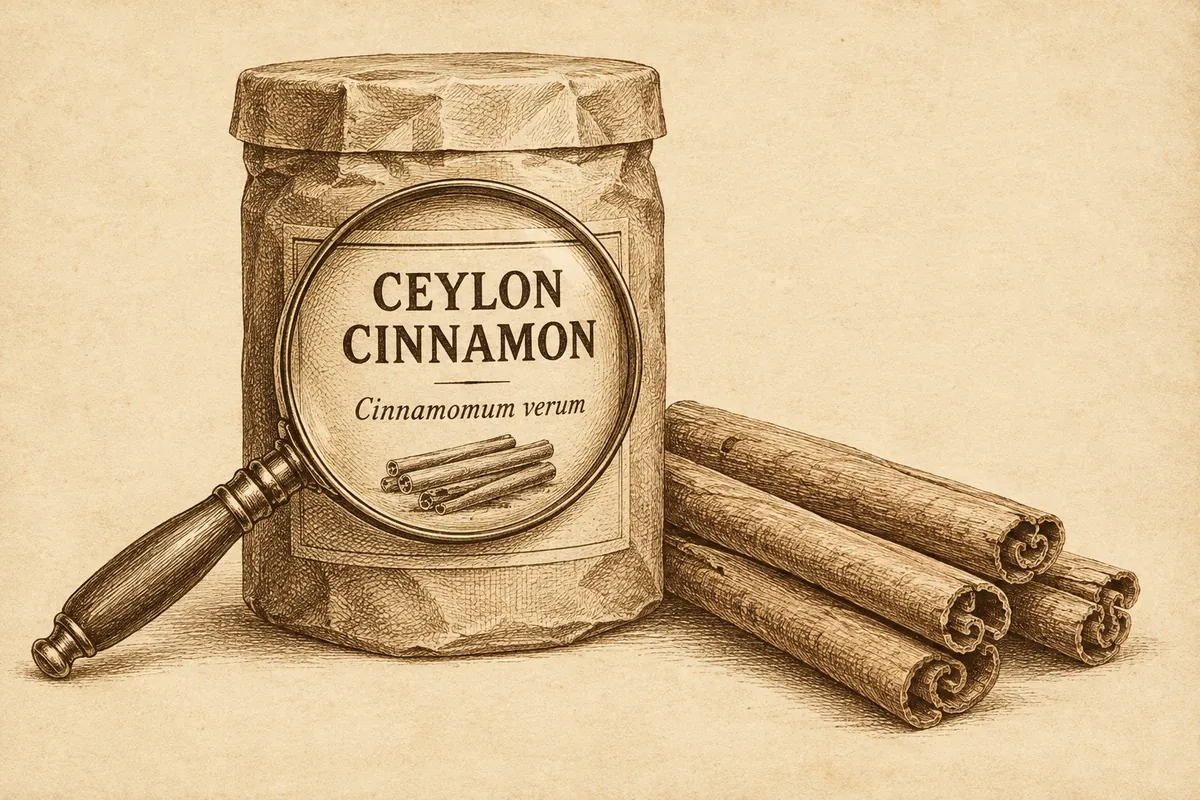
Reading a cinnamon label correctly means checking three things above all: the species name, the country of origin, and the wording used for the product. True Ceylon cinnamon is the bark of Cinnamomum verum (also written Cinnamomum zeylanicum) from Sri Lanka, so a label that names that species and a Sri Lankan origin, or clearly says “Ceylon cinnamon”, is telling you it is the real thing. A label that only says “cinnamon”, names a different species such as Cinnamomum cassia, or gives an origin like China or Indonesia is usually one of the cheaper cassia types, not true cinnamon.
Cinnamon labels can be confusing, and the differences that matter are often in the small print. This guide shows you exactly what to look for. It builds on our pillar guide to how to identify authentic Ceylon cinnamon.
The short answer
To read a cinnamon label correctly, look for the species name Cinnamomum verum, a Sri Lankan or Ceylon origin, and the words “Ceylon cinnamon” or “true cinnamon”. Those three signs together tell you the product is genuine Ceylon cinnamon. If a label just says “cinnamon” with no species or origin, or names a cassia species such as Cinnamomum cassia, it is most likely a cassia type rather than true cinnamon.
1. The species name
The single most reliable thing on any cinnamon label is the botanical, or species, name. True Ceylon cinnamon is Cinnamomum verum, which is the same plant as the older name Cinnamomum zeylanicum. If you see either of those on the label, you are looking at true cinnamon. To understand the name itself, see our guide to what “Cinnamomum verum” actually means.
The other cinnamon species you may see named are the cassia types. These include Cinnamomum cassia (also called Cinnamomum aromaticum), Cinnamomum burmannii and Cinnamomum loureiroi. All of these are cassia, not true cinnamon. So the species name alone can tell you which kind of cinnamon is in the packet, if the seller has printed it.
2. The country of origin
Origin is the second big clue. True Ceylon cinnamon comes from Sri Lanka, the island once called Ceylon, so a label that says “Product of Sri Lanka” or “Ceylon” points to the genuine spice. The cassia types, by contrast, are grown mainly in China, Indonesia and Vietnam, so an origin from those countries usually signals a cassia rather than true cinnamon. Origin and species work best together: a label that names both Cinnamomum verum and Sri Lanka gives you the clearest possible confirmation.
3. The product wording
The words a seller chooses also carry meaning. Phrases such as “Ceylon cinnamon”, “true cinnamon” or “pure Ceylon cinnamon” indicate the genuine article, and reputable sellers of true cinnamon tend to say so clearly because it is a selling point. A plain label that only says “cinnamon”, with no species and no origin, is a warning sign: most of the cinnamon sold this way around the world is actually cassia. This is not always deliberate, since in many countries the word cinnamon is legally allowed for cassia too, but it does mean a bare “cinnamon” label tells you very little.
Label clues at a glance
| On the label | Likely means |
|---|---|
| Cinnamomum verum or zeylanicum | True Ceylon cinnamon |
| “Ceylon cinnamon” / “true cinnamon” | True Ceylon cinnamon |
| Product of Sri Lanka | True Ceylon cinnamon |
| Cinnamomum cassia, burmannii or loureiroi | Cassia, not true cinnamon |
| Origin China, Indonesia or Vietnam | Usually cassia |
| Just “cinnamon”, no species or origin | Unknown, often cassia |
Grade codes on the label
Some Ceylon cinnamon labels also carry grade codes such as Alba, C5 Special or C5. These describe the thickness and quality of the quills and are a good sign, because they show a seller who knows and is open about their product. A grade code does not by itself prove the species, but sellers who use the proper Ceylon grading are usually selling genuine true cinnamon. To understand these codes, see our guide to Continental grade Ceylon cinnamon, which explains the common C grades.
Ceylon or Sri Lankan on the label
You may notice that some labels say “Ceylon cinnamon” while others say “Sri Lankan cinnamon”. These mean the same thing, because Ceylon was the former name of Sri Lanka. Both point to true cinnamon from the same island. The older name Ceylon is more common on labels because it became the established name for the spice, as explained in our guide to why it is called Ceylon cinnamon. So do not be thrown by seeing either term; they are two names for the same genuine spice.
What labels do not tell you
It is worth knowing what a label cannot confirm on its own. Words like “natural”, “premium” or “finest” are marketing terms and do not tell you the species. Certifications such as organic show how the spice was grown, not whether it is true cinnamon or cassia. Even a picture of rolled quills on the front is not proof, since cassia is also sold in stick form. This is why the species name and origin matter so much: they are the facts, while the rest is presentation. When those key facts are missing, it is reasonable to treat the product as uncertain.
A quick label checklist
When you pick up a packet of cinnamon, a simple routine helps. First, look for the species name and check whether it is Cinnamomum verum or zeylanicum. Second, look for the origin and see whether it says Sri Lanka or Ceylon. Third, read the product name for the words Ceylon or true cinnamon. If all three point the same way, you can be confident it is genuine Ceylon cinnamon. If the label is vague on all three, it is safer to assume it may be cassia and to look for a clearer product instead.
Where to look on the packet
The most useful information is often not on the front of the packet. The front usually carries the brand name and a large word like “Cinnamon”, chosen to catch the eye rather than to inform. The species name and country of origin are more often found in the small print on the back or side, near the ingredients or the packer’s details. So it pays to turn the packet over and read the fine print rather than judging by the front alone. If you are buying online, the same applies to the product description: look past the headline for a species name and an origin, and treat their absence as a reason to ask the seller before buying.
Reading loose and market labels
Not all cinnamon comes in printed packets. At markets, spice shops and bulk bins, the label may be a simple sign or a handwritten card. Here the same rules apply, but you may need to ask. A knowledgeable seller of true cinnamon will happily tell you the species and that it is Ceylon or Sri Lankan, and will often point to the soft, thin, layered quills as proof. If a seller cannot say what species it is or where it is from, that uncertainty is itself useful information. Asking two simple questions, what species is it and where is it from, quickly separates sellers who know their cinnamon from those who do not.
Frequently asked questions
How do I know if a cinnamon label is true Ceylon cinnamon?
Look for the species name Cinnamomum verum (or Cinnamomum zeylanicum), an origin of Sri Lanka or Ceylon, and the words “Ceylon cinnamon” or “true cinnamon”. When a label shows these, it is genuine Ceylon cinnamon. A label that only says “cinnamon” with no species or origin is often cassia.
What species names mean it is not Ceylon cinnamon?
The cassia types are named Cinnamomum cassia (or Cinnamomum aromaticum), Cinnamomum burmannii and Cinnamomum loureiroi. If a label names any of these, it is cassia rather than true Ceylon cinnamon.
Does “Ceylon” or “Sri Lankan” on a label matter?
Both mean the same thing. Ceylon was the former name of Sri Lanka, so “Ceylon cinnamon” and “Sri Lankan cinnamon” both refer to true cinnamon from that island. The name Ceylon is simply more common on labels.
Why do some labels just say “cinnamon”?
In many countries the word cinnamon is legally allowed for cassia as well as true cinnamon, so a bare “cinnamon” label does not tell you which one it is. Because most cinnamon sold this way is cassia, a label with no species or origin is best treated as uncertain.
Summary
Reading a cinnamon label correctly comes down to three checks: the species name, the origin, and the product wording. True Ceylon cinnamon is Cinnamomum verum (or Cinnamomum zeylanicum) from Sri Lanka, so a label naming that species, a Sri Lankan or Ceylon origin, and the words Ceylon or true cinnamon is showing you the genuine spice. Cassia types are named Cinnamomum cassia, burmannii or loureiroi and usually come from China, Indonesia or Vietnam, while a bare “cinnamon” label with no species or origin is often cassia by default. Grade codes and the Ceylon or Sri Lankan wording add further confidence, but marketing words and certifications do not confirm the species. Check the facts on the label, and the true cinnamon reveals itself.
This website provides educational information about Ceylon Cinnamon as a spice and food ingredient. It is not intended to provide medical advice or make health claims.
Leave a Reply