Tag: Cinnamon identification

  • Why People Confuse Ceylon Cinnamon and Cassia

    Why People Confuse Ceylon Cinnamon and Cassia

    People confuse Ceylon cinnamon and cassia because both are sold simply as “cinnamon”, both come as rolled brown bark with a similar warm smell, and in powder form they look almost identical. Yet they are different spices: Ceylon cinnamon is the bark of Cinnamomum verum from Sri Lanka, while cassia comes from other Cinnamomum species grown mainly in China, Indonesia and Vietnam. Loose labelling, lower cassia prices and a shared everyday name are the main reasons the two are so often mixed up.

    If you have ever wondered why “cinnamon” can mean two quite different spices, you are not alone. This guide explains exactly why Ceylon cinnamon and cassia are so easily confused, and how to tell them apart. It builds on our pillar guide, Ceylon cinnamon versus cassia.

    The short answer

    The confusion comes down to the shared name “cinnamon”, a similar appearance and aroma, and labels that rarely state the species. In many countries the word cinnamon is used for both true Ceylon cinnamon and the cheaper cassia, so shops, recipes and packaging seldom distinguish them. Because cassia is far more common and less costly, most of the “cinnamon” people meet is actually cassia, which makes the two blur together in everyday use. The difference becomes clear only when you look at the species name, the bark structure and the flavour, rather than the generic label.

    They share one everyday name

    The biggest reason for the confusion is language. The word cinnamon is used loosely for several related spices, so a jar simply marked cinnamon could be either true Ceylon cinnamon or cassia. Most dictionaries, recipes and supermarkets treat cinnamon as a single thing, even though botanically it is not. This shared name means a shopper can buy, cook with and talk about cinnamon for years without ever learning that two different spices sit behind the word. Our guide to reading cinnamon labels correctly shows how the species name, when it appears, cuts through this.

    They look alike, especially as powder

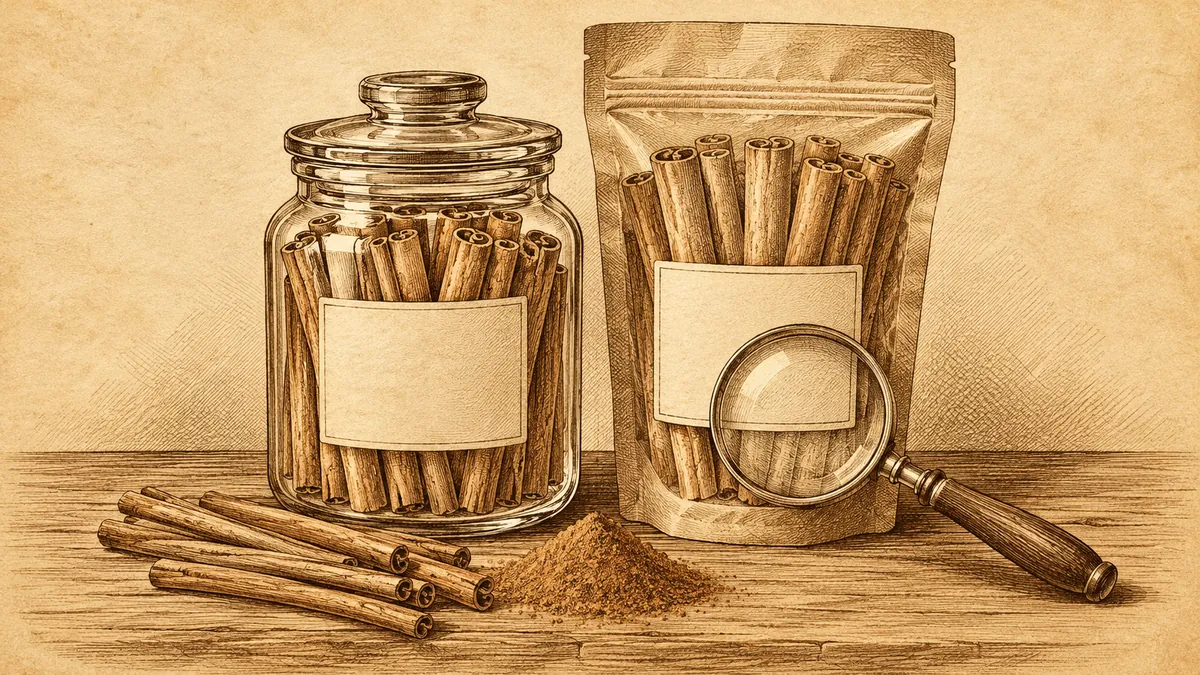
    Ceylon cinnamon and cassia also look similar enough to be mistaken for each other, particularly once ground. As a fine brown powder, the two are hard to tell apart by eye, which is why so much ground cinnamon is cassia without the buyer realising. As sticks there are real differences, since Ceylon quills are thin, soft and made of many fine layers, while cassia is a thick, hard single curl, but a casual glance may miss this. Our guide to how to tell if cinnamon powder is Ceylon explains what to look and ask for when the visual clues are gone.

    Reason for confusionWhat is really going on
    Shared name“Cinnamon” is used for both spices
    Similar lookBoth are rolled brown bark, alike as powder
    Similar smellBoth are warm and sweet-spicy at first
    Price and supplyCassia is cheaper and far more common
    Vague labelsSpecies and origin are often not stated

    Their aromas are similar at first

    Smell adds to the mix-up, because both spices are warm and sweet-spicy when you first open the jar. To a casual nose they seem like the same thing. On closer attention the two differ: true Ceylon cinnamon is delicate, sweet and complex, while cassia is stronger, sharper and more one-note. But most people do not sniff the two side by side, so the first warm impression is enough to treat them as identical. Our guide to coumarin levels in Ceylon cinnamon versus cassia looks at one real difference behind the two barks.

    Cassia is cheaper and more common

    Economics is a large part of the story. Cassia is easier to grow and harvest and costs much less than true Ceylon cinnamon, so it dominates the cinnamon sold around the world. Most supermarket cinnamon, and most cinnamon in processed foods, is cassia. Because true Ceylon cinnamon is the rarer and dearer of the two, many people have simply never knowingly tasted it, and assume the common cassia is what cinnamon is meant to be. This everyday dominance of cassia is why the two are so readily confused, and why the Ceylon name has to be stated clearly to stand apart.

    Labels rarely tell you the species

    Even a careful shopper is often left guessing, because many labels do not state the species or origin. A packet marked only cinnamon, with no mention of Cinnamomum verum or Sri Lanka, gives no way to know which spice is inside. In some markets the word cinnamon on a label is more likely to mean cassia than true cinnamon. Without a clear species name, the buyer cannot resolve the confusion at the point of sale, and the generic label quietly keeps the two spices blurred together. This is why checking for the species name and origin is the surest way to know what you have.

    Where the confusion shows up

    The mix-up appears in everyday places rather than in any single mistake. In supermarkets, a shelf of jars marked only cinnamon usually holds cassia, with true Ceylon cinnamon either absent or tucked away at a higher price. In recipes, a line that calls for a teaspoon of cinnamon does not say which spice, so cooks use whatever their jar contains. In conversation, people describe a warm, sweet flavour as cinnamon without ever distinguishing the two. Even many gift sets, spiced blends and flavoured products lean on cassia while calling it cinnamon. Because the confusion is spread thinly across so many small moments, most people never notice it, which is exactly why it persists.

    How to stop confusing them

    The confusion clears once you know what to look for. Check the label for the species name Cinnamomum verum and a statement of Sri Lankan origin, since this is the clearest sign of true Ceylon cinnamon. With sticks, look at the bark: Ceylon quills are thin and made of many soft layers rolled together, while cassia is a thick, hard single curl. With aroma, compare them and notice that Ceylon cinnamon is sweeter and more delicate. Knowing that two spices hide behind one word is itself most of the answer, because once you expect the difference, you start to see and taste it.

    Why the distinction is worth making

    Telling the two apart matters because they are not interchangeable in every way. Their flavour differs, with Ceylon cinnamon milder and more refined, and they are also different barks with different characteristics. For anyone who wants the genuine article, whether for its taste, its origin or its heritage, the generic word cinnamon is not enough. Learning why the confusion exists is the first step to buying with confidence, so that when you want true Ceylon cinnamon you can recognise it rather than relying on a label that treats every cinnamon as the same.

    Summary

    People confuse Ceylon cinnamon and cassia because both are sold under the single word cinnamon, both are rolled brown bark that looks alike, and both smell warm and sweet at first, especially as powder. Behind the shared name are different spices: Ceylon cinnamon is the bark of Cinnamomum verum from Sri Lanka, while cassia comes from other Cinnamomum species grown mainly in China, Indonesia and Vietnam. Because cassia is cheaper and far more common, it is the cinnamon most people meet, and vague labels that omit the species keep the two blurred. The confusion clears once you check for the species name and Sri Lankan origin, look at the bark structure, and compare the aromas, since true Ceylon cinnamon is thinner, softer, sweeter and more delicate than cassia.

    Frequently asked questions

    Why are Ceylon cinnamon and cassia both called cinnamon?

    Because the word cinnamon is used loosely for several related spices from the Cinnamomum family. Shops, recipes and labels rarely separate them, so both true Ceylon cinnamon and the cheaper cassia are simply sold and spoken of as cinnamon.

    Is most cinnamon actually cassia?

    In many markets, yes. Cassia is cheaper and more widely grown, so much of the cinnamon in supermarkets and processed foods is cassia rather than true Ceylon cinnamon. This is a large reason the two are so often confused.

    How can I tell Ceylon cinnamon from cassia?

    Check the label for Cinnamomum verum and Sri Lankan origin. As sticks, Ceylon cinnamon is thin and made of many soft layers, while cassia is a thick, hard single curl. In aroma, Ceylon cinnamon is sweeter and more delicate than the sharper cassia.

    Do Ceylon cinnamon and cassia taste the same?

    They are similar at first but not the same. True Ceylon cinnamon is milder, sweeter and more complex, while cassia is stronger and sharper. Because many people have only tasted cassia, they often assume that is simply what cinnamon tastes like.

    Why does the difference between them matter?

    Because they are different spices with different flavour and bark, and are not fully interchangeable. If you want genuine Ceylon cinnamon for its taste, origin or heritage, the generic cinnamon label is not enough, so knowing the difference helps you buy what you actually want.

    This website provides educational information about Ceylon Cinnamon as a spice and food ingredient. It is not intended to provide medical advice or make health claims.

  • How to Tell if Cinnamon Powder Is Ceylon

    How to Tell if Cinnamon Powder Is Ceylon

    You can tell if cinnamon powder is Ceylon by checking its colour, aroma, taste and label. True Ceylon cinnamon powder, ground from Cinnamomum verum grown in Sri Lanka, is a pale tan to light brown, smells mild and sweet, and tastes delicate rather than hot. Cassia powder is darker and reddish, smells sharp and strong, and tastes more pungent. The most reliable single check is the label: real Ceylon powder names Cinnamomum verum or Sri Lankan origin.

    Telling true cinnamon from cassia is simple when you hold a whole stick, but powder hides most of the visual clues. This guide explains how to judge ground cinnamon using colour, smell, taste and packaging, so you can work out what is in the jar. It builds on our pillar guide to how to identify authentic Ceylon cinnamon.

    The short answer

    With powder, no single home test is definitive, so you combine clues: colour, aroma, taste, texture, price and above all the label. Ceylon cinnamon powder tends to be lighter in colour, gentler in smell and milder in taste than cassia. Because grinding removes the bark structure that makes whole quills easy to read, the label and the price often tell you more than your senses do. When certainty matters, laboratory testing is the only sure route.

    Why powder is harder to judge than sticks

    A whole Ceylon quill is easy to recognise. It is thin, brittle, and rolls into many fine layers like a cigar, while a cassia stick is thick, hard and curls into a single heavy scroll. That structure is the basis of the roll test for sticks. Grinding destroys all of it. Once bark becomes powder, you lose the layered cross-section, the thickness and the snap, and you are left with colour, smell and taste alone. This is why powder is the form where mislabelling is easiest and why careful buyers lean on packaging and source. For more on the ground form itself, see our guide to ground Ceylon cinnamon.

    Clue 1: Colour

    Colour is the first thing to look at. True Ceylon cinnamon powder is usually a pale tan or light brown, sometimes with a slightly orange warmth. Cassia powder is darker, leaning reddish-brown or deep brown. If you tip a little onto a white plate and it looks rich and dark, that points to cassia. If it looks soft and light, that points to Ceylon. Colour alone is not proof, since roast level, freshness and grind can shift the shade, but a clear difference is a strong hint.

    Clue 2: Aroma

    Smell is one of the better guides. Ceylon cinnamon has a delicate, sweet, almost floral aroma with gentle warmth. Cassia smells stronger, sharper and more pungent, the bold scent most people associate with mass-market cinnamon rolls and sweets. Open the jar, warm a pinch between your fingers and breathe it in. A soft, mellow fragrance suggests Ceylon. A powerful, spicy hit suggests cassia. For the chemistry behind the scent, see our note on what gives Ceylon cinnamon its aroma.

    Clue 3: Taste

    Taste follows aroma. Place a tiny amount on your tongue. Ceylon cinnamon is mild, sweet and smooth, with little bite. Cassia is hotter and more intense, with a pungent edge that can feel almost drying. If a small taste is gentle and pleasant, that favours Ceylon. If it is fiery and lingering, that favours cassia. Use only a pinch, as even mild cinnamon is strong in concentrated form.

    Clue 4: Texture

    Texture is a smaller clue but still useful. Ceylon powder, ground from thin and brittle bark, often feels finer and softer. Cassia, from hard and dense bark, can feel grittier. The difference is subtle and depends on how finely each was milled, so treat texture as a supporting sign rather than a decider.

    Clue 5: The label and packaging

    For powder, the label is the most reliable clue of all. Genuine Ceylon cinnamon will usually say so plainly. Look for the botanical name Cinnamomum verum (sometimes written as its synonym Cinnamomum zeylanicum), or a clear statement of origin such as “product of Sri Lanka” or “Ceylon cinnamon”. A jar labelled only “cinnamon”, with no species and no origin, is very often cassia, because cassia is the cheaper and more common type sold worldwide. Learn to read the small print with our guide to reading cinnamon labels correctly.

    Clue 6: Price

    Price is a practical signal. True Ceylon cinnamon costs more to grow, harvest and prepare than cassia, so it almost always sells at a higher price. A jar of powder that is unusually cheap is unlikely to be Ceylon. This does not mean every expensive jar is genuine, but a very low price is a reliable warning that you are probably looking at cassia.

    The iodine starch test: does it work?

    A popular home test uses iodine. The idea is that cassia contains more starch than Ceylon, so a drop of iodine turns cassia powder a darker blue-black, while Ceylon stays lighter. There is some truth to the starch difference, but the test is not reliable on its own. Starch levels vary, iodine concentration varies, and reading the colour is subjective. Treat it as a rough and interesting check rather than proof. Your senses plus the label give a better everyday answer.

    Ceylon vs cassia powder at a glance

    ClueCeylon cinnamon powderCassia powder
    ColourPale tan to light brownDarker reddish-brown
    AromaDelicate, sweet, mellowStrong, sharp, pungent
    TasteMild and sweetHot and intense
    TextureOften finer and softerCan feel grittier
    LabelCinnamomum verum or Sri Lanka namedOften just “cinnamon”, no species
    PriceHigherLower

    When you need certainty: laboratory testing

    If you truly need to confirm a powder, the only sure method is a laboratory. Specialist labs can identify the species and measure the compounds that differ between Ceylon and cassia, including coumarin, which is far lower in true cinnamon. This is how serious buyers and importers verify a shipment. For everyday kitchen use, the combination of colour, aroma, taste and label is enough, but for professional or high-volume buying, testing removes all doubt. Our guide to coumarin levels in Ceylon cinnamon versus cassia explains the key chemical marker.

    Putting the clues together

    No single clue is proof on its own, so the practical method is to stack them. Tip a little powder onto a white plate and check the colour. Warm a pinch and smell it, then taste a tiny amount. Turn the jar around and read the species name and origin, and note the price. When the signs agree, for example a pale powder with a sweet, mild aroma, a Cinnamomum verum label and a higher price, you can be confident it is Ceylon. When they conflict, such as a light colour but a jar marked only “cinnamon” at a bargain price, trust the label and the price over appearance, and treat the powder as cassia until proven otherwise.

    Summary

    You tell whether cinnamon powder is Ceylon by reading several clues together rather than relying on one. True Ceylon powder, ground from Cinnamomum verum grown in Sri Lanka, is paler, smells sweeter and gentler, and tastes milder than cassia, which is darker, sharper and hotter. Because grinding hides the bark structure that makes whole quills easy to read, the label is the most dependable guide: look for the species name or Sri Lankan origin, and be wary of a jar marked only “cinnamon” at a very low price. Home checks such as the iodine starch test are rough at best, and only laboratory analysis gives full certainty. Put together, these signs let you judge a jar of powder with confidence.

    Frequently asked questions

    Can you tell Ceylon from cassia once it is ground?

    Not with complete certainty by sight alone, but you can get a strong answer by combining colour, aroma and taste with the label. Ceylon powder is lighter, sweeter and milder, while cassia is darker, sharper and hotter. The species name or origin on the packaging is the most reliable everyday clue.

    Is darker cinnamon powder always cassia?

    Darker colour points towards cassia, but it is not absolute. Freshness, grind and how the bark was dried can shift the shade. Use colour as one clue among several rather than the only one.

    Does the iodine test really identify Ceylon cinnamon?

    Only loosely. Cassia tends to contain more starch, so iodine can turn it darker than Ceylon, but the result is hard to read and varies between samples. It is a fun experiment, not a dependable test.

    What should the label say for real Ceylon cinnamon?

    Look for Cinnamomum verum (or the synonym Cinnamomum zeylanicum), or a clear origin such as “Ceylon cinnamon” or “product of Sri Lanka”. A label that only says “cinnamon” with no species or origin is often cassia.

    Is cheaper cinnamon powder a bad sign?

    A very low price is a warning. True Ceylon cinnamon costs more to produce, so bargain powder is usually cassia. Price is not proof on its own, but it is a useful signal alongside the other clues.

    This website provides educational information about Ceylon Cinnamon as a spice and food ingredient. It is not intended to provide medical advice or make health claims.
  • What to Look for on a Ceylon Cinnamon Label

    What to Look for on a Ceylon Cinnamon Label

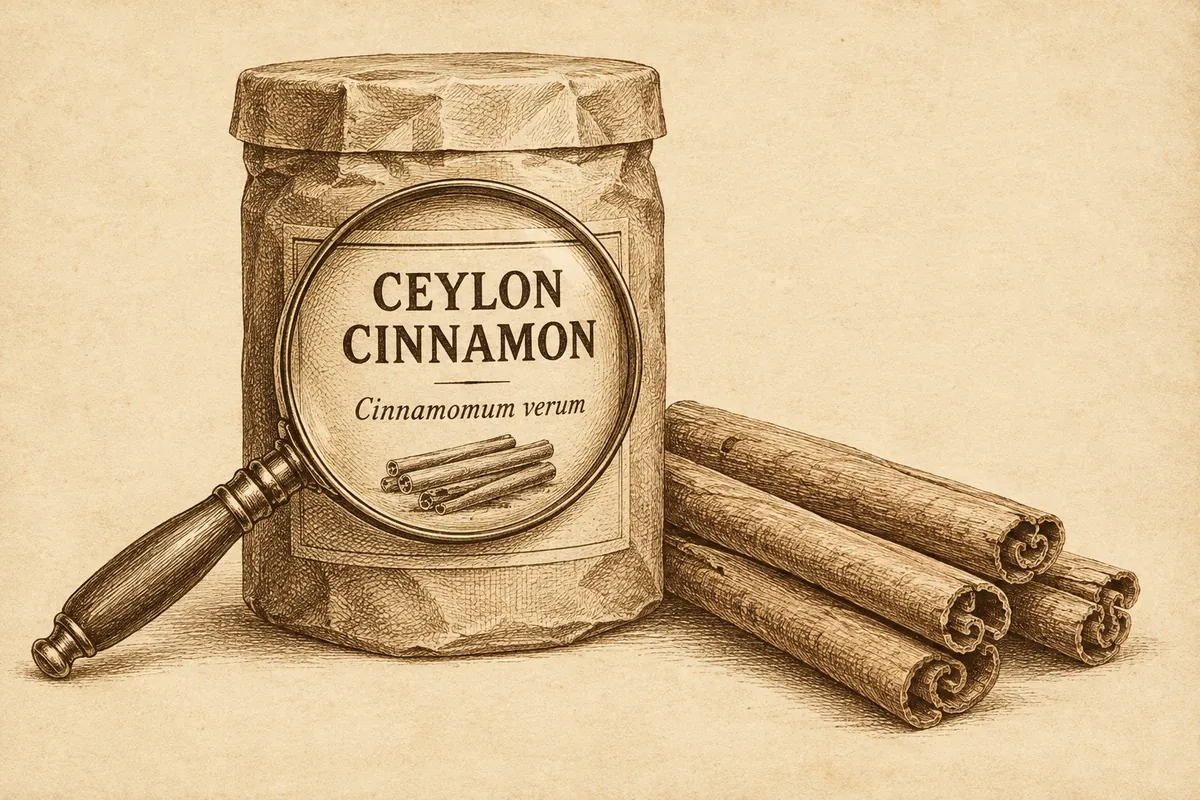
    When you buy Ceylon cinnamon, the label is the first thing you can actually check. True Ceylon cinnamon, Cinnamomum verum, comes from Sri Lanka, and a good label will usually say so in plain words: the species or botanical name, the country of origin, and often a grade such as Alba or C5. A label that only says “cinnamon”, with no species and no origin, gives you very little to go on. This guide walks through the details worth looking for on a Ceylon cinnamon label before you buy.

    Shopping for true cinnamon can be confusing because the word “cinnamon” on its own covers several different barks. This buying guide looks, point by point, at what a Ceylon cinnamon label should tell you and which words are a good sign. It builds on our pillar Ceylon cinnamon buying guide.

    The short answer

    On a Ceylon cinnamon label, look for the species name Cinnamomum verum (or Cinnamomum zeylanicum), the country of origin Sri Lanka, and a grade such as Alba, C5 or C4. Helpful extras include the form (quills, sticks or ground), packaging and harvest or batch details, and any recognised certification. A label that names the species and the origin, rather than just “cinnamon”, is the clearest starting sign that you are buying true Ceylon cinnamon.

    Why the label matters

    In many shops, “cinnamon” with no further detail is cassia, a related but different bark that comes mostly from China, Indonesia and Vietnam. True Ceylon cinnamon is a separate species with a milder, sweeter flavour and a thin, papery bark. Because the two are sold under the same everyday name, the label is often the only way to tell them apart before you open the pack. For the full flavour and bark differences, see our guide to Ceylon cinnamon versus cassia.

    A clear, detailed label is itself a quality signal. Sellers who take care to name the species, the origin and the grade are usually confident about what they are selling. A vague label is not proof of a problem, but it does leave you guessing.

    The species or botanical name

    The single most useful thing on the label is the botanical name. True Ceylon cinnamon is Cinnamomum verum, which was once called Cinnamomum zeylanicum, so either name points to the real thing. Cassia barks carry different species names, such as Cinnamomum cassia, Cinnamomum burmannii or Cinnamomum loureiroi.

    If the label prints Cinnamomum verum or Cinnamomum zeylanicum, that is a strong sign. If it prints one of the cassia species names, you are looking at cassia, whatever the front of the pack says. If there is no species name at all, treat the product as unconfirmed until you can check further.

    The country of origin

    True Ceylon cinnamon is grown in Sri Lanka, and most of the world’s supply still comes from there. A label that reads “Product of Sri Lanka” or “Origin: Sri Lanka” lines up with genuine Ceylon cinnamon. “Ceylon” is the historic name for the island, so “Ceylon cinnamon” and “Sri Lankan cinnamon” mean the same thing.

    Be careful with wording such as “packed in” or “distributed by”, which tells you where the pack was filled or handled, not where the bark was grown. The origin you want is the country where the cinnamon itself was produced. Our guide to reading cinnamon labels correctly goes deeper into this kind of wording.

    The grade

    Ceylon cinnamon is sorted into grades, and many good labels print the grade on the pack. Grades such as Alba, C5 Special, C5, C4 and the Continental and Mexican groups describe the thickness and appearance of the quills, with the thinnest and most delicate quills carrying the highest grades. Alba is the finest and thinnest.

    A grade on the label is a sign that the seller is working within the recognised Ceylon cinnamon system. You do not always need the top grade: for everyday cooking a mid grade is often a sensible choice. The point is that a named grade shows the product has been sorted to a standard rather than simply bagged.

    The form: quills, sticks or ground

    The label should make clear what form you are buying. True Ceylon cinnamon quills are made of many thin layers rolled together, so they look like a tightly packed cigar and snap easily. Cassia sticks are usually a single thick, hard curl. If you are buying sticks, “Ceylon cinnamon quills” is a better sign than an unnamed “cinnamon stick”.

    Ground cinnamon is harder to judge by eye once it is powder, which makes the species name and origin on the label even more important. If you want to tell the two forms apart in your own kitchen, our guide on how to identify authentic Ceylon cinnamon sets out the simple checks.

    Certifications and standards

    Some Ceylon cinnamon packs carry certification marks or references to a standard. The Sri Lanka Standards Institution sets the SLS standard for Ceylon cinnamon, and there are organic, fair trade and geographical indication schemes as well. A certification is not required for the cinnamon to be genuine, but a recognised mark adds confidence, especially when buying online. Our guide to the SLS standard for Ceylon cinnamon explains what that particular standard covers.

    Read certification wording closely. A phrase such as “certified organic” refers to how the cinnamon was grown, not to the species. Organic cassia is still cassia. Origin and species remain the details that tell you whether the bark is true Ceylon cinnamon.

    Harvest, batch and packaging details

    Smaller sellers often print a harvest date, a batch number or a best-before date. These help you judge freshness, since cinnamon slowly loses aroma over time once ground. Whole quills keep their aroma longer than powder, so a packaging date matters more for ground cinnamon. Good packaging is a resealable pouch or a sealed jar that keeps out air and light.

    None of these details confirm the species on their own, but together they show a careful seller. A pack with the species, the origin, a grade and a clear date is giving you a full picture.

    What a Ceylon cinnamon label should tell you

    Label detailGood sign for Ceylon cinnamonReason to check further
    Species nameCinnamomum verum or Cinnamomum zeylanicumA cassia species, or no species at all
    Country of originProduct of Sri LankaOnly “packed in” wording, or no origin
    GradeAlba, C5, C4 or another named gradeNo grade given
    FormCeylon cinnamon quills, sticks or groundUnnamed “cinnamon stick”
    CertificationSLS, organic, fair trade or GI markClaims with no species named
    FreshnessHarvest, batch or best-before dateNo date, loose or open packaging

    Putting it together at the shelf

    A quick way to read a label is to work down from the most telling detail. First look for the species: Cinnamomum verum or Cinnamomum zeylanicum is what you want. Next check the origin for Sri Lanka. Then look for a grade such as Alba or C5, confirm the form, and finally glance at any certification and the packaging date. If the first two details are present and clear, you are almost certainly holding true Ceylon cinnamon. If they are missing, it is worth asking the seller or reading more before you buy.

    Frequently asked questions

    What should a Ceylon cinnamon label say?

    A good Ceylon cinnamon label gives the species name Cinnamomum verum (or the older Cinnamomum zeylanicum), the country of origin Sri Lanka, and usually a grade such as Alba or C5. Helpful extras are the form, any certification and a harvest or best-before date.

    Does “Ceylon cinnamon” on the label guarantee it is real?

    The name alone is a good start but is strongest when backed by the species name and a Sri Lankan origin. A label that says “Ceylon cinnamon”, names Cinnamomum verum and states “Product of Sri Lanka” is giving you the full picture.

    If a label only says “cinnamon”, what does that mean?

    A plain “cinnamon” label with no species and no origin is most often cassia, since cassia is the common cinnamon in many shops. It is not confirmation either way, so look for the species name or ask the seller before assuming it is true Ceylon cinnamon.

    Does organic or fair trade mean it is Ceylon cinnamon?

    No. Organic and fair trade describe how the cinnamon was grown and traded, not which species it is. Cassia can also be organic. Always check the species name and origin alongside any such certification.

    Summary

    The label is your best tool when buying Ceylon cinnamon. The details that matter most are the species name, Cinnamomum verum or Cinnamomum zeylanicum, and the country of origin, Sri Lanka. A named grade such as Alba or C5, a clear form, a recognised certification and a freshness date all add confidence. A label that names the species and the origin is the clearest sign of true Ceylon cinnamon, while a bare “cinnamon” label with neither detail is worth a second look before you buy.

    This website provides educational information about Ceylon Cinnamon as a spice and food ingredient. It is not intended to provide medical advice or make health claims.

  • Reading Cinnamon Labels Correctly

    Reading Cinnamon Labels Correctly

    Reading a cinnamon label correctly means checking three things above all: the species name, the country of origin, and the wording used for the product. True Ceylon cinnamon is the bark of Cinnamomum verum (also written Cinnamomum zeylanicum) from Sri Lanka, so a label that names that species and a Sri Lankan origin, or clearly says “Ceylon cinnamon”, is telling you it is the real thing. A label that only says “cinnamon”, names a different species such as Cinnamomum cassia, or gives an origin like China or Indonesia is usually one of the cheaper cassia types, not true cinnamon.

    Cinnamon labels can be confusing, and the differences that matter are often in the small print. This guide shows you exactly what to look for. It builds on our pillar guide to how to identify authentic Ceylon cinnamon.

    The short answer

    To read a cinnamon label correctly, look for the species name Cinnamomum verum, a Sri Lankan or Ceylon origin, and the words “Ceylon cinnamon” or “true cinnamon”. Those three signs together tell you the product is genuine Ceylon cinnamon. If a label just says “cinnamon” with no species or origin, or names a cassia species such as Cinnamomum cassia, it is most likely a cassia type rather than true cinnamon.

    1. The species name

    The single most reliable thing on any cinnamon label is the botanical, or species, name. True Ceylon cinnamon is Cinnamomum verum, which is the same plant as the older name Cinnamomum zeylanicum. If you see either of those on the label, you are looking at true cinnamon. To understand the name itself, see our guide to what “Cinnamomum verum” actually means.

    The other cinnamon species you may see named are the cassia types. These include Cinnamomum cassia (also called Cinnamomum aromaticum), Cinnamomum burmannii and Cinnamomum loureiroi. All of these are cassia, not true cinnamon. So the species name alone can tell you which kind of cinnamon is in the packet, if the seller has printed it.

    2. The country of origin

    Origin is the second big clue. True Ceylon cinnamon comes from Sri Lanka, the island once called Ceylon, so a label that says “Product of Sri Lanka” or “Ceylon” points to the genuine spice. The cassia types, by contrast, are grown mainly in China, Indonesia and Vietnam, so an origin from those countries usually signals a cassia rather than true cinnamon. Origin and species work best together: a label that names both Cinnamomum verum and Sri Lanka gives you the clearest possible confirmation.

    3. The product wording

    The words a seller chooses also carry meaning. Phrases such as “Ceylon cinnamon”, “true cinnamon” or “pure Ceylon cinnamon” indicate the genuine article, and reputable sellers of true cinnamon tend to say so clearly because it is a selling point. A plain label that only says “cinnamon”, with no species and no origin, is a warning sign: most of the cinnamon sold this way around the world is actually cassia. This is not always deliberate, since in many countries the word cinnamon is legally allowed for cassia too, but it does mean a bare “cinnamon” label tells you very little.

    Label clues at a glance

    How to read common cinnamon label clues.
    On the labelLikely means
    Cinnamomum verum or zeylanicumTrue Ceylon cinnamon
    “Ceylon cinnamon” / “true cinnamon”True Ceylon cinnamon
    Product of Sri LankaTrue Ceylon cinnamon
    Cinnamomum cassia, burmannii or loureiroiCassia, not true cinnamon
    Origin China, Indonesia or VietnamUsually cassia
    Just “cinnamon”, no species or originUnknown, often cassia

    Grade codes on the label

    Some Ceylon cinnamon labels also carry grade codes such as Alba, C5 Special or C5. These describe the thickness and quality of the quills and are a good sign, because they show a seller who knows and is open about their product. A grade code does not by itself prove the species, but sellers who use the proper Ceylon grading are usually selling genuine true cinnamon. To understand these codes, see our guide to Continental grade Ceylon cinnamon, which explains the common C grades.

    Ceylon or Sri Lankan on the label

    You may notice that some labels say “Ceylon cinnamon” while others say “Sri Lankan cinnamon”. These mean the same thing, because Ceylon was the former name of Sri Lanka. Both point to true cinnamon from the same island. The older name Ceylon is more common on labels because it became the established name for the spice, as explained in our guide to why it is called Ceylon cinnamon. So do not be thrown by seeing either term; they are two names for the same genuine spice.

    What labels do not tell you

    It is worth knowing what a label cannot confirm on its own. Words like “natural”, “premium” or “finest” are marketing terms and do not tell you the species. Certifications such as organic show how the spice was grown, not whether it is true cinnamon or cassia. Even a picture of rolled quills on the front is not proof, since cassia is also sold in stick form. This is why the species name and origin matter so much: they are the facts, while the rest is presentation. When those key facts are missing, it is reasonable to treat the product as uncertain.

    A quick label checklist

    When you pick up a packet of cinnamon, a simple routine helps. First, look for the species name and check whether it is Cinnamomum verum or zeylanicum. Second, look for the origin and see whether it says Sri Lanka or Ceylon. Third, read the product name for the words Ceylon or true cinnamon. If all three point the same way, you can be confident it is genuine Ceylon cinnamon. If the label is vague on all three, it is safer to assume it may be cassia and to look for a clearer product instead.

    Where to look on the packet

    The most useful information is often not on the front of the packet. The front usually carries the brand name and a large word like “Cinnamon”, chosen to catch the eye rather than to inform. The species name and country of origin are more often found in the small print on the back or side, near the ingredients or the packer’s details. So it pays to turn the packet over and read the fine print rather than judging by the front alone. If you are buying online, the same applies to the product description: look past the headline for a species name and an origin, and treat their absence as a reason to ask the seller before buying.

    Reading loose and market labels

    Not all cinnamon comes in printed packets. At markets, spice shops and bulk bins, the label may be a simple sign or a handwritten card. Here the same rules apply, but you may need to ask. A knowledgeable seller of true cinnamon will happily tell you the species and that it is Ceylon or Sri Lankan, and will often point to the soft, thin, layered quills as proof. If a seller cannot say what species it is or where it is from, that uncertainty is itself useful information. Asking two simple questions, what species is it and where is it from, quickly separates sellers who know their cinnamon from those who do not.

    Frequently asked questions

    How do I know if a cinnamon label is true Ceylon cinnamon?

    Look for the species name Cinnamomum verum (or Cinnamomum zeylanicum), an origin of Sri Lanka or Ceylon, and the words “Ceylon cinnamon” or “true cinnamon”. When a label shows these, it is genuine Ceylon cinnamon. A label that only says “cinnamon” with no species or origin is often cassia.

    What species names mean it is not Ceylon cinnamon?

    The cassia types are named Cinnamomum cassia (or Cinnamomum aromaticum), Cinnamomum burmannii and Cinnamomum loureiroi. If a label names any of these, it is cassia rather than true Ceylon cinnamon.

    Does “Ceylon” or “Sri Lankan” on a label matter?

    Both mean the same thing. Ceylon was the former name of Sri Lanka, so “Ceylon cinnamon” and “Sri Lankan cinnamon” both refer to true cinnamon from that island. The name Ceylon is simply more common on labels.

    Why do some labels just say “cinnamon”?

    In many countries the word cinnamon is legally allowed for cassia as well as true cinnamon, so a bare “cinnamon” label does not tell you which one it is. Because most cinnamon sold this way is cassia, a label with no species or origin is best treated as uncertain.

    Summary

    Reading a cinnamon label correctly comes down to three checks: the species name, the origin, and the product wording. True Ceylon cinnamon is Cinnamomum verum (or Cinnamomum zeylanicum) from Sri Lanka, so a label naming that species, a Sri Lankan or Ceylon origin, and the words Ceylon or true cinnamon is showing you the genuine spice. Cassia types are named Cinnamomum cassia, burmannii or loureiroi and usually come from China, Indonesia or Vietnam, while a bare “cinnamon” label with no species or origin is often cassia by default. Grade codes and the Ceylon or Sri Lankan wording add further confidence, but marketing words and certifications do not confirm the species. Check the facts on the label, and the true cinnamon reveals itself.

    This website provides educational information about Ceylon Cinnamon as a spice and food ingredient. It is not intended to provide medical advice or make health claims.