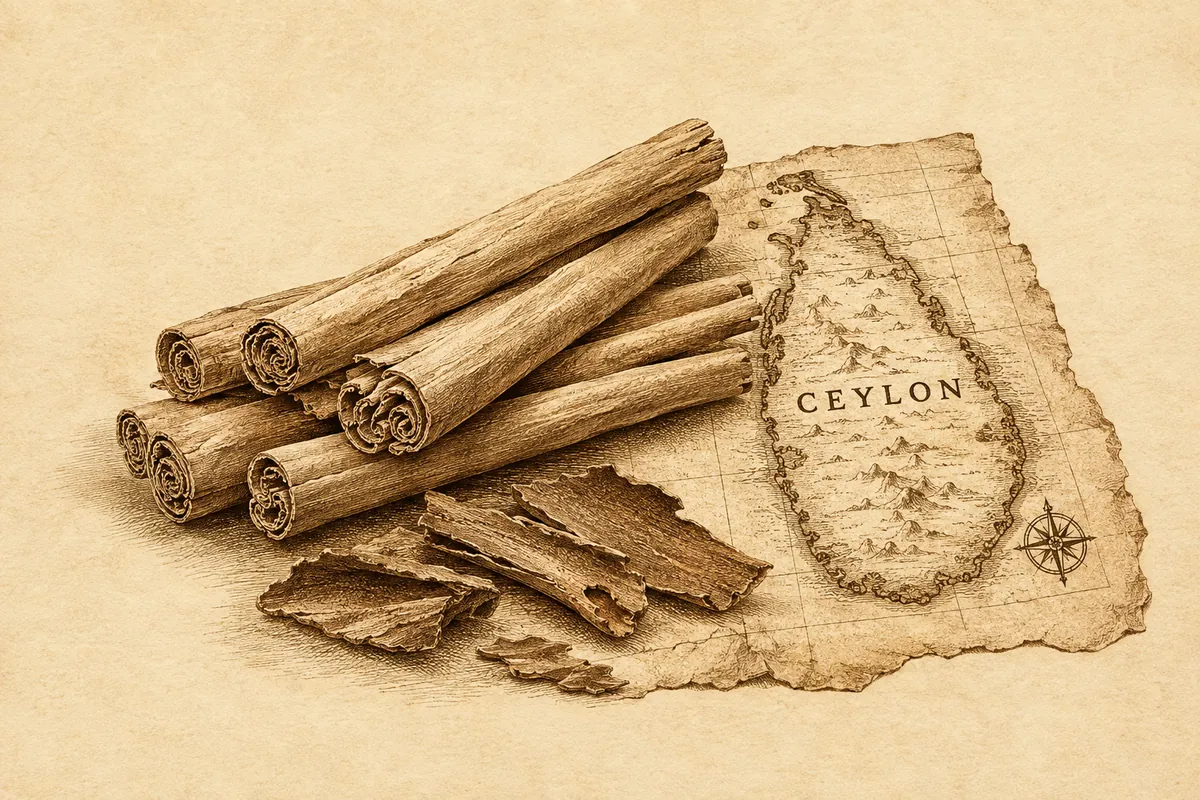
Ceylon cinnamon is called “Ceylon” cinnamon because it comes from the island of Sri Lanka, which was known as Ceylon for much of its history. This island is the native home of the true cinnamon tree, Cinnamomum verum, and for centuries it was the world’s source of the finest cinnamon. The name stuck to the spice as a mark of origin and quality, and it remains in use today even though the country itself is now called Sri Lanka.
The name “Ceylon cinnamon” carries a lot of history in two words. This guide explains where the name comes from, why it is still used, and what it tells you about the spice. It builds on our pillar guide to what true Ceylon cinnamon is.
The short answer
It is called Ceylon cinnamon because it originates in Sri Lanka, the island formerly named Ceylon, which is the native home of the true cinnamon tree Cinnamomum verum. “Ceylon” was the English name for the country until 1972, and by then the island’s cinnamon was already famous worldwide under that name. The spice kept the name as a recognised sign of its origin and its fine quality, so “Ceylon cinnamon” still means cinnamon from Sri Lanka today.
Ceylon was the old name for Sri Lanka
The key to the name is simple: Ceylon and Sri Lanka are the same place. Ceylon was the name used for the island for a long period, especially during British rule, and it remained the country’s official name until 1972, when it was changed to Sri Lanka. During the centuries when the island was called Ceylon, its cinnamon became known around the world, and the spice was named after the place it came from. So Ceylon cinnamon simply means cinnamon from the island once called Ceylon, which is modern Sri Lanka.
Where the word “Ceylon” itself came from
The word Ceylon has a long journey behind it. It grew out of older names for the island that passed through several languages. Traders and travellers from different parts of the world each had their own version of the island’s name, and over time the European form settled into “Ceylon” in English, “Ceilão” in Portuguese and “Zeylan” in Dutch. Each of these came from earlier names rooted in the island’s own history. By the time English speakers were using “Ceylon”, it was the everyday name for both the island and, before long, for its most famous spice.
What matters for the spice is not the exact path of the word, but the fact that “Ceylon” was the name the wider world knew the island by during the very period when its cinnamon trade was at its height. Ships carried the bark to distant ports labelled as coming from Ceylon, merchants bought and sold it under that name, and cooks came to ask for it by name. In this way the word became attached to the spice as firmly as it was to the island, so that centuries later people still reach for “Ceylon cinnamon” without always knowing that Ceylon was ever a country at all.
The island is the home of true cinnamon
The name is not only about geography. It also points to the plant. The true cinnamon tree, Cinnamomum verum, is native to Sri Lanka, and the spice made from its bark has been valued for its fine, sweet, delicate character since ancient times. Because the island was the original and finest source of this spice, the world came to associate the very best cinnamon with the island’s name. For more on the botanical name behind the tree, see our guide to what “Cinnamomum verum” actually means. The connection between the spice and its homeland is also why the island’s long trading history is so bound up with cinnamon, as told in our history of Ceylon cinnamon.
The name marks quality, not just origin
Over time, “Ceylon cinnamon” came to mean more than just “cinnamon from a certain island”. It became a mark of quality. Because the island produced cinnamon of a fine, mild, sweet kind, buyers and cooks learned that the Ceylon name signalled the real, true spice rather than a rougher substitute. This reputation is one reason the name has lasted. When people say Ceylon cinnamon, they usually mean the premium, authentic spice, and part of the reason it commands attention is bound up with why it is prized, a theme covered in our guide to why Ceylon cinnamon is so expensive.
Ceylon cinnamon versus cassia
The name also does an important job of telling true cinnamon apart from cassia. Most of the cinnamon sold cheaply around the world is not Ceylon cinnamon at all but cassia, which comes from different trees grown in other countries. Calling the true spice “Ceylon cinnamon” makes the distinction clear: it is the genuine Cinnamomum verum from Sri Lanka, not one of the cassia types. This is why the name matters so much to people who want the real thing, and it is explained fully in our pillar comparison of Ceylon cinnamon versus cassia.
The many names for the same spice
Because of this history, the same spice goes by several names, which can be confusing at first.
| Name | What it refers to | Why it is used |
|---|---|---|
| Ceylon cinnamon | True cinnamon from Sri Lanka | Named after the island’s historic name, Ceylon |
| True cinnamon | The same spice, Cinnamomum verum | To distinguish it from cassia |
| Sri Lankan cinnamon | The same spice, by the modern country name | Reflects the country’s current name |
| Cinnamomum verum | The botanical species itself | The scientific name of the tree |
All four names point to the same thing: the dried inner bark of the true cinnamon tree from Sri Lanka. Ceylon cinnamon is simply the most familiar and widely used of them.
Why the name did not change to “Sri Lanka cinnamon”
When the country changed its name from Ceylon to Sri Lanka in 1972, the spice did not follow suit for most buyers. By then, “Ceylon cinnamon” was a well established name in kitchens, markets and trade all over the world. Changing a famous product name is difficult once it is widely known, and the Ceylon name already carried a strong reputation for quality. You will sometimes see the spice described as Sri Lankan cinnamon, which is perfectly accurate, but the older name remains the common one. In this way, “Ceylon” lives on as the name of a spice long after it stopped being the name of a country.
What the name tells a buyer
For anyone shopping for cinnamon, the name is a useful signal. When a product is clearly labelled as Ceylon cinnamon, and better still names the species Cinnamomum verum, it is telling you that this is the true cinnamon from Sri Lanka rather than a cassia type. That said, names on labels are only as trustworthy as the seller, so it still pays to look for a clear origin and botanical name together. Understanding what the Ceylon name means is the first step to choosing the genuine spice with confidence.
Frequently asked questions
Why is it called Ceylon cinnamon?
Because it comes from Sri Lanka, the island that was called Ceylon for much of its history. The island is the native home of the true cinnamon tree, Cinnamomum verum, and its cinnamon became famous worldwide under the Ceylon name, which the spice still carries today.
Is Ceylon the same as Sri Lanka?
Yes. Ceylon was the name of the country until 1972, when it was changed to Sri Lanka. They are the same island. Ceylon cinnamon therefore means the same thing as Sri Lankan cinnamon: true cinnamon grown in Sri Lanka.
Is Ceylon cinnamon the same as true cinnamon?
Yes. Ceylon cinnamon, true cinnamon and Cinnamomum verum all refer to the same spice, made from the inner bark of the true cinnamon tree native to Sri Lanka. The different names are used to tell it apart from cassia.
Why is the name still used if the country is now Sri Lanka?
Because “Ceylon cinnamon” was already an established, well known name for the spice long before the country was renamed in 1972. The name carries a strong reputation for quality, so it stayed in use even though the country’s own name changed.
Summary
Ceylon cinnamon is called Ceylon cinnamon because it comes from Sri Lanka, the island known as Ceylon for much of its history and until 1972. This island is the native home of the true cinnamon tree, Cinnamomum verum, and was long the world’s source of the finest cinnamon, so the spice took the island’s name as a sign of both origin and quality. The name also helps tell true cinnamon apart from cassia. Even though the country is now Sri Lanka, the older name remains the common one, which is why the same spice is known as Ceylon cinnamon, true cinnamon, Sri Lankan cinnamon and Cinnamomum verum, all pointing to one thing: the real cinnamon of Sri Lanka.
This website provides educational information about Ceylon Cinnamon as a spice and food ingredient. It is not intended to provide medical advice or make health claims.
Leave a Reply