Tag: Ceylon history

  • The Portuguese and Ceylon Cinnamon

    The Portuguese and Ceylon Cinnamon

    The Portuguese were the first European power to control the Ceylon cinnamon trade. Arriving on the island of Ceylon, now Sri Lanka, in 1505, they recognised the value of its wild true cinnamon, Cinnamomum verum, and over the following decades took control of the coastal areas where it grew. Through treaties and force they secured the cinnamon supply, taxing and collecting the bark through the local peeler community, until they were displaced by the Dutch in the mid-seventeenth century. Their era marks the start of European competition over Ceylon cinnamon.

    Ceylon cinnamon has a long trade history, and the Portuguese period is a key chapter in it. This guide sets out, in plain terms, how the Portuguese came to Ceylon, how they controlled the cinnamon trade and what their rule meant for the spice. It builds on our pillar guide, the history of Ceylon cinnamon.

    The short answer

    The Portuguese controlled the Ceylon cinnamon trade from the early sixteenth century until the mid-seventeenth century, after arriving on the island in 1505. They were drawn by the island’s wild true cinnamon, took control of the cinnamon-growing coasts, and organised the collection of bark through the traditional peeler community, before the Dutch took over the trade in 1658.

    Why the Portuguese came to Ceylon

    In the early sixteenth century, European powers were seeking direct sea routes to the sources of prized spices, bypassing the overland trade. Cinnamon was one of the most prized of these spices, and the finest came from Ceylon. When Portuguese ships reached the island in 1505, they found true cinnamon, Cinnamomum verum, growing wild in the coastal forests, especially in the southwest. For a trading power built on spices, control of this supply was a major prize, and securing Ceylon cinnamon became a central aim of Portuguese activity in the region. For how the spice was valued in earlier eras, see our guide to cinnamon in the Bible and antiquity.

    How the Portuguese took control

    The Portuguese did not conquer the whole island at once. They first established a presence on the coast, built forts, and formed agreements with local rulers, in particular the kingdom of Kotte in the southwest, where much of the cinnamon grew. Over time these agreements, backed by military force, gave the Portuguese control of the coastal cinnamon lands and the right to collect the spice. The island’s interior kingdoms, especially Kandy, remained beyond their full control, so Portuguese power centred on the cinnamon-rich coasts rather than the whole of Ceylon.

    Cinnamon as tribute and trade

    Under the Portuguese, cinnamon became both a tribute and a traded commodity. Local rulers and communities were required to supply fixed quantities of cinnamon bark, and the Portuguese shipped it to Europe, where it sold at a high price. Because the cinnamon still grew mostly wild at this time rather than on plantations, the supply depended on gathering and peeling bark from trees across the coastal forests. This made the people who did that skilled work central to the whole trade.

    The peelers and the cinnamon supply

    The gathering and peeling of cinnamon was carried out by a traditional community of peelers, who held the specialised knowledge of how to find the right bark and strip it cleanly into quills. Under the Portuguese, this community was bound to deliver set amounts of cinnamon as a duty. The skill of peeling, passed down within these families, was essential, since poorly peeled bark made poor cinnamon. The Portuguese relied heavily on this established system rather than creating a new one, controlling the trade while the actual craft remained in local hands. The hand methods used then are still recognisable today, as our guide to why it is called Ceylon cinnamon touches on.

    Forts, ports and the coastal trade

    Portuguese power in Ceylon was built around the coast, where the cinnamon grew and where ships could load it for the voyage to Europe. They fortified key ports, most importantly Colombo, which became the centre of their activity on the island, and built or held other coastal strongholds to guard the trade. From these bases they controlled the gathering of cinnamon in the surrounding lands and its shipment overseas. Because their strength lay on the coast, the inland kingdom of Kandy stayed independent, and the long contest between the coastal Europeans and the highland kingdom runs through the whole of Ceylon’s colonial cinnamon history. For the Portuguese, holding the ports meant holding the cinnamon.

    The cinnamon that drew Europe

    It is worth remembering what made Ceylon cinnamon such a prize. The island’s wild Cinnamomum verum gave a thin, fragrant bark with a mild, sweet flavour, finer than the coarser cassia barks traded from elsewhere in Asia. In Europe, where cinnamon was a luxury, this quality commanded a high price, and Ceylon was its chief source. That combination of fine quality and limited supply is what turned a single island’s bark into something European empires were willing to fight over. The Portuguese were simply the first of those powers to seize it, and the character of the spice that drew them is the same mild, sweet true cinnamon prized today.

    The Portuguese era in the cinnamon story

    AspectUnder the Portuguese
    ArrivalReached Ceylon in 1505
    InterestWild true cinnamon, Cinnamomum verum
    Area controlledCinnamon-growing coasts, especially the southwest
    Trade methodCinnamon as tribute, shipped to Europe
    LabourTraditional peeler community, bound to supply bark
    End of eraDisplaced by the Dutch by 1658

    The end of Portuguese control

    Portuguese control of Ceylon cinnamon did not last. In the seventeenth century, the Dutch East India Company, a rival European spice power, moved against them, often in alliance with the inland kingdom of Kandy, which resented Portuguese power on the coast. Through a series of campaigns, the Dutch captured the Portuguese coastal forts, and by 1658 they had displaced the Portuguese from the island. Control of the lucrative Ceylon cinnamon trade passed to the Dutch, who would later take cinnamon cultivation further by planting it rather than relying only on wild bark. The Portuguese period thus forms the first chapter of European rivalry over the spice.

    What the Portuguese period changed

    The Portuguese era did not change how cinnamon itself was grown very much, since the spice was still gathered largely from wild trees. What it changed was who controlled the trade and how the bark was collected. By turning cinnamon into a tribute owed to a European power and tying the peeler community to fixed deliveries, the Portuguese set a pattern of outside control over Ceylon cinnamon that later powers would continue and tighten. In the longer history of the spice, their arrival marks the moment Ceylon cinnamon became a prize fought over by European empires rather than an Asian trade good alone.

    Frequently asked questions

    When did the Portuguese arrive in Ceylon?

    The Portuguese first reached the island of Ceylon, now Sri Lanka, in 1505. They were drawn by its wild true cinnamon and, over the following decades, took control of the coastal areas where the spice grew, holding the cinnamon trade until the Dutch displaced them by 1658.

    Why was cinnamon important to the Portuguese?

    Cinnamon was one of the most prized spices in Europe, and the finest, true cinnamon, grew in Ceylon. Controlling this supply gave the Portuguese a highly profitable trade, which is why securing Ceylon cinnamon was a central aim of their presence on the island.

    Did the Portuguese grow cinnamon on plantations?

    No. During the Portuguese period, cinnamon was still gathered mostly from wild trees in the coastal forests rather than grown on plantations. The bark was collected and peeled by a traditional community of peelers. Planned cultivation came later, chiefly under the Dutch.

    Who took over the cinnamon trade after the Portuguese?

    The Dutch East India Company took over the Ceylon cinnamon trade, displacing the Portuguese from the island by 1658. The Dutch later developed cinnamon cultivation by planting it, moving beyond the Portuguese reliance on wild bark.

    Summary

    The Portuguese were the first European power to control Ceylon cinnamon, arriving on the island in 1505 and taking hold of the cinnamon-growing coasts over the following decades. Drawn by the wild true cinnamon, Cinnamomum verum, they turned the spice into a tribute, shipped it to Europe at a high price, and relied on the island’s traditional peeler community to supply the bark. Their control lasted until the Dutch displaced them by 1658. The Portuguese period marks the start of European rivalry over Ceylon cinnamon and set a pattern of outside control that later powers continued. It is remembered today as the first time a single island’s fragrant bark drew a European empire across the sea to claim it.

    This website provides educational information about Ceylon Cinnamon as a spice and food ingredient. It is not intended to provide medical advice or make health claims.

  • Cinnamon in the Bible and Antiquity

    Cinnamon in the Bible and Antiquity

    Cinnamon appears in the Bible and across the ancient world as one of the most prized spices of antiquity. In the Hebrew Bible it is named among the ingredients of a sacred anointing oil in the Book of Exodus, and it appears again in Proverbs, the Song of Songs and, in the New Testament, the Book of Revelation. Beyond scripture, cinnamon was valued by the ancient Egyptians, Greeks and Romans as a costly luxury for perfume, incense and ritual, carried west along secret trade routes whose true source lay in and around Sri Lanka, the home of true cinnamon, Cinnamomum verum.

    Few spices carry as much history as cinnamon. This guide looks at where it appears in the Bible and how it was treasured in antiquity. It builds on our pillar guide to the history of Ceylon cinnamon.

    The short answer

    Cinnamon is mentioned several times in the Bible and was one of the most valued luxury spices of the ancient world. In scripture it appears as an ingredient of a holy anointing oil in Exodus, as a perfume in Proverbs and the Song of Songs, and among the goods of a great trading city in Revelation. In wider antiquity, Egyptians, Greeks and Romans prized cinnamon for perfume, incense and ceremony, and its high price and mysterious origin made it a symbol of wealth and the distant East.

    Cinnamon in the Bible

    Cinnamon is named directly in several books of the Bible, always as a fragrant, precious substance rather than an everyday food. The references show how highly it was regarded in the ancient Near East.

    The anointing oil in Exodus

    The best known biblical mention comes in the Book of Exodus, where cinnamon is listed among the ingredients of a sacred anointing oil, alongside other costly aromatics such as myrrh and cassia. This oil was set apart for holy use, which tells us that cinnamon was considered fine and precious enough to belong in a sacred preparation. Being placed beside myrrh, one of the most treasured perfumes of the ancient world, shows the high standing cinnamon held.

    Proverbs and the Song of Songs

    Cinnamon also appears as a perfume. In the Book of Proverbs it is named among the scents used to perfume a bed, and in the Song of Songs it is listed among the choice spices of a fragrant garden, together with other aromatics. In both cases cinnamon stands for luxury, sweetness and desirability. These poetic uses confirm that, in the biblical world, cinnamon was a byword for something rare and delightful to the senses. The same spice appears in these very different settings, sacred ritual and love poetry alike, which shows how widely admired its fragrance was.

    Revelation and the spice trade

    In the New Testament, cinnamon appears in the Book of Revelation among a long list of precious goods traded by a great commercial city. Its place on that list, beside gold, fine cloth and other luxuries, reflects the reality of the ancient spice trade, in which cinnamon was a high-value commodity carried over great distances. The mention is a reminder that, by the time of the early Roman Empire, cinnamon was a well established article of international trade.

    Cinnamon in ancient Egypt

    Outside the Bible, cinnamon was treasured across the ancient world, and Egypt is one of the earliest places associated with it. The ancient Egyptians valued fragrant spices and resins for perfume, incense and their embalming practices, and cinnamon was among the aromatics linked to these uses. Because it had to be brought from far away, it was a mark of wealth and status, reserved for temples, the wealthy and the rites of the dead rather than everyday cooking. The care the Egyptians took over fragrant spices, and the long distances these goods travelled to reach the Nile, help explain why cinnamon carried such prestige throughout the ancient Mediterranean. Our guide to cinnamon in ancient Egypt looks at this early chapter in more detail.

    Cinnamon in ancient Greece and Rome

    The Greeks and Romans wrote about cinnamon with a mixture of admiration and mystery. The Greek historian Herodotus recorded a famous tale that cinnamon was gathered from the nests of great birds, a story that shows how little the Mediterranean world knew about where the spice truly came from. Traders, most likely Arab middlemen, deliberately kept the real source secret to protect their business and justify the high prices.

    In Rome, cinnamon was a costly import. The Roman writer Pliny the Elder complained about its high price and noted how far it travelled to reach Roman markets. Cinnamon was burned as fragrant incense and used in perfumes, and Roman sources describe it being used lavishly at grand occasions as a display of wealth. One much repeated anecdote, recorded by Pliny, tells that the Emperor Nero burned a huge quantity of cinnamon at the funeral of his wife, a gesture meant to show extraordinary wealth and grief. Whether or not every detail is exact, the story captures how cinnamon was seen: something so costly that using it freely was itself a statement. Throughout the classical world, then, cinnamon was firmly a luxury, associated with the exotic East and with those who could afford the finest things.

    Where did biblical cinnamon come from?

    Scholars have long discussed exactly which plant the cinnamon of the Bible and antiquity refers to. The Hebrew word usually translated as cinnamon is qinnamon, and ancient writers were often vague about the botanical details, partly because traders hid the true source. What is clear is that the finest true cinnamon, Cinnamomum verum, is native to Sri Lanka, and that the ancient spice routes ultimately connected the Mediterranean world with South Asia. So while the precise identity of every ancient reference is debated, the story of cinnamon in antiquity is bound up with the same true cinnamon and the same distant island that give us Ceylon cinnamon today, which is part of why the spice took on the island’s name, as explained in our guide to why it is called Ceylon cinnamon.

    Why cinnamon was so valued in antiquity

    Several things combined to make cinnamon precious in the ancient world. It had a warm, sweet, lasting fragrance that suited perfume, incense and ceremony. It came from far away, along difficult routes, so supply was limited and prices were high. And its true origin was hidden, which added an air of mystery and wonder. Together these gave cinnamon a reputation as a spice fit for temples, kings and the wealthy. That reputation for rarity and value has echoes today, and it is part of the reason true Ceylon cinnamon is still regarded as a fine spice, as our guide to why Ceylon cinnamon is so expensive explains.

    Frequently asked questions

    Is cinnamon mentioned in the Bible?

    Yes. Cinnamon is named several times in the Bible. It appears as an ingredient of a sacred anointing oil in the Book of Exodus, as a perfume in Proverbs and the Song of Songs, and among the luxury goods of a great trading city in the Book of Revelation.

    What was cinnamon used for in ancient times?

    In antiquity cinnamon was used mainly as a fragrant luxury rather than an everyday food. It featured in perfumes, incense, anointing oils and religious ceremony, and it was a high-value item in the ancient spice trade, treasured by the Egyptians, Greeks and Romans.

    Where did cinnamon come from in antiquity?

    The finest true cinnamon, Cinnamomum verum, is native to Sri Lanka, and the ancient spice routes linked South Asia with the Mediterranean world. Traders kept the true source secret, so ancient Greek and Roman writers were often unsure exactly where it grew.

    Why was cinnamon so expensive in the ancient world?

    Cinnamon was costly because it came from far away over difficult trade routes, its supply was limited, and its true origin was hidden by the merchants who traded it. Its fine fragrance and rarity made it a symbol of wealth and status.

    Summary

    Cinnamon has a long and storied place in the Bible and in antiquity. In scripture it is named as an ingredient of a sacred anointing oil in Exodus, as a perfume in Proverbs and the Song of Songs, and among the precious goods of a great city in Revelation, always standing for something fragrant and precious. In the wider ancient world, the Egyptians, Greeks and Romans prized cinnamon for perfume, incense and ceremony, and writers such as Herodotus and Pliny recorded both its high price and the mystery around its origin. That origin lay in the distant East, and the finest true cinnamon, Cinnamomum verum, comes from Sri Lanka, tying these ancient stories to the same Ceylon cinnamon valued as a fine spice today.

    This website provides educational information about Ceylon Cinnamon as a spice and food ingredient. It is not intended to provide medical advice or make health claims.

  • Why Is It Called Ceylon Cinnamon?

    Why Is It Called Ceylon Cinnamon?

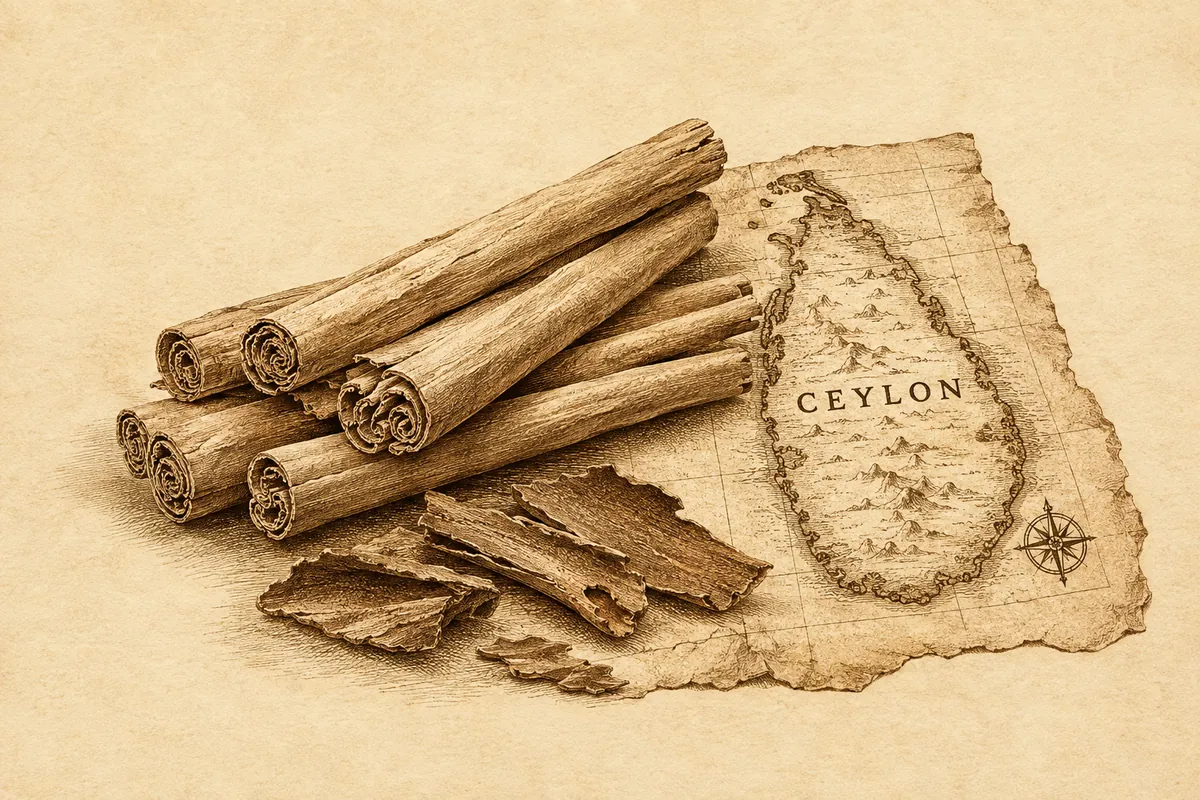
    Ceylon cinnamon is called “Ceylon” cinnamon because it comes from the island of Sri Lanka, which was known as Ceylon for much of its history. This island is the native home of the true cinnamon tree, Cinnamomum verum, and for centuries it was the world’s source of the finest cinnamon. The name stuck to the spice as a mark of origin and quality, and it remains in use today even though the country itself is now called Sri Lanka.

    The name “Ceylon cinnamon” carries a lot of history in two words. This guide explains where the name comes from, why it is still used, and what it tells you about the spice. It builds on our pillar guide to what true Ceylon cinnamon is.

    The short answer

    It is called Ceylon cinnamon because it originates in Sri Lanka, the island formerly named Ceylon, which is the native home of the true cinnamon tree Cinnamomum verum. “Ceylon” was the English name for the country until 1972, and by then the island’s cinnamon was already famous worldwide under that name. The spice kept the name as a recognised sign of its origin and its fine quality, so “Ceylon cinnamon” still means cinnamon from Sri Lanka today.

    Ceylon was the old name for Sri Lanka

    The key to the name is simple: Ceylon and Sri Lanka are the same place. Ceylon was the name used for the island for a long period, especially during British rule, and it remained the country’s official name until 1972, when it was changed to Sri Lanka. During the centuries when the island was called Ceylon, its cinnamon became known around the world, and the spice was named after the place it came from. So Ceylon cinnamon simply means cinnamon from the island once called Ceylon, which is modern Sri Lanka.

    Where the word “Ceylon” itself came from

    The word Ceylon has a long journey behind it. It grew out of older names for the island that passed through several languages. Traders and travellers from different parts of the world each had their own version of the island’s name, and over time the European form settled into “Ceylon” in English, “Ceilão” in Portuguese and “Zeylan” in Dutch. Each of these came from earlier names rooted in the island’s own history. By the time English speakers were using “Ceylon”, it was the everyday name for both the island and, before long, for its most famous spice.

    What matters for the spice is not the exact path of the word, but the fact that “Ceylon” was the name the wider world knew the island by during the very period when its cinnamon trade was at its height. Ships carried the bark to distant ports labelled as coming from Ceylon, merchants bought and sold it under that name, and cooks came to ask for it by name. In this way the word became attached to the spice as firmly as it was to the island, so that centuries later people still reach for “Ceylon cinnamon” without always knowing that Ceylon was ever a country at all.

    The island is the home of true cinnamon

    The name is not only about geography. It also points to the plant. The true cinnamon tree, Cinnamomum verum, is native to Sri Lanka, and the spice made from its bark has been valued for its fine, sweet, delicate character since ancient times. Because the island was the original and finest source of this spice, the world came to associate the very best cinnamon with the island’s name. For more on the botanical name behind the tree, see our guide to what “Cinnamomum verum” actually means. The connection between the spice and its homeland is also why the island’s long trading history is so bound up with cinnamon, as told in our history of Ceylon cinnamon.

    The name marks quality, not just origin

    Over time, “Ceylon cinnamon” came to mean more than just “cinnamon from a certain island”. It became a mark of quality. Because the island produced cinnamon of a fine, mild, sweet kind, buyers and cooks learned that the Ceylon name signalled the real, true spice rather than a rougher substitute. This reputation is one reason the name has lasted. When people say Ceylon cinnamon, they usually mean the premium, authentic spice, and part of the reason it commands attention is bound up with why it is prized, a theme covered in our guide to why Ceylon cinnamon is so expensive.

    Ceylon cinnamon versus cassia

    The name also does an important job of telling true cinnamon apart from cassia. Most of the cinnamon sold cheaply around the world is not Ceylon cinnamon at all but cassia, which comes from different trees grown in other countries. Calling the true spice “Ceylon cinnamon” makes the distinction clear: it is the genuine Cinnamomum verum from Sri Lanka, not one of the cassia types. This is why the name matters so much to people who want the real thing, and it is explained fully in our pillar comparison of Ceylon cinnamon versus cassia.

    The many names for the same spice

    Because of this history, the same spice goes by several names, which can be confusing at first.

    Different names used for the same true cinnamon.
    NameWhat it refers toWhy it is used
    Ceylon cinnamonTrue cinnamon from Sri LankaNamed after the island’s historic name, Ceylon
    True cinnamonThe same spice, Cinnamomum verumTo distinguish it from cassia
    Sri Lankan cinnamonThe same spice, by the modern country nameReflects the country’s current name
    Cinnamomum verumThe botanical species itselfThe scientific name of the tree

    All four names point to the same thing: the dried inner bark of the true cinnamon tree from Sri Lanka. Ceylon cinnamon is simply the most familiar and widely used of them.

    Why the name did not change to “Sri Lanka cinnamon”

    When the country changed its name from Ceylon to Sri Lanka in 1972, the spice did not follow suit for most buyers. By then, “Ceylon cinnamon” was a well established name in kitchens, markets and trade all over the world. Changing a famous product name is difficult once it is widely known, and the Ceylon name already carried a strong reputation for quality. You will sometimes see the spice described as Sri Lankan cinnamon, which is perfectly accurate, but the older name remains the common one. In this way, “Ceylon” lives on as the name of a spice long after it stopped being the name of a country.

    What the name tells a buyer

    For anyone shopping for cinnamon, the name is a useful signal. When a product is clearly labelled as Ceylon cinnamon, and better still names the species Cinnamomum verum, it is telling you that this is the true cinnamon from Sri Lanka rather than a cassia type. That said, names on labels are only as trustworthy as the seller, so it still pays to look for a clear origin and botanical name together. Understanding what the Ceylon name means is the first step to choosing the genuine spice with confidence.

    Frequently asked questions

    Why is it called Ceylon cinnamon?

    Because it comes from Sri Lanka, the island that was called Ceylon for much of its history. The island is the native home of the true cinnamon tree, Cinnamomum verum, and its cinnamon became famous worldwide under the Ceylon name, which the spice still carries today.

    Is Ceylon the same as Sri Lanka?

    Yes. Ceylon was the name of the country until 1972, when it was changed to Sri Lanka. They are the same island. Ceylon cinnamon therefore means the same thing as Sri Lankan cinnamon: true cinnamon grown in Sri Lanka.

    Is Ceylon cinnamon the same as true cinnamon?

    Yes. Ceylon cinnamon, true cinnamon and Cinnamomum verum all refer to the same spice, made from the inner bark of the true cinnamon tree native to Sri Lanka. The different names are used to tell it apart from cassia.

    Why is the name still used if the country is now Sri Lanka?

    Because “Ceylon cinnamon” was already an established, well known name for the spice long before the country was renamed in 1972. The name carries a strong reputation for quality, so it stayed in use even though the country’s own name changed.

    Summary

    Ceylon cinnamon is called Ceylon cinnamon because it comes from Sri Lanka, the island known as Ceylon for much of its history and until 1972. This island is the native home of the true cinnamon tree, Cinnamomum verum, and was long the world’s source of the finest cinnamon, so the spice took the island’s name as a sign of both origin and quality. The name also helps tell true cinnamon apart from cassia. Even though the country is now Sri Lanka, the older name remains the common one, which is why the same spice is known as Ceylon cinnamon, true cinnamon, Sri Lankan cinnamon and Cinnamomum verum, all pointing to one thing: the real cinnamon of Sri Lanka.

    This website provides educational information about Ceylon Cinnamon as a spice and food ingredient. It is not intended to provide medical advice or make health claims.