Tag: Sri Lanka

  • Smallholder Cinnamon Farmers in Sri Lanka

    Smallholder Cinnamon Farmers in Sri Lanka

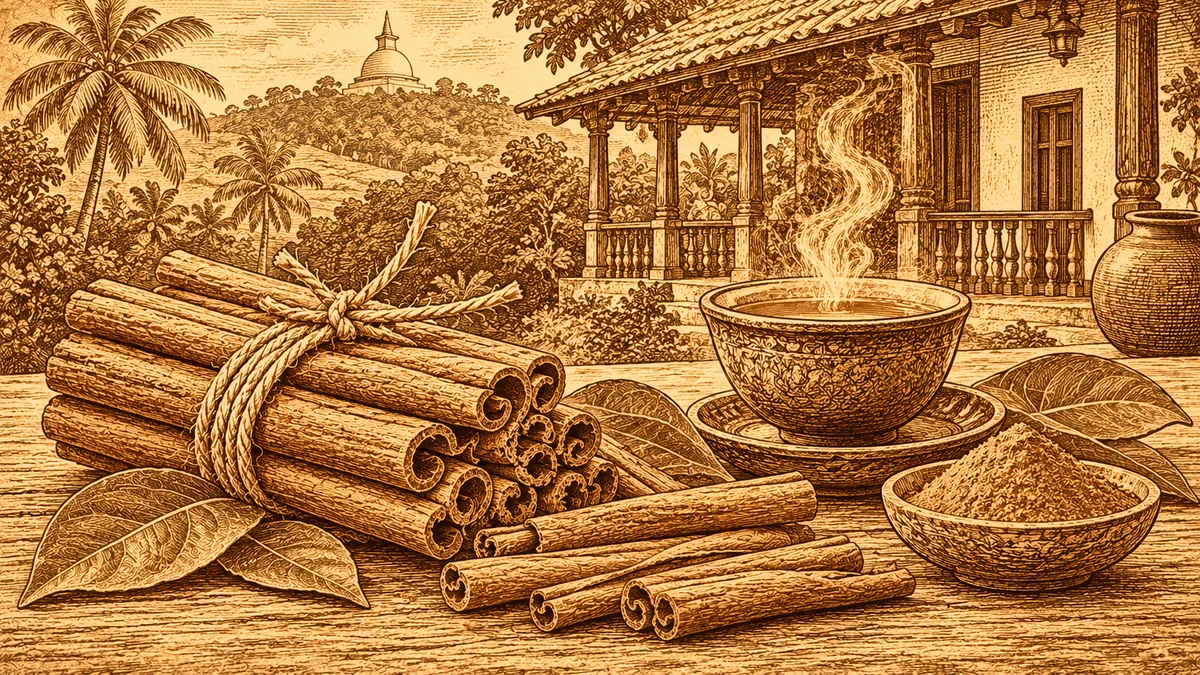
    Most of Sri Lanka’s Ceylon cinnamon is grown by smallholder farmers, families who cultivate true cinnamon, Cinnamomum verum, on small plots of land rather than on large plantations. These smallholdings, often only a few acres, are concentrated in the wet south and southwest of the island, where generations of the same families grow, harvest and peel the bark by hand. Smallholder farmers are the backbone of the Ceylon cinnamon industry, and their skill and labour are what bring the spice from tree to quill.

    Behind every stick of Ceylon cinnamon is a farming family, and understanding who grows the spice helps explain both its quality and its value. This guide looks at smallholder cinnamon farmers in Sri Lanka: who they are, how they work, and why they matter. It builds on our pillar guide to Sri Lankan cinnamon farming.

    The short answer

    Smallholder farmers are families who grow Ceylon cinnamon on small plots, usually a few acres, and they produce the large majority of Sri Lanka’s cinnamon. Rather than large estates, the island’s cinnamon comes mainly from many small family farms across the southern and southwestern districts. These families tend the trees, harvest the shoots and often peel the bark themselves, passing the skills down the generations. Because so much depends on their hand work, smallholders are central to both the supply and the quality of true Ceylon cinnamon.

    Who the smallholders are

    Smallholder cinnamon farmers are rural families, many of whom have grown the spice for generations. Their plots are small, often part of a mixed garden that may also hold coconut, fruit trees and other crops, and cinnamon provides an important part of the household income. The work is a family effort, with different members involved in tending, harvesting and peeling. In many cinnamon-growing villages, this way of life is deeply established, and the knowledge of how to grow and process cinnamon well is a shared inheritance. This continuity is part of what gives Sri Lankan cinnamon its heritage, as our guide to the cinnamon-growing regions of Sri Lanka describes.

    How smallholders work

    On a smallholding, cinnamon is grown as a managed shrub rather than a tall tree. The plants are cut back low so they send up many thin shoots, which are harvested when they reach the right size. After cutting, the shoots are peeled, a delicate hand skill, and the inner bark is rolled into quills and dried. Much of this is done on the farm or nearby, often by the family or by skilled peelers they work with. Because the plants regrow after cutting, a smallholding can be harvested again and again over many years, giving a steady livelihood from a small area of land.

    FeatureSmallholder cinnamon farming
    Farm sizeSmall, often only a few acres
    Who works itFamilies, often across generations
    WhereMainly the wet south and southwest
    MethodGrown as a cut-back shrub, peeled by hand
    RoleProduce most of Sri Lanka’s cinnamon

    Why smallholders matter to quality

    The smallholder model is closely tied to the quality of Ceylon cinnamon. Because peeling and rolling the thin bark is a careful hand skill, the attention of experienced family peelers helps produce the fine, many-layered quills that true cinnamon is known for. Small-scale, hands-on work allows this care in a way that large mechanised production would struggle to match. The result is that the character of Ceylon cinnamon is bound up with the people who make it, and the craft passed down within farming families is a real part of what buyers are paying for. This link between people and quality is a recurring theme across the island’s cinnamon story.

    The challenges smallholders face

    Smallholder farming also comes with difficulties. Returns can be uncertain, since prices vary and much of the value can be captured further along the supply chain rather than at the farm. The hand work is labour-intensive, and finding and keeping skilled peelers is a real concern in some areas. Weather, pests and the cost of inputs all affect a small farm more sharply than a large one. These pressures mean that, despite the spice’s fame, the families who grow it do not always share fully in its value. This is why efforts to support them matter, as our guide to fair trade and Ceylon cinnamon explains.

    How smallholders are supported

    A range of efforts aim to strengthen the position of smallholder cinnamon farmers. Fair trade and ethical sourcing schemes seek to give producers a fairer price and more stable demand. Training and support for peelers help keep the skilled craft alive and improve quality. Grouping smallholders into cooperatives or producer groups can give them more bargaining power and better access to markets. Protecting the Ceylon name through origin recognition also helps, since it defends the value of genuine Sri Lankan cinnamon that smallholders produce. Together these measures try to ensure that the families behind the spice benefit from its reputation.

    Cinnamon alongside other crops

    On many smallholdings, cinnamon is not grown on its own but as part of a mixed home garden. A family plot may hold coconut palms, fruit trees, pepper, and vegetables alongside the cinnamon shrubs, so the land yields several things at once. This mixed approach spreads risk, since a poor season for one crop can be offset by another, and it makes good use of a small area. Cinnamon fits this pattern well because it grows as a managed shrub in the understorey and regrows after cutting, giving a reliable return without needing a large dedicated field. For many families, cinnamon is therefore one steady thread in a wider farming life rather than their only source of income, which is part of how smallholdings stay resilient.

    The future of smallholder cinnamon farming

    The smallholder system faces questions about its future as well as its present. Younger people in farming families sometimes move to towns or other work, which raises concerns about who will tend the plots and carry on the peeling craft. At the same time, growing interest in genuine, traceable and sustainably grown Ceylon cinnamon offers an opportunity, since it rewards exactly the small-scale, careful production that smallholders provide. Support for training, fair prices and producer groups can help make cinnamon farming an attractive livelihood for the next generation. How well these efforts succeed will shape whether the smallholder tradition, and the quality it underpins, continues to thrive in the years ahead.

    Why this matters for buyers

    For someone buying Ceylon cinnamon, knowing that it comes from smallholder families adds meaning to the choice. Choosing genuine Ceylon cinnamon, and where possible cinnamon sold through fair and transparent channels, supports the rural communities who grow it. It also connects the buyer to the craft and heritage behind the spice, rather than treating it as an anonymous commodity. In this sense, the smallholder story is part of what makes true Ceylon cinnamon more than just a flavour: it is the product of many small farms and skilled hands across the south of Sri Lanka.

    Summary

    Most of Sri Lanka’s Ceylon cinnamon is grown by smallholder farmers, families who cultivate true cinnamon, Cinnamomum verum, on small plots of a few acres rather than on large plantations. Concentrated in the wet south and southwest, these families tend the cut-back shrubs, harvest the shoots and often peel the thin bark by hand, with the skills passed down the generations. Because the quality of Ceylon cinnamon depends so much on careful hand peeling, smallholders are central to both its supply and its fine character. They also face real challenges, from uncertain prices to the labour of peeling, which is why fair trade, training and cooperative efforts aim to support them. For buyers, choosing genuine Ceylon cinnamon helps sustain the smallholder families and the craft behind the spice.

    Frequently asked questions

    Who grows most of Sri Lanka’s cinnamon?

    Smallholder farmers, meaning families who grow Ceylon cinnamon on small plots of land, produce the large majority of Sri Lanka’s cinnamon. The industry is based on many small family farms, mainly in the south and southwest, rather than on large plantations.

    How big is a smallholder cinnamon farm?

    Usually small, often only a few acres, and frequently part of a mixed garden with other crops such as coconut and fruit trees. Cinnamon from these small plots provides an important part of the household income for the family.

    Do smallholders peel the cinnamon themselves?

    Often yes. Much of the peeling is done on or near the farm by the family or by skilled peelers they work with. Peeling the thin bark and rolling it into quills is a careful hand skill, and this attention is part of what gives Ceylon cinnamon its quality.

    What challenges do smallholder cinnamon farmers face?

    Uncertain prices, labour-intensive hand work, and difficulty finding skilled peelers are common challenges, along with weather, pests and input costs. Much of the spice’s value can be captured later in the supply chain, so farmers do not always share fully in it.

    How can buyers support smallholder farmers?

    By choosing genuine Ceylon cinnamon and, where possible, cinnamon sold through fair and transparent channels. This helps support the rural families who grow the spice and the skilled craft behind it, rather than treating cinnamon as an anonymous commodity.

    This website provides educational information about Ceylon Cinnamon as a spice and food ingredient. It is not intended to provide medical advice or make health claims.
  • The Cultural Significance of Cinnamon in Sri Lanka

    The Cultural Significance of Cinnamon in Sri Lanka

    Cinnamon holds a deep cultural significance in Sri Lanka, where it has been grown, traded and used for centuries. As the home of true cinnamon, Cinnamomum verum, the island treats the spice as part of its heritage: a source of livelihood for generations of farming and peeling families, an ingredient woven into its food and hospitality, and a symbol of its place in the world’s spice history. Cinnamon is not just a crop in Sri Lanka but a thread running through its culture.

    To understand Ceylon cinnamon fully is to see how closely it is tied to the culture of Sri Lanka. This guide looks at what cinnamon means to the island beyond its flavour: its place in work, food, tradition and identity. It builds on our pillar guide to the history of Ceylon cinnamon.

    The short answer

    In Sri Lanka, cinnamon is culturally significant as a heritage crop, a traditional craft, a culinary staple and a symbol of national identity. The island is the original home of true cinnamon, and the spice has shaped its economy, its daily life and its reputation abroad for centuries. Families pass down the skills of growing and peeling cinnamon, cooks use it across sweet and savoury dishes, and the Ceylon name carries the island’s pride. This blend of livelihood, craft, cuisine and identity is what gives cinnamon its cultural weight in Sri Lanka.

    Cinnamon as heritage and livelihood

    For many Sri Lankan families, cinnamon is a family inheritance as much as a crop. Across the cinnamon-growing south, generations have grown, peeled and prepared the spice, passing the knowledge from parents to children. The skill of peeling in particular is a craft learned over years and kept within communities, so that working with cinnamon becomes part of a family’s identity. This long continuity gives the spice a cultural meaning that a simple cash crop would not have: it links present-day farmers to ancestors who did the same work, and ties whole districts to a shared way of life. Our guide to traditional uses of cinnamon in Sri Lankan culture looks further at this heritage.

    Cinnamon in Sri Lankan food

    Cinnamon is woven into Sri Lankan cooking, where it appears in both everyday meals and special dishes. It is a common ingredient in curries, rice dishes and spice blends, lending warmth to savoury food, and it also flavours sweets, cakes and drinks. Because true cinnamon is mild and sweet rather than harsh, it blends gently into a dish rather than overpowering it. Its presence in the kitchen is so routine that it is simply part of how food tastes at home. This culinary role, both daily and celebratory, is a large part of what makes the spice culturally familiar, as our guide to cinnamon in traditional Sri Lankan sweets shows.

    Cinnamon in festivals and hospitality

    Beyond the everyday kitchen, cinnamon has a place in Sri Lankan celebrations and hospitality. Festive foods and sweets often carry its warm aroma, and offering spiced food and drink to guests is part of the island’s tradition of welcome. The scent of cinnamon is tied to moments of gathering and generosity, which gives it an emotional as well as a practical meaning. In this way the spice is bound up with the social life of the island, not only its meals. Our guide to cinnamon in Sri Lankan festivals and celebrations explores this side in more detail.

    DimensionCultural role of cinnamon in Sri Lanka
    HeritageA family craft and livelihood passed down generations
    FoodA staple in curries, sweets, rice and drinks
    HospitalityPart of festive food and welcoming guests
    HistoryCentre of the island’s famous spice trade
    IdentityA symbol of Sri Lanka and the Ceylon name

    Cinnamon and the island’s history

    Cinnamon’s cultural significance is inseparable from Sri Lanka’s history. For centuries the island was the world’s source of true cinnamon, and the spice drew traders and later colonial powers to its shores, shaping events across the island’s past. This long history means cinnamon is not a recent addition to the culture but a thread running through it, connected to the island’s role in the global spice trade. The very name Ceylon, the island’s historical name, became a byword for fine cinnamon, which is itself a mark of how closely the spice and the place are linked. This is the story our pillar guide to the history of Ceylon cinnamon tells in full.

    Cinnamon as a symbol of identity

    Today cinnamon remains a source of national pride and identity for Sri Lanka. As the home of the finest true cinnamon, the island holds a distinctive place in the world of spices, and that reputation is something Sri Lankans value. Efforts to protect the Ceylon name, such as origin recognition for the spice, reflect this sense that cinnamon is part of the country’s identity and worth defending. When Ceylon cinnamon is praised abroad, it reflects well on its homeland, and the spice stands as a quiet ambassador for Sri Lanka. In this sense, cinnamon carries meaning far beyond the kitchen or the farm.

    Cinnamon in the island’s economy and daily rhythm

    Cinnamon’s cultural place is also tied to the rhythm of rural life and the island’s economy. In the cinnamon-growing districts of the south and southwest, the work of tending gardens, harvesting shoots and peeling bark sets the pattern of the week for many households, and the income it brings helps support schools, homes and village life. Because the spice has been an export earner for Sri Lanka over a very long period, it is woven into the story the country tells about itself as a trading island. This practical, economic side of cinnamon is not separate from its cultural meaning but part of it, since a crop that has fed and clothed families for generations naturally becomes something people feel pride and attachment toward. Our pillar guide to Sri Lankan cinnamon farming looks at this working side of the spice in more detail.

    Passing the craft to the next generation

    A culture lives only as long as its skills are passed on, and cinnamon peeling is a clear example. The delicate work of separating the thin inner bark and rolling it into quills takes years to master, and it has traditionally been taught within families and communities, from experienced peelers to younger ones learning at their side. Keeping this knowledge alive is part of what keeps cinnamon culturally meaningful, because each new peeler carries forward a craft that stretches back through many generations. Efforts to train and support peelers, and to recognise their skill, help ensure that the tradition does not fade. In this sense the cultural significance of cinnamon depends on people as much as on the plant, and on the willingness of each generation to learn and continue the work.

    Why the cultural link matters

    Understanding the cultural significance of cinnamon helps explain why authenticity matters so much. When a spice is this closely tied to a place and its people, genuine origin is not only a quality question but a cultural one, since the craft, the heritage and the reputation all belong to Sri Lanka. Valuing true Ceylon cinnamon, then, also means valuing the communities and traditions behind it. This is why the island’s cinnamon is best understood not just as a product but as a living part of Sri Lankan culture, shaped by history and carried forward by the families who still grow and prepare it.

    Summary

    Cinnamon is culturally significant in Sri Lanka as a heritage crop, a traditional craft, a culinary staple and a symbol of national identity. As the original home of true cinnamon, Cinnamomum verum, the island has grown and prepared the spice for centuries, with the skills passed down through farming and peeling families across the south. Cinnamon flavours everyday meals and festive foods alike, features in hospitality and celebration, and is woven into the island’s long spice-trade history. It remains a source of pride and a quiet ambassador for Sri Lanka abroad. Seen this way, Ceylon cinnamon is not merely a product but a living thread in Sri Lankan culture, which is part of why its authentic origin carries such meaning.

    Frequently asked questions

    Why is cinnamon culturally important in Sri Lanka?

    Because Sri Lanka is the home of true cinnamon and has grown, peeled and traded it for centuries. The spice is a family heritage and livelihood, a staple in the island’s food, a part of its hospitality, and a symbol of its identity and place in spice history.

    How is cinnamon used in Sri Lankan culture?

    It is used widely in cooking, from curries and rice dishes to sweets and drinks, and it features in festive foods and hospitality. Beyond the kitchen, growing and peeling cinnamon is a traditional craft passed down within families across the cinnamon-growing south.

    Is cinnamon a symbol of Sri Lanka?

    Yes. As the source of the world’s finest true cinnamon, Sri Lanka takes pride in the spice, and the Ceylon name is closely linked to the island. Cinnamon acts as a quiet ambassador for the country and is part of its national identity.

    How long has cinnamon been part of Sri Lankan culture?

    For many centuries. The island was the world’s source of true cinnamon and was long at the centre of the global cinnamon trade, so the spice is a deep-rooted part of its history and culture rather than a recent addition.

    Why does the cultural significance of cinnamon matter for buyers?

    Because it shows that genuine Ceylon cinnamon carries heritage and craft, not just flavour. Valuing authentic cinnamon means valuing the Sri Lankan communities and traditions behind it, which is part of why origin and authenticity are so important.

    This website provides educational information about Ceylon Cinnamon as a spice and food ingredient. It is not intended to provide medical advice or make health claims.
  • Why Is It Called Ceylon Cinnamon?

    Why Is It Called Ceylon Cinnamon?

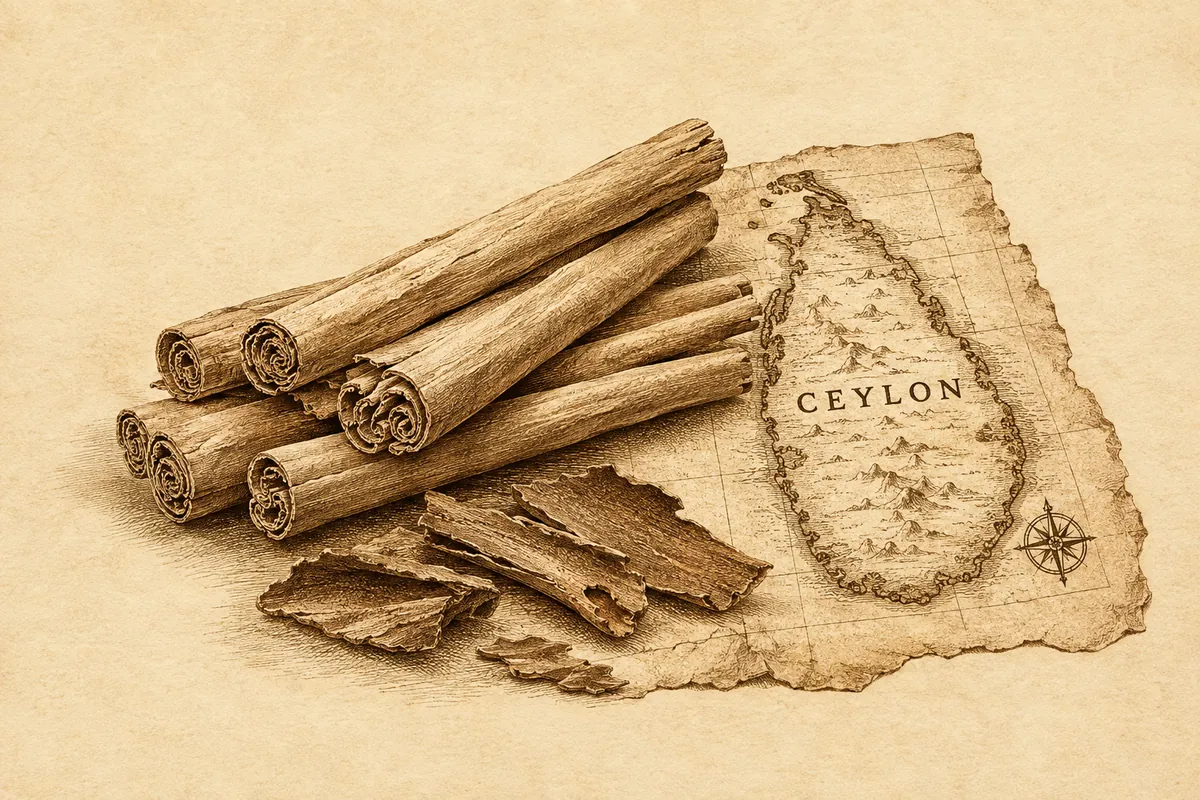
    Ceylon cinnamon is called “Ceylon” cinnamon because it comes from the island of Sri Lanka, which was known as Ceylon for much of its history. This island is the native home of the true cinnamon tree, Cinnamomum verum, and for centuries it was the world’s source of the finest cinnamon. The name stuck to the spice as a mark of origin and quality, and it remains in use today even though the country itself is now called Sri Lanka.

    The name “Ceylon cinnamon” carries a lot of history in two words. This guide explains where the name comes from, why it is still used, and what it tells you about the spice. It builds on our pillar guide to what true Ceylon cinnamon is.

    The short answer

    It is called Ceylon cinnamon because it originates in Sri Lanka, the island formerly named Ceylon, which is the native home of the true cinnamon tree Cinnamomum verum. “Ceylon” was the English name for the country until 1972, and by then the island’s cinnamon was already famous worldwide under that name. The spice kept the name as a recognised sign of its origin and its fine quality, so “Ceylon cinnamon” still means cinnamon from Sri Lanka today.

    Ceylon was the old name for Sri Lanka

    The key to the name is simple: Ceylon and Sri Lanka are the same place. Ceylon was the name used for the island for a long period, especially during British rule, and it remained the country’s official name until 1972, when it was changed to Sri Lanka. During the centuries when the island was called Ceylon, its cinnamon became known around the world, and the spice was named after the place it came from. So Ceylon cinnamon simply means cinnamon from the island once called Ceylon, which is modern Sri Lanka.

    Where the word “Ceylon” itself came from

    The word Ceylon has a long journey behind it. It grew out of older names for the island that passed through several languages. Traders and travellers from different parts of the world each had their own version of the island’s name, and over time the European form settled into “Ceylon” in English, “Ceilão” in Portuguese and “Zeylan” in Dutch. Each of these came from earlier names rooted in the island’s own history. By the time English speakers were using “Ceylon”, it was the everyday name for both the island and, before long, for its most famous spice.

    What matters for the spice is not the exact path of the word, but the fact that “Ceylon” was the name the wider world knew the island by during the very period when its cinnamon trade was at its height. Ships carried the bark to distant ports labelled as coming from Ceylon, merchants bought and sold it under that name, and cooks came to ask for it by name. In this way the word became attached to the spice as firmly as it was to the island, so that centuries later people still reach for “Ceylon cinnamon” without always knowing that Ceylon was ever a country at all.

    The island is the home of true cinnamon

    The name is not only about geography. It also points to the plant. The true cinnamon tree, Cinnamomum verum, is native to Sri Lanka, and the spice made from its bark has been valued for its fine, sweet, delicate character since ancient times. Because the island was the original and finest source of this spice, the world came to associate the very best cinnamon with the island’s name. For more on the botanical name behind the tree, see our guide to what “Cinnamomum verum” actually means. The connection between the spice and its homeland is also why the island’s long trading history is so bound up with cinnamon, as told in our history of Ceylon cinnamon.

    The name marks quality, not just origin

    Over time, “Ceylon cinnamon” came to mean more than just “cinnamon from a certain island”. It became a mark of quality. Because the island produced cinnamon of a fine, mild, sweet kind, buyers and cooks learned that the Ceylon name signalled the real, true spice rather than a rougher substitute. This reputation is one reason the name has lasted. When people say Ceylon cinnamon, they usually mean the premium, authentic spice, and part of the reason it commands attention is bound up with why it is prized, a theme covered in our guide to why Ceylon cinnamon is so expensive.

    Ceylon cinnamon versus cassia

    The name also does an important job of telling true cinnamon apart from cassia. Most of the cinnamon sold cheaply around the world is not Ceylon cinnamon at all but cassia, which comes from different trees grown in other countries. Calling the true spice “Ceylon cinnamon” makes the distinction clear: it is the genuine Cinnamomum verum from Sri Lanka, not one of the cassia types. This is why the name matters so much to people who want the real thing, and it is explained fully in our pillar comparison of Ceylon cinnamon versus cassia.

    The many names for the same spice

    Because of this history, the same spice goes by several names, which can be confusing at first.

    Different names used for the same true cinnamon.
    NameWhat it refers toWhy it is used
    Ceylon cinnamonTrue cinnamon from Sri LankaNamed after the island’s historic name, Ceylon
    True cinnamonThe same spice, Cinnamomum verumTo distinguish it from cassia
    Sri Lankan cinnamonThe same spice, by the modern country nameReflects the country’s current name
    Cinnamomum verumThe botanical species itselfThe scientific name of the tree

    All four names point to the same thing: the dried inner bark of the true cinnamon tree from Sri Lanka. Ceylon cinnamon is simply the most familiar and widely used of them.

    Why the name did not change to “Sri Lanka cinnamon”

    When the country changed its name from Ceylon to Sri Lanka in 1972, the spice did not follow suit for most buyers. By then, “Ceylon cinnamon” was a well established name in kitchens, markets and trade all over the world. Changing a famous product name is difficult once it is widely known, and the Ceylon name already carried a strong reputation for quality. You will sometimes see the spice described as Sri Lankan cinnamon, which is perfectly accurate, but the older name remains the common one. In this way, “Ceylon” lives on as the name of a spice long after it stopped being the name of a country.

    What the name tells a buyer

    For anyone shopping for cinnamon, the name is a useful signal. When a product is clearly labelled as Ceylon cinnamon, and better still names the species Cinnamomum verum, it is telling you that this is the true cinnamon from Sri Lanka rather than a cassia type. That said, names on labels are only as trustworthy as the seller, so it still pays to look for a clear origin and botanical name together. Understanding what the Ceylon name means is the first step to choosing the genuine spice with confidence.

    Frequently asked questions

    Why is it called Ceylon cinnamon?

    Because it comes from Sri Lanka, the island that was called Ceylon for much of its history. The island is the native home of the true cinnamon tree, Cinnamomum verum, and its cinnamon became famous worldwide under the Ceylon name, which the spice still carries today.

    Is Ceylon the same as Sri Lanka?

    Yes. Ceylon was the name of the country until 1972, when it was changed to Sri Lanka. They are the same island. Ceylon cinnamon therefore means the same thing as Sri Lankan cinnamon: true cinnamon grown in Sri Lanka.

    Is Ceylon cinnamon the same as true cinnamon?

    Yes. Ceylon cinnamon, true cinnamon and Cinnamomum verum all refer to the same spice, made from the inner bark of the true cinnamon tree native to Sri Lanka. The different names are used to tell it apart from cassia.

    Why is the name still used if the country is now Sri Lanka?

    Because “Ceylon cinnamon” was already an established, well known name for the spice long before the country was renamed in 1972. The name carries a strong reputation for quality, so it stayed in use even though the country’s own name changed.

    Summary

    Ceylon cinnamon is called Ceylon cinnamon because it comes from Sri Lanka, the island known as Ceylon for much of its history and until 1972. This island is the native home of the true cinnamon tree, Cinnamomum verum, and was long the world’s source of the finest cinnamon, so the spice took the island’s name as a sign of both origin and quality. The name also helps tell true cinnamon apart from cassia. Even though the country is now Sri Lanka, the older name remains the common one, which is why the same spice is known as Ceylon cinnamon, true cinnamon, Sri Lankan cinnamon and Cinnamomum verum, all pointing to one thing: the real cinnamon of Sri Lanka.

    This website provides educational information about Ceylon Cinnamon as a spice and food ingredient. It is not intended to provide medical advice or make health claims.

  • What Soil Is Best for Cinnamon?

    What Soil Is Best for Cinnamon?

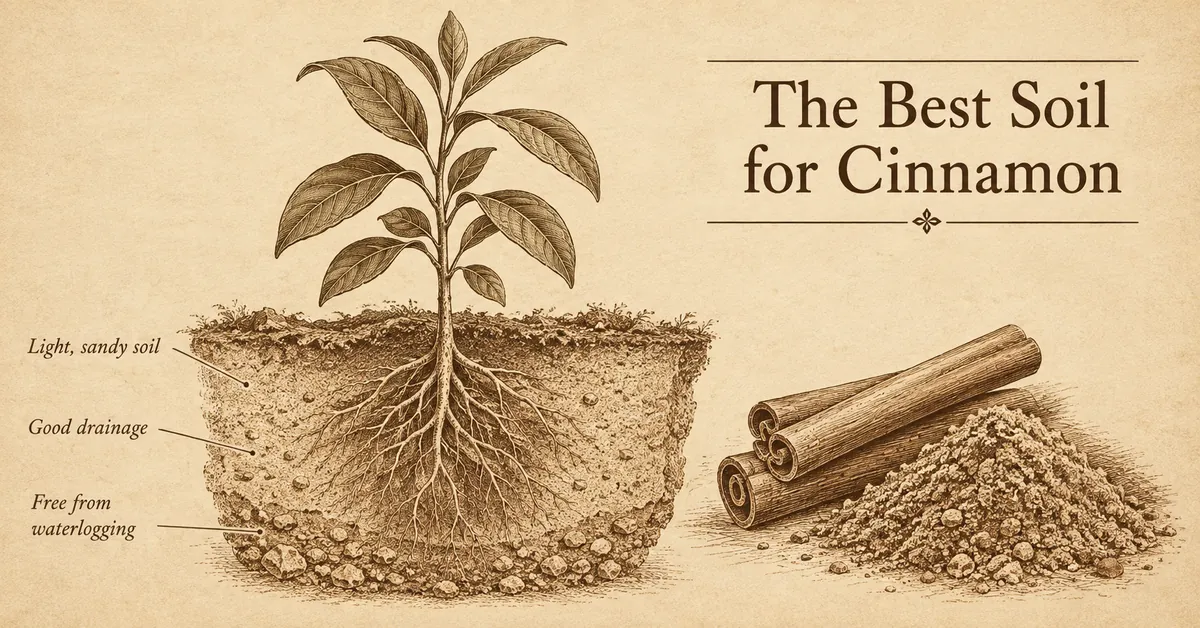
    The best soil for Ceylon cinnamon is light, sandy, well-drained soil that is slightly acidic and reasonably fertile. True cinnamon (Cinnamomum verum) grows especially well in the sandy loams of Sri Lanka’s wet coastal lowlands, where water drains freely and the roots never sit waterlogged. While cinnamon can tolerate a range of soils, it does best in deep, loose, free-draining ground with plenty of organic matter, which is one reason the sandy south-western coast of Sri Lanka has long been the heart of cinnamon growing.

    Soil is one of the quiet factors behind fine cinnamon. This guide explains what soil Ceylon cinnamon needs and why. It builds on our pillar guide to Sri Lankan cinnamon farming.

    The short answer

    Ceylon cinnamon grows best in light, sandy, well-drained, slightly acidic soil with good organic content. Free drainage is the single most important quality, since the roots dislike sitting in water. Sandy loams suit it especially well, which is why the sandy coastal soils of south-western Sri Lanka are ideal. Cinnamon is fairly adaptable, but the closer the soil is to this ideal, the better it grows.

    Why drainage matters most

    If there is one thing cinnamon needs from its soil, it is good drainage. The tree does not like waterlogged ground, where roots can suffer in the absence of air and be prone to rot. Light, sandy soils let excess water pass through quickly, keeping the roots healthy. This is why sandy and sandy-loam soils are so well suited to cinnamon, and why low-lying areas that flood or hold water are poor choices. Even in the wet zone, where rainfall is high, it is free-draining soil that lets the plant enjoy plenty of water without becoming waterlogged. This balance of ample rain and quick drainage is central to the climate Ceylon cinnamon needs.

    The ideal soil qualities

    Several soil qualities together make for good cinnamon growing.

    Texture: light and sandy

    Cinnamon prefers a light, loose, sandy or sandy-loam soil. This texture drains freely, is easy for roots to grow through, and warms readily. Heavy clay soils that hold water and compact tightly are much less suitable.

    Drainage: free and quick

    As noted, the soil must let water drain away rather than pooling. Good drainage is more important than richness; a poorer sandy soil that drains well often suits cinnamon better than a rich soil that stays wet.

    Acidity: slightly acidic

    Cinnamon generally does well in soil that is slightly acidic rather than strongly alkaline. This mildly acidic range suits the plant and the wet-zone soils where it naturally grows tend to fall within it.

    Fertility and organic matter

    While cinnamon tolerates fairly poor soils, it grows more strongly in ground with reasonable fertility and a good amount of organic matter. Organic content helps the light soil hold enough moisture and nutrients without losing its free-draining nature.

    Ideal soil for cinnamon at a glance

    The soil qualities that suit Ceylon cinnamon.
    QualityIdeal for cinnamon
    TextureLight, sandy or sandy loam
    DrainageFree and quick, never waterlogged
    AciditySlightly acidic
    FertilityModerate, with organic matter
    DepthDeep, loose and easy to root into

    The famous sandy soils of Sri Lanka

    The reason Sri Lanka produces the finest Ceylon cinnamon is partly its soil. The south-western coastal belt, taking in districts such as Galle, Matara and the surrounding wet zone, has light, sandy soils that drain freely while the climate supplies steady rain. This natural pairing of sandy ground and a wet, warm climate is close to perfect for cinnamon, and it has shaped the island’s cinnamon country for centuries. The link between the crop and these particular soils is part of why the growing regions cluster where they do, as our guide to the cinnamon-growing regions of Sri Lanka describes.

    Can cinnamon grow in other soils?

    Cinnamon is a fairly adaptable plant and can grow in a range of soils, from sandy coastal ground to some lateritic and loamy inland soils, as long as drainage is adequate. It is not restricted to a single perfect soil type. However, there is a difference between merely surviving and thriving. In heavy, poorly drained or frequently waterlogged soils the plant struggles, while in light, well-drained ground it flourishes. So while cinnamon can be grown more widely, the quality and vigour of the crop are best where the soil comes closest to the sandy, free-draining ideal.

    Preparing soil for cinnamon

    Where growers want to give cinnamon the best start, soil preparation focuses on the same qualities. Loosening compacted ground improves drainage and rooting, and adding organic matter such as compost enriches light soils and helps them hold moisture and nutrients. On sites where water tends to collect, improving drainage or planting on slightly raised ground helps keep the roots out of standing water. The aim throughout is to recreate, as far as possible, the deep, loose, free-draining and reasonably fertile conditions that cinnamon prefers. Good soil preparation sets the foundation for healthy trees and, in time, fine bark.

    Does soil affect cinnamon quality?

    Soil does more than keep the tree alive; it plays a part in the character of the bark. Healthy trees grown in suitable, free-draining, reasonably fertile soil tend to produce good, even bark, while trees struggling in poor or waterlogged ground are less vigorous and yield less well. The traditional reputation of Sri Lanka’s coastal cinnamon owes something to the light, sandy soils there, which help produce the fine, pale bark the island is known for. This is not a matter of one soil giving a completely different flavour, but of good growing conditions supporting healthy plants and, in turn, quality bark. Soil, then, is one of several quiet contributors to what makes true Ceylon cinnamon so prized.

    Common soil problems and how growers manage them

    A few soil problems come up often, and each has a practical answer. Waterlogging, the most serious, is managed by choosing well-drained sites, improving drainage, or planting on gently raised ground so water runs off. Compacted or heavy soil, which restricts roots and drainage, is loosened and improved with organic matter to open up its structure. Thin or poor soil is enriched over time by adding compost and mulch, building fertility and organic content without destroying the light texture cinnamon likes. And on sloping land, care is taken to limit erosion so the fertile topsoil is not washed away. In each case the goal is the same: to keep the soil loose, fertile and above all free-draining, matching as closely as possible the natural conditions in which cinnamon thrives.

    Soil, climate and the whole picture

    Soil never works alone; it is part of a bigger set of growing conditions. Cinnamon needs the right soil together with a warm tropical climate and plenty of well-spread rainfall to do its best. The sandy soils of Sri Lanka’s wet zone are ideal precisely because they pair with that climate, draining away the heavy rain while keeping the roots healthy. Understanding soil is therefore one piece of understanding how and where Ceylon cinnamon is grown, a subject covered in our guide to where and how Ceylon cinnamon is grown.

    Frequently asked questions

    What soil is best for cinnamon?

    Light, sandy, well-drained soil that is slightly acidic and reasonably fertile is best for Ceylon cinnamon. Free drainage matters most, since the roots dislike waterlogged ground. Sandy loams, like those of Sri Lanka’s wet coastal lowlands, suit the plant especially well.

    Does cinnamon need well-drained soil?

    Yes. Good drainage is the single most important soil quality for cinnamon. The tree does not tolerate waterlogged conditions well, so light, sandy soils that let excess water pass through quickly are ideal, keeping the roots healthy even in a high-rainfall climate.

    What kind of soil does cinnamon grow in in Sri Lanka?

    In Sri Lanka, cinnamon grows mainly in the light, sandy soils of the wet south-western coastal lowlands, in districts such as Galle and Matara. These free-draining sandy soils, combined with a warm, wet climate, are close to ideal for the crop.

    Can cinnamon grow in clay soil?

    Cinnamon grows poorly in heavy clay soils that hold water and compact tightly, because they drain badly and can leave roots waterlogged. It strongly prefers light, sandy, free-draining soil. If only heavier soil is available, improving its drainage and structure helps.

    Summary

    The best soil for Ceylon cinnamon is light, sandy and well-drained, slightly acidic and reasonably fertile, with plenty of organic matter and good depth. Above all it must drain freely, since cinnamon dislikes waterlogged ground. The sandy soils of Sri Lanka’s wet south-western coast, paired with a warm, rainy climate, are close to perfect, which is why the island’s cinnamon country lies there. Cinnamon can adapt to other soils where drainage allows, but it thrives best in the loose, sandy, free-draining conditions that suit its roots, giving the healthy trees behind fine true cinnamon.

    This website provides educational information about Ceylon Cinnamon as a spice and food ingredient. It is not intended to provide medical advice or make health claims.
  • Cinnamon in Sri Lankan Festivals and Celebrations

    Cinnamon in Sri Lankan Festivals and Celebrations

    In Sri Lanka, cinnamon is woven into festivals and celebrations mainly through food. As a home-grown spice, Ceylon cinnamon flavours the sweets, cakes and festive dishes that appear at times such as the Sinhala and Tamil New Year, weddings, and religious and seasonal celebrations. Its warm, sweet aroma is part of the taste of a Sri Lankan feast, adding fragrance to traditional treats and marking special occasions with a familiar, comforting scent.

    Cinnamon is more than an everyday spice in Sri Lanka; it is part of the island’s celebrations. This guide looks at how Ceylon cinnamon features in Sri Lankan festivals and special occasions. It builds on our pillar guide to the culinary uses of Ceylon cinnamon.

    The short answer

    Cinnamon appears in Sri Lankan festivals chiefly as a flavouring in festive food, from New Year sweets to celebration cakes and spiced dishes. Because true cinnamon is native to Sri Lanka, it is a natural part of the island’s traditional cooking, and it comes to the fore at celebrations when special sweets and dishes are prepared. Its warm scent is closely tied to the atmosphere of a Sri Lankan feast.

    Cinnamon and the Sri Lankan table

    To understand cinnamon’s place in celebrations, it helps to remember how central it is to Sri Lankan cooking in general. As the home of true cinnamon, Sri Lanka uses the spice in a wide range of dishes, both sweet and savoury. So when families gather to celebrate and prepare special food, cinnamon is one of the familiar spices that naturally finds its way into the pot and the mixing bowl. Its presence at festivals is really an extension of its everyday role, brought into sharper focus by the richer, more elaborate cooking that marks special days. This connection to traditional cooking is described in our guide to the traditional uses of cinnamon in Sri Lankan culture.

    The Sinhala and Tamil New Year

    One of the most important celebrations in Sri Lanka is the traditional New Year, known as Avurudu, marked by both Sinhala and Tamil communities in April. Food is at the heart of the festivities, and tables are laden with an array of traditional sweetmeats. Many of these festive treats are spiced, and warm spices including cinnamon help give them their characteristic flavour and fragrance. The New Year is a time of sharing food with family and neighbours, and the aromatic sweets, often prepared at home, carry the comforting scent of spices that says celebration to many Sri Lankans.

    Festive sweets and treats

    Sri Lankan celebrations are famous for their sweets, and spices are a key part of what makes them special. Traditional sweetmeats and confections, prepared for New Year, weddings and other occasions, often draw on warm, fragrant spices to enrich their flavour. Cinnamon, with its sweet and gentle character, sits comfortably among these festive flavours. Whether in syrupy treats, spiced doughs or rich confections, a note of cinnamon adds warmth and depth that suits the celebratory mood. The result is food that not only tastes special but fills the home with an inviting aroma.

    Cinnamon in celebration cakes

    Cake has an important place in Sri Lankan celebrations, particularly rich, spiced cakes served at Christmas, weddings and other big occasions. These cakes are known for their generous use of dried fruit and warm spices, and cinnamon is among the spices that give them their deep, festive flavour. A slice of celebration cake, dense and fragrant, is a familiar part of marking a special day in many Sri Lankan homes. Here cinnamon works alongside other spices to create the rich, aromatic character that sets festive baking apart from everyday fare. Our guide to Ceylon cinnamon in baking looks more closely at how the spice behaves in cakes and bakes.

    Cinnamon in celebrations at a glance

    How cinnamon features in Sri Lankan celebrations.
    OccasionHow cinnamon features
    Sinhala and Tamil New YearFlavour in festive sweetmeats and treats
    WeddingsSpice in celebration cakes and rich dishes
    Christmas and seasonal feastsWarm spice in rich fruit cakes
    Family gatheringsFragrance in special sweet and savoury dishes

    Savoury festive dishes

    Cinnamon’s festive role is not limited to sweets. Sri Lankan celebration meals often include rich rice dishes and elaborate curries, and whole cinnamon quills are a common addition to these, lending a warm background note to the dish. A celebratory rice cooked with spices, or a special curry prepared for guests, may well carry a piece of cinnamon among its flavourings. In this way the spice bridges the sweet and savoury sides of a feast, appearing in the main dishes as well as the desserts. This mirrors its everyday use in cooking with cinnamon sticks, simply made richer for special occasions.

    The scent of celebration

    Beyond any single dish, cinnamon contributes to something less tangible: the atmosphere of a celebration. The warm, sweet smell of spices drifting from the kitchen as festive food is prepared is, for many people, part of the very feeling of a special day. Cinnamon, as one of the classic warm spices, plays its part in this. The aroma becomes tied to memories of family gatherings, shared meals and happy occasions, so that later in life the scent of cinnamon can bring those celebrations to mind. In this sense the spice is woven into the emotional fabric of Sri Lankan festivities, not just the food.

    Preparing festival food together

    Part of what makes cinnamon so bound up with celebration in Sri Lanka is the way festive food is made. The elaborate sweets and cakes of a special occasion are often prepared at home, sometimes over several days, with family members working together to measure, mix, fry and bake. Warm spices like cinnamon are part of this shared ritual, their scent filling the house as the cooking goes on. For many people, memories of a grandmother’s kitchen or a busy pre-festival household are tied to exactly these aromas. Cinnamon, then, is not only an ingredient but a thread in a communal activity, one that draws generations together around the preparation of food. This is a large part of why the spice feels so closely linked to the warmth and togetherness of Sri Lankan celebrations.

    Welcoming guests with spiced treats

    Hospitality is central to Sri Lankan celebrations, and serving food to guests is an important part of any occasion. When visitors arrive during a festival, they are typically welcomed with an array of sweets and treats, many of them spiced. Cinnamon’s gentle warmth makes it well suited to these welcoming foods, adding a pleasant fragrance to what is set before guests. In this way the spice plays a small but real part in the rituals of hospitality that give Sri Lankan celebrations their generous, open character.

    A spice rooted in the island’s identity

    There is a special fittingness in cinnamon featuring so naturally in Sri Lankan celebrations, because the spice is so closely tied to the island itself. True Ceylon cinnamon comes from Sri Lanka, and it has been part of the country’s story for centuries, as our guide to the history of Ceylon cinnamon describes. Using this home-grown spice at festivals is a quiet celebration of the island’s own heritage. Every fragrant sweet and spiced dish is, in a small way, a nod to one of Sri Lanka’s most famous gifts to the world.

    Frequently asked questions

    How is cinnamon used in Sri Lankan festivals?

    Mainly as a flavouring in festive food. Cinnamon features in the sweetmeats and treats made for the Sinhala and Tamil New Year, in rich celebration cakes for weddings and Christmas, and in special rice dishes and curries prepared for gatherings. Its warm aroma is part of the feel of a Sri Lankan feast.

    Is cinnamon used in Sinhala and Tamil New Year food?

    Yes. The traditional New Year, or Avurudu, is celebrated with a wide array of sweetmeats, many of them spiced. Warm spices including cinnamon help give these festive treats their characteristic flavour and fragrance, prepared and shared among family and neighbours.

    Why is cinnamon important in Sri Lankan celebrations?

    Because true cinnamon is native to Sri Lanka and central to the island’s cooking, so it naturally features in the special food made for celebrations. Its sweet, warm character suits festive sweets, cakes and dishes, and its aroma is closely tied to the atmosphere of a feast.

    Does cinnamon appear in Sri Lankan celebration cakes?

    Yes. Rich, spiced cakes made for Christmas, weddings and other big occasions use generous amounts of dried fruit and warm spices, and cinnamon is among the spices that give these cakes their deep, festive flavour.

    Summary

    In Sri Lanka, cinnamon is part of celebration through food. As the island’s own famous spice, Ceylon cinnamon flavours the festive sweets of the Sinhala and Tamil New Year, the rich cakes of weddings and Christmas, and the special rice dishes and curries of family gatherings. Its warm, sweet aroma is bound up with the atmosphere of a feast and with memories of shared occasions. Using this home-grown spice at festivals is a natural celebration of the island’s heritage, so that a note of cinnamon in a festive dish carries not just flavour but a sense of place and belonging.

    This website provides educational information about Ceylon Cinnamon as a spice and food ingredient. It is not intended to provide medical advice or make health claims.

  • Fair Trade and Ceylon Cinnamon

    Fair Trade and Ceylon Cinnamon

    Fair trade in Ceylon cinnamon means the farmers and peelers who grow and prepare the spice are paid fairly and work in decent conditions, with a share of the value passed back down the supply chain. Because true Ceylon cinnamon depends on skilled hand peeling by rural families in Sri Lanka, fair and ethical sourcing matters a great deal. Buying cinnamon that is fairly traded or ethically sourced helps support the smallholder farmers and craftspeople behind this labour-intensive spice.

    Behind every quill of Ceylon cinnamon is a chain of people, from the grower to the peeler to the exporter. This guide looks at what fair trade means for Ceylon cinnamon and why it matters. It builds on our pillar guide to Sri Lankan cinnamon farming.

    The short answer

    Fair trade and ethical sourcing in Ceylon cinnamon aim to make sure the farmers and peelers are paid fairly, work in safe and decent conditions, and receive a fairer share of the price the spice fetches. Ceylon cinnamon is made almost entirely by hand, so the people who do that skilled work are central. Supporting fair and ethical cinnamon helps sustain both the craft and the communities that keep it alive.

    What fair trade means for cinnamon

    Fair trade is a broad idea about making global trade more equitable for the people at the start of the supply chain. For a spice like cinnamon, that means several things: paying growers and workers a fair price for their crop and labour, supporting safe and decent working conditions, avoiding exploitative practices, and often investing in the wider community. Some cinnamon carries formal fair-trade or ethical certifications, while other producers follow the same principles without a specific label. Either way, the goal is the same: to see that the value of the spice is shared more fairly with those who produce it.

    Why fair trade matters so much for Ceylon cinnamon

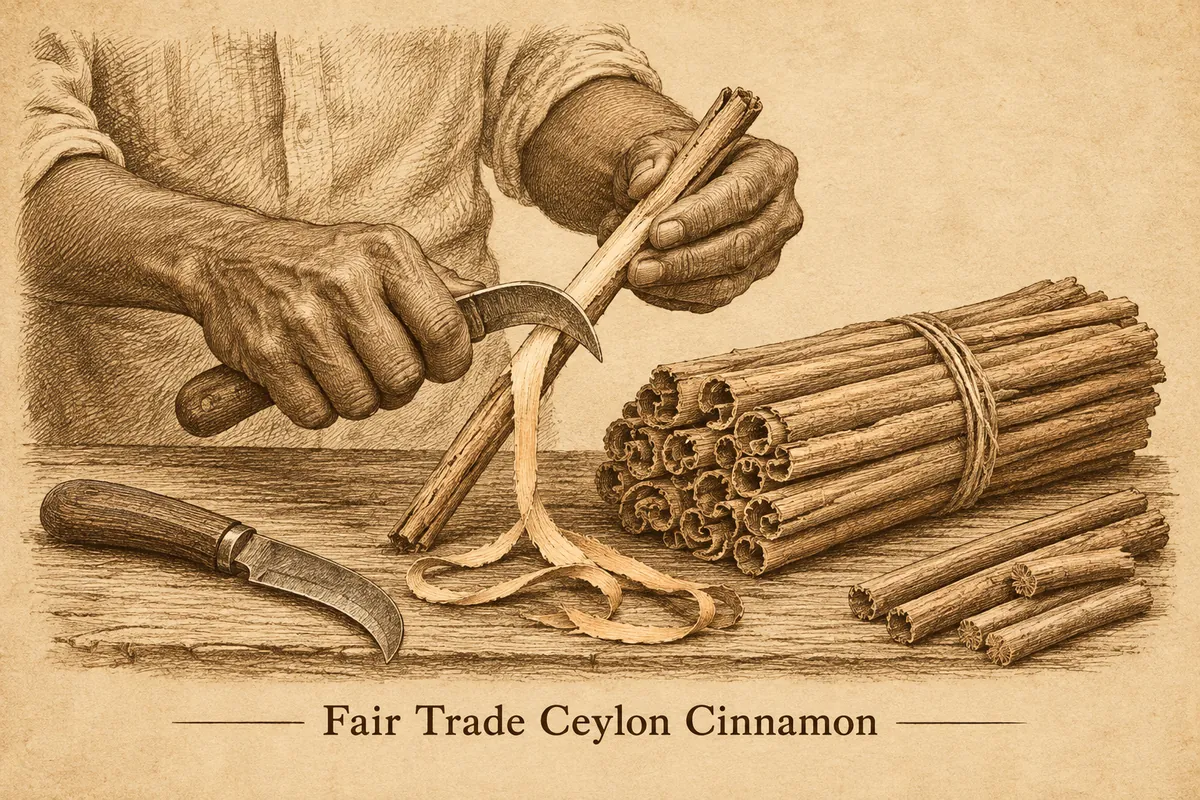
    Ceylon cinnamon is unusually dependent on human skill and effort. Unlike crops that can be largely mechanised, true cinnamon is peeled by hand, with skilled workers lifting the thin inner bark from the shoots and rolling it into quills. This is demanding, specialised work, and the quality of the finished spice rests on it. Much of it is done by smallholder farming families and village peelers in Sri Lanka. Because so much value depends on this labour, how those people are treated and paid is central to whether the trade is fair. Our guide to traditional cinnamon peeling methods shows just how much craft is involved.

    What fair trade aims to deliver at a glance

    The main aims of fair and ethical cinnamon sourcing.
    AimWhat it means in practice
    Fair pricesGrowers and peelers paid fairly for crop and labour
    Decent conditionsSafe, reasonable working conditions
    No exploitationAvoiding unfair or harmful labour practices
    Community supportInvestment back into farming communities
    TransparencyClearer, more traceable supply chains

    The people behind the spice

    It is easy to forget, looking at a neat jar of cinnamon, how many hands it has passed through. A cinnamon farmer tends the trees and harvests the shoots; a skilled peeler carefully separates and rolls the bark; others sort, grade, dry and pack it before it is exported and sold around the world. Many of these are small family operations rather than large industrial farms. Fair trade is really about recognising this human chain and making sure the people in it, especially those doing the hardest and most skilled work, are treated and rewarded fairly. It connects the pleasure of using fine cinnamon with the wellbeing of the communities that produce it.

    Fair trade, quality and sustainability

    Fair and ethical sourcing tends to go hand in hand with quality and sustainability. When peelers are fairly paid and valued, the skill and care that produce fine quills are more likely to be preserved and passed on. When farming communities are supported, they are better able to look after their land for the long term. In this way, treating people fairly and producing excellent, sustainable cinnamon are not separate goals but closely linked ones. This is part of the bigger picture set out in our guide to sustainable Ceylon cinnamon.

    How to support fair and ethical cinnamon

    As a buyer, there are simple ways to lean towards fairer cinnamon.

    Look for fair-trade or ethical labels

    Some cinnamon carries fair-trade or ethical-sourcing certifications or statements. Where these are present and credible, they are a helpful sign that the supply chain has been considered.

    Favour transparent sellers

    Sellers who are open about where their cinnamon comes from, and who talk about the farmers and communities behind it, are often more engaged with fair and ethical practices. Clear origin information is a good sign, a theme in our Ceylon cinnamon buying guide.

    Value true Ceylon cinnamon

    Choosing genuine Ceylon cinnamon from Sri Lanka, rather than the cheapest cassia, supports the specialised craft and communities behind the true spice. Paying a fair price for a fairly made product is itself part of the picture.

    Cooperatives and working together

    One of the ways fair trade takes shape on the ground is through farmers and peelers working together rather than alone. When small producers join cooperatives or groups, they can pool their cinnamon, reach buyers more directly, and negotiate better, steadier prices than a single family could on its own. Working together can also make it easier to meet the quality and record-keeping expectations that ethical buyers look for, and to share the cost of training and equipment. For many smallholders, this kind of cooperation is a practical route to a fairer deal, helping the value of the cinnamon flow back to the people who grow and peel it rather than being lost along a long chain of middlemen. It is a quiet but important part of how fair and ethical cinnamon works in practice.

    Why fairly traded cinnamon can cost more

    Fairly traded and ethically sourced cinnamon sometimes costs a little more than the cheapest options, and there are good reasons for that. Paying growers and peelers fairly, maintaining decent conditions and investing in communities all have real costs, which are reflected in the price. Rather than seeing this as simply more expensive, it can help to see it as paying closer to the true cost of a spice made carefully by skilled people. For many buyers, knowing that a purchase supports fair treatment of the farmers and craftspeople behind the cinnamon is well worth a modest difference in price.

    Fair trade and the future of Ceylon cinnamon

    The long-term health of the Ceylon cinnamon industry depends on keeping the craft attractive to the next generation. If peeling and farming do not provide a fair, decent living, fewer people will take up the work, and centuries of skill could be lost. Fair trade and ethical sourcing help guard against this by making sure the people who produce cinnamon can earn a reasonable living from it. In this sense, buying fairly traded Ceylon cinnamon is not only a kindness in the present but an investment in the survival of a remarkable traditional craft.

    Frequently asked questions

    What does fair trade mean for Ceylon cinnamon?

    It means the farmers and peelers who grow and prepare the cinnamon are paid fairly, work in decent conditions, and receive a fairer share of the value of the spice. Because Ceylon cinnamon is made largely by hand, fair treatment of these workers is central to whether the trade is fair.

    Why is fair trade especially important for cinnamon?

    Because true Ceylon cinnamon depends on skilled hand peeling by smallholder farmers and village craftspeople in Sri Lanka. So much of the spice’s value comes from this labour that how those people are paid and treated is at the heart of fair and ethical cinnamon.

    How can I buy fairly traded cinnamon?

    Look for credible fair-trade or ethical-sourcing labels, favour sellers who are transparent about where their cinnamon comes from and the communities behind it, and choose genuine Ceylon cinnamon from Sri Lanka rather than the cheapest cassia.

    Why does fairly traded cinnamon sometimes cost more?

    Because paying growers and peelers fairly, keeping conditions decent and supporting communities all have real costs, which are reflected in the price. It is closer to the true cost of a spice made carefully by skilled hands.

    Summary

    Fair trade and ethical sourcing in Ceylon cinnamon are about making sure the farmers and peelers behind the spice are paid fairly, work in decent conditions, and share more fairly in its value. Because true Ceylon cinnamon is made almost entirely by skilled hand peeling in Sri Lanka, the people who do that work are central to the whole trade. Supporting fair and ethical cinnamon, by looking for credible labels, favouring transparent sellers and valuing genuine Ceylon cinnamon, helps sustain both the craft and the communities that keep it alive, and helps secure the future of this remarkable spice.

    This website provides educational information about Ceylon Cinnamon as a spice and food ingredient. It is not intended to provide medical advice or make health claims.
  • The Cinnamon-Growing Regions of Sri Lanka

    The Cinnamon-Growing Regions of Sri Lanka

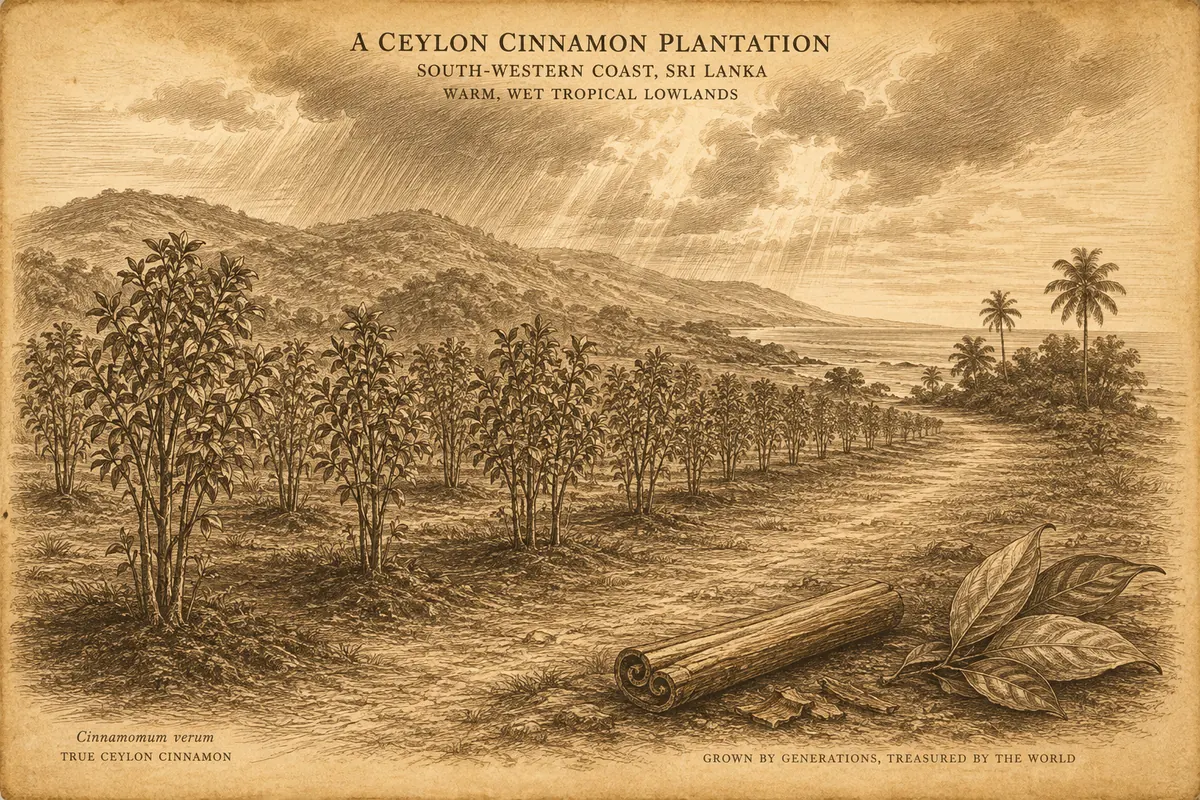
    Ceylon cinnamon grows mainly along the wet, low country of south-western Sri Lanka. The districts of Galle, Matara and Hambantota on the southern coast form the traditional heartland, with important growing areas also in Ratnapura, Kalutara and Colombo. These regions share the warm temperatures, steady rainfall and sandy soils that Cinnamomum verum needs, which is why the finest cinnamon in the world has come from this corner of the island for centuries.

    Sri Lanka is the home of true cinnamon, and within the island a handful of regions do most of the growing. This guide maps where Ceylon cinnamon comes from, why these areas suit the crop, and what makes each district notable. It builds on our pillar guide to Sri Lankan cinnamon farming.

    The short answer

    Most Ceylon cinnamon is grown in the wet south-western lowlands of Sri Lanka, above all in the Galle, Matara and Hambantota districts along the southern coast. Other significant growing areas include Ratnapura, Kalutara and parts of the Colombo district. Together these regions make up the country’s cinnamon belt, a zone shaped by climate and soil that has produced true cinnamon for hundreds of years.

    Sri Lanka: the home of true cinnamon

    True cinnamon, Cinnamomum verum, is native to Sri Lanka, and the island remains its most famous source. While the crop is now grown in a few other countries, Sri Lanka is still known for the finest grades and the deepest tradition of cultivation. The reason the plant thrives here comes down to a combination of a tropical climate, reliable rain and light, well drained soils, a mix found in abundance across the south-western part of the island. To understand the plant behind the spice, see our guide to what true Ceylon cinnamon is.

    The southern coast: the cinnamon heartland

    The southern coastal belt is the traditional centre of Ceylon cinnamon growing. Three districts stand out.

    Galle

    The Galle district is often thought of as the historic heart of the cinnamon country. Its warm, humid climate and sandy coastal soils are well suited to the crop, and cinnamon has been grown and traded here for generations. Much of the island’s peeling skill and cinnamon heritage is centred on this part of the coast.

    Matara

    Neighbouring Matara is another leading cinnamon district. Like Galle, it sits in the wet zone with a climate that favours steady growth, and it is home to many smallholder cinnamon farms and skilled peelers. Matara cinnamon has a long-standing reputation for quality.

    Hambantota

    Further east along the coast, the Hambantota district also grows cinnamon, though its climate is slightly drier than Galle and Matara. It rounds out the southern coastal belt that produces the bulk of the country’s true cinnamon.

    Other important growing regions

    Beyond the southern coast, several inland and western districts add to the country’s cinnamon output.

    Ratnapura

    Ratnapura, in the island’s interior, lies in the wet zone and grows cinnamon alongside its better known gem industry. Its rainfall and soils suit the crop, making it a notable growing area away from the coast.

    Kalutara

    Kalutara, on the west coast to the south of Colombo, is another traditional cinnamon district. Its wet, warm climate matches the crop’s needs, and it forms part of the wider south-western growing zone.

    Colombo district

    Parts of the Colombo district, particularly its more rural and southern reaches, have long grown cinnamon too. The name of Colombo’s Cinnamon Gardens neighbourhood is a reminder of how closely the spice was once tied to this area.

    Where Ceylon cinnamon is grown at a glance

    The main Ceylon cinnamon growing regions of Sri Lanka.
    RegionZoneNote
    GalleSouthern coast, wet zoneHistoric cinnamon heartland
    MataraSouthern coast, wet zoneLeading district, many smallholders
    HambantotaSouth-east coastSlightly drier, part of the belt
    RatnapuraInterior, wet zoneInland growing area
    KalutaraWest coast, wet zoneTraditional west-coast district
    ColomboWest coast, wet zoneRural areas, historic ties

    Why these regions suit cinnamon

    The cinnamon belt is not a matter of chance. The south-western lowlands share a set of conditions that Cinnamomum verum depends on. The climate is warm and tropical all year, with no cold season to check growth. Rainfall is high and fairly well spread, keeping the trees in steady leaf. And the soils along much of the coast are light and sandy, draining freely so the roots never sit in water. These same conditions are set out in our guide to the climate Ceylon cinnamon needs. Where all three come together, as they do across the south-west, cinnamon grows especially well.

    The wet zone and the cinnamon belt

    Sri Lanka is often divided into a wet zone in the south-west and a dry zone across the north and east. Ceylon cinnamon is very much a wet-zone crop, and the map of where it grows closely follows the map of that wetter region. This is why the growing districts cluster in the south-western quarter of the island rather than spreading evenly across it. The pattern has held for centuries and still shapes the country’s cinnamon industry today. For a closer look at the science of siting, see our guide to where and how Ceylon cinnamon is grown.

    How geography shapes the spice

    Because cinnamon takes so much from its setting, small differences between the growing regions can leave a mark on the crop. Soil type, rainfall, height above sea level and distance from the sea all play a part in how the trees grow and how the bark develops. Coastal districts with light, sandy soils tend to give the fine, pale bark that peelers prize, while conditions vary a little as you move inland. These are gentle differences rather than sharp ones, and most true Ceylon cinnamon shares the same soft, sweet, delicate character whatever district it comes from. Even so, the idea that place shapes the spice is real, and it is one reason the traditional coastal belt has kept its name for quality over the years. Buyers looking for the classic profile of Ceylon cinnamon are, in effect, looking for the produce of this particular part of the island.

    A tradition rooted in place

    The link between these regions and cinnamon runs deep. Generations of farming families in Galle, Matara and the surrounding districts have grown and peeled cinnamon, passing the craft from parent to child. The skill of the peeler, who lifts the thin inner bark by hand, is as much a part of these places as the trees themselves. This rootedness in a particular place and community is part of what gives Ceylon cinnamon its identity and its reputation. It is also why the origin of the spice is tied so firmly to Sri Lanka in the minds of buyers around the world.

    Does Ceylon cinnamon grow anywhere else?

    True cinnamon is now cultivated in a small number of other tropical places, including the Seychelles and parts of India and Madagascar. However, Sri Lanka remains the leading producer of the highest grades and the country most associated with the spice. When people picture where Ceylon cinnamon comes from, they picture the green, wet south-west of the island, and for good reason: this is where the crop has its longest history and its finest expression. For a fuller picture of the districts, our guide to where in Sri Lanka cinnamon is grown goes region by region.

    Frequently asked questions

    Where is Ceylon cinnamon grown in Sri Lanka?

    Mainly in the wet south-western lowlands. The Galle, Matara and Hambantota districts on the southern coast form the traditional heartland, with important growing areas also in Ratnapura, Kalutara and the Colombo district. Together these make up the country’s cinnamon belt.

    Which district produces the most cinnamon?

    The southern coastal districts of Galle and Matara are the leading producers, with a long history of growing and peeling cinnamon. Hambantota adds to the southern belt, while Ratnapura, Kalutara and Colombo contribute from the wider south-western zone.

    Why does cinnamon grow in the south-west of Sri Lanka?

    Because that part of the island is the wet zone, with warm temperatures, high rainfall and light, sandy, free-draining soils. These are exactly the conditions Cinnamomum verum needs, so the growing regions cluster in the south-western quarter of the country.

    Is all Sri Lankan cinnamon grown by the sea?

    No. While the southern and western coasts are the main growing areas, inland wet-zone districts such as Ratnapura also grow cinnamon. The key factor is the wet-zone climate and suitable soil rather than being directly on the coast.

    Summary

    Ceylon cinnamon comes above all from the wet, low country of south-western Sri Lanka. The southern coastal districts of Galle, Matara and Hambantota form the traditional heartland, and further growing areas lie in Ratnapura, Kalutara and the Colombo district. These regions share the warm climate, steady rainfall and light, sandy soils that true cinnamon needs, and they carry generations of farming and peeling tradition. That is why, when the world thinks of where the finest cinnamon is grown, it thinks of this green corner of Sri Lanka.

    This website provides educational information about Ceylon Cinnamon as a spice and food ingredient. It is not intended to provide medical advice or make health claims.
  • Traditional Cinnamon Peeling Methods

    Traditional Cinnamon Peeling Methods

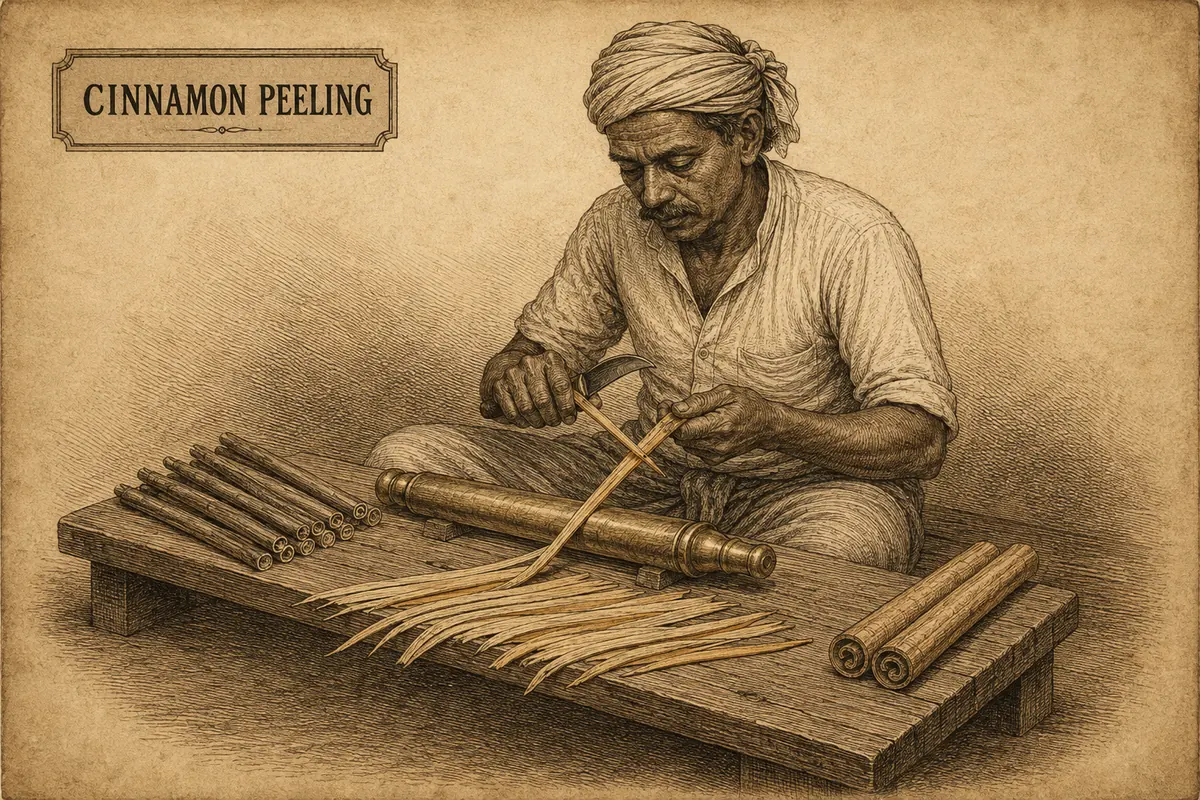
    Traditional cinnamon peeling is the skilled hand-craft of removing the thin inner bark from young cinnamon shoots and rolling it into quills. In Sri Lanka it is done with a few simple tools, in a set sequence of steps: the shoots are cut, the rough outer bark is scraped away, the bark is scored and loosened, the fine inner bark is peeled off in strips, and the strips are rolled into the familiar cinnamon quills to dry.

    This craft has changed little in generations and is central to what makes Ceylon cinnamon special. This guide walks through the traditional peeling methods step by step, and pairs with our pillar guide on how Ceylon cinnamon is made.

    The short answer

    Traditional peeling separates the delicate inner bark of the cinnamon shoot from the wood by hand, then rolls it into quills. A trained peeler uses a small curved knife and a rounded rod to scrape, score and lift the bark, working quickly so the thin inner layer comes away cleanly. The freed strips are then nested and rolled into long tubes that dry into quills. It is patient, delicate work, and the skill of the peeler shapes the quality of the finished spice.

    The tools of the peeler

    Traditional peeling uses a small set of hand tools rather than machinery. The main ones are a special curved peeling knife for scoring and lifting the bark, and a smooth rounded rod, often of brass, used to rub and loosen the bark before it is peeled. Simple stands or benches hold the shoots, and the rolled quills are laid out to dry. The simplicity of these tools is part of the craft: almost everything depends on the skill of the peeler’s hands rather than on equipment.

    The traditional peeling steps

    1. Cutting the shoots

    Peeling begins with young cinnamon shoots, cut from the coppiced trees at the right stage, when the bark peels most easily. The stems are trimmed to workable lengths and any side twigs and leaves are removed, leaving clean rods of bark-covered wood ready to work. The timing of the harvest matters, as covered in our guide to how Ceylon cinnamon is harvested.

    2. Scraping the outer bark

    The rough, greenish outer skin is scraped off the shoot, usually with a curved knife, to expose the smooth inner bark beneath. This step, sometimes called rubbing or scraping, cleans the stem so that only the fine, flavourful inner bark will be taken. It is done carefully to avoid cutting into the precious inner layer.

    3. Rubbing and loosening

    Next the peeler rubs the stem firmly with the rounded brass rod. This polishing action loosens the bond between the inner bark and the wood, so that the bark will lift away cleanly in the next step. Good rubbing is key to a clean peel, and it is one of the skills that separates an experienced peeler from a beginner.

    4. Scoring the bark

    With the bark loosened, the peeler makes long cuts along the shoot with the tip of the knife, scoring the bark into strips. These cuts run the length of the stem and mark out the pieces of inner bark that will be peeled off. Precise scoring keeps the strips even and reduces waste.

    5. Lifting the inner bark

    The peeler then slides the knife under the scored bark and carefully lifts the thin inner layer away from the wood. Done well, the wafer-thin bark comes off in clean strips. This is the most delicate stage, since the inner bark is fragile and easily torn, and it is where the peeler’s skill shows most clearly.

    6. Rolling the quills

    The freed strips of inner bark are then rolled and nested together into long tubes. Several thin pieces are layered inside one another to build up a quill of good length and thickness. This is why true Ceylon cinnamon quills have their signature many-layered structure, as explained in our guide to what a cinnamon quill is.

    7. Drying

    Finally the rolled quills are set aside to dry, often in shade at first and then in the sun, sometimes laid on racks. As they dry they tighten and firm into the pale, hard sticks we recognise. Once dried, they are sorted and graded ready for sale.

    The traditional peeling process at a glance

    The main steps of traditional cinnamon peeling.
    StepWhat happens
    Cut shootsYoung stems harvested and trimmed
    ScrapeRough outer bark removed
    RubBark loosened with a brass rod
    ScoreBark cut into strips along the stem
    PeelThin inner bark lifted off
    RollStrips nested into quills
    DryQuills dried, then sorted and graded

    A craft passed down through generations

    Traditional peeling is more than a set of steps; it is a skill handed down within families and communities in the cinnamon-growing districts. Experienced peelers work with remarkable speed and care, and their trained hands make the difference between fine, even quills and rough, wasteful ones. This inherited knowledge is a living tradition, closely tied to the farming communities described in our guide to Sri Lankan cinnamon farming. It is one of the reasons Ceylon cinnamon remains a hand-made, artisan product rather than a factory one.

    Why traditional peeling still matters

    Machines struggle to separate the wafer-thin inner bark of true cinnamon without damaging it, so the traditional hand method remains the best way to produce fine quills. The care taken at each stage, clean scraping, good rubbing, precise scoring and gentle lifting, decides how neat and how flavourful the finished cinnamon will be. In this sense the traditional peeling craft is not just history; it is still the method behind the quality of real Ceylon cinnamon today.

    Timing, moisture and the peeling season

    Traditional peeling works best when the conditions are right. Bark lifts most cleanly when the shoots are freshly cut and full of sap, so peeling usually follows soon after harvest, and the craft tends to be busiest during and just after the rains, when the sap is running. If the stems dry out, the bark clings to the wood and is far harder to remove in clean strips. Because of this, peelers often work through the day close to where the shoots are cut, keeping the stems fresh and moist so the bark comes away easily. This close link between weather, timing and workflow is part of why cinnamon farming and peeling follow the rhythm of the seasons.

    Quality starts with the peel

    The care taken during peeling shows directly in the finished quill. A clean, even peel produces smooth, well-formed quills that dry into fine grades, while rough or hurried work leaves ragged, broken bark that ends up as lower grades or off-cuts. Experienced peelers waste very little, lifting almost all of the usable inner bark and rolling it tightly and neatly. So the grade a quill eventually reaches is set in large part at this stage, long before it is sorted, which is why skilled peeling is so highly valued in the trade.

    Frequently asked questions

    How is cinnamon traditionally peeled?

    Young cinnamon shoots are cut, the rough outer bark is scraped off, the stem is rubbed with a brass rod to loosen the bark, the bark is scored into strips, and the thin inner bark is lifted off by hand. The strips are then rolled into quills and dried.

    What tools are used to peel cinnamon?

    The main tools are a small curved peeling knife, used to scrape, score and lift the bark, and a smooth rounded rod, often brass, used to rub and loosen the bark. Simple benches and drying racks are also used. Most of the work depends on hand skill.

    Why is cinnamon peeled by hand?

    Because the inner bark of true Ceylon cinnamon is very thin and delicate, machines tend to damage it. Skilled hand peeling separates the fine bark cleanly and rolls it into quills, which is why the craft is still done by hand.

    Who peels the cinnamon?

    In Sri Lanka, cinnamon is peeled by trained peelers, a skill traditionally passed down within farming and peeling families in the cinnamon-growing districts. Experienced peelers work quickly and carefully to produce fine quills.

    Summary

    Traditional cinnamon peeling is the hand-craft of turning young cinnamon shoots into quills. Using a curved knife and a brass rubbing rod, the peeler cuts the shoots, scrapes off the outer bark, rubs the stem to loosen the inner bark, scores it into strips, lifts the thin inner bark away, rolls the strips into quills, and dries them. It is a delicate, skilled process, handed down through generations in Sri Lanka, and it remains the best way to produce the fine, many-layered quills of true Ceylon cinnamon. The quality of the spice starts here, in the trained hands of the peeler.

    This website provides educational information about Ceylon Cinnamon as a spice and food ingredient. It is not intended to provide medical advice or make health claims.

  • The Climate Ceylon Cinnamon Needs

    The Climate Ceylon Cinnamon Needs

    Ceylon cinnamon (Cinnamomum verum) needs a warm, wet tropical climate to grow well: steady heat of roughly 24 to 30 degrees Celsius, high rainfall of about 2,000 to 2,500 millimetres a year, high humidity, and plenty of sunshine, ideally near sea level. These conditions are found along the south-western coast of Sri Lanka, which is why the island became the home of true cinnamon.

    The climate a cinnamon tree grows in shapes the flavour and quality of the bark, so understanding those conditions helps explain why Ceylon cinnamon from Sri Lanka is so prized. This guide sits alongside our pillar on Sri Lankan cinnamon farming.

    The short answer

    Ceylon cinnamon thrives in a hot, humid, low-lying tropical climate with abundant rainfall spread through the year. It likes warmth without cold spells, regular rain rather than long dry seasons, and a sunny position. The wet lowlands of south-western Sri Lanka give it exactly this, which is why the best true cinnamon has always come from there. To see where that is, our guide on where cinnamon is grown in Sri Lanka maps the main districts.

    Temperature: steady tropical warmth

    Cinnamon is a tropical tree and needs consistent warmth. It grows best in average temperatures of about 24 to 30 degrees Celsius, with no frost and no cold season. Sudden cold or a chilly climate will slow or stop its growth. The even, year-round heat of the tropics suits it perfectly, letting the tree grow steadily and the bark develop its full aroma.

    Rainfall: plenty, spread through the year

    Water is one of the biggest factors. Ceylon cinnamon likes a high annual rainfall, commonly in the range of 2,000 to 2,500 millimetres, and it prefers this rain to be well spread across the year rather than crammed into a short wet season. Regular moisture keeps the tree healthy and the bark growing. That said, the ground must drain freely, since cinnamon does not like to sit in waterlogged soil. A wet climate with good drainage is the sweet spot.

    The wet zone and the monsoon

    Sri Lanka’s south-western corner is known as the wet zone, watered by the south-west monsoon. This reliable rainfall, combined with warmth, makes it ideal cinnamon country. The monsoon delivers the steady moisture the trees need, and the peeling season is often timed around the rains, when the bark lifts most easily.

    Humidity and sunshine

    Alongside heat and rain, cinnamon likes high humidity, the moist air typical of coastal tropics. At the same time it wants plenty of sunshine, so an open, sunny position helps it grow strongly. This combination of a humid atmosphere and bright light is another feature of the south-western coastal belt where the spice flourishes. Too much dense shade tends to make the tree grow leggy and weak, so growers usually give it an open aspect where sunlight can reach the leaves for most of the day, which helps the plant build strong, aromatic bark.

    Altitude: low and coastal is best

    Ceylon cinnamon grows best at low elevations, from sea level up to a few hundred metres. It can be grown at somewhat higher altitudes, but the finest, most aromatic bark tends to come from the warm coastal lowlands. As the land rises and cools, growth slows, so the classic cinnamon gardens sit close to the coast. Our guide on how Ceylon cinnamon is grown looks at these growing conditions in more detail.

    The climate Ceylon cinnamon needs at a glance

    The main climate conditions that suit Ceylon cinnamon.
    FactorWhat cinnamon needs
    Climate typeWarm, humid tropical
    TemperatureAbout 24 to 30 degrees Celsius, no frost
    RainfallRoughly 2,000 to 2,500 mm a year, well spread
    HumidityHigh
    SunshinePlenty, open sunny position
    AltitudeSea level to a few hundred metres
    DrainageFree-draining, not waterlogged

    Why Sri Lanka’s climate is ideal

    Put these needs together and the south-western coast of Sri Lanka matches almost every one. It has year-round tropical heat, high and reliable monsoon rainfall, humid coastal air, strong sunshine and low, well-drained land near the sea. Few places in the world combine all of these so neatly, which is a major reason the island became famous for true cinnamon. The climate does not just let the tree survive; it helps produce the delicate, sweet, layered bark that defines Ceylon cinnamon. This close bond between place and spice is part of the island’s long cinnamon farming tradition.

    Can Ceylon cinnamon grow elsewhere?

    Yes, true cinnamon can be grown in other tropical regions with a similar warm, wet climate, such as parts of the Seychelles, Madagascar and southern India. Wherever the temperature, rainfall and humidity are right, the tree can be cultivated. Even so, Sri Lanka remains the benchmark, both for its ideal conditions and for its centuries of skill in growing and processing the spice. Climate makes the tree possible, but tradition and craft turn its bark into fine Ceylon cinnamon. It is worth noting that cinnamon grown in a different climate can taste noticeably different, since local heat, rain and soil all leave their mark on the bark. This is one reason buyers who want the classic Ceylon flavour look specifically for cinnamon grown in its traditional Sri Lankan home rather than simply the same species grown elsewhere.

    How climate affects quality

    The growing climate influences the final spice in subtle ways. Steady warmth and good moisture help the tree build the aromatic oils in its bark, while healthy, unstressed growth gives the thin, even inner bark that rolls into fine quills. Trees grown in poor conditions, too dry, too cold or badly drained, tend to give weaker, coarser bark. So the famous quality of Ceylon cinnamon starts in the field, with the right climate feeding a healthy tree, long before the bark is peeled and dried, as shown in our guide to how Ceylon cinnamon is made.

    Climate and the growing year

    The tropical climate also shapes the rhythm of the cinnamon year. Because the wet zone has no harsh winter, cinnamon grows more or less continuously, sending up new shoots that are harvested on a regular cycle rather than in a single yearly season. The rains matter for timing: peeling is easier when the bark is full of sap and lifts cleanly from the wood, which tends to happen during and just after wet spells. Growers read the weather closely, working with the monsoon rather than against it, so the climate sets the pattern of planting, tending and harvesting across the whole year.

    Soil, drainage and shelter

    Climate works together with the ground the tree sits in. The best cinnamon land is warm and wet but also free-draining, often sandy or loamy soil that holds moisture without turning boggy. Gentle slopes and coastal flats near the sea suit it well, giving both the humidity it likes and the drainage it needs. Some shelter from very strong winds helps too, since the young shoots that become quills are slender and easily damaged. When warm air, steady rain, bright sun and open, well-drained soil come together, the tree grows at its healthiest, and healthy trees give the finest bark.

    Frequently asked questions

    What climate does Ceylon cinnamon grow in?

    A warm, humid tropical climate. It needs steady temperatures of around 24 to 30 degrees Celsius, high rainfall spread through the year, high humidity and plenty of sunshine, ideally at low, coastal elevations. Sri Lanka’s south-western wet zone provides all of this.

    How much rain does cinnamon need?

    Ceylon cinnamon typically grows best with roughly 2,000 to 2,500 millimetres of rainfall a year, spread fairly evenly rather than falling in one short season. The soil must drain well, since the tree does not like waterlogged ground.

    Can cinnamon grow in a cold climate?

    No. Cinnamon is a tropical tree and cannot tolerate frost or a cold season. It needs consistent warmth all year, so temperate or cold regions are not suitable for growing it outdoors.

    Why is Sri Lanka so good for growing cinnamon?

    Its south-western coast combines year-round tropical heat, high monsoon rainfall, humid air, strong sunshine and low, well-drained land near the sea. This mix of conditions is close to ideal for Ceylon cinnamon, which is a key reason the island became its home.

    Summary

    Ceylon cinnamon needs a warm, wet, humid tropical climate to grow well: temperatures of about 24 to 30 degrees Celsius with no frost, high and well-spread rainfall of around 2,000 to 2,500 millimetres a year, high humidity, plenty of sunshine and low, free-draining coastal land. The south-western wet zone of Sri Lanka matches these needs almost exactly, which is why the island became the home of true cinnamon. The right climate does more than keep the tree alive; it helps build the delicate, aromatic bark that makes Ceylon cinnamon so prized.

    This website provides educational information about Ceylon Cinnamon as a spice and food ingredient. It is not intended to provide medical advice or make health claims.

  • Where in Sri Lanka Is Cinnamon Grown?

    Where in Sri Lanka Is Cinnamon Grown?

    Cinnamon in Sri Lanka is grown mainly along the warm, humid south-western coastal belt of the island, the “wet zone”, with the districts of Galle, Matara and Kalutara at its heart, and further cultivation around Ratnapura, Colombo and parts of the south and west. This corner of the island, with its heat, steady rainfall and sandy coastal soils, is the traditional home of true Ceylon cinnamon (Cinnamomum verum).

    This guide maps out where Ceylon cinnamon comes from within Sri Lanka: the regions and districts most associated with it, why the south-west suits the crop so well, and how geography shapes the spice. For the wider story of how it is cultivated, see our pillar guide on Sri Lankan cinnamon farming.

    Where is cinnamon grown in Sri Lanka?

    The vast majority of Sri Lanka’s cinnamon is grown in the south-western lowlands, the wet zone, where the climate is hot and humid and rainfall is generous and fairly evenly spread. The coastal and near-coastal districts of the south and west form the core cinnamon country, and it is here that the island’s long tradition of cinnamon growing is concentrated. Inland and drier parts of the island are far less suited to the crop, which is why cinnamon is so strongly associated with this particular region.

    The main cinnamon-growing districts

    A handful of districts are especially closely tied to Ceylon cinnamon.

    Galle

    Galle, on the southern coast, is one of the most famous cinnamon districts and has long been a centre of cultivation and trade. Its warm, humid coastal conditions are classic cinnamon country, and the wider Galle area is often regarded as part of the spice’s heartland.

    Matara

    Neighbouring Matara, also on the south coast, is another key district with a deep cinnamon heritage. Together with Galle, it forms much of the southern coastal belt where fine Ceylon cinnamon has been grown for generations.

    Kalutara and the west

    Moving up the west coast, Kalutara and surrounding areas are also important cinnamon districts. This south-western stretch, running roughly from the south coast up towards the Colombo region, is the backbone of Sri Lankan cinnamon production.

    Other areas

    Cultivation also extends into parts of districts such as Ratnapura and the wider south and west of the island, wherever the warm, humid, well-drained conditions the crop needs can be found. The common thread is the wet-zone climate rather than any single town.

    Why the south-west suits cinnamon

    The concentration of cinnamon in this region is no accident; it reflects what the plant needs.

    Climate

    Ceylon cinnamon thrives in a hot, humid tropical climate with steady rainfall, and the south-western wet zone provides exactly that. Consistent warmth and moisture keep the plants producing the frequent flushes of young shoots that growers harvest.

    Soil and coast

    The region’s well-drained, often sandy coastal soils suit cinnamon well, and sandy soils near the coast are traditionally associated with especially fine, fragrant cinnamon. Good drainage matters because the roots dislike waterlogging. The link between place, climate and soil is part of why the spice and the island became so closely tied, a story told in our guide to the history of Ceylon cinnamon.

    Low-country elevation

    Cinnamon is mainly a low-country crop, grown from near sea level into the lower hills, and the south-western lowlands fit this perfectly. The way these conditions translate into a healthy crop is covered in our guide to how Ceylon cinnamon is grown.

    Sri Lanka’s cinnamon regions at a glance

    A simplified overview of where cinnamon is grown in Sri Lanka.
    AreaNotes
    GalleFamous southern coastal cinnamon district
    MataraSouthern coast, deep cinnamon heritage
    Kalutara & west coastKey south-western production belt
    Ratnapura & wider south-westAdditional wet-zone cultivation

    Geography and the “Ceylon” name

    The strong link between this region and fine cinnamon is why the spice became known worldwide as “Ceylon” cinnamon, after the historical name for the island. Over centuries, the reputation of Sri Lanka’s south-western coast for producing superb cinnamon became so established that the place and the spice grew inseparable in name. That is why, even today, true cinnamon is called Ceylon cinnamon, a connection covered in our guide to what is true Ceylon cinnamon. The coastal location also mattered historically for trade, since cinnamon grown near the coast could be gathered and shipped from southern and western ports.

    Does where it is grown affect the cinnamon?

    To some degree, yes. As with many crops, local conditions of soil, climate and cultivation can influence the character of the cinnamon, and different areas within the growing region are sometimes associated with subtle differences in quality and aroma. However, the overarching factor is that all of this fine cinnamon comes from the same broad wet-zone environment in the south-west of the island, grown from the same species. The result is that genuine Ceylon cinnamon shares a recognisable delicacy and sweetness wherever in this belt it is grown, while remaining a hand-crafted, regionally rooted product. The sustainability of this regionally concentrated, smallholder-based industry is discussed in our guide to whether Ceylon cinnamon is sustainable.

    Summary

    Cinnamon in Sri Lanka is grown chiefly in the south-western wet zone, with Galle, Matara and Kalutara forming the heart of cinnamon country and further cultivation across the south and west, including areas such as Ratnapura. The region’s hot, humid climate, generous rainfall, well-drained sandy coastal soils and low-country elevation are ideal for the crop, which is why cinnamon is so concentrated here rather than spread evenly across the island. This deep-rooted association between the south-western coast and superb cinnamon is the very reason the spice is known worldwide as Ceylon cinnamon. In short, true Ceylon cinnamon is a product of a specific, favoured corner of Sri Lanka, shaped by its climate, soil and long tradition of skilled cultivation.

    Frequently asked questions

    Where in Sri Lanka is cinnamon grown?

    Mainly in the south-western wet zone, especially the districts of Galle, Matara and Kalutara, with further cultivation across the south and west of the island, including areas such as Ratnapura. The warm, humid coastal lowlands suit the crop best.

    Which district is most famous for cinnamon in Sri Lanka?

    Galle, on the southern coast, is one of the most famous cinnamon districts and is often regarded as part of the heartland of Ceylon cinnamon, along with neighbouring Matara.

    Why is cinnamon grown mainly in south-western Sri Lanka?

    Because the south-western wet zone offers the hot, humid climate, steady rainfall, well-drained sandy soils and low-country elevation that Ceylon cinnamon needs. Drier inland areas are far less suitable.

    Why is it called Ceylon cinnamon?

    Because it comes from Sri Lanka, historically known as Ceylon. The island’s south-western coast became so renowned for fine cinnamon that the spice and the place became inseparable in name.

    This website provides educational information about Ceylon Cinnamon as a spice and food ingredient. It is not intended to provide medical advice or make health claims.