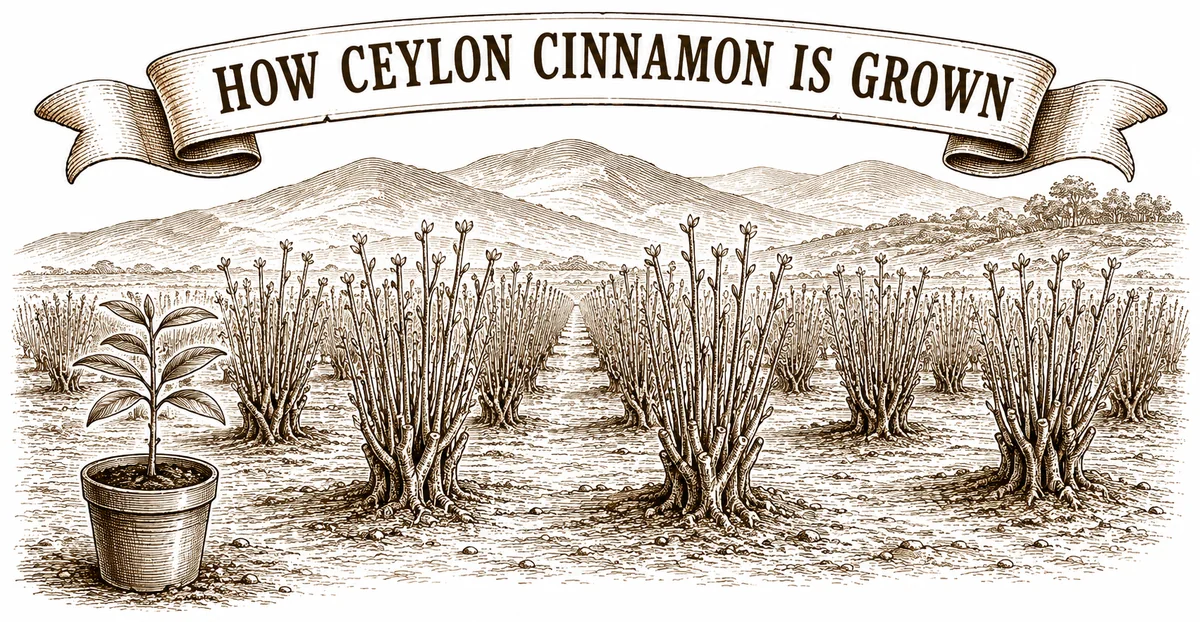
Ceylon cinnamon is widely regarded as one of the more sustainable spices, because the plant is grown as a coppiced bush that regrows after each harvest, is largely tended and processed by hand with little heavy machinery, and supports the livelihoods of many smallholder farming families in Sri Lanka. Rather than being cut down, cinnamon plants are pruned and keep producing for decades, so a well-managed garden is a renewable, long-lived crop.
This guide looks honestly at what makes true Ceylon cinnamon (Cinnamomum verum) a comparatively low-impact spice: how the growing method conserves the plants, the role of the people who produce it, and the environmental and social factors that shape its sustainability. For the wider context of how it is cultivated, see our pillar guide on Sri Lankan cinnamon farming.
What does “sustainable” mean for Ceylon cinnamon?
Sustainability here means producing cinnamon in a way that can continue for the long term without exhausting the land, harming the environment, or leaving the people who grow it worse off. For Ceylon cinnamon, that comes down to three linked things: the growing method that renews itself, the mostly manual, low-input way it is processed, and the many farming families whose livelihoods depend on it. No crop is perfectly impact-free, but cinnamon’s traditional cultivation has several features that make it relatively gentle on both land and people.
Why the growing method is renewable
The single biggest reason Ceylon cinnamon is considered sustainable is coppicing, the practice of cutting the plant back low so it sends up fresh shoots instead of being felled.
The plant is not cut down
Because only the young shoots are harvested and the rootstock stays in the ground, a single cinnamon plant keeps regrowing and producing for many years, often decades. There is no need to clear and replant with every harvest, which protects the soil and avoids the disturbance that comes with replanting. This regenerative cycle is described in our guide to how Ceylon cinnamon is grown.
Continuous, low-waste harvesting
Harvesting takes the shoots and leaves the plant to recover, and even the off-cuts are put to use: trimmed leaves and smaller material are often distilled for cinnamon leaf oil rather than discarded. This makes good use of the whole plant, as touched on in our guide to how Ceylon cinnamon is harvested.
A low-input, hand-made craft
Ceylon cinnamon is unusual among modern crops in how little heavy industry it involves. The shoots are cut, peeled, rolled and dried largely by hand, using simple tools and skilled human labour rather than energy-hungry machinery. Drying is often done in the open air or in simple sheds. This hand-made approach, covered in our guide to how Ceylon cinnamon is made, keeps the energy footprint of production low compared with heavily mechanised agriculture, and it is a large part of why genuine Ceylon cinnamon is both labour-intensive and comparatively low-impact.
The people behind the spice
Sustainability is not only about the environment; it is also about the people who make a crop possible.
Smallholder farming families
Much of Sri Lanka’s cinnamon is grown by smallholder families and processed by skilled peelers, often as knowledge passed down through generations. The crop provides income and employment across rural communities, so a healthy cinnamon industry supports many livelihoods.
Skilled, valued labour
Because peeling cinnamon is a craft that takes years to master, the people who do it hold genuine skill. Supporting fair prices and good conditions for growers and peelers is central to keeping the industry sustainable in a human sense, not just an environmental one. Choosing quality, traceable cinnamon is one way consumers connect to this, a theme in our Ceylon cinnamon buying guide.
Environmental strengths at a glance
| Feature | Why it helps |
|---|---|
| Coppicing | Plants regrow; no felling or frequent replanting |
| Long plant life | Same rootstock produces for decades |
| Hand processing | Low machinery and energy use |
| Whole-plant use | Off-cuts distilled into leaf oil, less waste |
| Perennial cover | Established gardens help protect the soil |
Honest limits and challenges
A fair look at sustainability also acknowledges the challenges. Like any agriculture, cinnamon farming can face pressures around land use, pests and diseases, fair pricing, and the demands placed on farmers and peelers. Prices paid to growers, market fluctuations, and the hard physical nature of peeling all affect whether the livelihoods behind the spice are truly sustainable over time. Environmental outcomes also depend on how individual gardens are managed. In other words, cinnamon has strong natural advantages, but realising them depends on good practice on the ground and fair treatment of the people involved, rather than being automatic.
How consumers can support sustainable cinnamon
Buyers have a real, if modest, role to play. Choosing genuine Ceylon cinnamon, looking for clear origin information, and favouring sellers who are transparent about sourcing all help reward good practice. Buying quality cinnamon and using it well, rather than wasting it, also respects the labour and resources behind it. Knowing how to recognise the real thing supports this, as set out in our guide to identifying authentic Ceylon cinnamon. While no single purchase transforms an industry, consistent demand for authentic, responsibly produced cinnamon encourages the practices that keep it sustainable.
Summary
Ceylon cinnamon is considered a relatively sustainable spice for several connected reasons: it is grown as a coppiced bush that regrows rather than being cut down, so the same plants produce for decades; it is largely tended and processed by hand with little heavy machinery, keeping energy use low; the whole plant is used, with off-cuts distilled into oil; and it supports the livelihoods of many smallholder farming families in Sri Lanka. These are genuine strengths, though sustainability is never automatic, it depends on good land management, fair prices and decent conditions for growers and peelers. For consumers, choosing authentic, transparently sourced Ceylon cinnamon and using it well is a simple way to support the practices that keep this ancient crop renewable.
Frequently asked questions
Is Ceylon cinnamon environmentally sustainable?
It has strong sustainability credentials: the plant is coppiced rather than felled, regrows for decades, is processed largely by hand with little machinery, and makes use of the whole plant. Actual impact still depends on how each garden is managed.
Why is coppicing important for sustainability?
Coppicing means cutting the plant back so it regrows new shoots instead of being cut down. This lets the same rootstock produce for many years without replanting, protecting the soil and reducing disturbance.
Does buying Ceylon cinnamon support farmers?
Much Ceylon cinnamon is grown and peeled by smallholder families and skilled workers in Sri Lanka. Choosing genuine, transparently sourced cinnamon helps reward fair, responsible production and the livelihoods behind it.
Is Ceylon cinnamon a low-impact spice?
Comparatively, yes. Its renewable growing method, hand-based processing and whole-plant use give it a lower footprint than many heavily mechanised crops, though no agriculture is entirely without impact.
This website provides educational information about Ceylon Cinnamon as a spice and food ingredient. It is not intended to provide medical advice or make health claims.