Category: Fundamentals

  • What Does Ceylon Cinnamon Smell Like?

    What Does Ceylon Cinnamon Smell Like?

    Ceylon cinnamon has a warm, sweet and delicate aroma, gently woody and lightly floral, with soft citrus and clove-like notes behind its main sweetness. It smells refined and complex rather than sharp or fiery. This gentle, perfumed scent is one of the clearest signs of true cinnamon, Cinnamomum verum, from Sri Lanka, and it is noticeably milder and more layered than the strong, hot, one-note smell of the cheaper cassia that is often sold simply as cinnamon.

    Aroma is one of the first things people notice about Ceylon cinnamon, and it is also one of the best ways to recognise it. This guide describes what Ceylon cinnamon smells like, why it has that scent, and how its aroma compares with cassia. It builds on our pillar guide, what is true Ceylon cinnamon.

    The short answer

    Ceylon cinnamon smells warm, sweet, delicate and complex, with woody, lightly floral and faintly citrus notes, and only a gentle spiciness. Open a jar of true Ceylon cinnamon and the first impression is sweetness and warmth, followed by softer, more perfumed notes that unfold rather than hit you all at once. It is fragrant but refined. This is quite different from cassia, which smells stronger, hotter and more straightforwardly spicy. The delicacy and depth of the scent are exactly what mark out genuine Ceylon cinnamon.

    The main notes in the aroma

    The aroma of Ceylon cinnamon can be broken into a few layers. The dominant impression is a sweet, warm woodiness, the familiar cinnamon character, but gentler than most people expect. Behind it sit lightly floral and faintly citrus notes that give the scent its freshness and lift. There is also a soft, clove-like warmth that adds depth without heat. Together these make the smell complex and rounded. Rather than a single strong blast of spice, Ceylon cinnamon offers a layered, almost perfume-like fragrance that reveals more the longer you smell it.

    Aroma noteHow it shows in Ceylon cinnamon
    SweetnessClear and gentle, the first impression
    Woody warmthSoft and rounded, not harsh
    Floral hintLight, adds freshness and lift
    Citrus edgeFaint, brightens the scent
    Clove-like noteSoft warmth in the background

    Why Ceylon cinnamon smells the way it does

    The scent comes from the natural aromatic compounds in the bark. The main one, cinnamaldehyde, gives cinnamon its characteristic sweet, warm smell, and Ceylon cinnamon contains it at a gentler level than cassia, which is part of why it is milder. Other naturally occurring compounds, including eugenol, add the soft clove-like and spicy notes, while traces of other aromatics contribute the floral and citrus hints. The balance of these compounds, rather than any single one, is what gives Ceylon cinnamon its delicate, layered aroma. Our guide to what gives Ceylon cinnamon its aroma looks at this in more detail.

    How it differs from cassia’s smell

    The clearest way to understand the smell of Ceylon cinnamon is to compare it with cassia. Cassia, the common cinnamon in many supermarkets, smells strong, hot and sharply spicy, with a bold single note that fills the room. Ceylon cinnamon, by contrast, is softer, sweeter and more fragrant, with the gentle complexity described above. If a cinnamon smells aggressive or fiery, it is likely cassia; if it smells sweet, mellow and perfumed, it is likely true Ceylon cinnamon. This difference in aroma is one of the simplest tests, which our guide to how to tell if cinnamon powder is Ceylon uses from the identification side.

    Sticks versus powder

    The form affects how strongly you smell the aroma. Whole Ceylon cinnamon sticks, or quills, release their scent slowly, so you often need to break or scratch a quill to catch the full fragrance, which then comes through sweet and clear. Ground Ceylon cinnamon smells more immediately, since grinding exposes much more surface and releases the aromatic compounds at once, but it also fades faster over time. A fresh jar of Ceylon cinnamon powder gives the quickest impression of the scent, while a quill rewards a closer sniff. In both forms the character is the same gentle, sweet, complex aroma.

    How freshness changes the smell

    Aroma is also a guide to freshness. Fresh Ceylon cinnamon has a lively, full scent, sweet and clearly perfumed. As it ages, especially as powder, the volatile aromatic compounds slowly escape, and the smell becomes fainter and flatter. Old cinnamon may still be safe to use if kept dry, but it will not give the same fragrance or flavour. So the strength of the scent, as well as its character, tells you something: a weak, dull smell suggests the cinnamon is past its best, while a warm, sweet, lively aroma points to fresh, good-quality Ceylon cinnamon.

    How the aroma shows in cooking

    The gentle scent of Ceylon cinnamon carries into the way it behaves in food. Because its aroma is sweet and delicate rather than overpowering, it perfumes a dish without dominating it, which is why it works so well in both sweet and savoury cooking. In a simmering curry, a warm drink or a baked dessert, Ceylon cinnamon adds a soft, fragrant warmth that blends with the other ingredients. The same quality that makes it smell refined in the jar makes it versatile in the kitchen. Cassia, with its stronger, hotter aroma, tends to announce itself more loudly, which suits some dishes but can overwhelm others. The smell, in other words, is a good guide to how the cinnamon will taste and behave.

    A simple way to compare the two

    If you want to understand the smell of Ceylon cinnamon, the easiest way is to compare it directly with cassia. Place a little of each side by side, as sticks or powder, and smell them in turn. The cassia will usually seem stronger and hotter at first, almost pushing forward, while the Ceylon cinnamon will seem softer, sweeter and more rounded, inviting a second, closer sniff. Once you have smelled the two together, the delicate, layered character of true Ceylon cinnamon becomes easy to recognise on its own. This simple comparison is one of the most memorable ways to learn the difference, and it needs no special equipment.

    Using the smell to buy well

    Because the aroma is so distinctive, your nose is a genuine tool when choosing cinnamon. Where you can smell before buying, or when you open a new pack, a sweet, delicate, layered fragrance is a good sign of true Ceylon cinnamon, while a harsh, hot, single-note smell suggests cassia. Combined with checking the label for Cinnamomum verum and Sri Lankan origin, the scent helps confirm you have the real thing. In this way, learning what Ceylon cinnamon smells like is not just pleasant but practical, since it connects directly to recognising and buying genuine Ceylon cinnamon.

    Summary

    Ceylon cinnamon smells warm, sweet, delicate and complex. Its main character is a gentle, sweet woodiness, lifted by light floral and faint citrus notes and softened by a clove-like warmth, giving a layered, almost perfumed fragrance rather than a sharp blast of spice. This refined aroma comes from the balance of natural compounds in the bark, including a milder level of cinnamaldehyde than cassia, which is why true cinnamon, Cinnamomum verum, smells softer and more fragrant than the strong, hot, one-note cassia. The scent is clearest in fresh cinnamon and fades with age, and it differs between whole quills, which release it slowly, and powder, which smells at once. Because the aroma is so distinctive, it is one of the easiest ways to recognise genuine Ceylon cinnamon from Sri Lanka.

    Frequently asked questions

    What does Ceylon cinnamon smell like?

    It smells warm, sweet, delicate and complex, with gentle woody, lightly floral and faintly citrus notes and a soft clove-like warmth. The fragrance is refined and perfumed rather than sharp, which is a clear sign of true Ceylon cinnamon.

    How is the smell of Ceylon cinnamon different from cassia?

    Cassia smells strong, hot and sharply spicy, with a bold single note. Ceylon cinnamon is softer, sweeter and more fragrant, with gentle complexity. If a cinnamon smells aggressive, it is likely cassia; if it smells sweet and perfumed, it is likely Ceylon.

    Why does Ceylon cinnamon smell sweeter?

    Because of the balance of natural compounds in the bark. It contains cinnamaldehyde at a gentler level than cassia, along with eugenol and other aromatics that add soft clove, floral and citrus notes, giving a milder, more layered and sweeter aroma.

    Does ground cinnamon smell different from sticks?

    The character is the same, but the strength differs. Ground Ceylon cinnamon smells more immediately because grinding releases the aromatic compounds at once, while whole quills release their scent slowly and may need breaking or scratching to smell fully.

    Can I use smell to tell if cinnamon is fresh?

    Yes. Fresh Ceylon cinnamon has a lively, sweet, full aroma, while old cinnamon smells faint and flat as its volatile compounds escape. A weak smell suggests it is past its best, and a warm, sweet, lively scent points to fresh, good-quality cinnamon.

    This website provides educational information about Ceylon Cinnamon as a spice and food ingredient. It is not intended to provide medical advice or make health claims.
  • What Is ‘True Cinnamon’ and Why Does It Matter?

    What Is ‘True Cinnamon’ and Why Does It Matter?

    “True cinnamon” is the common name for Ceylon cinnamon, the spice made from the dried inner bark of Cinnamomum verum, a tree native to Sri Lanka. It is called true cinnamon to set it apart from cassia, a group of related but different barks that are also sold as “cinnamon”. The distinction matters because the two differ in flavour, bark structure and botanical species, so knowing which one you have affects how your food tastes and what you are really buying. This guide explains what true cinnamon means and why the term is worth knowing.

    The phrase “true cinnamon” appears on labels, in recipes and in shops, but it is not always explained. This guide sets out what it means, where it comes from and why the difference is worth caring about, in plain terms. It builds on our pillar guide, what is true Ceylon cinnamon.

    The short answer

    True cinnamon is Ceylon cinnamon, the spice from Cinnamomum verum, grown in Sri Lanka, and the term exists to distinguish it from cassia, the cheaper, more common bark often sold simply as “cinnamon”. It matters because true cinnamon is milder and sweeter, has a thin, layered bark, and is a distinct botanical species, so the name tells you what you are actually getting.

    Where the term comes from

    The word “cinnamon” is used in everyday speech for several different barks from the Cinnamomum family of trees. Only one of them, Cinnamomum verum, is the original spice that the name historically referred to. The Latin word verum itself means “true”, so the botanical name already carries the idea. Over time, as cheaper cassia barks spread through world trade and were also called cinnamon, the term “true cinnamon” came into use to point clearly to the original Ceylon spice rather than its substitutes.

    So “true cinnamon” is not a marketing invention but a way of naming the specific spice that the word cinnamon first described. For more on the species name, see our guide to what Cinnamomum verum means.

    True cinnamon versus cassia

    The reason the term exists is the difference between true cinnamon and cassia. True cinnamon, Cinnamomum verum, comes from Sri Lanka and has a thin, papery bark made of many fine layers rolled into delicate quills. Its flavour is mild, sweet and lightly citrus. Cassia is a group of other species, such as Cinnamomum cassia from China and Cinnamomum burmannii from Indonesia, with a thick, hard single-layer bark and a stronger, hotter, more pungent flavour. Both are real spices, but they are not the same thing. Our full comparison covers this in detail: Ceylon cinnamon versus cassia.

    Because cassia is cheaper and more widely produced, much of the ground “cinnamon” on supermarket shelves is actually cassia. That is exactly why the term true cinnamon is useful: it names the original spice clearly, so you are not left guessing which bark is in the jar.

    Why the difference matters

    Knowing whether you have true cinnamon or cassia matters for a few practical reasons. The first is flavour. True cinnamon is gentle and sweet, which suits delicate desserts, custards and milk-based dishes, while cassia is bolder and better for a strong cinnamon hit in heavier bakes. Using one where you expected the other changes how a dish tastes.

    The second is simply knowing what you are buying. True cinnamon is a distinct, named spice with its own origin and character, and it usually costs more than cassia because it is more labour intensive to produce. When a product says true cinnamon or names Cinnamomum verum, you can be confident you are getting the Ceylon spice rather than a cheaper substitute sold under the same everyday name. For telling them apart yourself, see our guide on how to identify authentic Ceylon cinnamon.

    A little history behind the name

    True cinnamon has a long history that helps explain why it earned its name. For centuries, the thin, fragrant bark of Cinnamomum verum from Sri Lanka was one of the most sought-after spices in the world, carried along ancient trade routes and valued across the Mediterranean and beyond. Because it was rare and precious, it was the cinnamon that people knew and wrote about. As trade grew, cheaper cassia barks from other parts of Asia entered the market under the same broad name, and the two became blurred in everyday use. Calling the Sri Lankan spice “true cinnamon” was a way of keeping the original, historically prized spice distinct from the newer substitutes. The term carries that heritage with it, pointing back to the spice that first made cinnamon famous.

    Where you will see the term

    You are most likely to meet the phrase “true cinnamon” on product packaging, in recipes and in guides about spices. On packaging, it is often paired with “Ceylon cinnamon” and the species name to reassure buyers they are getting Cinnamomum verum. In recipes, a cook may specify true cinnamon when the gentle, sweet flavour matters to the dish. In spice guides and articles, the term is used to draw the clear line between true cinnamon and cassia. Seeing the phrase is usually a sign that the writer or seller wants to be precise about which spice they mean, rather than leaving it to the catch-all word cinnamon.

    How to spot true cinnamon

    You can recognise true cinnamon in a few ways. On a label, look for the words “Ceylon cinnamon” or “true cinnamon” and the species name Cinnamomum verum (or the older Cinnamomum zeylanicum), along with a Sri Lankan origin. By eye, a true cinnamon quill is thin and brittle, made of many layers rolled tightly together like a packed cigar, and it snaps and crumbles easily. A cassia stick is a thick, hard single curl that is much tougher to break. In powder form the two are hard to tell apart, which is why the label matters most for ground cinnamon.

    True cinnamon at a glance

    PointTrue cinnamonCassia
    Also calledCeylon cinnamonChinese, Indonesian, Saigon cinnamon
    SpeciesCinnamomum verumCinnamomum cassia and others
    OriginSri LankaChina, Indonesia, Vietnam
    BarkThin, layered, brittleThick, hard, single layer
    FlavourMild, sweet, delicateBold, hot, pungent
    Typical priceHigherLower

    Does “true cinnamon” mean better cinnamon?

    True cinnamon is not automatically better than cassia for every use, so the term is about identity rather than a simple ranking. True cinnamon is prized for its delicate, sweet flavour and fine quills, and it is the original spice, but cassia has its place where a strong, hot cinnamon flavour is wanted. What the term true cinnamon really tells you is which spice you are dealing with, so you can choose the right one for the dish and know what you are paying for. Thinking of it as a clear label rather than a quality badge is the most useful way to use the term.

    Frequently asked questions

    What does “true cinnamon” mean?

    True cinnamon means Ceylon cinnamon, the spice made from the dried inner bark of Cinnamomum verum, a tree native to Sri Lanka. The term distinguishes it from cassia, a group of related but different barks that are also commonly sold as cinnamon.

    Is true cinnamon the same as Ceylon cinnamon?

    Yes. True cinnamon and Ceylon cinnamon are two names for the same spice, made from Cinnamomum verum and grown in Sri Lanka. “Ceylon” is the historic name for the island, and “true cinnamon” marks it out from cassia.

    Why does it matter if cinnamon is true or cassia?

    It matters because the two differ in flavour, bark and species. True cinnamon is milder and sweeter and suits delicate dishes, while cassia is bolder and hotter. Knowing which you have affects how your food tastes and tells you what you are actually buying.

    Is all cinnamon true cinnamon?

    No. Much of the cinnamon sold, especially ground cinnamon in supermarkets, is cassia rather than true cinnamon. Only cinnamon from Cinnamomum verum is true cinnamon, so check the label for the species name or a Ceylon origin.

    Summary

    True cinnamon is the common name for Ceylon cinnamon, the spice from Cinnamomum verum, grown in Sri Lanka. The term exists to tell it apart from cassia, a group of cheaper, more common barks also sold as cinnamon. The difference matters because true cinnamon is milder and sweeter, has a thin, layered bark and is a distinct species, so the name tells you which spice you really have. It is best understood as a clear label of identity rather than a simple mark of quality, helping you choose the right cinnamon and know what you are buying.

    This website provides educational information about Ceylon Cinnamon as a spice and food ingredient. It is not intended to provide medical advice or make health claims.

  • Why Is It Called Ceylon Cinnamon?

    Why Is It Called Ceylon Cinnamon?

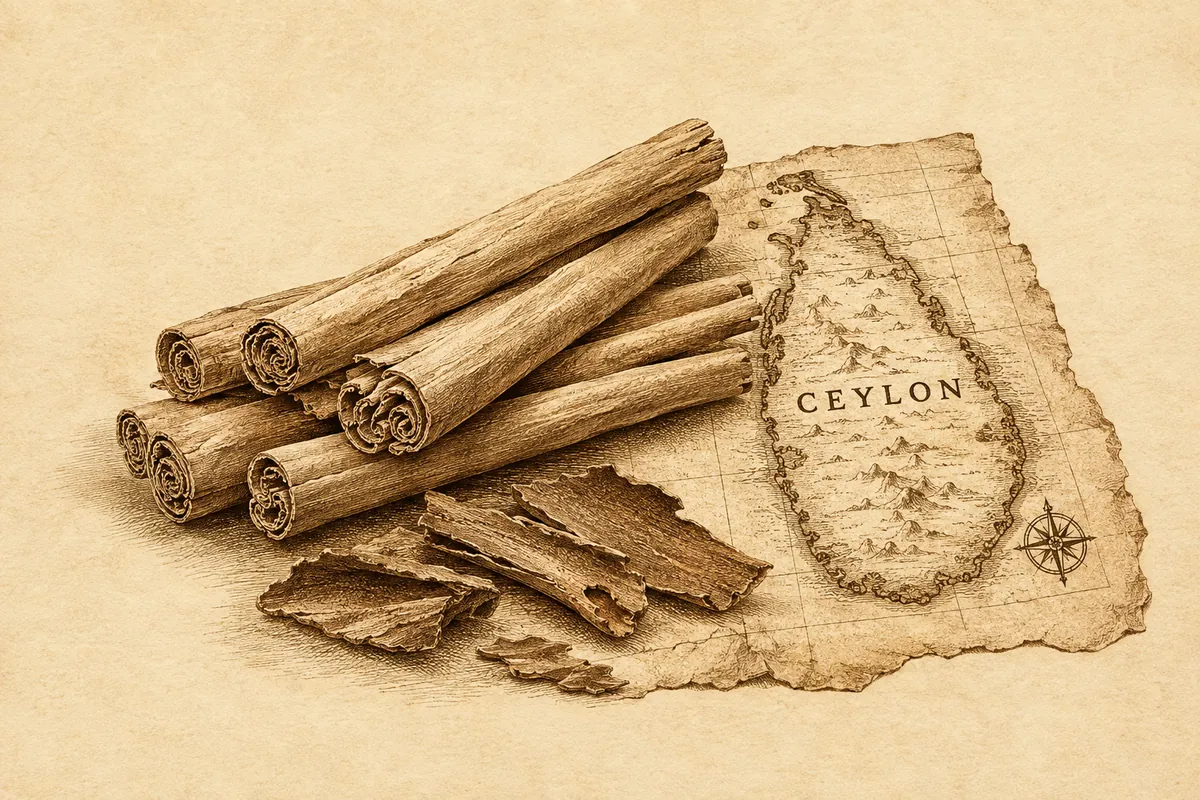
    Ceylon cinnamon is called “Ceylon” cinnamon because it comes from the island of Sri Lanka, which was known as Ceylon for much of its history. This island is the native home of the true cinnamon tree, Cinnamomum verum, and for centuries it was the world’s source of the finest cinnamon. The name stuck to the spice as a mark of origin and quality, and it remains in use today even though the country itself is now called Sri Lanka.

    The name “Ceylon cinnamon” carries a lot of history in two words. This guide explains where the name comes from, why it is still used, and what it tells you about the spice. It builds on our pillar guide to what true Ceylon cinnamon is.

    The short answer

    It is called Ceylon cinnamon because it originates in Sri Lanka, the island formerly named Ceylon, which is the native home of the true cinnamon tree Cinnamomum verum. “Ceylon” was the English name for the country until 1972, and by then the island’s cinnamon was already famous worldwide under that name. The spice kept the name as a recognised sign of its origin and its fine quality, so “Ceylon cinnamon” still means cinnamon from Sri Lanka today.

    Ceylon was the old name for Sri Lanka

    The key to the name is simple: Ceylon and Sri Lanka are the same place. Ceylon was the name used for the island for a long period, especially during British rule, and it remained the country’s official name until 1972, when it was changed to Sri Lanka. During the centuries when the island was called Ceylon, its cinnamon became known around the world, and the spice was named after the place it came from. So Ceylon cinnamon simply means cinnamon from the island once called Ceylon, which is modern Sri Lanka.

    Where the word “Ceylon” itself came from

    The word Ceylon has a long journey behind it. It grew out of older names for the island that passed through several languages. Traders and travellers from different parts of the world each had their own version of the island’s name, and over time the European form settled into “Ceylon” in English, “Ceilão” in Portuguese and “Zeylan” in Dutch. Each of these came from earlier names rooted in the island’s own history. By the time English speakers were using “Ceylon”, it was the everyday name for both the island and, before long, for its most famous spice.

    What matters for the spice is not the exact path of the word, but the fact that “Ceylon” was the name the wider world knew the island by during the very period when its cinnamon trade was at its height. Ships carried the bark to distant ports labelled as coming from Ceylon, merchants bought and sold it under that name, and cooks came to ask for it by name. In this way the word became attached to the spice as firmly as it was to the island, so that centuries later people still reach for “Ceylon cinnamon” without always knowing that Ceylon was ever a country at all.

    The island is the home of true cinnamon

    The name is not only about geography. It also points to the plant. The true cinnamon tree, Cinnamomum verum, is native to Sri Lanka, and the spice made from its bark has been valued for its fine, sweet, delicate character since ancient times. Because the island was the original and finest source of this spice, the world came to associate the very best cinnamon with the island’s name. For more on the botanical name behind the tree, see our guide to what “Cinnamomum verum” actually means. The connection between the spice and its homeland is also why the island’s long trading history is so bound up with cinnamon, as told in our history of Ceylon cinnamon.

    The name marks quality, not just origin

    Over time, “Ceylon cinnamon” came to mean more than just “cinnamon from a certain island”. It became a mark of quality. Because the island produced cinnamon of a fine, mild, sweet kind, buyers and cooks learned that the Ceylon name signalled the real, true spice rather than a rougher substitute. This reputation is one reason the name has lasted. When people say Ceylon cinnamon, they usually mean the premium, authentic spice, and part of the reason it commands attention is bound up with why it is prized, a theme covered in our guide to why Ceylon cinnamon is so expensive.

    Ceylon cinnamon versus cassia

    The name also does an important job of telling true cinnamon apart from cassia. Most of the cinnamon sold cheaply around the world is not Ceylon cinnamon at all but cassia, which comes from different trees grown in other countries. Calling the true spice “Ceylon cinnamon” makes the distinction clear: it is the genuine Cinnamomum verum from Sri Lanka, not one of the cassia types. This is why the name matters so much to people who want the real thing, and it is explained fully in our pillar comparison of Ceylon cinnamon versus cassia.

    The many names for the same spice

    Because of this history, the same spice goes by several names, which can be confusing at first.

    Different names used for the same true cinnamon.
    NameWhat it refers toWhy it is used
    Ceylon cinnamonTrue cinnamon from Sri LankaNamed after the island’s historic name, Ceylon
    True cinnamonThe same spice, Cinnamomum verumTo distinguish it from cassia
    Sri Lankan cinnamonThe same spice, by the modern country nameReflects the country’s current name
    Cinnamomum verumThe botanical species itselfThe scientific name of the tree

    All four names point to the same thing: the dried inner bark of the true cinnamon tree from Sri Lanka. Ceylon cinnamon is simply the most familiar and widely used of them.

    Why the name did not change to “Sri Lanka cinnamon”

    When the country changed its name from Ceylon to Sri Lanka in 1972, the spice did not follow suit for most buyers. By then, “Ceylon cinnamon” was a well established name in kitchens, markets and trade all over the world. Changing a famous product name is difficult once it is widely known, and the Ceylon name already carried a strong reputation for quality. You will sometimes see the spice described as Sri Lankan cinnamon, which is perfectly accurate, but the older name remains the common one. In this way, “Ceylon” lives on as the name of a spice long after it stopped being the name of a country.

    What the name tells a buyer

    For anyone shopping for cinnamon, the name is a useful signal. When a product is clearly labelled as Ceylon cinnamon, and better still names the species Cinnamomum verum, it is telling you that this is the true cinnamon from Sri Lanka rather than a cassia type. That said, names on labels are only as trustworthy as the seller, so it still pays to look for a clear origin and botanical name together. Understanding what the Ceylon name means is the first step to choosing the genuine spice with confidence.

    Frequently asked questions

    Why is it called Ceylon cinnamon?

    Because it comes from Sri Lanka, the island that was called Ceylon for much of its history. The island is the native home of the true cinnamon tree, Cinnamomum verum, and its cinnamon became famous worldwide under the Ceylon name, which the spice still carries today.

    Is Ceylon the same as Sri Lanka?

    Yes. Ceylon was the name of the country until 1972, when it was changed to Sri Lanka. They are the same island. Ceylon cinnamon therefore means the same thing as Sri Lankan cinnamon: true cinnamon grown in Sri Lanka.

    Is Ceylon cinnamon the same as true cinnamon?

    Yes. Ceylon cinnamon, true cinnamon and Cinnamomum verum all refer to the same spice, made from the inner bark of the true cinnamon tree native to Sri Lanka. The different names are used to tell it apart from cassia.

    Why is the name still used if the country is now Sri Lanka?

    Because “Ceylon cinnamon” was already an established, well known name for the spice long before the country was renamed in 1972. The name carries a strong reputation for quality, so it stayed in use even though the country’s own name changed.

    Summary

    Ceylon cinnamon is called Ceylon cinnamon because it comes from Sri Lanka, the island known as Ceylon for much of its history and until 1972. This island is the native home of the true cinnamon tree, Cinnamomum verum, and was long the world’s source of the finest cinnamon, so the spice took the island’s name as a sign of both origin and quality. The name also helps tell true cinnamon apart from cassia. Even though the country is now Sri Lanka, the older name remains the common one, which is why the same spice is known as Ceylon cinnamon, true cinnamon, Sri Lankan cinnamon and Cinnamomum verum, all pointing to one thing: the real cinnamon of Sri Lanka.

    This website provides educational information about Ceylon Cinnamon as a spice and food ingredient. It is not intended to provide medical advice or make health claims.
  • What Is Ceylon Cinnamon Oil?

    What Is Ceylon Cinnamon Oil?

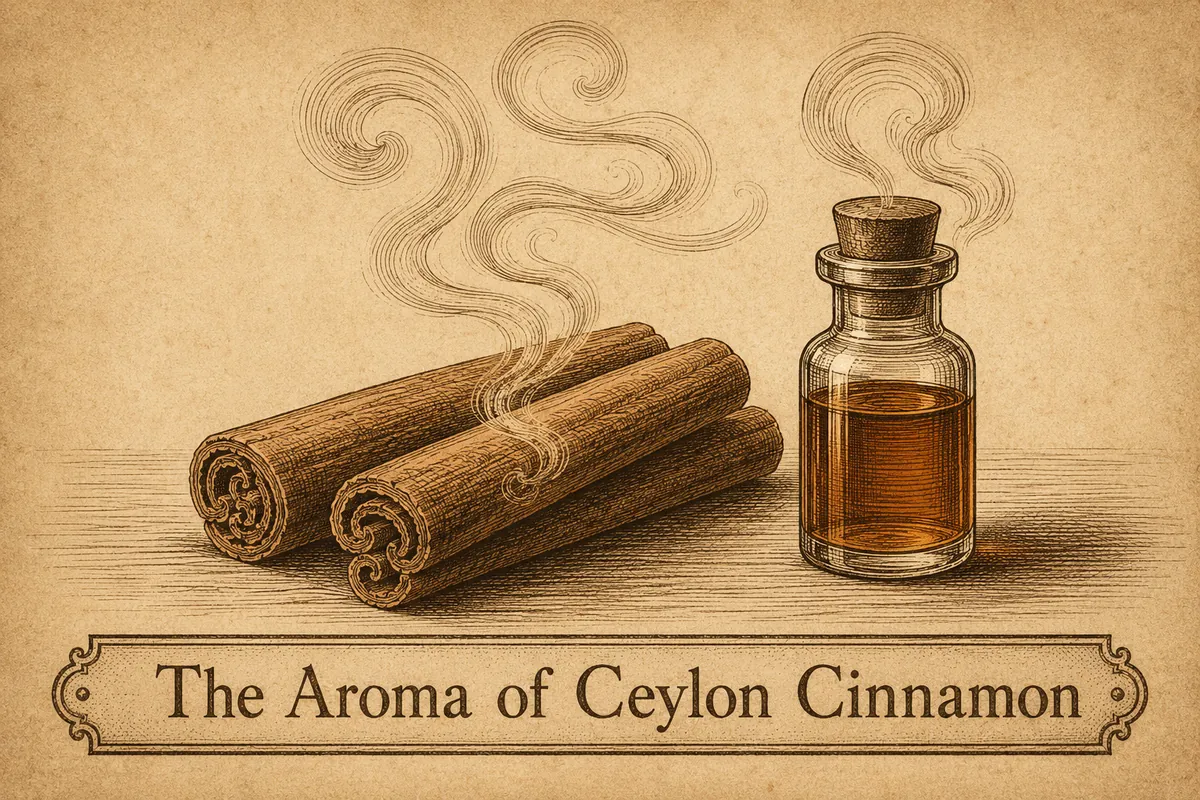
    Ceylon cinnamon oil is the concentrated essential oil extracted from the bark or leaves of the true cinnamon tree, Cinnamomum verum, from Sri Lanka. It captures the warm, sweet, spicy aroma and flavour of cinnamon in a highly concentrated liquid form. There are two main types: cinnamon bark oil, which has the rich, sweet character of the spice itself, and cinnamon leaf oil, which is warmer and more clove-like. Both are used as flavourings and fragrances, and because they are so concentrated, only tiny amounts are needed.

    Cinnamon oil is one of the many forms in which Ceylon cinnamon reaches the world. This guide explains what it is, how it is made and how it is used. It builds on our pillar guide to what true Ceylon cinnamon is.

    The short answer

    Ceylon cinnamon oil is the essential oil distilled from the bark or leaves of Cinnamomum verum, giving a highly concentrated form of cinnamon’s aroma and flavour. Bark oil carries the sweet, warm scent of the spice, while leaf oil is more clove-like. Both are potent, so only a very small amount is used, whether for flavouring food and drink or as a fragrance.

    Bark oil and leaf oil

    The most important thing to understand about cinnamon oil is that there are two main kinds, and they are quite different.

    Cinnamon bark oil

    Bark oil is distilled from the inner bark, the same part of the tree used to make cinnamon quills. It has the rich, sweet, warm aroma most people associate with cinnamon, dominated by the compound cinnamaldehyde. Because it comes from the prized bark, it is generally the more expensive of the two and the one valued for a true cinnamon flavour and scent.

    Cinnamon leaf oil

    Leaf oil is distilled from the leaves of the tree rather than the bark. Its aroma is warmer, spicier and more clove-like, because it is higher in a compound called eugenol, which is also found in cloves. Leaf oil is usually less costly than bark oil and has a slightly different character, so the two are chosen for different purposes. To understand the compounds behind these differences, see our guide to cinnamaldehyde.

    Bark oil vs leaf oil at a glance

    Comparing Ceylon cinnamon bark oil and leaf oil.
    FeatureBark oilLeaf oil
    SourceInner barkLeaves
    Main compoundCinnamaldehydeEugenol
    AromaSweet, warm, true cinnamonWarmer, spicier, clove-like
    CostHigherLower
    Typical useFlavour, fine fragranceFragrance, flavouring, scenting

    How cinnamon oil is made

    Ceylon cinnamon oil is usually produced by steam distillation. In this process, steam is passed through the cinnamon bark or leaves, carrying the volatile aromatic oils with it. The steam and oil vapour are then cooled and condensed back into liquid, and the oil, which does not mix with water, is separated off. The result is a concentrated essential oil holding the fragrant compounds of the plant. Because the oils are the same volatile compounds that give the spice its scent, distilling them simply captures that aroma in a pure, concentrated form, a theme covered in our guide to what gives Ceylon cinnamon its aroma.

    What cinnamon oil is used for

    Cinnamon oil has several everyday uses, all built on its strong aroma and flavour.

    Flavouring

    In food and drink, cinnamon oil is used as a concentrated flavouring, for example in confectionery, baked goods, and some beverages. A very small amount delivers a strong cinnamon taste. Food-grade cinnamon oil should always be used for this purpose, and only in tiny quantities.

    Fragrance and scenting

    Cinnamon oil is widely used as a fragrance, in perfumes, scented candles, potpourri and household scents. Its warm, spicy aroma is especially popular in autumn and festive scents, where it evokes a cosy, comforting mood.

    Traditional and aromatic use

    Cinnamon and its oil have long been valued as aromatics, historically prized for their fragrance. Today cinnamon leaf and bark oils remain popular in aromatic blends and scented products, continuing this long tradition of enjoying cinnamon for its smell.

    Why cinnamon oil is so concentrated

    It is worth stressing just how concentrated cinnamon oil is. A single small bottle of essential oil holds the aromatic compounds from a large amount of bark or leaves, so it is far stronger than the spice itself. This is why only a drop or two is needed to flavour or scent, and why cinnamon oil should be handled with care and, for culinary use, always be food grade and heavily diluted. Undiluted essential oils are very strong and are not meant to be used neat. Treating cinnamon oil as the potent concentrate it is helps you use it safely and get the best from it.

    How to choose a good cinnamon oil

    If you are buying cinnamon oil, a few things help you choose well. First, check whether it is bark oil or leaf oil, since they smell and behave differently and suit different purposes. Second, look at the source: oil made from true Ceylon cinnamon (Cinnamomum verum) from Sri Lanka carries the fine, sweet character of the real spice, so a clear botanical name and origin on the label are good signs. Third, decide what you need it for, and if it is for food, make sure it is clearly sold as food grade, since not all essential oils are intended for eating. Finally, buy from reputable sellers who are open about what their oil is and where it comes from. A little care at the point of purchase makes it much easier to use the oil confidently afterwards.

    Storing cinnamon oil

    Like the aromatic oils in the spice itself, the compounds in cinnamon oil are volatile and can fade or change over time if the oil is not kept well. The usual advice is to store essential oils in a tightly closed bottle, away from heat and direct light, in a cool place. Dark glass bottles are commonly used because they help shield the oil from light. Kept this way, a good cinnamon oil holds its strong aroma for a long time. Because only tiny amounts are used at a time, a small bottle tends to last, so careful storage really pays off in keeping every drop fragrant and effective.

    Cinnamon oil and true Ceylon cinnamon

    As with the spice itself, there is a difference between oil from true Ceylon cinnamon (Cinnamomum verum) and oil from cassia. Ceylon cinnamon oil reflects the milder, sweeter, more refined character of the true spice, while cassia oil tends to be sharper and is often cheaper and more common. For those who value the fine flavour and aroma of true cinnamon, Ceylon cinnamon oil offers that same quality in concentrated form. Choosing oil made from genuine Sri Lankan Cinnamomum verum is the way to be sure of it, which ties back to the broader picture in our guide to the culinary uses of Ceylon cinnamon.

    Frequently asked questions

    What is Ceylon cinnamon oil?

    It is the concentrated essential oil extracted, usually by steam distillation, from the bark or leaves of the true cinnamon tree, Cinnamomum verum, from Sri Lanka. It captures the warm, sweet, spicy aroma and flavour of cinnamon in a highly concentrated liquid, used as a flavouring and fragrance.

    What is the difference between cinnamon bark oil and leaf oil?

    Bark oil is distilled from the inner bark and has the sweet, warm aroma of true cinnamon, led by cinnamaldehyde. Leaf oil is distilled from the leaves and is warmer and more clove-like, being higher in eugenol. Bark oil is usually more expensive; leaf oil is generally cheaper.

    How is cinnamon oil made?

    Most cinnamon oil is made by steam distillation. Steam is passed through the bark or leaves, picking up the volatile aromatic oils, then cooled so the oil condenses and can be separated from the water. This captures the fragrant compounds of cinnamon in concentrated form.

    Is Ceylon cinnamon oil used in cooking?

    Yes, food-grade cinnamon oil is used as a concentrated flavouring in confectionery, baking and some drinks, but only in tiny amounts because it is so strong. It should always be food grade and well diluted, and undiluted essential oils are not meant to be consumed neat.

    Summary

    Ceylon cinnamon oil is the concentrated essential oil of the true cinnamon tree, Cinnamomum verum, distilled from either the bark or the leaves. Bark oil carries the sweet, warm aroma of the spice, led by cinnamaldehyde, while leaf oil is warmer and more clove-like, higher in eugenol. Made mainly by steam distillation, the oil captures cinnamon’s fragrance in a very potent form, used as a flavouring, a fragrance and an aromatic. Because it is so concentrated, only a little is needed, and food use calls for food-grade oil, well diluted. As ever, oil from genuine Ceylon cinnamon reflects the fine, sweet character of the true spice.

    This website provides educational information about Ceylon Cinnamon as a spice and food ingredient. It is not intended to provide medical advice or make health claims.
  • What Gives Ceylon Cinnamon Its Aroma?

    What Gives Ceylon Cinnamon Its Aroma?

    Ceylon cinnamon owes its warm, sweet scent to the natural oils held in its bark. The main aroma compound is cinnamaldehyde, which gives cinnamon its familiar spicy-sweet character, supported by smaller amounts of other fragrant compounds such as eugenol and linalool. In true Ceylon cinnamon these oils sit in a gentle balance, producing the soft, delicate, slightly floral aroma that sets it apart from the sharper smell of cassia.

    The smell of cinnamon is one of the most recognisable in any kitchen, and it comes down to chemistry that researchers have studied closely. This guide looks at the compounds behind the scent and why Ceylon cinnamon smells the way it does. It builds on our pillar guide to what true Ceylon cinnamon is.

    The short answer

    Ceylon cinnamon smells the way it does because of aromatic oils in the bark, led by cinnamaldehyde and rounded out by compounds such as eugenol and linalool. Cinnamaldehyde carries the core spicy-sweet note, while the supporting compounds add warmth, depth and a soft, clove-like or floral edge. The particular mix found in Cinnamomum verum gives it a milder, sweeter aroma than cassia.

    Cinnamaldehyde: the heart of the scent

    The single most important compound behind cinnamon’s smell is cinnamaldehyde. It is the substance most responsible for the warm, spicy, sweet aroma that people instantly recognise as cinnamon. When you catch the scent of a cinnamon stick or a jar of ground cinnamon, cinnamaldehyde is doing most of the work. It occurs naturally in the bark oil of the cinnamon tree, and it is present in both Ceylon cinnamon and cassia, though in different proportions. To read more about this compound on its own, see our guide to cinnamaldehyde in cinnamon.

    The supporting cast of aroma compounds

    Cinnamaldehyde may lead, but it does not act alone. A number of other naturally occurring compounds shape the full character of Ceylon cinnamon’s scent.

    Eugenol

    Eugenol is a compound also found in cloves, and it lends a warm, slightly clove-like note. In Ceylon cinnamon it is present in modest amounts and adds roundness and depth to the aroma. It is one of the reasons the smell feels warm rather than flat.

    Linalool and other notes

    Ceylon cinnamon also contains small quantities of compounds such as linalool, which carries a soft, sweet, slightly floral note. Traces of other fragrant substances add further nuance. Together these lighter compounds give Ceylon cinnamon its gentle, refined character, a softness that many people notice when they smell it beside a stronger cassia stick.

    The aroma compounds at a glance

    The main aroma compounds in Ceylon cinnamon and what they contribute.
    CompoundAroma note it adds
    CinnamaldehydeCore warm, spicy, sweet cinnamon scent
    EugenolWarm, clove-like depth
    LinaloolSoft, sweet, slightly floral note
    Other trace compoundsAdded nuance and roundness

    Why Ceylon cinnamon smells milder than cassia

    One of the clearest differences between the two barks is in their smell, and it comes back to the balance of these compounds. Cassia tends to be higher in cinnamaldehyde, which makes its aroma stronger, sharper and more pungent. Ceylon cinnamon has a gentler balance, so its scent comes across as softer, sweeter and more delicate, with those lighter floral and clove-like notes able to show through. This is why many people describe Ceylon cinnamon as the more refined of the two. The full comparison is set out in our guide to Ceylon cinnamon versus cassia.

    Where the aroma oils come from

    The fragrant compounds are held in the essential oil of the cinnamon bark. True Ceylon cinnamon is made from the thin inner bark of the tree, and it is this bark that carries the aromatic oils. When the bark is peeled, dried and later ground or steeped, those oils are released, which is why a freshly opened jar or a snapped stick gives off such a strong scent. The concentration and balance of the oils depend on the plant itself, Cinnamomum verum, and on how the bark is grown and processed. Because the aroma lives in these volatile oils, it also fades over time, which is why storage matters so much for keeping cinnamon smelling its best.

    How the aroma changes with form and freshness

    The way you encounter cinnamon affects how its aroma comes across. A whole quill holds its oils tightly and releases them slowly, so it keeps its scent for a long time and gives a burst of fragrance when broken or heated. Ground cinnamon has far more surface area exposed to the air, so it smells strong at first but loses its aroma more quickly as the volatile oils escape. Heat also brings the scent forward, which is why cinnamon smells so powerful in baking and warm drinks. Freshness is key throughout: the more recently the bark was ground, the fuller and truer the aroma. This link between form, freshness and smell is one of the simple checks in our guide on how to identify real Ceylon cinnamon.

    How growing and processing shape the aroma

    The scent of a finished cinnamon quill is not fixed by the plant alone. Where and how the bark is grown and handled plays a part too. Soil, climate and the age of the tree all influence how much aromatic oil the bark holds, which is one reason the traditional growing districts of Sri Lanka have such a strong name for fragrant cinnamon. Careful peeling and slow, even drying then help protect those oils, so that the aroma is preserved rather than driven off. Rushed or rough handling, by contrast, can leave the bark smelling flatter. In short, the warm, sweet scent of true Ceylon cinnamon is the result of both nature and craft: a plant rich in aromatic oils, and generations of skill in bringing that fragrance safely to the jar.

    Aroma and flavour go together

    It is worth remembering that much of what we call flavour is really aroma. When you taste cinnamon, a large part of the experience comes from these same volatile compounds reaching the nose from the back of the mouth. That is why the sweet, warm smell of Ceylon cinnamon and its mild, mellow taste are so closely linked. The gentle aroma profile that makes true cinnamon pleasant to smell is the same thing that makes it pleasant to eat, adding warmth to dishes without the sharp bite that stronger barks can bring.

    What researchers say about cinnamon aroma

    The aroma of cinnamon has been studied by food scientists interested in what makes spices smell and taste the way they do. Analysis of cinnamon bark oil consistently points to cinnamaldehyde as the dominant aroma compound, with eugenol and a range of minor constituents making up the rest of the profile. These studies look at cinnamon purely as a flavour and fragrance material, measuring the compounds that give the spice its scent. The picture they paint matches everyday experience: a bark whose smell is built around one main compound, softened and rounded by several others, to give the warm aroma we know so well.

    Frequently asked questions

    What makes cinnamon smell like cinnamon?

    The main reason is a natural compound called cinnamaldehyde, which carries the warm, spicy, sweet scent we recognise as cinnamon. It is supported by smaller amounts of other aromatic compounds, such as eugenol and linalool, that add depth and a soft, slightly floral edge.

    Why does Ceylon cinnamon smell sweeter than cassia?

    Because of the balance of its aroma compounds. Cassia is generally higher in cinnamaldehyde, giving a sharper, stronger smell, while Ceylon cinnamon has a gentler balance that lets its sweeter, more delicate and slightly floral notes come through.

    Where is the aroma held in cinnamon?

    In the essential oil of the bark. True Ceylon cinnamon is made from the thin inner bark, which carries the fragrant oils. Peeling, drying, grinding or steeping the bark releases these volatile oils, which is what you smell.

    Why does cinnamon lose its smell over time?

    Because the aroma comes from volatile oils that slowly escape into the air. Ground cinnamon, with more surface exposed, fades faster than whole quills. Keeping cinnamon well stored and using it while fresh helps preserve its full aroma.

    Summary

    Ceylon cinnamon gets its warm, sweet scent from the natural oils in its bark, led by cinnamaldehyde and rounded out by compounds such as eugenol and linalool. This particular balance gives true cinnamon a soft, delicate, slightly floral aroma, milder than the sharper smell of cassia, which is higher in cinnamaldehyde. The oils live in the thin inner bark and are released when it is peeled, ground, steeped or heated, so form, freshness and storage all shape how strong the scent is. Because aroma and flavour are so closely tied, the same gentle profile that makes Ceylon cinnamon lovely to smell is what makes it so pleasant to cook with.

    This website provides educational information about Ceylon Cinnamon as a spice and food ingredient. It is not intended to provide medical advice or make health claims.

  • What Is a Cinnamon Quill? Definition and Origin

    What Is a Cinnamon Quill? Definition and Origin

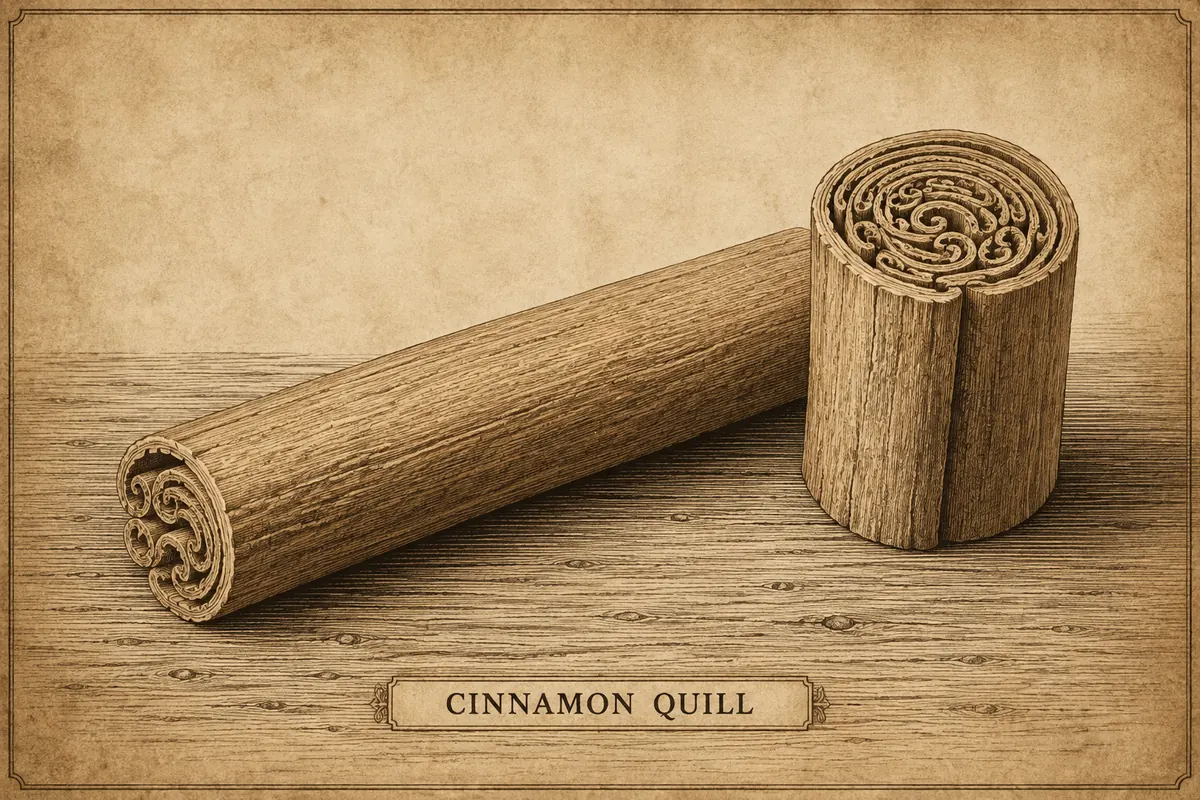
    A cinnamon quill is a stick of dried cinnamon bark that has curled into a hollow tube as it dries. In true Ceylon cinnamon, a quill is made from many thin, soft layers of inner bark rolled together by hand into a single neat roll. The word “quill” comes from the same root as a writing quill and a reed, because the rolled bark looks like a hollow tube or pen.

    “Quill” is the traditional name for what many people simply call a cinnamon stick, and it is the word used in the cinnamon trade. This guide explains exactly what a quill is, where the name comes from, how quills are formed, and how they relate to grades. It builds on our guide to Ceylon cinnamon grades.

    The short answer

    A cinnamon quill is a rolled tube of dried cinnamon bark, the classic form of the whole spice. For Ceylon cinnamon, peelers take the thin inner bark, layer several pieces together and roll them into a long, slender quill that dries into a firm stick. The result is the familiar pale, papery, multi-layered roll that sets true cinnamon apart from the thick, hard single curl of cassia.

    Where does the word “quill” come from?

    The word “quill” originally meant a hollow reed or the hollow shaft of a feather, the kind once cut into a pen. Because a roll of cinnamon bark forms a similar hollow tube, the same word came to be used for it. So a cinnamon quill is named for its shape: a neat, hollow roll. The term has been part of the spice trade for a long time and remains the correct name for a whole rolled cinnamon stick today.

    How a cinnamon quill is formed

    A quill does not simply grow on the tree; it is made through skilled handwork. After the outer bark is scraped away, the peeler lifts off the thin inner bark in strips. Several of these strips are then layered inside one another and rolled together into a long tube. As the roll dries, it tightens and firms into a solid quill. This craft is at the heart of how the spice is produced, as our guide to how Ceylon cinnamon is made explains in full.

    Why Ceylon quills have many layers

    The layered structure is a signature of true Ceylon cinnamon. Because its inner bark is so thin and delicate, several pieces are combined to make one quill, giving the cross-section its distinctive look of many soft, rolled-up layers, a little like a rolled cigar or a tiny scroll. Cassia, by contrast, has thick bark that curls into a single hard layer. This difference is one of the easiest ways to tell the two apart.

    Cinnamon quill vs cinnamon stick

    “Quill” and “stick” describe the same thing. Quill is the traditional trade term for a rolled length of cinnamon bark, while “stick” is the everyday word most shoppers use. There is no difference in the product; a cinnamon stick is a cinnamon quill. You will see “quill” more often on specialist and export packaging, and “stick” more often in supermarkets and recipes. Our guide to cinnamon sticks covers the same form in everyday terms.

    Quill sizes and lengths

    Quills are usually sold cut to a standard length, commonly around 8 to 10 centimetres for retail, though export quills can be much longer before cutting. Their diameter and neatness feed into how they are graded: fine, slender, evenly rolled quills of pale bark are prized, while thicker or broken pieces are graded lower. The finest grades are made from the thinnest, most tightly rolled quills, which is why a well-made quill is a mark of careful peeling and good bark rather than just a pretty shape. The look of the quill is therefore closely tied to quality, a link set out in our guide to Ceylon cinnamon grades.

    Quills and related forms at a glance

    How quills relate to other forms of cinnamon.
    TermWhat it means
    QuillA whole rolled tube of dried cinnamon bark
    StickThe everyday word for a quill
    QuillingsSmall broken pieces of quill
    FeatheringsThin inner bark shavings and small curls
    ChipsCut pieces of bark, often for grinding or infusing
    GroundQuills milled into powder

    These terms are all part of the cinnamon vocabulary, and several appear in our glossary of Ceylon cinnamon terms.

    Why the quill form matters

    The quill is not just how cinnamon looks; it is a practical and useful form. Whole quills keep their aroma far longer than powder, because less of the bark is exposed to air. They can be dropped whole into curries, rice, drinks and syrups to infuse flavour, then lifted out. And their multi-layered structure is a quick visual test of authenticity, since only true Ceylon cinnamon rolls into those thin, soft layers. In short, the quill is both the traditional shape of the spice and a sign of what it is. For anyone learning about Ceylon cinnamon, understanding the quill is a natural starting point, since so much of the spice’s quality, history and identity is wrapped up in that simple rolled tube of bark.

    A short history of the cinnamon quill

    The rolled quill is not a modern invention. For centuries, cinnamon was traded across the world in this form, because rolling the bark made it easier to dry, bundle, pack and ship without it crumbling. The neat tubes could be tied together, graded by eye, and carried great distances while holding their aroma. So the quill is partly a practical answer to an old problem: how to move a delicate spice safely from a small island to distant markets. The shape we still buy today carries that long trading history inside it.

    How to store and use quills

    Because a quill exposes little of its bark to the air, it keeps its flavour well. Stored whole in an airtight jar, away from heat, light and damp, Ceylon cinnamon quills stay fragrant for a long time, often a couple of years. In the kitchen they are used whole: a quill is added to a simmering pot, a warm drink or a syrup, left to infuse its gentle sweetness, then removed before serving. When you want ground cinnamon, a brittle Ceylon quill can be snapped and milled fresh, which gives a brighter flavour than powder that has been sitting open. In this way the quill is both a storage form and a cooking tool.

    Spotting a good quill

    A fine Ceylon quill is pale tan, slender and light, with a smooth surface and a clear pattern of thin rolled layers at the cut ends. It should feel brittle rather than hard, snapping cleanly, and smell sweet and delicate. A very dark, thick, heavy stick that curls in a single hard layer and smells sharp is a cassia quill rather than true cinnamon. Learning to read these signs in the quill itself is one of the simplest ways to judge what you are buying before you even taste it.

    Frequently asked questions

    What is a cinnamon quill?

    A cinnamon quill is a stick of dried cinnamon bark that has rolled into a hollow tube. In Ceylon cinnamon, it is made by layering and rolling several pieces of thin inner bark by hand, which then dry into a firm, pale, multi-layered roll.

    Is a cinnamon quill the same as a cinnamon stick?

    Yes. “Quill” is the traditional trade name and “stick” is the everyday word, but they mean the same thing: a whole rolled length of cinnamon bark.

    Why is it called a quill?

    Because the rolled bark forms a hollow tube, like a reed or the shaft of a feather quill once used as a pen. The name describes the shape of the rolled cinnamon.

    Why do Ceylon cinnamon quills have layers?

    Because the inner bark of true cinnamon is very thin, so several pieces are rolled together to make one quill. This gives the cross-section its distinctive many-layered look, which cassia, with its single thick layer, does not have.

    Summary

    A cinnamon quill is the classic rolled tube of dried cinnamon bark, named after the hollow reed or feather pen it resembles. In true Ceylon cinnamon, a quill is made by hand from many thin layers of inner bark rolled together, giving the pale, papery, multi-layered look that marks it out from cassia. “Quill” and “stick” mean the same thing, with quill being the traditional trade term. The quill form keeps cinnamon fresh, makes it easy to infuse and remove, and offers a quick test of authenticity, which is why it remains the signature shape of the spice.

    This website provides educational information about Ceylon Cinnamon as a spice and food ingredient. It is not intended to provide medical advice or make health claims.

  • What Does ‘Cinnamomum verum’ Actually Mean?

    What Does ‘Cinnamomum verum’ Actually Mean?

    “Cinnamomum verum” is the scientific name of the true cinnamon tree, and it means, quite literally, “true cinnamon”. Cinnamomum is the genus, the group of trees that all cinnamons belong to, and verum is the Latin word for “true” or “genuine”. So when a label says Cinnamomum verum, it is telling you the spice is real Ceylon cinnamon rather than one of the cheaper cassia types.

    The name looks technical, but it carries a simple and useful message for anyone buying cinnamon. This guide explains what each part means, why the tree earned the name “true”, and how it helps you tell real Ceylon cinnamon from the rest. It builds on our pillar guide to what true Ceylon cinnamon is.

    The short answer

    Cinnamomum verum is the botanical name for the true cinnamon tree, native to Sri Lanka, whose bark gives us Ceylon cinnamon. The two-word name follows the standard system scientists use for every plant: the first word is the genus and the second is the species. Here the species word, verum, means “true”, marking this tree out as the original, genuine cinnamon among several look-alikes.

    Breaking down the name

    Cinnamomum: the genus

    Cinnamomum is the genus, a family group of related evergreen trees in the laurel family. Many species sit within it, including both true cinnamon and the various cassias. The word itself comes from old names for the spice that reach back through Greek and earlier languages, a history covered in our glossary of cinnamon terms.

    Verum: the species

    Verum is the species name, and it is Latin for “true” or “genuine”. Naming the tree “true cinnamon” was a deliberate way to separate it from the other Cinnamomum species that are sold as cinnamon but are botanically different. In other words, the name itself makes a claim: this is the real one.

    Why is it called “true” cinnamon?

    The tree is called true cinnamon because it is the original spice that the name “cinnamon” first referred to, long before the cheaper cassia barks became common substitutes. Cassia comes from other Cinnamomum species and is coarser and stronger, but it is often sold simply as “cinnamon”. To distinguish the fine, delicate, original spice from these substitutes, botanists gave it the species name verum, meaning true. Understanding this difference is the heart of our guide on whether Ceylon cinnamon is the real cinnamon.

    Cinnamomum verum and Cinnamomum zeylanicum

    You may also see the same tree called Cinnamomum zeylanicum. This is an older scientific name for exactly the same species, and the two names refer to the identical tree. Zeylanicum means “of Ceylon”, the old name for Sri Lanka, so it points to the tree’s home. Today Cinnamomum verum is the accepted name, but Cinnamomum zeylanicum is still widely used and means the same thing. Either name on a label indicates true Ceylon cinnamon.

    The name compared with cassia species

    True cinnamon and the main cassia species, by scientific name.
    Scientific nameCommon nameType
    Cinnamomum verumCeylon cinnamon, true cinnamonTrue cinnamon
    Cinnamomum cassiaChinese cassiaCassia
    Cinnamomum loureiroiSaigon cinnamonCassia
    Cinnamomum burmanniiKorintje, Indonesian cinnamonCassia

    All four are members of the same Cinnamomum genus, which is why they share the cinnamon name, but only Cinnamomum verum is true cinnamon. The rest are cassias, as our guide to Ceylon cinnamon vs cassia explains in full.

    How botanical names work

    The two-word style of Cinnamomum verum is not unique to cinnamon. Every plant and animal has a scientific name made of two Latin parts, a system introduced in the eighteenth century so that people everywhere could refer to the same living thing without confusion. The first word, always capitalised, is the genus, a broad group of close relatives. The second word, in lower case, is the species, the particular member of that group. Together they pin down one exact plant.

    This matters for cinnamon because common names are slippery. The word “cinnamon” is used loosely for several different barks, and it can mean different things in different shops and countries. A scientific name does not move: Cinnamomum verum means one specific tree, wherever you are and whatever language you speak. That is exactly why it appears on the labels of quality Ceylon cinnamon.

    The history behind the name

    Cinnamon was one of the most sought-after spices of the ancient world, traded across long distances and often shrouded in mystery about where it came from. For much of that history, the fine cinnamon of Sri Lanka and the coarser cassia of other regions were both simply called cinnamon. As botany became a formal science, naming the Sri Lankan tree verum, “true”, was a way of settling which of these was the original spice. The name is therefore a small piece of history in itself, recording the long effort to tell genuine cinnamon from its substitutes.

    Other names you might see

    On packaging and in recipes you may meet several names for the same spice: true cinnamon, real cinnamon, Ceylon cinnamon, Sri Lankan cinnamon, Cinnamomum verum and Cinnamomum zeylanicum. These all point to the one tree. Cassia, by contrast, may appear as Chinese cinnamon, Saigon cinnamon, Korintje or Indonesian cinnamon, and these are different species. Knowing that the many friendly names for true cinnamon sit behind a single scientific name helps cut through the confusion on a busy shelf.

    How to say it

    The name is easier to say than it looks. Cinnamomum is said roughly as “sin-uh-MOH-mum”, and verum as “VAIR-um”. You do not need to use the Latin name in everyday life, but recognising it on a label is genuinely useful, since it is the clearest sign that a product is real Ceylon cinnamon. Saying it aloud once or twice makes it stick, and after that the name jumps out at you whenever you scan a spice jar or an ingredients list.

    Why the name matters when buying

    The main reason to know this name is shopping. Because ordinary cassia is often labelled just “cinnamon”, the surest way to know you are getting the true spice is to look for the words Cinnamomum verum (or Cinnamomum zeylanicum) on the packet, ideally with Sri Lanka named as the origin. A product that only says “cinnamon”, with no species name and no origin, may well be cassia. The scientific name is, in effect, a quality signal printed on the label.

    What the name does not tell you

    The scientific name confirms the species, but it does not tell you everything about quality. Two products can both be genuine Cinnamomum verum and still differ in grade, freshness and care of processing. The name assures you that the tree is true cinnamon, not that a particular jar is the finest grade or the freshest stock. So while Cinnamomum verum on the label is an excellent first check, it works best alongside the other signs of quality: a clear Sri Lankan origin, a pale colour, thin soft bark and a sweet, delicate aroma. Think of the name as the foundation of trust, with grade and freshness built on top of it.

    Frequently asked questions

    What does Cinnamomum verum mean?

    It is the scientific name of the true cinnamon tree. Cinnamomum is the genus of cinnamon trees, and verum is Latin for “true” or “genuine”. Together they mean “true cinnamon”, the real Ceylon cinnamon from Sri Lanka.

    Is Cinnamomum verum the same as Ceylon cinnamon?

    Yes. Cinnamomum verum is the botanical name for the tree whose bark is sold as Ceylon cinnamon, also called true cinnamon. They are the same spice.

    What is the difference between Cinnamomum verum and Cinnamomum zeylanicum?

    There is no difference in the plant. Both names refer to the same true cinnamon tree. Cinnamomum verum is the current accepted name, while Cinnamomum zeylanicum is an older name meaning “cinnamon of Ceylon”. Either indicates true Ceylon cinnamon.

    Why should I look for Cinnamomum verum on a label?

    Because cheaper cassia is often sold simply as “cinnamon”. Seeing Cinnamomum verum or Cinnamomum zeylanicum on the label, with Sri Lanka as the origin, is the clearest confirmation that you are buying genuine Ceylon cinnamon.

    Summary

    Cinnamomum verum is the scientific name of the true cinnamon tree, and it means “true cinnamon”: Cinnamomum is the genus of cinnamon trees, and verum is Latin for “true”. The name marks this Sri Lankan species out from the cassia barks that are often sold as cinnamon. The same tree is also called Cinnamomum zeylanicum, meaning “of Ceylon”. For anyone buying cinnamon, the name is a practical guide: look for Cinnamomum verum on the label, with Sri Lanka as the origin, and you can be confident you have the real, true Ceylon cinnamon.

    This website provides educational information about Ceylon Cinnamon as a spice and food ingredient. It is not intended to provide medical advice or make health claims.
  • Ceylon Cinnamon Glossary: Key Terms Explained

    Ceylon Cinnamon Glossary: Key Terms Explained

    This Ceylon cinnamon glossary explains the key terms you will meet when learning about, buying or cooking with true Ceylon cinnamon (Cinnamomum verum), from botanical names like Cinnamomum verum and Lauraceae to trade words like quill, quilling, feathering, chips, Alba and coumarin. Think of it as a plain-English dictionary of cinnamon, gathering the most useful words in one place so the rest of the subject makes immediate sense.

    Cinnamon has its own vocabulary, built up over centuries of farming and trade, and a single unfamiliar term can make an otherwise simple idea seem confusing. This guide defines those terms clearly and points you to fuller explanations where they exist. For the broader introduction that ties everything together, see our pillar guide on what is true Ceylon cinnamon.

    Ceylon cinnamon glossary: the essential terms

    Below are the core terms, grouped by theme, botany and naming, forms and grades, processing, and quality, each with a short, clear definition. You can read straight through for a complete picture, or jump to the term you need. Wherever a term has a fuller guide of its own, we link to it.

    Botanical and naming terms

    Cinnamomum verum, the botanical (scientific) name of the true cinnamon tree, native to Sri Lanka. “Verum” is Latin for “true,” so the name literally means “true cinnamon.” It is the species that yields genuine Ceylon cinnamon.

    Cinnamomum zeylanicum, an older scientific name for the same tree, still often seen on labels. “Zeylanicum” refers to Ceylon, the historical name for Sri Lanka. In practice, Cinnamomum verum and Cinnamomum zeylanicum mean the same plant.

    Ceylon, the historical name for Sri Lanka. Because the island was the original home of fine cinnamon, “Ceylon cinnamon” became the worldwide name for true cinnamon, and the term endures even though the country is now called Sri Lanka.

    Cassia, a group of related but different trees (such as Cinnamomum cassia) whose bark is sold as “cinnamon” in much of the world. Cassia is harder, darker and stronger than true cinnamon, and the two are frequently confused, a distinction covered fully in our guide to Ceylon cinnamon vs cassia.

    Lauraceae, the botanical plant family (the laurel family) to which the cinnamon tree belongs, alongside relatives such as bay laurel and avocado. Knowing the family simply places cinnamon in its wider botanical context.

    True cinnamon, another everyday name for Ceylon cinnamon, used to distinguish genuine Cinnamomum verum from cassia types often sold generically as “cinnamon.”

    Forms and grade terms

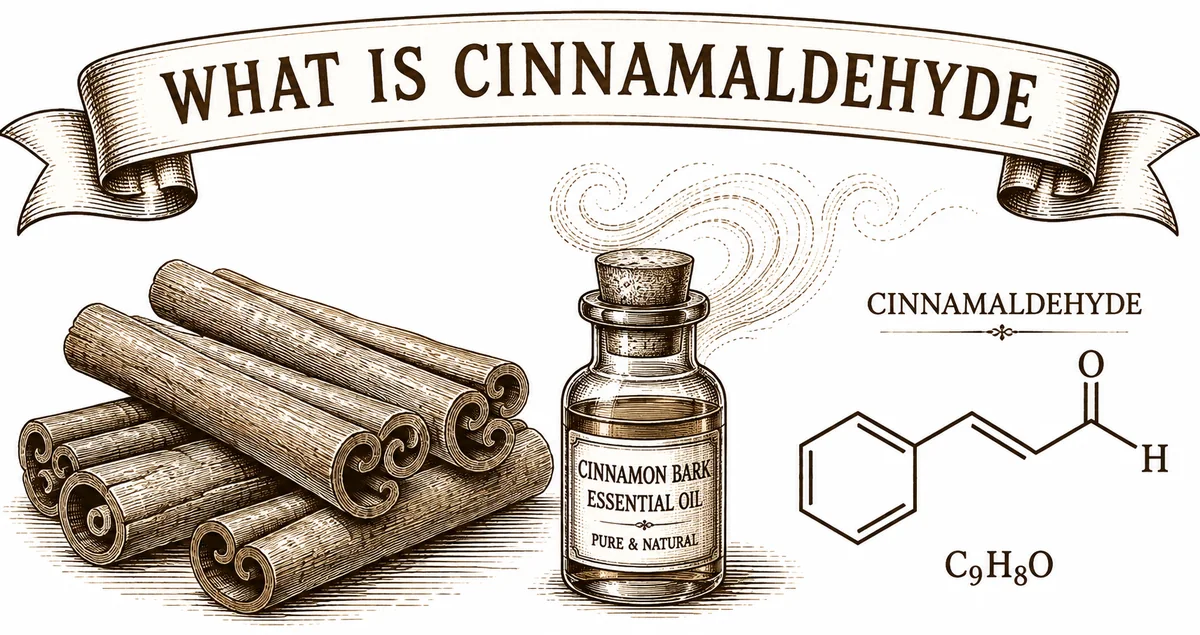
    Quill, the traditional trade term for a stick of rolled, dried Ceylon cinnamon bark. In true cinnamon a quill is made of many thin, papery layers rolled together, giving it a delicate, brittle character.

    Stick, the everyday word for a quill; in practice “cinnamon stick” and “cinnamon quill” mean the same thing.

    Alba, the finest, thinnest grade of Ceylon cinnamon quill, prized for its delicacy. “Alba” comes from the Latin for “white,” reflecting its pale, refined appearance. Grades like Alba are set out in our pillar guide to Ceylon cinnamon grades.

    Continental, Mexican, Hamburg, traditional grade names for Ceylon cinnamon quills, originally reflecting the markets or specifications different quills were prepared for. They describe progressively coarser grades than the delicate Alba.

    C5, C4, M grades, grade codes used in the cinnamon trade, combining a letter and often a number to indicate a quill’s diameter and quality band. They are a shorthand for describing exactly how fine or coarse a batch of quills is.

    Quillings, small pieces and fragments of broken quill, gathered together as a lower-priced grade. They are perfectly good cinnamon, simply not in whole-stick form, and are handy for grinding or infusing.

    Featherings (feathers), thin, feathery inner-bark shavings and small curls left over from preparing quills. Like quillings, they are a genuine by-product grade rather than a defect.

    Chips, small chipped pieces of cinnamon bark, another economical form often used for making cinnamon oil, infusions or ground cinnamon.

    Powder (ground cinnamon), cinnamon that has been ground into a fine powder, convenient for baking and dispersing flavour evenly, though it loses aroma faster than whole quills.

    Processing terms

    Coppicing, the practice of cutting the cinnamon plant back low so it sends up fresh shoots rather than being felled. It lets the same rootstock produce for many years and is central to how cinnamon is grown and harvested.

    Peeling, the skilled removal of the thin inner bark from harvested cinnamon shoots, the key first step in turning bark into a quill. The whole sequence is described in our guide to how Ceylon cinnamon is made.

    Rolling / nesting, the forming of a quill, in which several thin strips of bark are nested and rolled together so that, as they dry, they curl into one multi-layered stick.

    Drying, the stage in which freshly rolled bark is left to lose moisture and firm up into finished quills, developing colour and aroma as it dries.

    Grading / sorting, the sorting of dried quills by diameter, appearance and quality into the named grades above, so that buyers know exactly what they are getting.

    Quality and chemistry terms

    Coumarin, a naturally occurring aromatic compound found in much smaller amounts in Ceylon cinnamon than in cassia. It is one of the best-known chemical differences between the two.

    Cinnamaldehyde, the main aromatic compound in cinnamon bark oil, responsible for cinnamon’s characteristic warm, sweet scent and flavour.

    Essential oil, the fragrant, volatile oil naturally present in cinnamon bark (and leaf), which carries most of the spice’s aroma. Whole quills protect this oil, which is why they keep their scent longer than powder.

    SLS / ISO standards, national (Sri Lanka Standards) and international (International Organization for Standardization) specifications that define cinnamon quality and grading, giving the trade agreed benchmarks.

    Pure Ceylon Cinnamon mark, a certification mark used to identify authentic, origin-verified Sri Lankan cinnamon, acting as a signal of both origin and quality.

    Quick-reference glossary table

    A quick reference to some of the most common Ceylon cinnamon terms.
    TermShort meaning
    Cinnamomum verumThe true cinnamon tree, native to Sri Lanka
    CeylonHistorical name for Sri Lanka; source of true cinnamon
    CassiaDifferent, harder cinnamon type often sold as “cinnamon”
    QuillA rolled stick of dried cinnamon bark
    AlbaThe finest, thinnest quill grade
    QuillingsBroken quill pieces sold as a lower grade
    FeatheringsThin bark shavings and curls, a by-product grade
    ChipsSmall chipped bark pieces
    CoumarinCompound much lower in Ceylon than cassia
    CinnamaldehydeMain compound behind cinnamon’s aroma

    Why the right words matter

    Cinnamon’s vocabulary is not just jargon; it carries real information. A single term such as “Alba,” “Cinnamomum verum” or “quilling” can tell you the grade, the species or the form of a product at a glance. Understanding these words helps you read labels accurately, compare products fairly and avoid confusion, for instance, knowing that a “quill” and a “stick” are the same thing, or that “cassia” is not true Ceylon cinnamon. In a market where the word “cinnamon” alone can mean several different barks, a good grasp of terminology is one of the most practical tools a buyer can have, a theme covered in our guide to identifying authentic Ceylon cinnamon.

    How to use this glossary

    Keep this page as a reference to return to whenever a cinnamon term is unclear. Many of these words appear across our other guides, grades, processing, comparisons and buying, and each fuller guide expands on the terms introduced here. Read alongside the pillar overview of what is true Ceylon cinnamon, the glossary turns a scattering of unfamiliar words into a connected picture of the spice. As you learn more, terms that once seemed technical, coppicing, cinnamaldehyde, featherings, become simple, familiar signposts.

    Summary

    This Ceylon cinnamon glossary gathers the key terms of the subject in one place: the botanical names Cinnamomum verum and Cinnamomum zeylanicum and the family Lauraceae; naming words like Ceylon, cassia and true cinnamon; the forms and grades, quill, stick, Alba, Continental, Mexican, Hamburg, quillings, featherings, chips and powder; the processing steps of coppicing, peeling, rolling, drying and grading; and the quality and chemistry terms coumarin, cinnamaldehyde, essential oil, SLS and ISO standards and the Pure Ceylon Cinnamon mark. Learning this vocabulary makes every other aspect of cinnamon, buying, cooking, comparing and understanding quality, far easier, because the words themselves carry the meaning. Kept as a reference and read alongside our fuller guides, this glossary is a simple key to the whole world of true Ceylon cinnamon.

    Frequently asked questions

    What is the difference between a quill and a stick?

    None, they are the same thing. “Quill” is the traditional trade term for a rolled length of dried cinnamon bark, while “stick” is the everyday word. Ceylon cinnamon sold as “quills” is simply cinnamon sticks by another name.

    What does ‘Alba’ mean in cinnamon?

    Alba is the name of the finest, thinnest grade of Ceylon cinnamon quill. The word comes from the Latin for “white,” reflecting the pale, delicate appearance of these premium, tightly rolled quills.

    Are Cinnamomum verum and Cinnamomum zeylanicum the same?

    Yes. Both are scientific names for the same true cinnamon tree native to Sri Lanka. Cinnamomum verum is the current name and Cinnamomum zeylanicum an older one, but they refer to the identical plant.

    What are quillings and featherings?

    They are by-product grades of Ceylon cinnamon. Quillings are small broken pieces of quill, and featherings are thin, feathery inner-bark shavings and curls left from preparing quills. Both are genuine cinnamon, simply not in whole-stick form.

    This website provides educational information about Ceylon Cinnamon as a spice and food ingredient. It is not intended to provide medical advice or make health claims.
  • What Is Cinnamaldehyde?

    What Is Cinnamaldehyde?

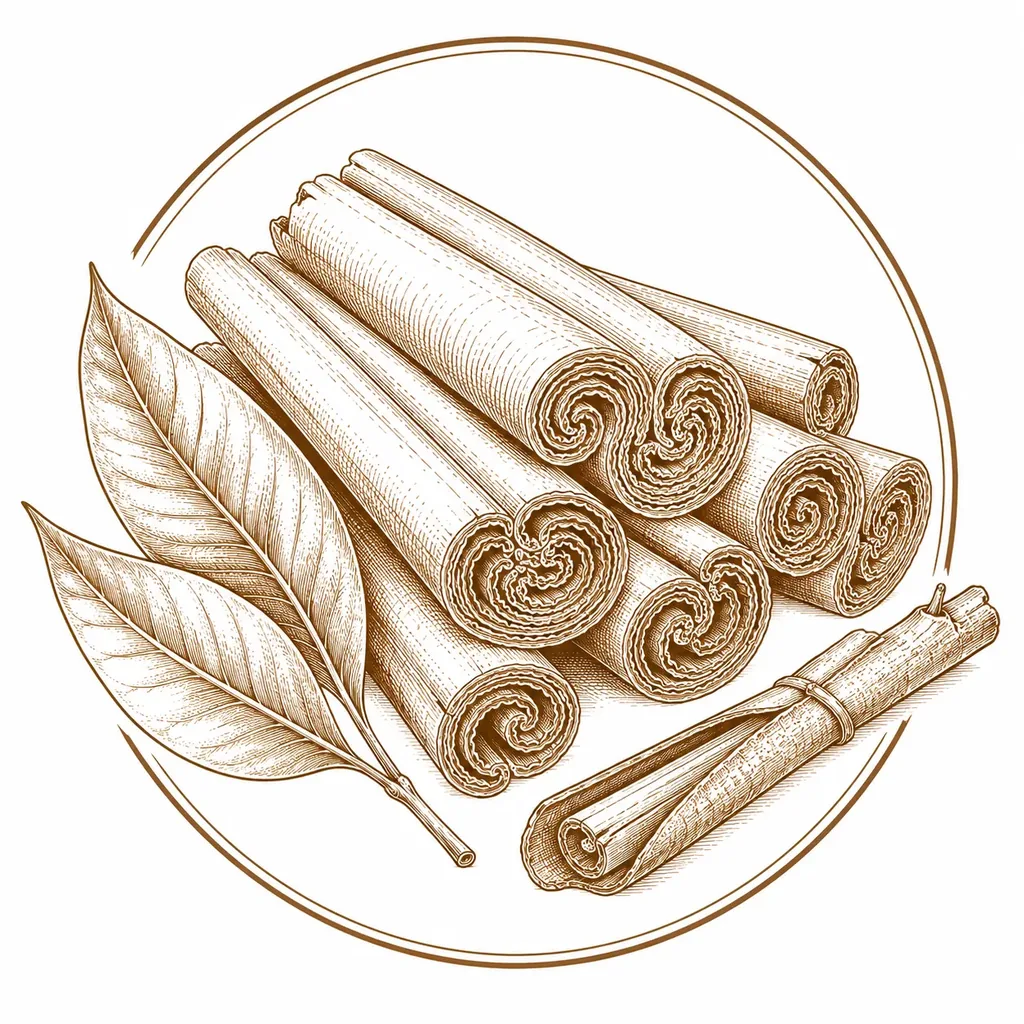
    Cinnamaldehyde is the naturally occurring organic compound that gives cinnamon its characteristic warm, sweet, spicy aroma and flavour, it is the main component of the essential oil in cinnamon bark. When you smell or taste cinnamon, cinnamaldehyde is the molecule most responsible for that unmistakable scent, and true Ceylon cinnamon (Cinnamomum verum) owes much of its fragrance to it.

    This guide gives a clear, non-technical explanation of what cinnamaldehyde is, where it comes from in the plant, why it matters for aroma and flavour, and how it relates to other compounds found in cinnamon. It is an educational look at the chemistry of a spice, not health advice. For the bigger picture of the spice itself, see our pillar guide on what is true Ceylon cinnamon.

    What is cinnamaldehyde, simply put?

    Cinnamaldehyde is an aromatic organic compound (an aldehyde) that occurs naturally in cinnamon and is the principal substance responsible for cinnamon’s smell and taste. In plain terms, it is the “cinnamon molecule”, the ingredient in the plant’s own chemistry that our noses and tongues register as cinnamon. It is found mainly in the bark, concentrated in the essential oil, and it is what makes cinnamon instantly recognisable among spices.

    Where does cinnamaldehyde come from in the plant?

    Cinnamaldehyde is produced by the cinnamon tree itself and is concentrated in the bark, which is the part harvested to make the spice.

    In the bark oil

    The inner bark of Cinnamomum verum contains a fragrant essential oil, and cinnamaldehyde is typically the largest single component of that oil. This is why the bark, once peeled, rolled and dried into quills, carries such a strong, sweet aroma, the process is described in our guide to how Ceylon cinnamon is made.

    Bark versus leaf

    Different parts of the plant have different chemistry. The bark oil is rich in cinnamaldehyde, which gives the familiar sweet cinnamon scent, whereas the leaf oil contains more of a different compound called eugenol, giving it a more clove-like character. This is why cinnamon bark and cinnamon leaf products can smell noticeably different.

    Why cinnamaldehyde matters for aroma and flavour

    The reason cinnamaldehyde is so important is simple: it is the main driver of cinnamon’s sensory identity. Its presence and concentration shape how sweet, warm and intense a cinnamon smells and tastes. A cinnamon rich in well-preserved aromatic oils will smell vivid and sweet, while one whose oils have faded will smell flat. This is why aroma is such a good test of freshness and quality, a theme in our guide to identifying authentic Ceylon cinnamon, and why storing cinnamon well to protect those volatile oils makes such a difference to cooking.

    Cinnamaldehyde in cooking

    Because cinnamaldehyde is a volatile aromatic compound, it behaves in characteristic ways in the kitchen. It is released as fragrance when cinnamon is warmed, which is why simmering a quill in milk or syrup, or baking with cinnamon, fills a room with scent. Gentle heat helps carry the aroma, while very prolonged high heat can drive off some of the delicate top notes. Understanding that cinnamon’s flavour lives largely in these aromatic oils helps explain why fresh, well-stored cinnamon performs so much better in recipes, as covered in our guide to the culinary uses of Ceylon cinnamon.

    Cinnamaldehyde and other cinnamon compounds

    Cinnamon is not a single chemical but a natural mixture, and cinnamaldehyde sits alongside other naturally occurring compounds.

    Some naturally occurring compounds associated with cinnamon and what they contribute.
    CompoundMainly found inSensory role
    CinnamaldehydeBark oilThe characteristic sweet, warm cinnamon aroma
    EugenolLeaf oilA clove-like, spicy note
    CoumarinCassia more than CeylonA compound found in much smaller amounts in Ceylon cinnamon

    The balance of these compounds differs between true Ceylon cinnamon and cassia. One well-known difference is coumarin, which is present in much lower amounts in Ceylon cinnamon than in cassia, a distinction discussed in our guide to Ceylon cinnamon vs cassia. Cinnamaldehyde, by contrast, is central to the aroma of both, though the overall flavour profiles still differ.

    Is cinnamaldehyde natural or artificial?

    Cinnamaldehyde is a naturally occurring compound made by the cinnamon plant, and it is the substance responsible for cinnamon’s natural scent. It can also be produced synthetically for use as a flavouring and fragrance ingredient in the wider food and cosmetics industries, but in true Ceylon cinnamon the cinnamaldehyde you encounter is the plant’s own. When you use genuine cinnamon bark or freshly ground cinnamon, its aroma comes from this naturally present compound rather than any additive.

    What researchers study about cinnamaldehyde

    As the defining compound of a globally important spice, cinnamaldehyde is of interest to scientists who study flavour, fragrance and plant chemistry. Researchers analyse its concentration to characterise different cinnamon types and grades, to understand aroma, and to assess quality in the spice trade. In this educational context, cinnamaldehyde is simply the best-known molecule in cinnamon’s natural make-up. This article does not make any health claims about cinnamaldehyde or cinnamon; it describes the compound’s role in aroma, flavour and plant chemistry only.

    Summary

    Cinnamaldehyde is the naturally occurring aromatic compound that gives cinnamon its signature warm, sweet, spicy character. Produced by the cinnamon tree and concentrated in the bark’s essential oil, it is the largest single component of that oil and the molecule most responsible for how cinnamon smells and tastes. Bark oil is rich in cinnamaldehyde, while leaf oil leans more towards eugenol, and the balance of these and other compounds, including the coumarin that is much lower in Ceylon cinnamon than in cassia, helps define each cinnamon’s flavour. Because cinnamaldehyde is volatile, protecting cinnamon’s oils through good storage keeps its aroma vivid. In short, cinnamaldehyde is the heart of cinnamon’s fragrance, and understanding it explains much about why fresh, genuine Ceylon cinnamon smells and tastes so good.

    Frequently asked questions

    What is cinnamaldehyde?

    Cinnamaldehyde is the naturally occurring organic compound that gives cinnamon its characteristic warm, sweet aroma and flavour. It is the main component of the essential oil found in cinnamon bark.

    Where is cinnamaldehyde found in cinnamon?

    It is concentrated in the bark, within the essential oil, and is typically the largest single component of that oil. Cinnamon leaf oil, by contrast, contains more eugenol and less cinnamaldehyde.

    Is cinnamaldehyde natural?

    Yes. In true Ceylon cinnamon, cinnamaldehyde is produced naturally by the plant and is responsible for its scent. A synthetic version also exists for industrial flavour and fragrance use, but genuine cinnamon’s aroma comes from the natural compound.

    Does cinnamaldehyde affect cinnamon’s flavour?

    Very much so. As the main aromatic compound, cinnamaldehyde largely determines how sweet, warm and intense a cinnamon smells and tastes, which is why fresh, well-stored cinnamon with well-preserved oils performs best in cooking.

    This website provides educational information about Ceylon Cinnamon as a spice and food ingredient. It is not intended to provide medical advice or make health claims.

  • Is Ceylon Cinnamon Real Cinnamon?

    Is Ceylon Cinnamon Real Cinnamon?

    Yes, Ceylon cinnamon is real cinnamon. In fact, it is often called “true cinnamon” because it comes from Cinnamomum verum, the species botanists regard as the original, genuine cinnamon. The confusion arises because most of the cinnamon sold worldwide is actually cassia, a related but different group of species. Both are sold under the single word “cinnamon”, yet only Ceylon cinnamon is the true article native to Sri Lanka.

    If you have ever stood in a supermarket aisle wondering whether the jar in your hand is “real” cinnamon, you are asking exactly the right question. The short answer is that Ceylon cinnamon is the genuine, original spice, while the more common product is usually cassia. This guide explains what “real cinnamon” actually means, why the confusion exists, and how to tell what you have. For the full picture, see our pillar guide on what is true Ceylon cinnamon.

    What does “real cinnamon” actually mean?

    Botanically, “true cinnamon” is the dried inner bark of Cinnamomum verum (also written Cinnamomum zeylanicum), an evergreen tree native to Sri Lanka. The word verum is Latin for “true”, and the species name records centuries of recognition that this particular tree produces the authentic spice. So when people ask whether Ceylon cinnamon is “real”, the answer is that it is the reference point against which every other cinnamon is compared.

    The complication is that “cinnamon” is also used loosely as a general culinary term. Several other trees in the Cinnamomum genus produce aromatic bark that is sold and cooked with as cinnamon. These are collectively known as cassia. Cassia is a genuine spice in its own right, not a counterfeit, but it is not the same species as true cinnamon and it has a noticeably different character.

    Ceylon cinnamon vs the cinnamon most people buy

    Most of the ground cinnamon and cinnamon sticks on ordinary supermarket shelves are cassia rather than Ceylon. Cassia comes mainly from China, Indonesia and Vietnam, and it is cheaper to grow and process, which is why it dominates the global market. Because both are labelled simply “cinnamon”, shoppers rarely realise there is a difference at all. We look at this in depth in Ceylon cinnamon vs cassia, but the essential point is this: cassia is real cassia, and Ceylon is real, true cinnamon. They are cousins, not the same plant.

    Why the name “cinnamon” causes so much confusion

    The word cinnamon has been applied broadly for a very long time. In many countries there is no legal requirement to distinguish Ceylon cinnamon from cassia on the label, so both are marketed under the same familiar name. A jar simply marked “cinnamon” could contain either. This is not usually deliberate deception, it reflects a long culinary tradition of treating all these barks as one spice. The result, though, is that a shopper who wants genuine Ceylon cinnamon has to look beyond the headline word and check the details.

    Another source of confusion is language. In some European languages the two are clearly separated by different words, while in English “cinnamon” covers both. So whether Ceylon cinnamon is “the real one” partly depends on which naming tradition you follow. In botanical and quality terms, however, Cinnamomum verum is unambiguously the true cinnamon.

    What makes Ceylon cinnamon the “true” cinnamon

    Three things underpin Ceylon cinnamon’s claim to be the genuine article. The first is botany: it is the specific species, Cinnamomum verum, that carries the name “true cinnamon”. The second is history: Sri Lanka (historically called Ceylon) has been the heartland of cinnamon cultivation and the source of the finest cinnamon in world trade for centuries, a story told in our history of Ceylon cinnamon. The third is craft: Ceylon cinnamon is hand-peeled into delicate, papery layers by skilled workers, giving it its distinctive fine quills.

    These qualities are also why Ceylon Cinnamon now enjoys formal recognition. The name is protected as a Geographical Indication tied to Sri Lanka, which means “Ceylon Cinnamon” is not just a marketing phrase but a designation linked to a specific origin and standard.

    How to tell if your cinnamon is genuine Ceylon

    You can often tell the two apart with a few simple checks, even without any special equipment. Genuine Ceylon cinnamon tends to show these characteristics:

    Appearance

    Ceylon quills are thin, papery and rolled into many nested layers, a little like a cigar made of fine bark. Cassia is usually a thick, hard, hollow single curl. Ceylon is also lighter in colour, a warm tan or golden brown, while cassia is a darker reddish-brown. There is more on this in how to identify authentic Ceylon cinnamon.

    Aroma and taste

    True cinnamon has a delicate, sweet, fragrant aroma with a complex, mellow flavour. Cassia is stronger, hotter and more pungent. If a cinnamon tastes fiery and one-dimensional, it is more likely cassia; if it is soft, sweet and layered, it is more likely Ceylon.

    Texture

    Because the bark is so thin, Ceylon cinnamon crumbles easily and can be broken or ground by hand. Cassia is hard and woody and tends to snap rather than crumble.

    The label

    The most reliable clue of all is the label. Genuine Ceylon cinnamon is usually named as such, and often lists the botanical name Cinnamomum verum (or zeylanicum) and Sri Lanka as the origin. If a product simply says “cinnamon” with no species or origin, it is more likely to be cassia.

    Is cassia “fake” cinnamon?

    No. It is important to be fair here: cassia is not a fake or a fraud. It is a real spice from real Cinnamomum trees, and it has been used in cooking around the world for a very long time. Its bold, warming flavour is exactly what many classic dishes call for. The point is simply that cassia is a different spice from true cinnamon, with a different species, origin, appearance and flavour profile. Calling Ceylon “true cinnamon” is a botanical distinction, not a judgement that cassia is worthless.

    What matters for you as a cook or buyer is knowing which one you are getting, so you can choose the right spice for the job and pay a fair price for it. If you specifically want the delicate, complex character of genuine Ceylon cinnamon, you need to look for it by name rather than trusting the generic word “cinnamon”.

    A note on the botanical names

    You may see genuine Ceylon cinnamon listed under two scientific names: Cinnamomum verum and Cinnamomum zeylanicum. These refer to the same tree, zeylanicum is an older name derived from “Zeylan”, an historic spelling of Ceylon, while verum (“true”) is the name in common modern use. Either name on a label points to the authentic species. Cassia, by contrast, is sold under several different species names, most commonly Cinnamomum cassia (Chinese cassia), Cinnamomum burmannii (Indonesian or Korintje) and Cinnamomum loureiroi (Saigon or Vietnamese). Seeing one of these cassia names, or no species name at all, is a good sign that the product is not true Ceylon cinnamon.

    Which should you use in cooking?

    Neither spice is “better” in every situation, they simply suit different purposes. The bold, hot punch of cassia can stand up well to heavy bakes and long-simmered dishes, while the gentle, sweet complexity of Ceylon cinnamon shines in delicate desserts, drinks and dishes where you want fragrance rather than fire. Knowing that your jar might be either one helps you season with intention: if a recipe tastes harsher than expected, you may be using cassia; if you want a softer, more aromatic result, seek out genuine Ceylon. Our guide to the culinary uses of Ceylon cinnamon looks at this in more detail.

    Why people increasingly seek out real Ceylon cinnamon

    Interest in authentic Ceylon cinnamon has grown as more people learn that the two spices are distinct. Some are drawn by its refined flavour for baking and beverages; others simply want to know exactly what they are buying and cooking with. Whatever the motivation, the demand for clear labelling and genuine origin is a positive development, because it rewards the farmers and peelers in Sri Lanka who produce the true spice. You can read about them in our guide to Sri Lankan cinnamon farming.

    Summary

    Ceylon cinnamon is unquestionably real cinnamon, it is the original, “true” cinnamon, produced from Cinnamomum verum in Sri Lanka. The reason the question comes up at all is that most cinnamon sold worldwide is cassia, a related but different and cheaper group of species, and both are labelled simply as “cinnamon”. Cassia is a genuine spice too, just not the true cinnamon. To be sure you are buying the real Ceylon article, look for thin, papery, multi-layered quills, a light colour, a sweet and delicate aroma, and a label that names Cinnamomum verum and Sri Lanka.

    Frequently asked questions

    Is Ceylon cinnamon the same as true cinnamon?

    Yes. Ceylon cinnamon comes from Cinnamomum verum, the species known as “true cinnamon”. The two terms refer to the same spice.

    Is the cinnamon in my supermarket real cinnamon?

    It is usually cassia rather than Ceylon. Cassia is a real spice, but it is a different species from true Ceylon cinnamon. Check the label for the species name and origin to be sure.

    Is cassia fake cinnamon?

    No. Cassia is a genuine spice from Cinnamomum trees and is widely used in cooking. It is simply not the same as true Ceylon cinnamon, which comes from Cinnamomum verum.

    How can I tell if cinnamon is genuine Ceylon?

    Look for thin, papery quills rolled in many layers, a light tan colour, a sweet delicate aroma, and a label naming Cinnamomum verum and Sri Lanka.

    This website provides educational information about Ceylon Cinnamon as a spice and food ingredient. It is not intended to provide medical advice or make health claims.