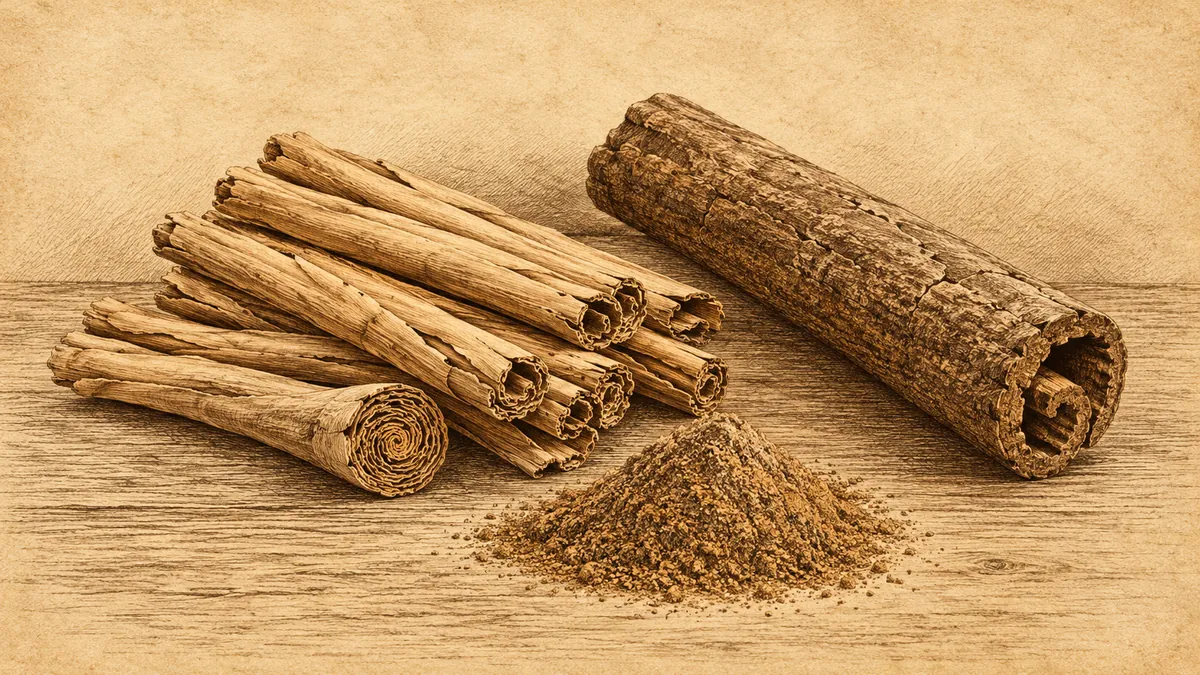
“True cinnamon” is the common name for Ceylon cinnamon, the spice made from the dried inner bark of Cinnamomum verum, a tree native to Sri Lanka. It is called true cinnamon to set it apart from cassia, a group of related but different barks that are also sold as “cinnamon”. The distinction matters because the two differ in flavour, bark structure and botanical species, so knowing which one you have affects how your food tastes and what you are really buying. This guide explains what true cinnamon means and why the term is worth knowing.
The phrase “true cinnamon” appears on labels, in recipes and in shops, but it is not always explained. This guide sets out what it means, where it comes from and why the difference is worth caring about, in plain terms. It builds on our pillar guide, what is true Ceylon cinnamon.
The short answer
True cinnamon is Ceylon cinnamon, the spice from Cinnamomum verum, grown in Sri Lanka, and the term exists to distinguish it from cassia, the cheaper, more common bark often sold simply as “cinnamon”. It matters because true cinnamon is milder and sweeter, has a thin, layered bark, and is a distinct botanical species, so the name tells you what you are actually getting.
Where the term comes from
The word “cinnamon” is used in everyday speech for several different barks from the Cinnamomum family of trees. Only one of them, Cinnamomum verum, is the original spice that the name historically referred to. The Latin word verum itself means “true”, so the botanical name already carries the idea. Over time, as cheaper cassia barks spread through world trade and were also called cinnamon, the term “true cinnamon” came into use to point clearly to the original Ceylon spice rather than its substitutes.
So “true cinnamon” is not a marketing invention but a way of naming the specific spice that the word cinnamon first described. For more on the species name, see our guide to what Cinnamomum verum means.
True cinnamon versus cassia
The reason the term exists is the difference between true cinnamon and cassia. True cinnamon, Cinnamomum verum, comes from Sri Lanka and has a thin, papery bark made of many fine layers rolled into delicate quills. Its flavour is mild, sweet and lightly citrus. Cassia is a group of other species, such as Cinnamomum cassia from China and Cinnamomum burmannii from Indonesia, with a thick, hard single-layer bark and a stronger, hotter, more pungent flavour. Both are real spices, but they are not the same thing. Our full comparison covers this in detail: Ceylon cinnamon versus cassia.
Because cassia is cheaper and more widely produced, much of the ground “cinnamon” on supermarket shelves is actually cassia. That is exactly why the term true cinnamon is useful: it names the original spice clearly, so you are not left guessing which bark is in the jar.
Why the difference matters
Knowing whether you have true cinnamon or cassia matters for a few practical reasons. The first is flavour. True cinnamon is gentle and sweet, which suits delicate desserts, custards and milk-based dishes, while cassia is bolder and better for a strong cinnamon hit in heavier bakes. Using one where you expected the other changes how a dish tastes.
The second is simply knowing what you are buying. True cinnamon is a distinct, named spice with its own origin and character, and it usually costs more than cassia because it is more labour intensive to produce. When a product says true cinnamon or names Cinnamomum verum, you can be confident you are getting the Ceylon spice rather than a cheaper substitute sold under the same everyday name. For telling them apart yourself, see our guide on how to identify authentic Ceylon cinnamon.
A little history behind the name
True cinnamon has a long history that helps explain why it earned its name. For centuries, the thin, fragrant bark of Cinnamomum verum from Sri Lanka was one of the most sought-after spices in the world, carried along ancient trade routes and valued across the Mediterranean and beyond. Because it was rare and precious, it was the cinnamon that people knew and wrote about. As trade grew, cheaper cassia barks from other parts of Asia entered the market under the same broad name, and the two became blurred in everyday use. Calling the Sri Lankan spice “true cinnamon” was a way of keeping the original, historically prized spice distinct from the newer substitutes. The term carries that heritage with it, pointing back to the spice that first made cinnamon famous.
Where you will see the term
You are most likely to meet the phrase “true cinnamon” on product packaging, in recipes and in guides about spices. On packaging, it is often paired with “Ceylon cinnamon” and the species name to reassure buyers they are getting Cinnamomum verum. In recipes, a cook may specify true cinnamon when the gentle, sweet flavour matters to the dish. In spice guides and articles, the term is used to draw the clear line between true cinnamon and cassia. Seeing the phrase is usually a sign that the writer or seller wants to be precise about which spice they mean, rather than leaving it to the catch-all word cinnamon.
How to spot true cinnamon
You can recognise true cinnamon in a few ways. On a label, look for the words “Ceylon cinnamon” or “true cinnamon” and the species name Cinnamomum verum (or the older Cinnamomum zeylanicum), along with a Sri Lankan origin. By eye, a true cinnamon quill is thin and brittle, made of many layers rolled tightly together like a packed cigar, and it snaps and crumbles easily. A cassia stick is a thick, hard single curl that is much tougher to break. In powder form the two are hard to tell apart, which is why the label matters most for ground cinnamon.
True cinnamon at a glance
| Point | True cinnamon | Cassia |
|---|---|---|
| Also called | Ceylon cinnamon | Chinese, Indonesian, Saigon cinnamon |
| Species | Cinnamomum verum | Cinnamomum cassia and others |
| Origin | Sri Lanka | China, Indonesia, Vietnam |
| Bark | Thin, layered, brittle | Thick, hard, single layer |
| Flavour | Mild, sweet, delicate | Bold, hot, pungent |
| Typical price | Higher | Lower |
Does “true cinnamon” mean better cinnamon?
True cinnamon is not automatically better than cassia for every use, so the term is about identity rather than a simple ranking. True cinnamon is prized for its delicate, sweet flavour and fine quills, and it is the original spice, but cassia has its place where a strong, hot cinnamon flavour is wanted. What the term true cinnamon really tells you is which spice you are dealing with, so you can choose the right one for the dish and know what you are paying for. Thinking of it as a clear label rather than a quality badge is the most useful way to use the term.
Frequently asked questions
What does “true cinnamon” mean?
True cinnamon means Ceylon cinnamon, the spice made from the dried inner bark of Cinnamomum verum, a tree native to Sri Lanka. The term distinguishes it from cassia, a group of related but different barks that are also commonly sold as cinnamon.
Is true cinnamon the same as Ceylon cinnamon?
Yes. True cinnamon and Ceylon cinnamon are two names for the same spice, made from Cinnamomum verum and grown in Sri Lanka. “Ceylon” is the historic name for the island, and “true cinnamon” marks it out from cassia.
Why does it matter if cinnamon is true or cassia?
It matters because the two differ in flavour, bark and species. True cinnamon is milder and sweeter and suits delicate dishes, while cassia is bolder and hotter. Knowing which you have affects how your food tastes and tells you what you are actually buying.
Is all cinnamon true cinnamon?
No. Much of the cinnamon sold, especially ground cinnamon in supermarkets, is cassia rather than true cinnamon. Only cinnamon from Cinnamomum verum is true cinnamon, so check the label for the species name or a Ceylon origin.
Summary
True cinnamon is the common name for Ceylon cinnamon, the spice from Cinnamomum verum, grown in Sri Lanka. The term exists to tell it apart from cassia, a group of cheaper, more common barks also sold as cinnamon. The difference matters because true cinnamon is milder and sweeter, has a thin, layered bark and is a distinct species, so the name tells you which spice you really have. It is best understood as a clear label of identity rather than a simple mark of quality, helping you choose the right cinnamon and know what you are buying.
This website provides educational information about Ceylon Cinnamon as a spice and food ingredient. It is not intended to provide medical advice or make health claims.
Leave a Reply