Tag: Cassia

  • Why People Confuse Ceylon Cinnamon and Cassia

    Why People Confuse Ceylon Cinnamon and Cassia

    People confuse Ceylon cinnamon and cassia because both are sold simply as “cinnamon”, both come as rolled brown bark with a similar warm smell, and in powder form they look almost identical. Yet they are different spices: Ceylon cinnamon is the bark of Cinnamomum verum from Sri Lanka, while cassia comes from other Cinnamomum species grown mainly in China, Indonesia and Vietnam. Loose labelling, lower cassia prices and a shared everyday name are the main reasons the two are so often mixed up.

    If you have ever wondered why “cinnamon” can mean two quite different spices, you are not alone. This guide explains exactly why Ceylon cinnamon and cassia are so easily confused, and how to tell them apart. It builds on our pillar guide, Ceylon cinnamon versus cassia.

    The short answer

    The confusion comes down to the shared name “cinnamon”, a similar appearance and aroma, and labels that rarely state the species. In many countries the word cinnamon is used for both true Ceylon cinnamon and the cheaper cassia, so shops, recipes and packaging seldom distinguish them. Because cassia is far more common and less costly, most of the “cinnamon” people meet is actually cassia, which makes the two blur together in everyday use. The difference becomes clear only when you look at the species name, the bark structure and the flavour, rather than the generic label.

    They share one everyday name

    The biggest reason for the confusion is language. The word cinnamon is used loosely for several related spices, so a jar simply marked cinnamon could be either true Ceylon cinnamon or cassia. Most dictionaries, recipes and supermarkets treat cinnamon as a single thing, even though botanically it is not. This shared name means a shopper can buy, cook with and talk about cinnamon for years without ever learning that two different spices sit behind the word. Our guide to reading cinnamon labels correctly shows how the species name, when it appears, cuts through this.

    They look alike, especially as powder

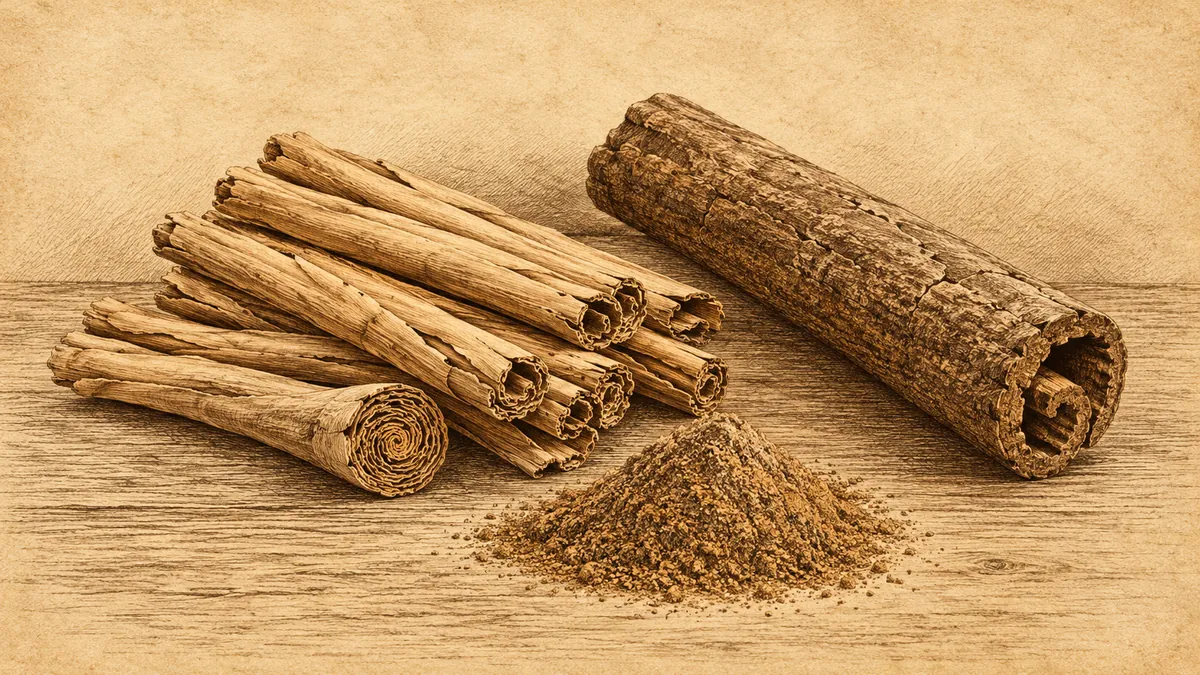
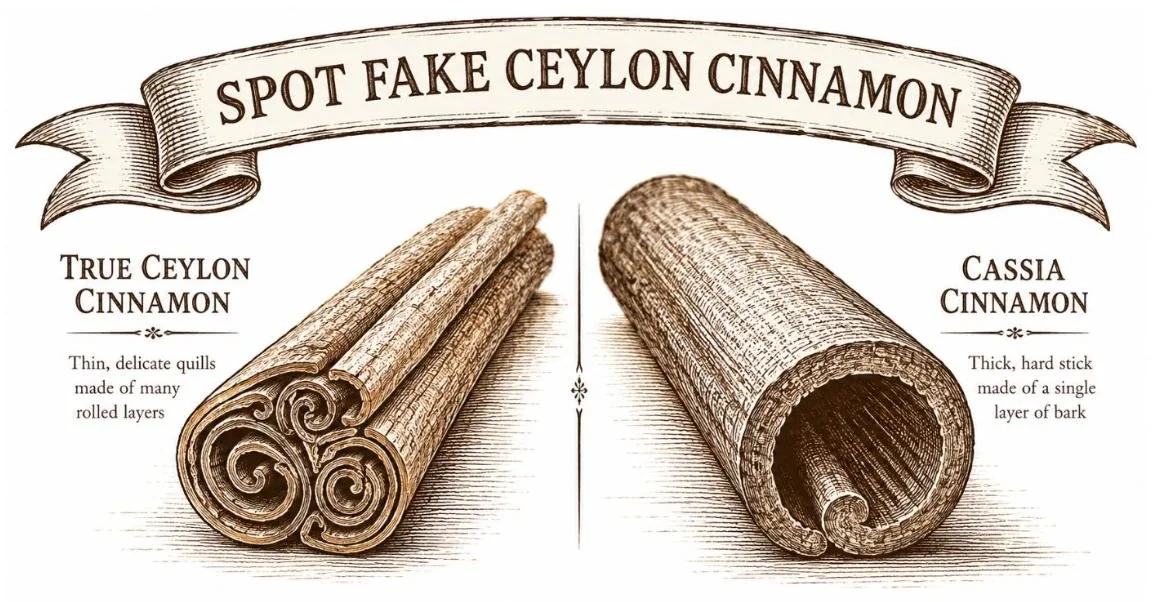
    Ceylon cinnamon and cassia also look similar enough to be mistaken for each other, particularly once ground. As a fine brown powder, the two are hard to tell apart by eye, which is why so much ground cinnamon is cassia without the buyer realising. As sticks there are real differences, since Ceylon quills are thin, soft and made of many fine layers, while cassia is a thick, hard single curl, but a casual glance may miss this. Our guide to how to tell if cinnamon powder is Ceylon explains what to look and ask for when the visual clues are gone.

    Reason for confusionWhat is really going on
    Shared name“Cinnamon” is used for both spices
    Similar lookBoth are rolled brown bark, alike as powder
    Similar smellBoth are warm and sweet-spicy at first
    Price and supplyCassia is cheaper and far more common
    Vague labelsSpecies and origin are often not stated

    Their aromas are similar at first

    Smell adds to the mix-up, because both spices are warm and sweet-spicy when you first open the jar. To a casual nose they seem like the same thing. On closer attention the two differ: true Ceylon cinnamon is delicate, sweet and complex, while cassia is stronger, sharper and more one-note. But most people do not sniff the two side by side, so the first warm impression is enough to treat them as identical. Our guide to coumarin levels in Ceylon cinnamon versus cassia looks at one real difference behind the two barks.

    Cassia is cheaper and more common

    Economics is a large part of the story. Cassia is easier to grow and harvest and costs much less than true Ceylon cinnamon, so it dominates the cinnamon sold around the world. Most supermarket cinnamon, and most cinnamon in processed foods, is cassia. Because true Ceylon cinnamon is the rarer and dearer of the two, many people have simply never knowingly tasted it, and assume the common cassia is what cinnamon is meant to be. This everyday dominance of cassia is why the two are so readily confused, and why the Ceylon name has to be stated clearly to stand apart.

    Labels rarely tell you the species

    Even a careful shopper is often left guessing, because many labels do not state the species or origin. A packet marked only cinnamon, with no mention of Cinnamomum verum or Sri Lanka, gives no way to know which spice is inside. In some markets the word cinnamon on a label is more likely to mean cassia than true cinnamon. Without a clear species name, the buyer cannot resolve the confusion at the point of sale, and the generic label quietly keeps the two spices blurred together. This is why checking for the species name and origin is the surest way to know what you have.

    Where the confusion shows up

    The mix-up appears in everyday places rather than in any single mistake. In supermarkets, a shelf of jars marked only cinnamon usually holds cassia, with true Ceylon cinnamon either absent or tucked away at a higher price. In recipes, a line that calls for a teaspoon of cinnamon does not say which spice, so cooks use whatever their jar contains. In conversation, people describe a warm, sweet flavour as cinnamon without ever distinguishing the two. Even many gift sets, spiced blends and flavoured products lean on cassia while calling it cinnamon. Because the confusion is spread thinly across so many small moments, most people never notice it, which is exactly why it persists.

    How to stop confusing them

    The confusion clears once you know what to look for. Check the label for the species name Cinnamomum verum and a statement of Sri Lankan origin, since this is the clearest sign of true Ceylon cinnamon. With sticks, look at the bark: Ceylon quills are thin and made of many soft layers rolled together, while cassia is a thick, hard single curl. With aroma, compare them and notice that Ceylon cinnamon is sweeter and more delicate. Knowing that two spices hide behind one word is itself most of the answer, because once you expect the difference, you start to see and taste it.

    Why the distinction is worth making

    Telling the two apart matters because they are not interchangeable in every way. Their flavour differs, with Ceylon cinnamon milder and more refined, and they are also different barks with different characteristics. For anyone who wants the genuine article, whether for its taste, its origin or its heritage, the generic word cinnamon is not enough. Learning why the confusion exists is the first step to buying with confidence, so that when you want true Ceylon cinnamon you can recognise it rather than relying on a label that treats every cinnamon as the same.

    Summary

    People confuse Ceylon cinnamon and cassia because both are sold under the single word cinnamon, both are rolled brown bark that looks alike, and both smell warm and sweet at first, especially as powder. Behind the shared name are different spices: Ceylon cinnamon is the bark of Cinnamomum verum from Sri Lanka, while cassia comes from other Cinnamomum species grown mainly in China, Indonesia and Vietnam. Because cassia is cheaper and far more common, it is the cinnamon most people meet, and vague labels that omit the species keep the two blurred. The confusion clears once you check for the species name and Sri Lankan origin, look at the bark structure, and compare the aromas, since true Ceylon cinnamon is thinner, softer, sweeter and more delicate than cassia.

    Frequently asked questions

    Why are Ceylon cinnamon and cassia both called cinnamon?

    Because the word cinnamon is used loosely for several related spices from the Cinnamomum family. Shops, recipes and labels rarely separate them, so both true Ceylon cinnamon and the cheaper cassia are simply sold and spoken of as cinnamon.

    Is most cinnamon actually cassia?

    In many markets, yes. Cassia is cheaper and more widely grown, so much of the cinnamon in supermarkets and processed foods is cassia rather than true Ceylon cinnamon. This is a large reason the two are so often confused.

    How can I tell Ceylon cinnamon from cassia?

    Check the label for Cinnamomum verum and Sri Lankan origin. As sticks, Ceylon cinnamon is thin and made of many soft layers, while cassia is a thick, hard single curl. In aroma, Ceylon cinnamon is sweeter and more delicate than the sharper cassia.

    Do Ceylon cinnamon and cassia taste the same?

    They are similar at first but not the same. True Ceylon cinnamon is milder, sweeter and more complex, while cassia is stronger and sharper. Because many people have only tasted cassia, they often assume that is simply what cinnamon tastes like.

    Why does the difference between them matter?

    Because they are different spices with different flavour and bark, and are not fully interchangeable. If you want genuine Ceylon cinnamon for its taste, origin or heritage, the generic cinnamon label is not enough, so knowing the difference helps you buy what you actually want.

    This website provides educational information about Ceylon Cinnamon as a spice and food ingredient. It is not intended to provide medical advice or make health claims.

  • How to Tell if Cinnamon Powder Is Ceylon

    How to Tell if Cinnamon Powder Is Ceylon

    You can tell if cinnamon powder is Ceylon by checking its colour, aroma, taste and label. True Ceylon cinnamon powder, ground from Cinnamomum verum grown in Sri Lanka, is a pale tan to light brown, smells mild and sweet, and tastes delicate rather than hot. Cassia powder is darker and reddish, smells sharp and strong, and tastes more pungent. The most reliable single check is the label: real Ceylon powder names Cinnamomum verum or Sri Lankan origin.

    Telling true cinnamon from cassia is simple when you hold a whole stick, but powder hides most of the visual clues. This guide explains how to judge ground cinnamon using colour, smell, taste and packaging, so you can work out what is in the jar. It builds on our pillar guide to how to identify authentic Ceylon cinnamon.

    The short answer

    With powder, no single home test is definitive, so you combine clues: colour, aroma, taste, texture, price and above all the label. Ceylon cinnamon powder tends to be lighter in colour, gentler in smell and milder in taste than cassia. Because grinding removes the bark structure that makes whole quills easy to read, the label and the price often tell you more than your senses do. When certainty matters, laboratory testing is the only sure route.

    Why powder is harder to judge than sticks

    A whole Ceylon quill is easy to recognise. It is thin, brittle, and rolls into many fine layers like a cigar, while a cassia stick is thick, hard and curls into a single heavy scroll. That structure is the basis of the roll test for sticks. Grinding destroys all of it. Once bark becomes powder, you lose the layered cross-section, the thickness and the snap, and you are left with colour, smell and taste alone. This is why powder is the form where mislabelling is easiest and why careful buyers lean on packaging and source. For more on the ground form itself, see our guide to ground Ceylon cinnamon.

    Clue 1: Colour

    Colour is the first thing to look at. True Ceylon cinnamon powder is usually a pale tan or light brown, sometimes with a slightly orange warmth. Cassia powder is darker, leaning reddish-brown or deep brown. If you tip a little onto a white plate and it looks rich and dark, that points to cassia. If it looks soft and light, that points to Ceylon. Colour alone is not proof, since roast level, freshness and grind can shift the shade, but a clear difference is a strong hint.

    Clue 2: Aroma

    Smell is one of the better guides. Ceylon cinnamon has a delicate, sweet, almost floral aroma with gentle warmth. Cassia smells stronger, sharper and more pungent, the bold scent most people associate with mass-market cinnamon rolls and sweets. Open the jar, warm a pinch between your fingers and breathe it in. A soft, mellow fragrance suggests Ceylon. A powerful, spicy hit suggests cassia. For the chemistry behind the scent, see our note on what gives Ceylon cinnamon its aroma.

    Clue 3: Taste

    Taste follows aroma. Place a tiny amount on your tongue. Ceylon cinnamon is mild, sweet and smooth, with little bite. Cassia is hotter and more intense, with a pungent edge that can feel almost drying. If a small taste is gentle and pleasant, that favours Ceylon. If it is fiery and lingering, that favours cassia. Use only a pinch, as even mild cinnamon is strong in concentrated form.

    Clue 4: Texture

    Texture is a smaller clue but still useful. Ceylon powder, ground from thin and brittle bark, often feels finer and softer. Cassia, from hard and dense bark, can feel grittier. The difference is subtle and depends on how finely each was milled, so treat texture as a supporting sign rather than a decider.

    Clue 5: The label and packaging

    For powder, the label is the most reliable clue of all. Genuine Ceylon cinnamon will usually say so plainly. Look for the botanical name Cinnamomum verum (sometimes written as its synonym Cinnamomum zeylanicum), or a clear statement of origin such as “product of Sri Lanka” or “Ceylon cinnamon”. A jar labelled only “cinnamon”, with no species and no origin, is very often cassia, because cassia is the cheaper and more common type sold worldwide. Learn to read the small print with our guide to reading cinnamon labels correctly.

    Clue 6: Price

    Price is a practical signal. True Ceylon cinnamon costs more to grow, harvest and prepare than cassia, so it almost always sells at a higher price. A jar of powder that is unusually cheap is unlikely to be Ceylon. This does not mean every expensive jar is genuine, but a very low price is a reliable warning that you are probably looking at cassia.

    The iodine starch test: does it work?

    A popular home test uses iodine. The idea is that cassia contains more starch than Ceylon, so a drop of iodine turns cassia powder a darker blue-black, while Ceylon stays lighter. There is some truth to the starch difference, but the test is not reliable on its own. Starch levels vary, iodine concentration varies, and reading the colour is subjective. Treat it as a rough and interesting check rather than proof. Your senses plus the label give a better everyday answer.

    Ceylon vs cassia powder at a glance

    ClueCeylon cinnamon powderCassia powder
    ColourPale tan to light brownDarker reddish-brown
    AromaDelicate, sweet, mellowStrong, sharp, pungent
    TasteMild and sweetHot and intense
    TextureOften finer and softerCan feel grittier
    LabelCinnamomum verum or Sri Lanka namedOften just “cinnamon”, no species
    PriceHigherLower

    When you need certainty: laboratory testing

    If you truly need to confirm a powder, the only sure method is a laboratory. Specialist labs can identify the species and measure the compounds that differ between Ceylon and cassia, including coumarin, which is far lower in true cinnamon. This is how serious buyers and importers verify a shipment. For everyday kitchen use, the combination of colour, aroma, taste and label is enough, but for professional or high-volume buying, testing removes all doubt. Our guide to coumarin levels in Ceylon cinnamon versus cassia explains the key chemical marker.

    Putting the clues together

    No single clue is proof on its own, so the practical method is to stack them. Tip a little powder onto a white plate and check the colour. Warm a pinch and smell it, then taste a tiny amount. Turn the jar around and read the species name and origin, and note the price. When the signs agree, for example a pale powder with a sweet, mild aroma, a Cinnamomum verum label and a higher price, you can be confident it is Ceylon. When they conflict, such as a light colour but a jar marked only “cinnamon” at a bargain price, trust the label and the price over appearance, and treat the powder as cassia until proven otherwise.

    Summary

    You tell whether cinnamon powder is Ceylon by reading several clues together rather than relying on one. True Ceylon powder, ground from Cinnamomum verum grown in Sri Lanka, is paler, smells sweeter and gentler, and tastes milder than cassia, which is darker, sharper and hotter. Because grinding hides the bark structure that makes whole quills easy to read, the label is the most dependable guide: look for the species name or Sri Lankan origin, and be wary of a jar marked only “cinnamon” at a very low price. Home checks such as the iodine starch test are rough at best, and only laboratory analysis gives full certainty. Put together, these signs let you judge a jar of powder with confidence.

    Frequently asked questions

    Can you tell Ceylon from cassia once it is ground?

    Not with complete certainty by sight alone, but you can get a strong answer by combining colour, aroma and taste with the label. Ceylon powder is lighter, sweeter and milder, while cassia is darker, sharper and hotter. The species name or origin on the packaging is the most reliable everyday clue.

    Is darker cinnamon powder always cassia?

    Darker colour points towards cassia, but it is not absolute. Freshness, grind and how the bark was dried can shift the shade. Use colour as one clue among several rather than the only one.

    Does the iodine test really identify Ceylon cinnamon?

    Only loosely. Cassia tends to contain more starch, so iodine can turn it darker than Ceylon, but the result is hard to read and varies between samples. It is a fun experiment, not a dependable test.

    What should the label say for real Ceylon cinnamon?

    Look for Cinnamomum verum (or the synonym Cinnamomum zeylanicum), or a clear origin such as “Ceylon cinnamon” or “product of Sri Lanka”. A label that only says “cinnamon” with no species or origin is often cassia.

    Is cheaper cinnamon powder a bad sign?

    A very low price is a warning. True Ceylon cinnamon costs more to produce, so bargain powder is usually cassia. Price is not proof on its own, but it is a useful signal alongside the other clues.

    This website provides educational information about Ceylon Cinnamon as a spice and food ingredient. It is not intended to provide medical advice or make health claims.

  • What Is ‘True Cinnamon’ and Why Does It Matter?

    What Is ‘True Cinnamon’ and Why Does It Matter?

    “True cinnamon” is the common name for Ceylon cinnamon, the spice made from the dried inner bark of Cinnamomum verum, a tree native to Sri Lanka. It is called true cinnamon to set it apart from cassia, a group of related but different barks that are also sold as “cinnamon”. The distinction matters because the two differ in flavour, bark structure and botanical species, so knowing which one you have affects how your food tastes and what you are really buying. This guide explains what true cinnamon means and why the term is worth knowing.

    The phrase “true cinnamon” appears on labels, in recipes and in shops, but it is not always explained. This guide sets out what it means, where it comes from and why the difference is worth caring about, in plain terms. It builds on our pillar guide, what is true Ceylon cinnamon.

    The short answer

    True cinnamon is Ceylon cinnamon, the spice from Cinnamomum verum, grown in Sri Lanka, and the term exists to distinguish it from cassia, the cheaper, more common bark often sold simply as “cinnamon”. It matters because true cinnamon is milder and sweeter, has a thin, layered bark, and is a distinct botanical species, so the name tells you what you are actually getting.

    Where the term comes from

    The word “cinnamon” is used in everyday speech for several different barks from the Cinnamomum family of trees. Only one of them, Cinnamomum verum, is the original spice that the name historically referred to. The Latin word verum itself means “true”, so the botanical name already carries the idea. Over time, as cheaper cassia barks spread through world trade and were also called cinnamon, the term “true cinnamon” came into use to point clearly to the original Ceylon spice rather than its substitutes.

    So “true cinnamon” is not a marketing invention but a way of naming the specific spice that the word cinnamon first described. For more on the species name, see our guide to what Cinnamomum verum means.

    True cinnamon versus cassia

    The reason the term exists is the difference between true cinnamon and cassia. True cinnamon, Cinnamomum verum, comes from Sri Lanka and has a thin, papery bark made of many fine layers rolled into delicate quills. Its flavour is mild, sweet and lightly citrus. Cassia is a group of other species, such as Cinnamomum cassia from China and Cinnamomum burmannii from Indonesia, with a thick, hard single-layer bark and a stronger, hotter, more pungent flavour. Both are real spices, but they are not the same thing. Our full comparison covers this in detail: Ceylon cinnamon versus cassia.

    Because cassia is cheaper and more widely produced, much of the ground “cinnamon” on supermarket shelves is actually cassia. That is exactly why the term true cinnamon is useful: it names the original spice clearly, so you are not left guessing which bark is in the jar.

    Why the difference matters

    Knowing whether you have true cinnamon or cassia matters for a few practical reasons. The first is flavour. True cinnamon is gentle and sweet, which suits delicate desserts, custards and milk-based dishes, while cassia is bolder and better for a strong cinnamon hit in heavier bakes. Using one where you expected the other changes how a dish tastes.

    The second is simply knowing what you are buying. True cinnamon is a distinct, named spice with its own origin and character, and it usually costs more than cassia because it is more labour intensive to produce. When a product says true cinnamon or names Cinnamomum verum, you can be confident you are getting the Ceylon spice rather than a cheaper substitute sold under the same everyday name. For telling them apart yourself, see our guide on how to identify authentic Ceylon cinnamon.

    A little history behind the name

    True cinnamon has a long history that helps explain why it earned its name. For centuries, the thin, fragrant bark of Cinnamomum verum from Sri Lanka was one of the most sought-after spices in the world, carried along ancient trade routes and valued across the Mediterranean and beyond. Because it was rare and precious, it was the cinnamon that people knew and wrote about. As trade grew, cheaper cassia barks from other parts of Asia entered the market under the same broad name, and the two became blurred in everyday use. Calling the Sri Lankan spice “true cinnamon” was a way of keeping the original, historically prized spice distinct from the newer substitutes. The term carries that heritage with it, pointing back to the spice that first made cinnamon famous.

    Where you will see the term

    You are most likely to meet the phrase “true cinnamon” on product packaging, in recipes and in guides about spices. On packaging, it is often paired with “Ceylon cinnamon” and the species name to reassure buyers they are getting Cinnamomum verum. In recipes, a cook may specify true cinnamon when the gentle, sweet flavour matters to the dish. In spice guides and articles, the term is used to draw the clear line between true cinnamon and cassia. Seeing the phrase is usually a sign that the writer or seller wants to be precise about which spice they mean, rather than leaving it to the catch-all word cinnamon.

    How to spot true cinnamon

    You can recognise true cinnamon in a few ways. On a label, look for the words “Ceylon cinnamon” or “true cinnamon” and the species name Cinnamomum verum (or the older Cinnamomum zeylanicum), along with a Sri Lankan origin. By eye, a true cinnamon quill is thin and brittle, made of many layers rolled tightly together like a packed cigar, and it snaps and crumbles easily. A cassia stick is a thick, hard single curl that is much tougher to break. In powder form the two are hard to tell apart, which is why the label matters most for ground cinnamon.

    True cinnamon at a glance

    PointTrue cinnamonCassia
    Also calledCeylon cinnamonChinese, Indonesian, Saigon cinnamon
    SpeciesCinnamomum verumCinnamomum cassia and others
    OriginSri LankaChina, Indonesia, Vietnam
    BarkThin, layered, brittleThick, hard, single layer
    FlavourMild, sweet, delicateBold, hot, pungent
    Typical priceHigherLower

    Does “true cinnamon” mean better cinnamon?

    True cinnamon is not automatically better than cassia for every use, so the term is about identity rather than a simple ranking. True cinnamon is prized for its delicate, sweet flavour and fine quills, and it is the original spice, but cassia has its place where a strong, hot cinnamon flavour is wanted. What the term true cinnamon really tells you is which spice you are dealing with, so you can choose the right one for the dish and know what you are paying for. Thinking of it as a clear label rather than a quality badge is the most useful way to use the term.

    Frequently asked questions

    What does “true cinnamon” mean?

    True cinnamon means Ceylon cinnamon, the spice made from the dried inner bark of Cinnamomum verum, a tree native to Sri Lanka. The term distinguishes it from cassia, a group of related but different barks that are also commonly sold as cinnamon.

    Is true cinnamon the same as Ceylon cinnamon?

    Yes. True cinnamon and Ceylon cinnamon are two names for the same spice, made from Cinnamomum verum and grown in Sri Lanka. “Ceylon” is the historic name for the island, and “true cinnamon” marks it out from cassia.

    Why does it matter if cinnamon is true or cassia?

    It matters because the two differ in flavour, bark and species. True cinnamon is milder and sweeter and suits delicate dishes, while cassia is bolder and hotter. Knowing which you have affects how your food tastes and tells you what you are actually buying.

    Is all cinnamon true cinnamon?

    No. Much of the cinnamon sold, especially ground cinnamon in supermarkets, is cassia rather than true cinnamon. Only cinnamon from Cinnamomum verum is true cinnamon, so check the label for the species name or a Ceylon origin.

    Summary

    True cinnamon is the common name for Ceylon cinnamon, the spice from Cinnamomum verum, grown in Sri Lanka. The term exists to tell it apart from cassia, a group of cheaper, more common barks also sold as cinnamon. The difference matters because true cinnamon is milder and sweeter, has a thin, layered bark and is a distinct species, so the name tells you which spice you really have. It is best understood as a clear label of identity rather than a simple mark of quality, helping you choose the right cinnamon and know what you are buying.

    This website provides educational information about Ceylon Cinnamon as a spice and food ingredient. It is not intended to provide medical advice or make health claims.

  • Ceylon Cinnamon vs Indonesian Cinnamon

    Ceylon Cinnamon vs Indonesian Cinnamon

    Ceylon cinnamon and Indonesian cinnamon are two different barks sold under the same everyday name. Ceylon cinnamon is true cinnamon, Cinnamomum verum, grown in Sri Lanka, with a thin, papery bark and a mild, sweet flavour. Indonesian cinnamon is a type of cassia, usually Cinnamomum burmannii, often called korintje or Padang cassia, with a thick, hard bark and a stronger, hotter taste. Knowing which one you have helps you buy and cook with confidence.

    Indonesian cinnamon is one of the most common cinnamons on supermarket shelves, so it is worth knowing how it compares with true Ceylon cinnamon. This guide sets out the botanical, origin, appearance and flavour differences in plain terms. It builds on our pillar comparison, Ceylon cinnamon versus cassia.

    The short answer

    Ceylon cinnamon is true cinnamon from the species Cinnamomum verum, native to Sri Lanka, while Indonesian cinnamon is a cassia, usually Cinnamomum burmannii, grown in Indonesia. Ceylon has a thin, layered quill and a gentle, sweet flavour. Indonesian cassia has a thick, single-layer bark and a bolder, spicier flavour, and it is the cinnamon most often used in mass-market ground cinnamon.

    What is Indonesian cinnamon?

    Indonesian cinnamon comes from Cinnamomum burmannii, a tree grown mainly on the island of Sumatra. It is widely known in the spice trade as korintje or Padang cassia, after the Padang region and port. Because Indonesia produces a very large share of the world’s cassia, much of the ground cinnamon sold in North America and parts of Europe is Indonesian cassia, even when the label simply reads “cinnamon”.

    Indonesian cinnamon is a genuine cinnamon in the broad sense, since it belongs to the Cinnamomum family. It is not the same species as true Ceylon cinnamon, though, and the two differ in bark structure, flavour and the way they are used.

    What is Ceylon cinnamon?

    Ceylon cinnamon is true cinnamon, Cinnamomum verum, grown in Sri Lanka, the island once known as Ceylon. It is made from the thin inner bark of the tree, which is peeled and rolled into delicate quills built up from many fine layers. Its flavour is mild, sweet and lightly citrus, with a soft aroma. To read more about the species itself, see our guide to what true Ceylon cinnamon is.

    Botanical differences

    The clearest difference is the species. True Ceylon cinnamon is Cinnamomum verum (once called Cinnamomum zeylanicum). Indonesian cinnamon is Cinnamomum burmannii, one of several cassia species alongside Cinnamomum cassia from China and Cinnamomum loureiroi from Vietnam. All are in the same plant family, but they are distinct trees with their own bark and flavour.

    This matters because the name “cinnamon” on a label does not tell you the species. The botanical name does. A label that reads Cinnamomum verum points to Ceylon cinnamon, while Cinnamomum burmannii points to Indonesian cassia.

    Origin differences

    Ceylon cinnamon is grown in Sri Lanka, which remains the main source of true cinnamon. Indonesian cinnamon is grown in Indonesia, chiefly on Sumatra. Both countries have warm, humid tropical climates that suit the trees, but the growing regions and the plants themselves are different. When a label states “Product of Sri Lanka”, it lines up with Ceylon cinnamon. “Product of Indonesia” points to cassia.

    Appearance and bark structure

    The two barks look quite different once you know what to look for. A Ceylon cinnamon quill is made of many thin layers rolled tightly together, so it looks like a packed cigar and feels light and brittle. It snaps and crumbles easily. An Indonesian cassia stick is a thick, single curl of hard bark that is much tougher to break, often with a darker, redder brown colour.

    Ground cinnamon is harder to tell apart by eye, which is why the species name on the label matters most for powder. If you want to tell the barks apart in your own kitchen, our guide on how to identify authentic Ceylon cinnamon sets out the simple checks.

    Flavour differences

    Ceylon cinnamon has a mild, sweet and delicate flavour with gentle citrus notes. It adds warmth without heat, which makes it a good match for desserts and light dishes. Indonesian cassia is bolder and spicier, with a stronger, hotter edge and a deeper colour. Many people recognise this fuller flavour because Indonesian cassia is so common in everyday baking blends and breakfast cereals.

    Neither is simply better. For delicate custards and milk-based sweets, the softness of Ceylon cinnamon suits the dish. For a strong cinnamon hit in a spiced bun or a hearty stew, the intensity of cassia can be a good fit.

    How they are used in cooking

    The two cinnamons tend to suit different jobs in the kitchen. Ceylon cinnamon, with its gentle sweetness, is a natural fit for puddings, custards, fruit dishes and milk-based drinks, where a softer spice lets the other flavours come through. It also works well in delicate Sri Lankan sweets and in lightly spiced teas and coffees. Indonesian cassia, being stronger and hotter, carries its flavour through heavier bakes, spiced buns, breakfast cereals and mulled drinks, and it is the cinnamon most people picture when they think of a bold cinnamon taste.

    In practice, many cooks keep both. A thin Ceylon quill can be simmered in syrup or milk and lifted out, while ground cassia is often stirred straight into doughs and batters for a deeper, warmer note. Choosing between them is less about quality and more about how much cinnamon flavour a dish needs.

    Price and availability

    Indonesian cassia is cheaper and more widely available than true Ceylon cinnamon, which is part of why it fills so many supermarket shelves. Cassia trees grow quickly and yield thick bark, so the spice is produced in large volumes at lower cost. True Ceylon cinnamon is more labour intensive to peel and roll by hand, and Sri Lanka produces a smaller share of the global cinnamon trade, so it usually costs more and is more often found in specialist shops or online. The higher price reflects the careful handwork and the thin, delicate quills rather than any single measure of quality.

    Ceylon cinnamon versus Indonesian cinnamon at a glance

    FeatureCeylon cinnamonIndonesian cinnamon
    TypeTrue cinnamonCassia
    SpeciesCinnamomum verumCinnamomum burmannii
    Common nameCeylon, true cinnamonKorintje, Padang cassia
    OriginSri LankaIndonesia (mainly Sumatra)
    BarkThin, many layers, brittleThick, single layer, hard
    FlavourMild, sweet, delicateBold, spicy, stronger
    ColourLight tanDarker red-brown

    Which one is in your kitchen?

    If your cinnamon came in a plain supermarket jar labelled only “cinnamon” or “ground cinnamon”, it is most likely Indonesian or another cassia, since cassia dominates the mass market. If you bought thin, crumbly quills labelled Cinnamomum verum and marked as a product of Sri Lanka, you have true Ceylon cinnamon. The surest way to know is to read the species name and origin on the label, and to look at the bark if you have whole sticks. For a wider comparison with other cassia types, see our guide to Ceylon cinnamon versus Chinese cinnamon.

    Frequently asked questions

    Is Indonesian cinnamon real cinnamon?

    Indonesian cinnamon is a real cinnamon in the broad sense, since it belongs to the Cinnamomum family. It is a cassia, usually Cinnamomum burmannii, rather than true cinnamon. True cinnamon is the separate species Cinnamomum verum, grown in Sri Lanka.

    What is korintje cinnamon?

    Korintje is a common trade name for Indonesian cassia, Cinnamomum burmannii, grown on Sumatra. It is also called Padang cassia. It is the same bark as Indonesian cinnamon, so korintje and Indonesian cinnamon refer to the same thing.

    Is Ceylon or Indonesian cinnamon better for baking?

    It depends on the result you want. Indonesian cassia gives a strong, spicy cinnamon flavour that suits bold baked goods. Ceylon cinnamon gives a milder, sweeter warmth that suits delicate desserts. Both work in baking, so the choice is about flavour strength.

    Why is most supermarket cinnamon Indonesian?

    Indonesia produces a very large share of the world’s cassia, and cassia is cheaper and more widely traded than true cinnamon. As a result, much of the ground cinnamon sold in shops is Indonesian cassia, often labelled simply as “cinnamon”.

    Summary

    Ceylon cinnamon and Indonesian cinnamon are different barks. Ceylon cinnamon is true cinnamon, Cinnamomum verum, from Sri Lanka, with a thin, layered quill and a mild, sweet flavour. Indonesian cinnamon is a cassia, usually Cinnamomum burmannii and known as korintje, grown in Indonesia, with a thick, hard bark and a bolder, spicier taste. The species name and origin on the label are the clearest way to tell which bark you are buying, and each has its place depending on the dish and the flavour you want.

    This website provides educational information about Ceylon Cinnamon as a spice and food ingredient. It is not intended to provide medical advice or make health claims.
  • Coumarin Levels in Ceylon Cinnamon vs Cassia

    Coumarin Levels in Ceylon Cinnamon vs Cassia

    The main difference in coumarin between the two kinds of cinnamon is one of quantity. Coumarin is a naturally occurring aromatic compound found in the bark of cinnamon trees, and true Ceylon cinnamon, Cinnamomum verum, contains only trace amounts of it, while cassia cinnamon contains much more. This difference in coumarin content is one of the most studied and most talked about contrasts between Ceylon cinnamon and cassia.

    Coumarin comes up often when people compare the two cinnamons, yet it is frequently misunderstood. This guide explains what coumarin is, why the levels differ, and what researchers and food-safety bodies have said about it, in plain and factual terms. It builds on our pillar guide to Ceylon cinnamon vs cassia cinnamon.

    The short answer

    Ceylon cinnamon contains only trace levels of coumarin, whereas cassia cinnamon contains substantially higher levels. Coumarin is a naturally occurring compound that gives a sweet, hay-like note and is present in many plants. In cinnamon it sits in the bark, and the amount varies a great deal by species. True Ceylon cinnamon is consistently very low in coumarin, which is one reason it is often distinguished from the cassia types sold as ordinary cinnamon.

    What coumarin is

    Coumarin is a naturally occurring aromatic compound found in a range of plants, including cinnamon, tonka beans and sweet clover. It has a pleasant, sweet, grassy or hay-like smell and contributes to the aroma of the plants that contain it. In cinnamon, coumarin is one of many naturally occurring compounds in the bark, alongside the aroma compound cinnamaldehyde that gives cinnamon much of its character. You can read more about the aroma side in our guide to what gives Ceylon cinnamon its aroma. Coumarin is studied by researchers as a marker that helps tell cinnamon species apart, because the amount present is closely tied to which species the bark came from. It is the same compound that gives freshly cut hay and certain grasses their characteristic sweet, warm scent, which is why it is described as having a hay-like note.

    Why the levels differ between Ceylon and cassia

    The difference comes down to species. True Ceylon cinnamon is made from Cinnamomum verum, which naturally produces very little coumarin in its bark. The cassia cinnamons, which include Cinnamomum cassia, Cinnamomum burmannii and Cinnamomum loureiroi, naturally contain far more. So the gap is not about processing or quality but about the botany of the trees themselves. This is why laboratories can use coumarin content, along with other markers, to check whether a sample is genuine Ceylon cinnamon or one of the cassia types often sold simply as cinnamon. The way these show up on packaging is covered in our guide to reading cinnamon labels correctly.

    How much coumarin each type contains

    Exact figures vary from sample to sample, because coumarin levels depend on the particular batch, the growing conditions and the part of the bark. As a general picture, though, researchers consistently report that Ceylon cinnamon contains only trace amounts of coumarin, while cassia contains many times more. The table below gives a simplified comparison of the typical pattern rather than precise numbers, since published measurements range widely.

    A simplified comparison of coumarin in Ceylon cinnamon and cassia.
    FeatureCeylon cinnamonCassia cinnamon
    SpeciesCinnamomum verumC. cassia, burmannii, loureiroi
    Typical coumarin levelTrace amountsMuch higher
    Main originSri LankaChina, Indonesia, Vietnam
    Used as a species markerLow readingHigh reading

    How coumarin is measured in cinnamon

    Coumarin is measured in a laboratory rather than by eye or by taste. A small, ground sample of the bark is prepared and analysed using techniques such as high-performance liquid chromatography, often shortened to HPLC, which separates the compounds in the sample and measures how much of each is present. The result is usually given as a concentration, for example milligrams of coumarin per kilogram of cinnamon. Because the figure depends on the exact batch, the growing conditions and even which part of the bark was tested, individual readings vary, which is why researchers describe a range rather than a single fixed number. What stays consistent across studies is the pattern: samples confirmed as Cinnamomum verum read very low, and samples of the cassia species read much higher. This reliability is what makes coumarin useful as a species marker. It is worth noting that you cannot judge coumarin content at home, because it has only a faint aroma and no obvious taste at the levels found in cinnamon, so laboratory testing is the only way to measure it accurately.

    What researchers and food-safety bodies say

    Coumarin in food has been studied by researchers and reviewed by food-safety authorities. Bodies such as the European Food Safety Authority have looked at coumarin as a naturally occurring food compound and published guidance on it, including a tolerable daily intake figure used in food-safety assessment. Because cassia is higher in coumarin, these discussions often focus on cassia-based products. Ceylon cinnamon, by contrast, is consistently reported as very low in coumarin. This website does not give health or medical advice, and anyone with specific dietary questions should speak to a qualified professional. What can be said factually is that the two cinnamons differ markedly in coumarin content, and that this difference is well documented in the scientific literature.

    Why this difference matters for identification

    For the purposes of this educational resource, the most useful point is that coumarin content is a reliable way to tell the two cinnamons apart in a laboratory. Because the level is tied so closely to species, a low coumarin reading points to Ceylon cinnamon and a high reading points to cassia. This makes coumarin one of several scientific markers, alongside the look, aroma and bark structure, that together confirm whether a sample is true Ceylon cinnamon. For the home cook, the practical takeaway is simply that true Ceylon cinnamon and cassia are different products with different compositions, and that knowing which one you have starts with knowing the species and origin.

    This is also part of why the two cinnamons are not simply interchangeable in the way they are often assumed to be. They look different, they taste different, and they differ in measurable composition, coumarin included. A label that names Cinnamomum verum or Cinnamomum zeylanicum and gives a Sri Lankan or Ceylon origin is pointing to the low-coumarin true cinnamon, while a bare cinnamon label with no species or origin is, more often than not, one of the higher-coumarin cassia types. Understanding the coumarin difference therefore reinforces the broader message of this resource: that true Ceylon cinnamon is a distinct spice, and that the clearest way to be sure of what you are buying is to check the species and the country of origin on the label rather than relying on the single word cinnamon.

    Frequently asked questions

    Does Ceylon cinnamon contain coumarin?

    Yes, but only in trace amounts. Coumarin is a naturally occurring compound in cinnamon bark, and true Ceylon cinnamon, Cinnamomum verum, naturally contains very little of it, far less than the cassia types of cinnamon.

    Why does cassia have more coumarin than Ceylon cinnamon?

    The difference is down to species. Cassia cinnamons such as Cinnamomum cassia and Cinnamomum burmannii naturally produce much more coumarin in their bark than Cinnamomum verum does. It is a feature of the trees themselves rather than of how the cinnamon is processed.

    Can coumarin be used to tell Ceylon cinnamon from cassia?

    Yes. Because coumarin content is closely tied to species, laboratories use it as one marker to distinguish true Ceylon cinnamon, which reads very low, from cassia, which reads much higher. It is used alongside other checks such as appearance and aroma.

    Is coumarin natural in cinnamon?

    Yes. Coumarin is a naturally occurring aromatic compound found in many plants, including cinnamon, tonka beans and sweet clover. It is not added to cinnamon; it is simply present in the bark in differing amounts depending on the species.

    Summary

    Coumarin is a naturally occurring aromatic compound found in cinnamon bark, and the key difference between the two cinnamons is how much of it they contain. True Ceylon cinnamon, made from Cinnamomum verum, holds only trace amounts of coumarin, while the cassia types, Cinnamomum cassia, burmannii and loureiroi, contain substantially more. The gap is a matter of species rather than processing, which is why laboratories use coumarin as a marker to tell genuine Ceylon cinnamon from cassia: a low reading points to Ceylon, a high reading to cassia. Researchers and food-safety bodies have studied coumarin as a food compound, and this difference is well documented. For anyone trying to understand the two cinnamons, coumarin is one more clear, measurable way in which true Ceylon cinnamon stands apart from the common cassia sold as ordinary cinnamon.

    This website provides educational information about Ceylon Cinnamon as a spice and food ingredient. It is not intended to provide medical advice or make health claims.

  • Reading Cinnamon Labels Correctly

    Reading Cinnamon Labels Correctly

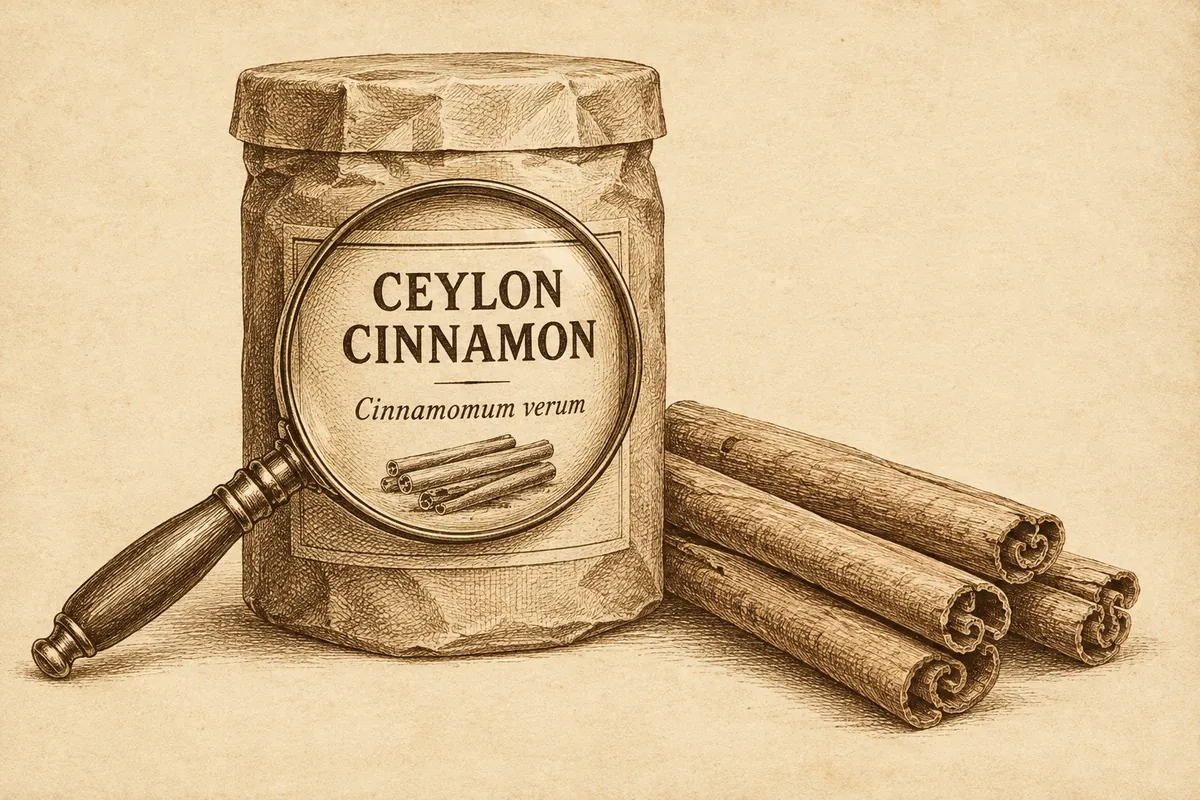
    Reading a cinnamon label correctly means checking three things above all: the species name, the country of origin, and the wording used for the product. True Ceylon cinnamon is the bark of Cinnamomum verum (also written Cinnamomum zeylanicum) from Sri Lanka, so a label that names that species and a Sri Lankan origin, or clearly says “Ceylon cinnamon”, is telling you it is the real thing. A label that only says “cinnamon”, names a different species such as Cinnamomum cassia, or gives an origin like China or Indonesia is usually one of the cheaper cassia types, not true cinnamon.

    Cinnamon labels can be confusing, and the differences that matter are often in the small print. This guide shows you exactly what to look for. It builds on our pillar guide to how to identify authentic Ceylon cinnamon.

    The short answer

    To read a cinnamon label correctly, look for the species name Cinnamomum verum, a Sri Lankan or Ceylon origin, and the words “Ceylon cinnamon” or “true cinnamon”. Those three signs together tell you the product is genuine Ceylon cinnamon. If a label just says “cinnamon” with no species or origin, or names a cassia species such as Cinnamomum cassia, it is most likely a cassia type rather than true cinnamon.

    1. The species name

    The single most reliable thing on any cinnamon label is the botanical, or species, name. True Ceylon cinnamon is Cinnamomum verum, which is the same plant as the older name Cinnamomum zeylanicum. If you see either of those on the label, you are looking at true cinnamon. To understand the name itself, see our guide to what “Cinnamomum verum” actually means.

    The other cinnamon species you may see named are the cassia types. These include Cinnamomum cassia (also called Cinnamomum aromaticum), Cinnamomum burmannii and Cinnamomum loureiroi. All of these are cassia, not true cinnamon. So the species name alone can tell you which kind of cinnamon is in the packet, if the seller has printed it.

    2. The country of origin

    Origin is the second big clue. True Ceylon cinnamon comes from Sri Lanka, the island once called Ceylon, so a label that says “Product of Sri Lanka” or “Ceylon” points to the genuine spice. The cassia types, by contrast, are grown mainly in China, Indonesia and Vietnam, so an origin from those countries usually signals a cassia rather than true cinnamon. Origin and species work best together: a label that names both Cinnamomum verum and Sri Lanka gives you the clearest possible confirmation.

    3. The product wording

    The words a seller chooses also carry meaning. Phrases such as “Ceylon cinnamon”, “true cinnamon” or “pure Ceylon cinnamon” indicate the genuine article, and reputable sellers of true cinnamon tend to say so clearly because it is a selling point. A plain label that only says “cinnamon”, with no species and no origin, is a warning sign: most of the cinnamon sold this way around the world is actually cassia. This is not always deliberate, since in many countries the word cinnamon is legally allowed for cassia too, but it does mean a bare “cinnamon” label tells you very little.

    Label clues at a glance

    How to read common cinnamon label clues.
    On the labelLikely means
    Cinnamomum verum or zeylanicumTrue Ceylon cinnamon
    “Ceylon cinnamon” / “true cinnamon”True Ceylon cinnamon
    Product of Sri LankaTrue Ceylon cinnamon
    Cinnamomum cassia, burmannii or loureiroiCassia, not true cinnamon
    Origin China, Indonesia or VietnamUsually cassia
    Just “cinnamon”, no species or originUnknown, often cassia

    Grade codes on the label

    Some Ceylon cinnamon labels also carry grade codes such as Alba, C5 Special or C5. These describe the thickness and quality of the quills and are a good sign, because they show a seller who knows and is open about their product. A grade code does not by itself prove the species, but sellers who use the proper Ceylon grading are usually selling genuine true cinnamon. To understand these codes, see our guide to Continental grade Ceylon cinnamon, which explains the common C grades.

    Ceylon or Sri Lankan on the label

    You may notice that some labels say “Ceylon cinnamon” while others say “Sri Lankan cinnamon”. These mean the same thing, because Ceylon was the former name of Sri Lanka. Both point to true cinnamon from the same island. The older name Ceylon is more common on labels because it became the established name for the spice, as explained in our guide to why it is called Ceylon cinnamon. So do not be thrown by seeing either term; they are two names for the same genuine spice.

    What labels do not tell you

    It is worth knowing what a label cannot confirm on its own. Words like “natural”, “premium” or “finest” are marketing terms and do not tell you the species. Certifications such as organic show how the spice was grown, not whether it is true cinnamon or cassia. Even a picture of rolled quills on the front is not proof, since cassia is also sold in stick form. This is why the species name and origin matter so much: they are the facts, while the rest is presentation. When those key facts are missing, it is reasonable to treat the product as uncertain.

    A quick label checklist

    When you pick up a packet of cinnamon, a simple routine helps. First, look for the species name and check whether it is Cinnamomum verum or zeylanicum. Second, look for the origin and see whether it says Sri Lanka or Ceylon. Third, read the product name for the words Ceylon or true cinnamon. If all three point the same way, you can be confident it is genuine Ceylon cinnamon. If the label is vague on all three, it is safer to assume it may be cassia and to look for a clearer product instead.

    Where to look on the packet

    The most useful information is often not on the front of the packet. The front usually carries the brand name and a large word like “Cinnamon”, chosen to catch the eye rather than to inform. The species name and country of origin are more often found in the small print on the back or side, near the ingredients or the packer’s details. So it pays to turn the packet over and read the fine print rather than judging by the front alone. If you are buying online, the same applies to the product description: look past the headline for a species name and an origin, and treat their absence as a reason to ask the seller before buying.

    Reading loose and market labels

    Not all cinnamon comes in printed packets. At markets, spice shops and bulk bins, the label may be a simple sign or a handwritten card. Here the same rules apply, but you may need to ask. A knowledgeable seller of true cinnamon will happily tell you the species and that it is Ceylon or Sri Lankan, and will often point to the soft, thin, layered quills as proof. If a seller cannot say what species it is or where it is from, that uncertainty is itself useful information. Asking two simple questions, what species is it and where is it from, quickly separates sellers who know their cinnamon from those who do not.

    Frequently asked questions

    How do I know if a cinnamon label is true Ceylon cinnamon?

    Look for the species name Cinnamomum verum (or Cinnamomum zeylanicum), an origin of Sri Lanka or Ceylon, and the words “Ceylon cinnamon” or “true cinnamon”. When a label shows these, it is genuine Ceylon cinnamon. A label that only says “cinnamon” with no species or origin is often cassia.

    What species names mean it is not Ceylon cinnamon?

    The cassia types are named Cinnamomum cassia (or Cinnamomum aromaticum), Cinnamomum burmannii and Cinnamomum loureiroi. If a label names any of these, it is cassia rather than true Ceylon cinnamon.

    Does “Ceylon” or “Sri Lankan” on a label matter?

    Both mean the same thing. Ceylon was the former name of Sri Lanka, so “Ceylon cinnamon” and “Sri Lankan cinnamon” both refer to true cinnamon from that island. The name Ceylon is simply more common on labels.

    Why do some labels just say “cinnamon”?

    In many countries the word cinnamon is legally allowed for cassia as well as true cinnamon, so a bare “cinnamon” label does not tell you which one it is. Because most cinnamon sold this way is cassia, a label with no species or origin is best treated as uncertain.

    Summary

    Reading a cinnamon label correctly comes down to three checks: the species name, the origin, and the product wording. True Ceylon cinnamon is Cinnamomum verum (or Cinnamomum zeylanicum) from Sri Lanka, so a label naming that species, a Sri Lankan or Ceylon origin, and the words Ceylon or true cinnamon is showing you the genuine spice. Cassia types are named Cinnamomum cassia, burmannii or loureiroi and usually come from China, Indonesia or Vietnam, while a bare “cinnamon” label with no species or origin is often cassia by default. Grade codes and the Ceylon or Sri Lankan wording add further confidence, but marketing words and certifications do not confirm the species. Check the facts on the label, and the true cinnamon reveals itself.

    This website provides educational information about Ceylon Cinnamon as a spice and food ingredient. It is not intended to provide medical advice or make health claims.
  • Ceylon Cinnamon vs Chinese Cinnamon

    Ceylon Cinnamon vs Chinese Cinnamon

    Ceylon cinnamon and Chinese cinnamon are two different spices. Ceylon cinnamon is the dried inner bark of Cinnamomum verum, native to Sri Lanka, prized for its soft, sweet, delicate flavour and thin, layered quills. Chinese cinnamon, also called Chinese cassia, comes from Cinnamomum cassia, a related tree grown mainly in China and South-East Asia. It is a thicker, harder, single-layer bark with a stronger, sharper, more pungent flavour, and it is the most common cassia sold simply as “cinnamon” around the world.

    Chinese cinnamon is one of the main types of cassia that people confuse with true cinnamon. This guide compares the two so you can tell them apart. It builds on our pillar guide to Ceylon cinnamon versus cassia.

    The short answer

    Ceylon cinnamon (Cinnamomum verum) is the true cinnamon of Sri Lanka, mild and sweet with thin layered quills, while Chinese cinnamon (Cinnamomum cassia) is a type of cassia from China with a thick single-layer bark and a stronger, sharper taste. They are different species from the same broad family, and Chinese cassia is the bolder, cheaper, more widely sold of the two.

    What is Chinese cinnamon?

    Chinese cinnamon is the common name for Cinnamomum cassia, also known as Chinese cassia or simply cassia. It is one of the main cassia species, alongside others such as Indonesian and Saigon (Vietnamese) cinnamon. Grown chiefly in southern China and neighbouring regions, it has been used for a very long time in Chinese cooking and trade. Because it is cheaper to produce than true cinnamon and has a strong, familiar flavour, Chinese cassia is what many shoppers around the world are actually buying when a product is labelled just “cinnamon”.

    What is Ceylon cinnamon?

    Ceylon cinnamon is true cinnamon, Cinnamomum verum, native to Sri Lanka (once called Ceylon). It is made from the thin, papery inner bark of the tree, which is peeled and rolled into delicate, multi-layered quills. Its flavour is soft, sweet and gently spicy, more refined and less sharp than cassia. To understand the true spice more fully, see our guide to what true Ceylon cinnamon is.

    Ceylon vs Chinese cinnamon at a glance

    Comparing Ceylon cinnamon and Chinese cinnamon (cassia).
    FeatureCeylon cinnamonChinese cinnamon (cassia)
    SpeciesCinnamomum verumCinnamomum cassia
    OriginSri LankaChina and nearby regions
    BarkThin, papery, many layersThick, hard, single layer
    Quill shapeScroll of fine layersSingle thick curl
    ColourPale tanDarker reddish brown
    FlavourSoft, sweet, delicateStrong, sharp, pungent
    PriceHigherLower

    Botanical and origin differences

    Although both belong to the Cinnamomum group of trees, Ceylon and Chinese cinnamon are distinct species with different homes. Ceylon cinnamon, Cinnamomum verum, is native to Sri Lanka, which remains the source of the finest true cinnamon. Chinese cinnamon, Cinnamomum cassia, is native to and grown mainly in China and the surrounding region. This difference in species and origin is the root of all the other contrasts between them, from bark structure to flavour.

    Appearance: how to tell them apart

    The clearest way to distinguish the two is by looking at the bark, especially whole sticks. Ceylon cinnamon quills are pale, thin and made of many soft layers rolled together, like a little scroll, and they are brittle enough to snap easily. Chinese cassia sticks are darker, thicker and harder, formed from a single tough layer curled into a hollow tube. Cassia is difficult to break by hand, while Ceylon crumbles readily. This visual test is one of the simplest checks, covered in our guide on how to identify real Ceylon cinnamon.

    Flavour and aroma

    The taste difference is easy to notice once you know it. Ceylon cinnamon is mild, sweet and subtly complex, with gentle floral and citrus notes that make it well suited to delicate dishes and desserts. Chinese cinnamon is much bolder: strong, sharp and intensely spicy, with a pungent warmth that stands up well to robust, savoury cooking. Neither is simply better; they suit different purposes. The difference in strength comes largely from the balance of aromatic compounds in each bark, including cinnamaldehyde, which our guide to cinnamaldehyde explains.

    A note on composition

    One well-known difference between the two is the level of a naturally occurring compound called coumarin. Cassia barks, including Chinese cassia, contain notably higher levels of coumarin than true Ceylon cinnamon, which is very low in it. This is a compositional difference that researchers and food scientists often point to when distinguishing the two spices. Here we note it simply as a factual difference in makeup rather than a health matter; it is one more way in which true Ceylon cinnamon and cassia are genuinely different products.

    Culinary uses

    Both spices are used in cooking, but their strengths differ. Ceylon cinnamon’s gentle sweetness makes it a favourite for baking, desserts, delicate drinks and dishes where a refined cinnamon note is wanted without overwhelming other flavours. Chinese cassia’s bold, punchy character suits hearty savoury dishes, spiced stews, strong mulled drinks and recipes where a powerful cinnamon hit is the aim. Many classic Chinese and other Asian dishes are built around the robust flavour of cassia. Choosing between them is really about matching the spice to the dish.

    Why they are often confused

    The confusion between Ceylon and Chinese cinnamon comes down to labelling. In many countries the word “cinnamon” on its own is most often cassia, frequently Chinese or Indonesian, rather than true Ceylon cinnamon. Since both are warm, brown, sweet-smelling barks from related trees, shoppers rarely realise they are buying a different spice. Only when the label specifically says Ceylon cinnamon or Cinnamomum verum can you be sure of true cinnamon. This same pattern of confusion appears with other cassia types, as our comparison of Ceylon and Saigon cinnamon describes.

    Cost and why cassia dominates shelves

    A big reason Chinese cassia is so common comes down to cost and scale. Cassia trees grow readily and the thick bark is quicker and cheaper to harvest and process than the delicate hand-peeled quills of true cinnamon. That lower cost, combined with a strong flavour that carries well in mass-market products, means cassia fills most supermarket shelves and flavours most inexpensive cinnamon goods. True Ceylon cinnamon, made by skilled hand peeling in Sri Lanka, costs more to produce and so sits at the premium end. When you understand this, the price gap between a cheap jar of “cinnamon” and genuine Ceylon cinnamon makes sense: you are usually comparing mass-produced cassia with a carefully crafted specialty spice.

    Which should you choose?

    The right choice depends on what you want. If you are after the fine, sweet, delicate spice with the greatest reputation for quality, and you value the true cinnamon of Sri Lanka, choose Ceylon cinnamon. If you want a strong, inexpensive, boldly flavoured cinnamon for hearty cooking, Chinese cassia does the job. Many cooks keep true Ceylon cinnamon for baking and refined dishes and reach for cassia when they want a powerful punch. Knowing the difference simply lets you choose on purpose rather than by accident.

    Frequently asked questions

    Is Chinese cinnamon the same as Ceylon cinnamon?

    No. They are different species. Ceylon cinnamon is true cinnamon, Cinnamomum verum, from Sri Lanka, with thin, layered quills and a mild, sweet flavour. Chinese cinnamon is a cassia, Cinnamomum cassia, from China, with a thick, hard bark and a strong, sharp taste.

    Is Chinese cinnamon real cinnamon?

    Chinese cinnamon is a type of cassia, which is a close relative of true cinnamon rather than the same spice. It is very widely sold simply as “cinnamon”, but only Cinnamomum verum, Ceylon cinnamon, is considered true cinnamon.

    How can I tell Ceylon from Chinese cinnamon?

    Look at the sticks. Ceylon cinnamon is pale, thin and made of many soft layers that snap easily, like a scroll. Chinese cassia is darker, thicker and harder, a single curled layer that resists breaking. With powder, rely on the label, checking for Ceylon cinnamon or Cinnamomum verum.

    Which is better, Ceylon or Chinese cinnamon?

    Neither is simply better; they suit different uses. Ceylon cinnamon is milder, sweeter and more refined, ideal for baking and delicate dishes. Chinese cassia is stronger and cheaper, good for bold, hearty cooking. The best choice depends on the flavour and budget you want.

    Summary

    Ceylon cinnamon and Chinese cinnamon are two distinct spices from related trees. Ceylon cinnamon, Cinnamomum verum from Sri Lanka, is the true cinnamon: pale, thin, many-layered and mild, sweet and delicate in flavour. Chinese cinnamon, Cinnamomum cassia from China, is a cassia: a thick, hard, single-layer bark with a strong, sharp, pungent taste, cheaper and more widely sold. They differ in species, origin, appearance, flavour and composition, and they are often confused only because both are sold as “cinnamon”. Knowing the difference lets you choose true Ceylon cinnamon when you want it and use cassia knowingly when a bolder flavour suits.

    This website provides educational information about Ceylon Cinnamon as a spice and food ingredient. It is not intended to provide medical advice or make health claims.
  • The Roll Test: Telling Ceylon From Cassia

    The Roll Test: Telling Ceylon From Cassia

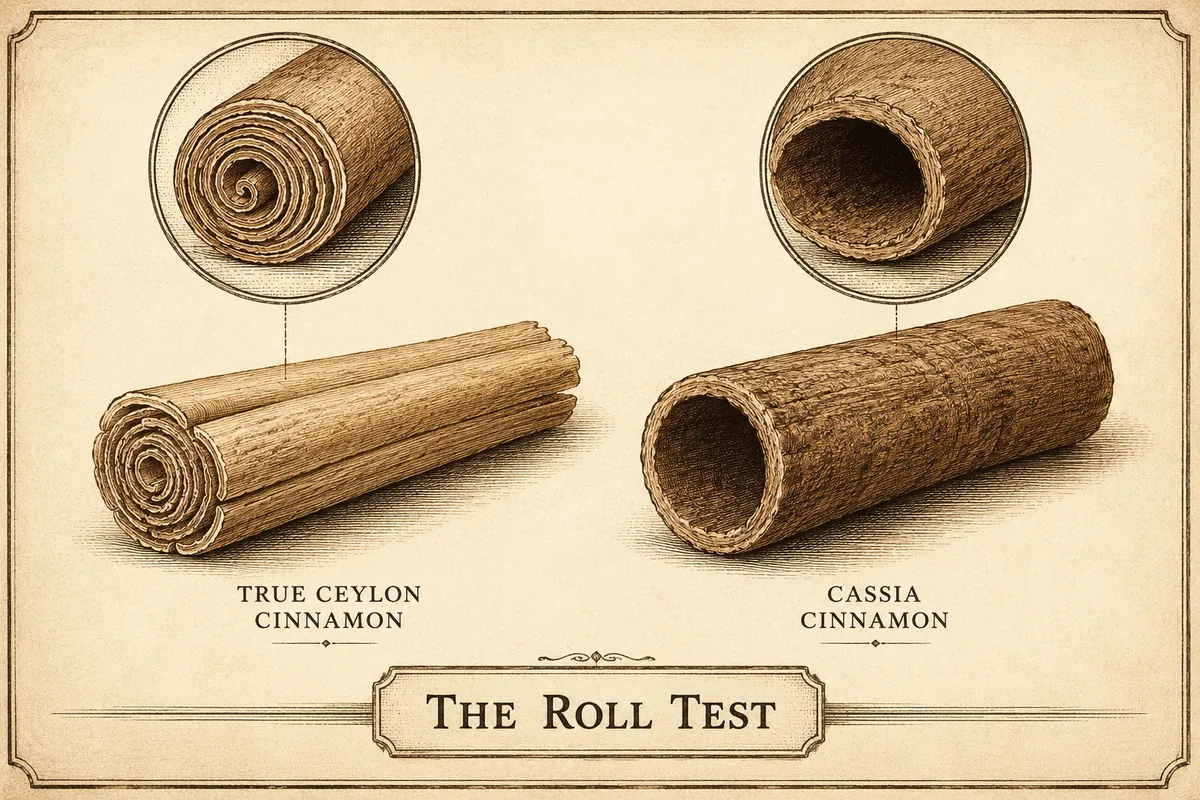
    The roll test is a quick, simple way to tell true Ceylon cinnamon from cassia just by looking at the shape of the stick. A Ceylon cinnamon quill is made of many thin, soft layers of bark rolled tightly together, so its cut end looks like a little scroll or a rolled-up cigar. A cassia stick, by contrast, is a single thick, hard layer that curls into one hollow tube. Look at how the bark rolls, and you can usually tell the two apart at a glance.

    This test is one of the easiest checks any shopper can do, and it needs no special tools. This guide explains how the roll test works, why the two barks roll so differently, and how to use it alongside other simple checks. It builds on our pillar guide on how to identify real Ceylon cinnamon.

    The short answer

    Look at the end of the stick: many thin layers rolled up like a scroll means Ceylon cinnamon, while a single thick curl means cassia. True Ceylon cinnamon is made from delicate inner bark layered and rolled by hand, giving a multi-layered quill. Cassia is a thick, tough bark that curls once. This difference in the roll is one of the clearest visual clues to which spice you are holding. It is the kind of detail you only need to see once to remember: after your first side-by-side comparison, the scrolled Ceylon quill and the single-curl cassia stick become instantly recognisable, and you will spot the difference almost without thinking whenever you handle a cinnamon stick.

    Why the two barks roll differently

    The reason comes down to the bark itself. True Ceylon cinnamon uses only the thin, papery inner bark of the tree, and several fine strips are layered inside one another and rolled together to build a quill. This produces the signature look of many soft, tight layers, a little like a rolled scroll. Cassia uses a much thicker, harder bark, and a single piece curls into one solid tube. So the roll test is really a test of bark thickness and structure, a difference explained further in our guide to what a cinnamon quill is.

    How to do the roll test

    The test is simple and takes seconds. Pick up the stick and look closely at its cut end and its overall shape.

    Look at the end

    The clearest sign is the cross-section at the end of the stick. If you see many thin layers curled up together, like the rings of a tiny scroll, it is Ceylon cinnamon. If you see one thick layer forming a single hollow tube, it is cassia.

    Look at the whole stick

    Ceylon quills are usually pale tan, slender and light, and they often have that rolled, papery, layered look along their length. Cassia sticks are darker reddish brown, thicker, heavier and harder, curling in a single tight roll. The overall shape backs up what you see at the end.

    Feel and snap

    You can add a touch test. Ceylon cinnamon is brittle and crumbly, and a quill snaps easily into pieces because the thin layers break readily. Cassia is hard and woody and resists snapping. If the stick shatters lightly in your fingers, that points to Ceylon; if it is tough and solid, that points to cassia. This links closely to the checks in our guide on how to spot fake Ceylon cinnamon.

    Roll test results at a glance

    What the roll test shows for Ceylon cinnamon and cassia.
    FeatureCeylon cinnamonCassia
    Roll shapeMany thin layers, like a scrollSingle thick curl
    BarkThin, papery inner barkThick, hard bark
    ColourPale tan brownDarker reddish brown
    WeightLightHeavier
    SnapBrittle, crumbles easilyHard, resists breaking

    Why the roll test is so useful

    The roll test is popular because anyone can do it, anywhere, with no equipment. In a shop, at home or in the kitchen, a quick look at the end of the stick gives a strong hint about which cinnamon you have. It is not a laboratory test, and edge cases exist, but for whole sticks it is one of the fastest and most reliable visual checks. Because cassia is often sold simply as “cinnamon”, this simple habit of looking at the roll can save you from mistaking one for the other, a theme at the heart of our guide to Ceylon cinnamon vs cassia.

    When the roll test does not help

    The roll test only works on whole sticks. Once cinnamon is ground into powder, the roll is gone, and you cannot use this method; there you have to rely on colour, smell and, above all, the label. Very short or broken pieces can also be harder to read. In these cases, checking that the product is clearly labelled as Ceylon cinnamon or Cinnamomum verum, ideally from Sri Lanka, is the surest guide. For whole quills, though, the roll test remains a quick and handy first check.

    The roll test in the shop and the kitchen

    One of the best things about the roll test is where you can use it. In a shop, you can hold a jar or packet of whole quills up to the light and look at the ends of the sticks before you buy, choosing the ones with the fine, scrolled, many-layered look. At home, it is a quick way to check what you already have in the cupboard: pull out a stick, look at the end, and you will usually know at once whether it is Ceylon or cassia. It is also a lovely thing to show children or guests, since the difference between a soft, rolled Ceylon scroll and a hard cassia tube is easy to see once it is pointed out. A small habit like this quietly builds your confidence as a buyer.

    Combining the roll test with other checks

    The roll test is strongest when used alongside a couple of other simple signs. Colour is a good partner: true Ceylon cinnamon tends to be a pale, warm tan, while cassia is a darker reddish brown. Aroma helps too, as Ceylon has a soft, sweet, delicate smell, whereas cassia is sharper and more pungent. And the label is the final word, since only true cinnamon should carry the name Ceylon cinnamon or Cinnamomum verum. Put together, the roll, the colour, the smell and the label give a clear, confident picture, which is exactly the layered approach set out in our pillar guide on how to identify real Ceylon cinnamon.

    Frequently asked questions

    What is the roll test for cinnamon?

    It is a simple visual check that tells Ceylon cinnamon from cassia by the shape of the stick. Ceylon cinnamon has many thin layers rolled together like a scroll, while cassia is a single thick curl. Looking at the rolled end of the stick reveals which one it is.

    How can you tell Ceylon cinnamon from cassia by looking?

    Look at the end of the stick and its overall form. Many fine layers, a pale colour and a light, brittle feel point to Ceylon cinnamon. A single thick curl, a darker colour and a hard, heavy feel point to cassia.

    Does the roll test work on ground cinnamon?

    No. The roll test only works on whole sticks, because it relies on seeing how the bark is rolled. For ground cinnamon you must rely on colour, aroma and the label, checking for Ceylon cinnamon or Cinnamomum verum from Sri Lanka.

    Is the roll test always accurate?

    It is a strong, quick guide for whole sticks, but not a laboratory test. Most Ceylon and cassia sticks are easy to tell apart by their roll, though broken or unusual pieces can be harder to read. Pairing the roll test with colour, smell and the label gives the most confidence.

    Summary

    The roll test is a fast, no-tools way to tell true Ceylon cinnamon from cassia. Ceylon cinnamon is made from thin inner bark rolled into many soft layers, so its end looks like a little scroll, and the stick is pale, light and brittle. Cassia is a single thick, hard curl, darker and heavier. By looking at the rolled end of a whole stick, and adding a gentle snap test, you can usually tell the two apart in seconds. The method does not work on powder, where the label is your best guide, but for whole quills the roll test is one of the simplest and most useful checks there is. Once you have made it a habit, telling true Ceylon cinnamon from cassia becomes second nature every time you shop or cook.

    This website provides educational information about Ceylon Cinnamon as a spice and food ingredient. It is not intended to provide medical advice or make health claims.
  • Ceylon Cinnamon vs Saigon Cinnamon

    Ceylon Cinnamon vs Saigon Cinnamon

    Ceylon cinnamon and Saigon cinnamon are two very different spices that share a name. Ceylon cinnamon is true cinnamon (Cinnamomum verum) from Sri Lanka, prized for its light, sweet, delicate flavour. Saigon cinnamon is a type of cassia (Cinnamomum loureiroi) from Vietnam, known for its bold, intense, spicy punch. If you have seen both on a shelf and wondered which is which, this guide explains the differences in plain terms.

    Saigon cinnamon, sometimes sold as Vietnamese cinnamon, is one of the strongest and most aromatic cassia types, which is why it is popular with bakers who want a big, warming flavour. It is still a cassia, though, and that puts it in a different family from true Ceylon cinnamon. For the wider picture, this article sits alongside our pillar guide on Ceylon cinnamon vs cassia.

    The short answer

    Ceylon cinnamon is true cinnamon with a mild, complex, sweet flavour and thin, soft bark. Saigon cinnamon is a premium cassia with a strong, sweet-hot flavour and thick, hard bark. Both are real spices with their own uses, but they are botanically distinct: Ceylon comes from Cinnamomum verum, Saigon from Cinnamomum loureiroi. Saigon also has a much higher level of a naturally occurring compound called coumarin, which is worth knowing about, as our guide on the coumarin difference explains.

    What is Saigon cinnamon?

    Saigon cinnamon is the bark of Cinnamomum loureiroi, a tree grown mainly in Vietnam. It is a member of the cassia group of cinnamons rather than the true cinnamon group. Among cassias it is often considered the most flavourful, with a high oil content that gives it a powerful, sweet, spicy taste. Because of that strength, it is a favourite for baking, where a bold cinnamon flavour is wanted in cakes, rolls and cookies.

    Despite the intense flavour, Saigon cinnamon shares the physical traits of other cassias: a thick, hard, single-layer bark that curls into a solid tube. This sets it apart from the thin, papery, multi-layered quills of true Ceylon cinnamon.

    What is Ceylon cinnamon?

    Ceylon cinnamon is the dried inner bark of Cinnamomum verum, native to Sri Lanka. It is known as true cinnamon and has a light brown colour, a soft and brittle texture, and a delicate, sweet, layered flavour with gentle floral and citrus notes. Its quills are made of many thin layers rolled together, which crumble easily. To learn the essentials, see our guide to what true Ceylon cinnamon is.

    Ceylon vs Saigon: the key differences

    Botanical source

    The most basic difference is the plant. Ceylon cinnamon comes from Cinnamomum verum, the only species considered true cinnamon. Saigon cinnamon comes from Cinnamomum loureiroi, one of several cassia species. They are related but distinct trees.

    Flavour

    Ceylon cinnamon is mild, sweet and complex, with a refined taste that does not overpower a dish. Saigon cinnamon is the opposite: strong, sweet and hot, with a pronounced spicy kick. Where Ceylon adds a gentle background warmth, Saigon makes cinnamon the star of the flavour.

    Appearance and texture

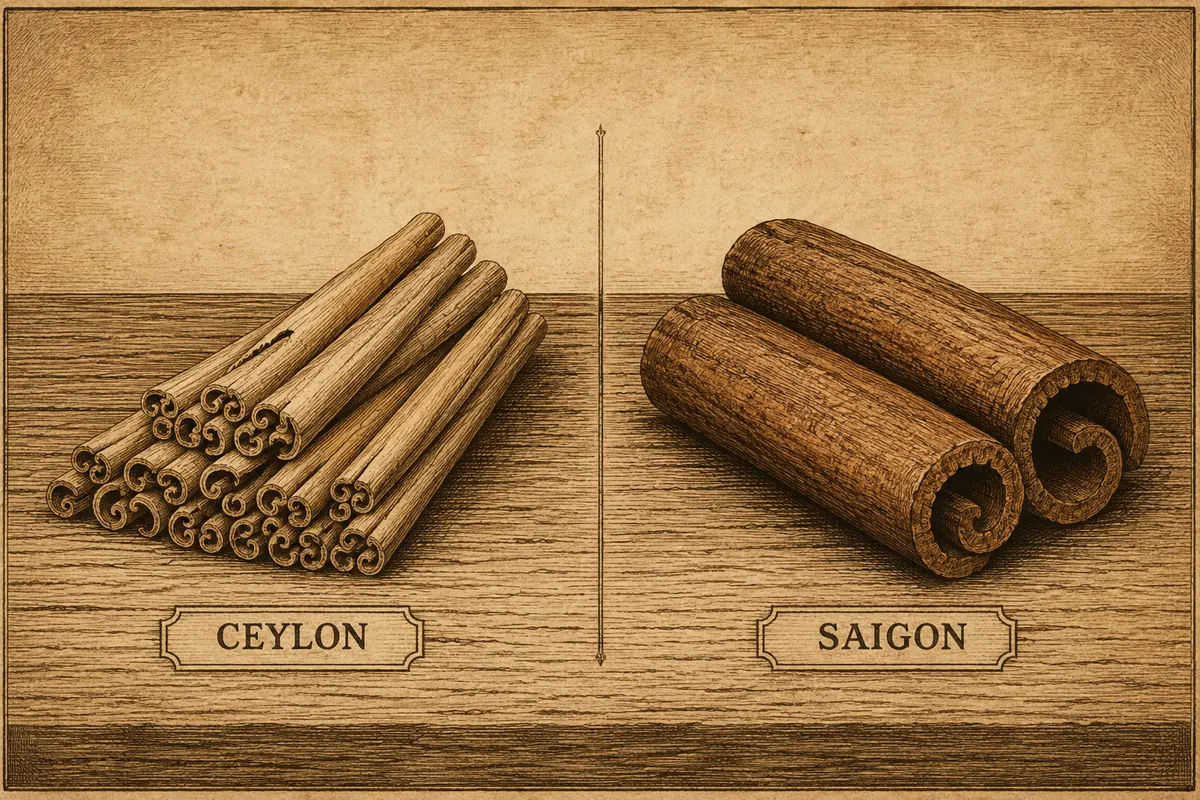
    Ceylon quills are pale, thin and soft, rolling up like a fragile cigar of many layers. Saigon quills are darker, thicker and hard, forming a tough single-curl tube. If you can snap it easily and see thin papery layers, it is Ceylon; if it is hard and dense, it is a cassia such as Saigon. Our guide on how to identify real Ceylon cinnamon covers these tests in more detail.

    Coumarin content

    Like other cassias, Saigon cinnamon naturally contains a much higher level of coumarin than Ceylon cinnamon, which has only trace amounts. This is a simple botanical fact about the two spices rather than a health claim, and it is one reason some people choose Ceylon for everyday use.

    Price

    Ceylon cinnamon is usually more expensive because it is hand-processed and produced in smaller quantities. Saigon cinnamon costs more than ordinary supermarket cassia but is generally still cheaper than true Ceylon cinnamon.

    Ceylon cinnamon vs Saigon cinnamon at a glance

    A side-by-side comparison of Ceylon and Saigon cinnamon.
    FeatureCeylon cinnamonSaigon cinnamon
    SpeciesCinnamomum verum (true cinnamon)Cinnamomum loureiroi (a cassia)
    Main originSri LankaVietnam
    FlavourMild, sweet, complexStrong, sweet, spicy
    BarkThin, soft, many layersThick, hard, single curl
    ColourLight tan brownDarker reddish brown
    CoumarinVery low (trace)High
    Typical priceHigher, premiumMid-range

    Which one should you use?

    The right choice depends on the dish and the flavour you want. Saigon cinnamon suits recipes where a strong, dominant cinnamon flavour is the goal, such as cinnamon rolls, spiced cookies and bold baked goods. Ceylon cinnamon suits dishes where you want a subtle, refined sweetness that blends with other flavours, such as delicate desserts, drinks, fruit dishes and light curries.

    Many cooks keep both: Saigon for a punchy hit in baking, and Ceylon for a gentle, everyday warmth. Neither is simply better than the other; they are different tools for different jobs. If you mostly drink cinnamon in tea or add it to fruit and porridge, the softer Ceylon flavour tends to be more pleasant. If you bake big, sweet, spiced treats, the boldness of Saigon can be the better match. Trying a small amount of each side by side is the quickest way to learn which you prefer.

    Where each spice comes from

    Origin is a big part of the story. Ceylon cinnamon is tied to Sri Lanka, the island that has grown and traded true cinnamon for centuries and remains its main home today. The spice is a point of national pride there, and the finest grades still come from the south-western coastal districts.

    Saigon cinnamon takes its name from the city and region of southern Vietnam, and Vietnam is its main growing area. The country has a long tradition of producing aromatic cassia, and Saigon cinnamon is regarded as the top tier of that trade. So while both spices come from Asia, they are rooted in different countries, different species and different traditions.

    Can you substitute one for the other?

    You can swap them, but you need to adjust for strength. Because Saigon cinnamon is much bolder, using it in place of Ceylon can overpower a delicate recipe, so it is wise to start with a little less. Going the other way, replacing Saigon with Ceylon in a recipe that wants a strong cinnamon hit may give a softer, gentler result, so you may choose to use a touch more.

    For most everyday cooking either will work, as long as you remember the golden rule: Ceylon is the quiet, sweet one, and Saigon is the loud, spicy one. Taste as you go and adjust to suit the dish.

    How to tell them apart at home

    Telling Ceylon from Saigon is straightforward once you know the signs. Look at the quill: Ceylon is pale, thin and made of many soft layers that crumble, while Saigon is darker, thick and hard. Check the label for the species name, since Cinnamomum verum means true Ceylon cinnamon and Cinnamomum loureiroi means Saigon cassia. And note the smell and taste: Ceylon is soft and sweet, Saigon is intense and hot. These simple checks are covered further in our guide to identifying real Ceylon cinnamon.

    Frequently asked questions

    Is Saigon cinnamon the same as Ceylon cinnamon?

    No. Saigon cinnamon is a type of cassia from the tree Cinnamomum loureiroi, grown mainly in Vietnam. Ceylon cinnamon is true cinnamon from Cinnamomum verum, grown mainly in Sri Lanka. They are different species with different flavour and texture.

    Is Saigon cinnamon better than Ceylon cinnamon?

    Neither is simply better. Saigon has a stronger, spicier flavour that many bakers love, while Ceylon has a milder, sweeter, more delicate taste. The best choice depends on the dish and your personal preference.

    Why does Saigon cinnamon taste so strong?

    Saigon cinnamon has a high content of the naturally occurring oils that give cinnamon its flavour, which makes its taste bold and spicy compared with the gentler Ceylon cinnamon.

    Does Saigon cinnamon contain more coumarin than Ceylon?

    Yes. As a cassia, Saigon cinnamon naturally contains a much higher level of coumarin than Ceylon cinnamon, which has only trace amounts. This is a botanical difference between the two spices.

    Summary

    Ceylon cinnamon and Saigon cinnamon are different spices with a shared name. Ceylon cinnamon is true cinnamon from Cinnamomum verum in Sri Lanka, with a mild, sweet, complex flavour and thin, soft bark. Saigon cinnamon is a premium cassia from Cinnamomum loureiroi in Vietnam, with a strong, spicy flavour, thick hard bark, and a much higher coumarin level. Choose Saigon when you want a bold cinnamon punch and Ceylon when you want a gentle, refined sweetness. Checking the species name on the label, along with the colour and texture of the quills, makes it easy to know which one you have.

    This website provides educational information about Ceylon Cinnamon as a spice and food ingredient. It is not intended to provide medical advice or make health claims.

  • How to Spot Fake Ceylon Cinnamon

    How to Spot Fake Ceylon Cinnamon

    The easiest way to spot fake Ceylon cinnamon is to look at the shape and feel of the stick: true Ceylon cinnamon (Cinnamomum verum) forms thin, brittle quills made of many soft, papery layers rolled tightly together, while the “fake” cinnamon sold in most supermarkets is usually cassia, a single, thick, hard, hollow curl of dark reddish-brown bark. In powder form the clues are subtler, but colour, aroma and taste still give it away.

    Most “fake” Ceylon cinnamon is not a deliberate forgery so much as a case of mistaken identity: cheaper cassia bark sold under the single word “cinnamon”. This guide shows you exactly what to look for, whether you are holding a stick, a jar of powder, or reading a label, so you can tell genuine Cinnamomum verum from the imposters. For the full picture, see our pillar guide on how to identify authentic Ceylon cinnamon.

    What does “fake” Ceylon cinnamon actually mean?

    “Fake” Ceylon cinnamon usually means cassia cinnamon being passed off, knowingly or not, as true Ceylon cinnamon. Cassia comes from several related trees (such as Cinnamomum cassia and Cinnamomum burmannii) grown mainly in China, Indonesia and Vietnam. It is a genuine spice in its own right and perfectly legal to sell, but it is coarser, cheaper and chemically different from true Ceylon cinnamon, which comes almost entirely from Sri Lanka. The confusion arises because in many countries both barks are simply labelled “cinnamon”. The full botanical contrast is set out in our guide to Ceylon cinnamon vs cassia.

    Less commonly, “fake” can also mean powder that has been bulked out with fillers, or old, stale stock sold as premium spice. The checks below help with all of these cases.

    How to spot fake cinnamon sticks (quills)

    Whole sticks are the easiest form to judge, because the physical structure of the bark is very hard to fake.

    Look at the layers

    Break or look at the end of the stick. True Ceylon cinnamon is made of many thin layers rolled up like a fine cigar or a rolled newspaper, so the cross-section looks like the rings of a tightly wound scroll. Cassia is typically a single thick layer curled into a hard tube, often with a hollow centre and only one or two curls. If you see one thick, woody wall instead of many delicate layers, you are almost certainly holding cassia.

    Check the thickness and hardness

    Genuine Ceylon quills are thin and brittle, you can usually snap them easily by hand or even crumble them between your fingers. Cassia bark is thick, hard and woody; it resists breaking and often needs a grinder. If a “cinnamon” stick feels like a piece of tough bark that won’t yield, that hardness is a strong sign it is cassia.

    Judge the colour

    True Ceylon cinnamon is a light tan or pale golden-brown. Cassia is a noticeably darker, reddish or chocolate brown. Colour alone is not proof, because lighting and age vary, but a very dark, uniform stick leans strongly toward cassia.

    Smell and taste

    Ceylon cinnamon has a delicate, sweet, warm and complex aroma with citrus and floral notes. Cassia smells and tastes stronger, harsher and more “spicy-hot”, with a pungent bite. If the flavour is aggressive and one-dimensional rather than subtle and layered, it is likely cassia. The finer flavour of Ceylon cinnamon is one reason it is prized in cooking, as covered in our guide to culinary uses of Ceylon cinnamon.

    Quick comparison: Ceylon vs cassia sticks

    At-a-glance signs for telling true Ceylon cinnamon from cassia sticks.
    FeatureTrue Ceylon cinnamonCassia (often sold as “cinnamon”)
    LayersMany thin, papery layers rolled upSingle thick, hard layer
    TextureThin and brittle, snaps easilyThick, hard and woody
    ColourLight tan / pale brownDark reddish or chocolate brown
    AromaSweet, delicate, complexStrong, harsh, pungent
    ShapeSolid, tightly filled quillOften a single hollow curl

    How to spot fake cinnamon powder

    Powder is harder to judge because grinding removes the tell-tale layered structure. Still, several clues remain.

    Colour of the powder

    Ceylon cinnamon powder is a lighter tan-brown, while cassia powder tends to be a darker reddish-brown. If you have known-genuine Ceylon powder to compare against, the difference is often visible side by side.

    Aroma and flavour

    As with sticks, Ceylon powder smells mild, sweet and layered, whereas cassia is sharper and more intense. A cheap “cinnamon” that overwhelms a dish with a hot, biting note is more likely cassia.

    Be alert to fillers

    Very cheap ground “cinnamon” is occasionally bulked out with other ground plant material or starches. You cannot reliably detect this by eye, which is why the source and packaging matter so much. Buying whole quills and grinding them yourself removes most of this risk, a strategy discussed in our Ceylon cinnamon buying guide.

    Read the label carefully

    Labels are one of the most reliable tools you have, if you know what to look for.

    Look for the botanical name

    Genuine Ceylon cinnamon lists Cinnamomum verum (sometimes written Cinnamomum zeylanicum) on the packaging. If the label only says “cinnamon” with no species, or names Cinnamomum cassia or Cinnamomum burmannii, you are not looking at true Ceylon cinnamon. The word “verum” literally means “true”, and it is the clearest label-level signal there is.

    Check the country of origin

    True Ceylon cinnamon comes overwhelmingly from Sri Lanka (historically called Ceylon). Cassia is grown mainly in China, Indonesia and Vietnam. An origin of Sri Lanka, combined with the Cinnamomum verum name, is a strong pair of signals. The farming tradition behind this origin is described in our guide to Sri Lankan cinnamon farming.

    Be sceptical of vague marketing

    Terms like “premium”, “true” or “gourmet” on the front of a pack mean nothing on their own. Turn the packet over and read the ingredients and botanical name. If a product markets itself as Ceylon cinnamon but hides or omits the species and origin, treat that as a warning sign.

    Why price is a clue (but not proof)

    True Ceylon cinnamon is more labour-intensive to harvest and process than cassia, so it almost always costs more. If a product is branded “Ceylon” but priced the same as ordinary bulk cinnamon, be cautious, the price may be too good to be true. That said, a high price alone does not guarantee authenticity, so always combine the price signal with the structural, sensory and label checks above. Why genuine Ceylon cinnamon commands a premium is tied to how it is grown and peeled, covered in how Ceylon cinnamon is made.

    Understanding grades helps too

    Even among genuine Ceylon cinnamon there are different grades, from the delicate Alba quills to coarser grades. Knowing the grading system helps you judge whether a premium price is justified and whether the product matches its description, rather than being over-sold. Our complete guide to Ceylon cinnamon grades explains what the grade names mean and how quality is classified.

    A simple three-step authenticity check

    If you want a quick routine to apply in a shop or kitchen, use these three steps in order.

    Step 1: Read the label

    Look for Cinnamomum verum (or zeylanicum) and an origin of Sri Lanka. No species named usually means cassia.

    Step 2: Inspect the stick

    If you can see whole quills, check for many thin layers, a light tan colour, and a stick that feels thin and brittle rather than hard and woody.

    Step 3: Smell and taste

    Genuine Ceylon cinnamon is sweet, mild and complex. A harsh, hot, one-note “cinnamon” flavour points to cassia.

    Summary

    Spotting fake Ceylon cinnamon comes down to a handful of reliable signals. Most “fakes” are simply cassia sold under the generic name “cinnamon”, so the key is to distinguish the two. Whole sticks are easiest: true Ceylon cinnamon forms thin, brittle quills of many papery layers in a pale tan colour, while cassia is a hard, thick, dark, often hollow curl. In powder form, rely on colour, a mild sweet aroma, and, above all, the label, which should name Cinnamomum verum and an origin of Sri Lanka. Combine the physical checks, the sensory checks and the label together, use price as a supporting clue, and you can buy true Ceylon cinnamon with confidence.

    Frequently asked questions

    How can I tell if my cinnamon is real Ceylon cinnamon?

    Check the stick and the label. True Ceylon cinnamon forms thin, brittle quills of many rolled layers in a light tan colour, and its packaging names Cinnamomum verum with an origin of Sri Lanka. Hard, dark, single-layer sticks are usually cassia.

    Is supermarket cinnamon fake?

    Not fake, but usually cassia rather than true Ceylon cinnamon. Most inexpensive “cinnamon” is genuine cassia bark, which is a real spice but botanically different from Cinnamomum verum. Check the label for the species and origin to be sure.

    Does colour tell you if cinnamon is fake?

    Colour is a useful clue but not proof. Ceylon cinnamon is usually a lighter tan, while cassia is darker and more reddish. Because lighting and age affect colour, combine it with the layered-stick test and the label check.

    Why is real Ceylon cinnamon more expensive?

    Because it is harvested and hand-peeled with more care and comes mainly from Sri Lanka, its production is more labour-intensive than cassia. A “Ceylon” product priced like ordinary bulk cinnamon should be treated with caution.

    This website provides educational information about Ceylon Cinnamon as a spice and food ingredient. It is not intended to provide medical advice or make health claims.