Tag: Buying cinnamon

  • Buying Ceylon Cinnamon in Bulk: A Guide

    Buying Ceylon Cinnamon in Bulk: A Guide

    Buying Ceylon cinnamon in bulk means purchasing larger quantities of true cinnamon, Cinnamomum verum, at once, usually at a lower price per unit than small retail packs. It suits households that use cinnamon often, as well as cafes, bakers and small businesses. The keys to buying well in bulk are confirming the cinnamon is genuine Ceylon cinnamon from Sri Lanka, choosing sticks or powder to match your use, checking grade and freshness, and having a cool, dry, airtight way to store what you buy.

    Bulk buying can be a sensible way to get good value from Ceylon cinnamon, but only if the cinnamon is authentic and you can store it well. This guide explains when bulk buying makes sense, what to check before you buy, and how to keep a larger quantity fresh. It builds on our pillar, the Ceylon cinnamon buying guide.

    The short answer

    Buy Ceylon cinnamon in bulk when you use it often enough to finish it before it fades, when you can confirm it is genuine Cinnamomum verum from Sri Lanka, and when you have proper airtight storage. Bulk lowers the price per unit and cuts packaging, which is useful for frequent cooks, bakers, cafes and small food businesses. The main cautions are authenticity, since the Ceylon name is often misused, and freshness, since cinnamon slowly loses aroma. Sticks keep far longer than powder, so for long storage, whole quills in bulk are usually the safer choice.

    When buying in bulk makes sense

    Bulk buying rewards steady, regular use. If you bake often, run a cafe or small food business, or simply use cinnamon in cooking and drinks most weeks, a larger quantity will be finished while still fresh and will cost less per gram than small jars. If you only use cinnamon occasionally, a large quantity may lose its aroma before you reach the bottom of it, so a smaller pack is the better buy. The honest question to ask is how much you realistically use in a few months, and whether the form you are buying will stay fresh that long.

    Confirm it is genuine Ceylon cinnamon

    The single most important check when buying in bulk is authenticity. Because true Ceylon cinnamon costs more than cassia, the Ceylon name is sometimes applied to cheaper bark, and a large purchase multiplies the cost of getting this wrong. Look for the species name Cinnamomum verum and a clear statement of Sri Lankan origin, not just the word cinnamon or a vague country label. If you can see the product, genuine Ceylon quills are thin, soft and made of many fine layers rolled together, unlike the thick, hard single curl of cassia. Our guide to reading cinnamon labels correctly explains the wording to look for, which matters even more at bulk quantities.

    Sticks or powder for bulk buying

    The form you buy changes how long a bulk quantity will last. Whole cinnamon sticks, or quills, expose little surface to the air, so they hold their aroma for a few years when stored well. Ground cinnamon has far more surface area and fades faster, keeping its best flavour for several months up to about a year. For a large quantity meant to last, sticks are usually the wiser choice, and you can grind small amounts as needed. Powder in bulk suits only those who use it quickly. Our guide to cinnamon sticks versus powder and what to buy looks at this choice in detail.

    FactorBulk sticks (quills)Bulk powder
    Best-flavour lifeA few yearsSeveral months to a year
    Best forLong storage, grind as neededHigh, quick turnover
    Storage needAirtight, cool, dark, dryAirtight, cool, dark, dry
    ConvenienceNeeds grinding for powder usesReady to use straight away
    Risk if slow useLow, keeps wellHigher, fades faster

    Check grade, origin and freshness

    Bulk Ceylon cinnamon is often sold by grade, and knowing a little about grades helps you buy the right thing for your use. Finer grades such as Alba have thinner, more delicate quills, while continental and coarser grades are sturdier and often more economical for everyday cooking. For most kitchens and cafes, a mid grade offers good value without paying for the most delicate quills. Alongside grade, confirm the origin is Sri Lanka and ask about freshness, since aroma is what you are really buying. A reputable bulk seller should be able to tell you the grade and origin, and genuine Ceylon cinnamon should smell warm and sweet rather than faint.

    Plan your storage before you buy

    Buying in bulk only pays off if you can keep the cinnamon fresh, so plan storage before you order. The aim is to keep both sticks and powder in airtight containers in a cool, dark, dry place, away from heat, light and moisture. For a large quantity, it helps to divide it between a main sealed store that you open rarely and a smaller working jar for daily use, so the bulk of it is disturbed as little as possible. Each time a container is opened, a little air gets in, so keeping most of your stock sealed protects its aroma. Our guide to storing cinnamon sticks versus cinnamon powder covers the method in full.

    Getting good value without waste

    Good value in bulk is not simply the lowest price per gram, but the lowest cost for cinnamon you actually use while it is fresh. A large, cheap quantity that fades before you finish it is not a saving. A sensible approach is to match the quantity to your real use over a few months, favour sticks for anything you will keep long term, and buy powder in bulk only if you use it quickly. Splitting a bulk purchase with others who also use cinnamon is another way to enjoy the lower unit price without holding more than you can keep fresh. In short, buy what you will use, store it well, and the bulk price becomes a genuine saving.

    Where bulk buying fits for small businesses

    For cafes, bakeries and small food producers, bulk Ceylon cinnamon can make good sense, since steady use means it is turned over quickly and the lower unit price adds up. The same checks apply, only with more at stake: confirm the cinnamon is genuine Cinnamomum verum from Sri Lanka, choose a grade suited to the dishes or drinks you make, and keep the stock sealed and cool. Many small businesses buy sticks for display, infusions and grinding, and a separate quantity of powder for baking, matching each form to how fast it is used. Consistent authenticity also matters for a business, because customers who value true cinnamon will notice the difference.

    Summary

    Buying Ceylon cinnamon in bulk means purchasing larger quantities of true cinnamon, Cinnamomum verum, at a lower price per unit, which suits frequent cooks, bakers, cafes and small businesses. It pays off when you use cinnamon often enough to finish it fresh, when you confirm it is genuine Ceylon cinnamon from Sri Lanka, and when you can store it well. Sticks keep far longer than powder, so whole quills are usually the better choice for a large quantity, with powder bought in bulk only for quick use. Check the species name and origin, consider grade and freshness, and plan airtight, cool, dark storage before you buy. Done this way, bulk buying turns the lower unit price into a real saving on authentic Ceylon cinnamon.

    Frequently asked questions

    Is it cheaper to buy Ceylon cinnamon in bulk?

    Usually yes, the price per unit is lower than small retail packs, and there is less packaging. It is only a true saving, though, if you use the cinnamon while it is still fresh. A large quantity that fades before you finish it is not good value, so match the amount to your real use.

    Should I buy bulk cinnamon as sticks or powder?

    For long storage, buy sticks, since whole quills keep their aroma for a few years and can be ground as needed. Buy powder in bulk only if you use it quickly, within several months to about a year, because ground cinnamon loses its aroma faster than sticks.

    How do I know bulk cinnamon is genuine Ceylon cinnamon?

    Look for the species name Cinnamomum verum and a clear statement of Sri Lankan origin. Genuine Ceylon quills are thin, soft and made of many fine layers, unlike the thick, hard curl of cassia. A reputable bulk seller should confirm the grade and origin.

    How should I store a large quantity of cinnamon?

    Keep it in airtight containers in a cool, dark, dry place, away from heat, light and moisture. For bulk, divide it into a sealed main store you open rarely and a smaller working jar for daily use, so most of your stock stays sealed and keeps its aroma longer.

    How much Ceylon cinnamon should I buy in bulk?

    Buy roughly what you will use over a few months while it stays fresh. For sticks this can be more, since they keep well, while for powder it should be less. If a bulk quantity is more than you can use in time, consider sharing it with others who also use cinnamon.

    This website provides educational information about Ceylon Cinnamon as a spice and food ingredient. It is not intended to provide medical advice or make health claims.
  • What to Look for on a Ceylon Cinnamon Label

    What to Look for on a Ceylon Cinnamon Label

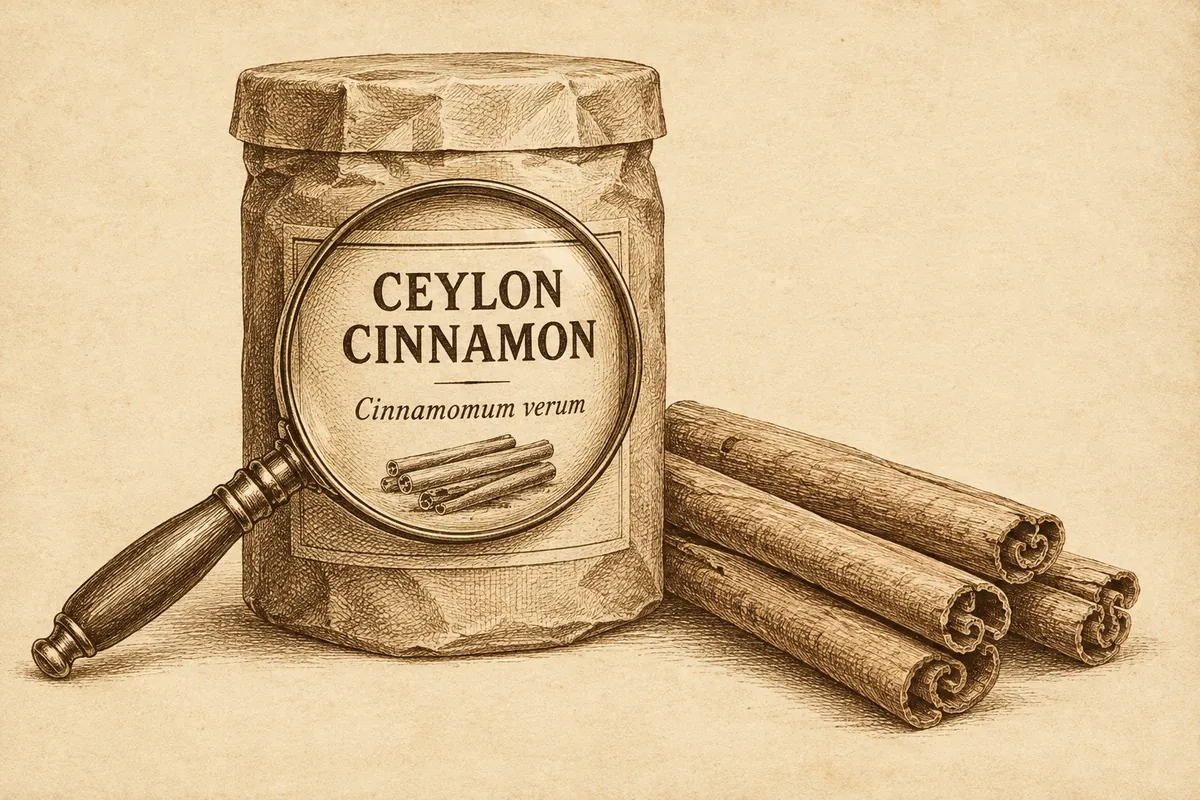
    When you buy Ceylon cinnamon, the label is the first thing you can actually check. True Ceylon cinnamon, Cinnamomum verum, comes from Sri Lanka, and a good label will usually say so in plain words: the species or botanical name, the country of origin, and often a grade such as Alba or C5. A label that only says “cinnamon”, with no species and no origin, gives you very little to go on. This guide walks through the details worth looking for on a Ceylon cinnamon label before you buy.

    Shopping for true cinnamon can be confusing because the word “cinnamon” on its own covers several different barks. This buying guide looks, point by point, at what a Ceylon cinnamon label should tell you and which words are a good sign. It builds on our pillar Ceylon cinnamon buying guide.

    The short answer

    On a Ceylon cinnamon label, look for the species name Cinnamomum verum (or Cinnamomum zeylanicum), the country of origin Sri Lanka, and a grade such as Alba, C5 or C4. Helpful extras include the form (quills, sticks or ground), packaging and harvest or batch details, and any recognised certification. A label that names the species and the origin, rather than just “cinnamon”, is the clearest starting sign that you are buying true Ceylon cinnamon.

    Why the label matters

    In many shops, “cinnamon” with no further detail is cassia, a related but different bark that comes mostly from China, Indonesia and Vietnam. True Ceylon cinnamon is a separate species with a milder, sweeter flavour and a thin, papery bark. Because the two are sold under the same everyday name, the label is often the only way to tell them apart before you open the pack. For the full flavour and bark differences, see our guide to Ceylon cinnamon versus cassia.

    A clear, detailed label is itself a quality signal. Sellers who take care to name the species, the origin and the grade are usually confident about what they are selling. A vague label is not proof of a problem, but it does leave you guessing.

    The species or botanical name

    The single most useful thing on the label is the botanical name. True Ceylon cinnamon is Cinnamomum verum, which was once called Cinnamomum zeylanicum, so either name points to the real thing. Cassia barks carry different species names, such as Cinnamomum cassia, Cinnamomum burmannii or Cinnamomum loureiroi.

    If the label prints Cinnamomum verum or Cinnamomum zeylanicum, that is a strong sign. If it prints one of the cassia species names, you are looking at cassia, whatever the front of the pack says. If there is no species name at all, treat the product as unconfirmed until you can check further.

    The country of origin

    True Ceylon cinnamon is grown in Sri Lanka, and most of the world’s supply still comes from there. A label that reads “Product of Sri Lanka” or “Origin: Sri Lanka” lines up with genuine Ceylon cinnamon. “Ceylon” is the historic name for the island, so “Ceylon cinnamon” and “Sri Lankan cinnamon” mean the same thing.

    Be careful with wording such as “packed in” or “distributed by”, which tells you where the pack was filled or handled, not where the bark was grown. The origin you want is the country where the cinnamon itself was produced. Our guide to reading cinnamon labels correctly goes deeper into this kind of wording.

    The grade

    Ceylon cinnamon is sorted into grades, and many good labels print the grade on the pack. Grades such as Alba, C5 Special, C5, C4 and the Continental and Mexican groups describe the thickness and appearance of the quills, with the thinnest and most delicate quills carrying the highest grades. Alba is the finest and thinnest.

    A grade on the label is a sign that the seller is working within the recognised Ceylon cinnamon system. You do not always need the top grade: for everyday cooking a mid grade is often a sensible choice. The point is that a named grade shows the product has been sorted to a standard rather than simply bagged.

    The form: quills, sticks or ground

    The label should make clear what form you are buying. True Ceylon cinnamon quills are made of many thin layers rolled together, so they look like a tightly packed cigar and snap easily. Cassia sticks are usually a single thick, hard curl. If you are buying sticks, “Ceylon cinnamon quills” is a better sign than an unnamed “cinnamon stick”.

    Ground cinnamon is harder to judge by eye once it is powder, which makes the species name and origin on the label even more important. If you want to tell the two forms apart in your own kitchen, our guide on how to identify authentic Ceylon cinnamon sets out the simple checks.

    Certifications and standards

    Some Ceylon cinnamon packs carry certification marks or references to a standard. The Sri Lanka Standards Institution sets the SLS standard for Ceylon cinnamon, and there are organic, fair trade and geographical indication schemes as well. A certification is not required for the cinnamon to be genuine, but a recognised mark adds confidence, especially when buying online. Our guide to the SLS standard for Ceylon cinnamon explains what that particular standard covers.

    Read certification wording closely. A phrase such as “certified organic” refers to how the cinnamon was grown, not to the species. Organic cassia is still cassia. Origin and species remain the details that tell you whether the bark is true Ceylon cinnamon.

    Harvest, batch and packaging details

    Smaller sellers often print a harvest date, a batch number or a best-before date. These help you judge freshness, since cinnamon slowly loses aroma over time once ground. Whole quills keep their aroma longer than powder, so a packaging date matters more for ground cinnamon. Good packaging is a resealable pouch or a sealed jar that keeps out air and light.

    None of these details confirm the species on their own, but together they show a careful seller. A pack with the species, the origin, a grade and a clear date is giving you a full picture.

    What a Ceylon cinnamon label should tell you

    Label detailGood sign for Ceylon cinnamonReason to check further
    Species nameCinnamomum verum or Cinnamomum zeylanicumA cassia species, or no species at all
    Country of originProduct of Sri LankaOnly “packed in” wording, or no origin
    GradeAlba, C5, C4 or another named gradeNo grade given
    FormCeylon cinnamon quills, sticks or groundUnnamed “cinnamon stick”
    CertificationSLS, organic, fair trade or GI markClaims with no species named
    FreshnessHarvest, batch or best-before dateNo date, loose or open packaging

    Putting it together at the shelf

    A quick way to read a label is to work down from the most telling detail. First look for the species: Cinnamomum verum or Cinnamomum zeylanicum is what you want. Next check the origin for Sri Lanka. Then look for a grade such as Alba or C5, confirm the form, and finally glance at any certification and the packaging date. If the first two details are present and clear, you are almost certainly holding true Ceylon cinnamon. If they are missing, it is worth asking the seller or reading more before you buy.

    Frequently asked questions

    What should a Ceylon cinnamon label say?

    A good Ceylon cinnamon label gives the species name Cinnamomum verum (or the older Cinnamomum zeylanicum), the country of origin Sri Lanka, and usually a grade such as Alba or C5. Helpful extras are the form, any certification and a harvest or best-before date.

    Does “Ceylon cinnamon” on the label guarantee it is real?

    The name alone is a good start but is strongest when backed by the species name and a Sri Lankan origin. A label that says “Ceylon cinnamon”, names Cinnamomum verum and states “Product of Sri Lanka” is giving you the full picture.

    If a label only says “cinnamon”, what does that mean?

    A plain “cinnamon” label with no species and no origin is most often cassia, since cassia is the common cinnamon in many shops. It is not confirmation either way, so look for the species name or ask the seller before assuming it is true Ceylon cinnamon.

    Does organic or fair trade mean it is Ceylon cinnamon?

    No. Organic and fair trade describe how the cinnamon was grown and traded, not which species it is. Cassia can also be organic. Always check the species name and origin alongside any such certification.

    Summary

    The label is your best tool when buying Ceylon cinnamon. The details that matter most are the species name, Cinnamomum verum or Cinnamomum zeylanicum, and the country of origin, Sri Lanka. A named grade such as Alba or C5, a clear form, a recognised certification and a freshness date all add confidence. A label that names the species and the origin is the clearest sign of true Ceylon cinnamon, while a bare “cinnamon” label with neither detail is worth a second look before you buy.

    This website provides educational information about Ceylon Cinnamon as a spice and food ingredient. It is not intended to provide medical advice or make health claims.

  • Reading Cinnamon Labels Correctly

    Reading Cinnamon Labels Correctly

    Reading a cinnamon label correctly means checking three things above all: the species name, the country of origin, and the wording used for the product. True Ceylon cinnamon is the bark of Cinnamomum verum (also written Cinnamomum zeylanicum) from Sri Lanka, so a label that names that species and a Sri Lankan origin, or clearly says “Ceylon cinnamon”, is telling you it is the real thing. A label that only says “cinnamon”, names a different species such as Cinnamomum cassia, or gives an origin like China or Indonesia is usually one of the cheaper cassia types, not true cinnamon.

    Cinnamon labels can be confusing, and the differences that matter are often in the small print. This guide shows you exactly what to look for. It builds on our pillar guide to how to identify authentic Ceylon cinnamon.

    The short answer

    To read a cinnamon label correctly, look for the species name Cinnamomum verum, a Sri Lankan or Ceylon origin, and the words “Ceylon cinnamon” or “true cinnamon”. Those three signs together tell you the product is genuine Ceylon cinnamon. If a label just says “cinnamon” with no species or origin, or names a cassia species such as Cinnamomum cassia, it is most likely a cassia type rather than true cinnamon.

    1. The species name

    The single most reliable thing on any cinnamon label is the botanical, or species, name. True Ceylon cinnamon is Cinnamomum verum, which is the same plant as the older name Cinnamomum zeylanicum. If you see either of those on the label, you are looking at true cinnamon. To understand the name itself, see our guide to what “Cinnamomum verum” actually means.

    The other cinnamon species you may see named are the cassia types. These include Cinnamomum cassia (also called Cinnamomum aromaticum), Cinnamomum burmannii and Cinnamomum loureiroi. All of these are cassia, not true cinnamon. So the species name alone can tell you which kind of cinnamon is in the packet, if the seller has printed it.

    2. The country of origin

    Origin is the second big clue. True Ceylon cinnamon comes from Sri Lanka, the island once called Ceylon, so a label that says “Product of Sri Lanka” or “Ceylon” points to the genuine spice. The cassia types, by contrast, are grown mainly in China, Indonesia and Vietnam, so an origin from those countries usually signals a cassia rather than true cinnamon. Origin and species work best together: a label that names both Cinnamomum verum and Sri Lanka gives you the clearest possible confirmation.

    3. The product wording

    The words a seller chooses also carry meaning. Phrases such as “Ceylon cinnamon”, “true cinnamon” or “pure Ceylon cinnamon” indicate the genuine article, and reputable sellers of true cinnamon tend to say so clearly because it is a selling point. A plain label that only says “cinnamon”, with no species and no origin, is a warning sign: most of the cinnamon sold this way around the world is actually cassia. This is not always deliberate, since in many countries the word cinnamon is legally allowed for cassia too, but it does mean a bare “cinnamon” label tells you very little.

    Label clues at a glance

    How to read common cinnamon label clues.
    On the labelLikely means
    Cinnamomum verum or zeylanicumTrue Ceylon cinnamon
    “Ceylon cinnamon” / “true cinnamon”True Ceylon cinnamon
    Product of Sri LankaTrue Ceylon cinnamon
    Cinnamomum cassia, burmannii or loureiroiCassia, not true cinnamon
    Origin China, Indonesia or VietnamUsually cassia
    Just “cinnamon”, no species or originUnknown, often cassia

    Grade codes on the label

    Some Ceylon cinnamon labels also carry grade codes such as Alba, C5 Special or C5. These describe the thickness and quality of the quills and are a good sign, because they show a seller who knows and is open about their product. A grade code does not by itself prove the species, but sellers who use the proper Ceylon grading are usually selling genuine true cinnamon. To understand these codes, see our guide to Continental grade Ceylon cinnamon, which explains the common C grades.

    Ceylon or Sri Lankan on the label

    You may notice that some labels say “Ceylon cinnamon” while others say “Sri Lankan cinnamon”. These mean the same thing, because Ceylon was the former name of Sri Lanka. Both point to true cinnamon from the same island. The older name Ceylon is more common on labels because it became the established name for the spice, as explained in our guide to why it is called Ceylon cinnamon. So do not be thrown by seeing either term; they are two names for the same genuine spice.

    What labels do not tell you

    It is worth knowing what a label cannot confirm on its own. Words like “natural”, “premium” or “finest” are marketing terms and do not tell you the species. Certifications such as organic show how the spice was grown, not whether it is true cinnamon or cassia. Even a picture of rolled quills on the front is not proof, since cassia is also sold in stick form. This is why the species name and origin matter so much: they are the facts, while the rest is presentation. When those key facts are missing, it is reasonable to treat the product as uncertain.

    A quick label checklist

    When you pick up a packet of cinnamon, a simple routine helps. First, look for the species name and check whether it is Cinnamomum verum or zeylanicum. Second, look for the origin and see whether it says Sri Lanka or Ceylon. Third, read the product name for the words Ceylon or true cinnamon. If all three point the same way, you can be confident it is genuine Ceylon cinnamon. If the label is vague on all three, it is safer to assume it may be cassia and to look for a clearer product instead.

    Where to look on the packet

    The most useful information is often not on the front of the packet. The front usually carries the brand name and a large word like “Cinnamon”, chosen to catch the eye rather than to inform. The species name and country of origin are more often found in the small print on the back or side, near the ingredients or the packer’s details. So it pays to turn the packet over and read the fine print rather than judging by the front alone. If you are buying online, the same applies to the product description: look past the headline for a species name and an origin, and treat their absence as a reason to ask the seller before buying.

    Reading loose and market labels

    Not all cinnamon comes in printed packets. At markets, spice shops and bulk bins, the label may be a simple sign or a handwritten card. Here the same rules apply, but you may need to ask. A knowledgeable seller of true cinnamon will happily tell you the species and that it is Ceylon or Sri Lankan, and will often point to the soft, thin, layered quills as proof. If a seller cannot say what species it is or where it is from, that uncertainty is itself useful information. Asking two simple questions, what species is it and where is it from, quickly separates sellers who know their cinnamon from those who do not.

    Frequently asked questions

    How do I know if a cinnamon label is true Ceylon cinnamon?

    Look for the species name Cinnamomum verum (or Cinnamomum zeylanicum), an origin of Sri Lanka or Ceylon, and the words “Ceylon cinnamon” or “true cinnamon”. When a label shows these, it is genuine Ceylon cinnamon. A label that only says “cinnamon” with no species or origin is often cassia.

    What species names mean it is not Ceylon cinnamon?

    The cassia types are named Cinnamomum cassia (or Cinnamomum aromaticum), Cinnamomum burmannii and Cinnamomum loureiroi. If a label names any of these, it is cassia rather than true Ceylon cinnamon.

    Does “Ceylon” or “Sri Lankan” on a label matter?

    Both mean the same thing. Ceylon was the former name of Sri Lanka, so “Ceylon cinnamon” and “Sri Lankan cinnamon” both refer to true cinnamon from that island. The name Ceylon is simply more common on labels.

    Why do some labels just say “cinnamon”?

    In many countries the word cinnamon is legally allowed for cassia as well as true cinnamon, so a bare “cinnamon” label does not tell you which one it is. Because most cinnamon sold this way is cassia, a label with no species or origin is best treated as uncertain.

    Summary

    Reading a cinnamon label correctly comes down to three checks: the species name, the origin, and the product wording. True Ceylon cinnamon is Cinnamomum verum (or Cinnamomum zeylanicum) from Sri Lanka, so a label naming that species, a Sri Lankan or Ceylon origin, and the words Ceylon or true cinnamon is showing you the genuine spice. Cassia types are named Cinnamomum cassia, burmannii or loureiroi and usually come from China, Indonesia or Vietnam, while a bare “cinnamon” label with no species or origin is often cassia by default. Grade codes and the Ceylon or Sri Lankan wording add further confidence, but marketing words and certifications do not confirm the species. Check the facts on the label, and the true cinnamon reveals itself.

    This website provides educational information about Ceylon Cinnamon as a spice and food ingredient. It is not intended to provide medical advice or make health claims.

  • Cinnamon Sticks vs Powder: What to Buy

    Cinnamon Sticks vs Powder: What to Buy

    Whether to buy Ceylon cinnamon as sticks or powder comes down to how you use it. Whole cinnamon sticks, or quills, keep their aroma far longer, are ideal for infusing drinks, curries and slow-cooked dishes, and let you grind fresh powder as needed. Ground cinnamon is more convenient for baking and quick recipes but loses its flavour faster. For the best of both, many people keep whole quills as their main supply and a small jar of powder for everyday use.

    Standing in the spice aisle, the choice between cinnamon sticks and powder is a common one. This guide compares the two forms of Ceylon cinnamon and helps you decide what to buy. It builds on our pillar guide, the Ceylon cinnamon buying guide.

    The short answer

    Buy whole cinnamon sticks for the freshest, longest-lasting flavour and for infusing dishes and drinks, and buy ground cinnamon for convenience in baking and quick cooking. Sticks keep their aroma for years and can be ground fresh, while powder is ready to use but fades faster. The best choice depends on how and how often you cook with cinnamon, and many cooks simply keep both.

    Cinnamon sticks: the case for whole quills

    Whole Ceylon cinnamon sticks are the rolled inner bark of the tree, known as quills. Their biggest advantage is staying power: because the aromatic oils are locked inside the bark, whole sticks keep their flavour and scent for a long time, often three to four years when stored well. They are perfect for simmering in curries, rice dishes, mulled drinks and syrups, where they slowly release their warm flavour and can be removed before serving. You can also grind or grate them at home for the freshest possible powder. The main drawback is that they are less convenient for recipes that need ground cinnamon mixed straight in. To learn more about the form itself, see our guide covering cinnamon sticks.

    Ground cinnamon: the case for powder

    Ground Ceylon cinnamon is simply the bark milled into a fine powder. Its great strength is convenience: it blends instantly into cake batter, sprinkles over porridge or coffee, and mixes easily into doughs and sauces. For baking especially, powder is usually the practical choice. The trade-off is shelf life. With far more surface exposed to the air, ground cinnamon loses its aroma more quickly, keeping its best flavour for around one to two years. Our guide to ground Ceylon cinnamon looks at the powder form in more detail.

    Sticks vs powder at a glance

    Comparing whole cinnamon sticks and ground cinnamon.
    FeatureWhole sticksGround powder
    Shelf lifeAbout 3 to 4 yearsAbout 1 to 2 years
    FreshnessGrind fresh as neededFades faster once opened
    Best forInfusing drinks, curries, slow cookingBaking, quick recipes, sprinkling
    ConvenienceNeeds grinding for powder usesReady to use instantly
    Flavour controlStrong, freshly groundEven, easy to measure

    Which should you buy?

    The right choice depends on how you cook. If you mostly make drinks, curries, stews and slow-cooked dishes, whole sticks are ideal, giving long-lasting value and a gentle infused flavour. If you bake often or like a quick sprinkle of cinnamon, powder is far more practical. Many households find the answer is to keep both: a supply of whole quills as the long-lasting backbone, and a small jar of powder for everyday convenience. Buying whole and grinding small amounts also lets you enjoy the freshest flavour while keeping a longer-lasting reserve.

    Freshness and value over time

    One reason whole sticks often represent good value is their long shelf life. A jar of powder bought in bulk may lose much of its punch before you finish it, whereas whole quills stay fragrant for years, so little is wasted. If you use cinnamon only occasionally, sticks are the more economical choice, since they hold their flavour until you need them. If you get through cinnamon quickly, powder’s faster fading matters less, and its convenience wins. This link between form and freshness is described further in our guide on how long Ceylon cinnamon lasts.

    Grinding your own cinnamon

    One appealing middle path is to buy whole Ceylon cinnamon sticks and grind them at home as needed. True cinnamon is brittle and soft, so it grinds more easily than the harder cassia bark, and a spice grinder or even a sturdy mortar and pestle can turn quills into fresh powder. Grinding your own gives you the strong, bright flavour of freshly milled cinnamon whenever you want it, while the rest of your supply stays sealed in stick form, keeping its aroma. For anyone who cares about flavour, this is a simple way to enjoy the best of both worlds without buying two separate products.

    How each form performs in the kitchen

    The two forms suit different jobs in cooking, and knowing which to reach for makes a real difference. Whole sticks come into their own in anything liquid and slow: a stick dropped into a pot of rice, a simmering curry, a jug of mulled wine or a pan of syrup releases its flavour gradually and can be lifted out at the end, leaving a clean, warm background note. Powder, by contrast, disperses evenly and instantly, which is exactly what you want in a cake batter, a spice rub, a dusting over a latte or a quick stir into yoghurt or oatmeal. Trying to use a stick where you need powder, or powder where you need a gentle infusion, tends to disappoint. Matching the form to the dish is the simplest way to get the most from your cinnamon.

    Converting between sticks and powder

    If a recipe calls for one form and you have the other, a rough guide helps. A standard cinnamon stick, once ground, yields somewhere around half a teaspoon to a teaspoon of powder, though this varies with the size of the quill. For infusing, you can usually drop in a whole stick in place of a measured amount of powder and adjust to taste, removing it once the flavour is right. When grinding sticks for baking, grind a little more than you think you need, since freshly ground Ceylon cinnamon is fragrant and you will not want to run short mid-recipe. These simple conversions mean that keeping just one form on hand need not limit what you can cook.

    Making sure it is real Ceylon cinnamon

    Whichever form you choose, the most important thing is that you are buying genuine Ceylon cinnamon rather than cassia sold simply as “cinnamon”. With whole sticks this is easier to check, since true Ceylon quills are pale, thin and made of many soft layers, while cassia is a hard, thick single curl. With powder it is harder to tell by eye, so the label matters more: look for Ceylon cinnamon or Cinnamomum verum, ideally from Sri Lanka. This is one quiet advantage of sticks, that their authenticity is easier to judge, a point covered in our Ceylon cinnamon buying guide.

    Frequently asked questions

    Should I buy cinnamon sticks or ground cinnamon?

    It depends on how you use it. Buy whole cinnamon sticks for the freshest, longest-lasting flavour and for infusing drinks, curries and slow-cooked dishes. Buy ground cinnamon for convenience in baking and quick recipes. Many people keep both, using sticks as the main supply and powder for everyday use.

    Do cinnamon sticks last longer than powder?

    Yes. Whole cinnamon sticks keep their best flavour for around three to four years, while ground cinnamon holds its flavour for about one to two years. This is because whole quills keep their aromatic oils locked in the bark, whereas powder has far more surface exposed to the air.

    Can I grind cinnamon sticks into powder at home?

    Yes. True Ceylon cinnamon is brittle and grinds easily in a spice grinder or a sturdy mortar and pestle. Grinding your own from whole quills gives the freshest, strongest powder, while keeping the rest of your supply in long-lasting stick form.

    Is it cheaper to buy sticks or powder?

    It depends on how often you use cinnamon. If you use it occasionally, whole sticks are often better value because they stay fragrant for years with little waste. If you get through cinnamon quickly, powder’s convenience may outweigh its faster fading.

    Summary

    Choosing between Ceylon cinnamon sticks and powder comes down to how you cook. Whole sticks keep their aroma for years, are ideal for infusing drinks, curries and slow-cooked dishes, and can be ground fresh at home. Ground cinnamon is more convenient for baking and quick recipes but fades faster. For occasional use and long-lasting value, sticks are the better buy; for frequent baking and convenience, powder wins. Keeping both, with whole quills as the backbone and a small jar of powder for everyday use, gives you fresh flavour and easy convenience together, as long as you make sure it is genuine Ceylon cinnamon.

    This website provides educational information about Ceylon Cinnamon as a spice and food ingredient. It is not intended to provide medical advice or make health claims.
  • Where to Buy Authentic Ceylon Cinnamon

    Where to Buy Authentic Ceylon Cinnamon

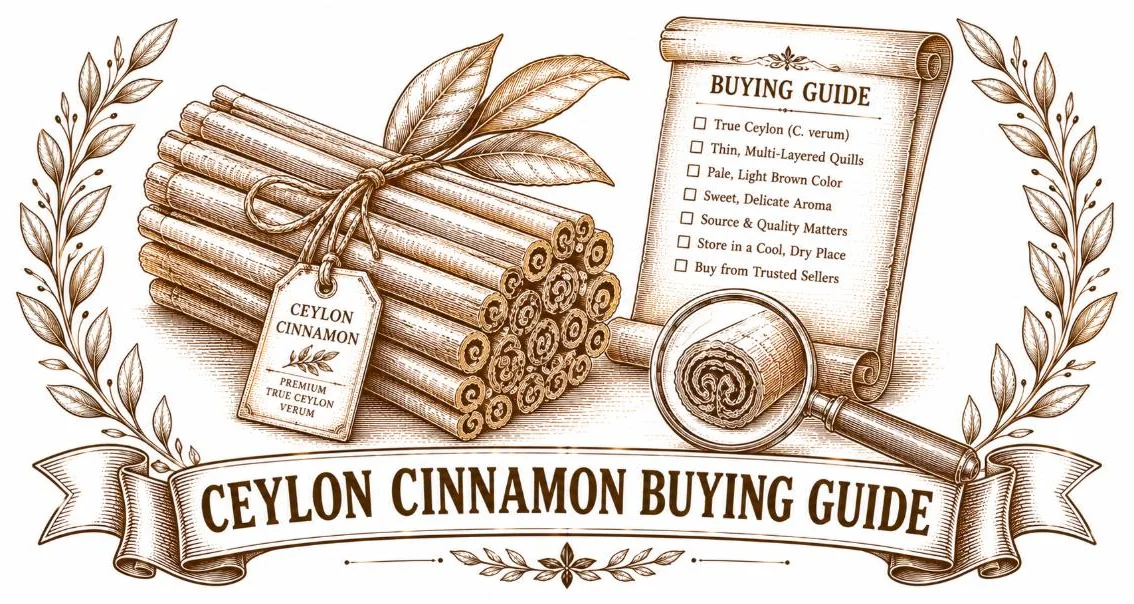
    The safest places to buy authentic Ceylon cinnamon (Cinnamomum verum) are specialist spice merchants, reputable online sellers that clearly state the species and Sri Lankan origin, and shops that sell whole quills you can inspect. Wherever you buy, the single most reliable rule is the same: look for the words Cinnamomum verum and an origin of Sri Lanka on the label, and treat anything simply sold as “cinnamon” with caution.

    This guide is not about pointing you to one shop. It is about teaching you how to recognise a trustworthy source anywhere in the world, so you can buy genuine Ceylon cinnamon with confidence rather than accidentally ending up with cheaper cassia. For the wider picture of choosing well, see our pillar guide, the Ceylon cinnamon buying guide.

    Where can you buy authentic Ceylon cinnamon?

    Ceylon cinnamon is sold through several kinds of outlets, each with strengths and trade-offs. Knowing what to expect from each helps you shop wisely.

    Specialist spice shops

    Dedicated spice merchants are often the best starting point. They tend to know their products, label species and origin clearly, and stock genuine Ceylon cinnamon rather than generic “cinnamon”. Because spices are their whole business, they are more likely to be able to answer questions about grade, harvest and source.

    Reputable online retailers

    Buying online opens up a much wider choice, including sellers who ship directly from Sri Lanka. The trade-off is that you cannot handle the product before buying, so you must rely on the listing. Favour sellers who state Cinnamomum verum, name Sri Lanka as the origin, show clear photographs of thin, layered quills, and describe the grade. Vague listings that only say “cinnamon” are best avoided.

    Supermarkets and general grocers

    Mainstream supermarkets usually sell cassia under the plain name “cinnamon”, though some now carry a clearly labelled Ceylon line as well. If you shop here, read the label carefully: the presence of the botanical name and a Sri Lankan origin is what separates true Ceylon cinnamon from the cassia sitting beside it. The reasons these two are so often confused are explained in our guide to Ceylon cinnamon vs cassia.

    Farmers’ markets and direct trade

    Some markets, delis and direct-trade sellers offer Ceylon cinnamon sourced from specific growers. These can be excellent, especially when the seller can tell you where the spice comes from. As always, confirm the species and origin rather than relying on the word “authentic” alone.

    What to look for in any seller

    Regardless of where you shop, the same signals separate a trustworthy source from a doubtful one.

    The botanical name is stated

    A reliable seller of true cinnamon will proudly display Cinnamomum verum (sometimes written Cinnamomum zeylanicum). If the species is missing and the product is simply “cinnamon”, assume it may be cassia until proven otherwise.

    The origin is Sri Lanka

    Genuine Ceylon cinnamon comes overwhelmingly from Sri Lanka. A clear country of origin, paired with the correct species, is a strong sign of authenticity. The farming tradition behind that origin is described in our guide to Sri Lankan cinnamon farming.

    Whole quills you can inspect

    Where possible, buy whole quills rather than powder, because their structure is hard to fake. True Ceylon quills are thin, pale and made of many soft layers rolled together, in contrast to the hard single curl of cassia. Being able to see or photograph the quills gives you a way to verify quality yourself, using the checks in our guide to how to spot fake Ceylon cinnamon.

    Transparent grade information

    Good sellers describe the grade of their cinnamon, from the delicate Alba to coarser grades, rather than leaving it unspecified. Understanding what these grades mean helps you judge whether the price is fair, as set out in our complete guide to Ceylon cinnamon grades.

    Whole quills or ground powder: which to buy

    Where you buy is closely tied to what form you buy. Each has its place.

    Choosing between whole quills and ground cinnamon when buying.
    FormBest forThings to watch
    Whole quillsVerifying authenticity; longer shelf lifeNeeds grinding for some recipes
    Ground powderConvenience and everyday bakingHarder to verify; can be adulterated

    Because ground cinnamon hides the tell-tale layered structure, it is easier to pass off cassia or fillers as Ceylon powder. If you are buying powder, it matters even more that the seller is reputable and that the label names the species and origin.

    Buying Ceylon cinnamon online safely

    Online is where most people now shop, so it deserves a closer look. Before you buy, check that the listing names Cinnamomum verum and Sri Lanka, shows real photographs rather than generic stock images, describes the grade, and comes from a seller with a track record of honest descriptions. Be wary of listings where the price is far lower than comparable Ceylon cinnamon, as unusually cheap “Ceylon” is a classic warning sign that the product may actually be cassia. When a listing is vague, ask the seller directly about species and origin before ordering.

    Why price is part of the picture

    True Ceylon cinnamon is more labour-intensive to harvest and hand-peel than cassia, so it almost always costs more. A realistic, somewhat higher price is normal and even reassuring; a suspiciously low price on something labelled “Ceylon” is a reason to look more closely. That said, a high price alone does not guarantee authenticity, so always combine the price signal with the species, origin and structural checks. The relationship between cost and quality is covered further in our Ceylon cinnamon buying guide.

    Questions worth asking before you buy

    Whether you are standing at a market stall or reading an online listing, a few simple questions quickly reveal how trustworthy a source is. Ask what the species is and expect to hear Cinnamomum verum. Ask where it is from and expect Sri Lanka. Ask about the grade and expect a specific answer rather than a shrug. A seller who can answer these clearly and consistently is far more likely to be product the real thing than one who deals only in the vague word “cinnamon”.

    Avoiding the most common mistakes

    Most disappointments come from a handful of avoidable errors. Buying purely on the word “cinnamon” without checking the species is the biggest one, because that word covers both true cinnamon and cassia. Assuming that “organic” or “premium” automatically means Ceylon is another, since those terms say nothing about the botanical species. Finally, chasing the lowest possible price often leads straight to cassia. Slowing down to read the label and verify the source is what separates a confident purchase from a lucky guess, and it builds naturally on knowing how to identify authentic Ceylon cinnamon.

    Summary

    You can buy authentic Ceylon cinnamon from specialist spice shops, reputable online sellers, some supermarkets, and direct-trade markets, but the outlet matters less than the checks you apply. Everywhere, the decisive signals are the same: the label names Cinnamomum verum, the origin is Sri Lanka, whole quills are thin and layered, the grade is stated, and the price is realistic rather than suspiciously cheap. Favour whole quills when you can, be extra careful with powder, ask sellers direct questions about species and origin, and don’t let words like “premium” or “organic” stand in for proof of authenticity. Apply these habits and you can shop with confidence wherever you are.

    Frequently asked questions

    Where is the best place to buy Ceylon cinnamon?

    Specialist spice merchants and reputable online sellers that clearly state Cinnamomum verum and a Sri Lankan origin are usually the most reliable. Being able to see whole quills, in person or in clear photos, is a further advantage.

    Can you buy real Ceylon cinnamon in supermarkets?

    Sometimes. Most supermarket “cinnamon” is cassia, but some stores now stock a clearly labelled Ceylon line. Check for the botanical name and a Sri Lankan origin to tell the two apart on the shelf.

    Is it safe to buy Ceylon cinnamon online?

    Yes, if you choose carefully. Favour listings that name Cinnamomum verum and Sri Lanka, show genuine photos of thin layered quills, describe the grade, and come from sellers with honest descriptions. Treat unusually cheap “Ceylon” cinnamon with caution.

    How do I know a seller’s Ceylon cinnamon is genuine?

    Ask about the species, origin and grade. A trustworthy seller will confirm Cinnamomum verum, name Sri Lanka, and give a specific grade. Whole quills you can inspect provide extra reassurance.

    This website provides educational information about Ceylon Cinnamon as a spice and food ingredient. It is not intended to provide medical advice or make health claims.

  • Ceylon Cinnamon Buying Guide

    Ceylon Cinnamon Buying Guide

    To buy good Ceylon cinnamon, look for a label naming Cinnamomum verum and Sri Lanka, choose whole quills over powder where you can, match the grade to your use and budget, and buy from a source that is transparent about origin. Whole Alba and Continental quills suit delicate cooking and gifting; thicker grades and quillings are great value for everyday use. This guide walks you through every decision.

    Buying true cinnamon can be confusing when so much cassia is sold simply as “cinnamon.” This practical guide helps you shop with confidence, what to check, sticks versus powder, which grade to pick, how to judge value, and the questions worth asking. If you are new to the spice, begin with what is true Ceylon cinnamon.

    1. Check the label first

    The single most important step is reading the label. Genuine Ceylon cinnamon should clearly indicate Cinnamomum verum (or the older synonym Cinnamomum zeylanicum), and ideally state “Ceylon cinnamon” or “true cinnamon” with Sri Lanka as the origin. If a product only says “cinnamon” with no species or country, treat it as cassia. Remember that “organic” and “premium” describe farming and marketing, not the species, see our identification guide for the full checks.

    2. Sticks (quills) or powder?

    Both have their place:

    • Whole quills keep their aroma far longer, can be inspected for authenticity, and are ideal for infusing drinks, curries and syrups. You can also grind them fresh as needed.
    • Powder is convenient for baking and dusting but loses fragrance faster and cannot be checked by eye, so buy it only from a trusted, clearly labelled source and in modest quantities.

    For most people, keeping whole quills and grinding small amounts gives the best flavour and confidence.

    3. Choose the right grade

    Grade is about quill thickness and finesse, not authenticity, all grades are genuine Ceylon cinnamon. Match it to the job:

    Matching grade to use and budget.
    GradeBest forValue
    Alba / C5 SpecialGifting, delicate desserts, drinksPremium
    Continental (C5 / C4)All-round premium cooking and bakingExcellent balance
    Mexican / HamburgEveryday baking, mulling, simmeringGreat value
    Quillings / featheringsGrinding your own powder, infusionsMost economical

    The full breakdown is in our complete guide to Ceylon cinnamon grades.

    4. Judge quality signs

    Good Ceylon cinnamon looks and smells alive: pale, evenly coloured quills with tight, neat rolls, few cracks, and a sweet, fragrant aroma. Dull, musty or oddly uniform-smelling products may be old or poorly stored. Freshness matters more than most shoppers realise, because aromatic oils fade over time, especially in powder.

    5. Understand price and value

    Ceylon cinnamon costs more than cassia because it is grown in a limited region and processed by hand, as explained in how Ceylon cinnamon is made. That premium is normal. Be wary of two extremes: prices far below typical Ceylon rates (often a sign it is really cassia), and premiums far above the norm that are not justified by grade or quality. Compare on a per-weight basis, and factor in that finer grades naturally cost more than thicker ones.

    6. Buy from transparent sources

    The best sellers are open about species, grade and origin, and can tell you where their cinnamon comes from. Single-origin Sri Lankan cinnamon with clear grade labelling is a good sign. When buying online, read descriptions carefully, look for the botanical name, and be cautious of listings that lean on vague health language rather than clear product detail.

    7. How much should you buy?

    Because aroma fades, buy quantities you will use within several months to a year rather than stockpiling. Whole quills keep longer than powder, so if you want to buy a little more at once, choose quills and grind as needed. Proper storage in an airtight container away from heat and light will help preserve freshness.

    A simple buying checklist

    • Label names Cinnamomum verum and Sri Lanka ✔
    • Whole quills chosen where possible ✔
    • Grade matched to your use and budget ✔
    • Quills pale, tightly rolled and fragrant ✔
    • Price consistent with genuine Ceylon cinnamon ✔
    • Seller transparent about origin ✔

    Where to buy: shops vs online

    Both specialist shops and reputable online sellers can be excellent sources. In person, you can inspect the quills for the pale colour, tight multi-layered roll and fragrant aroma described in our identification guide. Online, you trade that hands-on check for wider choice and often better prices, so lean on clear labelling, grade information, origin details and good photographs. Buying direct from suppliers who specialise in Sri Lankan cinnamon is often the most transparent route of all.

    Certifications and claims explained

    Labels carry various marks, and it helps to know what they mean. Organic certification concerns how the plant was grown, not the species, organic cassia exists. Fair trade and similar schemes relate to how farmers are paid. A Geographical Indication reference points to genuine Sri Lankan origin. None of these replaces the botanical name: always confirm Cinnamomum verum as well. Treat marketing words like “premium,” “pure” and “natural” as descriptions, not guarantees of species.

    Storing what you buy

    Good buying is wasted without good storage. Keep cinnamon in an airtight container away from heat, light and moisture, and keep whole quills separate from powder since quills last far longer. Buying quills and grinding small amounts as needed is the best way to keep flavour at its peak, and it means a single purchase stays fragrant for many months, a habit that pays off across all the dishes in our culinary guide.

    Buying Ceylon cinnamon as a gift

    Because fine Alba and C5 Special quills are visually striking and genuinely special, Ceylon cinnamon makes an excellent gift for cooks and food lovers. Choose a high grade, presented in a clear container that shows off the pale, neatly rolled quills, and include a note on origin and use. A gift of true cinnamon is also a small education in the difference between real cinnamon and the everyday cassia most people know.

    Matching cinnamon to how you cook

    The right purchase depends on your kitchen. If you mostly bake and dust, a jar of good Ceylon powder from a trusted source plus a few whole quills to grind fresh will serve you well. If you cook curries, rice and drinks that call for infusing, prioritise whole quills in a versatile Continental grade. If you love gifting or delicate desserts, add some fine Alba. And if you get through a lot of cinnamon, thicker grades and quillings give great value for grinding your own. Thinking about how you actually cook, rather than simply buying the cheapest or the most premium option, is the surest way to end up with cinnamon you will use and enjoy.

    How much cinnamon do you really need?

    It is tempting to buy in bulk, but aroma fades over time, so the freshest results come from buying quantities you will use within several months to a year. For most households a modest bag of whole quills goes a long way, since each quill can flavour many dishes and can be ground fresh as needed. If you cook with cinnamon heavily, buying a slightly larger amount of whole quills, which keep far better than powder, is the sensible compromise between value and freshness. Store the surplus airtight and cool, and it will stay fragrant for a long time.

    Red flags to watch for

    • No species or origin named, “cinnamon” alone usually means cassia.
    • Prices far below typical Ceylon rates, often a sign it is cassia.
    • Heavy reliance on health claims instead of clear product detail.
    • Very dark, thick, hard sticks described as Ceylon, the physical signs say otherwise.
    • Vague “premium” or “pure” wording with no botanical name to back it up.

    Treat any of these as a prompt to look more closely or choose another supplier. When species, grade, origin and a fair price all line up, you can buy with confidence, and the checks in our identification guide will confirm the rest once the product is in your hands.

    Summary

    Buying Ceylon cinnamon well comes down to a few habits: read the label for Cinnamomum verum and Sri Lanka, favour whole quills for freshness and authenticity, choose a grade that fits your cooking and budget, look for pale, fragrant, neatly rolled sticks, and buy from sellers who are transparent about origin. Expect to pay a fair premium over cassia, but be sceptical of prices that seem too good to be true. With these checks, you can be confident you are getting genuine true cinnamon.

    Frequently asked questions

    Where should I buy Ceylon cinnamon?

    From sellers who clearly state the species (Cinnamomum verum), grade and Sri Lankan origin. Single-origin, well-labelled products are a good sign, whether in specialist shops or reputable online stores.

    Why is Ceylon cinnamon so expensive?

    It is grown in a limited region and hand-processed through skilled peeling and rolling, which is labour-intensive. That craft, plus its quality and low coumarin, is reflected in the price.

    Should I buy cinnamon sticks or powder?

    Whole quills keep their aroma longer and can be checked for authenticity, so they are usually the better buy. Use powder for convenience, from a trusted source, in small amounts.

    What grade of Ceylon cinnamon should a home cook buy?

    Continental grades (C5/C4) are excellent all-rounders. Choose Alba for delicate or special uses, and thicker grades or quillings for everyday cooking and grinding.

    This website provides educational information about Ceylon Cinnamon as a spice and food ingredient. It is not intended to provide medical advice or make health claims.