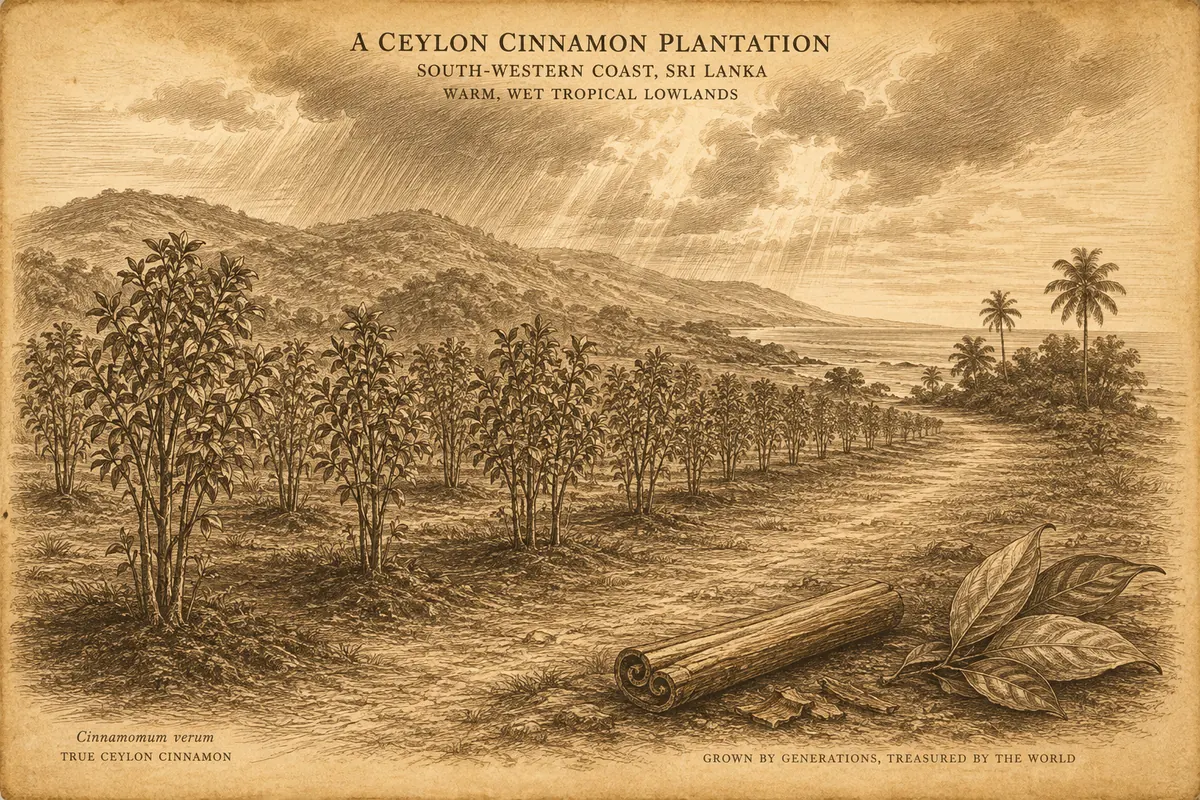
Most of Sri Lanka’s Ceylon cinnamon is grown by smallholder farmers, families who cultivate true cinnamon, Cinnamomum verum, on small plots of land rather than on large plantations. These smallholdings, often only a few acres, are concentrated in the wet south and southwest of the island, where generations of the same families grow, harvest and peel the bark by hand. Smallholder farmers are the backbone of the Ceylon cinnamon industry, and their skill and labour are what bring the spice from tree to quill.
Behind every stick of Ceylon cinnamon is a farming family, and understanding who grows the spice helps explain both its quality and its value. This guide looks at smallholder cinnamon farmers in Sri Lanka: who they are, how they work, and why they matter. It builds on our pillar guide to Sri Lankan cinnamon farming.
The short answer
Smallholder farmers are families who grow Ceylon cinnamon on small plots, usually a few acres, and they produce the large majority of Sri Lanka’s cinnamon. Rather than large estates, the island’s cinnamon comes mainly from many small family farms across the southern and southwestern districts. These families tend the trees, harvest the shoots and often peel the bark themselves, passing the skills down the generations. Because so much depends on their hand work, smallholders are central to both the supply and the quality of true Ceylon cinnamon.
Who the smallholders are
Smallholder cinnamon farmers are rural families, many of whom have grown the spice for generations. Their plots are small, often part of a mixed garden that may also hold coconut, fruit trees and other crops, and cinnamon provides an important part of the household income. The work is a family effort, with different members involved in tending, harvesting and peeling. In many cinnamon-growing villages, this way of life is deeply established, and the knowledge of how to grow and process cinnamon well is a shared inheritance. This continuity is part of what gives Sri Lankan cinnamon its heritage, as our guide to the cinnamon-growing regions of Sri Lanka describes.
How smallholders work
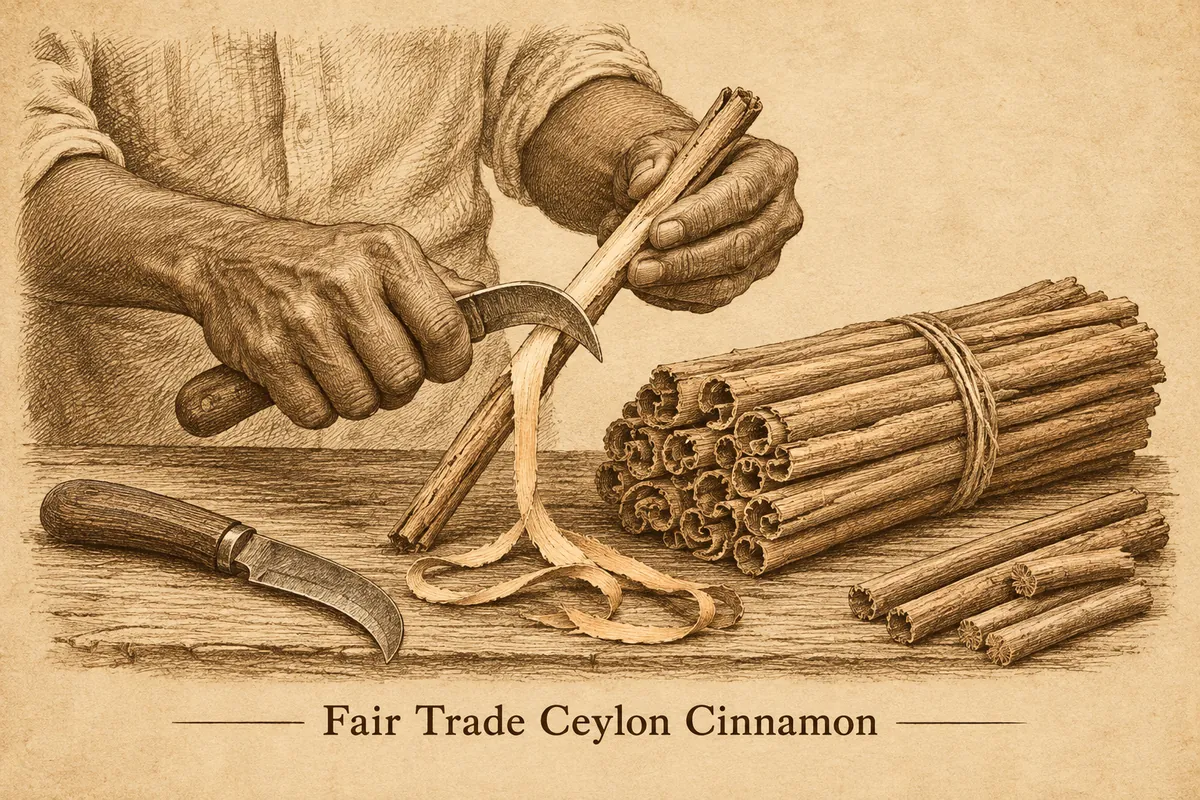
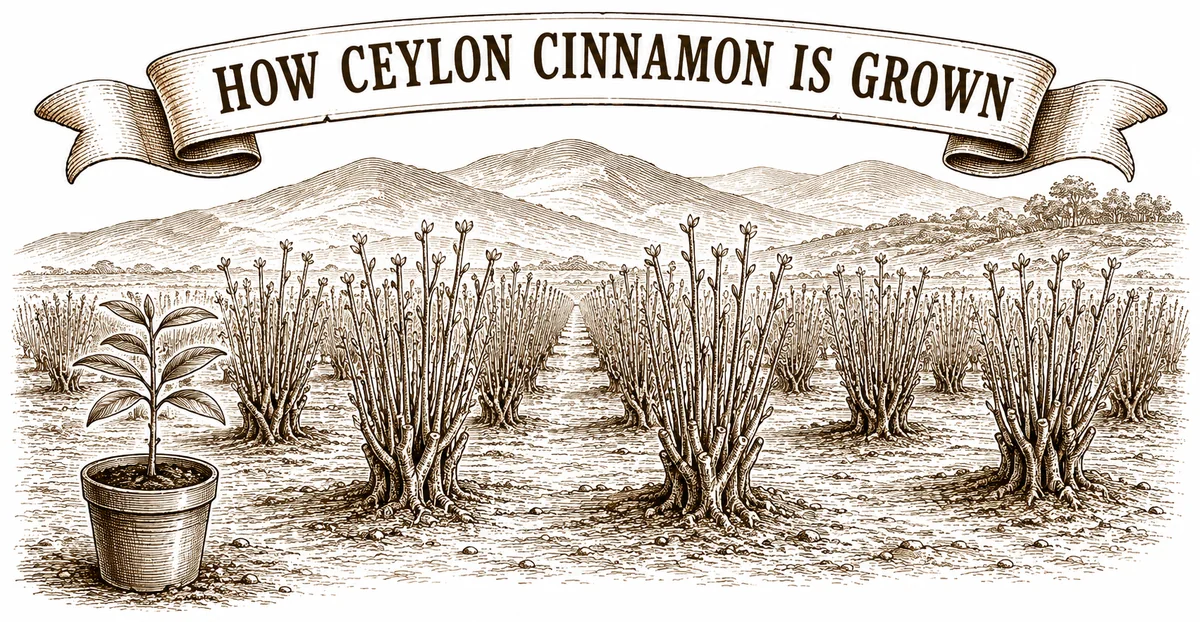
On a smallholding, cinnamon is grown as a managed shrub rather than a tall tree. The plants are cut back low so they send up many thin shoots, which are harvested when they reach the right size. After cutting, the shoots are peeled, a delicate hand skill, and the inner bark is rolled into quills and dried. Much of this is done on the farm or nearby, often by the family or by skilled peelers they work with. Because the plants regrow after cutting, a smallholding can be harvested again and again over many years, giving a steady livelihood from a small area of land.
| Feature | Smallholder cinnamon farming |
|---|---|
| Farm size | Small, often only a few acres |
| Who works it | Families, often across generations |
| Where | Mainly the wet south and southwest |
| Method | Grown as a cut-back shrub, peeled by hand |
| Role | Produce most of Sri Lanka’s cinnamon |
Why smallholders matter to quality
The smallholder model is closely tied to the quality of Ceylon cinnamon. Because peeling and rolling the thin bark is a careful hand skill, the attention of experienced family peelers helps produce the fine, many-layered quills that true cinnamon is known for. Small-scale, hands-on work allows this care in a way that large mechanised production would struggle to match. The result is that the character of Ceylon cinnamon is bound up with the people who make it, and the craft passed down within farming families is a real part of what buyers are paying for. This link between people and quality is a recurring theme across the island’s cinnamon story.
The challenges smallholders face
Smallholder farming also comes with difficulties. Returns can be uncertain, since prices vary and much of the value can be captured further along the supply chain rather than at the farm. The hand work is labour-intensive, and finding and keeping skilled peelers is a real concern in some areas. Weather, pests and the cost of inputs all affect a small farm more sharply than a large one. These pressures mean that, despite the spice’s fame, the families who grow it do not always share fully in its value. This is why efforts to support them matter, as our guide to fair trade and Ceylon cinnamon explains.
How smallholders are supported
A range of efforts aim to strengthen the position of smallholder cinnamon farmers. Fair trade and ethical sourcing schemes seek to give producers a fairer price and more stable demand. Training and support for peelers help keep the skilled craft alive and improve quality. Grouping smallholders into cooperatives or producer groups can give them more bargaining power and better access to markets. Protecting the Ceylon name through origin recognition also helps, since it defends the value of genuine Sri Lankan cinnamon that smallholders produce. Together these measures try to ensure that the families behind the spice benefit from its reputation.
Cinnamon alongside other crops
On many smallholdings, cinnamon is not grown on its own but as part of a mixed home garden. A family plot may hold coconut palms, fruit trees, pepper, and vegetables alongside the cinnamon shrubs, so the land yields several things at once. This mixed approach spreads risk, since a poor season for one crop can be offset by another, and it makes good use of a small area. Cinnamon fits this pattern well because it grows as a managed shrub in the understorey and regrows after cutting, giving a reliable return without needing a large dedicated field. For many families, cinnamon is therefore one steady thread in a wider farming life rather than their only source of income, which is part of how smallholdings stay resilient.
The future of smallholder cinnamon farming
The smallholder system faces questions about its future as well as its present. Younger people in farming families sometimes move to towns or other work, which raises concerns about who will tend the plots and carry on the peeling craft. At the same time, growing interest in genuine, traceable and sustainably grown Ceylon cinnamon offers an opportunity, since it rewards exactly the small-scale, careful production that smallholders provide. Support for training, fair prices and producer groups can help make cinnamon farming an attractive livelihood for the next generation. How well these efforts succeed will shape whether the smallholder tradition, and the quality it underpins, continues to thrive in the years ahead.
Why this matters for buyers
For someone buying Ceylon cinnamon, knowing that it comes from smallholder families adds meaning to the choice. Choosing genuine Ceylon cinnamon, and where possible cinnamon sold through fair and transparent channels, supports the rural communities who grow it. It also connects the buyer to the craft and heritage behind the spice, rather than treating it as an anonymous commodity. In this sense, the smallholder story is part of what makes true Ceylon cinnamon more than just a flavour: it is the product of many small farms and skilled hands across the south of Sri Lanka.
Summary
Most of Sri Lanka’s Ceylon cinnamon is grown by smallholder farmers, families who cultivate true cinnamon, Cinnamomum verum, on small plots of a few acres rather than on large plantations. Concentrated in the wet south and southwest, these families tend the cut-back shrubs, harvest the shoots and often peel the thin bark by hand, with the skills passed down the generations. Because the quality of Ceylon cinnamon depends so much on careful hand peeling, smallholders are central to both its supply and its fine character. They also face real challenges, from uncertain prices to the labour of peeling, which is why fair trade, training and cooperative efforts aim to support them. For buyers, choosing genuine Ceylon cinnamon helps sustain the smallholder families and the craft behind the spice.
Frequently asked questions
Who grows most of Sri Lanka’s cinnamon?
Smallholder farmers, meaning families who grow Ceylon cinnamon on small plots of land, produce the large majority of Sri Lanka’s cinnamon. The industry is based on many small family farms, mainly in the south and southwest, rather than on large plantations.
How big is a smallholder cinnamon farm?
Usually small, often only a few acres, and frequently part of a mixed garden with other crops such as coconut and fruit trees. Cinnamon from these small plots provides an important part of the household income for the family.
Do smallholders peel the cinnamon themselves?
Often yes. Much of the peeling is done on or near the farm by the family or by skilled peelers they work with. Peeling the thin bark and rolling it into quills is a careful hand skill, and this attention is part of what gives Ceylon cinnamon its quality.
What challenges do smallholder cinnamon farmers face?
Uncertain prices, labour-intensive hand work, and difficulty finding skilled peelers are common challenges, along with weather, pests and input costs. Much of the spice’s value can be captured later in the supply chain, so farmers do not always share fully in it.
How can buyers support smallholder farmers?
By choosing genuine Ceylon cinnamon and, where possible, cinnamon sold through fair and transparent channels. This helps support the rural families who grow the spice and the skilled craft behind it, rather than treating cinnamon as an anonymous commodity.
This website provides educational information about Ceylon Cinnamon as a spice and food ingredient. It is not intended to provide medical advice or make health claims.