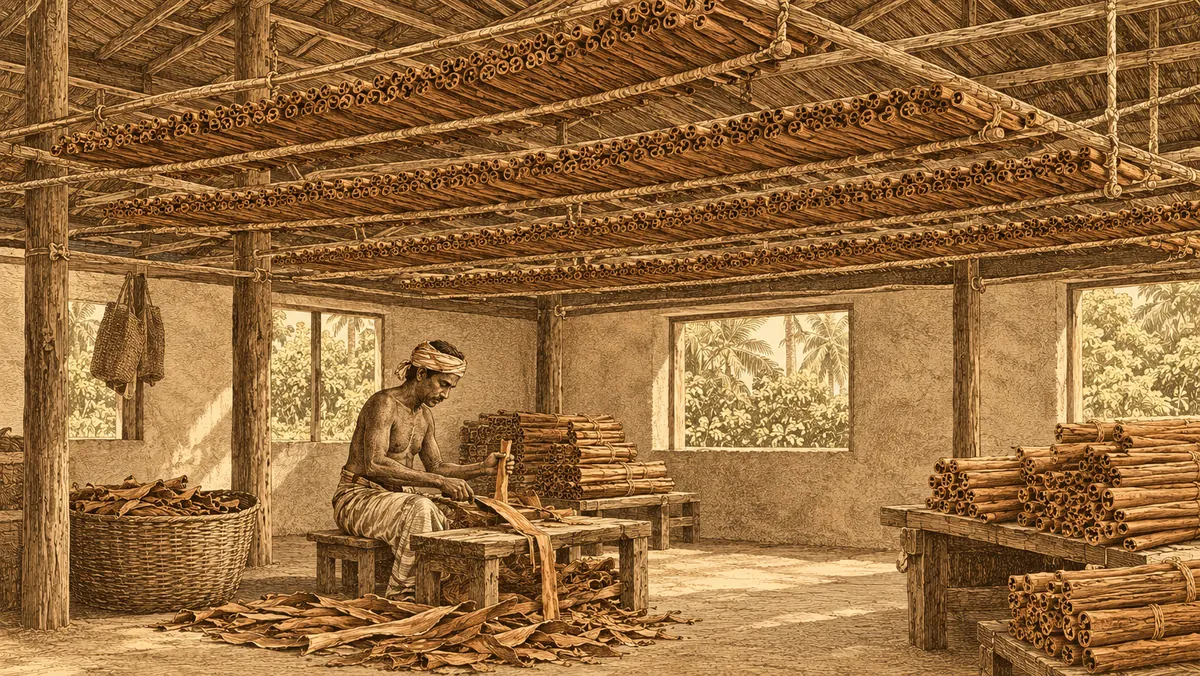
Ceylon cinnamon is dried by resting the freshly peeled and rolled bark in shade and gentle air for several days, so the quills lose moisture slowly, keep their pale colour and tighten as they set. The peeled bark is formed into quills and dried on raised rope racks suspended overhead inside the roofed peeling sheds, turned as it firms, never out in the open. Careful drying is what gives true Ceylon cinnamon its light colour, smooth quills and fine aroma.
Drying is one of the quiet but decisive steps in making Ceylon cinnamon. Done well, it sets the quill, locks in the aroma and keeps the colour pale. Done badly, it can darken the bark, invite mould or leave the quills loose. This guide explains how Ceylon cinnamon is dried, why the method matters and how it shapes the final spice. It builds on our pillar guide to how Ceylon cinnamon is made.
The short answer
Ceylon cinnamon is dried slowly and mostly in the shade, not baked hard in strong sun. After the bark is peeled and rolled into quills, it is left to dry over several days in shaded, airy conditions. As the quills lose water they shrink and tighten, so peelers roll and firm them during this time. The drying is done indoors on raised rope racks, in shade with good airflow, because strong direct sun can darken and crack the delicate bark. The aim is a quill that is dry, firm, pale and fragrant.
Where drying fits in the process
Drying comes after harvesting, peeling and rolling. First the stems are cut and the outer bark is scraped away. Then the thin inner bark is carefully lifted off in strips, a skill explained in our guide to traditional cinnamon peeling methods. These strips are shaped into the familiar quills, as described in how cinnamon quills are rolled by hand. Only then does drying begin, turning soft, moist bark into a stable, storable spice. Because the bark is still damp and flexible when rolling starts, drying and shaping overlap: the quill is formed, then set as it dries.
Why slow shade drying is preferred
Ceylon cinnamon bark is thin and delicate, so it responds badly to fast, harsh drying. Strong direct sun can dry the outside too quickly while the inside is still moist, which can crack the quill, darken the colour and trap moisture inside. Slow drying in shade, with good airflow, lets water leave the bark evenly from the inside out. This keeps the quill smooth and pale, helps it hold its shape, and protects the gentle aroma that sets true cinnamon apart. The traditional preference for shade is a practical response to how fragile the bark is.
How the quills are dried day by day
In the early stage, the freshly rolled quills are soft and still shrinking. Peelers rest them across raised rope racks, horizontal lines of rope strung inside the peeling shed about eight to nine feet above the floor. This height matters: it keeps the drying quills in the warm, moving air near the roof, lets workers move and peel freely in the space below, and is still within easy reach so peelers can lift each batch of freshly peeled quills straight up onto the racks as they finish. Over the first days, as the bark loses water, the quills tighten around themselves, and the peelers roll and press them so they stay firm and even rather than loosening. The quills are turned so they dry on all sides. After several days the bark becomes firm and dry enough to hold its shape and can be taken down to sort and bundle. All of this happens inside the shed, never out in the open.
Sun drying versus shade drying
People often picture spices drying in the open sun, but quality Ceylon cinnamon is different. Shade drying is gentle and slow, protecting colour and shape, which is why the quills are dried indoors on the raised racks rather than in the open. Strong sun is faster but risks darkening and cracking the thin Ceylon bark, so direct sun drying is avoided for the delicate quills. In practice, good Ceylon cinnamon is dried in the shaded, airy space of the peeling shed from start to finish.
| Aspect | Shade drying | Sun drying |
|---|---|---|
| Speed | Slow and gentle | Faster |
| Effect on colour | Keeps quills pale | Can darken the bark |
| Effect on shape | Quills set smoothly | Can crack if too harsh |
| Best use | Whole drying process | Generally avoided |
| Risk | Slower, needs airflow | Cracking and colour loss |
What good drying does for the spice
Proper drying shapes almost everything a buyer notices later. It fixes the quill so it stays tight and neat, which matters for grading, since smooth, even quills reach higher grades. It keeps the colour the pale tan that marks genuine Ceylon cinnamon rather than a dark, over-dried brown. It protects the delicate, sweet aroma instead of driving it off with excess heat. And by lowering moisture to a safe level, it makes the spice stable enough to store and ship without spoiling. In short, drying is where the quality built up during peeling and rolling is either preserved or lost.
Weather, humidity and the drying space
Drying depends heavily on the weather and the space it is done in. Sri Lanka’s cinnamon districts are warm and humid, so simply leaving bark in the open air is not enough on its own. Peelers dry quills on the raised rope racks inside the roofed peeling sheds, which keep off rain and harsh midday sun while their open sides still let breezes pass through. In damp or rainy spells, drying takes longer and needs extra care, because high humidity slows moisture loss and raises the risk of mould. Good ventilation is as important as shade, since moving air carries away the moisture leaving the bark. This is why the drying space, not just the sun, shapes the result.
How peelers know the quills are ready
Experienced peelers judge dryness by feel, sound and look rather than by instruments. A properly dried quill feels light and firm, holds its rolled shape without softness, and has an even pale colour along its length. It should not feel damp or flexible in the middle, which would signal moisture still trapped inside. This judgement is part of the craft passed down in cinnamon families, built on long experience with how the bark behaves as it dries. The same hands that peel and roll the bark also decide when it has dried enough to sort, bundle and store.
Moisture, storage and shelf life
The point of drying is to bring the bark down to a low, stable moisture level. Bark that is still damp can grow mould or lose aroma, while properly dried quills keep well for a long time. This is why drying links directly to storage: a well-dried quill stored in a cool, dry, airtight place holds its flavour for a year or more. For how long the finished spice lasts once dried, see our guide to how long Ceylon cinnamon lasts.
Summary
Ceylon cinnamon is dried slowly, mostly in shade with good airflow, over several days after the bark is peeled and rolled into quills. Because the inner bark is thin and delicate, gentle drying protects the pale colour, the smooth quill shape and the fine aroma, while harsh sun is avoided because it can darken and crack the bark. As the quills lose moisture they tighten, and peelers firm them during this stage on raised rope racks suspended inside the shed, never out in the open. Good drying sets the quill, preserves the quality built during peeling and rolling, and lowers moisture enough for safe storage, which is why it is a decisive step in producing true Ceylon cinnamon.
Frequently asked questions
Is Ceylon cinnamon dried in the sun or the shade?
In the shade, indoors. The delicate bark is dried slowly on raised rope racks inside the roofed peeling sheds to protect its colour and shape. Direct sun is avoided because it can darken and crack the quills, so the cinnamon is not dried out in the open.
How long does it take to dry Ceylon cinnamon?
Several days. The exact time depends on the weather, the thickness of the bark and the airflow, but the quills are dried over a number of days until they are firm, pale and low in moisture.
Why is Ceylon cinnamon dried slowly?
Because the inner bark is thin and fragile. Slow drying lets moisture leave evenly, keeping the quill smooth, pale and fragrant. Fast, harsh drying can crack the bark, darken the colour and trap moisture inside.
Does drying affect the colour of cinnamon?
Yes. Gentle shade drying keeps the pale tan colour that marks genuine Ceylon cinnamon, while over-drying or strong sun can turn the bark darker. Colour is one of the clues people use to judge quality.
Why does drying matter for storage?
Drying lowers the moisture in the bark to a safe level. Well-dried quills resist mould and keep their aroma, so they store and ship well. Bark that is not dried enough can spoil or lose flavour quickly.
This website provides educational information about Ceylon Cinnamon as a spice and food ingredient. It is not intended to provide medical advice or make health claims.
Leave a Reply