Tag: Cinnamon peeling

  • How Ceylon Cinnamon Is Dried

    How Ceylon Cinnamon Is Dried

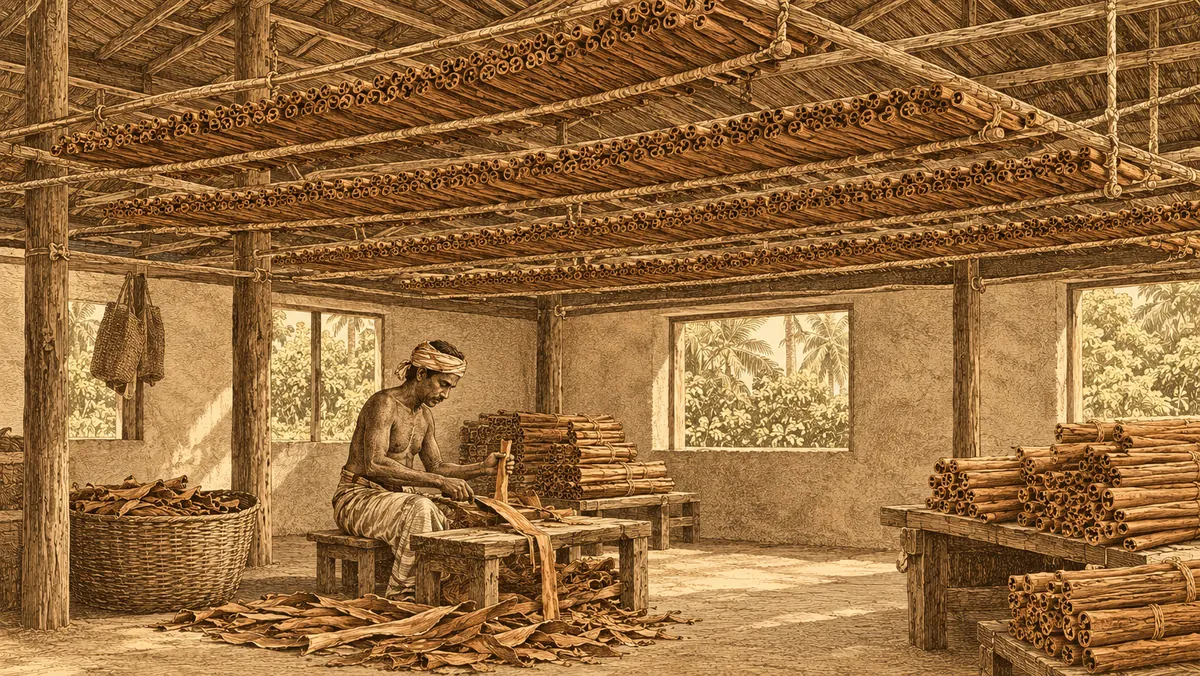
    Ceylon cinnamon is dried by resting the freshly peeled and rolled bark in shade and gentle air for several days, so the quills lose moisture slowly, keep their pale colour and tighten as they set. The peeled bark is formed into quills and dried on raised rope racks suspended overhead inside the roofed peeling sheds, turned as it firms, never out in the open. Careful drying is what gives true Ceylon cinnamon its light colour, smooth quills and fine aroma.

    Drying is one of the quiet but decisive steps in making Ceylon cinnamon. Done well, it sets the quill, locks in the aroma and keeps the colour pale. Done badly, it can darken the bark, invite mould or leave the quills loose. This guide explains how Ceylon cinnamon is dried, why the method matters and how it shapes the final spice. It builds on our pillar guide to how Ceylon cinnamon is made.

    The short answer

    Ceylon cinnamon is dried slowly and mostly in the shade, not baked hard in strong sun. After the bark is peeled and rolled into quills, it is left to dry over several days in shaded, airy conditions. As the quills lose water they shrink and tighten, so peelers roll and firm them during this time. The drying is done indoors on raised rope racks, in shade with good airflow, because strong direct sun can darken and crack the delicate bark. The aim is a quill that is dry, firm, pale and fragrant.

    Where drying fits in the process

    Drying comes after harvesting, peeling and rolling. First the stems are cut and the outer bark is scraped away. Then the thin inner bark is carefully lifted off in strips, a skill explained in our guide to traditional cinnamon peeling methods. These strips are shaped into the familiar quills, as described in how cinnamon quills are rolled by hand. Only then does drying begin, turning soft, moist bark into a stable, storable spice. Because the bark is still damp and flexible when rolling starts, drying and shaping overlap: the quill is formed, then set as it dries.

    Why slow shade drying is preferred

    Ceylon cinnamon bark is thin and delicate, so it responds badly to fast, harsh drying. Strong direct sun can dry the outside too quickly while the inside is still moist, which can crack the quill, darken the colour and trap moisture inside. Slow drying in shade, with good airflow, lets water leave the bark evenly from the inside out. This keeps the quill smooth and pale, helps it hold its shape, and protects the gentle aroma that sets true cinnamon apart. The traditional preference for shade is a practical response to how fragile the bark is.

    How the quills are dried day by day

    In the early stage, the freshly rolled quills are soft and still shrinking. Peelers rest them across raised rope racks, horizontal lines of rope strung inside the peeling shed about eight to nine feet above the floor. This height matters: it keeps the drying quills in the warm, moving air near the roof, lets workers move and peel freely in the space below, and is still within easy reach so peelers can lift each batch of freshly peeled quills straight up onto the racks as they finish. Over the first days, as the bark loses water, the quills tighten around themselves, and the peelers roll and press them so they stay firm and even rather than loosening. The quills are turned so they dry on all sides. After several days the bark becomes firm and dry enough to hold its shape and can be taken down to sort and bundle. All of this happens inside the shed, never out in the open.

    Sun drying versus shade drying

    People often picture spices drying in the open sun, but quality Ceylon cinnamon is different. Shade drying is gentle and slow, protecting colour and shape, which is why the quills are dried indoors on the raised racks rather than in the open. Strong sun is faster but risks darkening and cracking the thin Ceylon bark, so direct sun drying is avoided for the delicate quills. In practice, good Ceylon cinnamon is dried in the shaded, airy space of the peeling shed from start to finish.

    AspectShade dryingSun drying
    SpeedSlow and gentleFaster
    Effect on colourKeeps quills paleCan darken the bark
    Effect on shapeQuills set smoothlyCan crack if too harsh
    Best useWhole drying processGenerally avoided
    RiskSlower, needs airflowCracking and colour loss

    What good drying does for the spice

    Proper drying shapes almost everything a buyer notices later. It fixes the quill so it stays tight and neat, which matters for grading, since smooth, even quills reach higher grades. It keeps the colour the pale tan that marks genuine Ceylon cinnamon rather than a dark, over-dried brown. It protects the delicate, sweet aroma instead of driving it off with excess heat. And by lowering moisture to a safe level, it makes the spice stable enough to store and ship without spoiling. In short, drying is where the quality built up during peeling and rolling is either preserved or lost.

    Weather, humidity and the drying space

    Drying depends heavily on the weather and the space it is done in. Sri Lanka’s cinnamon districts are warm and humid, so simply leaving bark in the open air is not enough on its own. Peelers dry quills on the raised rope racks inside the roofed peeling sheds, which keep off rain and harsh midday sun while their open sides still let breezes pass through. In damp or rainy spells, drying takes longer and needs extra care, because high humidity slows moisture loss and raises the risk of mould. Good ventilation is as important as shade, since moving air carries away the moisture leaving the bark. This is why the drying space, not just the sun, shapes the result.

    How peelers know the quills are ready

    Experienced peelers judge dryness by feel, sound and look rather than by instruments. A properly dried quill feels light and firm, holds its rolled shape without softness, and has an even pale colour along its length. It should not feel damp or flexible in the middle, which would signal moisture still trapped inside. This judgement is part of the craft passed down in cinnamon families, built on long experience with how the bark behaves as it dries. The same hands that peel and roll the bark also decide when it has dried enough to sort, bundle and store.

    Moisture, storage and shelf life

    The point of drying is to bring the bark down to a low, stable moisture level. Bark that is still damp can grow mould or lose aroma, while properly dried quills keep well for a long time. This is why drying links directly to storage: a well-dried quill stored in a cool, dry, airtight place holds its flavour for a year or more. For how long the finished spice lasts once dried, see our guide to how long Ceylon cinnamon lasts.

    Summary

    Ceylon cinnamon is dried slowly, mostly in shade with good airflow, over several days after the bark is peeled and rolled into quills. Because the inner bark is thin and delicate, gentle drying protects the pale colour, the smooth quill shape and the fine aroma, while harsh sun is avoided because it can darken and crack the bark. As the quills lose moisture they tighten, and peelers firm them during this stage on raised rope racks suspended inside the shed, never out in the open. Good drying sets the quill, preserves the quality built during peeling and rolling, and lowers moisture enough for safe storage, which is why it is a decisive step in producing true Ceylon cinnamon.

    Frequently asked questions

    Is Ceylon cinnamon dried in the sun or the shade?

    In the shade, indoors. The delicate bark is dried slowly on raised rope racks inside the roofed peeling sheds to protect its colour and shape. Direct sun is avoided because it can darken and crack the quills, so the cinnamon is not dried out in the open.

    How long does it take to dry Ceylon cinnamon?

    Several days. The exact time depends on the weather, the thickness of the bark and the airflow, but the quills are dried over a number of days until they are firm, pale and low in moisture.

    Why is Ceylon cinnamon dried slowly?

    Because the inner bark is thin and fragile. Slow drying lets moisture leave evenly, keeping the quill smooth, pale and fragrant. Fast, harsh drying can crack the bark, darken the colour and trap moisture inside.

    Does drying affect the colour of cinnamon?

    Yes. Gentle shade drying keeps the pale tan colour that marks genuine Ceylon cinnamon, while over-drying or strong sun can turn the bark darker. Colour is one of the clues people use to judge quality.

    Why does drying matter for storage?

    Drying lowers the moisture in the bark to a safe level. Well-dried quills resist mould and keep their aroma, so they store and ship well. Bark that is not dried enough can spoil or lose flavour quickly.

    This website provides educational information about Ceylon Cinnamon as a spice and food ingredient. It is not intended to provide medical advice or make health claims.

  • How Ceylon Cinnamon Is Made

    How Ceylon Cinnamon Is Made

    Ceylon cinnamon is made by cutting mature stems from the Cinnamomum verum bush, scraping and loosening the bark, peeling away the thin inner bark by hand, rolling it into quills, drying it in the shade and sun, then sorting and grading it. Almost every step is done by skilled hands, which is why true cinnamon is a craft product rather than an industrial one. This guide walks through the journey from tree to quill.

    The delicate character of Ceylon cinnamon, explained in what is true Ceylon cinnamon, is a direct result of how it is processed. The spice is not simply dried bark; it is the wafer-thin inner bark, carefully separated and rolled while still pliable. Getting that right takes years of practice.

    1. Farming and growing

    Ceylon cinnamon begins in the plantations and smallholdings of Sri Lanka’s wet south-west. Rather than being grown as tall trees, the plants are kept as low, multi-stemmed bushes through coppicing, cutting them back so they send up many straight, harvestable shoots. This is covered in depth in Sri Lankan cinnamon farming. A young plant is typically ready for its first harvest a few years after planting, after which it can be harvested repeatedly.

    2. Harvesting the stems

    Harvesting happens when the stems are the right thickness and the bark separates easily, often after rain when the sap is rising. Peelers select brown, mature shoots roughly the diameter of a thumb and cut them close to the base. The cut stems are gathered into bundles and taken to the peeling shed the same day, because the bark is easiest to remove while fresh.

    3. Scraping and loosening the bark

    Before the prized inner bark can be removed, the rough outer bark is scraped away. The peeler rubs and polishes the stem with a curved knife and a brass rod, then works the surface to loosen the bark from the wood. This “rubbing” stage is key: it frees the bark cleanly so it will come away in long, unbroken strips.

    4. Peeling the inner bark

    Peeling is the heart of the craft. Using a specialised small knife and a pointed brass tool called a peeling rod, the peeler slits the loosened bark and carefully lifts the thin inner layer away from the stem in long ribbons. This is painstaking, highly skilled work, a good peeler produces fine, even, unbroken strips with very little waste, and the skill has traditionally been passed down within families and communities. The thinness of these strips is exactly what gives Ceylon cinnamon its characteristic multi-layered quill.

    5. Rolling the quills

    The fresh inner-bark strips are still soft and flexible. The peeler layers several strips together and rolls them by hand into a quill, tucking smaller pieces and shavings inside so nothing is wasted. As the quill dries it contracts around these inner layers, producing the tightly nested, cigar-like cross-section that distinguishes true cinnamon from the single hollow curl of cassia. The leftover shavings become featherings and offcuts become quillings, described in our guide to grades.

    6. Drying

    The freshly rolled quills are first dried in the shade for a few days so they firm up without cracking, then finished in gentle sun to bring the moisture down to a stable level. During drying the quills shrink, tighten and develop their pale golden colour. Careful drying is essential: too fast and the quills split; too slow or too humid and mould can develop. Controlling moisture content is one of the quiet skills that separates good cinnamon from poor.

    7. Sorting and grading

    Once dry, the long quills are trimmed to standard lengths and sorted by diameter, colour and neatness into grades, from fine, pale Alba down through Continental, Mexican and Hamburg categories. This grading, done largely by eye and hand, determines the quill’s market name and price. The full system is explained in the complete guide to Ceylon cinnamon grades.

    8. Grinding into powder (optional)

    Some cinnamon is milled into powder rather than sold as quills. Quills, quillings or featherings are ground, with higher grades producing paler, more fragrant powder. Because ground cinnamon loses its aroma faster and cannot be checked by eye, quality and clear labelling matter even more, a point we return to in the buying guide.

    By-products: nothing is wasted

    Traditional cinnamon processing is remarkably efficient. Beyond quills and powder, the harvest yields featherings and chips, while the leaves and thin twigs can be distilled to produce cinnamon leaf oil, and the bark to produce cinnamon bark oil. These oils have their own aromatic character and are valued in the flavour and fragrance trades.

    Why it is still done by hand

    Despite modern machinery, the peeling and rolling of Ceylon cinnamon remains stubbornly manual. The inner bark is too thin and irregular for machines to handle without damaging it, and the judgement involved, which stems to cut, how to loosen the bark, how tightly to roll, depends on human skill. This is why authentic Ceylon cinnamon is best understood as an artisanal product, and why the tradition is central to its history.

    The skill and time involved

    What looks like a simple strip of bark represents hours of careful work. A skilled peeler spends years learning to judge which stems are ready, how to loosen the bark without tearing it, and how to lift the inner layer in long, even ribbons with minimal waste. The best peelers produce fine, uniform quills quickly, but the work is physically demanding and cannot be rushed without damaging the bark. Because so much depends on the human hand, the availability of trained peelers directly affects both the quantity and quality of cinnamon a region can produce.

    Quality control and moisture

    Throughout processing, controlling moisture is critical. Bark that is dried too quickly cracks and splits; bark left damp in humid conditions can develop mould and lose value. Peelers and graders monitor the quills as they dry, moving them between shade and sun and checking that they reach a stable, low moisture level before packing. Consistent moisture also protects the aromatic oils that give the spice its fragrance, which is why careful drying is as important as skilful peeling.

    Traditional craft in a modern market

    Although machinery is used for tasks like grinding powder and distilling oil, the core steps of peeling and rolling remain traditional and manual. Efforts to modernise focus on supporting peelers with better tools, hygienic processing sheds and fair prices rather than replacing the craft itself. This blend of age-old skill and modern quality standards is part of what earned Ceylon Cinnamon its protected status, and it connects directly to the spice’s long history and the farming systems that supply it.

    The tools of the trade

    The peeler’s craft relies on a small, specialised toolkit refined over generations. A curved knife scrapes and trims the outer bark; a smooth brass rod is used to rub and loosen the bark from the stem; and a fine peeling knife slits and lifts the inner bark in ribbons. Brass is favoured because it does not react with the bark or discolour it. Simple drying racks, mats and sorting boards complete the setup. It is a striking example of how a premium global product can still be made with modest, traditional equipment in the hands of skilled workers.

    From peeling shed to export

    Once graded, quills are bundled to standard lengths, weighed and packed for market. Reputable processors also attend to hygiene and moisture control at this stage, since cinnamon destined for export must meet food-safety and quality expectations. The finished quills may then be sold whole, cut into quillings, or milled into powder. This final journey from peeling shed to packed product connects the traditional craft directly to the shelves and kitchens described in our buying guide, and it is the last step in turning a freshly cut stem into the fragrant spice you cook with.

    Summary

    Making Ceylon cinnamon is a hand-crafted journey: coppiced bushes are harvested for mature stems, the outer bark is scraped away, the thin inner bark is skilfully peeled into ribbons, rolled into multi-layered quills, dried in shade and sun, then sorted into grades. Offcuts become quillings and featherings, and leaves and bark can be distilled into oils. This labour-intensive craft, impossible to fully mechanise, is the reason true cinnamon is thin, pale, fragrant and prized the world over.

    Frequently asked questions

    How is Ceylon cinnamon harvested?

    Skilled workers cut mature brown stems from coppiced bushes, usually when the bark separates easily, then take them to a shed to be peeled the same day.

    Why is Ceylon cinnamon rolled into thin quills?

    Because only the thin inner bark is used. Several soft strips are layered and rolled by hand, and as they dry they tighten into the characteristic multi-layered quill.

    Is Ceylon cinnamon made by hand or machine?

    Mostly by hand. The inner bark is too fine and irregular for machines, so peeling and rolling rely on human skill passed down over generations.

    What happens to the leftover bark?

    Little is wasted: offcuts become quillings and featherings, and leaves and bark can be distilled into cinnamon leaf oil and bark oil.

    This website provides educational information about Ceylon Cinnamon as a spice and food ingredient. It is not intended to provide medical advice or make health claims.