
Tag: Culinary uses

  • Ceylon Cinnamon Tea Bags vs Loose Sticks

    Ceylon Cinnamon Tea Bags vs Loose Sticks

    Ceylon cinnamon for tea comes in two main forms: ready-made tea bags and loose cinnamon sticks, or quills. Cinnamon tea bags are quick and convenient, giving a consistent cup with no measuring, while loose Ceylon cinnamon sticks, Cinnamomum verum, give a fresher, stronger and more adjustable flavour and can be reused. For an everyday hot drink, bags are easiest; for the best flavour and value, whole sticks usually win. Which suits you depends on convenience, flavour and how often you make cinnamon tea.

    If you enjoy cinnamon tea, it helps to know how tea bags and loose sticks compare. This guide sets out the differences in convenience, flavour, freshness, cost and control, in plain terms. It builds on our pillar guide to the culinary uses of Ceylon cinnamon.

    The short answer

    Cinnamon tea bags are the convenient choice, giving a fast, consistent cup, while loose Ceylon cinnamon sticks give a fresher, fuller flavour, more control over strength and the option to reuse the stick. Bags suit quick daily drinks and travel. Whole sticks suit anyone who wants the best flavour from true cinnamon and does not mind a few extra minutes of simmering.

    What each form is

    A cinnamon tea bag holds ground or finely cut cinnamon, sometimes blended with black tea or other spices, sealed in a bag for a single cup. You pour hot water over it, steep, and remove the bag. A loose cinnamon stick is a whole rolled quill of dried bark. To use it, you break off a piece and simmer or steep it in water or milk, then lift it out. Both deliver cinnamon flavour, but the form changes how fresh, strong and flexible that flavour is.

    With tea bags, it is worth checking the label names true Ceylon cinnamon, Cinnamomum verum, rather than cassia, since the bag hides the bark from view. With loose sticks, the thin, layered quill of Ceylon cinnamon is easy to recognise by eye.

    Convenience

    Tea bags are the clear winner for convenience. There is no measuring, no simmering and no stick to remove and clean, just a bag, hot water and a short steep. That makes them ideal for a quick cup at work, for travel, or for anyone who wants cinnamon tea with no effort. Loose sticks take a little more care: you break off a piece, simmer it for several minutes for the fullest flavour, and lift it out. For a relaxed cup at home this is part of the pleasure, but it is slower than dropping in a bag.

    Flavour and freshness

    Loose Ceylon cinnamon sticks usually give the better flavour. A whole quill keeps its aromatic oils sealed inside until you simmer it, so the flavour is fresh and full. Ground cinnamon in a tea bag has much more surface exposed to air and tends to lose aroma faster, so a bag can taste flatter, especially if it has been stored a while. Simmering a stick also draws out a deeper, rounder cinnamon flavour than a quick steep of a bag.

    That said, a good quality cinnamon tea bag made with true Ceylon cinnamon can still make a pleasant, fragrant cup. The gap is widest when you compare a fresh stick with an older bag, and narrowest with a fresh, well-made bag. For the methods that get the most from a stick, see our guide on Ceylon cinnamon in tea.

    Control over strength

    Loose sticks give you more control. You decide how large a piece to use and how long to simmer it, so you can make the tea as light or as strong as you like, and simmer longer for more flavour without any bitterness. A tea bag is fixed: each bag holds a set amount, so your main control is how long you steep it and whether you use one bag or two. For people who like to adjust their cup, sticks are more flexible. For people who want the same reliable cup every time, the fixed dose of a bag is an advantage.

    Cost and reuse

    Whole sticks tend to offer better value over time. A single Ceylon cinnamon stick can flavour several cups, since a piece can often be simmered more than once before it fades, and a pack of sticks lasts a long time. Tea bags are used once and thrown away, so the cost per cup can be higher, though a box of bags has a low upfront price. If you drink cinnamon tea often, loose sticks usually work out more economical. For choosing between forms when buying, our guide on cinnamon sticks versus powder covers similar trade-offs.

    Ceylon cinnamon tea bags versus loose sticks

    FeatureTea bagsLoose sticks
    ConvenienceVery quick, no cleanupNeeds simmering and removing
    FlavourGood, can taste flatterFresher and fuller
    FreshnessGround, loses aroma fasterWhole, keeps aroma longer
    ControlFixed dose per bagAdjust size and simmer time
    ReuseSingle useOften reusable once
    Value per cupHigher over timeLower over time

    Storage and shelf life

    The two forms also keep differently. Whole Ceylon cinnamon sticks hold their aroma for a long time when stored in a sealed jar away from heat and light, often staying fragrant for a year or more. Ground cinnamon in a tea bag has far more surface exposed to air, so it fades faster, and an opened box of bags left for many months can taste weak. If you buy in bulk or use cinnamon tea only now and then, sticks are the more forgiving choice, since they stay fresh longer between cups. With bags, it is best to buy a smaller box you will use while it is still fresh.

    Blends and added ingredients

    Tea bags are often sold as blends, with cinnamon joined by black tea, ginger, cardamom, apple or other flavours in one bag. This can be handy when you want a ready-made spiced or fruit tea with no effort. Loose sticks are a single ingredient, which gives you a blank base to build your own blend: you choose which spices, tea or citrus to add and in what amount. So bags can be the simpler route to a flavoured tea, while sticks give you freedom to create your own. Either way, reading the ingredient list tells you what else is in a blended bag besides cinnamon.

    Which should you choose?

    There is no single right answer, since the two forms suit different needs. Choose cinnamon tea bags if you value speed and convenience, make cinnamon tea occasionally, or want something easy to carry and brew anywhere. Choose loose Ceylon cinnamon sticks if you want the freshest, fullest flavour, like to control the strength of your cup, drink cinnamon tea regularly, or want better value over time. Many people keep both: bags for a quick weekday cup and sticks for a slower, more flavourful pot at the weekend. Whichever you pick, check that the product names true Ceylon cinnamon so you are getting Cinnamomum verum rather than cassia.

    Frequently asked questions

    Are cinnamon sticks better than cinnamon tea bags?

    For flavour and value, loose Ceylon cinnamon sticks are usually better, since a whole quill keeps its aroma longer, gives a fuller flavour when simmered and can be reused. Tea bags win on convenience, giving a fast, consistent cup with no measuring or cleanup. The best choice depends on what you want from the cup.

    Can you reuse a cinnamon stick from tea?

    Yes. A Ceylon cinnamon stick can usually be simmered a second time for a lighter cup, since one use does not draw out all the flavour. Rinse and dry it between uses, and replace it once it stops giving much aroma. Tea bags, by contrast, are used only once.

    Do cinnamon tea bags contain real Ceylon cinnamon?

    Some do and some do not. Because the bag hides the bark, you cannot tell by eye, so check the label. A bag that names Cinnamomum verum or Ceylon cinnamon contains true cinnamon, while one that just says “cinnamon” may be cassia.

    Which is cheaper, cinnamon sticks or tea bags?

    A box of tea bags has a low upfront price, but each bag is used once. A pack of cinnamon sticks costs more at first but flavours many cups, and a stick can often be reused, so sticks usually work out cheaper per cup if you drink cinnamon tea often.

    Summary

    Ceylon cinnamon tea bags and loose cinnamon sticks both make cinnamon tea, but they suit different needs. Tea bags are the convenient choice, giving a quick, consistent cup with no measuring or cleanup. Loose Ceylon cinnamon sticks, Cinnamomum verum, give a fresher, fuller flavour, more control over strength and the chance to reuse the stick, which makes them better for flavour and value. For a fast daily drink, reach for a bag; for the best cup, simmer a whole stick. Whichever form you choose, check the label names true Ceylon cinnamon.

    This website provides educational information about Ceylon Cinnamon as a spice and food ingredient. It is not intended to provide medical advice or make health claims.
  • Ceylon Cinnamon in Tea: Ways to Use It

    Ceylon Cinnamon in Tea: Ways to Use It

    Ceylon cinnamon is a simple way to add gentle, sweet warmth to tea. The easiest method is to simmer a small piece of a true Ceylon cinnamon quill, Cinnamomum verum, in water or milk, or to drop a short stick into a pot of black tea while it brews. Because true cinnamon is mild rather than sharp, it flavours tea softly without turning it bitter, and the same quill can often be used more than once. This guide covers the main ways to use Ceylon cinnamon in tea.

    Cinnamon and tea have gone together for a long time, and true Ceylon cinnamon suits the pairing well. This guide sets out practical ways to use it, from a plain cinnamon tea to spiced blends, in plain and flavourful terms. It builds on our pillar guide to the culinary uses of Ceylon cinnamon.

    The short answer

    To use Ceylon cinnamon in tea, simmer a small piece of a cinnamon quill in water for a few minutes to make a plain cinnamon tea, or add a short stick to black tea, chai or a milky tea while it steeps. You can also stir in a small pinch of ground Ceylon cinnamon, though a stick gives a cleaner cup with no grit. True Ceylon cinnamon is mild and sweet, so it blends into tea gently rather than overpowering it.

    Why Ceylon cinnamon suits tea

    True Ceylon cinnamon has a mild, sweet and lightly citrus flavour, with little of the hot, sharp edge of cassia. That softness is what makes it a good match for tea, where you usually want warmth and fragrance rather than a strong bite. Its thin, papery quills also break and release flavour easily, and they are low enough in intensity that the tea itself still comes through.

    Ceylon cinnamon works in both plain water infusions and milk-based teas. In water it gives a light, fragrant cup. In milk, as with chai or a spiced tea, its sweetness sits naturally alongside the richer base. Either way, the spice adds aroma and a soft finish rather than heat.

    Plain Ceylon cinnamon tea

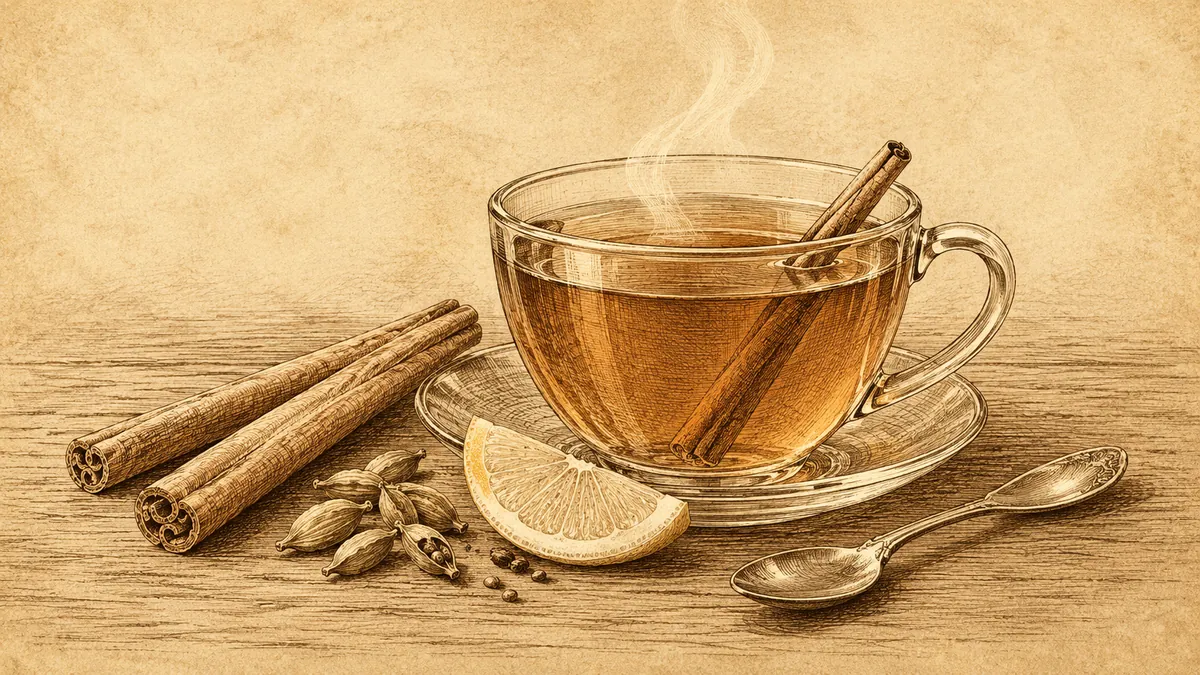
    The simplest cinnamon tea uses nothing but water and a piece of quill. Break off a short length of a Ceylon cinnamon stick, around two to three centimetres, and simmer it in a cup of water for five to ten minutes. The longer it simmers, the deeper the flavour. Remove the stick, and the tea is ready. You can add a little honey or a slice of lemon if you like, and the same stick can usually be simmered a second time for a lighter cup.

    Ground Ceylon cinnamon also works, though it leaves a fine sediment. If you use powder, a small pinch stirred into hot water is enough, and letting it settle before drinking gives a smoother cup.

    Adding cinnamon to black tea

    A short Ceylon cinnamon stick dropped into the pot while black tea brews gives a lightly spiced cup. The cinnamon infuses alongside the tea leaves, so you get the tea’s own character with a soft, warm edge. This works well with strong black teas, including a Ceylon tea from Sri Lanka, where the spice and the tea share an origin. Leave the stick in for the brewing time, then pour as usual.

    For a stronger cinnamon note, simmer the stick in the water first for a few minutes, then use that water to brew the tea. For how cinnamon behaves in a hot drink more generally, our guide to Ceylon cinnamon in coffee covers similar methods.

    Cinnamon in chai and spiced tea

    Ceylon cinnamon is a classic part of a spiced tea or chai, where it sits alongside cardamom, cloves, ginger and black pepper. To make a simple spiced tea, simmer a short cinnamon stick with a few cardamom pods and a little ginger in water and milk, then add black tea and sweeten to taste. The cinnamon gives the blend its warm, sweet backbone without dominating the other spices.

    Because true cinnamon is gentle, you can use a slightly larger piece in a spiced milk tea than you would in a plain water infusion, since the milk and other spices carry stronger flavours. A whole short stick per pot is a good starting point.

    Iced cinnamon tea

    Cinnamon also works in cold tea. Brew a cinnamon tea or a spiced black tea as above, let it cool, then chill it and serve over ice. The spice flavour holds up well when cold, giving a fragrant iced tea. A cinnamon stick left in the jug as it chills deepens the flavour, and a slice of orange or lemon suits the cold version nicely.

    A simple spiced cinnamon tea, step by step

    If you want a method to follow, this makes one mug of lightly spiced cinnamon tea. Put a cup of water and a short Ceylon cinnamon stick into a small pan, bring it to a gentle simmer, and let it bubble softly for about five minutes so the cinnamon can infuse. Add two cardamom pods and a thin slice of ginger if you want a fuller spiced cup, and simmer for another two minutes. Add your black tea, either a tea bag or a teaspoon of loose leaf, and let it steep for two to three minutes off the heat. Pour through a strainer, add a splash of milk and a little honey if you like, and lift out the cinnamon stick to save for next time. The result is a warm, fragrant cup where the cinnamon supports the tea rather than hiding it.

    Flavours that pair well with cinnamon tea

    Ceylon cinnamon sits happily beside many tea-friendly flavours. Citrus, such as a slice of orange or lemon, lifts a plain cinnamon tea and suits the iced version. Honey rounds out the sweetness, while cardamom, cloves, ginger and nutmeg build a fuller spiced blend. A little vanilla or a few peppercorns can add depth to a milky cup. Because true cinnamon is gentle, it rarely clashes, so it is an easy spice to build a tea around.

    Stick or powder: which to use in tea

    FormBest forNotes
    Ceylon cinnamon stickPlain cinnamon tea, chai, iced teaClean cup, no grit, can be reused
    Ground Ceylon cinnamonQuick single cupsLeaves fine sediment, let it settle
    Cinnamon tea bagConvenienceCheck the label names Ceylon, not cassia

    How much to use

    A little Ceylon cinnamon goes a long way in tea, so it is best to start small and adjust. For a single cup of plain cinnamon tea, a two to three centimetre piece of stick is plenty. For a pot of spiced tea or chai, a whole short stick works well alongside the other spices. If you prefer a stronger cinnamon flavour, simmer the stick for longer rather than adding more, since a long, gentle infusion draws out flavour without any bitterness. Whole sticks are easy to lift out, which gives you control over how strong the cup becomes.

    If you are buying cinnamon specifically for tea, thin, brittle Ceylon quills are ideal because they infuse quickly and cleanly. For choosing the right form and grade, our guide on how to use cinnamon sticks in cooking covers the same whole-stick methods that suit tea.

    Frequently asked questions

    How do you make Ceylon cinnamon tea?

    Simmer a short piece of a Ceylon cinnamon quill, around two to three centimetres, in a cup of water for five to ten minutes, then remove the stick. Add honey or lemon if you like. For a spiced version, simmer the cinnamon with cardamom and ginger, then add black tea and milk.

    Can you put a cinnamon stick in tea?

    Yes. A short Ceylon cinnamon stick dropped into the pot while tea brews gives a lightly spiced cup, and it can be lifted out when the flavour is right. Whole sticks give a cleaner cup than powder, with no sediment, and they can often be reused once.

    Is Ceylon cinnamon better than cassia for tea?

    Ceylon cinnamon is milder and sweeter, so it flavours tea gently without a sharp or bitter edge, which many people prefer in a hot drink. Cassia is stronger and hotter. Both can be used in tea, so the choice comes down to how bold a cinnamon flavour you want.

    Can you reuse a cinnamon stick for tea?

    Yes. A Ceylon cinnamon stick can usually be simmered a second time for a lighter cup, since the first use does not draw out all the flavour. Rinse and dry it between uses, and replace it once it stops giving much aroma.

    Summary

    Ceylon cinnamon is an easy and flexible way to flavour tea. The simplest method is to simmer a short piece of a true cinnamon quill, Cinnamomum verum, in water, or to drop a stick into black tea, chai or a milky tea as it brews. Its mild, sweet character blends into the cup gently rather than overpowering it, it works hot or iced, and a whole stick can often be reused. Starting with a small piece and simmering longer for a stronger flavour gives the best control over the final cup.

    This website provides educational information about Ceylon Cinnamon as a spice and food ingredient. It is not intended to provide medical advice or make health claims.

  • Cinnamon in Traditional Sri Lankan Sweets

    Cinnamon in Traditional Sri Lankan Sweets

    Cinnamon has a quiet but important place in traditional Sri Lankan sweets. True Ceylon cinnamon, Cinnamomum verum, grows on the island itself, so its warm, sweet, delicate flavour has long been woven into festive treats and everyday sweets, from the steamed coconut custard watalappan to syrupy cakes, milk toffees and spiced doughs. It is usually one of several spices, adding gentle warmth rather than dominating, and it appears especially at New Year and other celebrations.

    Sri Lanka is the home of true cinnamon, so it is no surprise that the spice turns up in the island’s sweets. This guide looks, in plain and flavourful terms, at how cinnamon is used in traditional Sri Lankan sweets and which treats it appears in. It builds on our pillar guide to the culinary uses of Ceylon cinnamon.

    The short answer

    In traditional Sri Lankan sweets, Ceylon cinnamon is used as a warming background spice, most famously in watalappan, and also in festive sweets such as kavum, aluwa, dodol and milk toffee, usually alongside cardamom, cloves and nutmeg. Because true cinnamon is mild and sweet rather than sharp, it blends into the coconut, jaggery and treacle that form the base of many Sri Lankan sweets, lifting them with a soft, fragrant warmth. It is used in both stick and ground form, and is a familiar part of the island’s festive table.

    Why cinnamon suits Sri Lankan sweets

    True Ceylon cinnamon is well matched to sweet dishes because its flavour is gentle and sweet, with little of the harsh, hot edge of cassia. This lets it add warmth to a dessert without overpowering the coconut, palm sugar and spices around it. Sri Lankan sweets often rest on jaggery or kithul treacle, both made from palm sap, and on coconut in its many forms, and cinnamon’s mellow sweetness sits naturally with these. Grown on the island, it has always been close at hand, so cooks have folded it into their sweets for generations alongside cardamom, cloves and nutmeg.

    Watalappan: the classic spiced sweet

    If one Sri Lankan sweet shows off warming spice, it is watalappan, a rich steamed custard made from coconut milk, eggs and jaggery or kithul treacle, flavoured with spices. Cinnamon, together with cardamom and sometimes nutmeg and cloves, gives watalappan its fragrant, mellow warmth, balancing the deep caramel sweetness of the palm sugar. Often served at celebrations and especially associated with festive meals, watalappan is perhaps the dish where cinnamon’s role in Sri Lankan sweets is most clearly tasted. It shows how the spice works in the island’s cooking: not as the star, but as part of a warm, rounded blend.

    Festive sweets and New Year treats

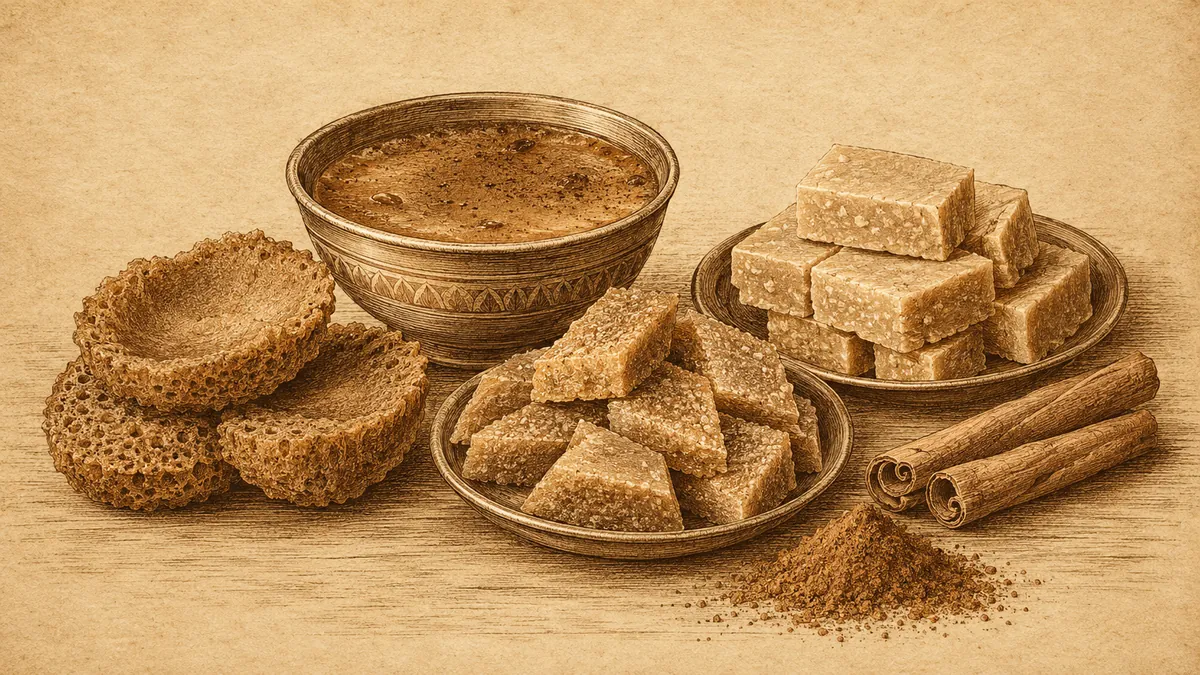
    Many traditional Sri Lankan sweets appear at the Sinhala and Tamil New Year and other celebrations, and cinnamon often has a place among them. Oil cakes such as kavum, made from rice flour and treacle, and sweets like aluwa, a rice-flour and sugar sweet, are commonly spiced, with cinnamon adding to their warmth. Dodol, a dense, dark sweet of coconut milk, jaggery and rice flour, is slow-cooked with spices that can include cinnamon. Milk toffee, a popular homemade sweet of condensed milk and sugar, is sometimes scented with cinnamon too. The spice is rarely the headline, but it is part of the familiar festive flavour. For more on these occasions, see our guide to cinnamon in Sri Lankan festivals and celebrations.

    Some traditional sweets that use cinnamon

    Traditional Sri Lankan sweets in which cinnamon is often used.
    SweetWhat it is
    WatalappanSteamed coconut and jaggery custard, spiced
    KavumTraditional oil cake of rice flour and treacle
    AluwaRice-flour and sugar sweet, often spiced
    DodolDense coconut, jaggery and rice-flour sweet
    Milk toffeeCondensed-milk fudge, sometimes cinnamon-scented

    Other sweets and tea-time treats

    Beyond the best-known festive sweets, cinnamon finds its way into many everyday Sri Lankan treats. Aggala, little balls of roasted rice flour, treacle and spice, can carry a hint of cinnamon, as can kalu dodol, a very dark, rich version of dodol. Spiced plantain or banana fritters, coconut cakes and various rice-flour sweets may be scented with it, and cinnamon often appears in the sweet milk rice and treacle dishes shared at celebrations. At tea time, where Sri Lanka’s love of tea meets its love of sweets, a warm, lightly spiced cake or biscuit may owe part of its fragrance to cinnamon. In many homes a piece of cinnamon bark is also dropped into the pot when making tea or a spiced milk drink, so the same gentle warmth that flavours the sweets carries over into what is served beside them. None of this is fixed by rule; each family and region has its own habits, but the thread running through them is the soft, sweet warmth that true Ceylon cinnamon brings.

    How cinnamon is used in the kitchen

    In Sri Lankan sweet-making, cinnamon is used in both its forms. A piece of a quill may be simmered in coconut milk, syrup or treacle to infuse its flavour gently before the stick is removed, which is common in custards and slow-cooked sweets. Ground cinnamon is stirred into doughs, batters and mixtures where its flavour should spread evenly, such as in cakes and toffees. Often it is combined with other warm spices, especially cardamom and cloves, in small amounts, so that no single spice stands out. Because true Ceylon cinnamon is mild, cooks can use a little more freely than they might with the stronger cassia. A gentle hand is still the rule, though, since the aim in most Sri Lankan sweets is a rounded, fragrant warmth rather than a single bold spice note, and the cinnamon is meant to sit in harmony with the coconut and palm sugar. Fresh, good-quality cinnamon makes a real difference here, as its aroma is strongest when the bark is not too old, which is one reason home cooks often keep whole quills and grind or break them as needed. For general guidance on cooking with the spice, see our guide to how to use cinnamon sticks in cooking.

    Cinnamon as part of a wider tradition

    Cinnamon in Sri Lankan sweets is one thread of a much older relationship between the island and its spices. Cinnamon has been grown, traded and used in Sri Lankan homes for centuries, so its presence in the sweet kitchen is part of a deep culinary heritage rather than a modern addition. The same warm spices that flavour the sweets also appear in savoury cooking and in daily life, which is why the scent of cinnamon, cardamom and cloves is so closely tied to Sri Lankan food. To read more of this wider story, see our guide to traditional uses of cinnamon in Sri Lankan culture.

    Frequently asked questions

    What Sri Lankan sweets use cinnamon?

    Cinnamon appears in many traditional Sri Lankan sweets, most famously watalappan, the spiced coconut and jaggery custard. It is also used in festive sweets such as kavum, aluwa and dodol, and sometimes in milk toffee, usually alongside cardamom, cloves and nutmeg.

    Is cinnamon a strong flavour in Sri Lankan desserts?

    Usually not. True Ceylon cinnamon is mild and sweet, so in Sri Lankan sweets it adds gentle background warmth rather than a strong flavour. It is typically used with other spices and blends into the coconut, jaggery and treacle, lifting the dessert without dominating it.

    What is watalappan flavoured with?

    Watalappan is a steamed custard of coconut milk, eggs and jaggery or kithul treacle, flavoured with warm spices. Cinnamon is a common part of the blend, along with cardamom and often nutmeg and cloves, which give the custard its fragrant, mellow warmth.

    Do Sri Lankan sweets use cinnamon sticks or powder?

    Both. A piece of cinnamon quill is often simmered in coconut milk, syrup or treacle to infuse its flavour and then removed, while ground cinnamon is stirred into doughs, batters and toffees where it should spread evenly through the mixture.

    Summary

    Cinnamon has long been part of traditional Sri Lankan sweets, a natural fit on the island that is home to true cinnamon, Cinnamomum verum. Its mild, sweet warmth blends into the coconut, jaggery and kithul treacle at the heart of the island’s desserts, so it lifts rather than dominates. It shines most clearly in watalappan, the spiced steamed custard, and appears in festive sweets such as kavum, aluwa, dodol and milk toffee, usually alongside cardamom, cloves and nutmeg. Cooks use it in both stick and ground form, simmering quills to infuse syrups and stirring powder into doughs and batters. More than a single ingredient, cinnamon in Sri Lankan sweets reflects a long culinary heritage, in which the island’s own spices give its food a warm, fragrant character all its own.

    This website provides educational information about Ceylon Cinnamon as a spice and food ingredient. It is not intended to provide medical advice or make health claims.
  • Ceylon Cinnamon in Coffee: A How-To

    Ceylon Cinnamon in Coffee: A How-To

    Adding Ceylon cinnamon to coffee is easy and gives a warm, sweet, aromatic flavour without any sugar. The simplest ways are to stir a little ground Ceylon cinnamon into your coffee grounds before brewing, sprinkle it over the top of a finished cup, or drop a whole cinnamon stick into the pot or mug to infuse. Because true Ceylon cinnamon is mild and sweet, it blends smoothly into coffee, adding gentle spice and a lovely aroma to hot or iced drinks.

    Cinnamon and coffee are a natural pairing, and true Ceylon cinnamon makes the combination especially smooth. This guide shows how to use Ceylon cinnamon in coffee, step by step. It builds on our pillar guide to the culinary uses of Ceylon cinnamon.

    The short answer

    Add Ceylon cinnamon to coffee by stirring ground cinnamon into the grounds before brewing, dusting it over a finished cup, or steeping a whole cinnamon stick in the coffee. A little goes a long way, and Ceylon cinnamon’s gentle sweetness means it flavours coffee without overpowering it. You can use it in hot brews, iced coffee and milky drinks alike.

    Why Ceylon cinnamon suits coffee

    Ceylon cinnamon is the mild, sweet, delicate true cinnamon from Sri Lanka, and this softer character is exactly what makes it work so well in coffee. Where a sharp, pungent cassia can dominate a cup, Ceylon cinnamon adds warmth and fragrance while letting the coffee itself shine through. Its gentle sweetness can also make a cup taste a touch sweeter without any added sugar. This same refined flavour is what makes Ceylon cinnamon so prized in the kitchen generally, as our guide to using cinnamon sticks in cooking explains.

    Three easy ways to add cinnamon to coffee

    There are three simple methods, each suited to a slightly different situation.

    Stir it into the grounds before brewing

    For an even, well-infused flavour, add a small amount of ground Ceylon cinnamon directly to your coffee grounds before brewing, whether in a filter, cafetiere or drip machine. Around a quarter to half a teaspoon per couple of cups is a good starting point. The cinnamon brews along with the coffee, giving a smooth, integrated taste throughout the pot.

    Sprinkle it over a finished cup

    The quickest method is simply to dust a little ground cinnamon over the top of a made coffee, especially one with foam or milk that helps hold the powder. This is perfect for a single cup and lets each person add as much or as little as they like. A light sprinkle over a latte or cappuccino adds both flavour and an attractive finish.

    Steep a whole cinnamon stick

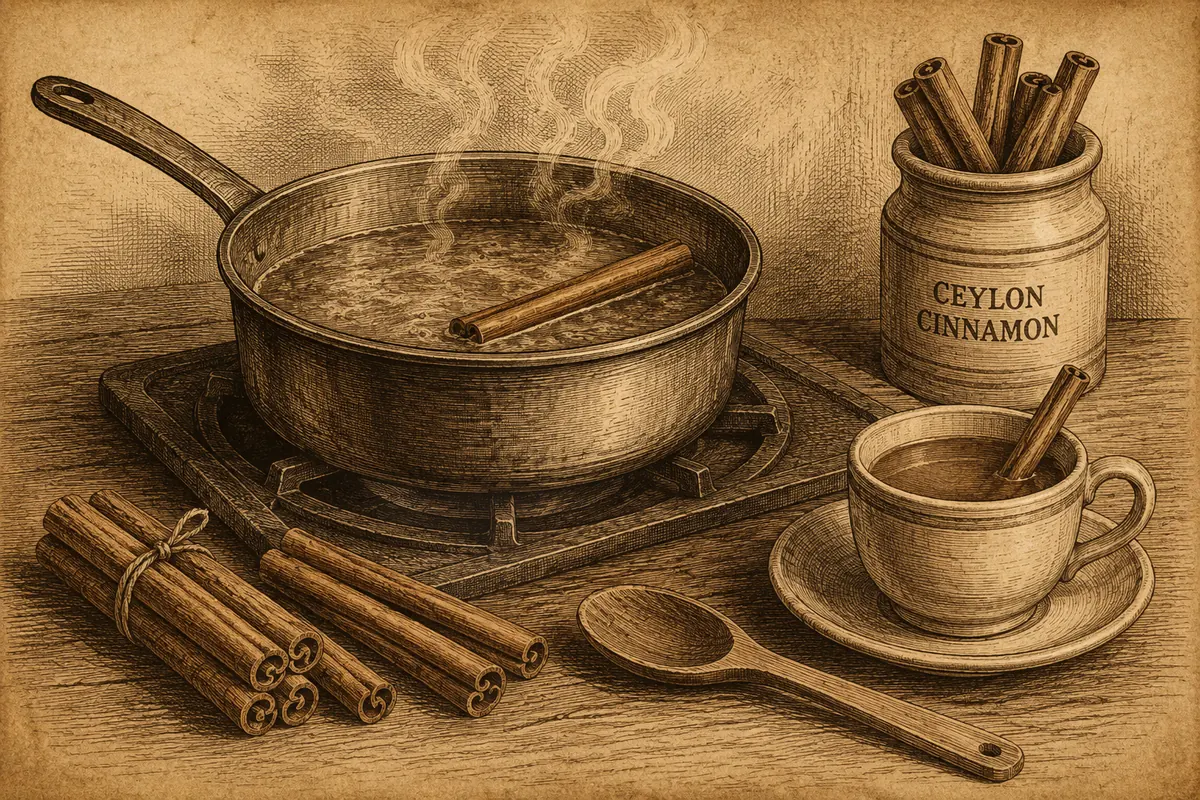
    For a gentle, clean infusion with no powder in the cup, drop a whole Ceylon cinnamon quill into the coffee pot, cafetiere or even your mug and let it steep while the coffee brews or sits. The stick slowly releases its warm flavour and can be lifted out before drinking. This is a lovely, tidy way to flavour a whole pot, and it makes good use of the long-lasting whole quills discussed in our guide to buying cinnamon sticks versus powder.

    How much cinnamon to use at a glance

    Simple guide to adding Ceylon cinnamon to coffee.
    MethodRough amountBest for
    In the grounds1/4 to 1/2 tsp per 2 cupsEven flavour through a pot
    Sprinkled on topA light dustingSingle cups, lattes
    Whole stick steeped1 quill per pot or mugClean infusion, no powder

    Ceylon cinnamon in iced and cold coffee

    Cinnamon is not just for hot coffee. It works beautifully in iced coffee and cold brew too. For cold brew, add a whole Ceylon cinnamon stick to the coffee and water as it steeps in the fridge, and the slow, cold infusion draws out a smooth, mellow cinnamon flavour over several hours. For a quick iced coffee, stir a little ground cinnamon into the coffee while it is still warm so it dissolves evenly, then chill and pour over ice. Either way, the warm spice pairs surprisingly well with a cold, refreshing drink.

    Cinnamon in milky coffee drinks

    Some of the best-loved ways to enjoy cinnamon in coffee involve milk. A dusting of Ceylon cinnamon over the foam of a latte or cappuccino is a classic, adding aroma with every sip. You can also warm a cinnamon stick gently in the milk before frothing it, letting the spice infuse into the milk for a deeper flavour. Cinnamon works well alongside other warm flavours too, so a pinch in a mocha or a spiced milky coffee adds a comforting, festive note. Its gentle sweetness makes these drinks feel indulgent without extra sugar.

    Tips for the best flavour

    A few simple habits help you get the most from cinnamon in coffee. Use freshly ground or good-quality ground Ceylon cinnamon, since fresher cinnamon has a stronger, sweeter aroma, a point covered in our guide to what gives Ceylon cinnamon its aroma. Start with a small amount and add more to taste, as it is easy to add and impossible to remove. If you dislike finding powder at the bottom of the cup, favour the whole-stick method or stir the powder in very well. And make sure you are using true Ceylon cinnamon rather than cassia, so the flavour stays smooth and sweet rather than sharp.

    Pairing cinnamon coffee with other flavours

    Once you are happy with plain cinnamon coffee, it is easy to build on it. Ceylon cinnamon sits comfortably alongside other warm flavours, so a small amount of vanilla, a little nutmeg, a pinch of cardamom or a touch of cocoa can turn a simple cinnamon coffee into something richer and more interesting. A cinnamon and vanilla latte, or a lightly spiced coffee reminiscent of a chai, are easy variations to try. The key is restraint: let the coffee and the cinnamon lead, and add other spices only in small pinches so the cup stays balanced rather than crowded. This gentle layering is one of the pleasures of cooking with a mild, adaptable spice like true Ceylon cinnamon.

    Getting a smooth cup without clumps

    One small challenge with ground cinnamon in coffee is that it can float or clump rather than dissolving fully, since it is a bark and not a soluble powder. There are easy ways around this. Stirring the cinnamon into the dry grounds before brewing spreads it evenly and avoids clumps in the cup. If you are adding it to a finished coffee, mix it into a little warm milk or a splash of the hot coffee first to make a smooth paste, then stir that in. And when you want a perfectly clear cup with no sediment at all, the whole-stick steeping method is the answer. A little care here gives you all the flavour and aroma of cinnamon with none of the gritty texture.

    A simple Ceylon cinnamon coffee to try

    To bring it all together, here is an easy approach for a fragrant cup. Add about a quarter teaspoon of ground Ceylon cinnamon to your coffee grounds and brew as normal. Pour into your cup, add milk if you like, and finish with a light dusting of cinnamon over the top. For a treat, warm the milk with a small piece of cinnamon stick first, then froth it. The result is a naturally sweet, aromatic coffee with a gentle warmth that suits any time of day. From here you can adjust the amount and method to build your own perfect cinnamon coffee.

    Frequently asked questions

    How do you add cinnamon to coffee?

    There are three easy ways. Stir ground Ceylon cinnamon into the coffee grounds before brewing for even flavour, sprinkle it over a finished cup for a quick option, or steep a whole cinnamon stick in the coffee for a clean infusion with no powder. Start with a small amount and adjust to taste.

    How much cinnamon should I put in coffee?

    A little goes a long way. Around a quarter to half a teaspoon of ground Ceylon cinnamon per couple of cups, or one whole stick per pot, is a good starting point. Ceylon cinnamon is mild and sweet, so you can add more to taste if you like a stronger flavour.

    Is Ceylon cinnamon good in coffee?

    Yes. Ceylon cinnamon’s mild, sweet, delicate flavour blends smoothly into coffee, adding warmth and aroma without overpowering the coffee itself. Its gentle sweetness can also make a cup taste slightly sweeter without any added sugar, which many people enjoy.

    Can I use a cinnamon stick in coffee?

    Yes. Dropping a whole Ceylon cinnamon quill into the pot, cafetiere or mug lets it steep and release its flavour, and you can lift it out before drinking. This gives a clean, gentle infusion with no powder in the cup, and works for hot coffee and cold brew alike.

    Summary

    Adding Ceylon cinnamon to coffee is a simple way to bring warmth, sweetness and aroma to your cup without any sugar. Stir ground cinnamon into the grounds before brewing for an even flavour, sprinkle it over a finished cup for speed, or steep a whole cinnamon stick for a clean infusion. It works in hot coffee, iced coffee, cold brew and milky drinks alike, and true Ceylon cinnamon’s mild, sweet character makes the pairing especially smooth. Start with a little, use good-quality Ceylon cinnamon, and adjust to build the perfect cinnamon coffee for your taste.

    This website provides educational information about Ceylon Cinnamon as a spice and food ingredient. It is not intended to provide medical advice or make health claims.
  • How to Use Cinnamon Sticks in Cooking

    How to Use Cinnamon Sticks in Cooking

    Cinnamon sticks, also called quills, are whole rolls of dried Ceylon cinnamon bark that release a gentle, sweet warmth slowly as they cook. To use them, drop a stick straight into simmering curries, rice, stews, syrups, mulled drinks or poaching liquid, let it infuse, then lift it out before serving. Unlike ground cinnamon, a whole stick flavours a dish without adding texture or clouding it, which makes it a favourite for slow-cooked and liquid dishes.

    This guide covers how to get the most from Ceylon cinnamon sticks in everyday cooking: which dishes suit them, how many to use, how long to infuse, and how to store and reuse them. It pairs with our pillar guide on the culinary uses of Ceylon cinnamon.

    What is a cinnamon stick?

    A cinnamon stick is a quill of dried inner bark rolled into a tube. True Ceylon cinnamon sticks are pale, thin and made of many soft layers rolled together, so they crumble easily and have a delicate, sweet flavour. They are used whole to flavour a dish from the inside out, then removed. To learn more about the sticks themselves, see our full guide to cinnamon sticks.

    Why cook with whole sticks instead of powder?

    Whole cinnamon sticks give a cleaner, gentler flavour and leave no gritty texture, while releasing their aroma slowly over a long cook. Ground cinnamon is quicker and stronger but can turn a sauce cloudy and settle at the bottom. Sticks are ideal when you want a smooth liquid, a slow infusion, or a subtle background warmth. Powder is better when you want an instant, even hit of flavour, as in baking. Many kitchens keep both, choosing by the dish.

    How to use cinnamon sticks in cooking

    In curries and savoury dishes

    Add a whole stick to the pan early, when you fry the onions and spices, so its flavour has time to spread through the dish. It works beautifully in slow-cooked curries, tagines, biryanis and braises, giving a soft, sweet warmth that balances chilli and salt. Fish it out before serving, or simply push it to the side of the plate.

    In rice and grains

    Drop a stick into the pot when cooking rice, pilau or pilaf. As the rice absorbs the water, it takes on a light, fragrant warmth. This is a classic use in Sri Lankan and South Asian cooking, where a piece of cinnamon quill sits alongside cardamom and cloves in the pot.

    In drinks

    Cinnamon sticks are made for warm drinks. Simmer one in tea, mulled wine, hot cider, spiced coffee or warm milk, and it releases a sweet, comforting aroma. A single stick can flavour a whole pot, and it can often be reused once or twice. Stir a drink with a stick to add a light hint of cinnamon at the table.

    In syrups and poaching liquid

    To make a cinnamon syrup, simmer a stick with sugar and water, then lift it out. Use the syrup in drinks, over pancakes or in desserts. A stick added to the liquid for poaching pears, apples or other fruit infuses the fruit with a gentle spice as it cooks.

    In desserts and baked goods

    For custards, rice pudding, compotes and stewed fruit, a whole stick infused into the warm liquid gives a clean cinnamon flavour without specks. For baking such as cakes and cookies, ground cinnamon is usually easier, since a stick cannot be mixed evenly into a batter. Our guide on Ceylon cinnamon in baking covers those uses in detail.

    How many cinnamon sticks should you use?

    As a rough guide, one stick of about 7 to 8 centimetres flavours a dish for four to six people or a pot of drink. Because Ceylon cinnamon is delicate, you can add a little more without it turning harsh, but it is easy to start with one stick, taste, and add another if you want a stronger flavour. For a long, slow cook, one stick is often plenty, as the flavour builds over time.

    Whole sticks vs ground cinnamon at a glance

    When to reach for a cinnamon stick and when to use ground cinnamon.
    UseCinnamon stickGround cinnamon
    Curries and stewsBest, infuses slowlyWorks, can cloud sauce
    Rice and grainsBest, clean flavourLess common
    Warm drinksBest, reusableCan leave sediment
    Syrups and poachingBest, easy to removeHarder to strain
    Cakes and cookiesNot suitableBest, mixes evenly
    SpeedSlow infusionInstant flavour

    How long to infuse a cinnamon stick

    The longer a stick sits in hot liquid, the more flavour it gives. In a quick drink, ten to fifteen minutes of gentle simmering draws out a good amount of aroma. In a slow-cooked curry or stew, the stick can stay in for the whole cook, an hour or more, building a deeper warmth. Taste as you go, and remove the stick once the flavour is where you want it, since leaving it in indefinitely will not harm the dish but adds little after a point.

    Can you reuse cinnamon sticks?

    Yes. A cinnamon stick still holds flavour after one use, especially if it was only simmered in a drink. Rinse it, let it dry fully, and store it in an airtight jar. It will be milder the second time, so it suits another pot of tea or a gentle infusion rather than a dish that needs a strong cinnamon note. Once a stick has lost its smell, it is spent.

    How to store cinnamon sticks

    Keep cinnamon sticks whole in an airtight container, away from heat, light and moisture. Stored this way they hold their aroma far longer than ground cinnamon, often for a couple of years. Grinding or breaking them only when needed keeps the flavour fresh. For the full method, see our guide on how to store Ceylon cinnamon properly.

    A simple way to start

    If you are new to cooking with whole sticks, begin with a pot of spiced tea: simmer one Ceylon cinnamon stick in water or milk for ten minutes, add tea and a little sweetness, and taste the difference from powder. From there, try a stick in your next rice pot or curry. The clean, sweet warmth of true Ceylon cinnamon is easy to fall for. To understand why Ceylon is prized for this gentle flavour, see our guide to what true Ceylon cinnamon is.

    Removing and serving

    Because a cinnamon stick stays firm and woody even after a long cook, it is always taken out rather than eaten. In a pot dish, simply lift it out with a spoon before serving, or leave it in and warn diners to set it aside on the plate. In a drink, the stick can stay in the cup or jug as an attractive garnish, and it doubles as a stirrer that adds a little more flavour with each swirl. Whole sticks are easy to spot and remove, which is one of their advantages over powder in a smooth sauce or clear broth.

    Getting whole spices to bloom

    A useful trick is to warm the stick briefly in a little oil or dry in the pan before adding liquid. This gentle heat helps release the aromatic oils in the bark, so the cinnamon flavour spreads more fully through the dish. Take care not to scorch it, as burnt spice turns bitter. A few seconds of warmth alongside your other whole spices, such as cardamom pods and cloves, is enough to wake up the aroma before the rest of the cooking begins.

    Frequently asked questions

    Do you leave the cinnamon stick in while cooking?

    Yes. Add the whole stick at the start so it infuses the dish as it cooks, then lift it out before serving. It is not eaten whole; it is used only to flavour the food and liquid around it.

    Can you eat a whole cinnamon stick?

    Cinnamon sticks are not meant to be eaten whole, as they stay woody and firm even after cooking. They are used to flavour a dish and then removed. If you want the cinnamon in the food itself, use ground cinnamon instead.

    How many times can you reuse a cinnamon stick?

    Usually once or twice, mainly for drinks or gentle infusions. Rinse and dry the stick between uses. Each time it gives a little less flavour, and once it no longer smells of cinnamon it should be replaced.

    Are Ceylon cinnamon sticks better for cooking than cassia sticks?

    Ceylon cinnamon sticks have a milder, sweeter, more delicate flavour and thin, soft, layered bark that is easy to break. Cassia sticks are harder and stronger. For subtle dishes and drinks, many cooks prefer the gentler taste of Ceylon.

    Summary

    Cinnamon sticks are whole quills of dried bark that you add to a dish to infuse a gentle, sweet warmth, then remove before serving. They shine in curries, rice, stews, warm drinks, syrups and poached fruit, where their clean flavour and lack of grit beat ground cinnamon. One stick usually flavours a dish for four to six people, and it can often be rinsed, dried and reused once or twice. Stored whole in an airtight jar, Ceylon cinnamon sticks keep their aroma for a long time, making them a simple and rewarding way to cook with true cinnamon.

    This website provides educational information about Ceylon Cinnamon as a spice and food ingredient. It is not intended to provide medical advice or make health claims.

  • How to Use Ceylon Cinnamon in Baking

    How to Use Ceylon Cinnamon in Baking

    Ceylon cinnamon is prized in baking for its delicate, sweet, mildly citrusy flavour, which blends smoothly into cakes, breads, pastries and biscuits without the harsh bite of cassia. Because true Ceylon cinnamon (Cinnamomum verum) is finer and less overpowering, you can often use it a little more generously, letting its warm aroma lift a bake rather than dominate it.

    This guide walks through how to get the best from Ceylon cinnamon in the kitchen: when to use powder versus quills, how to add it at the right moment, which classic bakes it suits, and simple habits that keep its flavour fresh. For the wider view of cooking with this spice, see our pillar guide on the culinary uses of Ceylon cinnamon.

    Why use Ceylon cinnamon in baking?

    Ceylon cinnamon suits baking because its flavour is gentle, sweet and complex rather than sharp and hot. Cassia, the cinnamon most people know from supermarket shelves, is stronger and more pungent, which can overwhelm subtle bakes. Ceylon cinnamon’s softer profile lets it sit in harmony with butter, vanilla, fruit and sugar, adding warmth and fragrance without taking over. This is one reason many bakers who try true Ceylon cinnamon find their cakes and pastries taste rounder and more refined. The differences between the two are explained in our guide to Ceylon cinnamon vs cassia.

    Powder or quills: which to use in baking?

    Both forms have a place in the baker’s kitchen, and choosing well makes a real difference.

    Ground cinnamon for even flavour

    For most baking, ground Ceylon cinnamon is the natural choice. It disperses evenly through batters, doughs and fillings, so every bite carries the same gentle warmth. Powder is ideal for cakes, cookies, muffins, cinnamon rolls and spiced breads, where you want the flavour woven throughout.

    Whole quills for infusing

    Whole quills shine when you want to infuse a liquid rather than season a batter. Simmering a quill in milk, cream, syrup or a fruit compote draws out the aroma slowly and cleanly, which you can then use as the base of a custard, rice pudding, poached fruit or a soaking syrup. Grinding your own powder from fresh quills also gives a brighter flavour than pre-ground cinnamon that has sat for months. The distinctions between forms and grades are covered in our complete guide to Ceylon cinnamon grades.

    When to add cinnamon in a recipe

    Timing affects how the flavour comes through in the finished bake.

    Mixed into dry ingredients

    For cakes, biscuits and breads, the simplest approach is to whisk ground cinnamon into the flour and other dry ingredients before combining with the wet. This ensures it is evenly distributed and avoids clumping.

    Blended into fillings and swirls

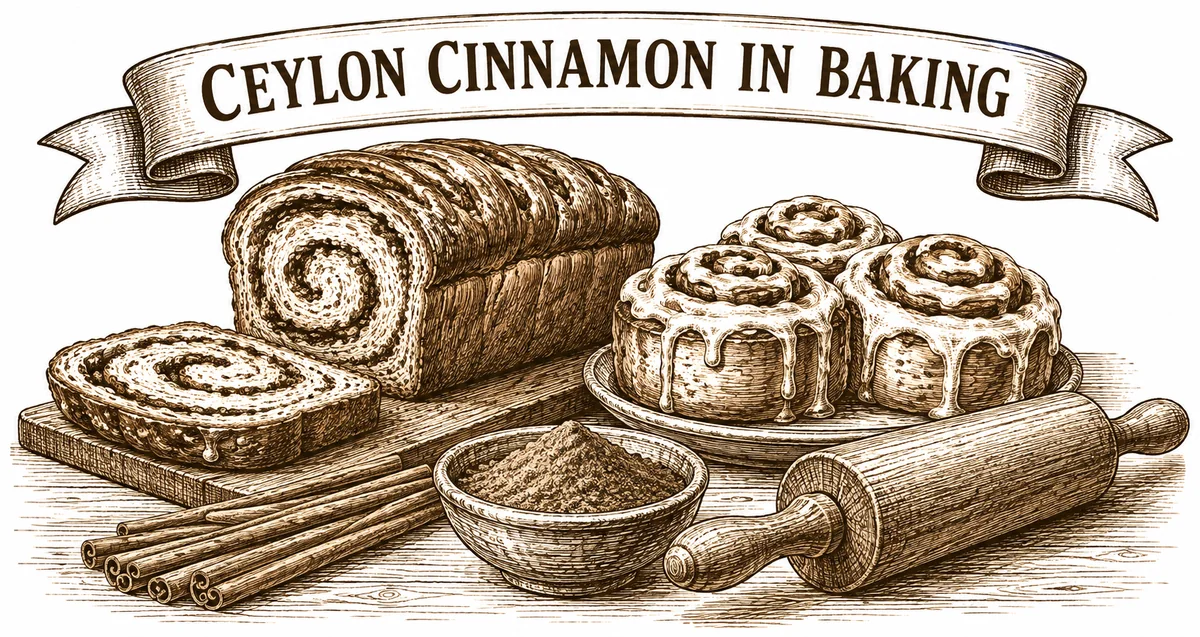
    For cinnamon rolls, swirl breads and pastries, cinnamon is usually mixed with sugar and sometimes butter to form a filling or paste that is spread and rolled through the dough. Here a slightly more generous hand works well, because the cinnamon is concentrated in ribbons rather than spread through the whole crumb.

    Infused into liquids first

    For custards, syrups and puddings, add a quill to the warming liquid and let it steep, then remove it before finishing the recipe. This gives a smooth, even cinnamon note without any powdery texture.

    How much Ceylon cinnamon to use

    Because Ceylon cinnamon is milder than cassia, you can generally be a little more generous, though taste always guides the amount. A rough starting point for a standard cake or batch of cookies is around one to two teaspoons of ground Ceylon cinnamon, adjusted up or down to preference. It is easy to add more next time, so when trying a new recipe it is sensible to start moderate, taste the batter where safe to do so, and build up. The gentle flavour means Ceylon cinnamon rewards experimentation without the risk of a single spoonful overpowering the whole bake.

    Classic bakes that suit Ceylon cinnamon

    Ceylon cinnamon flatters a wide range of baked goods.

    Popular bakes and how Ceylon cinnamon is typically used in each.
    BakeHow cinnamon is used
    Cinnamon rollsMixed with sugar and butter as a swirl filling
    Spiced cakes and loavesWhisked into the dry ingredients
    Cookies and biscuitsBlended into the dough; dusted on top
    Fruit pies and crumblesTossed with the fruit and sugar
    Custards and rice puddingsInfused as a whole quill in the milk

    Cinnamon also pairs beautifully with common baking partners such as vanilla, nutmeg, cardamom, apple, pear, chocolate and citrus, so it slots naturally into festive and everyday recipes alike.

    Cinnamon and sugar: a baking staple

    One of the simplest and most useful preparations is cinnamon sugar: ground Ceylon cinnamon stirred into caster or granulated sugar. It can be sprinkled over buns, toast, doughnuts, pastries and cookies before or after baking, or folded into swirl fillings. Because Ceylon cinnamon is so fragrant, a homemade cinnamon sugar using fresh, good-quality cinnamon tastes noticeably livelier than a jar that has been open for a long time. Making a small batch as you need it keeps the aroma at its best.

    Getting the freshest flavour

    The flavour of any cinnamon fades over time as its aromatic oils gradually escape. To keep bakes tasting their best, store Ceylon cinnamon in an airtight container away from heat, light and moisture, and buy in amounts you will use within a reasonable period. Whole quills keep their flavour longer than powder, so grinding small quantities as needed is a good habit for keen bakers. If a jar of ground cinnamon has lost its punch, you may simply need to use a little more, or replace it. Good storage is part of buying well, a theme covered in our Ceylon cinnamon buying guide.

    A few simple tips for better results

    Small adjustments can noticeably improve how cinnamon comes through in your baking. Whisking the powder thoroughly into dry ingredients prevents streaks and clumps. Toasting whole quills briefly before grinding can deepen their aroma. Tasting fillings and batters where it is safe to do so lets you fine-tune the amount to your liking. And choosing genuine Ceylon cinnamon in the first place sets the ceiling on flavour, which is why it helps to know how to identify authentic Ceylon cinnamon before you bake.

    Summary

    Ceylon cinnamon is a baker’s friend because its sweet, delicate, complex flavour improves cakes, cookies, breads, pastries and puddings without overpowering them. Use ground cinnamon for even flavour through batters and doughs, and whole quills for infusing milk, syrups and custards. Whisk powder into dry ingredients, build cinnamon-sugar fillings for swirls, and infuse quills into warming liquids for smooth results. Because it is milder than cassia, you can often be a little more generous, adjusting to taste. Keep it fresh with airtight storage, grind small amounts from quills when you can, and start with authentic Ceylon cinnamon to give every bake the finest possible warmth and aroma.

    Frequently asked questions

    Is Ceylon cinnamon good for baking?

    Yes. Its delicate, sweet and complex flavour blends smoothly into cakes, breads, cookies and pastries without the harsh, hot bite of cassia, making it especially suited to subtle bakes.

    How much Ceylon cinnamon should I use in a cake?

    A common starting point is around one to two teaspoons of ground Ceylon cinnamon for a standard cake, adjusted to taste. Because it is milder than cassia, you can often use a little more without it becoming overpowering.

    Should I use cinnamon powder or sticks for baking?

    Use ground cinnamon for even flavour through batters, doughs and fillings, and whole quills for infusing liquids such as milk, cream or syrup. Grinding your own powder from fresh quills gives a brighter taste.

    When should I add cinnamon in a baking recipe?

    Whisk ground cinnamon into the dry ingredients for even distribution, blend it with sugar and butter for swirl fillings, or infuse a whole quill into warming liquids for custards and puddings, removing it before finishing.

    This website provides educational information about Ceylon Cinnamon as a spice and food ingredient. It is not intended to provide medical advice or make health claims.

  • Culinary Uses of Ceylon Cinnamon

    Culinary Uses of Ceylon Cinnamon

    Ceylon cinnamon is used in sweet and savoury cooking alike, in baking, hot and cold drinks, curries, rice dishes, desserts and spice blends. Its delicate, sweet flavour makes it especially good where a subtle warmth is wanted rather than a fiery punch. Use whole quills to infuse liquids and freshly ground powder to flavour bakes, and pair it with spices like cardamom, clove and vanilla.

    Because true cinnamon is milder and more fragrant than cassia, it behaves a little differently in the kitchen, it flatters delicate dishes instead of overpowering them. This guide covers the best ways to use it, from everyday ideas to world cuisines. For the flavour background, see what is true Ceylon cinnamon.

    Whole quills vs ground cinnamon

    Choosing the right form makes a real difference:

    • Whole quills release flavour slowly, making them perfect for infusing liquids, simmered into curries, rice, mulled drinks, syrups, poaching liquids and stocks, then removed before serving.
    • Ground cinnamon disperses quickly and evenly, which suits baking and dusting over foods. For the best aroma, grind quills fresh; Ceylon’s brittle bark grinds easily. Grade tips are in our grades guide.

    Ceylon cinnamon in baking

    Baking is where many people first fall for cinnamon. Ceylon’s gentle sweetness shines in cinnamon rolls, buns, banana and apple breads, cakes, cookies, biscuits, crumbles and pastries. Because it is milder than cassia, you can often use a little more to get a rounded cinnamon flavour without harshness. Combine it with sugar for a classic cinnamon-sugar topping, or fold it into fruit fillings for pies and baked apples.

    Beverages: tea, coffee and more

    A single Ceylon quill transforms a drink. Try it:

    • Simmered in tea or steeped in a pot for a fragrant spiced brew.
    • As a stirrer or ground pinch in coffee, lattes and hot chocolate.
    • In mulled wine and cider, where it infuses warmth without bitterness.
    • In chai and spiced milk, alongside cardamom, ginger and clove.
    • Infused into cinnamon water or cold brews for a subtle aromatic drink.

    Savoury cooking and curries

    In Sri Lankan and South Indian kitchens, cinnamon is as much a savoury spice as a sweet one. A short length of quill is added whole to curries, rice dishes and pilaus, where it perfumes the dish as it cooks. It works beautifully in slow-cooked stews and braises, meat marinades and rubs, and in spice blends such as garam masala and Sri Lankan curry powder. Its subtlety means it supports the other spices rather than shouting over them.

    Desserts and sweets

    Ceylon cinnamon is ideal for delicate desserts where cassia would be too harsh: rice pudding, custards, poached pears, baked apples, ice cream, milk puddings and traditional Sri Lankan sweets. It has a natural affinity with dairy and with soft fruits, adding warmth and depth to creamy, gentle dishes.

    Best flavour pairings

    Cinnamon rarely works alone. It pairs especially well with:

    • Cardamom, clove and nutmeg, the classic warm-spice family.
    • Vanilla and honey, for rounded sweetness.
    • Ginger and star anise, for chai and mulled drinks.
    • Apple, pear, banana and citrus, natural fruit partners.
    • Chocolate and coffee, for depth in desserts and drinks.

    Around the world

    Cinnamon appears across global cuisines: in Middle Eastern rice and meat dishes, Moroccan tagines, Indian and Sri Lankan curries and chai, Mexican drinks and baking, and European festive baking and mulled drinks. Reaching for delicate Ceylon cinnamon in these dishes gives an authentic, refined warmth, particularly in cuisines that use cinnamon in savoury contexts, where its subtlety is an advantage.

    Simple everyday ideas

    • Stir a pinch into porridge, oatmeal, yoghurt or granola.
    • Dust over buttered toast, pancakes or French toast.
    • Blend into smoothies with banana and milk.
    • Add a quill to the pot when cooking rice.
    • Make a quick cinnamon syrup for drinks and desserts.

    A note on storage

    To keep its aroma, store cinnamon in an airtight container away from heat, light and moisture. Whole quills last considerably longer than powder, so grind small amounts as you need them. Good storage means every dish gets the full fragrance, the same freshness principles covered in our buying guide.

    How to infuse with whole quills

    Infusing is the simplest way to use Ceylon cinnamon and shows off its subtlety. Drop a short length of quill into the liquid at the start of cooking, a curry, a pot of rice, a syrup, a pan of mulled wine or a poaching liquid for fruit, and let it release its aroma gently as the dish simmers. Remove the quill before serving. Because true cinnamon is mild, it infuses cleanly without the harshness cassia can lend to long-cooked dishes. A single quill can often be rinsed, dried and reused once or twice while it still holds fragrance.

    Substitution and quantities

    As a rough guide, one 7, 8 cm Ceylon quill yields close to a teaspoon of ground cinnamon. When a recipe was written with cassia in mind, remember that Ceylon is milder: you can comfortably use a little more to reach a full cinnamon flavour. Conversely, if substituting cassia where Ceylon is specified, start with less and taste, since cassia is considerably stronger. Add ground cinnamon toward the end of cooking or in the mix for baking, as prolonged high heat can dull its aroma.

    Common mistakes to avoid

    • Using stale powder, ground cinnamon fades fast; grind quills fresh for the best results.
    • Expecting a cassia “punch”, Ceylon is meant to be subtle; season to taste rather than by habit.
    • Boiling powder for too long, add it later to preserve fragrance.
    • Storing near heat or light, this shortens its useful life; keep it airtight and cool.

    Building cinnamon into your routine

    The easiest way to enjoy true cinnamon is to make it a small daily habit: a quill in the rice pot, a pinch in your coffee or porridge, a dusting over fruit. Because it is gentle, it rewards frequent, everyday use rather than occasional heavy-handed additions. Pair it thoughtfully with the spices and ingredients above, and it will quietly improve a huge range of dishes.

    Cinnamon in world cuisines, in brief

    Part of what makes cinnamon so rewarding is how differently cultures use it. In Sri Lankan and South Indian cooking it seasons savoury curries and rice; in the Middle East it flavours meat, rice and pastries; in Morocco it perfumes tagines and couscous; in Mexico it appears in drinks, moles and sweet breads; and across Europe and North America it defines festive baking and mulled drinks. Reaching for delicate Ceylon cinnamon in these dishes gives an authentic, refined warmth, especially in the many savoury traditions where its subtlety keeps it from overwhelming the other ingredients.

    Simple things to make this week

    If you are not sure where to start, a few easy preparations show off Ceylon cinnamon beautifully. Make a quick cinnamon syrup by simmering a quill with equal parts sugar and water, then use it in coffee, over pancakes or in cocktails. Brew a pot of spiced tea by steeping a quill with black tea and a little ginger. Warm milk with a quill and a touch of honey for a comforting cinnamon-infused milk. Or bake cinnamon-sugar straws from spare pastry. Each takes minutes and highlights the spice’s gentle, fragrant warmth.

    Cooking tips for the best flavour

    A few habits get the most from true cinnamon. Add whole quills early so they have time to infuse, but stir ground cinnamon in later, since long high heat can flatten its aroma. Toast a quill briefly in a dry pan before using it in savoury dishes to deepen its fragrance. Grind only what you need, keeping the rest as whole quills for freshness. And taste as you go: because Ceylon is milder than cassia, the right amount is often a little more than a cassia-based recipe suggests. These small adjustments, combined with good storage, keep every dish fragrant and balanced.

    Summary

    Ceylon cinnamon is a wonderfully versatile spice for both sweet and savoury cooking. Use whole quills to infuse drinks, curries, rice and syrups, and freshly ground powder for baking and dusting. Its delicate sweetness suits everything from cinnamon rolls and rice pudding to fragrant curries and mulled wine, and it pairs naturally with cardamom, clove, vanilla and fruit. Milder than cassia, it improves a dish without dominating it, which is exactly why cooks who value finesse keep true cinnamon in the kitchen.

    Frequently asked questions

    Can I use Ceylon cinnamon in both sweet and savoury dishes?

    Yes. It is excellent in baking and desserts and equally at home in curries, rice, stews and spice blends, where its subtle warmth supports other flavours.

    Should I use cinnamon sticks or powder for cooking?

    Use whole quills to infuse liquids like curries, drinks and syrups, and ground cinnamon for baking and dusting. Grinding quills fresh gives the best aroma.

    How much Ceylon cinnamon should I use?

    Because it is milder than cassia, you can often use a little more to achieve a full flavour. Start modestly and adjust to taste.

    What spices pair well with Ceylon cinnamon?

    Cardamom, clove, nutmeg, ginger, star anise, vanilla and honey, plus fruits like apple and pear and flavours like chocolate and coffee.

    This website provides educational information about Ceylon Cinnamon as a spice and food ingredient. It is not intended to provide medical advice or make health claims.