Tag: Cinnamon quality

  • ISO Standards and Cinnamon Quality

    ISO Standards and Cinnamon Quality

    ISO standards are international rules that set out what cinnamon should be and how its quality is measured, so that buyers and sellers around the world share the same definitions. For true cinnamon, the key standard is ISO 6539, which specifies the requirements for cinnamon from Cinnamomum verum (also written Cinnamomum zeylanicum) in its various forms. These standards cover things like the species, the forms the bark is sold in, and quality factors such as moisture and volatile oil content.

    Standards sound dry, but they are part of what keeps the global cinnamon trade honest and consistent. This guide explains, in plain terms, what ISO standards are, how they apply to cinnamon, and what quality factors they look at. It builds on our pillar guide to Ceylon cinnamon grades.

    The short answer

    ISO standards for cinnamon are international specifications, chiefly ISO 6539, that define what true cinnamon is and set measurable quality requirements for it. ISO stands for the International Organization for Standardization, a body that publishes agreed technical standards used worldwide. For cinnamon, these standards name the botanical species, describe the forms the spice is traded in, such as quills and ground powder, and lay out quality factors like moisture, volatile oil, ash and foreign matter. They give the whole trade a shared language for quality.

    What ISO is

    ISO, the International Organization for Standardization, is an independent, international body that brings together experts to agree on technical standards for products, materials and methods. An ISO standard is a published document that sets out requirements or guidelines, so that a product made or tested in one country can be understood and trusted in another. For food and spices, ISO standards help define what a product is and how to test it, which supports fair trade and consistent quality across borders. They are voluntary in themselves, but are widely referenced in contracts, national rules and quality systems, so in practice they carry real weight in how spices are bought and sold around the world.

    ISO 6539: the standard for true cinnamon

    The main ISO standard for true cinnamon is ISO 6539. It specifies requirements for cinnamon obtained from Cinnamomum verum, the species also known as Cinnamomum zeylanicum, which is the botanical source of Ceylon cinnamon. The standard describes the different commercial forms of the bark, including quills, quillings, featherings, chips and ground cinnamon, and sets out the characteristics each should have. In doing so, it ties the name cinnamon, in this standard, firmly to the true cinnamon species rather than to the cassia types. This is why ISO 6539 matters for anyone interested in authentic Ceylon cinnamon: it is an international reference point for what the genuine article is.

    What quality factors the standards look at

    ISO standards for cinnamon do not just name the species. They also set out measurable quality factors that a sample should meet. These typically include the moisture content, the volatile oil content, which relates to the aroma and flavour strength, the total ash and acid-insoluble ash, which reflect mineral matter and any gritty contamination, and limits on foreign matter such as stalks or extraneous material. For ground cinnamon, fineness and the absence of added colouring or starch may also be considered. Together these factors give a rounded picture of quality that goes beyond simply how the cinnamon looks.

    Typical quality factors covered by ISO standards for cinnamon.
    FactorWhat it tells you
    SpeciesConfirms it is true cinnamon, Cinnamomum verum
    Moisture contentHow much water is present, which affects keeping quality
    Volatile oil contentRelates to the strength of aroma and flavour
    Total and acid-insoluble ashReflects mineral matter and any gritty contamination
    Foreign matterLimits on stalks, dust and extraneous material

    How cinnamon is tested against the standards

    Checking cinnamon against an ISO specification is done in a laboratory, using agreed test methods. Moisture is usually measured by carefully drying a sample and weighing the loss, while volatile oil content is found by distilling the ground cinnamon and measuring the oil collected. Ash is determined by burning a sample and weighing the mineral residue that remains, and foreign matter is assessed by careful inspection and separation. Because these methods are standardised, a laboratory in one country should reach much the same result as a laboratory in another, which is the whole point of having a shared standard. For exporters, passing these tests is often a condition of sale, so the standards shape quality well before the cinnamon reaches a shop shelf. This testing is separate from the visual grading of the quills, though both contribute to the overall judgement of quality.

    How ISO standards relate to grades

    ISO standards and the grading system work together but are not the same thing. The grades, such as Alba, Continental and the numbered quill grades, describe the physical quality of the quills, mainly their thickness, neatness and appearance. ISO standards sit alongside this, defining the species and setting broader quality and testing requirements. A quill can be graded by its appearance and also tested against an ISO specification for factors like moisture and volatile oil. In practice, exporters and buyers often use both: the grade to describe the look and class of the cinnamon, and the standard to confirm it meets agreed quality and authenticity requirements. You can read more about the appearance side in our pillar guide to Ceylon cinnamon grades.

    ISO and national standards together

    ISO standards do not replace national ones; they work with them. In Sri Lanka, for example, the national SLS standard sets out requirements for Ceylon cinnamon, and there is a certification mark for pure Ceylon cinnamon, while ISO provides the international layer. The different standards broadly agree on the essentials, that true cinnamon is Cinnamomum verum and that quality is judged on factors like moisture, oil and cleanliness. For the story of the Sri Lankan standard, see our guide to the SLS standard for Ceylon cinnamon, and for a broader look at quality rules, our guide to Ceylon cinnamon quality standards.

    Why standards matter for buyers

    For everyday buyers, ISO standards work quietly in the background. You are unlikely to test your own cinnamon against ISO 6539, but the standard shapes what reputable suppliers sell. When a supplier states that their cinnamon meets a recognised standard, it is a sign that the product has been defined and tested against agreed requirements, rather than simply labelled cinnamon and sold. Combined with checking the species and origin on the label, an awareness of standards helps you understand that quality cinnamon is backed by real, measurable requirements. It is one more reason that true Ceylon cinnamon, grown and processed to meet these standards, is regarded as a premium spice.

    Frequently asked questions

    What is the ISO standard for cinnamon?

    The main ISO standard for true cinnamon is ISO 6539, which specifies requirements for cinnamon from Cinnamomum verum (also called Cinnamomum zeylanicum). It describes the commercial forms, such as quills and ground cinnamon, and sets quality factors like moisture and volatile oil content.

    Does ISO 6539 cover Ceylon cinnamon?

    Yes. ISO 6539 covers cinnamon from Cinnamomum verum, which is the species that Ceylon cinnamon comes from. The standard defines this true cinnamon and its forms, which is why it is the key international reference for authentic Ceylon cinnamon.

    What quality factors do ISO cinnamon standards measure?

    They typically cover the species, moisture content, volatile oil content, total and acid-insoluble ash, and limits on foreign matter. For ground cinnamon, fineness and the absence of added colouring or starch may also be considered. Together these define quality beyond appearance.

    Are ISO standards the same as cinnamon grades?

    No. Grades such as Alba and Continental describe the physical appearance and class of the quills, mainly thickness and neatness. ISO standards define the species and set broader quality and testing requirements. The two are used together to describe and confirm quality.

    Summary

    ISO standards are international specifications that give the cinnamon trade a shared definition of what cinnamon is and how its quality is measured. The key one for true cinnamon is ISO 6539, which specifies requirements for cinnamon from Cinnamomum verum, also known as Cinnamomum zeylanicum, and describes its forms, from quills to ground powder. These standards look at quality factors such as moisture, volatile oil, ash and foreign matter, giving a fuller picture than appearance alone. They work alongside the grading system, which describes how the quills look, and alongside national standards such as Sri Lanka’s SLS. For buyers, the value of standards is that they sit behind reputable suppliers, so quality Ceylon cinnamon is backed by agreed, measurable requirements rather than just a label.

    This website provides educational information about Ceylon Cinnamon as a spice and food ingredient. It is not intended to provide medical advice or make health claims.

  • Where to Buy Authentic Ceylon Cinnamon

    Where to Buy Authentic Ceylon Cinnamon

    The safest places to buy authentic Ceylon cinnamon (Cinnamomum verum) are specialist spice merchants, reputable online sellers that clearly state the species and Sri Lankan origin, and shops that sell whole quills you can inspect. Wherever you buy, the single most reliable rule is the same: look for the words Cinnamomum verum and an origin of Sri Lanka on the label, and treat anything simply sold as “cinnamon” with caution.

    This guide is not about pointing you to one shop. It is about teaching you how to recognise a trustworthy source anywhere in the world, so you can buy genuine Ceylon cinnamon with confidence rather than accidentally ending up with cheaper cassia. For the wider picture of choosing well, see our pillar guide, the Ceylon cinnamon buying guide.

    Where can you buy authentic Ceylon cinnamon?

    Ceylon cinnamon is sold through several kinds of outlets, each with strengths and trade-offs. Knowing what to expect from each helps you shop wisely.

    Specialist spice shops

    Dedicated spice merchants are often the best starting point. They tend to know their products, label species and origin clearly, and stock genuine Ceylon cinnamon rather than generic “cinnamon”. Because spices are their whole business, they are more likely to be able to answer questions about grade, harvest and source.

    Reputable online retailers

    Buying online opens up a much wider choice, including sellers who ship directly from Sri Lanka. The trade-off is that you cannot handle the product before buying, so you must rely on the listing. Favour sellers who state Cinnamomum verum, name Sri Lanka as the origin, show clear photographs of thin, layered quills, and describe the grade. Vague listings that only say “cinnamon” are best avoided.

    Supermarkets and general grocers

    Mainstream supermarkets usually sell cassia under the plain name “cinnamon”, though some now carry a clearly labelled Ceylon line as well. If you shop here, read the label carefully: the presence of the botanical name and a Sri Lankan origin is what separates true Ceylon cinnamon from the cassia sitting beside it. The reasons these two are so often confused are explained in our guide to Ceylon cinnamon vs cassia.

    Farmers’ markets and direct trade

    Some markets, delis and direct-trade sellers offer Ceylon cinnamon sourced from specific growers. These can be excellent, especially when the seller can tell you where the spice comes from. As always, confirm the species and origin rather than relying on the word “authentic” alone.

    What to look for in any seller

    Regardless of where you shop, the same signals separate a trustworthy source from a doubtful one.

    The botanical name is stated

    A reliable seller of true cinnamon will proudly display Cinnamomum verum (sometimes written Cinnamomum zeylanicum). If the species is missing and the product is simply “cinnamon”, assume it may be cassia until proven otherwise.

    The origin is Sri Lanka

    Genuine Ceylon cinnamon comes overwhelmingly from Sri Lanka. A clear country of origin, paired with the correct species, is a strong sign of authenticity. The farming tradition behind that origin is described in our guide to Sri Lankan cinnamon farming.

    Whole quills you can inspect

    Where possible, buy whole quills rather than powder, because their structure is hard to fake. True Ceylon quills are thin, pale and made of many soft layers rolled together, in contrast to the hard single curl of cassia. Being able to see or photograph the quills gives you a way to verify quality yourself, using the checks in our guide to how to spot fake Ceylon cinnamon.

    Transparent grade information

    Good sellers describe the grade of their cinnamon, from the delicate Alba to coarser grades, rather than leaving it unspecified. Understanding what these grades mean helps you judge whether the price is fair, as set out in our complete guide to Ceylon cinnamon grades.

    Whole quills or ground powder: which to buy

    Where you buy is closely tied to what form you buy. Each has its place.

    Choosing between whole quills and ground cinnamon when buying.
    FormBest forThings to watch
    Whole quillsVerifying authenticity; longer shelf lifeNeeds grinding for some recipes
    Ground powderConvenience and everyday bakingHarder to verify; can be adulterated

    Because ground cinnamon hides the tell-tale layered structure, it is easier to pass off cassia or fillers as Ceylon powder. If you are buying powder, it matters even more that the seller is reputable and that the label names the species and origin.

    Buying Ceylon cinnamon online safely

    Online is where most people now shop, so it deserves a closer look. Before you buy, check that the listing names Cinnamomum verum and Sri Lanka, shows real photographs rather than generic stock images, describes the grade, and comes from a seller with a track record of honest descriptions. Be wary of listings where the price is far lower than comparable Ceylon cinnamon, as unusually cheap “Ceylon” is a classic warning sign that the product may actually be cassia. When a listing is vague, ask the seller directly about species and origin before ordering.

    Why price is part of the picture

    True Ceylon cinnamon is more labour-intensive to harvest and hand-peel than cassia, so it almost always costs more. A realistic, somewhat higher price is normal and even reassuring; a suspiciously low price on something labelled “Ceylon” is a reason to look more closely. That said, a high price alone does not guarantee authenticity, so always combine the price signal with the species, origin and structural checks. The relationship between cost and quality is covered further in our Ceylon cinnamon buying guide.

    Questions worth asking before you buy

    Whether you are standing at a market stall or reading an online listing, a few simple questions quickly reveal how trustworthy a source is. Ask what the species is and expect to hear Cinnamomum verum. Ask where it is from and expect Sri Lanka. Ask about the grade and expect a specific answer rather than a shrug. A seller who can answer these clearly and consistently is far more likely to be product the real thing than one who deals only in the vague word “cinnamon”.

    Avoiding the most common mistakes

    Most disappointments come from a handful of avoidable errors. Buying purely on the word “cinnamon” without checking the species is the biggest one, because that word covers both true cinnamon and cassia. Assuming that “organic” or “premium” automatically means Ceylon is another, since those terms say nothing about the botanical species. Finally, chasing the lowest possible price often leads straight to cassia. Slowing down to read the label and verify the source is what separates a confident purchase from a lucky guess, and it builds naturally on knowing how to identify authentic Ceylon cinnamon.

    Summary

    You can buy authentic Ceylon cinnamon from specialist spice shops, reputable online sellers, some supermarkets, and direct-trade markets, but the outlet matters less than the checks you apply. Everywhere, the decisive signals are the same: the label names Cinnamomum verum, the origin is Sri Lanka, whole quills are thin and layered, the grade is stated, and the price is realistic rather than suspiciously cheap. Favour whole quills when you can, be extra careful with powder, ask sellers direct questions about species and origin, and don’t let words like “premium” or “organic” stand in for proof of authenticity. Apply these habits and you can shop with confidence wherever you are.

    Frequently asked questions

    Where is the best place to buy Ceylon cinnamon?

    Specialist spice merchants and reputable online sellers that clearly state Cinnamomum verum and a Sri Lankan origin are usually the most reliable. Being able to see whole quills, in person or in clear photos, is a further advantage.

    Can you buy real Ceylon cinnamon in supermarkets?

    Sometimes. Most supermarket “cinnamon” is cassia, but some stores now stock a clearly labelled Ceylon line. Check for the botanical name and a Sri Lankan origin to tell the two apart on the shelf.

    Is it safe to buy Ceylon cinnamon online?

    Yes, if you choose carefully. Favour listings that name Cinnamomum verum and Sri Lanka, show genuine photos of thin layered quills, describe the grade, and come from sellers with honest descriptions. Treat unusually cheap “Ceylon” cinnamon with caution.

    How do I know a seller’s Ceylon cinnamon is genuine?

    Ask about the species, origin and grade. A trustworthy seller will confirm Cinnamomum verum, name Sri Lanka, and give a specific grade. Whole quills you can inspect provide extra reassurance.

    This website provides educational information about Ceylon Cinnamon as a spice and food ingredient. It is not intended to provide medical advice or make health claims.

  • Ceylon Cinnamon Buying Guide

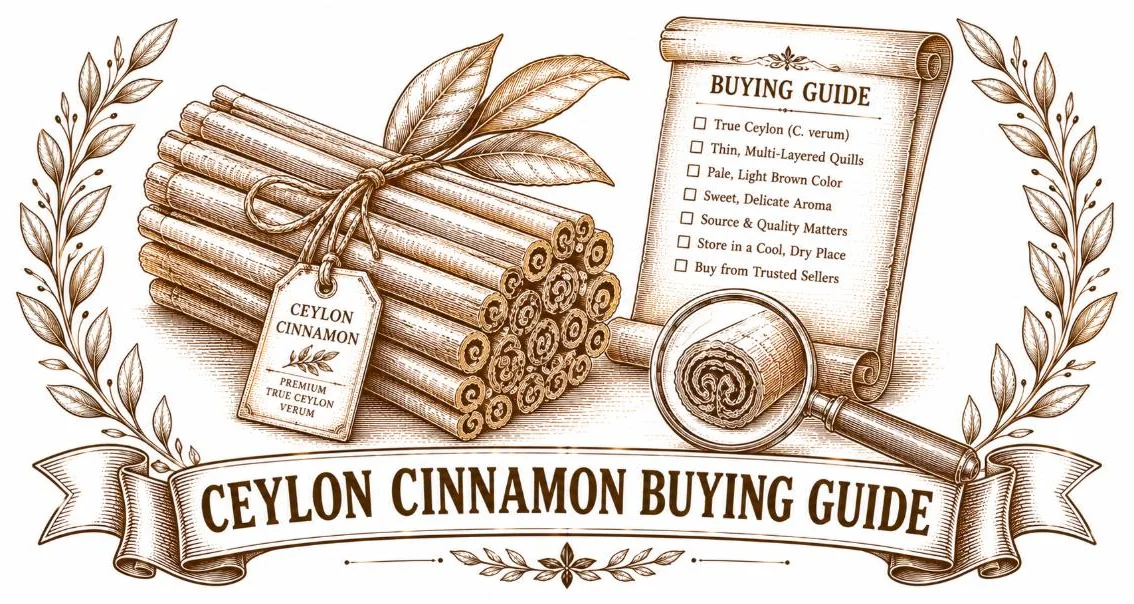
    Ceylon Cinnamon Buying Guide

    To buy good Ceylon cinnamon, look for a label naming Cinnamomum verum and Sri Lanka, choose whole quills over powder where you can, match the grade to your use and budget, and buy from a source that is transparent about origin. Whole Alba and Continental quills suit delicate cooking and gifting; thicker grades and quillings are great value for everyday use. This guide walks you through every decision.

    Buying true cinnamon can be confusing when so much cassia is sold simply as “cinnamon.” This practical guide helps you shop with confidence, what to check, sticks versus powder, which grade to pick, how to judge value, and the questions worth asking. If you are new to the spice, begin with what is true Ceylon cinnamon.

    1. Check the label first

    The single most important step is reading the label. Genuine Ceylon cinnamon should clearly indicate Cinnamomum verum (or the older synonym Cinnamomum zeylanicum), and ideally state “Ceylon cinnamon” or “true cinnamon” with Sri Lanka as the origin. If a product only says “cinnamon” with no species or country, treat it as cassia. Remember that “organic” and “premium” describe farming and marketing, not the species, see our identification guide for the full checks.

    2. Sticks (quills) or powder?

    Both have their place:

    • Whole quills keep their aroma far longer, can be inspected for authenticity, and are ideal for infusing drinks, curries and syrups. You can also grind them fresh as needed.
    • Powder is convenient for baking and dusting but loses fragrance faster and cannot be checked by eye, so buy it only from a trusted, clearly labelled source and in modest quantities.

    For most people, keeping whole quills and grinding small amounts gives the best flavour and confidence.

    3. Choose the right grade

    Grade is about quill thickness and finesse, not authenticity, all grades are genuine Ceylon cinnamon. Match it to the job:

    Matching grade to use and budget.
    GradeBest forValue
    Alba / C5 SpecialGifting, delicate desserts, drinksPremium
    Continental (C5 / C4)All-round premium cooking and bakingExcellent balance
    Mexican / HamburgEveryday baking, mulling, simmeringGreat value
    Quillings / featheringsGrinding your own powder, infusionsMost economical

    The full breakdown is in our complete guide to Ceylon cinnamon grades.

    4. Judge quality signs

    Good Ceylon cinnamon looks and smells alive: pale, evenly coloured quills with tight, neat rolls, few cracks, and a sweet, fragrant aroma. Dull, musty or oddly uniform-smelling products may be old or poorly stored. Freshness matters more than most shoppers realise, because aromatic oils fade over time, especially in powder.

    5. Understand price and value

    Ceylon cinnamon costs more than cassia because it is grown in a limited region and processed by hand, as explained in how Ceylon cinnamon is made. That premium is normal. Be wary of two extremes: prices far below typical Ceylon rates (often a sign it is really cassia), and premiums far above the norm that are not justified by grade or quality. Compare on a per-weight basis, and factor in that finer grades naturally cost more than thicker ones.

    6. Buy from transparent sources

    The best sellers are open about species, grade and origin, and can tell you where their cinnamon comes from. Single-origin Sri Lankan cinnamon with clear grade labelling is a good sign. When buying online, read descriptions carefully, look for the botanical name, and be cautious of listings that lean on vague health language rather than clear product detail.

    7. How much should you buy?

    Because aroma fades, buy quantities you will use within several months to a year rather than stockpiling. Whole quills keep longer than powder, so if you want to buy a little more at once, choose quills and grind as needed. Proper storage in an airtight container away from heat and light will help preserve freshness.

    A simple buying checklist

    • Label names Cinnamomum verum and Sri Lanka ✔
    • Whole quills chosen where possible ✔
    • Grade matched to your use and budget ✔
    • Quills pale, tightly rolled and fragrant ✔
    • Price consistent with genuine Ceylon cinnamon ✔
    • Seller transparent about origin ✔

    Where to buy: shops vs online

    Both specialist shops and reputable online sellers can be excellent sources. In person, you can inspect the quills for the pale colour, tight multi-layered roll and fragrant aroma described in our identification guide. Online, you trade that hands-on check for wider choice and often better prices, so lean on clear labelling, grade information, origin details and good photographs. Buying direct from suppliers who specialise in Sri Lankan cinnamon is often the most transparent route of all.

    Certifications and claims explained

    Labels carry various marks, and it helps to know what they mean. Organic certification concerns how the plant was grown, not the species, organic cassia exists. Fair trade and similar schemes relate to how farmers are paid. A Geographical Indication reference points to genuine Sri Lankan origin. None of these replaces the botanical name: always confirm Cinnamomum verum as well. Treat marketing words like “premium,” “pure” and “natural” as descriptions, not guarantees of species.

    Storing what you buy

    Good buying is wasted without good storage. Keep cinnamon in an airtight container away from heat, light and moisture, and keep whole quills separate from powder since quills last far longer. Buying quills and grinding small amounts as needed is the best way to keep flavour at its peak, and it means a single purchase stays fragrant for many months, a habit that pays off across all the dishes in our culinary guide.

    Buying Ceylon cinnamon as a gift

    Because fine Alba and C5 Special quills are visually striking and genuinely special, Ceylon cinnamon makes an excellent gift for cooks and food lovers. Choose a high grade, presented in a clear container that shows off the pale, neatly rolled quills, and include a note on origin and use. A gift of true cinnamon is also a small education in the difference between real cinnamon and the everyday cassia most people know.

    Matching cinnamon to how you cook

    The right purchase depends on your kitchen. If you mostly bake and dust, a jar of good Ceylon powder from a trusted source plus a few whole quills to grind fresh will serve you well. If you cook curries, rice and drinks that call for infusing, prioritise whole quills in a versatile Continental grade. If you love gifting or delicate desserts, add some fine Alba. And if you get through a lot of cinnamon, thicker grades and quillings give great value for grinding your own. Thinking about how you actually cook, rather than simply buying the cheapest or the most premium option, is the surest way to end up with cinnamon you will use and enjoy.

    How much cinnamon do you really need?

    It is tempting to buy in bulk, but aroma fades over time, so the freshest results come from buying quantities you will use within several months to a year. For most households a modest bag of whole quills goes a long way, since each quill can flavour many dishes and can be ground fresh as needed. If you cook with cinnamon heavily, buying a slightly larger amount of whole quills, which keep far better than powder, is the sensible compromise between value and freshness. Store the surplus airtight and cool, and it will stay fragrant for a long time.

    Red flags to watch for

    • No species or origin named, “cinnamon” alone usually means cassia.
    • Prices far below typical Ceylon rates, often a sign it is cassia.
    • Heavy reliance on health claims instead of clear product detail.
    • Very dark, thick, hard sticks described as Ceylon, the physical signs say otherwise.
    • Vague “premium” or “pure” wording with no botanical name to back it up.

    Treat any of these as a prompt to look more closely or choose another supplier. When species, grade, origin and a fair price all line up, you can buy with confidence, and the checks in our identification guide will confirm the rest once the product is in your hands.

    Summary

    Buying Ceylon cinnamon well comes down to a few habits: read the label for Cinnamomum verum and Sri Lanka, favour whole quills for freshness and authenticity, choose a grade that fits your cooking and budget, look for pale, fragrant, neatly rolled sticks, and buy from sellers who are transparent about origin. Expect to pay a fair premium over cassia, but be sceptical of prices that seem too good to be true. With these checks, you can be confident you are getting genuine true cinnamon.

    Frequently asked questions

    Where should I buy Ceylon cinnamon?

    From sellers who clearly state the species (Cinnamomum verum), grade and Sri Lankan origin. Single-origin, well-labelled products are a good sign, whether in specialist shops or reputable online stores.

    Why is Ceylon cinnamon so expensive?

    It is grown in a limited region and hand-processed through skilled peeling and rolling, which is labour-intensive. That craft, plus its quality and low coumarin, is reflected in the price.

    Should I buy cinnamon sticks or powder?

    Whole quills keep their aroma longer and can be checked for authenticity, so they are usually the better buy. Use powder for convenience, from a trusted source, in small amounts.

    What grade of Ceylon cinnamon should a home cook buy?

    Continental grades (C5/C4) are excellent all-rounders. Choose Alba for delicate or special uses, and thicker grades or quillings for everyday cooking and grinding.

    This website provides educational information about Ceylon Cinnamon as a spice and food ingredient. It is not intended to provide medical advice or make health claims.