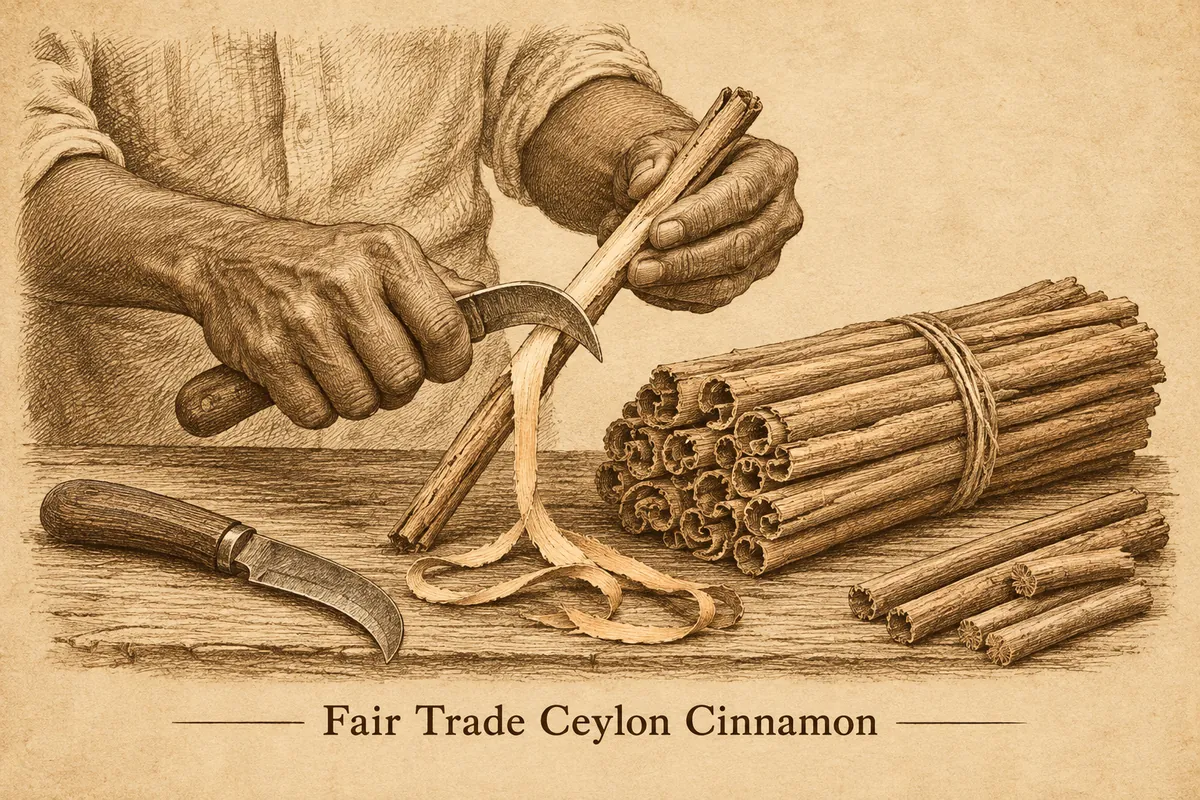
Fair trade in Ceylon cinnamon means the farmers and peelers who grow and prepare the spice are paid fairly and work in decent conditions, with a share of the value passed back down the supply chain. Because true Ceylon cinnamon depends on skilled hand peeling by rural families in Sri Lanka, fair and ethical sourcing matters a great deal. Buying cinnamon that is fairly traded or ethically sourced helps support the smallholder farmers and craftspeople behind this labour-intensive spice.
Behind every quill of Ceylon cinnamon is a chain of people, from the grower to the peeler to the exporter. This guide looks at what fair trade means for Ceylon cinnamon and why it matters. It builds on our pillar guide to Sri Lankan cinnamon farming.
The short answer
Fair trade and ethical sourcing in Ceylon cinnamon aim to make sure the farmers and peelers are paid fairly, work in safe and decent conditions, and receive a fairer share of the price the spice fetches. Ceylon cinnamon is made almost entirely by hand, so the people who do that skilled work are central. Supporting fair and ethical cinnamon helps sustain both the craft and the communities that keep it alive.
What fair trade means for cinnamon
Fair trade is a broad idea about making global trade more equitable for the people at the start of the supply chain. For a spice like cinnamon, that means several things: paying growers and workers a fair price for their crop and labour, supporting safe and decent working conditions, avoiding exploitative practices, and often investing in the wider community. Some cinnamon carries formal fair-trade or ethical certifications, while other producers follow the same principles without a specific label. Either way, the goal is the same: to see that the value of the spice is shared more fairly with those who produce it.
Why fair trade matters so much for Ceylon cinnamon
Ceylon cinnamon is unusually dependent on human skill and effort. Unlike crops that can be largely mechanised, true cinnamon is peeled by hand, with skilled workers lifting the thin inner bark from the shoots and rolling it into quills. This is demanding, specialised work, and the quality of the finished spice rests on it. Much of it is done by smallholder farming families and village peelers in Sri Lanka. Because so much value depends on this labour, how those people are treated and paid is central to whether the trade is fair. Our guide to traditional cinnamon peeling methods shows just how much craft is involved.
What fair trade aims to deliver at a glance
| Aim | What it means in practice |
|---|---|
| Fair prices | Growers and peelers paid fairly for crop and labour |
| Decent conditions | Safe, reasonable working conditions |
| No exploitation | Avoiding unfair or harmful labour practices |
| Community support | Investment back into farming communities |
| Transparency | Clearer, more traceable supply chains |
The people behind the spice
It is easy to forget, looking at a neat jar of cinnamon, how many hands it has passed through. A cinnamon farmer tends the trees and harvests the shoots; a skilled peeler carefully separates and rolls the bark; others sort, grade, dry and pack it before it is exported and sold around the world. Many of these are small family operations rather than large industrial farms. Fair trade is really about recognising this human chain and making sure the people in it, especially those doing the hardest and most skilled work, are treated and rewarded fairly. It connects the pleasure of using fine cinnamon with the wellbeing of the communities that produce it.
Fair trade, quality and sustainability
Fair and ethical sourcing tends to go hand in hand with quality and sustainability. When peelers are fairly paid and valued, the skill and care that produce fine quills are more likely to be preserved and passed on. When farming communities are supported, they are better able to look after their land for the long term. In this way, treating people fairly and producing excellent, sustainable cinnamon are not separate goals but closely linked ones. This is part of the bigger picture set out in our guide to sustainable Ceylon cinnamon.
How to support fair and ethical cinnamon
As a buyer, there are simple ways to lean towards fairer cinnamon.
Look for fair-trade or ethical labels
Some cinnamon carries fair-trade or ethical-sourcing certifications or statements. Where these are present and credible, they are a helpful sign that the supply chain has been considered.
Favour transparent sellers
Sellers who are open about where their cinnamon comes from, and who talk about the farmers and communities behind it, are often more engaged with fair and ethical practices. Clear origin information is a good sign, a theme in our Ceylon cinnamon buying guide.
Value true Ceylon cinnamon
Choosing genuine Ceylon cinnamon from Sri Lanka, rather than the cheapest cassia, supports the specialised craft and communities behind the true spice. Paying a fair price for a fairly made product is itself part of the picture.
Cooperatives and working together
One of the ways fair trade takes shape on the ground is through farmers and peelers working together rather than alone. When small producers join cooperatives or groups, they can pool their cinnamon, reach buyers more directly, and negotiate better, steadier prices than a single family could on its own. Working together can also make it easier to meet the quality and record-keeping expectations that ethical buyers look for, and to share the cost of training and equipment. For many smallholders, this kind of cooperation is a practical route to a fairer deal, helping the value of the cinnamon flow back to the people who grow and peel it rather than being lost along a long chain of middlemen. It is a quiet but important part of how fair and ethical cinnamon works in practice.
Why fairly traded cinnamon can cost more
Fairly traded and ethically sourced cinnamon sometimes costs a little more than the cheapest options, and there are good reasons for that. Paying growers and peelers fairly, maintaining decent conditions and investing in communities all have real costs, which are reflected in the price. Rather than seeing this as simply more expensive, it can help to see it as paying closer to the true cost of a spice made carefully by skilled people. For many buyers, knowing that a purchase supports fair treatment of the farmers and craftspeople behind the cinnamon is well worth a modest difference in price.
Fair trade and the future of Ceylon cinnamon
The long-term health of the Ceylon cinnamon industry depends on keeping the craft attractive to the next generation. If peeling and farming do not provide a fair, decent living, fewer people will take up the work, and centuries of skill could be lost. Fair trade and ethical sourcing help guard against this by making sure the people who produce cinnamon can earn a reasonable living from it. In this sense, buying fairly traded Ceylon cinnamon is not only a kindness in the present but an investment in the survival of a remarkable traditional craft.
Frequently asked questions
What does fair trade mean for Ceylon cinnamon?
It means the farmers and peelers who grow and prepare the cinnamon are paid fairly, work in decent conditions, and receive a fairer share of the value of the spice. Because Ceylon cinnamon is made largely by hand, fair treatment of these workers is central to whether the trade is fair.
Why is fair trade especially important for cinnamon?
Because true Ceylon cinnamon depends on skilled hand peeling by smallholder farmers and village craftspeople in Sri Lanka. So much of the spice’s value comes from this labour that how those people are paid and treated is at the heart of fair and ethical cinnamon.
How can I buy fairly traded cinnamon?
Look for credible fair-trade or ethical-sourcing labels, favour sellers who are transparent about where their cinnamon comes from and the communities behind it, and choose genuine Ceylon cinnamon from Sri Lanka rather than the cheapest cassia.
Why does fairly traded cinnamon sometimes cost more?
Because paying growers and peelers fairly, keeping conditions decent and supporting communities all have real costs, which are reflected in the price. It is closer to the true cost of a spice made carefully by skilled hands.
Summary
Fair trade and ethical sourcing in Ceylon cinnamon are about making sure the farmers and peelers behind the spice are paid fairly, work in decent conditions, and share more fairly in its value. Because true Ceylon cinnamon is made almost entirely by skilled hand peeling in Sri Lanka, the people who do that work are central to the whole trade. Supporting fair and ethical cinnamon, by looking for credible labels, favouring transparent sellers and valuing genuine Ceylon cinnamon, helps sustain both the craft and the communities that keep it alive, and helps secure the future of this remarkable spice.
This website provides educational information about Ceylon Cinnamon as a spice and food ingredient. It is not intended to provide medical advice or make health claims.
