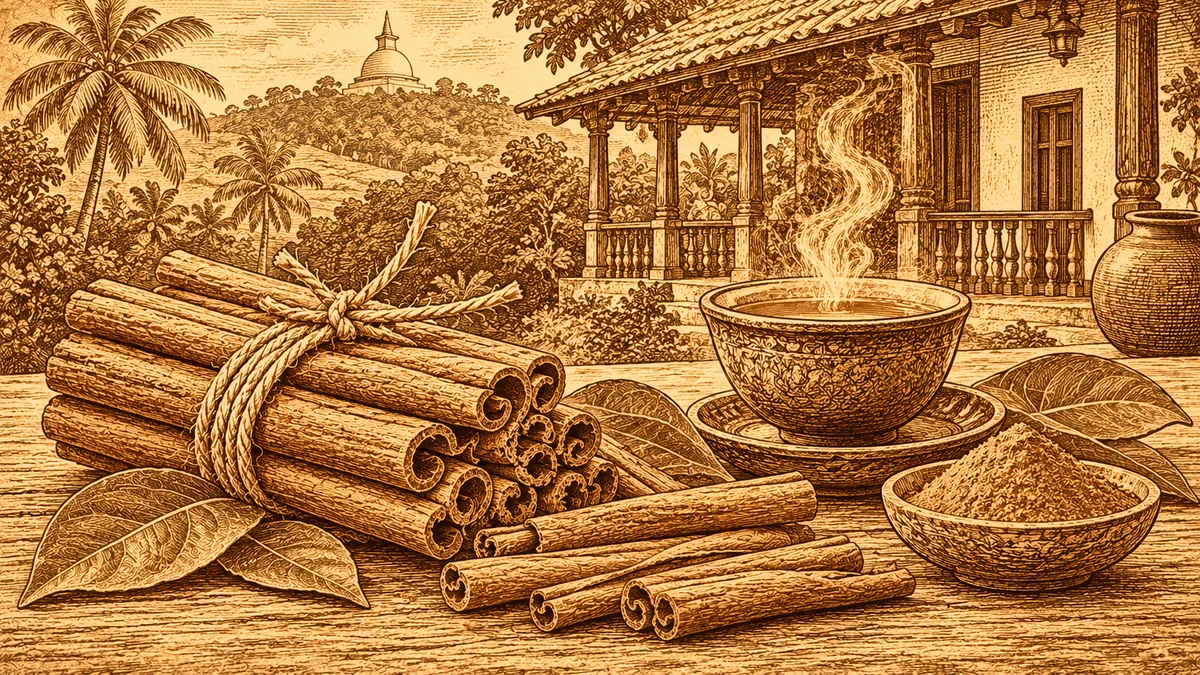
Cinnamon holds a deep cultural significance in Sri Lanka, where it has been grown, traded and used for centuries. As the home of true cinnamon, Cinnamomum verum, the island treats the spice as part of its heritage: a source of livelihood for generations of farming and peeling families, an ingredient woven into its food and hospitality, and a symbol of its place in the world’s spice history. Cinnamon is not just a crop in Sri Lanka but a thread running through its culture.
To understand Ceylon cinnamon fully is to see how closely it is tied to the culture of Sri Lanka. This guide looks at what cinnamon means to the island beyond its flavour: its place in work, food, tradition and identity. It builds on our pillar guide to the history of Ceylon cinnamon.
The short answer
In Sri Lanka, cinnamon is culturally significant as a heritage crop, a traditional craft, a culinary staple and a symbol of national identity. The island is the original home of true cinnamon, and the spice has shaped its economy, its daily life and its reputation abroad for centuries. Families pass down the skills of growing and peeling cinnamon, cooks use it across sweet and savoury dishes, and the Ceylon name carries the island’s pride. This blend of livelihood, craft, cuisine and identity is what gives cinnamon its cultural weight in Sri Lanka.
Cinnamon as heritage and livelihood
For many Sri Lankan families, cinnamon is a family inheritance as much as a crop. Across the cinnamon-growing south, generations have grown, peeled and prepared the spice, passing the knowledge from parents to children. The skill of peeling in particular is a craft learned over years and kept within communities, so that working with cinnamon becomes part of a family’s identity. This long continuity gives the spice a cultural meaning that a simple cash crop would not have: it links present-day farmers to ancestors who did the same work, and ties whole districts to a shared way of life. Our guide to traditional uses of cinnamon in Sri Lankan culture looks further at this heritage.
Cinnamon in Sri Lankan food
Cinnamon is woven into Sri Lankan cooking, where it appears in both everyday meals and special dishes. It is a common ingredient in curries, rice dishes and spice blends, lending warmth to savoury food, and it also flavours sweets, cakes and drinks. Because true cinnamon is mild and sweet rather than harsh, it blends gently into a dish rather than overpowering it. Its presence in the kitchen is so routine that it is simply part of how food tastes at home. This culinary role, both daily and celebratory, is a large part of what makes the spice culturally familiar, as our guide to cinnamon in traditional Sri Lankan sweets shows.
Cinnamon in festivals and hospitality
Beyond the everyday kitchen, cinnamon has a place in Sri Lankan celebrations and hospitality. Festive foods and sweets often carry its warm aroma, and offering spiced food and drink to guests is part of the island’s tradition of welcome. The scent of cinnamon is tied to moments of gathering and generosity, which gives it an emotional as well as a practical meaning. In this way the spice is bound up with the social life of the island, not only its meals. Our guide to cinnamon in Sri Lankan festivals and celebrations explores this side in more detail.
| Dimension | Cultural role of cinnamon in Sri Lanka |
|---|---|
| Heritage | A family craft and livelihood passed down generations |
| Food | A staple in curries, sweets, rice and drinks |
| Hospitality | Part of festive food and welcoming guests |
| History | Centre of the island’s famous spice trade |
| Identity | A symbol of Sri Lanka and the Ceylon name |
Cinnamon and the island’s history
Cinnamon’s cultural significance is inseparable from Sri Lanka’s history. For centuries the island was the world’s source of true cinnamon, and the spice drew traders and later colonial powers to its shores, shaping events across the island’s past. This long history means cinnamon is not a recent addition to the culture but a thread running through it, connected to the island’s role in the global spice trade. The very name Ceylon, the island’s historical name, became a byword for fine cinnamon, which is itself a mark of how closely the spice and the place are linked. This is the story our pillar guide to the history of Ceylon cinnamon tells in full.
Cinnamon as a symbol of identity
Today cinnamon remains a source of national pride and identity for Sri Lanka. As the home of the finest true cinnamon, the island holds a distinctive place in the world of spices, and that reputation is something Sri Lankans value. Efforts to protect the Ceylon name, such as origin recognition for the spice, reflect this sense that cinnamon is part of the country’s identity and worth defending. When Ceylon cinnamon is praised abroad, it reflects well on its homeland, and the spice stands as a quiet ambassador for Sri Lanka. In this sense, cinnamon carries meaning far beyond the kitchen or the farm.
Cinnamon in the island’s economy and daily rhythm
Cinnamon’s cultural place is also tied to the rhythm of rural life and the island’s economy. In the cinnamon-growing districts of the south and southwest, the work of tending gardens, harvesting shoots and peeling bark sets the pattern of the week for many households, and the income it brings helps support schools, homes and village life. Because the spice has been an export earner for Sri Lanka over a very long period, it is woven into the story the country tells about itself as a trading island. This practical, economic side of cinnamon is not separate from its cultural meaning but part of it, since a crop that has fed and clothed families for generations naturally becomes something people feel pride and attachment toward. Our pillar guide to Sri Lankan cinnamon farming looks at this working side of the spice in more detail.
Passing the craft to the next generation
A culture lives only as long as its skills are passed on, and cinnamon peeling is a clear example. The delicate work of separating the thin inner bark and rolling it into quills takes years to master, and it has traditionally been taught within families and communities, from experienced peelers to younger ones learning at their side. Keeping this knowledge alive is part of what keeps cinnamon culturally meaningful, because each new peeler carries forward a craft that stretches back through many generations. Efforts to train and support peelers, and to recognise their skill, help ensure that the tradition does not fade. In this sense the cultural significance of cinnamon depends on people as much as on the plant, and on the willingness of each generation to learn and continue the work.
Why the cultural link matters
Understanding the cultural significance of cinnamon helps explain why authenticity matters so much. When a spice is this closely tied to a place and its people, genuine origin is not only a quality question but a cultural one, since the craft, the heritage and the reputation all belong to Sri Lanka. Valuing true Ceylon cinnamon, then, also means valuing the communities and traditions behind it. This is why the island’s cinnamon is best understood not just as a product but as a living part of Sri Lankan culture, shaped by history and carried forward by the families who still grow and prepare it.
Summary
Cinnamon is culturally significant in Sri Lanka as a heritage crop, a traditional craft, a culinary staple and a symbol of national identity. As the original home of true cinnamon, Cinnamomum verum, the island has grown and prepared the spice for centuries, with the skills passed down through farming and peeling families across the south. Cinnamon flavours everyday meals and festive foods alike, features in hospitality and celebration, and is woven into the island’s long spice-trade history. It remains a source of pride and a quiet ambassador for Sri Lanka abroad. Seen this way, Ceylon cinnamon is not merely a product but a living thread in Sri Lankan culture, which is part of why its authentic origin carries such meaning.
Frequently asked questions
Why is cinnamon culturally important in Sri Lanka?
Because Sri Lanka is the home of true cinnamon and has grown, peeled and traded it for centuries. The spice is a family heritage and livelihood, a staple in the island’s food, a part of its hospitality, and a symbol of its identity and place in spice history.
How is cinnamon used in Sri Lankan culture?
It is used widely in cooking, from curries and rice dishes to sweets and drinks, and it features in festive foods and hospitality. Beyond the kitchen, growing and peeling cinnamon is a traditional craft passed down within families across the cinnamon-growing south.
Is cinnamon a symbol of Sri Lanka?
Yes. As the source of the world’s finest true cinnamon, Sri Lanka takes pride in the spice, and the Ceylon name is closely linked to the island. Cinnamon acts as a quiet ambassador for the country and is part of its national identity.
How long has cinnamon been part of Sri Lankan culture?
For many centuries. The island was the world’s source of true cinnamon and was long at the centre of the global cinnamon trade, so the spice is a deep-rooted part of its history and culture rather than a recent addition.
Why does the cultural significance of cinnamon matter for buyers?
Because it shows that genuine Ceylon cinnamon carries heritage and craft, not just flavour. Valuing authentic cinnamon means valuing the Sri Lankan communities and traditions behind it, which is part of why origin and authenticity are so important.
This website provides educational information about Ceylon Cinnamon as a spice and food ingredient. It is not intended to provide medical advice or make health claims.
Leave a Reply