Category: Buying

  • Buying Ceylon Cinnamon in Bulk: A Guide

    Buying Ceylon Cinnamon in Bulk: A Guide

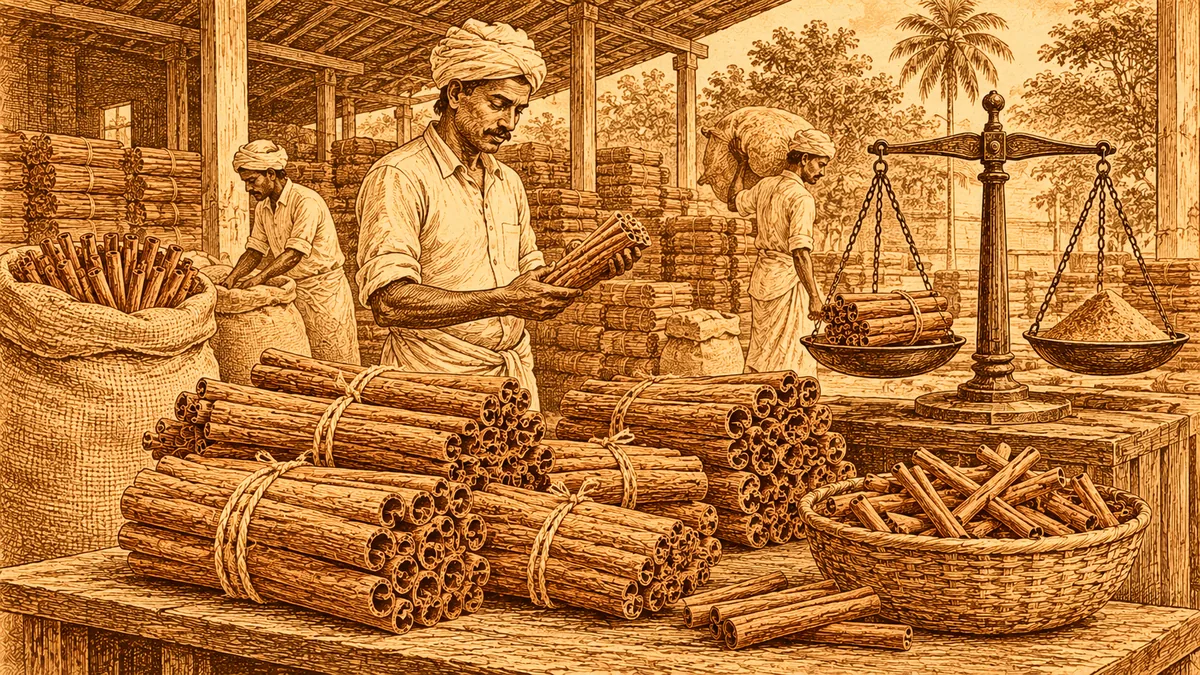
    Buying Ceylon cinnamon in bulk means purchasing larger quantities of true cinnamon, Cinnamomum verum, at once, usually at a lower price per unit than small retail packs. It suits households that use cinnamon often, as well as cafes, bakers and small businesses. The keys to buying well in bulk are confirming the cinnamon is genuine Ceylon cinnamon from Sri Lanka, choosing sticks or powder to match your use, checking grade and freshness, and having a cool, dry, airtight way to store what you buy.

    Bulk buying can be a sensible way to get good value from Ceylon cinnamon, but only if the cinnamon is authentic and you can store it well. This guide explains when bulk buying makes sense, what to check before you buy, and how to keep a larger quantity fresh. It builds on our pillar, the Ceylon cinnamon buying guide.

    The short answer

    Buy Ceylon cinnamon in bulk when you use it often enough to finish it before it fades, when you can confirm it is genuine Cinnamomum verum from Sri Lanka, and when you have proper airtight storage. Bulk lowers the price per unit and cuts packaging, which is useful for frequent cooks, bakers, cafes and small food businesses. The main cautions are authenticity, since the Ceylon name is often misused, and freshness, since cinnamon slowly loses aroma. Sticks keep far longer than powder, so for long storage, whole quills in bulk are usually the safer choice.

    When buying in bulk makes sense

    Bulk buying rewards steady, regular use. If you bake often, run a cafe or small food business, or simply use cinnamon in cooking and drinks most weeks, a larger quantity will be finished while still fresh and will cost less per gram than small jars. If you only use cinnamon occasionally, a large quantity may lose its aroma before you reach the bottom of it, so a smaller pack is the better buy. The honest question to ask is how much you realistically use in a few months, and whether the form you are buying will stay fresh that long.

    Confirm it is genuine Ceylon cinnamon

    The single most important check when buying in bulk is authenticity. Because true Ceylon cinnamon costs more than cassia, the Ceylon name is sometimes applied to cheaper bark, and a large purchase multiplies the cost of getting this wrong. Look for the species name Cinnamomum verum and a clear statement of Sri Lankan origin, not just the word cinnamon or a vague country label. If you can see the product, genuine Ceylon quills are thin, soft and made of many fine layers rolled together, unlike the thick, hard single curl of cassia. Our guide to reading cinnamon labels correctly explains the wording to look for, which matters even more at bulk quantities.

    Sticks or powder for bulk buying

    The form you buy changes how long a bulk quantity will last. Whole cinnamon sticks, or quills, expose little surface to the air, so they hold their aroma for a few years when stored well. Ground cinnamon has far more surface area and fades faster, keeping its best flavour for several months up to about a year. For a large quantity meant to last, sticks are usually the wiser choice, and you can grind small amounts as needed. Powder in bulk suits only those who use it quickly. Our guide to cinnamon sticks versus powder and what to buy looks at this choice in detail.

    FactorBulk sticks (quills)Bulk powder
    Best-flavour lifeA few yearsSeveral months to a year
    Best forLong storage, grind as neededHigh, quick turnover
    Storage needAirtight, cool, dark, dryAirtight, cool, dark, dry
    ConvenienceNeeds grinding for powder usesReady to use straight away
    Risk if slow useLow, keeps wellHigher, fades faster

    Check grade, origin and freshness

    Bulk Ceylon cinnamon is often sold by grade, and knowing a little about grades helps you buy the right thing for your use. Finer grades such as Alba have thinner, more delicate quills, while continental and coarser grades are sturdier and often more economical for everyday cooking. For most kitchens and cafes, a mid grade offers good value without paying for the most delicate quills. Alongside grade, confirm the origin is Sri Lanka and ask about freshness, since aroma is what you are really buying. A reputable bulk seller should be able to tell you the grade and origin, and genuine Ceylon cinnamon should smell warm and sweet rather than faint.

    Plan your storage before you buy

    Buying in bulk only pays off if you can keep the cinnamon fresh, so plan storage before you order. The aim is to keep both sticks and powder in airtight containers in a cool, dark, dry place, away from heat, light and moisture. For a large quantity, it helps to divide it between a main sealed store that you open rarely and a smaller working jar for daily use, so the bulk of it is disturbed as little as possible. Each time a container is opened, a little air gets in, so keeping most of your stock sealed protects its aroma. Our guide to storing cinnamon sticks versus cinnamon powder covers the method in full.

    Getting good value without waste

    Good value in bulk is not simply the lowest price per gram, but the lowest cost for cinnamon you actually use while it is fresh. A large, cheap quantity that fades before you finish it is not a saving. A sensible approach is to match the quantity to your real use over a few months, favour sticks for anything you will keep long term, and buy powder in bulk only if you use it quickly. Splitting a bulk purchase with others who also use cinnamon is another way to enjoy the lower unit price without holding more than you can keep fresh. In short, buy what you will use, store it well, and the bulk price becomes a genuine saving.

    Where bulk buying fits for small businesses

    For cafes, bakeries and small food producers, bulk Ceylon cinnamon can make good sense, since steady use means it is turned over quickly and the lower unit price adds up. The same checks apply, only with more at stake: confirm the cinnamon is genuine Cinnamomum verum from Sri Lanka, choose a grade suited to the dishes or drinks you make, and keep the stock sealed and cool. Many small businesses buy sticks for display, infusions and grinding, and a separate quantity of powder for baking, matching each form to how fast it is used. Consistent authenticity also matters for a business, because customers who value true cinnamon will notice the difference.

    Summary

    Buying Ceylon cinnamon in bulk means purchasing larger quantities of true cinnamon, Cinnamomum verum, at a lower price per unit, which suits frequent cooks, bakers, cafes and small businesses. It pays off when you use cinnamon often enough to finish it fresh, when you confirm it is genuine Ceylon cinnamon from Sri Lanka, and when you can store it well. Sticks keep far longer than powder, so whole quills are usually the better choice for a large quantity, with powder bought in bulk only for quick use. Check the species name and origin, consider grade and freshness, and plan airtight, cool, dark storage before you buy. Done this way, bulk buying turns the lower unit price into a real saving on authentic Ceylon cinnamon.

    Frequently asked questions

    Is it cheaper to buy Ceylon cinnamon in bulk?

    Usually yes, the price per unit is lower than small retail packs, and there is less packaging. It is only a true saving, though, if you use the cinnamon while it is still fresh. A large quantity that fades before you finish it is not good value, so match the amount to your real use.

    Should I buy bulk cinnamon as sticks or powder?

    For long storage, buy sticks, since whole quills keep their aroma for a few years and can be ground as needed. Buy powder in bulk only if you use it quickly, within several months to about a year, because ground cinnamon loses its aroma faster than sticks.

    How do I know bulk cinnamon is genuine Ceylon cinnamon?

    Look for the species name Cinnamomum verum and a clear statement of Sri Lankan origin. Genuine Ceylon quills are thin, soft and made of many fine layers, unlike the thick, hard curl of cassia. A reputable bulk seller should confirm the grade and origin.

    How should I store a large quantity of cinnamon?

    Keep it in airtight containers in a cool, dark, dry place, away from heat, light and moisture. For bulk, divide it into a sealed main store you open rarely and a smaller working jar for daily use, so most of your stock stays sealed and keeps its aroma longer.

    How much Ceylon cinnamon should I buy in bulk?

    Buy roughly what you will use over a few months while it stays fresh. For sticks this can be more, since they keep well, while for powder it should be less. If a bulk quantity is more than you can use in time, consider sharing it with others who also use cinnamon.

    This website provides educational information about Ceylon Cinnamon as a spice and food ingredient. It is not intended to provide medical advice or make health claims.
  • What to Look for on a Ceylon Cinnamon Label

    What to Look for on a Ceylon Cinnamon Label

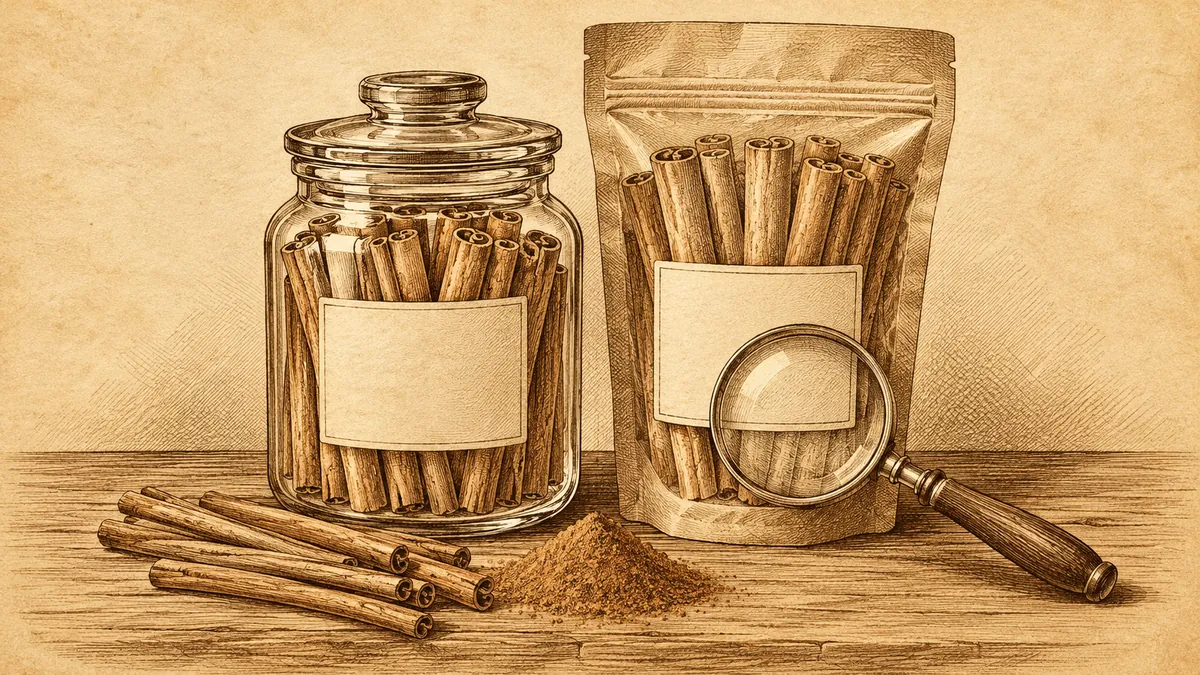
    When you buy Ceylon cinnamon, the label is the first thing you can actually check. True Ceylon cinnamon, Cinnamomum verum, comes from Sri Lanka, and a good label will usually say so in plain words: the species or botanical name, the country of origin, and often a grade such as Alba or C5. A label that only says “cinnamon”, with no species and no origin, gives you very little to go on. This guide walks through the details worth looking for on a Ceylon cinnamon label before you buy.

    Shopping for true cinnamon can be confusing because the word “cinnamon” on its own covers several different barks. This buying guide looks, point by point, at what a Ceylon cinnamon label should tell you and which words are a good sign. It builds on our pillar Ceylon cinnamon buying guide.

    The short answer

    On a Ceylon cinnamon label, look for the species name Cinnamomum verum (or Cinnamomum zeylanicum), the country of origin Sri Lanka, and a grade such as Alba, C5 or C4. Helpful extras include the form (quills, sticks or ground), packaging and harvest or batch details, and any recognised certification. A label that names the species and the origin, rather than just “cinnamon”, is the clearest starting sign that you are buying true Ceylon cinnamon.

    Why the label matters

    In many shops, “cinnamon” with no further detail is cassia, a related but different bark that comes mostly from China, Indonesia and Vietnam. True Ceylon cinnamon is a separate species with a milder, sweeter flavour and a thin, papery bark. Because the two are sold under the same everyday name, the label is often the only way to tell them apart before you open the pack. For the full flavour and bark differences, see our guide to Ceylon cinnamon versus cassia.

    A clear, detailed label is itself a quality signal. Sellers who take care to name the species, the origin and the grade are usually confident about what they are selling. A vague label is not proof of a problem, but it does leave you guessing.

    The species or botanical name

    The single most useful thing on the label is the botanical name. True Ceylon cinnamon is Cinnamomum verum, which was once called Cinnamomum zeylanicum, so either name points to the real thing. Cassia barks carry different species names, such as Cinnamomum cassia, Cinnamomum burmannii or Cinnamomum loureiroi.

    If the label prints Cinnamomum verum or Cinnamomum zeylanicum, that is a strong sign. If it prints one of the cassia species names, you are looking at cassia, whatever the front of the pack says. If there is no species name at all, treat the product as unconfirmed until you can check further.

    The country of origin

    True Ceylon cinnamon is grown in Sri Lanka, and most of the world’s supply still comes from there. A label that reads “Product of Sri Lanka” or “Origin: Sri Lanka” lines up with genuine Ceylon cinnamon. “Ceylon” is the historic name for the island, so “Ceylon cinnamon” and “Sri Lankan cinnamon” mean the same thing.

    Be careful with wording such as “packed in” or “distributed by”, which tells you where the pack was filled or handled, not where the bark was grown. The origin you want is the country where the cinnamon itself was produced. Our guide to reading cinnamon labels correctly goes deeper into this kind of wording.

    The grade

    Ceylon cinnamon is sorted into grades, and many good labels print the grade on the pack. Grades such as Alba, C5 Special, C5, C4 and the Continental and Mexican groups describe the thickness and appearance of the quills, with the thinnest and most delicate quills carrying the highest grades. Alba is the finest and thinnest.

    A grade on the label is a sign that the seller is working within the recognised Ceylon cinnamon system. You do not always need the top grade: for everyday cooking a mid grade is often a sensible choice. The point is that a named grade shows the product has been sorted to a standard rather than simply bagged.

    The form: quills, sticks or ground

    The label should make clear what form you are buying. True Ceylon cinnamon quills are made of many thin layers rolled together, so they look like a tightly packed cigar and snap easily. Cassia sticks are usually a single thick, hard curl. If you are buying sticks, “Ceylon cinnamon quills” is a better sign than an unnamed “cinnamon stick”.

    Ground cinnamon is harder to judge by eye once it is powder, which makes the species name and origin on the label even more important. If you want to tell the two forms apart in your own kitchen, our guide on how to identify authentic Ceylon cinnamon sets out the simple checks.

    Certifications and standards

    Some Ceylon cinnamon packs carry certification marks or references to a standard. The Sri Lanka Standards Institution sets the SLS standard for Ceylon cinnamon, and there are organic, fair trade and geographical indication schemes as well. A certification is not required for the cinnamon to be genuine, but a recognised mark adds confidence, especially when buying online. Our guide to the SLS standard for Ceylon cinnamon explains what that particular standard covers.

    Read certification wording closely. A phrase such as “certified organic” refers to how the cinnamon was grown, not to the species. Organic cassia is still cassia. Origin and species remain the details that tell you whether the bark is true Ceylon cinnamon.

    Harvest, batch and packaging details

    Smaller sellers often print a harvest date, a batch number or a best-before date. These help you judge freshness, since cinnamon slowly loses aroma over time once ground. Whole quills keep their aroma longer than powder, so a packaging date matters more for ground cinnamon. Good packaging is a resealable pouch or a sealed jar that keeps out air and light.

    None of these details confirm the species on their own, but together they show a careful seller. A pack with the species, the origin, a grade and a clear date is giving you a full picture.

    What a Ceylon cinnamon label should tell you

    Label detailGood sign for Ceylon cinnamonReason to check further
    Species nameCinnamomum verum or Cinnamomum zeylanicumA cassia species, or no species at all
    Country of originProduct of Sri LankaOnly “packed in” wording, or no origin
    GradeAlba, C5, C4 or another named gradeNo grade given
    FormCeylon cinnamon quills, sticks or groundUnnamed “cinnamon stick”
    CertificationSLS, organic, fair trade or GI markClaims with no species named
    FreshnessHarvest, batch or best-before dateNo date, loose or open packaging

    Putting it together at the shelf

    A quick way to read a label is to work down from the most telling detail. First look for the species: Cinnamomum verum or Cinnamomum zeylanicum is what you want. Next check the origin for Sri Lanka. Then look for a grade such as Alba or C5, confirm the form, and finally glance at any certification and the packaging date. If the first two details are present and clear, you are almost certainly holding true Ceylon cinnamon. If they are missing, it is worth asking the seller or reading more before you buy.

    Frequently asked questions

    What should a Ceylon cinnamon label say?

    A good Ceylon cinnamon label gives the species name Cinnamomum verum (or the older Cinnamomum zeylanicum), the country of origin Sri Lanka, and usually a grade such as Alba or C5. Helpful extras are the form, any certification and a harvest or best-before date.

    Does “Ceylon cinnamon” on the label guarantee it is real?

    The name alone is a good start but is strongest when backed by the species name and a Sri Lankan origin. A label that says “Ceylon cinnamon”, names Cinnamomum verum and states “Product of Sri Lanka” is giving you the full picture.

    If a label only says “cinnamon”, what does that mean?

    A plain “cinnamon” label with no species and no origin is most often cassia, since cassia is the common cinnamon in many shops. It is not confirmation either way, so look for the species name or ask the seller before assuming it is true Ceylon cinnamon.

    Does organic or fair trade mean it is Ceylon cinnamon?

    No. Organic and fair trade describe how the cinnamon was grown and traded, not which species it is. Cassia can also be organic. Always check the species name and origin alongside any such certification.

    Summary

    The label is your best tool when buying Ceylon cinnamon. The details that matter most are the species name, Cinnamomum verum or Cinnamomum zeylanicum, and the country of origin, Sri Lanka. A named grade such as Alba or C5, a clear form, a recognised certification and a freshness date all add confidence. A label that names the species and the origin is the clearest sign of true Ceylon cinnamon, while a bare “cinnamon” label with neither detail is worth a second look before you buy.

    This website provides educational information about Ceylon Cinnamon as a spice and food ingredient. It is not intended to provide medical advice or make health claims.
  • Cinnamon Sticks vs Powder: What to Buy

    Cinnamon Sticks vs Powder: What to Buy

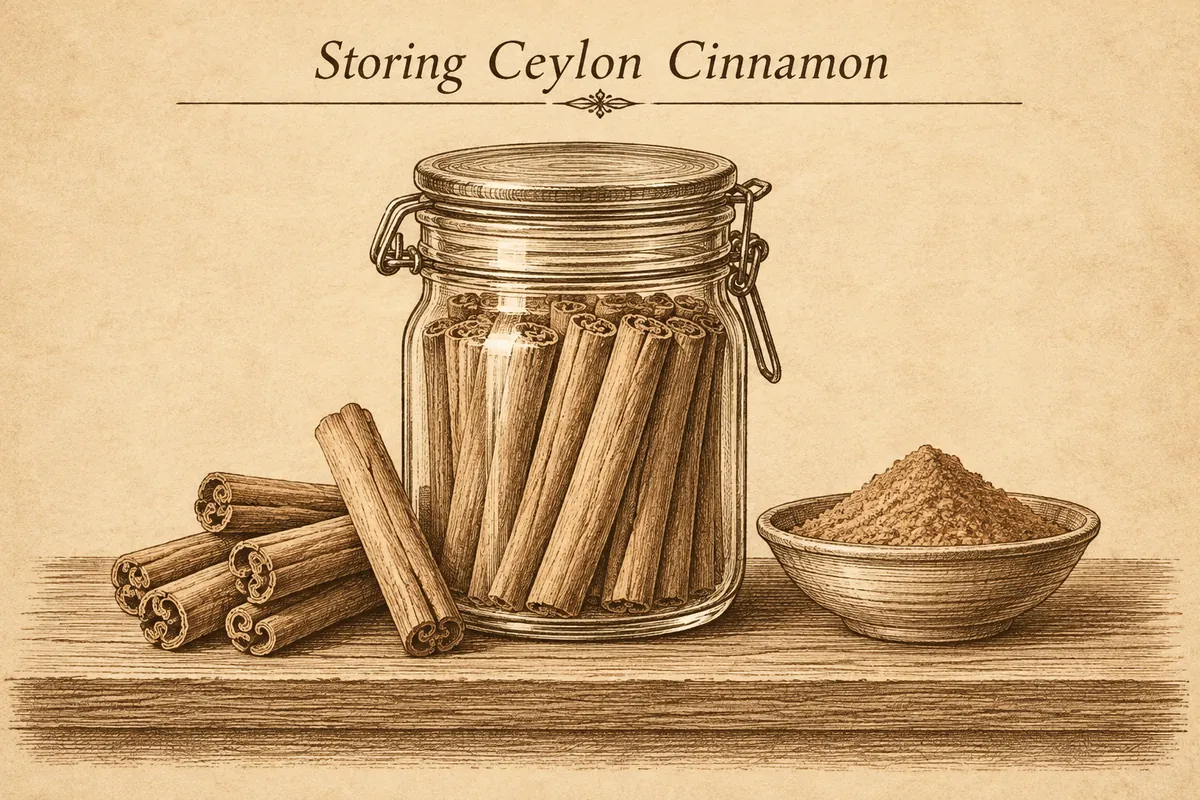
    Whether to buy Ceylon cinnamon as sticks or powder comes down to how you use it. Whole cinnamon sticks, or quills, keep their aroma far longer, are ideal for infusing drinks, curries and slow-cooked dishes, and let you grind fresh powder as needed. Ground cinnamon is more convenient for baking and quick recipes but loses its flavour faster. For the best of both, many people keep whole quills as their main supply and a small jar of powder for everyday use.

    Standing in the spice aisle, the choice between cinnamon sticks and powder is a common one. This guide compares the two forms of Ceylon cinnamon and helps you decide what to buy. It builds on our pillar guide, the Ceylon cinnamon buying guide.

    The short answer

    Buy whole cinnamon sticks for the freshest, longest-lasting flavour and for infusing dishes and drinks, and buy ground cinnamon for convenience in baking and quick cooking. Sticks keep their aroma for years and can be ground fresh, while powder is ready to use but fades faster. The best choice depends on how and how often you cook with cinnamon, and many cooks simply keep both.

    Cinnamon sticks: the case for whole quills

    Whole Ceylon cinnamon sticks are the rolled inner bark of the tree, known as quills. Their biggest advantage is staying power: because the aromatic oils are locked inside the bark, whole sticks keep their flavour and scent for a long time, often three to four years when stored well. They are perfect for simmering in curries, rice dishes, mulled drinks and syrups, where they slowly release their warm flavour and can be removed before serving. You can also grind or grate them at home for the freshest possible powder. The main drawback is that they are less convenient for recipes that need ground cinnamon mixed straight in. To learn more about the form itself, see our guide covering cinnamon sticks.

    Ground cinnamon: the case for powder

    Ground Ceylon cinnamon is simply the bark milled into a fine powder. Its great strength is convenience: it blends instantly into cake batter, sprinkles over porridge or coffee, and mixes easily into doughs and sauces. For baking especially, powder is usually the practical choice. The trade-off is shelf life. With far more surface exposed to the air, ground cinnamon loses its aroma more quickly, keeping its best flavour for around one to two years. Our guide to ground Ceylon cinnamon looks at the powder form in more detail.

    Sticks vs powder at a glance

    Comparing whole cinnamon sticks and ground cinnamon.
    FeatureWhole sticksGround powder
    Shelf lifeAbout 3 to 4 yearsAbout 1 to 2 years
    FreshnessGrind fresh as neededFades faster once opened
    Best forInfusing drinks, curries, slow cookingBaking, quick recipes, sprinkling
    ConvenienceNeeds grinding for powder usesReady to use instantly
    Flavour controlStrong, freshly groundEven, easy to measure

    Which should you buy?

    The right choice depends on how you cook. If you mostly make drinks, curries, stews and slow-cooked dishes, whole sticks are ideal, giving long-lasting value and a gentle infused flavour. If you bake often or like a quick sprinkle of cinnamon, powder is far more practical. Many households find the answer is to keep both: a supply of whole quills as the long-lasting backbone, and a small jar of powder for everyday convenience. Buying whole and grinding small amounts also lets you enjoy the freshest flavour while keeping a longer-lasting reserve.

    Freshness and value over time

    One reason whole sticks often represent good value is their long shelf life. A jar of powder bought in bulk may lose much of its punch before you finish it, whereas whole quills stay fragrant for years, so little is wasted. If you use cinnamon only occasionally, sticks are the more economical choice, since they hold their flavour until you need them. If you get through cinnamon quickly, powder’s faster fading matters less, and its convenience wins. This link between form and freshness is described further in our guide on how long Ceylon cinnamon lasts.

    Grinding your own cinnamon

    One appealing middle path is to buy whole Ceylon cinnamon sticks and grind them at home as needed. True cinnamon is brittle and soft, so it grinds more easily than the harder cassia bark, and a spice grinder or even a sturdy mortar and pestle can turn quills into fresh powder. Grinding your own gives you the strong, bright flavour of freshly milled cinnamon whenever you want it, while the rest of your supply stays sealed in stick form, keeping its aroma. For anyone who cares about flavour, this is a simple way to enjoy the best of both worlds without buying two separate products.

    How each form performs in the kitchen

    The two forms suit different jobs in cooking, and knowing which to reach for makes a real difference. Whole sticks come into their own in anything liquid and slow: a stick dropped into a pot of rice, a simmering curry, a jug of mulled wine or a pan of syrup releases its flavour gradually and can be lifted out at the end, leaving a clean, warm background note. Powder, by contrast, disperses evenly and instantly, which is exactly what you want in a cake batter, a spice rub, a dusting over a latte or a quick stir into yoghurt or oatmeal. Trying to use a stick where you need powder, or powder where you need a gentle infusion, tends to disappoint. Matching the form to the dish is the simplest way to get the most from your cinnamon.

    Converting between sticks and powder

    If a recipe calls for one form and you have the other, a rough guide helps. A standard cinnamon stick, once ground, yields somewhere around half a teaspoon to a teaspoon of powder, though this varies with the size of the quill. For infusing, you can usually drop in a whole stick in place of a measured amount of powder and adjust to taste, removing it once the flavour is right. When grinding sticks for baking, grind a little more than you think you need, since freshly ground Ceylon cinnamon is fragrant and you will not want to run short mid-recipe. These simple conversions mean that keeping just one form on hand need not limit what you can cook.

    Making sure it is real Ceylon cinnamon

    Whichever form you choose, the most important thing is that you are buying genuine Ceylon cinnamon rather than cassia sold simply as “cinnamon”. With whole sticks this is easier to check, since true Ceylon quills are pale, thin and made of many soft layers, while cassia is a hard, thick single curl. With powder it is harder to tell by eye, so the label matters more: look for Ceylon cinnamon or Cinnamomum verum, ideally from Sri Lanka. This is one quiet advantage of sticks, that their authenticity is easier to judge, a point covered in our Ceylon cinnamon buying guide.

    Frequently asked questions

    Should I buy cinnamon sticks or ground cinnamon?

    It depends on how you use it. Buy whole cinnamon sticks for the freshest, longest-lasting flavour and for infusing drinks, curries and slow-cooked dishes. Buy ground cinnamon for convenience in baking and quick recipes. Many people keep both, using sticks as the main supply and powder for everyday use.

    Do cinnamon sticks last longer than powder?

    Yes. Whole cinnamon sticks keep their best flavour for around three to four years, while ground cinnamon holds its flavour for about one to two years. This is because whole quills keep their aromatic oils locked in the bark, whereas powder has far more surface exposed to the air.

    Can I grind cinnamon sticks into powder at home?

    Yes. True Ceylon cinnamon is brittle and grinds easily in a spice grinder or a sturdy mortar and pestle. Grinding your own from whole quills gives the freshest, strongest powder, while keeping the rest of your supply in long-lasting stick form.

    Is it cheaper to buy sticks or powder?

    It depends on how often you use cinnamon. If you use it occasionally, whole sticks are often better value because they stay fragrant for years with little waste. If you get through cinnamon quickly, powder’s convenience may outweigh its faster fading.

    Summary

    Choosing between Ceylon cinnamon sticks and powder comes down to how you cook. Whole sticks keep their aroma for years, are ideal for infusing drinks, curries and slow-cooked dishes, and can be ground fresh at home. Ground cinnamon is more convenient for baking and quick recipes but fades faster. For occasional use and long-lasting value, sticks are the better buy; for frequent baking and convenience, powder wins. Keeping both, with whole quills as the backbone and a small jar of powder for everyday use, gives you fresh flavour and easy convenience together, as long as you make sure it is genuine Ceylon cinnamon.

    This website provides educational information about Ceylon Cinnamon as a spice and food ingredient. It is not intended to provide medical advice or make health claims.
  • How Long Does Ceylon Cinnamon Last?

    How Long Does Ceylon Cinnamon Last?

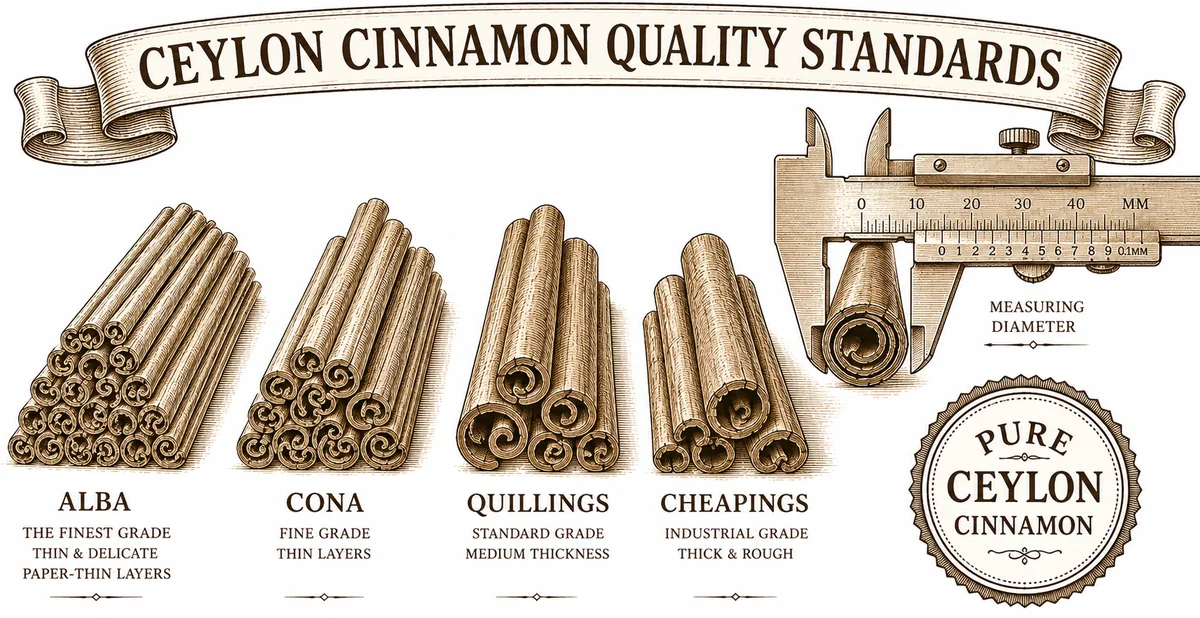
    Ceylon cinnamon keeps for a long time if stored well. Whole cinnamon quills stay good for around three to four years, while ground Ceylon cinnamon holds its best flavour for about one to two years. Cinnamon does not really spoil or become unsafe in the way fresh food does; instead it slowly loses its aroma and flavour. Kept in an airtight container away from heat, light and moisture, Ceylon cinnamon stays fragrant and useful well beyond a year.

    Cinnamon is one of those spices that can sit in the cupboard for ages, but it does not last forever at full strength. This guide explains how long Ceylon cinnamon lasts, why it fades, and how to keep it fresh. It builds on our pillar guide, the Ceylon cinnamon buying guide.

    The short answer

    Whole Ceylon cinnamon quills last around three to four years, and ground Ceylon cinnamon keeps its best flavour for about one to two years, when stored properly. These are guides to peak quality rather than hard expiry dates. Cinnamon rarely goes bad in a way that makes it unsafe; it simply grows weaker in aroma and taste over time as its natural oils fade.

    How long each form lasts

    The single biggest factor in how long cinnamon stays at its best is whether it is whole or ground.

    Whole quills

    Whole Ceylon cinnamon sticks, or quills, last the longest. Because the bark is intact, its aromatic oils are locked inside and escape only slowly. Stored well, whole quills keep good flavour for roughly three to four years, and often remain usable, if a little milder, beyond that.

    Ground cinnamon

    Ground Ceylon cinnamon has much more surface exposed to the air, so its oils escape faster. It holds its best flavour for about one to two years. After that it is still safe to use but noticeably weaker, and you may need to add more to get the same warmth. Our guide to ground Ceylon cinnamon looks at the powder form in more detail.

    Cinnamon shelf life at a glance

    Approximate shelf life of Ceylon cinnamon by form.
    FormBest flavour forNote
    Whole quillsAbout 3 to 4 yearsOils locked in the bark
    Ground cinnamonAbout 1 to 2 yearsFades faster, more surface exposed
    Cinnamon in a blendVariesFollow the blend’s own date

    Does cinnamon actually go bad?

    For most purposes, cinnamon does not spoil the way perishable foods do. Being dry, it is not a friendly home for the kind of growth that ruins fresh food, so it generally stays safe for a long time. What changes is quality, not safety. Over months and years the aromatic oils that give Ceylon cinnamon its warm, sweet character gradually escape, and the spice becomes fainter and flatter. So the real question is usually not whether old cinnamon is dangerous, but whether it still has enough flavour to be worth using. The exception is if cinnamon has been exposed to damp, which can allow clumping or mould; in that case it should be thrown away.

    How to tell if your cinnamon is past its best

    The simplest test is your nose. Fresh Ceylon cinnamon has a strong, sweet, warm aroma. If you open the jar and can barely smell anything, the oils have faded and the flavour will be weak. You can also rub a little between your fingers or taste a pinch: vibrant cinnamon gives a clear, warm note, while tired cinnamon tastes dull and woody. With whole quills, a fresh stick snaps cleanly and smells strongly when broken. This aroma test is closely tied to the science set out in our guide to what gives Ceylon cinnamon its aroma.

    How to make Ceylon cinnamon last longer

    Good storage makes a real difference to how long cinnamon stays fragrant. A few simple habits go a long way.

    Keep it airtight

    Air is the main enemy, since it carries away the volatile oils. Store cinnamon in a tightly sealed, airtight container, and close it promptly after each use.

    Away from heat and light

    Heat and light speed up the loss of aroma. A cool, dark cupboard is ideal, and it is best to keep cinnamon away from the stove, the oven and sunny windowsills.

    Keep it dry

    Moisture can cause clumping and, in the worst case, mould. Always use a dry spoon, and avoid shaking cinnamon straight over a steaming pot, which lets damp air into the jar. For a fuller routine, see our guide on how to store Ceylon cinnamon properly.

    Buy whole and grind as needed

    One of the best ways to enjoy cinnamon at its freshest is to buy whole quills and grind small amounts as you need them. Because whole cinnamon keeps its aroma so much longer than powder, this approach gives you fresher flavour and less waste. A whole quill snapped or grated into a dish releases a burst of scent that pre-ground cinnamon, sitting open to the air for months, simply cannot match. For everyday convenience many people keep both, using powder for quick baking and quills for slow cooking and drinks.

    Common storage mistakes to avoid

    Most cinnamon fades faster than it needs to because of a few easily fixed habits. The most common is leaving the container open or loosely closed, which lets the aromatic oils drift away between uses. Another is keeping the jar on a rack right beside the cooker, where heat and steam reach it every time you cook. Shaking cinnamon straight from the jar over a hot, steaming pan is a frequent culprit too, since it draws warm, damp air back inside. Storing cinnamon in a clear jar on a sunny shelf looks attractive but exposes it to light that speeds fading. And buying large tubs of ground cinnamon that take years to finish means most of it is past its best long before it is used up. Avoiding these small slips keeps your cinnamon fresher for far longer.

    Should you refrigerate or freeze cinnamon?

    For everyday use, cinnamon does not need to be kept in the fridge or freezer, and a cool, dark, dry cupboard is perfectly good. In fact, moving cinnamon in and out of a cold fridge can cause condensation inside the jar, adding the very moisture you want to avoid. If you buy cinnamon in large quantities and want to keep a long-term reserve, storing a sealed, airtight portion in the freezer can help preserve it, but the everyday jar is best kept at room temperature in the cupboard. For most households, a good airtight container in a cool cupboard is all that is needed.

    Getting the most from older cinnamon

    If you find a jar of cinnamon that has lost some of its punch, you do not have to throw it out, as long as it is dry and smells clean. You can simply use more of it to make up for the fainter flavour, or add it to long-cooked dishes where it has time to give up what aroma it still holds. Gently warming whole sticks in a dry pan for a short time can also help coax out a little more scent before use. These are handy ways to make the last of a jar count, while saving your freshest cinnamon for dishes where its aroma really shines.

    Frequently asked questions

    How long does Ceylon cinnamon last?

    Whole Ceylon cinnamon quills last around three to four years at their best, and ground Ceylon cinnamon keeps its best flavour for about one to two years, when stored well. These are guides to peak quality rather than strict expiry dates, since cinnamon fades in aroma over time rather than truly spoiling.

    Does cinnamon expire or go bad?

    Cinnamon does not usually go bad in a way that makes it unsafe, because it is dry. Instead it slowly loses aroma and flavour. The main exception is if it gets damp, which can cause clumping or mould; damp or mouldy cinnamon should be thrown away.

    How can I tell if my cinnamon is still good?

    Smell it. Fresh Ceylon cinnamon has a strong, sweet, warm aroma. If it barely smells, its flavour will be weak. You can also taste a pinch, or snap a whole quill, which should break cleanly and smell strongly when fresh.

    How should I store cinnamon to make it last?

    Keep it in an airtight container in a cool, dark, dry place, away from heat, light and moisture. Buying whole quills and grinding as needed also keeps flavour fresher for longer than storing ground cinnamon.

    Summary

    Ceylon cinnamon is a long-lasting spice. Whole quills stay at their best for around three to four years and ground cinnamon for about one to two years, though both remain safe well beyond that. Rather than spoiling, cinnamon simply loses its aroma and flavour over time as its natural oils escape, so the real test is whether it still smells strong and sweet. Store it airtight, cool, dark and dry, buy whole and grind as needed where you can, and your Ceylon cinnamon will stay fragrant and full of flavour for a long time.

    This website provides educational information about Ceylon Cinnamon as a spice and food ingredient. It is not intended to provide medical advice or make health claims.
  • Ceylon Cinnamon Quality Standards Explained

    Ceylon Cinnamon Quality Standards Explained

    Ceylon cinnamon quality standards are the grading rules, national specifications and certification marks used to define, measure and guarantee the quality of true Ceylon cinnamon (Cinnamomum verum). They cover everything from the thickness and appearance of the quills to moisture, cleanliness and origin, and they are what allow buyers around the world to trust that a product labelled “Ceylon cinnamon” really meets a recognised level of quality.

    This guide explains, in plain terms, how Ceylon cinnamon quality is defined and protected: the grading system, the Sri Lankan and international standards involved, the “Pure Ceylon Cinnamon” mark, and what these standards mean for you as a buyer. For the practical side of choosing well, it pairs closely with our pillar Ceylon cinnamon buying guide.

    What are Ceylon cinnamon quality standards?

    Quality standards for Ceylon cinnamon are agreed rules that describe what good cinnamon should be, and how to measure it, so that buyers and sellers share a common definition of quality. Rather than leaving “quality” as a vague idea, standards set out measurable characteristics, such as the grade of the quills, their moisture content, and freedom from foreign matter, that a batch of cinnamon must meet. This turns quality into something that can be checked and certified rather than simply claimed, which matters greatly in an international spice trade where buyers may never see the crop growing.

    Grading: the foundation of cinnamon quality

    The most familiar quality system is the grading of the quills themselves. Ceylon cinnamon is sorted into grades based mainly on the diameter and appearance of the sticks, from the fine, thin Alba grade through to coarser grades, along with categories such as quillings, featherings and chips. Finer, thinner, cleaner quills command the highest grades. This grading language is the everyday backbone of cinnamon quality, and it is explained fully in our pillar guide to Ceylon cinnamon grades. Understanding the grade of a product tells you a great deal about its quality and helps you judge whether a price is fair.

    National and international standards

    Beyond grading, formal standards set out detailed specifications for cinnamon as a traded commodity.

    Sri Lankan standards

    As the home of true cinnamon, Sri Lanka maintains national standards for cinnamon through its standards body. These Sri Lanka Standards (often referred to as SLS) specifications describe the requirements for different grades and the limits for things like moisture and impurities, giving the industry an agreed benchmark. Because Sri Lanka is the origin of genuine Ceylon cinnamon, its standards carry particular weight.

    International standards

    Cinnamon is also covered by international standards, such as those published by the International Organization for Standardization (ISO), which set out specifications and test methods used across the global spice trade. These help ensure that cinnamon traded between countries meets consistent, internationally recognised requirements.

    Food-safety standards

    On top of quality grading, cinnamon sold as food must meet general food-safety requirements in the markets where it is sold, covering hygiene and safe handling. These sit alongside quality standards rather than replacing them.

    What quality standards actually measure

    Different standards look at different attributes, but several characteristics come up repeatedly.

    Common attributes covered by Ceylon cinnamon quality standards.
    AttributeWhy it matters
    Grade (quill diameter and appearance)The core measure of stick quality
    Moisture contentToo much moisture risks spoilage and mould
    Cleanliness and foreign matterEnsures the product is free of debris
    Aroma and colourIndicators of freshness and authenticity
    Origin and speciesConfirms it is genuine Ceylon cinnamon

    Together these give a rounded picture of quality, from how the cinnamon looks and smells to how clean, dry and authentic it is.

    The “Pure Ceylon Cinnamon” certification mark

    To protect the identity and reputation of genuine Ceylon cinnamon, a dedicated certification mark exists to identify authentic Sri Lankan cinnamon that meets defined requirements. A mark of this kind acts as a signal of both origin and quality, helping buyers distinguish true Ceylon cinnamon from cassia sold under the generic name “cinnamon”. Certification and origin protection are closely tied to authenticity, which is why knowing how to identify authentic Ceylon cinnamon is such a useful companion skill: standards and marks work best when buyers also know what genuine cinnamon looks, feels and smells like.

    Why quality standards matter to buyers

    For an ordinary shopper, these standards may seem distant, but they underpin the trust you place in a product. Standards and certification mean that “Ceylon cinnamon” is not just a marketing phrase but a defined, checkable claim. They give reputable sellers a framework to demonstrate quality and origin, and they give you a reason to trust clear labelling. When you look for the species Cinnamomum verum, a Sri Lankan origin, a stated grade, or a recognised certification, you are effectively relying on this standards system, a practical approach set out in our guide to where to buy authentic Ceylon cinnamon. Standards also matter because they help keep genuine Ceylon cinnamon distinct from cassia, a distinction explained in Ceylon cinnamon vs cassia.

    Standards versus marketing claims

    It is worth remembering that a recognised standard or grade is more meaningful than a vague marketing word. Terms like “premium,” “gourmet” or “finest” are not defined standards and can be used freely, whereas a stated grade, a Sri Lankan origin, the species name, or a genuine certification mark point to something measurable. When judging cinnamon, it pays to look past adjectives to these concrete signals of quality, which is a recurring theme in our Ceylon cinnamon buying guide.

    Summary

    Ceylon cinnamon quality standards are the grading rules, national and international specifications, food-safety requirements and certification marks that together define and protect the quality of true Ceylon cinnamon. Grading by quill diameter and appearance is the everyday foundation, while Sri Lankan (SLS) and international (ISO) standards set detailed specifications for attributes such as moisture, cleanliness, aroma and origin. A dedicated “Pure Ceylon Cinnamon” certification mark signals authentic, origin-verified cinnamon. For buyers, these standards turn quality from a vague claim into something measurable and trustworthy: by looking for the species Cinnamomum verum, a Sri Lankan origin, a clear grade and recognised certification, you are drawing on the whole standards system to choose genuine, high-quality Ceylon cinnamon with confidence.

    Frequently asked questions

    What are Ceylon cinnamon quality standards?

    They are the grading rules, national and international specifications, food-safety requirements and certification marks that define and measure the quality of true Ceylon cinnamon, covering things like grade, moisture, cleanliness and origin.

    What is the SLS standard for cinnamon?

    SLS refers to Sri Lanka Standards, the national specifications maintained by Sri Lanka’s standards body. They set out requirements for cinnamon grades and limits for attributes such as moisture and impurities, giving the industry an agreed benchmark.

    Is there a certification mark for genuine Ceylon cinnamon?

    Yes. A dedicated “Pure Ceylon Cinnamon” certification mark exists to identify authentic Sri Lankan cinnamon that meets defined requirements, helping buyers distinguish true Ceylon cinnamon from cassia.

    How do quality standards help me as a buyer?

    They turn “Ceylon cinnamon” into a defined, checkable claim rather than a marketing phrase. Looking for the species, a Sri Lankan origin, a stated grade and recognised certification lets you rely on the standards system to choose genuine, quality cinnamon.

    This website provides educational information about Ceylon Cinnamon as a spice and food ingredient. It is not intended to provide medical advice or make health claims.

  • How to Store Ceylon Cinnamon Properly

    How to Store Ceylon Cinnamon Properly

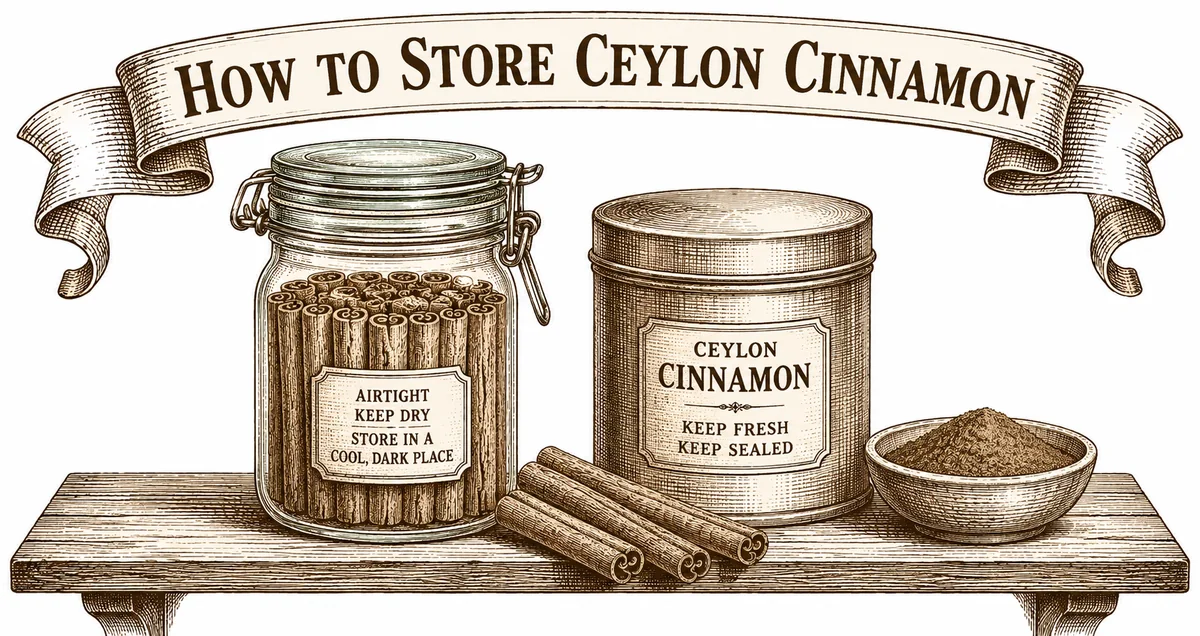
    The best way to store Ceylon cinnamon is in an airtight container kept in a cool, dark, dry place away from heat, light and moisture, ideally as whole quills rather than powder, since whole cinnamon keeps its aroma far longer. Stored well, whole Ceylon cinnamon quills stay flavourful for a few years, while ground cinnamon is at its best within about six months to a year.

    This guide explains exactly how to keep true Ceylon cinnamon (Cinnamomum verum) fresh: the conditions that spoil it, the best containers and locations, how long each form lasts, and simple habits that protect its delicate flavour. Good storage is the natural companion to buying well, so it pairs closely with our pillar Ceylon cinnamon buying guide.

    Why does storage matter for Ceylon cinnamon?

    Ceylon cinnamon owes its sweet, delicate flavour to naturally occurring aromatic oils, and those oils gradually escape and fade over time, a process that heat, light, air and moisture all speed up. Because true Ceylon cinnamon is prized for its subtle, complex aroma, protecting those volatile oils is the whole point of good storage. Poor storage doesn’t usually make cinnamon unsafe, but it does leave it dull, flat and far less fragrant than it should be, which matters most when you are cooking with a spice chosen for its finesse, as covered in our guide to culinary uses of Ceylon cinnamon.

    The four enemies of fresh cinnamon

    Keeping cinnamon fresh is mostly about shielding it from four things.

    Air

    Exposure to air lets the aromatic oils evaporate and oxidise, so an airtight container is the single most important safeguard. Every time a jar is opened some aroma is lost, so a well-sealed container that is not opened more than necessary keeps cinnamon lively for longer.

    Heat

    Warmth drives off the volatile oils faster, which is why a spot right next to the oven or hob is one of the worst places to keep cinnamon. A cool cupboard is far kinder to its flavour.

    Light

    Direct light, especially sunlight, degrades both colour and aroma over time. Storing cinnamon in a dark cupboard or an opaque container protects it.

    Moisture

    Damp is particularly harmful: moisture can cause clumping in powder and, in bad cases, mould. Always use a dry spoon in the jar and keep cinnamon well away from steam and humidity.

    The best way to store Ceylon cinnamon

    Putting those principles together gives a simple, reliable method.

    Use an airtight container

    Transfer cinnamon into a clean, dry, airtight jar or tin with a tight-fitting lid. Glass jars with good seals and opaque tins both work well; the key is that air and moisture cannot get in.

    Keep it cool, dark and dry

    Store the container in a cool, dark, dry cupboard, away from the oven, hob, kettle, dishwasher and any sunny windowsill. A pantry or an interior cupboard is ideal.

    Favour whole quills

    Wherever possible, store cinnamon as whole quills and grind only what you need. Whole cinnamon has far less surface area exposed to air, so it holds its aroma much longer than powder. The differences between forms and grades are covered in our guide to Ceylon cinnamon grades.

    How long does Ceylon cinnamon last?

    Shelf life depends mainly on the form and how well it is stored.

    Approximate flavour life of well-stored Ceylon cinnamon.
    FormBest flavour withinNotes
    Whole quills (sticks)Around 2, 3 yearsKeep longest; grind as needed
    Ground cinnamonAround 6, 12 monthsFades faster once ground
    Cinnamon in a blendUse by the blend’s dateOther spices may fade first

    These are guides to flavour, not safety. Dried cinnamon rarely “goes off” in a way that is unsafe if kept dry, but past these windows it simply tastes weaker. If in doubt, the aroma test below is the best judge.

    How to tell if your cinnamon is still good

    The simplest check is your nose. Fresh Ceylon cinnamon smells sweet, warm and fragrant; tired cinnamon smells faint or of almost nothing. With whole quills, snapping a piece or lightly scraping the surface releases fresh aroma; if little scent comes through, the cinnamon has faded. For powder, a quick sniff tells you a lot, a lively, sweet smell means it is still good, while a flat or dusty smell means it is past its best. Faded cinnamon is not harmful, but you may need to use more of it, or replace it, to get the flavour you want. Recognising genuine quality in the first place helps too, as set out in our guide to identifying authentic Ceylon cinnamon.

    Storing whole quills vs ground cinnamon

    The two forms have slightly different needs. Whole quills are forgiving: kept airtight, cool and dark, they stay aromatic for years, and grinding a small amount fresh gives a noticeably brighter flavour. Ground cinnamon is more delicate because its large surface area lets aroma escape quickly, so it benefits from an especially well-sealed container, storage in smaller quantities, and being used within a year. If you buy powder, buying amounts you will realistically use in that time avoids waste. This is one reason many keen cooks prefer to buy quills and grind as needed, a strategy discussed in our Ceylon cinnamon buying guide.

    Common storage mistakes to avoid

    A few everyday habits quietly shorten cinnamon’s life. Keeping the jar on a rack right beside the cooker exposes it to constant heat; storing it in a clear jar on a sunny counter subjects it to light; dipping a wet spoon into powder introduces moisture; and leaving a container loosely closed lets aroma drift away. Avoiding these, a sealed container in a cool, dark, dry cupboard, opened only when needed and used with a dry spoon, is really all it takes to keep Ceylon cinnamon at its fragrant best.

    Can you refrigerate or freeze Ceylon cinnamon?

    For everyday purposes, cinnamon does not need refrigeration or freezing; a cool, dark, dry cupboard is ideal and avoids the risk of condensation that a fridge or freezer can introduce. If you keep a large quantity of whole quills for the long term, an airtight container in a cool cupboard is usually enough. The most important thing is to protect cinnamon from moisture and temperature swings, so if a container is ever moved between cold and warm places, letting it come back to room temperature before opening helps prevent condensation inside.

    Summary

    Storing Ceylon cinnamon well is simple: keep it in an airtight container in a cool, dark, dry cupboard, away from heat, light and moisture, and favour whole quills over powder. Stored this way, whole quills stay fragrant for around two to three years, while ground cinnamon is best used within six to twelve months. Protect it from the four enemies, air, heat, light and moisture, use a dry spoon, and open the container only when you need it. When in doubt, trust your nose: sweet and fragrant means fresh, faint means faded. Faded cinnamon is not unsafe, just less flavourful, so good storage is really about preserving the delicate aroma that makes true Ceylon cinnamon special.

    Frequently asked questions

    How should I store Ceylon cinnamon?

    Keep it in an airtight container in a cool, dark, dry cupboard, away from heat, light and moisture. Whole quills store best; grind only what you need, and always use a dry spoon with powder.

    How long does Ceylon cinnamon last?

    Well-stored whole quills stay fragrant for around two to three years, while ground cinnamon is at its best within about six to twelve months. These are guides to flavour rather than safety, since dry cinnamon rarely becomes unsafe.

    Does Ceylon cinnamon go off?

    Kept dry, cinnamon rarely spoils in an unsafe way; instead it gradually loses aroma and tastes weaker. If it has been exposed to moisture and shows clumping or any sign of mould, discard it.

    Should I keep cinnamon in the fridge?

    No, a cool, dark, dry cupboard is better. Fridges and freezers can introduce condensation and moisture, which harm cinnamon. If a container is moved from cold to warm, let it reach room temperature before opening.

    This website provides educational information about Ceylon Cinnamon as a spice and food ingredient. It is not intended to provide medical advice or make health claims.
  • Where to Buy Authentic Ceylon Cinnamon

    Where to Buy Authentic Ceylon Cinnamon

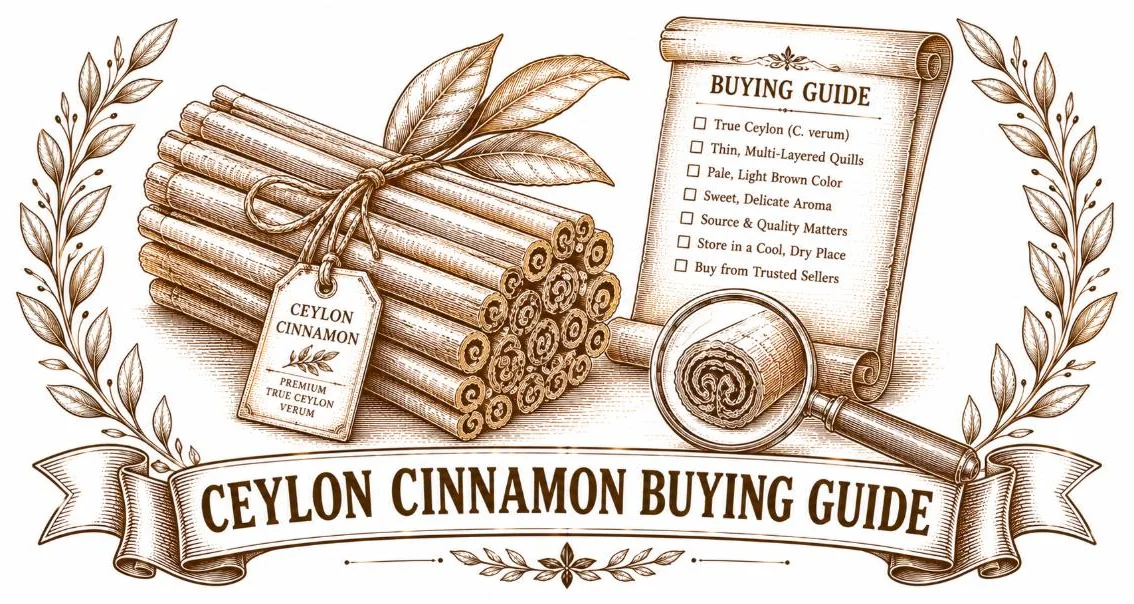
    The safest places to buy authentic Ceylon cinnamon (Cinnamomum verum) are specialist spice merchants, reputable online sellers that clearly state the species and Sri Lankan origin, and shops that sell whole quills you can inspect. Wherever you buy, the single most reliable rule is the same: look for the words Cinnamomum verum and an origin of Sri Lanka on the label, and treat anything simply sold as “cinnamon” with caution.

    This guide is not about pointing you to one shop. It is about teaching you how to recognise a trustworthy source anywhere in the world, so you can buy genuine Ceylon cinnamon with confidence rather than accidentally ending up with cheaper cassia. For the wider picture of choosing well, see our pillar guide, the Ceylon cinnamon buying guide.

    Where can you buy authentic Ceylon cinnamon?

    Ceylon cinnamon is sold through several kinds of outlets, each with strengths and trade-offs. Knowing what to expect from each helps you shop wisely.

    Specialist spice shops

    Dedicated spice merchants are often the best starting point. They tend to know their products, label species and origin clearly, and stock genuine Ceylon cinnamon rather than generic “cinnamon”. Because spices are their whole business, they are more likely to be able to answer questions about grade, harvest and source.

    Reputable online retailers

    Buying online opens up a much wider choice, including sellers who ship directly from Sri Lanka. The trade-off is that you cannot handle the product before buying, so you must rely on the listing. Favour sellers who state Cinnamomum verum, name Sri Lanka as the origin, show clear photographs of thin, layered quills, and describe the grade. Vague listings that only say “cinnamon” are best avoided.

    Supermarkets and general grocers

    Mainstream supermarkets usually sell cassia under the plain name “cinnamon”, though some now carry a clearly labelled Ceylon line as well. If you shop here, read the label carefully: the presence of the botanical name and a Sri Lankan origin is what separates true Ceylon cinnamon from the cassia sitting beside it. The reasons these two are so often confused are explained in our guide to Ceylon cinnamon vs cassia.

    Farmers’ markets and direct trade

    Some markets, delis and direct-trade sellers offer Ceylon cinnamon sourced from specific growers. These can be excellent, especially when the seller can tell you where the spice comes from. As always, confirm the species and origin rather than relying on the word “authentic” alone.

    What to look for in any seller

    Regardless of where you shop, the same signals separate a trustworthy source from a doubtful one.

    The botanical name is stated

    A reliable seller of true cinnamon will proudly display Cinnamomum verum (sometimes written Cinnamomum zeylanicum). If the species is missing and the product is simply “cinnamon”, assume it may be cassia until proven otherwise.

    The origin is Sri Lanka

    Genuine Ceylon cinnamon comes overwhelmingly from Sri Lanka. A clear country of origin, paired with the correct species, is a strong sign of authenticity. The farming tradition behind that origin is described in our guide to Sri Lankan cinnamon farming.

    Whole quills you can inspect

    Where possible, buy whole quills rather than powder, because their structure is hard to fake. True Ceylon quills are thin, pale and made of many soft layers rolled together, in contrast to the hard single curl of cassia. Being able to see or photograph the quills gives you a way to verify quality yourself, using the checks in our guide to how to spot fake Ceylon cinnamon.

    Transparent grade information

    Good sellers describe the grade of their cinnamon, from the delicate Alba to coarser grades, rather than leaving it unspecified. Understanding what these grades mean helps you judge whether the price is fair, as set out in our complete guide to Ceylon cinnamon grades.

    Whole quills or ground powder: which to buy

    Where you buy is closely tied to what form you buy. Each has its place.

    Choosing between whole quills and ground cinnamon when buying.
    FormBest forThings to watch
    Whole quillsVerifying authenticity; longer shelf lifeNeeds grinding for some recipes
    Ground powderConvenience and everyday bakingHarder to verify; can be adulterated

    Because ground cinnamon hides the tell-tale layered structure, it is easier to pass off cassia or fillers as Ceylon powder. If you are buying powder, it matters even more that the seller is reputable and that the label names the species and origin.

    Buying Ceylon cinnamon online safely

    Online is where most people now shop, so it deserves a closer look. Before you buy, check that the listing names Cinnamomum verum and Sri Lanka, shows real photographs rather than generic stock images, describes the grade, and comes from a seller with a track record of honest descriptions. Be wary of listings where the price is far lower than comparable Ceylon cinnamon, as unusually cheap “Ceylon” is a classic warning sign that the product may actually be cassia. When a listing is vague, ask the seller directly about species and origin before ordering.

    Why price is part of the picture

    True Ceylon cinnamon is more labour-intensive to harvest and hand-peel than cassia, so it almost always costs more. A realistic, somewhat higher price is normal and even reassuring; a suspiciously low price on something labelled “Ceylon” is a reason to look more closely. That said, a high price alone does not guarantee authenticity, so always combine the price signal with the species, origin and structural checks. The relationship between cost and quality is covered further in our Ceylon cinnamon buying guide.

    Questions worth asking before you buy

    Whether you are standing at a market stall or reading an online listing, a few simple questions quickly reveal how trustworthy a source is. Ask what the species is and expect to hear Cinnamomum verum. Ask where it is from and expect Sri Lanka. Ask about the grade and expect a specific answer rather than a shrug. A seller who can answer these clearly and consistently is far more likely to be product the real thing than one who deals only in the vague word “cinnamon”.

    Avoiding the most common mistakes

    Most disappointments come from a handful of avoidable errors. Buying purely on the word “cinnamon” without checking the species is the biggest one, because that word covers both true cinnamon and cassia. Assuming that “organic” or “premium” automatically means Ceylon is another, since those terms say nothing about the botanical species. Finally, chasing the lowest possible price often leads straight to cassia. Slowing down to read the label and verify the source is what separates a confident purchase from a lucky guess, and it builds naturally on knowing how to identify authentic Ceylon cinnamon.

    Summary

    You can buy authentic Ceylon cinnamon from specialist spice shops, reputable online sellers, some supermarkets, and direct-trade markets, but the outlet matters less than the checks you apply. Everywhere, the decisive signals are the same: the label names Cinnamomum verum, the origin is Sri Lanka, whole quills are thin and layered, the grade is stated, and the price is realistic rather than suspiciously cheap. Favour whole quills when you can, be extra careful with powder, ask sellers direct questions about species and origin, and don’t let words like “premium” or “organic” stand in for proof of authenticity. Apply these habits and you can shop with confidence wherever you are.

    Frequently asked questions

    Where is the best place to buy Ceylon cinnamon?

    Specialist spice merchants and reputable online sellers that clearly state Cinnamomum verum and a Sri Lankan origin are usually the most reliable. Being able to see whole quills, in person or in clear photos, is a further advantage.

    Can you buy real Ceylon cinnamon in supermarkets?

    Sometimes. Most supermarket “cinnamon” is cassia, but some stores now stock a clearly labelled Ceylon line. Check for the botanical name and a Sri Lankan origin to tell the two apart on the shelf.

    Is it safe to buy Ceylon cinnamon online?

    Yes, if you choose carefully. Favour listings that name Cinnamomum verum and Sri Lanka, show genuine photos of thin layered quills, describe the grade, and come from sellers with honest descriptions. Treat unusually cheap “Ceylon” cinnamon with caution.

    How do I know a seller’s Ceylon cinnamon is genuine?

    Ask about the species, origin and grade. A trustworthy seller will confirm Cinnamomum verum, name Sri Lanka, and give a specific grade. Whole quills you can inspect provide extra reassurance.

    This website provides educational information about Ceylon Cinnamon as a spice and food ingredient. It is not intended to provide medical advice or make health claims.

  • Ceylon Cinnamon Buying Guide

    Ceylon Cinnamon Buying Guide

    To buy good Ceylon cinnamon, look for a label naming Cinnamomum verum and Sri Lanka, choose whole quills over powder where you can, match the grade to your use and budget, and buy from a source that is transparent about origin. Whole Alba and Continental quills suit delicate cooking and gifting; thicker grades and quillings are great value for everyday use. This guide walks you through every decision.

    Buying true cinnamon can be confusing when so much cassia is sold simply as “cinnamon.” This practical guide helps you shop with confidence, what to check, sticks versus powder, which grade to pick, how to judge value, and the questions worth asking. If you are new to the spice, begin with what is true Ceylon cinnamon.

    1. Check the label first

    The single most important step is reading the label. Genuine Ceylon cinnamon should clearly indicate Cinnamomum verum (or the older synonym Cinnamomum zeylanicum), and ideally state “Ceylon cinnamon” or “true cinnamon” with Sri Lanka as the origin. If a product only says “cinnamon” with no species or country, treat it as cassia. Remember that “organic” and “premium” describe farming and marketing, not the species, see our identification guide for the full checks.

    2. Sticks (quills) or powder?

    Both have their place:

    • Whole quills keep their aroma far longer, can be inspected for authenticity, and are ideal for infusing drinks, curries and syrups. You can also grind them fresh as needed.
    • Powder is convenient for baking and dusting but loses fragrance faster and cannot be checked by eye, so buy it only from a trusted, clearly labelled source and in modest quantities.

    For most people, keeping whole quills and grinding small amounts gives the best flavour and confidence.

    3. Choose the right grade

    Grade is about quill thickness and finesse, not authenticity, all grades are genuine Ceylon cinnamon. Match it to the job:

    Matching grade to use and budget.
    GradeBest forValue
    Alba / C5 SpecialGifting, delicate desserts, drinksPremium
    Continental (C5 / C4)All-round premium cooking and bakingExcellent balance
    Mexican / HamburgEveryday baking, mulling, simmeringGreat value
    Quillings / featheringsGrinding your own powder, infusionsMost economical

    The full breakdown is in our complete guide to Ceylon cinnamon grades.

    4. Judge quality signs

    Good Ceylon cinnamon looks and smells alive: pale, evenly coloured quills with tight, neat rolls, few cracks, and a sweet, fragrant aroma. Dull, musty or oddly uniform-smelling products may be old or poorly stored. Freshness matters more than most shoppers realise, because aromatic oils fade over time, especially in powder.

    5. Understand price and value

    Ceylon cinnamon costs more than cassia because it is grown in a limited region and processed by hand, as explained in how Ceylon cinnamon is made. That premium is normal. Be wary of two extremes: prices far below typical Ceylon rates (often a sign it is really cassia), and premiums far above the norm that are not justified by grade or quality. Compare on a per-weight basis, and factor in that finer grades naturally cost more than thicker ones.

    6. Buy from transparent sources

    The best sellers are open about species, grade and origin, and can tell you where their cinnamon comes from. Single-origin Sri Lankan cinnamon with clear grade labelling is a good sign. When buying online, read descriptions carefully, look for the botanical name, and be cautious of listings that lean on vague health language rather than clear product detail.

    7. How much should you buy?

    Because aroma fades, buy quantities you will use within several months to a year rather than stockpiling. Whole quills keep longer than powder, so if you want to buy a little more at once, choose quills and grind as needed. Proper storage in an airtight container away from heat and light will help preserve freshness.

    A simple buying checklist

    • Label names Cinnamomum verum and Sri Lanka ✔
    • Whole quills chosen where possible ✔
    • Grade matched to your use and budget ✔
    • Quills pale, tightly rolled and fragrant ✔
    • Price consistent with genuine Ceylon cinnamon ✔
    • Seller transparent about origin ✔

    Where to buy: shops vs online

    Both specialist shops and reputable online sellers can be excellent sources. In person, you can inspect the quills for the pale colour, tight multi-layered roll and fragrant aroma described in our identification guide. Online, you trade that hands-on check for wider choice and often better prices, so lean on clear labelling, grade information, origin details and good photographs. Buying direct from suppliers who specialise in Sri Lankan cinnamon is often the most transparent route of all.

    Certifications and claims explained

    Labels carry various marks, and it helps to know what they mean. Organic certification concerns how the plant was grown, not the species, organic cassia exists. Fair trade and similar schemes relate to how farmers are paid. A Geographical Indication reference points to genuine Sri Lankan origin. None of these replaces the botanical name: always confirm Cinnamomum verum as well. Treat marketing words like “premium,” “pure” and “natural” as descriptions, not guarantees of species.

    Storing what you buy

    Good buying is wasted without good storage. Keep cinnamon in an airtight container away from heat, light and moisture, and keep whole quills separate from powder since quills last far longer. Buying quills and grinding small amounts as needed is the best way to keep flavour at its peak, and it means a single purchase stays fragrant for many months, a habit that pays off across all the dishes in our culinary guide.

    Buying Ceylon cinnamon as a gift

    Because fine Alba and C5 Special quills are visually striking and genuinely special, Ceylon cinnamon makes an excellent gift for cooks and food lovers. Choose a high grade, presented in a clear container that shows off the pale, neatly rolled quills, and include a note on origin and use. A gift of true cinnamon is also a small education in the difference between real cinnamon and the everyday cassia most people know.

    Matching cinnamon to how you cook

    The right purchase depends on your kitchen. If you mostly bake and dust, a jar of good Ceylon powder from a trusted source plus a few whole quills to grind fresh will serve you well. If you cook curries, rice and drinks that call for infusing, prioritise whole quills in a versatile Continental grade. If you love gifting or delicate desserts, add some fine Alba. And if you get through a lot of cinnamon, thicker grades and quillings give great value for grinding your own. Thinking about how you actually cook, rather than simply buying the cheapest or the most premium option, is the surest way to end up with cinnamon you will use and enjoy.

    How much cinnamon do you really need?

    It is tempting to buy in bulk, but aroma fades over time, so the freshest results come from buying quantities you will use within several months to a year. For most households a modest bag of whole quills goes a long way, since each quill can flavour many dishes and can be ground fresh as needed. If you cook with cinnamon heavily, buying a slightly larger amount of whole quills, which keep far better than powder, is the sensible compromise between value and freshness. Store the surplus airtight and cool, and it will stay fragrant for a long time.

    Red flags to watch for

    • No species or origin named, “cinnamon” alone usually means cassia.
    • Prices far below typical Ceylon rates, often a sign it is cassia.
    • Heavy reliance on health claims instead of clear product detail.
    • Very dark, thick, hard sticks described as Ceylon, the physical signs say otherwise.
    • Vague “premium” or “pure” wording with no botanical name to back it up.

    Treat any of these as a prompt to look more closely or choose another supplier. When species, grade, origin and a fair price all line up, you can buy with confidence, and the checks in our identification guide will confirm the rest once the product is in your hands.

    Summary

    Buying Ceylon cinnamon well comes down to a few habits: read the label for Cinnamomum verum and Sri Lanka, favour whole quills for freshness and authenticity, choose a grade that fits your cooking and budget, look for pale, fragrant, neatly rolled sticks, and buy from sellers who are transparent about origin. Expect to pay a fair premium over cassia, but be sceptical of prices that seem too good to be true. With these checks, you can be confident you are getting genuine true cinnamon.

    Frequently asked questions

    Where should I buy Ceylon cinnamon?

    From sellers who clearly state the species (Cinnamomum verum), grade and Sri Lankan origin. Single-origin, well-labelled products are a good sign, whether in specialist shops or reputable online stores.

    Why is Ceylon cinnamon so expensive?

    It is grown in a limited region and hand-processed through skilled peeling and rolling, which is labour-intensive. That craft, plus its quality and low coumarin, is reflected in the price.

    Should I buy cinnamon sticks or powder?

    Whole quills keep their aroma longer and can be checked for authenticity, so they are usually the better buy. Use powder for convenience, from a trusted source, in small amounts.

    What grade of Ceylon cinnamon should a home cook buy?

    Continental grades (C5/C4) are excellent all-rounders. Choose Alba for delicate or special uses, and thicker grades or quillings for everyday cooking and grinding.

    This website provides educational information about Ceylon Cinnamon as a spice and food ingredient. It is not intended to provide medical advice or make health claims.