Hamburg is the name of the thickest grade of true Ceylon cinnamon, Cinnamomum verum, from Sri Lanka. A Hamburg quill has the largest diameter of the main grades, which makes it coarser and bolder than the finer tiers, and it usually costs less. The name is a traditional trade label from the European markets the spice was sold into, not a different plant. When a cinnamon is labelled Hamburg, it tells you the bark has been rolled into thicker, sturdier quills and sorted into the lower, more affordable tier of the Ceylon cinnamon grading system, while still being genuine Ceylon cinnamon.
If you have seen Ceylon cinnamon sold as “Hamburg” and wondered what it means, this guide explains it clearly. It covers what Hamburg is, how it sits in the grading system, how it compares with the finer grades, and when it is a sensible choice. It builds on our pillar guide to Ceylon cinnamon grades.
The short answer
Hamburg is the thickest and lowest of the main Ceylon cinnamon grades, with the largest quill diameter, a coarser texture and a bolder flavour, and it is usually the most affordable. Ceylon cinnamon is graded mainly by the thickness, or diameter, of its rolled quills, and the thicker the quill, the lower the grade. Hamburg sits at the bottom of the main ladder, below the Mexican, Continental and Alba grades. It is still genuine Ceylon cinnamon, simply made of sturdier bark, which makes it practical and economical for everyday cooking.
Where the word Hamburg comes from
Hamburg takes its name from the German port city, one of the European markets that Ceylon cinnamon was shipped into during the long history of the spice trade. Several Ceylon cinnamon grade names, such as Hamburg, Mexican and Continental, come from the destinations or markets the different thicknesses of quill were sold to. The name is a traditional trade label rather than a description of a different type of cinnamon. Hamburg cinnamon is the same species, Cinnamomum verum, as every other grade of Ceylon cinnamon; it is just the thicker, lower class of quill sorted by diameter.
How Hamburg fits into the grading system
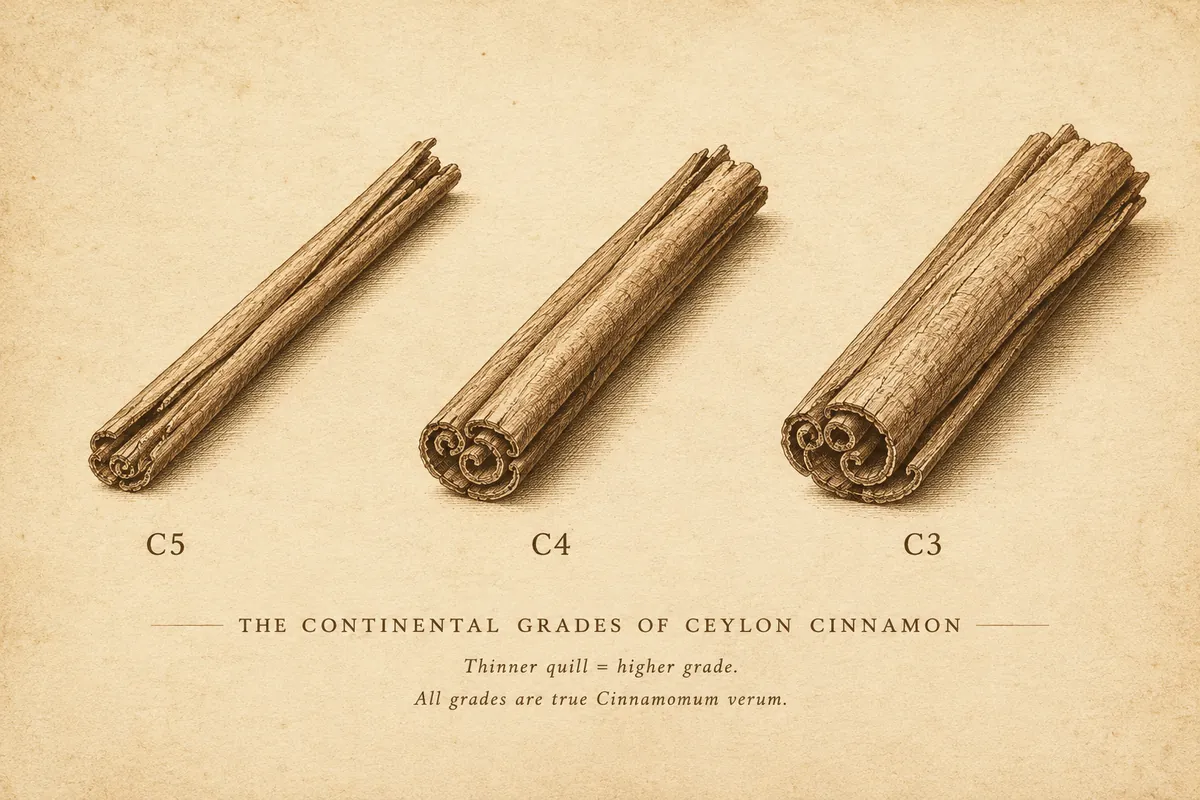
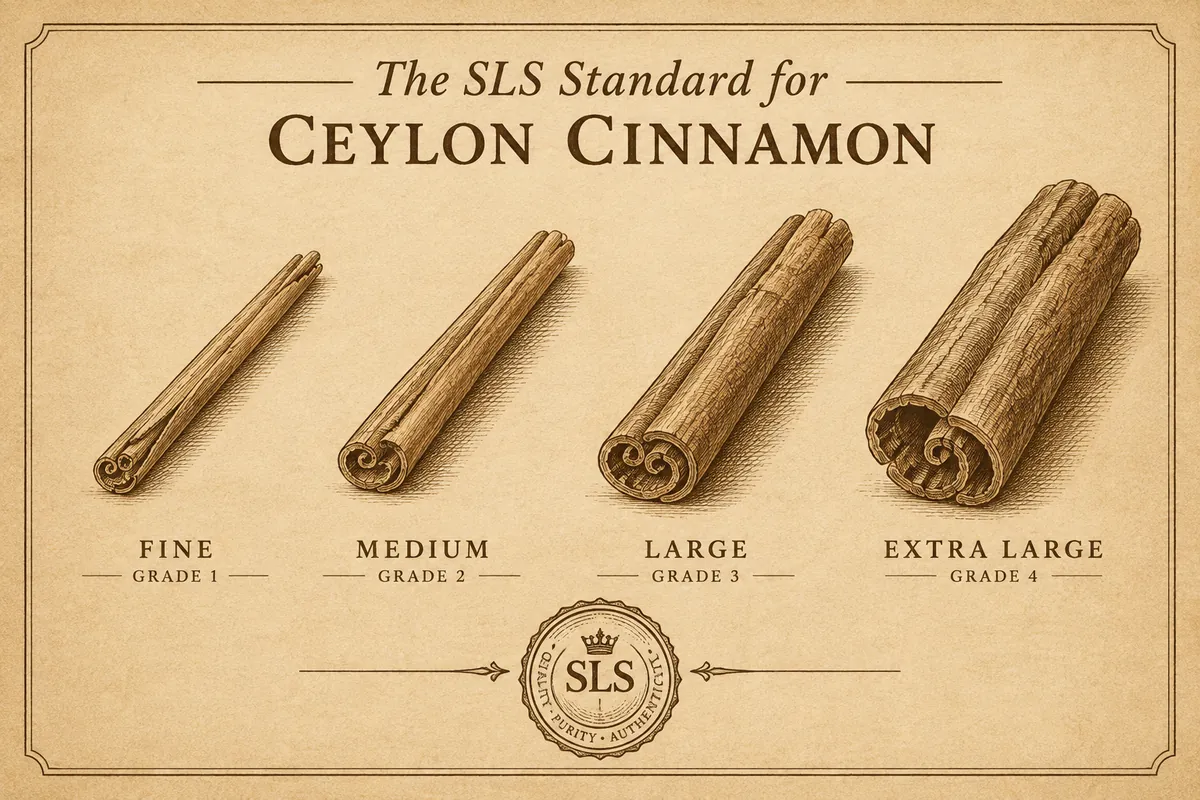
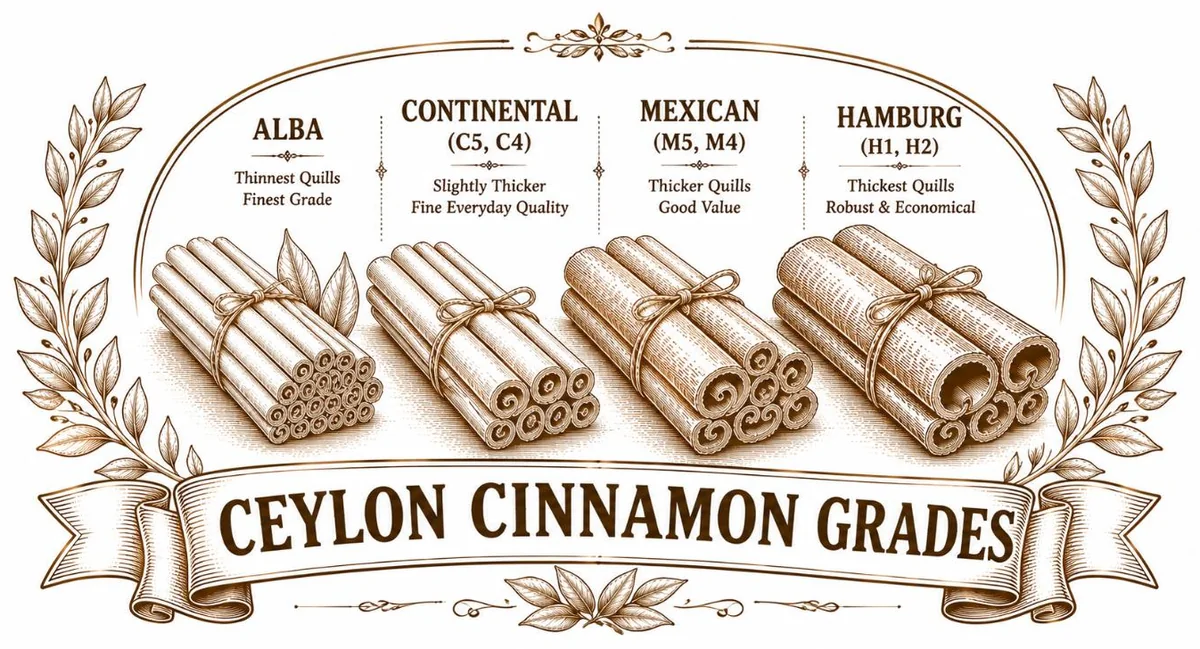
Ceylon cinnamon is graded by quill diameter, and the main grades run from the finest to the thickest. Alba is the thinnest and highest, followed by the Continental grades, then the Mexican grades, and then the Hamburg grades, which are the thickest of the main tiers. Within each there are numbered sub-grades. Hamburg therefore sits at the lower end of the ladder. Our guide to how Ceylon cinnamon is officially graded sets out the full system, and the pillar guide above lists every grade in order.
| Grade | Quill thickness | Position |
|---|---|---|
| Alba | Thinnest of all | Top grade |
| Continental | Thin | High grade |
| Mexican | Medium | Middle grade |
| Hamburg | Thickest | Lower grade |
What makes Hamburg a thicker grade
Hamburg quills are made from thicker pieces of bark, rolled into sturdier tubes with a larger diameter than the finer grades. Because the bark is thicker, the quills are firmer and coarser, and they are quicker to produce than the very thin Alba quills, which need more careful peeling. The result is a strong, practical quill. The extra thickness also gives Hamburg a slightly bolder flavour and a sturdier feel, while still carrying the sweet, mild character that sets Ceylon cinnamon apart from cassia. This combination of lower cost and genuine quality is what makes Hamburg popular for everyday use.
How Hamburg compares with the finer grades
The main difference between Hamburg and the finer grades is quill thickness, and everything else follows from that. Compared with the Mexican grade just above it, Hamburg is thicker and a little coarser. Compared with the Continental and Alba grades, which have much thinner quills, Hamburg is clearly sturdier and bolder, and far more affordable. The finer grades are prized for their delicacy and pale, neat quills, while Hamburg is valued for being economical and practical. Our guides to the Mexican grade and the Continental grade explain those tiers, and what Alba means covers the top grade. All of them are true Ceylon cinnamon.
What Hamburg means for flavour
Because Hamburg is made of thicker bark, its flavour is a little bolder and less delicate than the finest grades, though it keeps the sweet, mild, complex character of Ceylon cinnamon rather than the hot, sharp taste of cassia. The sturdier quills release their flavour well in long, slow cooking, which makes Hamburg a sound choice for simmered dishes, stocks and infusions where the cinnamon has time to give up its flavour. For delicate uses where a soft, refined scent matters most, a finer grade is often chosen, but for hearty everyday cooking, Hamburg does the job well and at a lower cost.
When Hamburg is the right choice
Hamburg is a sensible choice whenever you want genuine Ceylon cinnamon at the best value. For everyday cooking, baking, mulled drinks and long-simmered dishes, the thickness of the quill makes little difference to the finished dish, so paying more for a finer grade is rarely necessary. Where Hamburg is less suited is in presentation, or in delicate preparations where the appearance and softness of fine Alba or Continental quills are appreciated. So the grade to choose depends on the use: Hamburg for practical, economical, everyday cooking, and the finer grades where delicacy and looks matter, as our pillar guide explains.
How to recognise Hamburg
You can recognise Hamburg quills by their thickness. They are the sturdiest of the main Ceylon cinnamon grades, with a larger diameter and a coarser, firmer feel than the fine, pale Alba or Continental quills. Next to a thin grade, the difference is clear. The quills are still genuine Ceylon cinnamon, made of layered bark, so they should remain softer and more crumbly than a hard, single-layer cassia stick. On a label, the word Hamburg, alongside Ceylon cinnamon or Cinnamomum verum, tells you the grade directly. Our guide to cinnamon grading terms made simple helps with reading these labels.
A note on value and quality
It is worth being clear that a lower grade like Hamburg does not mean lower-quality cinnamon in the sense of being a different or inferior spice. All the main grades, from Alba to Hamburg, are the same species of true Ceylon cinnamon, graded only by the thickness of the quill. Hamburg is simply the thicker, more affordable tier. A genuine Hamburg grade from Sri Lanka is still the real thing, far superior in character to cheap cassia sold loosely as cinnamon. The main check remains the same: look for Cinnamomum verum and Sri Lankan origin on the label, and then choose the grade that suits your use and budget.
Summary
Hamburg is the name of the thickest grade of true Ceylon cinnamon, Cinnamomum verum, from Sri Lanka. The name comes from the German port that was one of the European markets the spice was traded into, and it is a trade label rather than a different plant. Ceylon cinnamon is graded by quill diameter, and Hamburg sits at the lower end of the main ladder, below the Mexican, Continental and Alba grades, with the largest diameter, a coarser texture and a bolder flavour. Its thicker quills make it quicker to produce and more affordable, which is why it suits everyday cooking, baking and long-simmered dishes. Hamburg is still genuine Ceylon cinnamon, so the grade is about thickness and value rather than authenticity: for practical, economical use it is an excellent choice, while the finer grades are preferred where delicacy and appearance matter.
Frequently asked questions
What does Hamburg mean in Ceylon cinnamon?
Hamburg is the name of the thickest grade of true Ceylon cinnamon. The quills have the largest diameter of the main grades, and the name comes from the German port that was one of the markets the spice was traded into. It is the lower, more affordable tier of the grading system.
Is Hamburg grade lower quality?
Not in the sense of being a different or inferior spice. Hamburg is the same species as all Ceylon cinnamon, graded only by quill thickness. It is the thicker, more affordable tier, still genuine Ceylon cinnamon and far better in character than cheap cassia.
How is Hamburg different from Alba?
Mainly in quill thickness. Alba is the thinnest and highest grade, with fine, pale, delicate quills, while Hamburg is the thickest, with sturdier, coarser quills and a bolder flavour. Alba is the most prized and expensive; Hamburg is the most economical.
Is Hamburg cinnamon good for cooking?
Yes. Hamburg is a sound, economical choice for everyday cooking, baking, mulled drinks and long-simmered dishes, where the thickness of the quill makes little difference to the result. Finer grades are preferred mainly for delicate uses and presentation.
Is Hamburg cinnamon still true Ceylon cinnamon?
Yes. A genuine Hamburg grade is true Ceylon cinnamon, Cinnamomum verum from Sri Lanka, simply sorted into the thicker, lower tier by diameter. Check the label for the species name and Sri Lankan origin to be sure it is the real thing rather than cassia.
This website provides educational information about Ceylon Cinnamon as a spice and food ingredient. It is not intended to provide medical advice or make health claims.