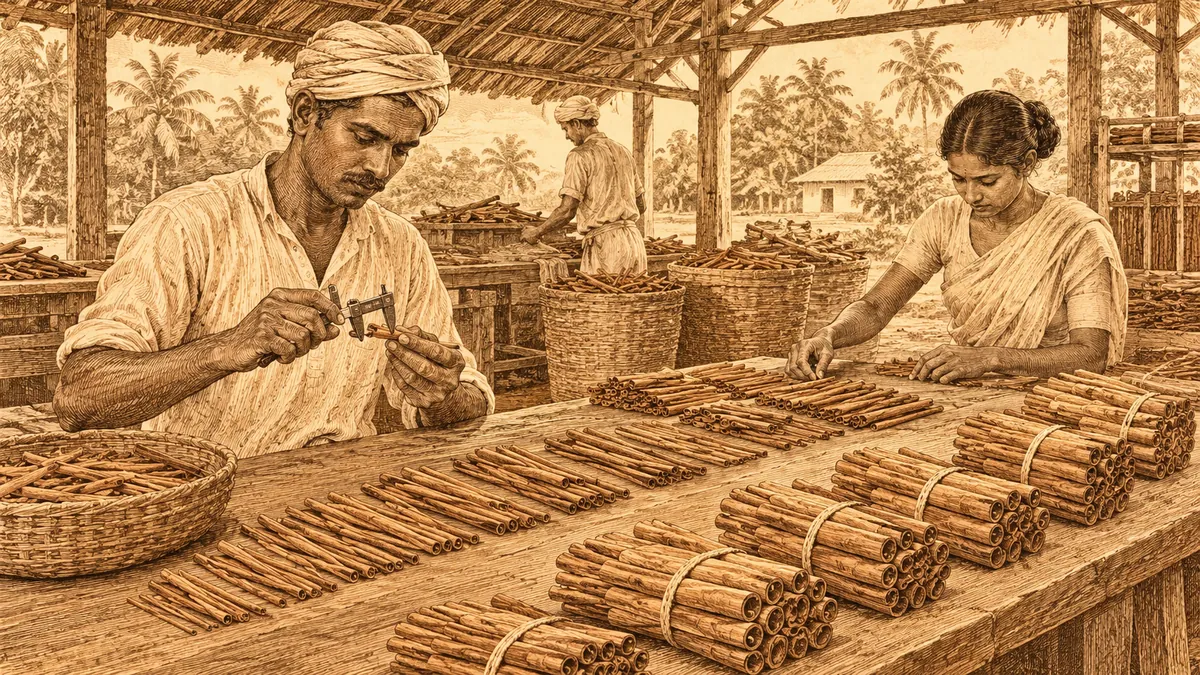
Ceylon cinnamon is officially graded by sorting the dried quills according to set rules for their diameter, appearance and quality, then labelling them with standard grade codes. The main grades run from the finest, Alba, through the Continental, Mexican and Hamburg families, with numbered sub-grades such as C5 or M5. Grading follows national standards in Sri Lanka, and quills are measured and inspected so that each grade means the same thing to every buyer.
Behind every tin of Ceylon cinnamon labelled with a grade is a formal system of sorting and measurement. This guide explains how that official grading works, what the grade codes mean and who sets the rules, in plain terms. It builds on our pillar guide, the complete guide to Ceylon cinnamon grades.
The short answer
Official grading sorts dried Ceylon cinnamon quills by measured diameter, appearance and defects into named grades, following Sri Lankan national standards. Thinner, finer, cleaner quills reach higher grades, while thicker or more flawed ones fall into lower ones. Each grade has a code, such as Alba, C5 Special, C5, M5 or H1, and a definition that sets the limits for that grade. Because the rules are written down and the quills are measured against them, a grade name carries the same meaning from one supplier to another.
What grading means
Grading is the process of sorting a crop into quality classes so that buyers know what they are getting. For Ceylon cinnamon, grading takes the finished, dried quills and divides them into grades based on measurable features. It does not change the cinnamon itself: a grade simply describes where a particular quill fits on a scale from finest to coarsest. This matters because cinnamon is traded worldwide, and a shared grading system lets a buyer order a grade and receive bark that matches it, without inspecting every quill in person.
What is measured
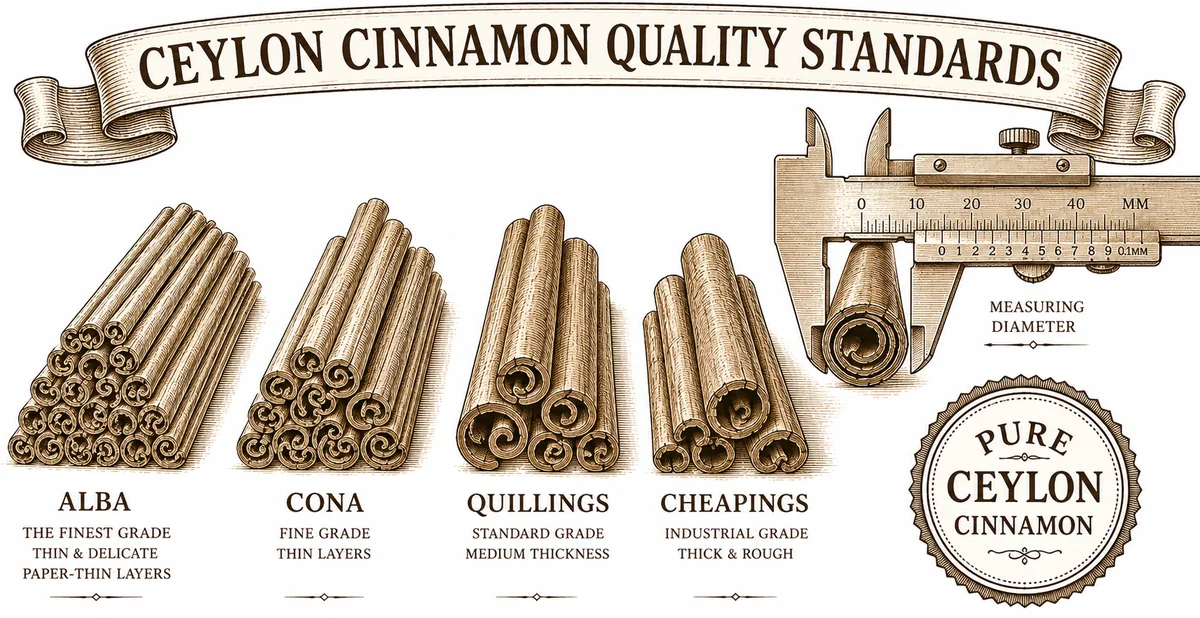
Official grading rests on a few clear, measurable features of each quill. The most important is diameter: the thickness of the rolled quill, measured across its width. Finer, thinner quills are more prized and reach higher grades, while thicker quills fall into lower grades. Alongside diameter, graders look at appearance and colour, the evenness and neatness of the quill, and the presence of any defects such as roughness, breakage or blemishes. Together these decide the grade. The emphasis on diameter is why the finest grade, Alba, is defined by a very small quill diameter.
The main grade families
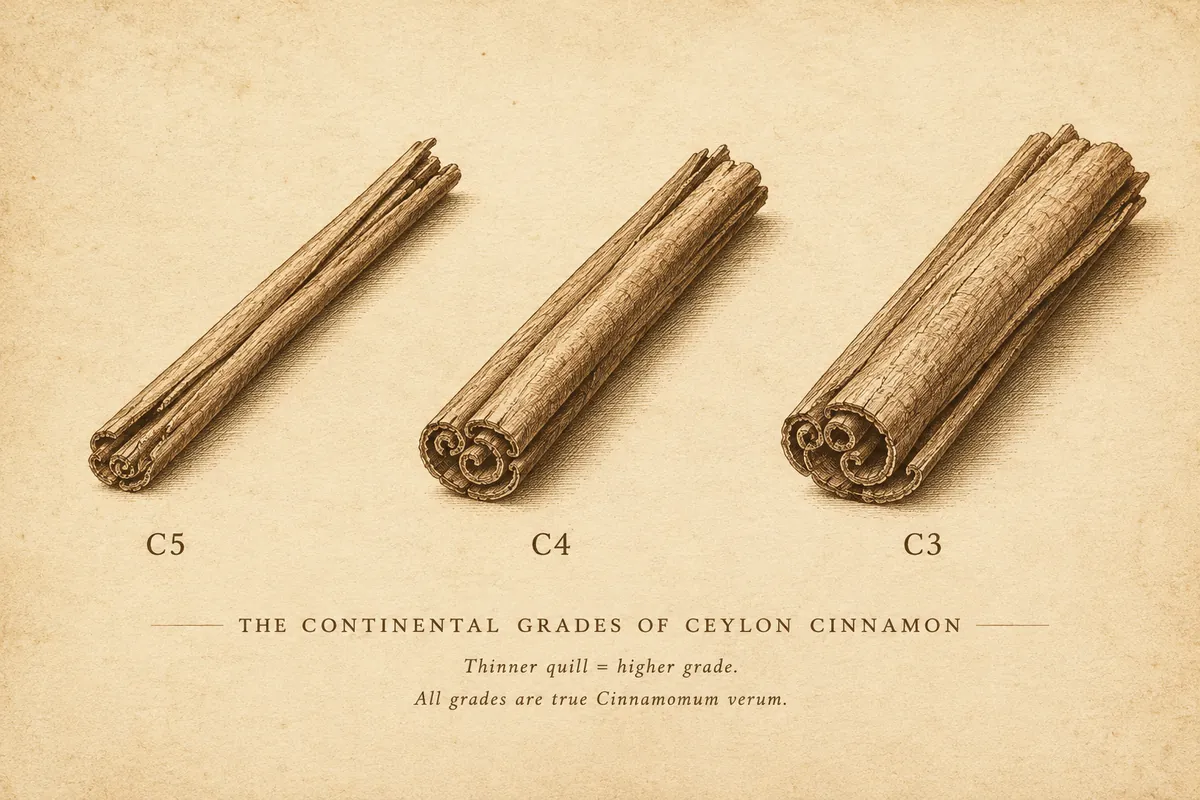
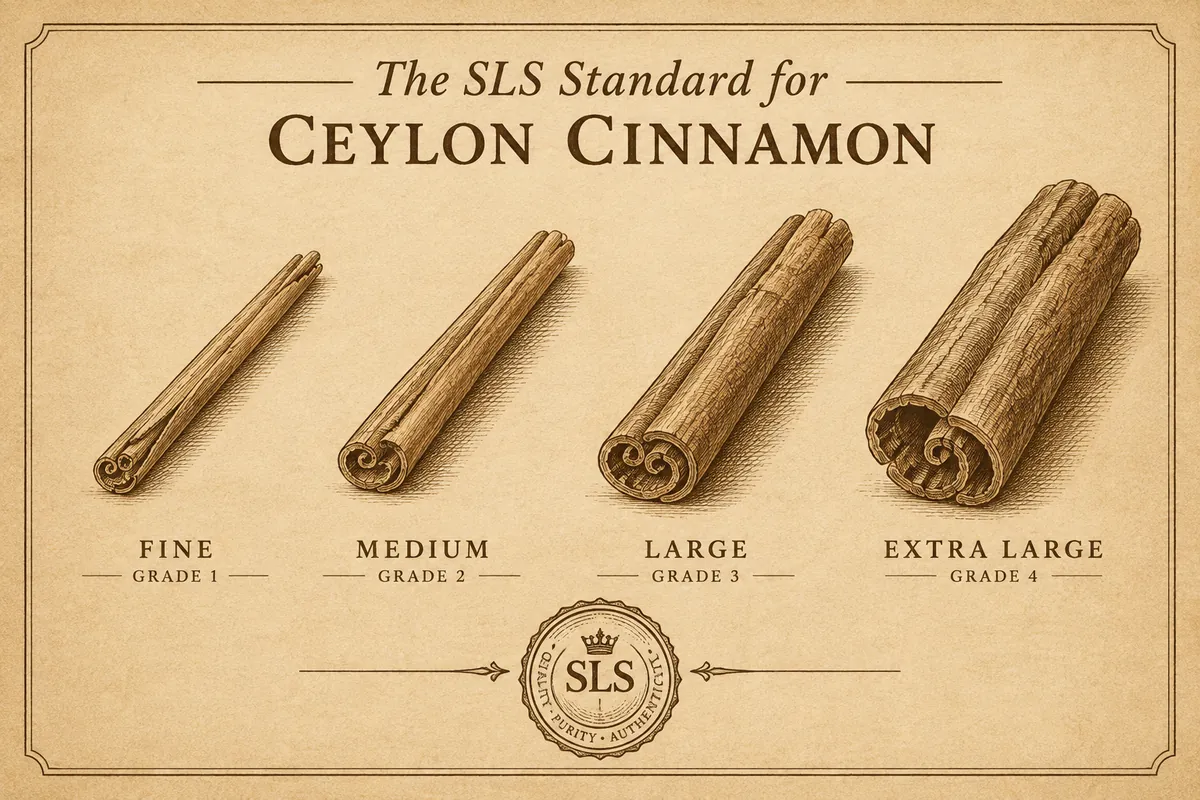
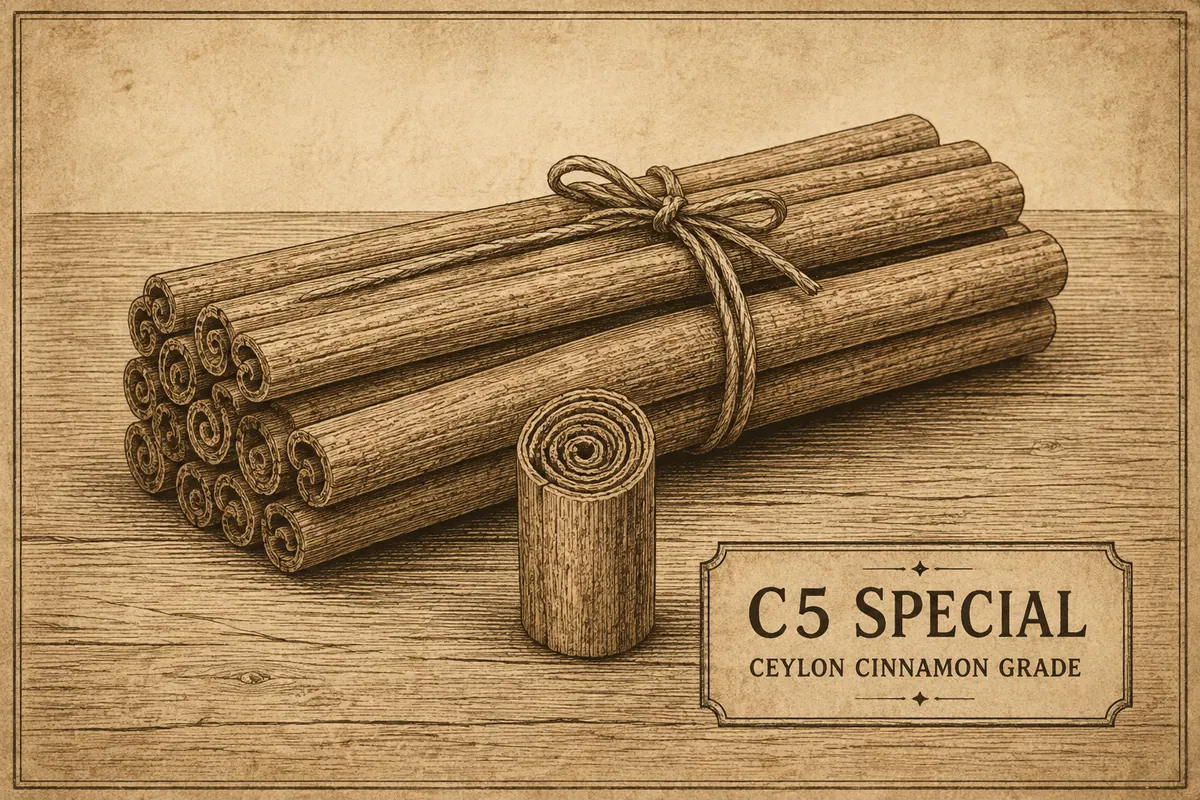
Ceylon cinnamon grades are organised into families, each with its own range of quill diameters. Alba is the finest and thinnest, the top of the scale. Below it, the Continental grades cover fine quills, the Mexican grades cover medium quills, and the Hamburg grades cover the thickest quills. Within these families, numbers mark sub-grades, so a label may read C5 Special, C5, C4, M5, M4 or H1, where the letter shows the family and the number relates to the diameter class. The result is a ladder of grades from Alba at the top down through the Hamburg range, each step allowing a slightly thicker quill.
| Grade family | Code | Quill character |
|---|---|---|
| Alba | Alba | Finest and thinnest, top grade |
| Continental | C5 Special, C5, C4 | Fine, thin quills |
| Mexican | M5, M4 | Medium quills |
| Hamburg | H1, H2, H3 | Thicker quills |
For a fuller description of what each grade name means, see our guide to cinnamon grading terms made simple.
Who sets the standards
The grading of Ceylon cinnamon is governed by official standards, most importantly the national standards of Sri Lanka. The Sri Lanka Standards Institution sets the rules for how cinnamon is classified, defining the grades and their requirements. There are also international standards, such as those issued by the International Organization for Standardization, which cover cinnamon quality and classification more broadly. These written standards are what make a grade official rather than a matter of opinion. Our guides to the SLS standard for Ceylon cinnamon and to ISO standards and cinnamon quality explain these bodies in more detail.
How quills are sorted in practice
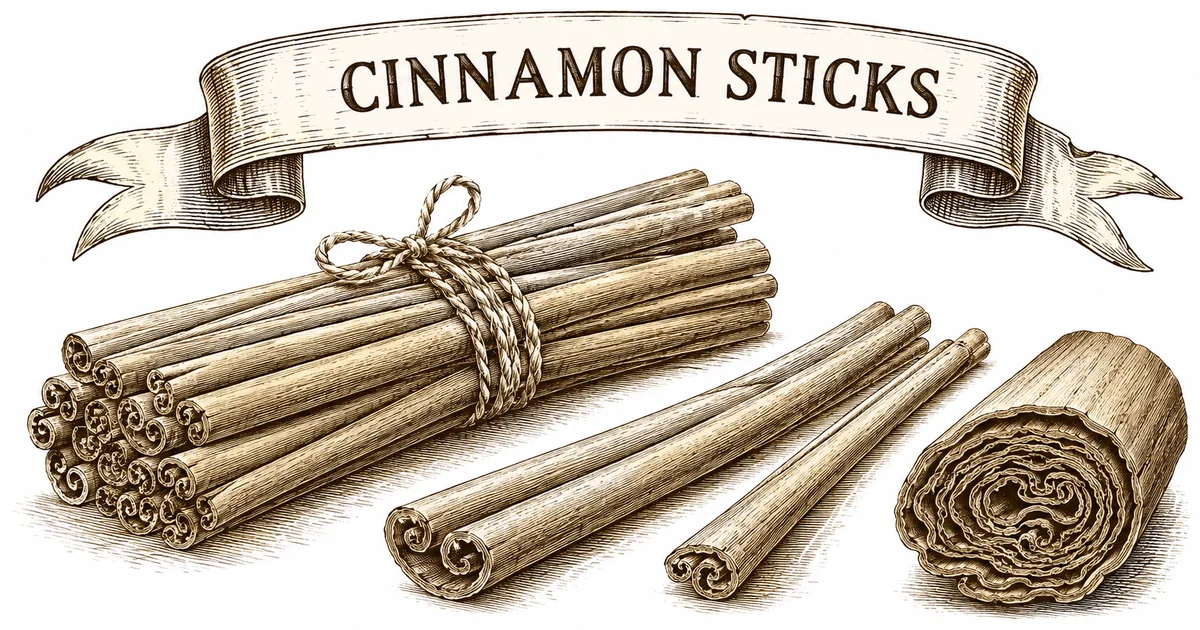
In practice, grading happens after the cinnamon has been peeled, rolled and dried. Workers sort the finished quills, judging and measuring their diameter and checking their appearance, and group together the quills that meet each grade’s definition. Skilled graders can assess quills quickly by eye and feel, having learned the diameter classes through long experience, while measurement confirms the borderline cases. The sorted quills are then bundled by grade, ready to be labelled and traded. This sorting step turns a mixed batch of quills into clearly defined grades that the market can price and buy.
Why official grading matters
Official grading gives Ceylon cinnamon a common language of quality. For producers, it allows their cinnamon to be sold at a fair price that matches its grade, rewarding the care taken in peeling and rolling fine quills. For buyers, it provides confidence: ordering a named grade means receiving bark that meets a defined standard, whether the buyer is a spice importer, a manufacturer or a retailer. For the trade as a whole, it supports trust and consistency, since everyone works from the same definitions. In this way grading underpins the reputation of Ceylon cinnamon as a carefully classified, high-quality spice.
Grading beyond whole quills
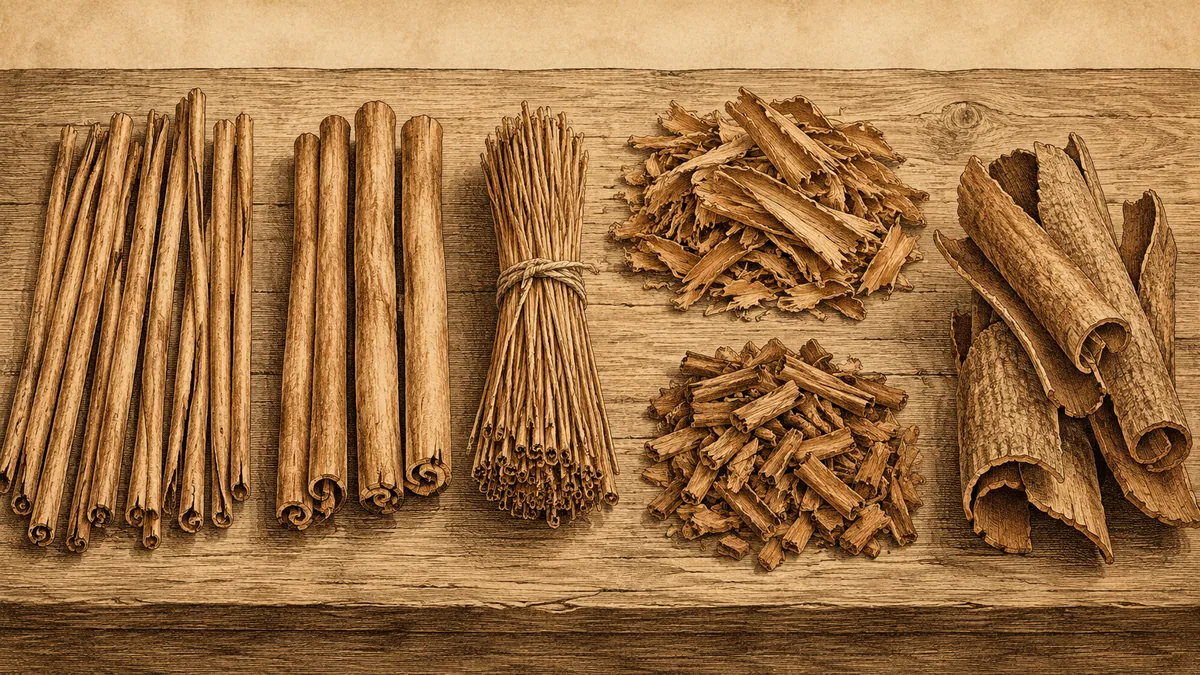
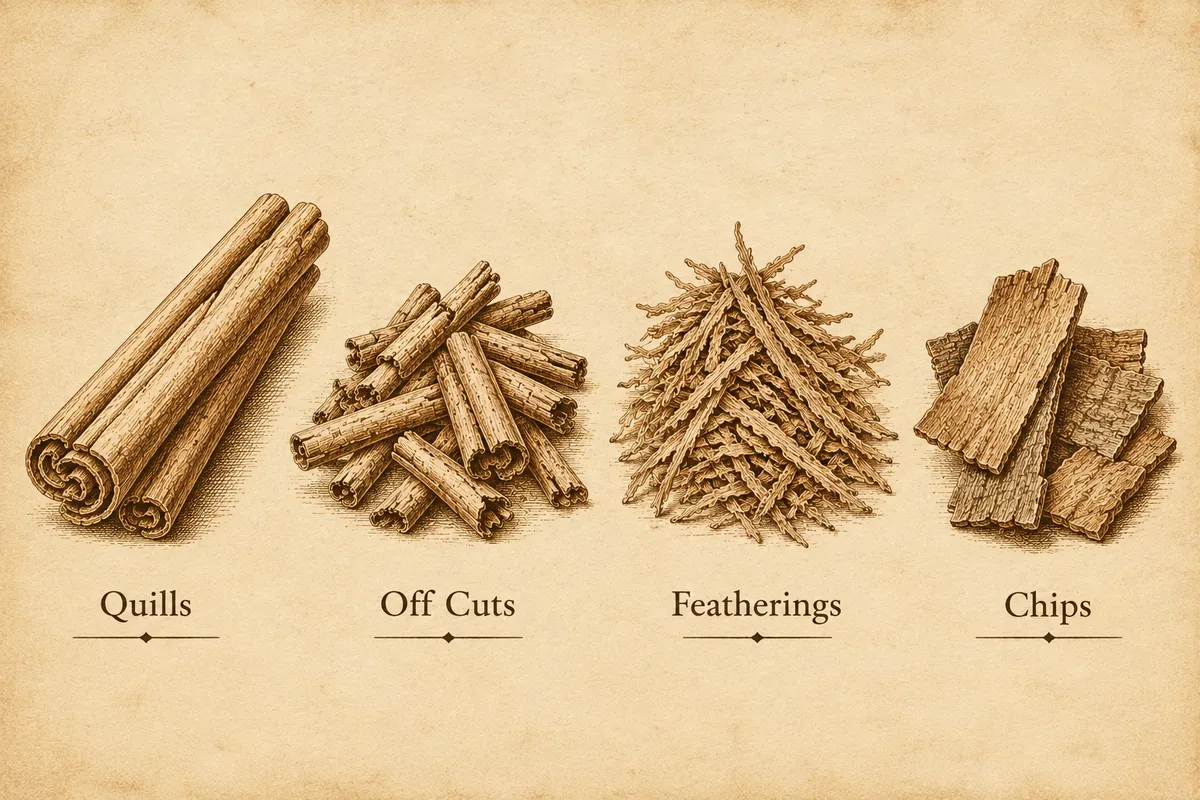
Official grading covers more than the prime quills. During peeling and sorting, not every piece of bark forms a perfect quill, and these other forms are graded too. Featherings are the small, thin inner pieces of bark; quillings are broken fragments of quills; and chips are small pieces of bark trimmed away or left over. Each of these has its own place in the grading system and its own uses, generally in grinding and flavouring rather than sale as whole sticks. Sorting them properly means the whole crop is classified, with prime quills graded by diameter and the remaining material graded into these named classes. Our glossary of feathering, quilling and chips explains these forms in detail.
Grading and price
Grade and price are closely linked. Because higher grades such as Alba require the finest, thinnest quills, which are more limited and take more skill to produce, they command higher prices. Lower grades, with thicker quills, are more plentiful and cost less. This is why grade is one of the first things a serious buyer looks at, and why the grade on a label is a useful guide to both quality and cost. Grading, in other words, is not only about quality description but also about how the market values different classes of cinnamon.
Summary
Ceylon cinnamon is officially graded by sorting the dried quills according to written standards, mainly those of the Sri Lanka Standards Institution, based on measurable features above all the quill’s diameter, together with appearance and defects. The grades form a ladder from the finest, Alba, through the Continental, Mexican and Hamburg families, each marked by a code such as C5, M5 or H1. Grading takes place after peeling, rolling and drying, when workers sort and measure the quills and bundle them by grade. Because the rules are set down and applied consistently, a grade carries the same meaning for every buyer, which supports fair pricing, buyer confidence and the reputation of Ceylon cinnamon as a well-classified spice.
Frequently asked questions
How is Ceylon cinnamon officially graded?
It is graded by sorting the dried quills according to set standards, mainly the quill’s diameter along with its appearance and any defects. Finer, thinner quills reach higher grades, and each grade has a code and a written definition under Sri Lankan national standards.
What is the highest grade of Ceylon cinnamon?
Alba is the highest and finest grade. It is defined by a very small quill diameter, meaning the thinnest, most delicate quills. Because such quills are limited and skilled to produce, Alba is the most prized and most costly grade.
What do the grade codes like C5 or M5 mean?
The letter shows the grade family, such as C for Continental or M for Mexican, and the number relates to the diameter class within that family. So C5 and M5 are specific sub-grades, each covering quills of a defined thickness.
Who sets the grading standards for Ceylon cinnamon?
The main authority is the Sri Lanka Standards Institution, which sets national standards defining the grades. International standards from the International Organization for Standardization also cover cinnamon quality and classification. These written rules make the grades official.
Does the grade affect the price of cinnamon?
Yes. Higher grades such as Alba, made from the finest, thinnest quills, are more limited and command higher prices, while lower grades with thicker quills cost less. Grade is therefore a useful guide to both quality and price.
This website provides educational information about Ceylon Cinnamon as a spice and food ingredient. It is not intended to provide medical advice or make health claims.