Tag: Cinnamon grades

  • Ceylon Cinnamon Alba Grade Explained

    Ceylon Cinnamon Alba Grade Explained

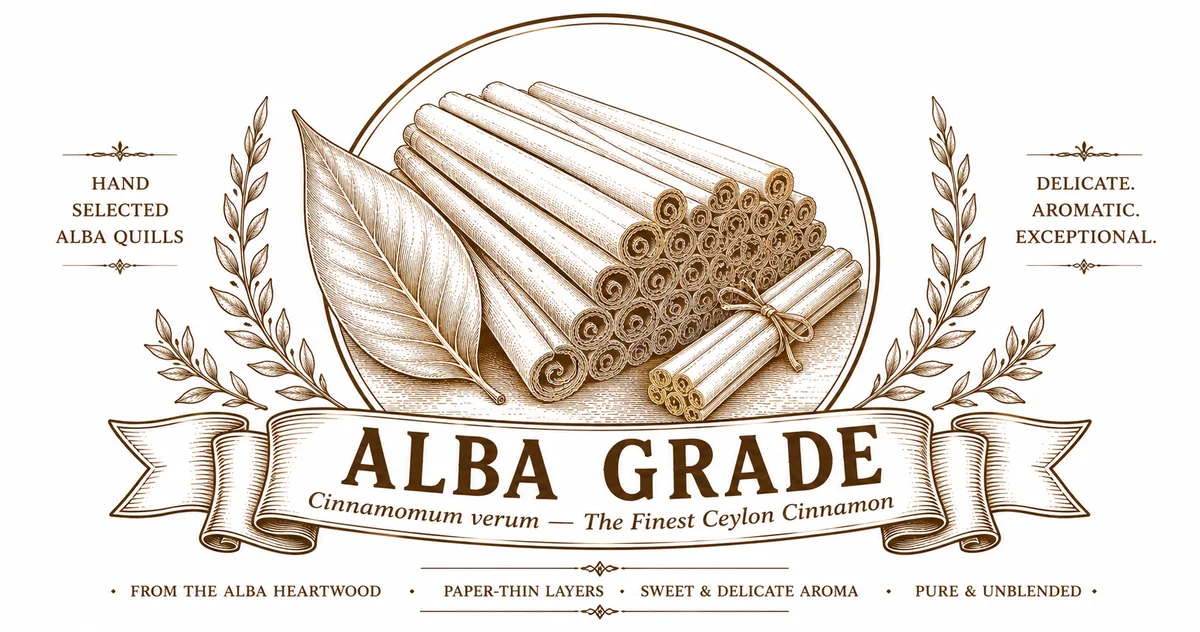
    Alba is the highest and most refined grade of Ceylon cinnamon. The name refers to the very thinnest, most delicate quills, those with the smallest diameter, which are prized for their pale colour, fine texture and sweet, mellow aroma. In the Ceylon cinnamon grading system, the thinner the quill, the higher the grade, and Alba sits right at the top.

    If you have seen “Alba” on a packet of cinnamon and wondered what it means, this guide explains it clearly: what the Alba grade is, how it fits into the wider grading system, why it commands the highest price, and whether it is the right choice for you. For the full overview of every grade, see our pillar guide on Ceylon cinnamon grades.

    What is Alba grade Ceylon cinnamon?

    Alba is the top grade of true Ceylon cinnamon (Cinnamomum verum), made from the thinnest quills produced during processing. Ceylon cinnamon quills are graded largely by their diameter: after the bark is peeled, dried and rolled into quills, they are sorted by thickness, and the finest, narrowest quills are classified as Alba. Because only a portion of any harvest yields quills thin enough to qualify, Alba is relatively scarce, which is part of why it is the most sought-after grade.

    How the grading system works

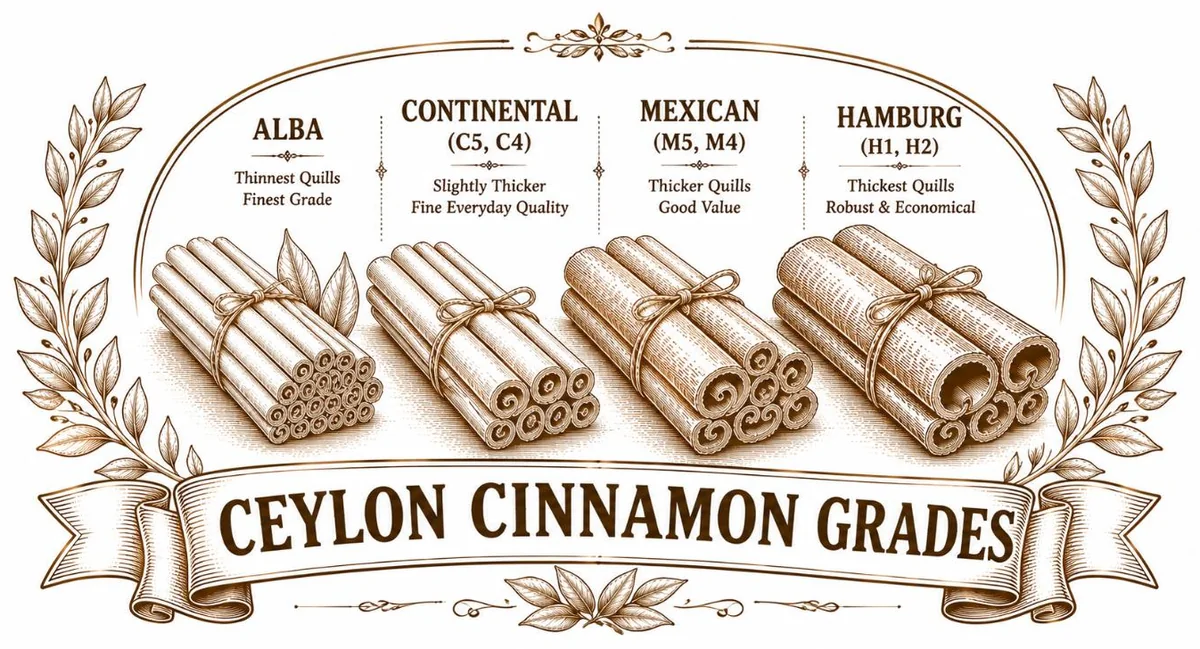
    Ceylon cinnamon grades are based on quill diameter, measured in millimetres, with smaller diameters earning higher grades. The main families of grades, from finest to coarsest, are broadly: Alba (the thinnest of all), then the Continental grades (such as C5 Special, C5 and C4), the Mexican grades (M5, M4) and the Hamburg grades (H1, H2). Each step down the ladder represents a slightly thicker quill. Alba typically has the smallest diameter of any grade, often cited at around 6 millimetres, which is why it feels so fine and papery. For the individual grades below Alba, see our guides to Continental grade and the other grade families linked from the grades pillar.

    Why quill diameter matters

    Diameter is used for grading because it closely reflects the quality of the bark and the skill of the peeler. The thinnest quills come from carefully selected, well-grown shoots and require the most expert hand-peeling to produce, as described in how Ceylon cinnamon is made. A thin quill also tends to have a more delicate structure and a smoother, more even surface. So while diameter is a physical measurement, it stands in for a whole set of quality attributes, fineness, appearance and craftsmanship, that buyers value.

    What makes Alba special

    Several qualities set Alba apart from the grades below it:

    Fine, papery texture

    Alba quills are exceptionally thin and delicate, closer to fine paper than to the harder bark of lower grades. They break and grind very easily, which makes them pleasant to work with in the kitchen.

    Pale, even colour

    Alba tends to have a light, uniform tan colour, reflecting the fine inner bark from which it is made. This pale appearance is one of the visual hallmarks people associate with premium Ceylon cinnamon.

    Delicate aroma and flavour

    Because it is made from the finest bark, Alba carries the sweet, gentle, complex aroma that Ceylon cinnamon is known for, without harshness. It is subtle rather than pungent, a quality that suits delicate dishes and beverages.

    Alba vs other Ceylon cinnamon grades

    A simplified comparison. All grades are true Ceylon cinnamon; they differ mainly in quill diameter.
    Grade familyRelative diameterCharacter
    AlbaThinnest / finestMost delicate, palest, premium
    Continental (C5, C4…)Slightly thickerFine, widely used, excellent quality
    Mexican (M5, M4)Thicker againGood everyday quality
    Hamburg (H1, H2)ThickestRobust, more economical

    It is worth stressing that every one of these grades is genuine Ceylon cinnamon from Cinnamomum verum. A lower grade is not lower quality in the sense of being a different, inferior species, it simply has a thicker quill. This is quite different from the distinction between Ceylon and cassia, which are different plants entirely, as explained in Ceylon cinnamon vs cassia.

    Why is Alba the most expensive grade?

    Alba costs more than other grades for a few connected reasons. First, it is scarce: only the finest quills from a harvest qualify, so there is simply less of it. Second, it demands the highest level of skill to peel and roll the very thin bark without tearing it, which is labour-intensive and time-consuming. Third, its fineness and appearance make it the grade most in demand for premium presentation. Together, scarcity, craftsmanship and demand push Alba to the top of the price range, a dynamic covered further in the Ceylon cinnamon buying guide.

    Is Alba worth it?

    Whether Alba is worth the premium depends on how you use cinnamon. For gifts, fine presentation, or delicate dishes and drinks where a subtle, refined flavour matters, Alba’s fineness is a genuine pleasure. For everyday cooking, baking or long-simmered dishes, a Continental or Mexican grade delivers the same true-cinnamon character at a lower price, and the difference in the finished dish may be modest. In other words, Alba is not “better cinnamon” in a way that transforms every recipe, it is the finest, most delicate expression of the same spice, and its value depends on whether that refinement matters for your particular use.

    How to use Alba cinnamon

    Because Alba is so fine and delicate, it shines where its subtlety can be appreciated: in lightly spiced desserts, warm milk and infusions, delicate baking, and beverages such as tea or coffee. Its thin quills grind smoothly for fresh powder and crumble easily into gentle infusions. In robust, heavily spiced dishes its finesse can be lost among stronger flavours, so many cooks reserve Alba for recipes where cinnamon is a star rather than a background note. For broader ideas, see our guide to the culinary uses of Ceylon cinnamon.

    How to buy genuine Alba

    When buying Alba, look for a label that names the grade and confirms the species and origin, genuine Alba should be described as Ceylon cinnamon, Cinnamomum verum, from Sri Lanka. The quills themselves should look very thin, pale and uniform, rolled into many fine layers. Be a little cautious of unusually cheap “Alba”, since the grade is naturally costly to produce; a price far below the norm may indicate mislabelling. Reputable suppliers are usually happy to state the grade clearly, and some provide details of origin and quality. Our guide to identifying authentic Ceylon cinnamon covers the visual checks in more detail.

    Common misunderstandings about Alba

    A few points often cause confusion. Alba is a grade, not a species or a place, it tells you about the quill’s fineness, not a different type of cinnamon. A higher grade does not mean the lower grades are “fake” or poor; they are all true Ceylon cinnamon. And grade is separate from freshness and storage: even the finest Alba will lose aroma if it is old or poorly kept, so buying from a source with good turnover and storing it well matters as much as the grade itself. Keeping these distinctions clear helps you shop with confidence rather than paying for a name alone.

    Summary

    Alba is the finest, highest grade of Ceylon cinnamon, made from the thinnest quills with the smallest diameter, often around 6 millimetres. It is prized for its pale, even colour, its exceptionally fine and papery texture, and its sweet, delicate aroma. It sits above the Continental, Mexican and Hamburg grade families, all of which are also genuine Cinnamomum verum but with progressively thicker quills. Alba is the most expensive grade because it is scarce, skill-intensive to produce and highly sought after. It is a lovely choice for delicate dishes, drinks and gifts, while lower grades offer the same true-cinnamon character at a friendlier price for everyday cooking.

    Frequently asked questions

    What does Alba mean in Ceylon cinnamon?

    Alba is the top grade of Ceylon cinnamon, made from the thinnest, finest quills. It refers to quill diameter, not a different species, it is still true Cinnamomum verum.

    Is Alba the best Ceylon cinnamon grade?

    Alba is the highest grade by fineness, with the smallest quill diameter and most delicate character. Whether it is “best” for you depends on your use; lower grades are the same species and excellent for everyday cooking.

    Why is Alba cinnamon so expensive?

    Because it is scarce, requires the most skilled hand-peeling of very thin bark, and is in high demand. Scarcity, craftsmanship and demand together make it the priciest grade.

    Is a lower grade of Ceylon cinnamon worse quality?

    Not in terms of authenticity. Lower grades such as Continental or Hamburg are all genuine Ceylon cinnamon; they simply have thicker quills. They offer the same true-cinnamon flavour at a lower price.

    This website provides educational information about Ceylon Cinnamon as a spice and food ingredient. It is not intended to provide medical advice or make health claims.
  • Ceylon Cinnamon Buying Guide

    Ceylon Cinnamon Buying Guide

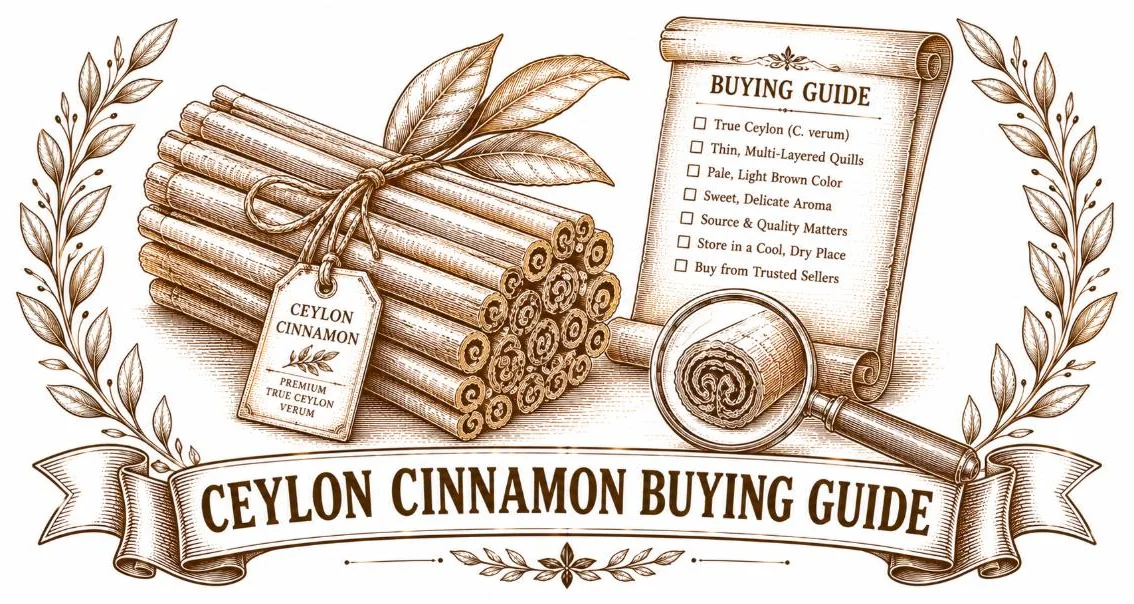
    To buy good Ceylon cinnamon, look for a label naming Cinnamomum verum and Sri Lanka, choose whole quills over powder where you can, match the grade to your use and budget, and buy from a source that is transparent about origin. Whole Alba and Continental quills suit delicate cooking and gifting; thicker grades and quillings are great value for everyday use. This guide walks you through every decision.

    Buying true cinnamon can be confusing when so much cassia is sold simply as “cinnamon.” This practical guide helps you shop with confidence, what to check, sticks versus powder, which grade to pick, how to judge value, and the questions worth asking. If you are new to the spice, begin with what is true Ceylon cinnamon.

    1. Check the label first

    The single most important step is reading the label. Genuine Ceylon cinnamon should clearly indicate Cinnamomum verum (or the older synonym Cinnamomum zeylanicum), and ideally state “Ceylon cinnamon” or “true cinnamon” with Sri Lanka as the origin. If a product only says “cinnamon” with no species or country, treat it as cassia. Remember that “organic” and “premium” describe farming and marketing, not the species, see our identification guide for the full checks.

    2. Sticks (quills) or powder?

    Both have their place:

    • Whole quills keep their aroma far longer, can be inspected for authenticity, and are ideal for infusing drinks, curries and syrups. You can also grind them fresh as needed.
    • Powder is convenient for baking and dusting but loses fragrance faster and cannot be checked by eye, so buy it only from a trusted, clearly labelled source and in modest quantities.

    For most people, keeping whole quills and grinding small amounts gives the best flavour and confidence.

    3. Choose the right grade

    Grade is about quill thickness and finesse, not authenticity, all grades are genuine Ceylon cinnamon. Match it to the job:

    Matching grade to use and budget.
    GradeBest forValue
    Alba / C5 SpecialGifting, delicate desserts, drinksPremium
    Continental (C5 / C4)All-round premium cooking and bakingExcellent balance
    Mexican / HamburgEveryday baking, mulling, simmeringGreat value
    Quillings / featheringsGrinding your own powder, infusionsMost economical

    The full breakdown is in our complete guide to Ceylon cinnamon grades.

    4. Judge quality signs

    Good Ceylon cinnamon looks and smells alive: pale, evenly coloured quills with tight, neat rolls, few cracks, and a sweet, fragrant aroma. Dull, musty or oddly uniform-smelling products may be old or poorly stored. Freshness matters more than most shoppers realise, because aromatic oils fade over time, especially in powder.

    5. Understand price and value

    Ceylon cinnamon costs more than cassia because it is grown in a limited region and processed by hand, as explained in how Ceylon cinnamon is made. That premium is normal. Be wary of two extremes: prices far below typical Ceylon rates (often a sign it is really cassia), and premiums far above the norm that are not justified by grade or quality. Compare on a per-weight basis, and factor in that finer grades naturally cost more than thicker ones.

    6. Buy from transparent sources

    The best sellers are open about species, grade and origin, and can tell you where their cinnamon comes from. Single-origin Sri Lankan cinnamon with clear grade labelling is a good sign. When buying online, read descriptions carefully, look for the botanical name, and be cautious of listings that lean on vague health language rather than clear product detail.

    7. How much should you buy?

    Because aroma fades, buy quantities you will use within several months to a year rather than stockpiling. Whole quills keep longer than powder, so if you want to buy a little more at once, choose quills and grind as needed. Proper storage in an airtight container away from heat and light will help preserve freshness.

    A simple buying checklist

    • Label names Cinnamomum verum and Sri Lanka ✔
    • Whole quills chosen where possible ✔
    • Grade matched to your use and budget ✔
    • Quills pale, tightly rolled and fragrant ✔
    • Price consistent with genuine Ceylon cinnamon ✔
    • Seller transparent about origin ✔

    Where to buy: shops vs online

    Both specialist shops and reputable online sellers can be excellent sources. In person, you can inspect the quills for the pale colour, tight multi-layered roll and fragrant aroma described in our identification guide. Online, you trade that hands-on check for wider choice and often better prices, so lean on clear labelling, grade information, origin details and good photographs. Buying direct from suppliers who specialise in Sri Lankan cinnamon is often the most transparent route of all.

    Certifications and claims explained

    Labels carry various marks, and it helps to know what they mean. Organic certification concerns how the plant was grown, not the species, organic cassia exists. Fair trade and similar schemes relate to how farmers are paid. A Geographical Indication reference points to genuine Sri Lankan origin. None of these replaces the botanical name: always confirm Cinnamomum verum as well. Treat marketing words like “premium,” “pure” and “natural” as descriptions, not guarantees of species.

    Storing what you buy

    Good buying is wasted without good storage. Keep cinnamon in an airtight container away from heat, light and moisture, and keep whole quills separate from powder since quills last far longer. Buying quills and grinding small amounts as needed is the best way to keep flavour at its peak, and it means a single purchase stays fragrant for many months, a habit that pays off across all the dishes in our culinary guide.

    Buying Ceylon cinnamon as a gift

    Because fine Alba and C5 Special quills are visually striking and genuinely special, Ceylon cinnamon makes an excellent gift for cooks and food lovers. Choose a high grade, presented in a clear container that shows off the pale, neatly rolled quills, and include a note on origin and use. A gift of true cinnamon is also a small education in the difference between real cinnamon and the everyday cassia most people know.

    Matching cinnamon to how you cook

    The right purchase depends on your kitchen. If you mostly bake and dust, a jar of good Ceylon powder from a trusted source plus a few whole quills to grind fresh will serve you well. If you cook curries, rice and drinks that call for infusing, prioritise whole quills in a versatile Continental grade. If you love gifting or delicate desserts, add some fine Alba. And if you get through a lot of cinnamon, thicker grades and quillings give great value for grinding your own. Thinking about how you actually cook, rather than simply buying the cheapest or the most premium option, is the surest way to end up with cinnamon you will use and enjoy.

    How much cinnamon do you really need?

    It is tempting to buy in bulk, but aroma fades over time, so the freshest results come from buying quantities you will use within several months to a year. For most households a modest bag of whole quills goes a long way, since each quill can flavour many dishes and can be ground fresh as needed. If you cook with cinnamon heavily, buying a slightly larger amount of whole quills, which keep far better than powder, is the sensible compromise between value and freshness. Store the surplus airtight and cool, and it will stay fragrant for a long time.

    Red flags to watch for

    • No species or origin named, “cinnamon” alone usually means cassia.
    • Prices far below typical Ceylon rates, often a sign it is cassia.
    • Heavy reliance on health claims instead of clear product detail.
    • Very dark, thick, hard sticks described as Ceylon, the physical signs say otherwise.
    • Vague “premium” or “pure” wording with no botanical name to back it up.

    Treat any of these as a prompt to look more closely or choose another supplier. When species, grade, origin and a fair price all line up, you can buy with confidence, and the checks in our identification guide will confirm the rest once the product is in your hands.

    Summary

    Buying Ceylon cinnamon well comes down to a few habits: read the label for Cinnamomum verum and Sri Lanka, favour whole quills for freshness and authenticity, choose a grade that fits your cooking and budget, look for pale, fragrant, neatly rolled sticks, and buy from sellers who are transparent about origin. Expect to pay a fair premium over cassia, but be sceptical of prices that seem too good to be true. With these checks, you can be confident you are getting genuine true cinnamon.

    Frequently asked questions

    Where should I buy Ceylon cinnamon?

    From sellers who clearly state the species (Cinnamomum verum), grade and Sri Lankan origin. Single-origin, well-labelled products are a good sign, whether in specialist shops or reputable online stores.

    Why is Ceylon cinnamon so expensive?

    It is grown in a limited region and hand-processed through skilled peeling and rolling, which is labour-intensive. That craft, plus its quality and low coumarin, is reflected in the price.

    Should I buy cinnamon sticks or powder?

    Whole quills keep their aroma longer and can be checked for authenticity, so they are usually the better buy. Use powder for convenience, from a trusted source, in small amounts.

    What grade of Ceylon cinnamon should a home cook buy?

    Continental grades (C5/C4) are excellent all-rounders. Choose Alba for delicate or special uses, and thicker grades or quillings for everyday cooking and grinding.

    This website provides educational information about Ceylon Cinnamon as a spice and food ingredient. It is not intended to provide medical advice or make health claims.

  • Complete Guide to Ceylon Cinnamon Grades

    Complete Guide to Ceylon Cinnamon Grades

    Ceylon cinnamon is graded mainly by the diameter and appearance of its quills, from the very fine, pale Alba grade through Continental, Mexican and Hamburg categories, each with coded sub-grades such as C5, M5 and H1. Thinner, lighter, more tightly rolled quills are considered higher grade. Alongside whole quills, the harvest also yields quillings, featherings, chips and powder. This guide decodes every grade so you know exactly what you are buying.

    Grading can look baffling on a spice label, Alba, C5 Special, M4, H2, but the system is logical once you understand that it is largely about quill diameter and neatness. Grades describe appearance and size, not a different species: every grade below is still true Ceylon cinnamon (Cinnamomum verum). The internationally recognised reference for cinnamon specifications is the ISO 6539 standard.

    How Ceylon cinnamon is graded

    After the bark is peeled, rolled and dried, a process described in how Ceylon cinnamon is made, the finished quills are sorted by hand. The main criteria are the diameter of the quill, its colour, how tightly and cleanly it is rolled, and the absence of cracks or blemishes. In general, the finer and paler the quill, the higher the grade and the more delicate the flavour. Thicker quills are darker, more robust in taste and more affordable.

    The four main grade families

    Approximate quill diameters by grade. Figures vary between exporters; ranges are indicative.
    Grade familyTypical diameterCharacter
    Alba (finest)about 6 mm or lessPalest, sweetest, most delicate; a small fraction of the harvest
    Continental (C)about 10, 13 mmLight brown, well rolled; a popular everyday premium grade
    Mexican (M)about 14, 16 mmWarmer amber tone, more rustic roll, punchier character
    Hamburg (H)about 17, 19 mm and upThicker, darker, boldest flavour; often used in bulk

    The names Continental, Mexican and Hamburg are traditional market categories, historically linked to the regions that favoured each thickness. They do not mean the cinnamon was grown in Mexico or Germany, it is all Sri Lankan.

    The coded sub-grades (C, M and H numbers)

    Within the main families you will see codes that further specify diameter. Smaller numbers usually indicate finer quills. Indicative ranges include:

    • Alba, the finest of all, roughly 6 mm or under.
    • C5 Special, a premium Continental quill, about 7, 9 mm.
    • C5, about 10, 12 mm; C4, about 13, 14 mm.
    • M5 / M4 (Mexican), roughly 16, 20 mm.
    • H1 / H2 / H3 (Hamburg), roughly 17 mm and thicker.

    Because exporters and standards differ slightly, treat these numbers as a practical guide rather than absolute cut-offs. What stays constant is the principle: lower number and family closer to Alba means finer, paler and more delicate.

    Quills, quillings, featherings and chips

    Not everything from the harvest becomes a perfect long quill. The trade recognises several forms:

    • Quills, the classic rolled sticks, typically sold in lengths up to around a metre before being cut. These are the premium form.
    • Quillings, small broken pieces of quill, often under 200 mm. They carry the same flavour at a lower price and are ideal for grinding or infusing.
    • Featherings, thin, feathery inner-bark shavings and small curls left over from making quills. Economical and aromatic.
    • Chips, small cut pieces of bark, sometimes including outer bark, generally the most affordable form and often used for extracting oil or for bulk infusions.

    Ground cinnamon and powder

    Ceylon cinnamon powder is made by grinding quills, quillings or featherings. Powder made from higher grades will be paler and more fragrant. Because ground cinnamon loses aroma faster than whole quills and cannot be inspected for authenticity by eye, buying reputable, clearly labelled Ceylon powder, or grinding your own from quills, is the safest way to be sure of quality. Our identification guide explains why powder demands extra care.

    Which grade should you buy?

    For most home cooks, the “best” grade is the one that fits the job and budget:

    • Alba or C5 Special, for gifting, delicate desserts, drinks and anywhere the cinnamon flavour is the star.
    • C5 / C4 (Continental), excellent all-rounders product premium quality at a sensible price.
    • Mexican / Hamburg, great value for everyday baking, mulling, long simmering and grinding your own powder, where a bolder flavour is welcome.

    Remember that a “lower” grade is not lower quality cinnamon, it is simply a thicker quill with a more robust flavour. The buying guide pairs grades with uses and budgets in more detail.

    Where the grade names come from

    The traditional grade names reflect the historic export trade rather than geography. Continental, Mexican and Hamburg were market categories associated with the regions and buyers that favoured particular quill thicknesses, for example, thinner quills for certain European markets and thicker ones for others. Over time these names became standardised descriptions of diameter. Alba, from the Latin for “white,” refers to the palest, finest quills. Knowing this helps explain why a “Mexican” grade is still entirely Sri Lankan cinnamon.

    How grade affects flavour and price

    Diameter is closely linked to both taste and cost. Finer quills such as Alba come from the youngest, most tender bark and tend to be the sweetest and most delicate, but they are scarce and labour-intensive to produce, so they command the highest prices. Thicker quills carry a more robust, woody flavour and are more plentiful, making them better value for everyday cooking. None of this changes authenticity, a thick Hamburg quill is just as genuinely Cinnamomum verum as a fine Alba.

    Grades and the ISO standard

    Internationally, cinnamon specifications are described by the ISO 6539 standard, which sets out characteristics such as dimensions and quality parameters for cinnamon quills. Sri Lankan grading builds on this framework, sorting quills by diameter and appearance into the familiar Alba, C, M and H categories. When buying, the practical takeaway is that a clearly stated grade, alongside the species and origin, is a sign of a well-organised, transparent supplier.

    A quick buyer’s cheat-sheet

    • Want the finest, most delicate quills? Choose Alba or C5 Special.
    • Want the best balance of quality and price? Continental C5 or C4.
    • Cooking in volume or grinding your own powder? Mexican, Hamburg, or quillings and featherings.
    • Buying powder? Favour a trusted, clearly labelled Ceylon source, since grade cannot be judged by eye once ground.

    Do grades change how you cook with it?

    In practice, the grade you choose can subtly shape a dish. Finer grades like Alba dissolve their delicate flavour quickly and are lovely in drinks, dustings and gentle desserts where you want fragrance without any harsh edge. Thicker Hamburg-style quills, with their more robust, woody character, hold up well in long-simmered curries, stocks and mulled drinks where a sturdier flavour is welcome and the quill is removed before serving. Because all grades are the same species, you can move between them freely; think of grade as a way to fine-tune intensity and elegance rather than as a quality hierarchy. Our culinary guide shows where each shines.

    Are thicker grades worse quality?

    This is a common misunderstanding. A thicker Hamburg quill is not spoiled, stale or adulterated cinnamon, it is simply a larger-diameter roll from more mature bark, with a bolder, woodier flavour. It comes from the same Cinnamomum verum plant, grown and hand-peeled in the same way as Alba. The grade tells you about size and finesse, not integrity. For a busy kitchen that gets through cinnamon quickly, a thicker grade or quillings can be the smarter, more economical choice while still being completely genuine Ceylon cinnamon.

    Reading grades on a label

    When shopping, you may see grade codes printed alongside the species and origin, for example “Ceylon Cinnamon (Cinnamomum verum), Alba, Sri Lanka.” A clearly stated grade is a good sign of a careful, transparent supplier. If a product simply says “cinnamon sticks” with no species, origin or grade, you cannot assume it is Ceylon at all; it may well be cassia. Combining grade information with the authenticity checks in our identification guide gives you the fullest picture of what you are buying.

    Summary

    Ceylon cinnamon grades describe the size and appearance of the quills, not different plants. Alba is the finest and palest, followed by Continental (C), Mexican (M) and Hamburg (H) families, each with numbered sub-grades tied to diameter. Broken and offcut forms, quillings, featherings and chips, offer the same flavour more affordably, and powder is milled from these grades. Choose finer grades for delicate, showcase uses and thicker grades for everyday, robust cooking. Whatever the grade, genuine Ceylon cinnamon remains thin-barked, pale and low in coumarin.

    Frequently asked questions

    What is the best grade of Ceylon cinnamon?

    Alba is the finest and most delicate, but “best” depends on use. Continental grades offer premium quality at better value, while thicker grades are ideal for everyday baking and grinding.

    What does Alba cinnamon mean?

    Alba is the top grade of Ceylon cinnamon: the thinnest, palest and sweetest quills, roughly 6 mm or less in diameter, and only a small share of each harvest.

    Are quillings lower quality than quills?

    No. Quillings are simply broken pieces of quill. They have the same flavour and are excellent value for grinding or infusing.

    Do the grade numbers mean different quality?

    They mainly indicate quill diameter. Finer grades are more delicate; thicker grades are bolder. All are genuine Ceylon cinnamon.

    This website provides educational information about Ceylon Cinnamon as a spice and food ingredient. It is not intended to provide medical advice or make health claims.