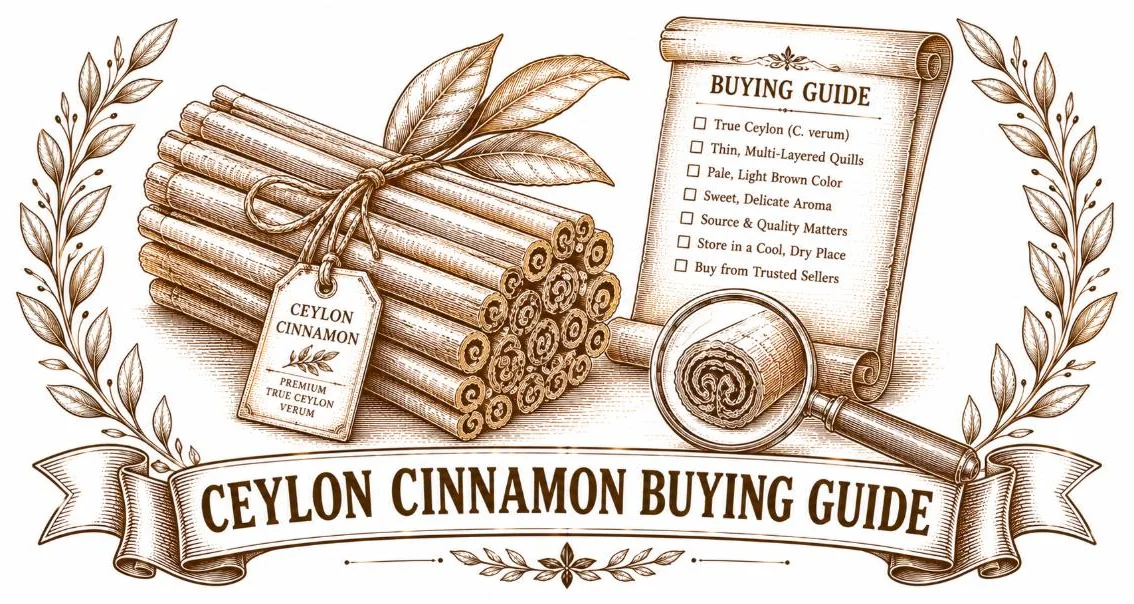
To buy good Ceylon cinnamon, look for a label naming Cinnamomum verum and Sri Lanka, choose whole quills over powder where you can, match the grade to your use and budget, and buy from a source that is transparent about origin. Whole Alba and Continental quills suit delicate cooking and gifting; thicker grades and quillings are great value for everyday use. This guide walks you through every decision.
Buying true cinnamon can be confusing when so much cassia is sold simply as “cinnamon.” This practical guide helps you shop with confidence, what to check, sticks versus powder, which grade to pick, how to judge value, and the questions worth asking. If you are new to the spice, begin with what is true Ceylon cinnamon.
1. Check the label first
The single most important step is reading the label. Genuine Ceylon cinnamon should clearly indicate Cinnamomum verum (or the older synonym Cinnamomum zeylanicum), and ideally state “Ceylon cinnamon” or “true cinnamon” with Sri Lanka as the origin. If a product only says “cinnamon” with no species or country, treat it as cassia. Remember that “organic” and “premium” describe farming and marketing, not the species, see our identification guide for the full checks.
2. Sticks (quills) or powder?
Both have their place:
- Whole quills keep their aroma far longer, can be inspected for authenticity, and are ideal for infusing drinks, curries and syrups. You can also grind them fresh as needed.
- Powder is convenient for baking and dusting but loses fragrance faster and cannot be checked by eye, so buy it only from a trusted, clearly labelled source and in modest quantities.
For most people, keeping whole quills and grinding small amounts gives the best flavour and confidence.
3. Choose the right grade
Grade is about quill thickness and finesse, not authenticity, all grades are genuine Ceylon cinnamon. Match it to the job:
| Grade | Best for | Value |
|---|---|---|
| Alba / C5 Special | Gifting, delicate desserts, drinks | Premium |
| Continental (C5 / C4) | All-round premium cooking and baking | Excellent balance |
| Mexican / Hamburg | Everyday baking, mulling, simmering | Great value |
| Quillings / featherings | Grinding your own powder, infusions | Most economical |
The full breakdown is in our complete guide to Ceylon cinnamon grades.
4. Judge quality signs
Good Ceylon cinnamon looks and smells alive: pale, evenly coloured quills with tight, neat rolls, few cracks, and a sweet, fragrant aroma. Dull, musty or oddly uniform-smelling products may be old or poorly stored. Freshness matters more than most shoppers realise, because aromatic oils fade over time, especially in powder.
5. Understand price and value
Ceylon cinnamon costs more than cassia because it is grown in a limited region and processed by hand, as explained in how Ceylon cinnamon is made. That premium is normal. Be wary of two extremes: prices far below typical Ceylon rates (often a sign it is really cassia), and premiums far above the norm that are not justified by grade or quality. Compare on a per-weight basis, and factor in that finer grades naturally cost more than thicker ones.
6. Buy from transparent sources
The best sellers are open about species, grade and origin, and can tell you where their cinnamon comes from. Single-origin Sri Lankan cinnamon with clear grade labelling is a good sign. When buying online, read descriptions carefully, look for the botanical name, and be cautious of listings that lean on vague health language rather than clear product detail.
7. How much should you buy?
Because aroma fades, buy quantities you will use within several months to a year rather than stockpiling. Whole quills keep longer than powder, so if you want to buy a little more at once, choose quills and grind as needed. Proper storage in an airtight container away from heat and light will help preserve freshness.
A simple buying checklist
- Label names Cinnamomum verum and Sri Lanka ✔
- Whole quills chosen where possible ✔
- Grade matched to your use and budget ✔
- Quills pale, tightly rolled and fragrant ✔
- Price consistent with genuine Ceylon cinnamon ✔
- Seller transparent about origin ✔
Where to buy: shops vs online
Both specialist shops and reputable online sellers can be excellent sources. In person, you can inspect the quills for the pale colour, tight multi-layered roll and fragrant aroma described in our identification guide. Online, you trade that hands-on check for wider choice and often better prices, so lean on clear labelling, grade information, origin details and good photographs. Buying direct from suppliers who specialise in Sri Lankan cinnamon is often the most transparent route of all.
Certifications and claims explained
Labels carry various marks, and it helps to know what they mean. Organic certification concerns how the plant was grown, not the species, organic cassia exists. Fair trade and similar schemes relate to how farmers are paid. A Geographical Indication reference points to genuine Sri Lankan origin. None of these replaces the botanical name: always confirm Cinnamomum verum as well. Treat marketing words like “premium,” “pure” and “natural” as descriptions, not guarantees of species.
Storing what you buy
Good buying is wasted without good storage. Keep cinnamon in an airtight container away from heat, light and moisture, and keep whole quills separate from powder since quills last far longer. Buying quills and grinding small amounts as needed is the best way to keep flavour at its peak, and it means a single purchase stays fragrant for many months, a habit that pays off across all the dishes in our culinary guide.
Buying Ceylon cinnamon as a gift
Because fine Alba and C5 Special quills are visually striking and genuinely special, Ceylon cinnamon makes an excellent gift for cooks and food lovers. Choose a high grade, presented in a clear container that shows off the pale, neatly rolled quills, and include a note on origin and use. A gift of true cinnamon is also a small education in the difference between real cinnamon and the everyday cassia most people know.
Matching cinnamon to how you cook
The right purchase depends on your kitchen. If you mostly bake and dust, a jar of good Ceylon powder from a trusted source plus a few whole quills to grind fresh will serve you well. If you cook curries, rice and drinks that call for infusing, prioritise whole quills in a versatile Continental grade. If you love gifting or delicate desserts, add some fine Alba. And if you get through a lot of cinnamon, thicker grades and quillings give great value for grinding your own. Thinking about how you actually cook, rather than simply buying the cheapest or the most premium option, is the surest way to end up with cinnamon you will use and enjoy.
How much cinnamon do you really need?
It is tempting to buy in bulk, but aroma fades over time, so the freshest results come from buying quantities you will use within several months to a year. For most households a modest bag of whole quills goes a long way, since each quill can flavour many dishes and can be ground fresh as needed. If you cook with cinnamon heavily, buying a slightly larger amount of whole quills, which keep far better than powder, is the sensible compromise between value and freshness. Store the surplus airtight and cool, and it will stay fragrant for a long time.
Red flags to watch for
- No species or origin named, “cinnamon” alone usually means cassia.
- Prices far below typical Ceylon rates, often a sign it is cassia.
- Heavy reliance on health claims instead of clear product detail.
- Very dark, thick, hard sticks described as Ceylon, the physical signs say otherwise.
- Vague “premium” or “pure” wording with no botanical name to back it up.
Treat any of these as a prompt to look more closely or choose another supplier. When species, grade, origin and a fair price all line up, you can buy with confidence, and the checks in our identification guide will confirm the rest once the product is in your hands.
Summary
Buying Ceylon cinnamon well comes down to a few habits: read the label for Cinnamomum verum and Sri Lanka, favour whole quills for freshness and authenticity, choose a grade that fits your cooking and budget, look for pale, fragrant, neatly rolled sticks, and buy from sellers who are transparent about origin. Expect to pay a fair premium over cassia, but be sceptical of prices that seem too good to be true. With these checks, you can be confident you are getting genuine true cinnamon.
Frequently asked questions
Where should I buy Ceylon cinnamon?
From sellers who clearly state the species (Cinnamomum verum), grade and Sri Lankan origin. Single-origin, well-labelled products are a good sign, whether in specialist shops or reputable online stores.
Why is Ceylon cinnamon so expensive?
It is grown in a limited region and hand-processed through skilled peeling and rolling, which is labour-intensive. That craft, plus its quality and low coumarin, is reflected in the price.
Should I buy cinnamon sticks or powder?
Whole quills keep their aroma longer and can be checked for authenticity, so they are usually the better buy. Use powder for convenience, from a trusted source, in small amounts.
What grade of Ceylon cinnamon should a home cook buy?
Continental grades (C5/C4) are excellent all-rounders. Choose Alba for delicate or special uses, and thicker grades or quillings for everyday cooking and grinding.
This website provides educational information about Ceylon Cinnamon as a spice and food ingredient. It is not intended to provide medical advice or make health claims.
Leave a Reply