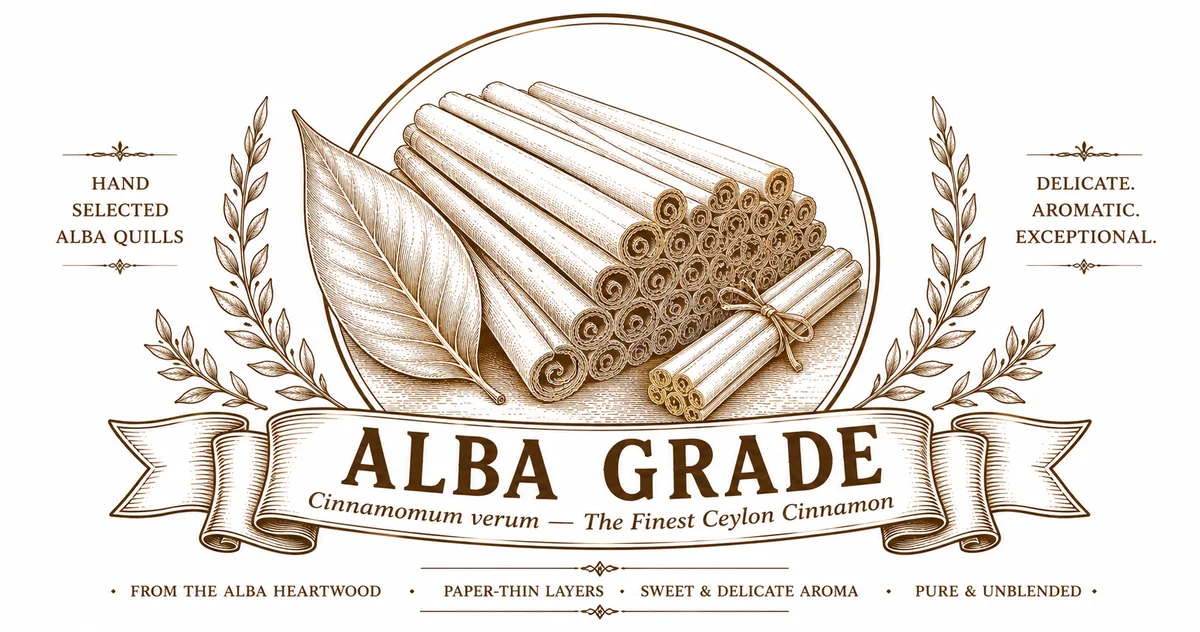
Alba is the highest and most refined grade of Ceylon cinnamon. The name refers to the very thinnest, most delicate quills, those with the smallest diameter, which are prized for their pale colour, fine texture and sweet, mellow aroma. In the Ceylon cinnamon grading system, the thinner the quill, the higher the grade, and Alba sits right at the top.
If you have seen “Alba” on a packet of cinnamon and wondered what it means, this guide explains it clearly: what the Alba grade is, how it fits into the wider grading system, why it commands the highest price, and whether it is the right choice for you. For the full overview of every grade, see our pillar guide on Ceylon cinnamon grades.
What is Alba grade Ceylon cinnamon?
Alba is the top grade of true Ceylon cinnamon (Cinnamomum verum), made from the thinnest quills produced during processing. Ceylon cinnamon quills are graded largely by their diameter: after the bark is peeled, dried and rolled into quills, they are sorted by thickness, and the finest, narrowest quills are classified as Alba. Because only a portion of any harvest yields quills thin enough to qualify, Alba is relatively scarce, which is part of why it is the most sought-after grade.
How the grading system works
Ceylon cinnamon grades are based on quill diameter, measured in millimetres, with smaller diameters earning higher grades. The main families of grades, from finest to coarsest, are broadly: Alba (the thinnest of all), then the Continental grades (such as C5 Special, C5 and C4), the Mexican grades (M5, M4) and the Hamburg grades (H1, H2). Each step down the ladder represents a slightly thicker quill. Alba typically has the smallest diameter of any grade, often cited at around 6 millimetres, which is why it feels so fine and papery. For the individual grades below Alba, see our guides to Continental grade and the other grade families linked from the grades pillar.
Why quill diameter matters
Diameter is used for grading because it closely reflects the quality of the bark and the skill of the peeler. The thinnest quills come from carefully selected, well-grown shoots and require the most expert hand-peeling to produce, as described in how Ceylon cinnamon is made. A thin quill also tends to have a more delicate structure and a smoother, more even surface. So while diameter is a physical measurement, it stands in for a whole set of quality attributes, fineness, appearance and craftsmanship, that buyers value.
What makes Alba special
Several qualities set Alba apart from the grades below it:
Fine, papery texture
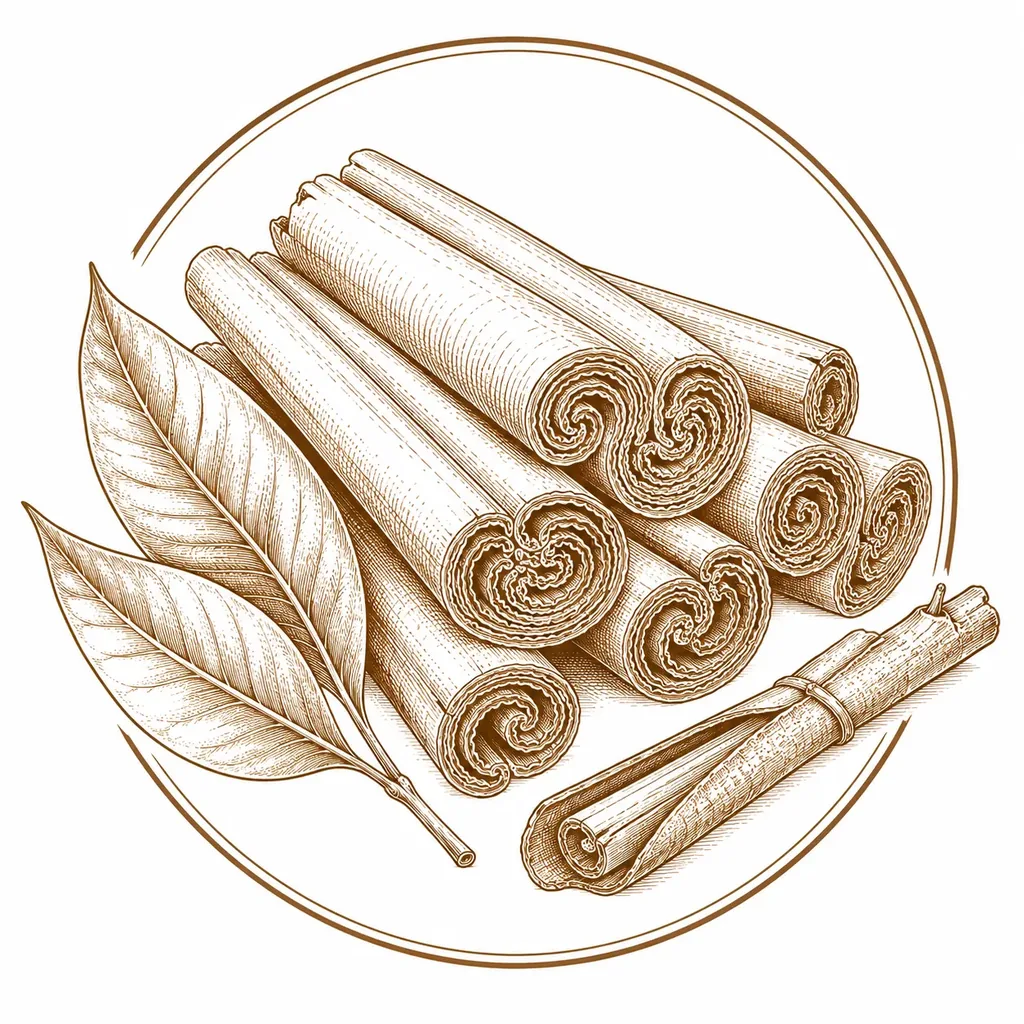
Alba quills are exceptionally thin and delicate, closer to fine paper than to the harder bark of lower grades. They break and grind very easily, which makes them pleasant to work with in the kitchen.
Pale, even colour
Alba tends to have a light, uniform tan colour, reflecting the fine inner bark from which it is made. This pale appearance is one of the visual hallmarks people associate with premium Ceylon cinnamon.
Delicate aroma and flavour
Because it is made from the finest bark, Alba carries the sweet, gentle, complex aroma that Ceylon cinnamon is known for, without harshness. It is subtle rather than pungent, a quality that suits delicate dishes and beverages.
Alba vs other Ceylon cinnamon grades
| Grade family | Relative diameter | Character |
|---|---|---|
| Alba | Thinnest / finest | Most delicate, palest, premium |
| Continental (C5, C4…) | Slightly thicker | Fine, widely used, excellent quality |
| Mexican (M5, M4) | Thicker again | Good everyday quality |
| Hamburg (H1, H2) | Thickest | Robust, more economical |
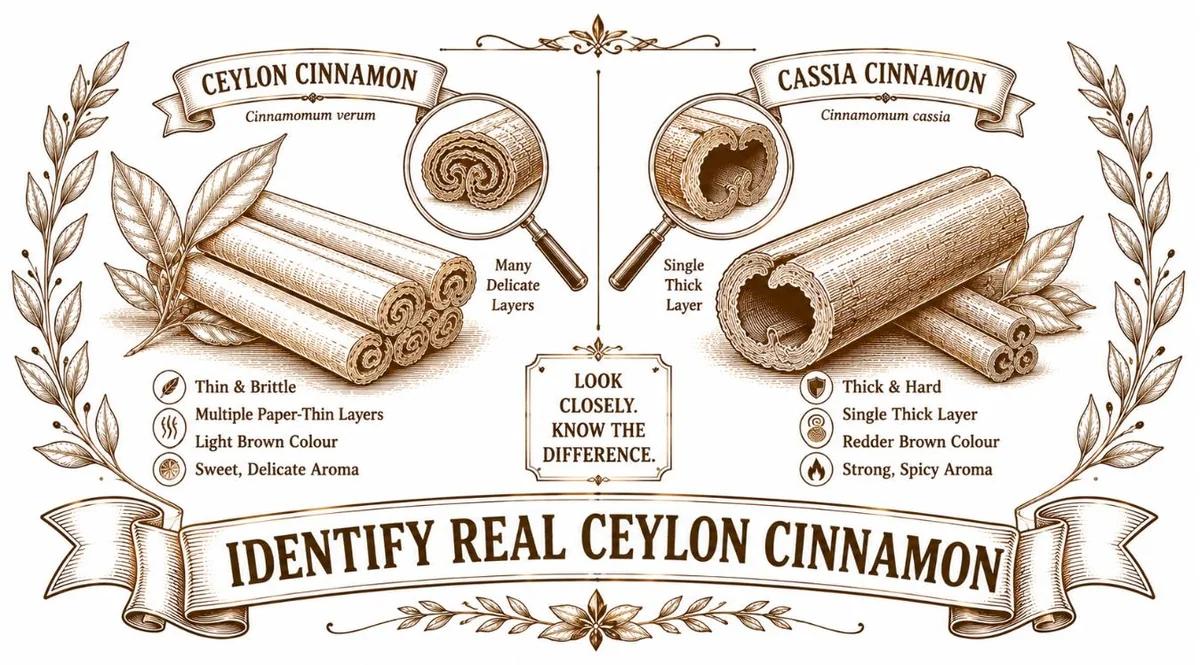
It is worth stressing that every one of these grades is genuine Ceylon cinnamon from Cinnamomum verum. A lower grade is not lower quality in the sense of being a different, inferior species, it simply has a thicker quill. This is quite different from the distinction between Ceylon and cassia, which are different plants entirely, as explained in Ceylon cinnamon vs cassia.
Why is Alba the most expensive grade?
Alba costs more than other grades for a few connected reasons. First, it is scarce: only the finest quills from a harvest qualify, so there is simply less of it. Second, it demands the highest level of skill to peel and roll the very thin bark without tearing it, which is labour-intensive and time-consuming. Third, its fineness and appearance make it the grade most in demand for premium presentation. Together, scarcity, craftsmanship and demand push Alba to the top of the price range, a dynamic covered further in the Ceylon cinnamon buying guide.
Is Alba worth it?
Whether Alba is worth the premium depends on how you use cinnamon. For gifts, fine presentation, or delicate dishes and drinks where a subtle, refined flavour matters, Alba’s fineness is a genuine pleasure. For everyday cooking, baking or long-simmered dishes, a Continental or Mexican grade delivers the same true-cinnamon character at a lower price, and the difference in the finished dish may be modest. In other words, Alba is not “better cinnamon” in a way that transforms every recipe, it is the finest, most delicate expression of the same spice, and its value depends on whether that refinement matters for your particular use.
How to use Alba cinnamon
Because Alba is so fine and delicate, it shines where its subtlety can be appreciated: in lightly spiced desserts, warm milk and infusions, delicate baking, and beverages such as tea or coffee. Its thin quills grind smoothly for fresh powder and crumble easily into gentle infusions. In robust, heavily spiced dishes its finesse can be lost among stronger flavours, so many cooks reserve Alba for recipes where cinnamon is a star rather than a background note. For broader ideas, see our guide to the culinary uses of Ceylon cinnamon.
How to buy genuine Alba
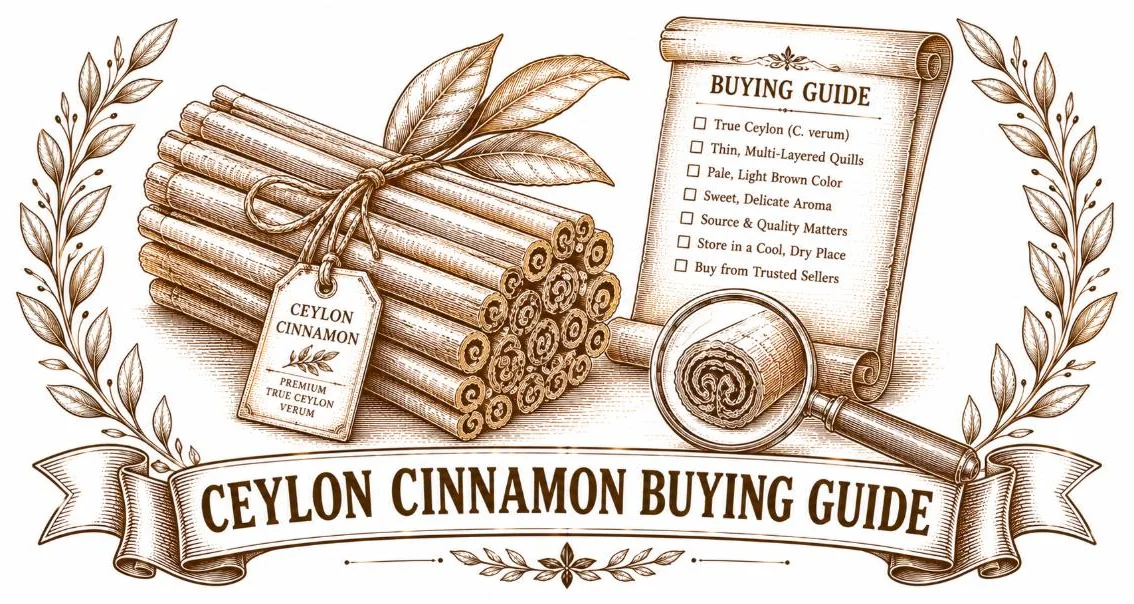
When buying Alba, look for a label that names the grade and confirms the species and origin, genuine Alba should be described as Ceylon cinnamon, Cinnamomum verum, from Sri Lanka. The quills themselves should look very thin, pale and uniform, rolled into many fine layers. Be a little cautious of unusually cheap “Alba”, since the grade is naturally costly to produce; a price far below the norm may indicate mislabelling. Reputable suppliers are usually happy to state the grade clearly, and some provide details of origin and quality. Our guide to identifying authentic Ceylon cinnamon covers the visual checks in more detail.
Common misunderstandings about Alba
A few points often cause confusion. Alba is a grade, not a species or a place, it tells you about the quill’s fineness, not a different type of cinnamon. A higher grade does not mean the lower grades are “fake” or poor; they are all true Ceylon cinnamon. And grade is separate from freshness and storage: even the finest Alba will lose aroma if it is old or poorly kept, so buying from a source with good turnover and storing it well matters as much as the grade itself. Keeping these distinctions clear helps you shop with confidence rather than paying for a name alone.
Summary
Alba is the finest, highest grade of Ceylon cinnamon, made from the thinnest quills with the smallest diameter, often around 6 millimetres. It is prized for its pale, even colour, its exceptionally fine and papery texture, and its sweet, delicate aroma. It sits above the Continental, Mexican and Hamburg grade families, all of which are also genuine Cinnamomum verum but with progressively thicker quills. Alba is the most expensive grade because it is scarce, skill-intensive to produce and highly sought after. It is a lovely choice for delicate dishes, drinks and gifts, while lower grades offer the same true-cinnamon character at a friendlier price for everyday cooking.
Frequently asked questions
What does Alba mean in Ceylon cinnamon?
Alba is the top grade of Ceylon cinnamon, made from the thinnest, finest quills. It refers to quill diameter, not a different species, it is still true Cinnamomum verum.
Is Alba the best Ceylon cinnamon grade?
Alba is the highest grade by fineness, with the smallest quill diameter and most delicate character. Whether it is “best” for you depends on your use; lower grades are the same species and excellent for everyday cooking.
Why is Alba cinnamon so expensive?
Because it is scarce, requires the most skilled hand-peeling of very thin bark, and is in high demand. Scarcity, craftsmanship and demand together make it the priciest grade.
Is a lower grade of Ceylon cinnamon worse quality?
Not in terms of authenticity. Lower grades such as Continental or Hamburg are all genuine Ceylon cinnamon; they simply have thicker quills. They offer the same true-cinnamon flavour at a lower price.
This website provides educational information about Ceylon Cinnamon as a spice and food ingredient. It is not intended to provide medical advice or make health claims.